Ghost towns are what happen when history leaves the room but forgets to take everything with it. Across the backroads of Utah, abandoned mines, silent railroad stops, half-buried structures, and lonely cemeteries still mark places that once expected to have a future.
That is what makes this road trip so fascinating. You are not looking at movie props or staged ruins.
You are tracing real communities shaped by mining booms, transportation routes, hard labor, and fortunes that disappeared faster than anyone planned. Some stops are simple to reach, while others demand more preparation, especially where roads get rough or private-property rules come into play.
Bring a map, plenty of water, snacks, and enough curiosity to linger over the details. Because out in rural Utah, an empty building or weathered grave marker can tell a surprisingly vivid story about just how quickly a thriving town can become a memory.
Grafton Ghost Town, Near Rockville
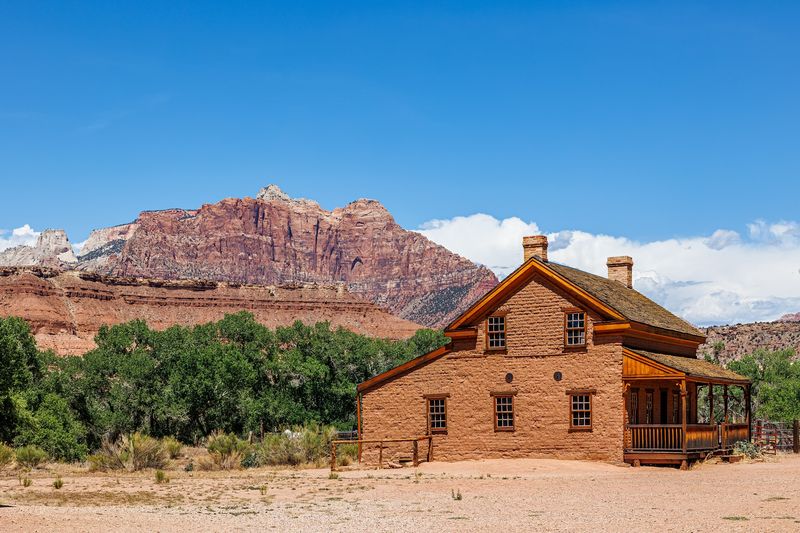
Movie fans may recognize Grafton Ghost Town before they can explain why. Scenes from the 1969 film Butch Cassidy and the Sundance Kid were filmed here, which gives the place a strange double life: real pioneer settlement, part Hollywood memory.
Grafton was settled in the 1860s along the Virgin River, and several buildings still stand, including the old schoolhouse and a few homes. The cemetery is one of the most moving parts of the stop, with graves that tell a hard story of disease, accidents, and frontier life.
For a Utah road trip, Grafton is useful because it shows the family side of ghost-town history, not just mines and saloons.
Visitors should pay close attention to fences and signs because some nearby property is private. Stay on open roads, do not enter closed structures, and treat the cemetery like a cemetery, not a photo prop.
The site sits near Rockville, not far from the Zion area, so it can pair with a southern Utah trip, but it deserves more than a rushed peek through a windshield.
Silver Reef, Leeds
Silver Reef sounds like someone mixed up a geology lesson, because silver is not usually found in sandstone. Yet in the late 1800s, miners pulled silver ore from the red rock here, creating one of the stranger mining stories in Utah.
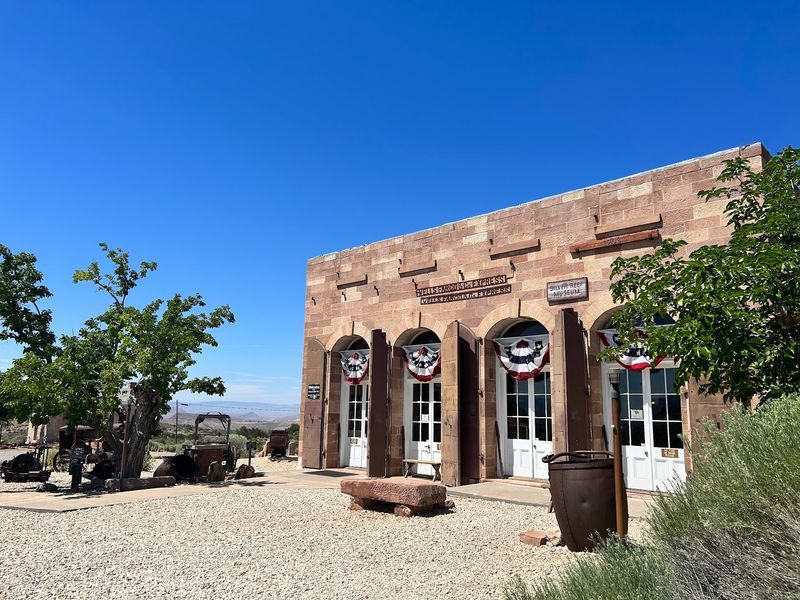
The former settlement near Leeds once had businesses, mills, saloons, and a busy mining economy. Today, the preserved Wells Fargo building is the main historic anchor, while ruins, foundations, and the cemetery help visitors understand the town’s old footprint.
The Silver Reef Museum operates in the historic Wells Fargo Express office and gives helpful context for people who prefer their ghost towns with labels, maps, and fewer wild guesses.
Silver Reef works well for travelers who want history without committing to a rough backroad expedition. Still, it is not a theme park, so the most interesting parts come from slowing down and reading the site as a former working town.
Respect marked areas, watch for uneven ground around foundations, and remember that the eerie part is not special effects. It is the fact that a full mining town rose here because people believed red sandstone could make them rich.
Old Iron Town, Cedar City
Old Iron Town is what happens when a ghost town comes with a job description. Instead of chasing silver or gold, this settlement was built around iron production, which makes it feel more like an outdoor workshop left behind by very ambitious pioneers.
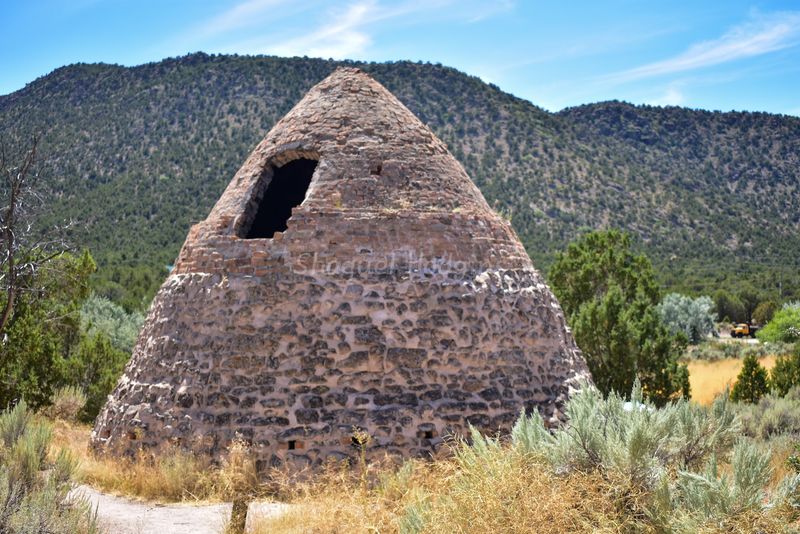
The site, west of Cedar City, preserves remnants of a nineteenth-century ironworks community, including a stone furnace, beehive-shaped charcoal kiln remains, and other ruins tied to early industry in southern Utah. Interpretive signs help explain how workers tried to turn local ore, timber, and labor into a lasting business.
That makes Old Iron Town different from flashier mining camps because its story is about manufacturing, not only prospecting fever.
The area is publicly accessible during daylight hours and is generally considered open year-round, though road and weather conditions can still matter. Wear sturdy shoes because historic sites have uneven ground, loose rock, and plenty of places where ankles may question your planning skills.
For families or travelers who like clear context, Old Iron Town is one of the easier stops to understand. The ruins are not just old walls; they are the remains of an industrial plan that almost made Cedar City a major iron center.
Frisco Ghost Town, Near Milford
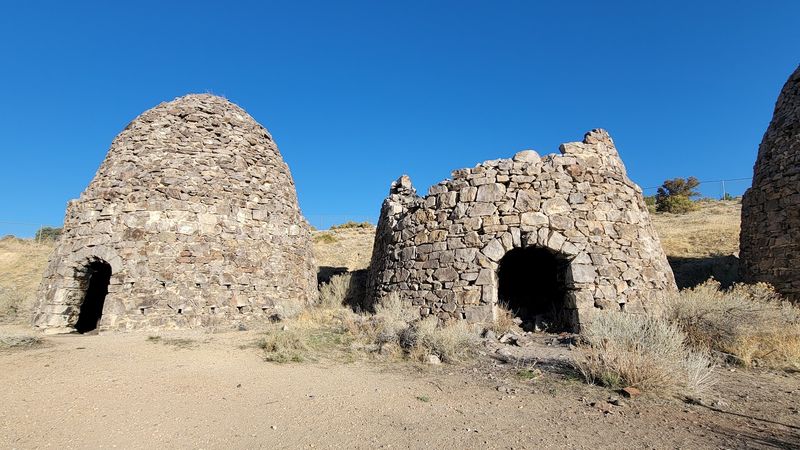
Frisco Ghost Town carries the kind of reputation that makes travelers lower their voices even when nobody is around. During its silver boom in the late 1800s, Frisco was known as a rough mining camp, and its history has followed it like dust on boots.
The town grew after major silver discoveries in the San Francisco Mountains west of Milford. Its most famous surviving features are the stone charcoal kilns, large beehive-like structures used to make charcoal for smelting.
Visitors can also find the cemetery and scattered remains connected to the mining settlement. Among Utah ghost towns, Frisco stands out because the kilns are so solid and visible, almost too orderly for a place with such a rowdy backstory.
Frisco is remote, so planning matters more here than at stops closer to towns. Bring water, check road conditions, and do not count on services at the site.
The remains should be viewed with care, not climbed on or treated like playground equipment. A stop here rewards patient travelers who like their history plainspoken: ore came out of the hills, money came fast, and when the boom faded, the desert kept the heaviest pieces.
Thistle Ghost Town, Spanish Fork Canyon
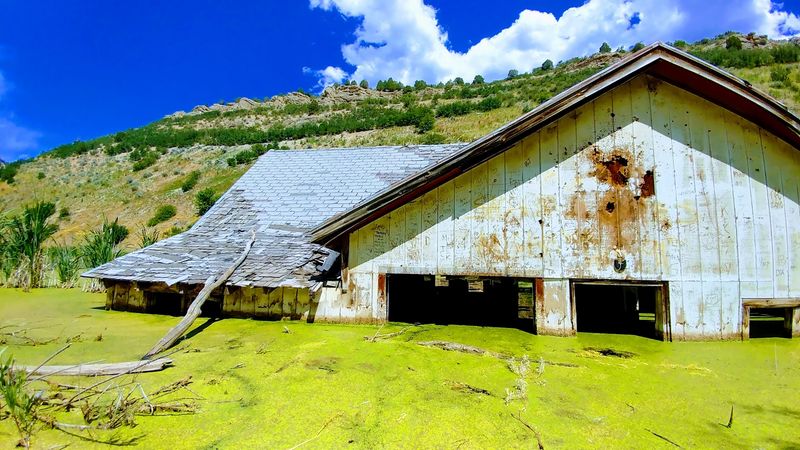
Not every ghost town died slowly. Thistle was changed almost overnight in 1983, when a massive landslide blocked Spanish Fork Canyon, dammed the Spanish Fork River, and flooded the small railroad community.
Before the disaster, Thistle served railroad traffic and travelers through the canyon. After the slide, water rose around homes and buildings, forcing residents out and leaving structures partly buried or standing in odd, damaged positions.
The event remains one of Utah’s best-known natural disasters, and it gives Thistle a different mood from old mining camps. Here, the creepy history is not about a boom going bust.
It is about landscape moving with enough force to rewrite a town.
Travelers usually view Thistle from public roads near US-89, and access can be limited by private property and safety concerns. Do not wander onto fenced land or unstable ruins for a closer photo.
The smarter approach is to treat it as a roadside history stop and use official pullouts only where parking is safe and legal. Thistle is a useful reminder that ghost towns are not always ancient.
Some vanish within living memory, leaving a road trip stop that feels uncomfortably recent.
Eureka, Utah
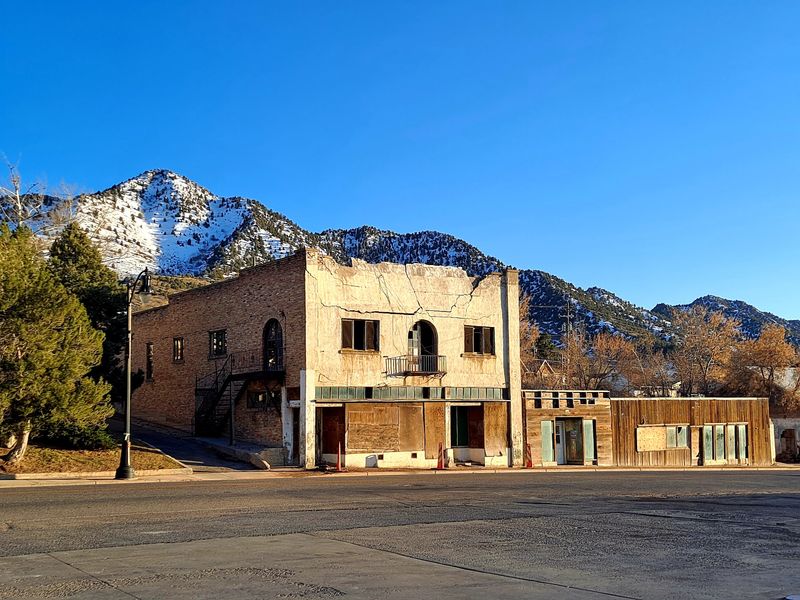
Eureka is not empty, which makes it a little more complicated and a lot more interesting. People still live here, so the goal is not to roam like an explorer in a costume hat, but to notice how a mining boom left its marks on a working community.
Located in the Tintic Mining District, Eureka grew around rich silver, lead, zinc, and gold deposits. Its historic Main Street still shows the bones of a mining-era town, with old commercial buildings and the former jail among the visible reminders.
Because Eureka is a semi-ghost town, it offers a rare middle ground on a Utah ghost-town route: history is plainly visible, but daily life has not fully stepped aside.
That also means visitors should be thoughtful. Photograph public buildings from public areas, avoid private property, and remember that weathered does not mean abandoned.
For road trippers, Eureka can add context between more remote stops because it shows what happened when some mining towns survived in reduced form. The result is less spooky-movie backdrop and more historical puzzle.
You can see the ambition of the Tintic era, then see how much quieter the town became after mining stopped running the show.
Ophir, Utah
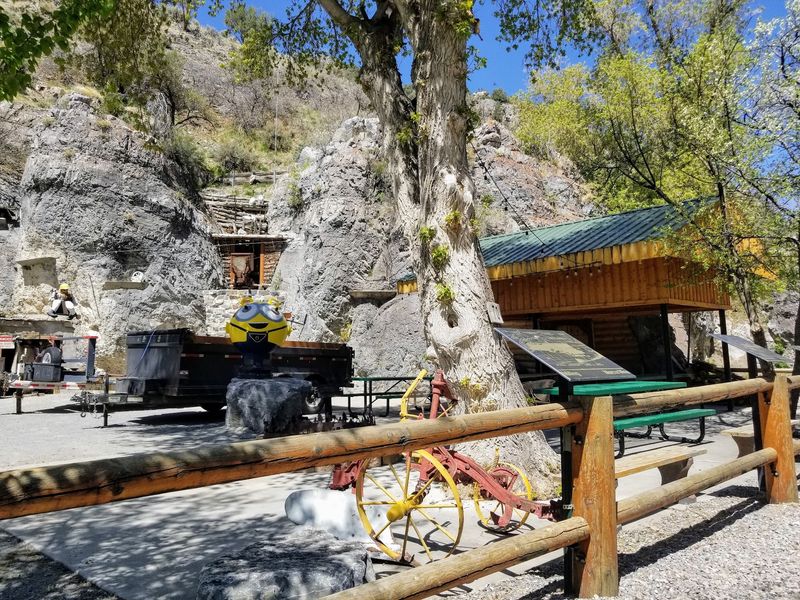
Ophir has an advantage that nearby Mercur does not: travelers can actually see it. Mercur, another famous mining name in the region, is not open for casual wandering because access is restricted, while Ophir’s historic district remains the practical stop for curious road trippers.
The town sits in Ophir Canyon in Tooele County and grew from nineteenth-century mining activity in the Oquirrh Mountains. Today, Ophir is a semi-ghost town with historic buildings and mining-era remnants that help explain how small canyon settlements formed around ore, roads, and hard labor.
It is not a large place, but that limited scale is useful. The compact setting makes the connection between canyon geography and mining life easier to grasp.
Visitors should still use common sense because Ophir is not an abandoned playground. Some buildings and land are private, and old mining areas can be dangerous even when they look harmless from a distance.
Stay on public routes, obey posted signs, and skip any mine opening that appears tempting in a bad-decision sort of way. Ophir adds a quieter chapter to this Utah route, showing how mining history can remain visible without becoming overexplained or overly polished.
Cisco Ghost Town, Cisco
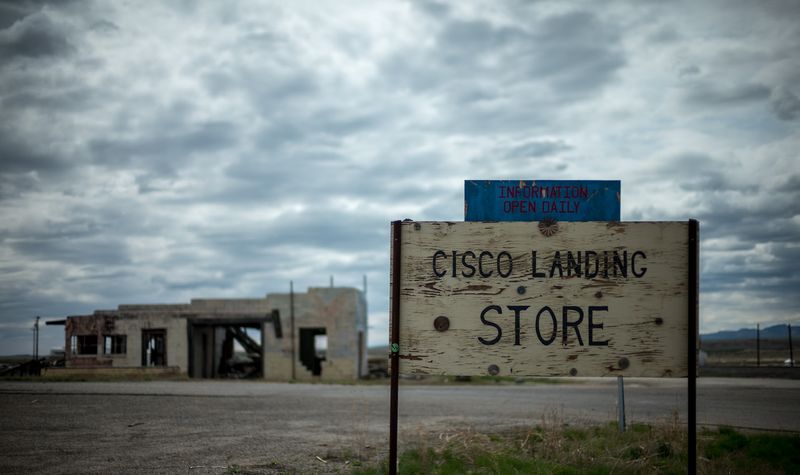
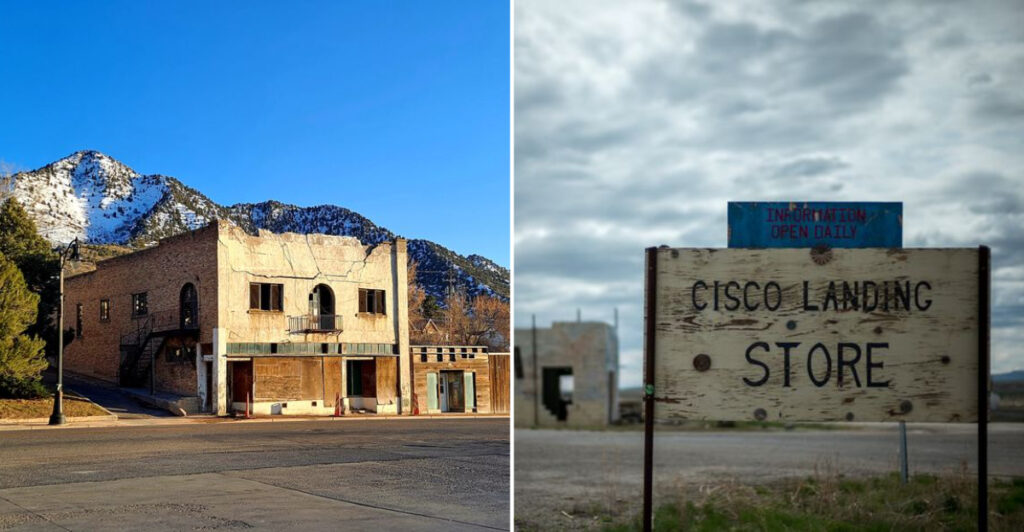
Cisco looks like the desert got tired of cleaning up after the railroad. Weathered buildings sit scattered near the road east of Moab, and the whole place has become one of Utah’s most photographed semi-abandoned stops.
The community began as a railroad and stock-shipping point, serving the Denver and Rio Grande Western Railroad and nearby ranching activity. Over time, highway changes, shifting transportation patterns, and economic decline left many structures empty.
Utah tourism materials still feature Cisco as a ghost-town stop, and the Bureau of Land Management provides public directions through the area, which helps separate it from places that are simply off-limits ruins with a famous name.
Even so, Cisco requires restraint. Some parcels may be private, and abandoned buildings can be unstable, so the safest plan is to observe from public roads and avoid entering structures.
The desert setting also means visitors should bring water and treat the stop as remote, even if it appears on a map like a quick pause. Cisco fits the creepy-history theme because it is not just old.
It shows how railroad towns could lose their purpose when the systems that fed them moved on.
Thompson Springs, Utah
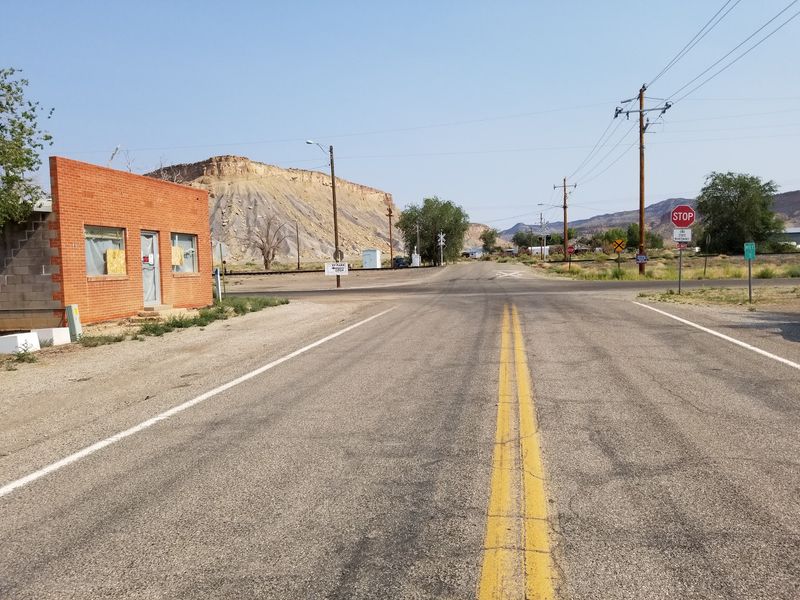
Thompson Springs is the kind of place that makes a traveler check the gas gauge and the map at the same time. A small population remains, but boarded buildings and railroad-era leftovers give the community a half-paused feeling.
The town, formerly known as Thompson, developed as a railroad stop in eastern Utah. Its location near Interstate 70 now makes it easier to reach than many ghost-town sites, though easy access should not be confused with unlimited access.
Old commercial buildings and quiet streets hint at the days when the railroad mattered more to daily life here. Thompson Springs also serves as the practical starting point for travelers heading toward Sego Canyon, which adds another layer of history nearby.
Because people still live in Thompson Springs, visitors need to act like guests rather than treasure hunters. Stay on public roads, do not enter boarded structures, and keep photos respectful around homes and private property.
The appeal is in noticing the shift from active railroad community to near-silence, not in forcing drama onto every old wall. For a Utah road trip, Thompson Springs works best as a pause that explains how transportation shaped small desert towns, then left some of them barely holding the line.
Sego Ghost Town, Near Thompson Springs
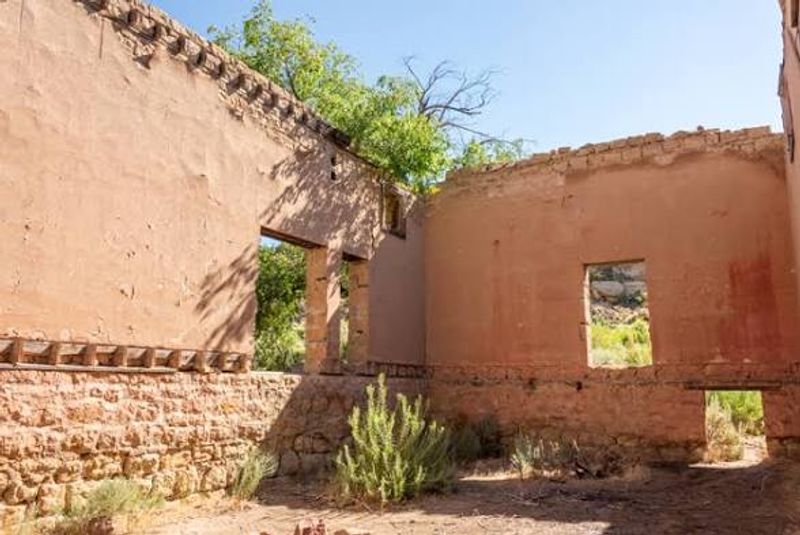
Sego Ghost Town asks more from visitors than a quick roadside stop, mostly because the history and the access rules both deserve attention. The former coal-mining settlement sits up Sego Canyon north of Thompson Springs, where ruins and foundations remain from a town that once depended on mining and rail connections.
Sego developed in the early 1900s around coal operations, and its remains include crumbling building foundations and scattered mining-era structures farther up the canyon. The area is also known for nearby rock art sites in Sego Canyon, though those cultural places should be treated with extra care and respect.
This is one of the more serious stops on the route because the landscape holds both industrial history and Indigenous cultural history.
Current access can be more complicated than it looks on a map. Portions of the surrounding route cross Tribal land, and permits or restrictions may apply, so travelers should check current rules before going rather than assuming open wandering is fine.
Stay on legal roads, avoid touching rock art, and do not remove anything from ruins. Sego belongs on this Utah ghost-town trip precisely because it slows people down.
History here is not a prop; it is layered, fragile, and still connected to living communities.