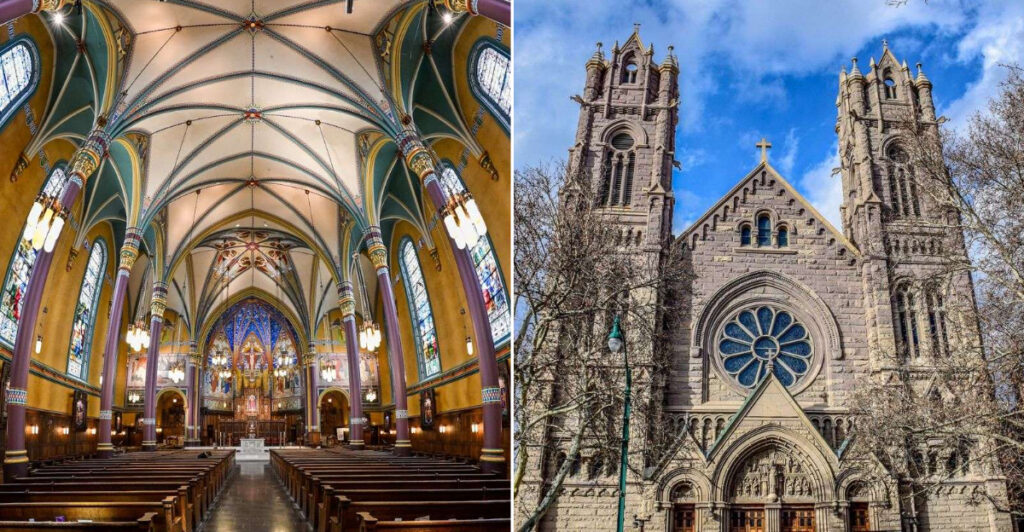
Some buildings impress you with size. Others make you notice the details you almost walked past.
That is what makes this cathedral such an easy place to remember. Stone towers draw your eye first, then stained glass, murals, carved details, and the quiet atmosphere start doing the rest.
In Utah, where weekend plans often lean outdoors, spending part of the day inside a historic landmark can feel like an unexpected change of pace. You do not need to know architectural terms or religious history to enjoy the visit.
Just look around, take your time, and let the space reveal itself slowly. That simplicity is part of the appeal.
A quick stop can turn into twenty extra minutes because there is always another ceiling, window, or corner worth noticing. For an ordinary afternoon in the middle of Utah, finding this much beauty without needing a full itinerary feels like a small win.
A South Temple Landmark That Makes Planning Feel Easy
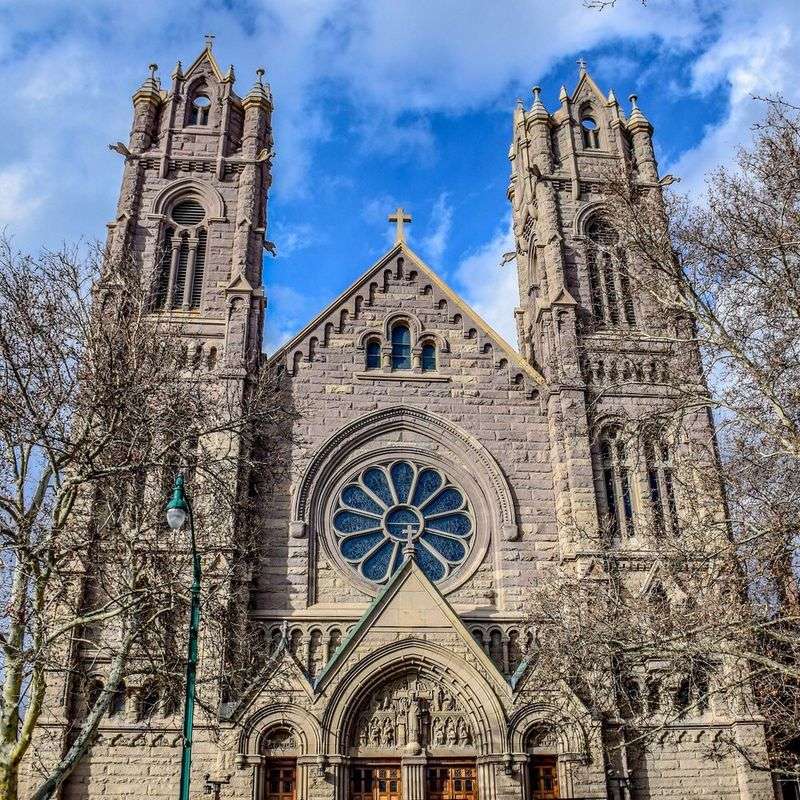
Some outings announce themselves before the group chat can become a committee meeting. This place does that neatly with enough presence to make a quick stop feel like an actual plan.
Built between 1900 and 1909, the Cathedral of the Madeleine is the mother church of the Roman Catholic Diocese of Salt Lake City. That gives it a current religious role, not just a preserved building with a plaque and a locked door.
Its location along South Temple places it in a historic part of Salt Lake City where older civic and religious architecture still carries weight. For travelers, families, solo visitors, or professionals with a spare hour, the appeal is simple: there is a clear address, a clear purpose, and a building that rewards close looking.
Utah is often pictured through red rock and mountain skylines, but this cathedral adds another layer to the state’s visual story. It is formal without feeling remote, grand without requiring a complicated ticketing ritual, and detailed enough that even a short visit can reset the pace of the day.
Nobody needs a clipboard. Just check current access around services before going.
Romanesque Outside, Gothic Inside, No Architecture Degree Needed
The first surprise is that the building changes character once you understand its design. The Cathedral of the Madeleine has a predominantly Romanesque exterior, with strong stone forms and rounded elements, while the interior moves into a Gothic style with pointed arches, painted surfaces, and vertical drama.
That contrast gives visitors an easy way to notice architecture without pretending to know every technical term. Outside, the sandstone and towers feel sturdy and deliberate.
Inside, the eye has more places to go than a grocery list on a Friday afternoon.
The Cathedral of the Madeleine is especially useful for people who like beauty but dislike overplanned sightseeing. You can notice the stained glass, murals, shrines, and carved details at your own pace.
The building does not need a long explanation to make sense, though learning a little helps.
Its artistic layers were shaped over time, including important interior work completed in the early twentieth century and major restoration work in the 1990s. That means the cathedral is not frozen in one moment.
It reflects construction, decoration, care, and renewal. For a Salt Lake City visitor, that makes the stop feel richer than a simple photo opportunity.
For locals, it is a reminder that familiar streets can still contain a plot twist.
Sandstone Towers And Gargoyles With A Utah Accent
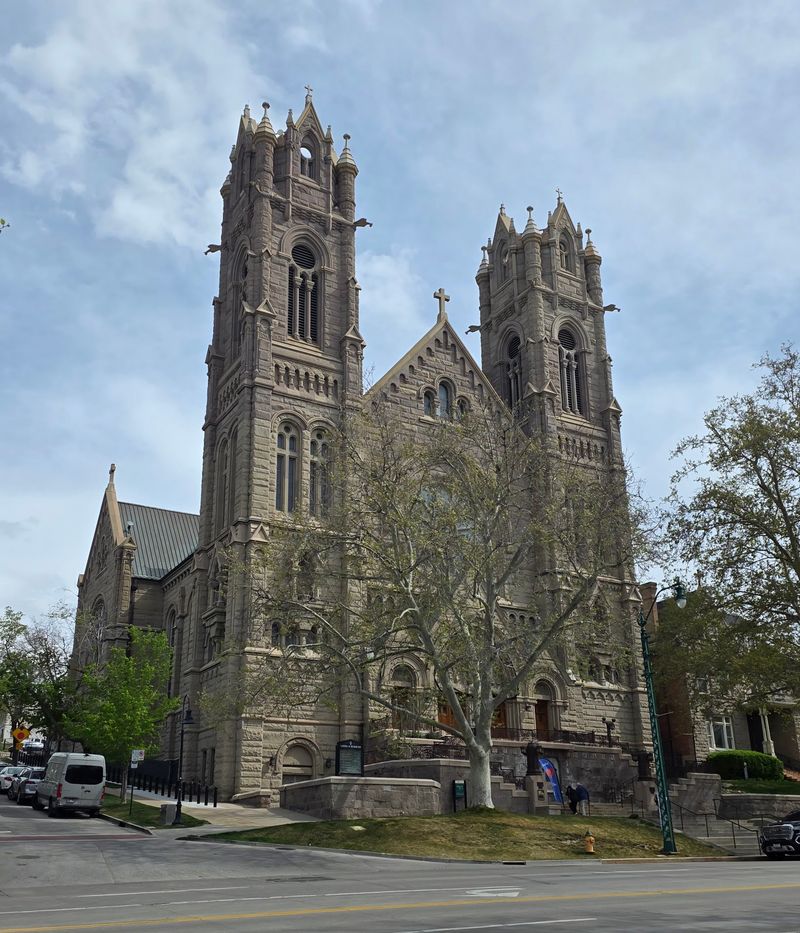
A good landmark should give you something to study before you even reach the door. The Cathedral of the Madeleine manages that with Utah sandstone, twin towers, a carved tympanum over the main entrance, and gargoyles that add a little medieval side eye to South Temple.
The exterior remains closely tied to its 1909 completion, though some features came later. The tympanum above the main doors was added after the original construction period, and the gargoyles seen today replaced earlier figures during the 1990s restoration.
Details like those keep the building from feeling like a single date in a history book. It is more like a long running project, maintained by people who understood that stone, paint, glass, and weather all have opinions.
Utah landmarks often get measured by cliffs, canyons, and peaks, so a cathedral built from local stone offers a different kind of regional identity. It belongs to Salt Lake City’s built landscape rather than its backcountry one, but it still feels grounded in place.
Look up before going in. The towers, carvings, and entry details help explain why the Cathedral of the Madeleine holds attention even before the interior does its full dramatic turn.
Murals, Stained Glass, And A Ceiling That Rewards Patience
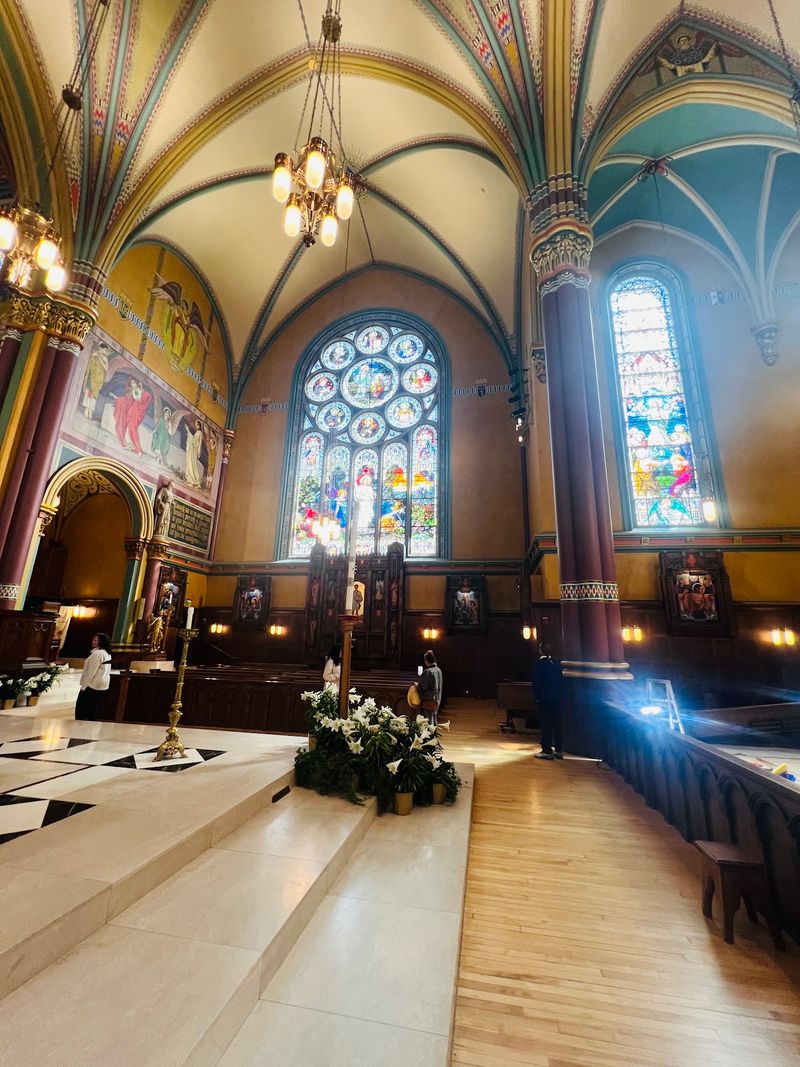
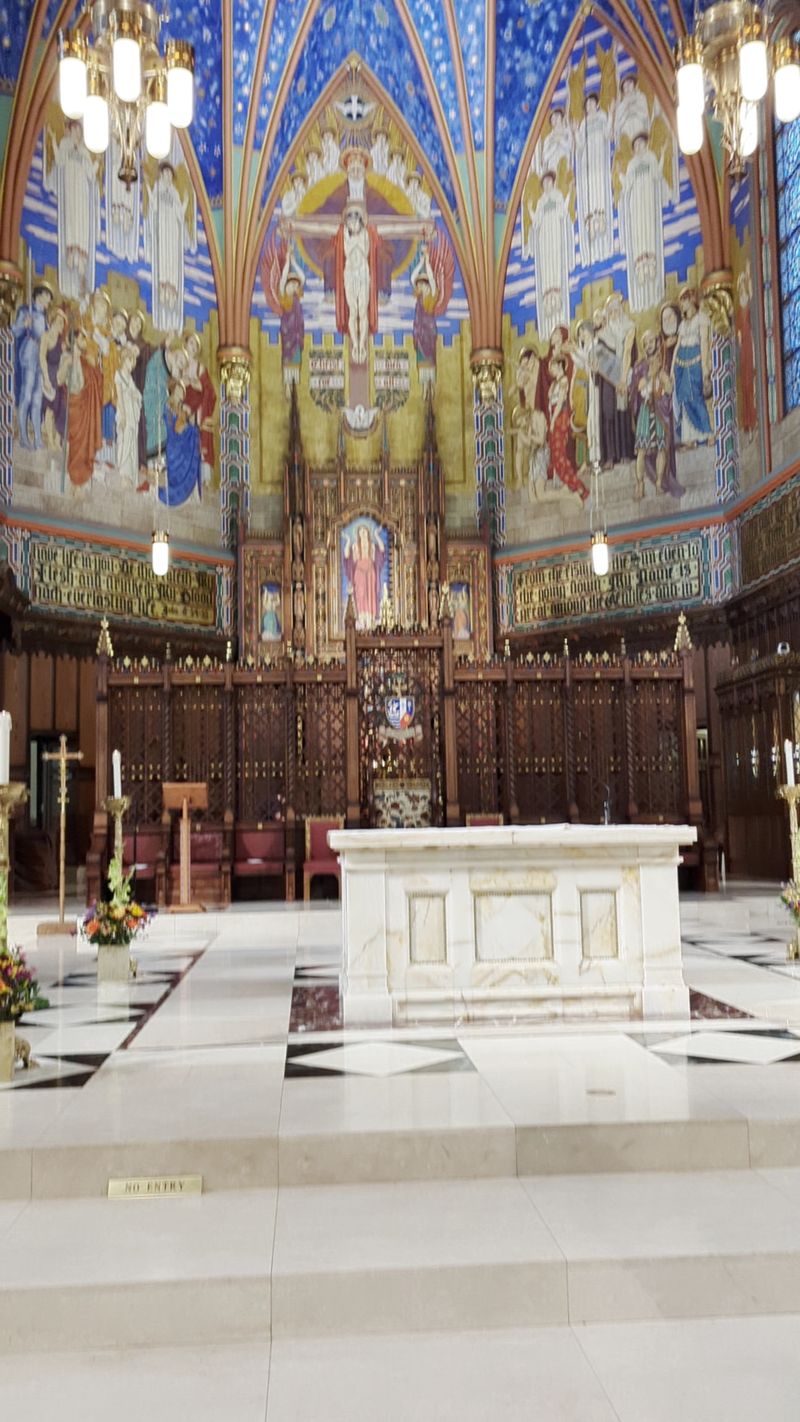
Inside, the sensible move is to slow down, even if your normal museum speed is politely brisk. The Cathedral of the Madeleine contains murals, stained glass, painted ceiling decoration, sculptural details, and an ornate sanctuary that ask for more than a glance.
The stained glass windows are associated with the well known F. X.
Zettler studio, and the cathedral’s murals were painted by Felix Lieftuchter in the early twentieth century. During the major 1991 to 1993 restoration, important interior art and finishes were renewed with careful attention.
Good To Know: The Cathedral of the Madeleine is an active church, so visitors should plan around services and keep the space respectful.
That practical note matters because the building is not operating as a quiet exhibit hall with pews for decoration. People come here for worship, prayer, music, and community life.
The art is part of that use, not separate from it.
This is where the cathedral earns its reputation as one of Utah’s most beautiful landmarks without needing loud claims. The ceiling colors, glass scenes, and painted surfaces create a layered interior that feels rare in the region.
It is the kind of place where one person studies symbols and another simply says, quite reasonably, “That took a lot of work.” Both responses count.
A Working Cathedral, Not Just A Pretty Building
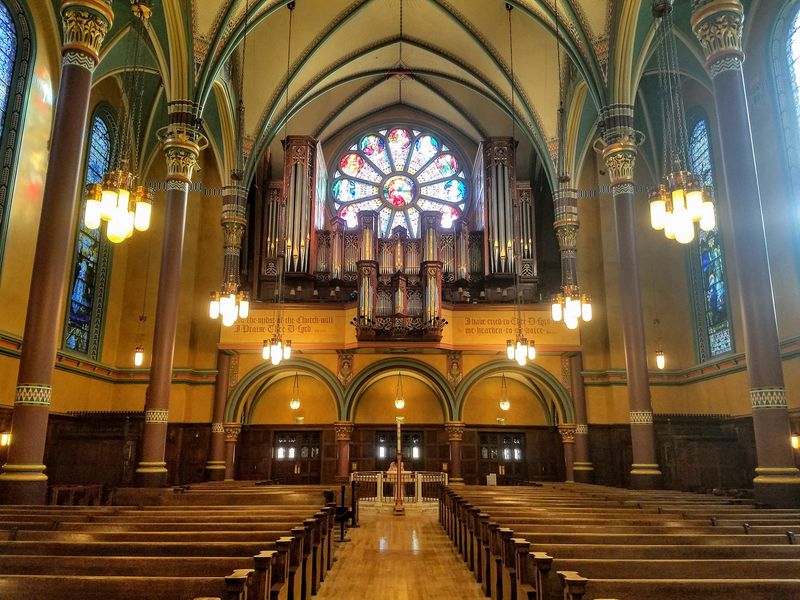
The building’s beauty matters, but its purpose gives the visit more weight. The Cathedral of the Madeleine is the cathedral church for the Roman Catholic Diocese of Salt Lake City, which means it serves a central role for Catholics across Utah.
That current use changes how a visitor should approach it. This is not an abandoned relic, a movie set, or a decorative stop inserted into town for tourism.
It is a living religious space where worship and public access share the same walls.
For families, that can be a useful teaching moment about how buildings carry meaning beyond their design. Children may notice windows, colors, and high ceilings first, which is honestly how many adults begin too.
Couples might appreciate the quiet pace and craftsmanship, while solo visitors can take time with the art without negotiating anyone else’s snack schedule.
The Cathedral of the Madeleine also suits weekend travelers who want a Salt Lake City stop that is memorable but not exhausting. You can visit briefly, stay longer if the space is open for quiet viewing, or plan around an official service if that is your intention.
The key is to remember that access can shift with cathedral activities. A little schedule checking saves everyone from standing outside looking thoughtful for the wrong reason.
The Organ And Music Program Add Another Layer
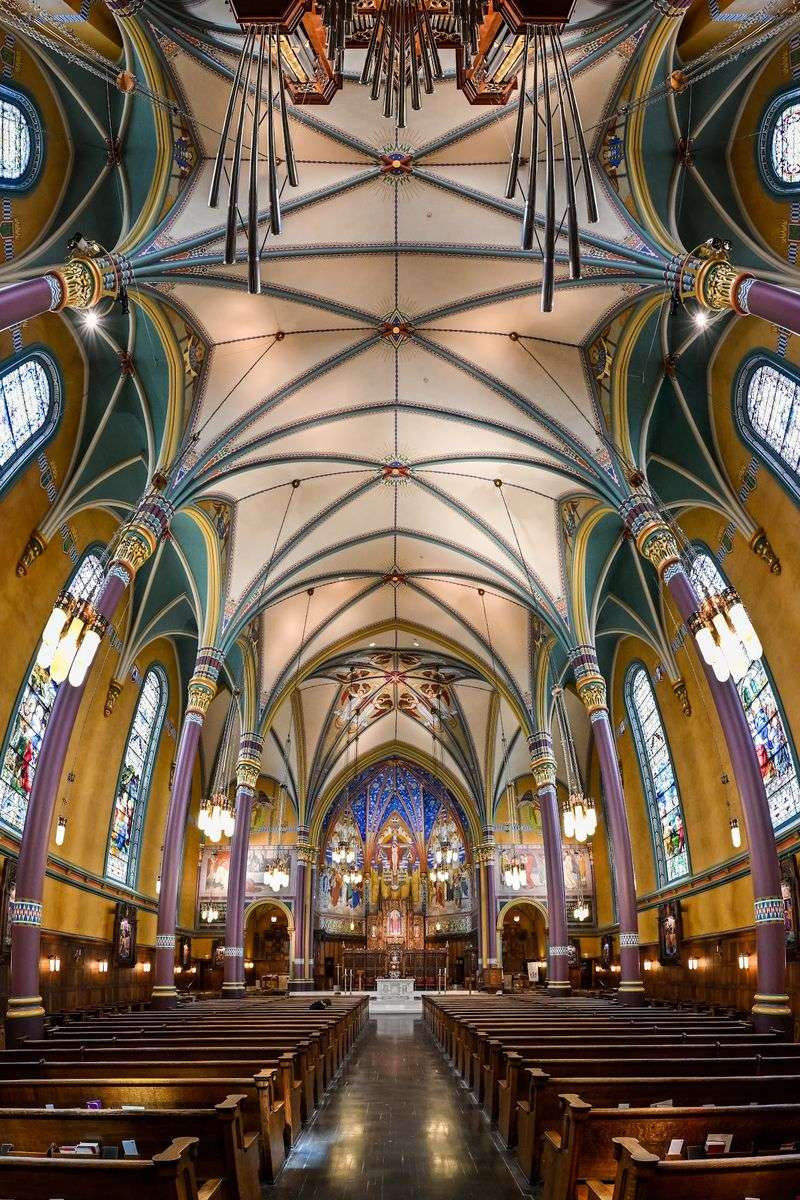
Even people who cannot name three organ composers can usually recognize that a cathedral organ is not casual background equipment. The Cathedral of the Madeleine has an English style pipe organ installed during the 1990s restoration, with more than 4,000 pipes.
That scale matters because music is part of the cathedral’s identity, not an afterthought squeezed into a corner. The Madeleine Choir School, connected with the cathedral, is also an important part of its musical life and broader role in Salt Lake City.
For visitors, this adds a reason to check the official calendar before going. Services, concerts, and special programs may affect access, but they also show the building doing what it was designed to do: hold art, ceremony, music, and community in one carefully shaped space.
The Cathedral of the Madeleine is not only visually rich. It is also built around acoustics, ritual, and attention, which helps explain why the interior feels so complete.
Utah has plenty of places where scale comes from nature. Here, scale comes from pipes, vaults, paint, glass, and human patience.
That is a different kind of grandeur, and it fits nicely into a city afternoon when the usual plan needs one intelligent detour.
A Simple Stop For A Saturday Or Spare Hour
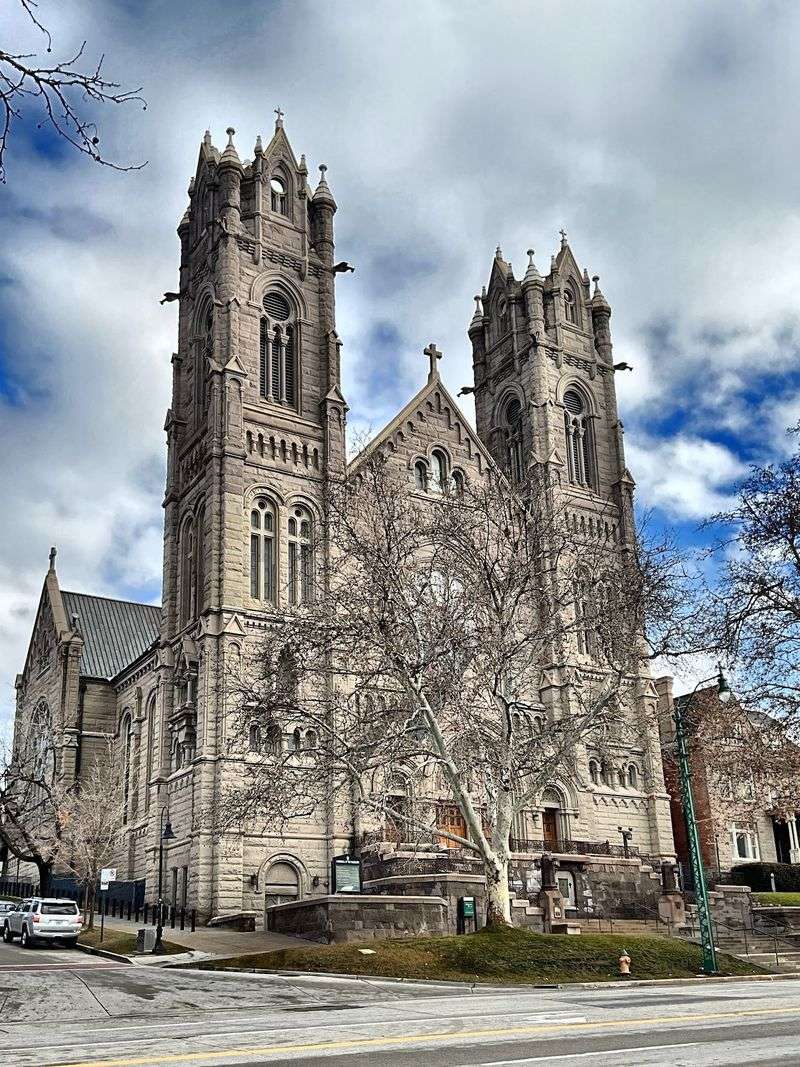
A visit here does not need to become a production, which is welcome news for anyone whose weekend already contains errands, laundry, and one mysterious household task that keeps moving to next week. The Cathedral of the Madeleine can work as a simple Saturday detour while already in Salt Lake City.
The address is 331 E South Temple, Salt Lake City, UT 84111, and visitors should confirm current public access through the cathedral’s official information before heading over. Hours and access can change around Masses, events, restoration needs, and special liturgical schedules.
Once inside, keep the visit respectful and quiet. Silence your phone, avoid blocking aisles, and remember that some people may be there for prayer rather than sightseeing.
Photography rules can vary, so look for posted guidance or ask if staff are available.
The Cathedral of the Madeleine rewards the kind of outing that does not require a full itinerary. Spend time with the windows, look up at the ceiling, notice the altar area, and give the exterior another look before leaving.
It is a practical stop for road trippers, professionals with a gap between commitments, or families who want one meaningful place instead of four rushed ones. Utah travel does not always need a trailhead to feel memorable.
Why This Cathedral Stays With People After They Leave
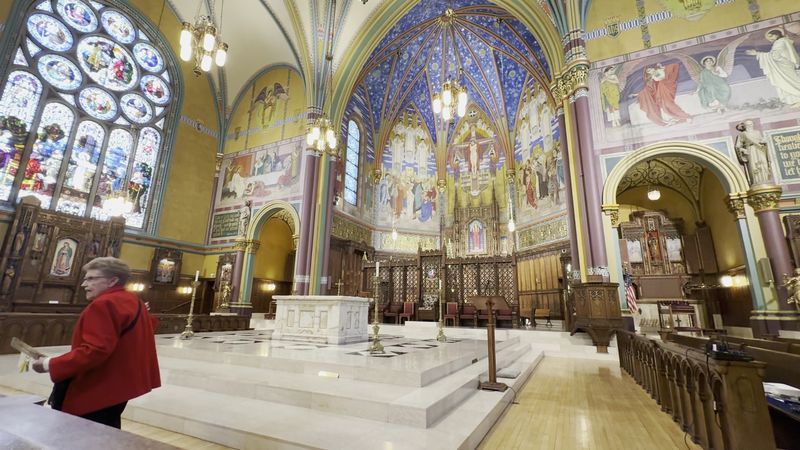
The lasting appeal of the Cathedral of the Madeleine comes from how many roles it holds at once. It is a historic building completed in 1909, an active Catholic cathedral, a work of art, a music space, and a recognizable piece of Salt Lake City’s identity.
That mix keeps the visit from feeling thin. The Romanesque exterior gives the building strength, the Gothic interior supplies drama, and the restored murals and stained glass show how much care has gone into keeping the place usable and beautiful.
It also broadens the idea of what a Utah landmark can be. The state’s natural scenery gets plenty of attention, and rightly so, but the Cathedral of the Madeleine shows another side of Utah’s story: immigrant faith communities, skilled artisans, ambitious architecture, and preservation work carried across generations.
For a traveler, that makes the stop feel grounded rather than decorative. For someone who lives nearby, it can turn a familiar street into a reminder that the city still has corners worth studying.
The best approach is not to rush in, snap a photo, and flee back to the calendar. Give it a little time.
Tell your friend to look up at the ceiling first, then go back outside and check the stonework like you both suddenly have very important cathedral business.