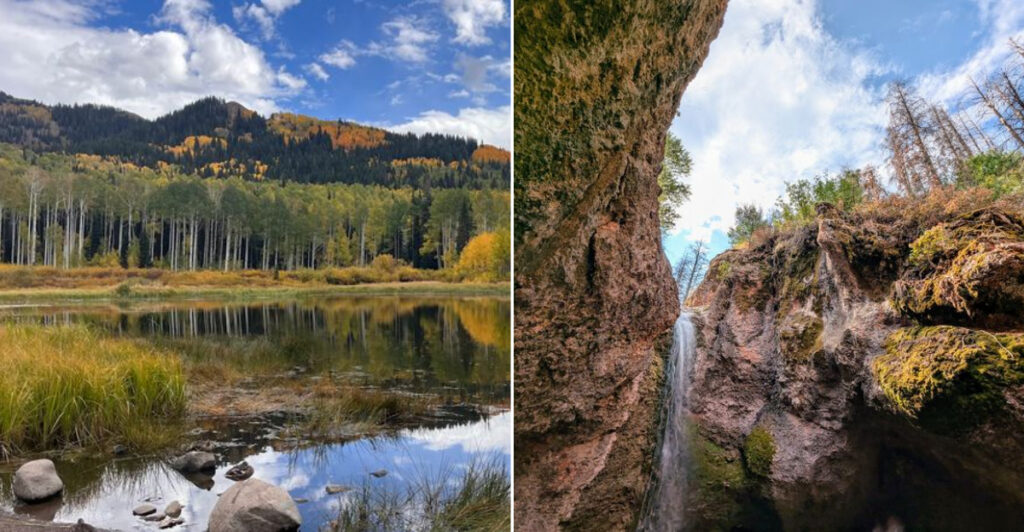
Fall color is better when you do not have to elbow through a crowd to enjoy it. Early in the season, golden aspens can light up forest paths while the busiest overlooks are still waiting for their rush.
On quieter trails across Utah, the payoff comes in layers: mountain lakes reflecting yellow leaves, canyon walls catching soft afternoon light, and stretches of woodland where every turn feels newly painted. The beauty here is not loud or overproduced.
It sneaks up on you, especially when a breeze sends a few leaves spinning across the trail. That makes these hikes perfect for anyone who wants scenery without the spectacle of peak-season congestion.
Pack a layer, bring water, and leave enough time to wander rather than race the clock. By early fall, some of Utah’s best color is already waiting in places where the trail still feels wonderfully calm and genuinely personal too.
1. Pando Nature Trail, Fishlake National Forest
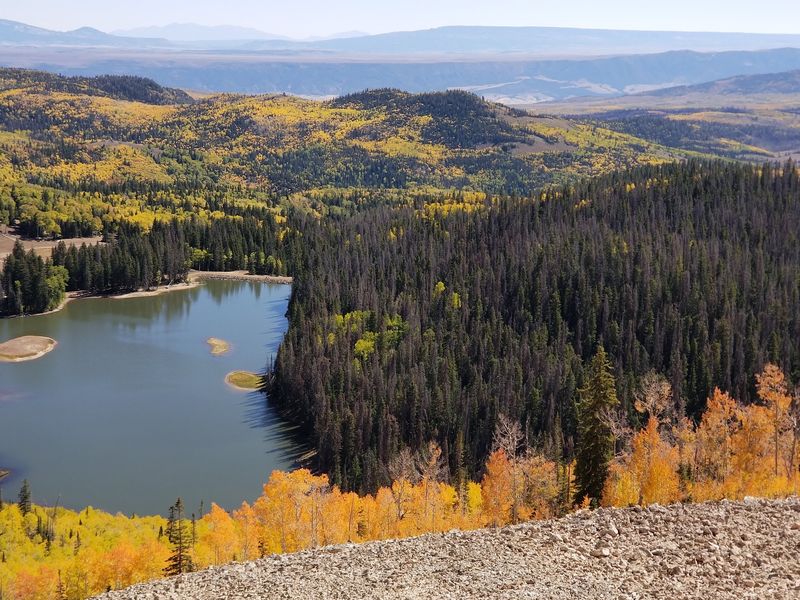
A grove that is also one living organism sounds like something a science teacher would use to wake up a sleepy classroom. Pando Nature Trail gives that lesson actual roots, since Pando is a massive quaking aspen clone in the beautiful Fishlake National Forest near Fish Lake.
The trail is short, signed, and built around the famous grove, whose trees are genetically connected through one root system. That makes Pando Nature Trail more than a pretty fall stroll; it is a rare chance to see one of Utah’s best known natural wonders doing its seasonal costume change.
Early autumn can bring yellow leaves against dark trunks, with Fish Lake close enough to make the outing feel fuller without needing an all-day march. Because the trail is interpretive and not a peak-bagging test, it suits families, curious road trippers, and anyone who packed snacks but not mountaineering ambitions.
Stay on the marked route, since the grove is studied and protected. For leaf color with a side of botany, Pando makes a strong first stop.
2. Temple Fork Sawmill Trail, Logan Canyon
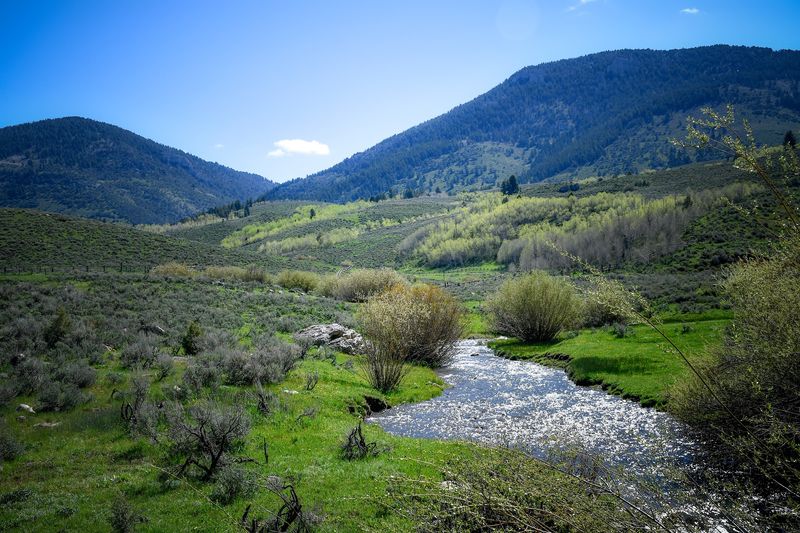
Old industry leaves odd little clues in the mountains, and Temple Fork Sawmill Trail has one right in its name. The route follows Temple Fork in Logan Canyon to the historic site of a sawmill area connected to early settlement and timber use in Cache Valley.
That history gives the walk a useful frame: you are not just wandering under fall color, you are following a canyon drainage that once mattered for practical reasons. The trail is commonly described as moderate, with creekside sections, forest shade, and canyon scenery that turn especially appealing when maples and aspens begin changing.
Logan Canyon is part of the Wasatch-Cache National Forest, so conditions can shift with weather, road work, and seasonal maintenance. Checking current forest information before leaving is smarter than trusting a screenshot from three summers ago, which is how many hiking plans become comedy with blisters.
Temple Fork Sawmill Trail works well for hikers who like a little story with their leaves. It feels grounded, not staged, and the canyon setting keeps the focus on the route itself.
3. South Fork Of North Creek Trail, Tushar Mountains
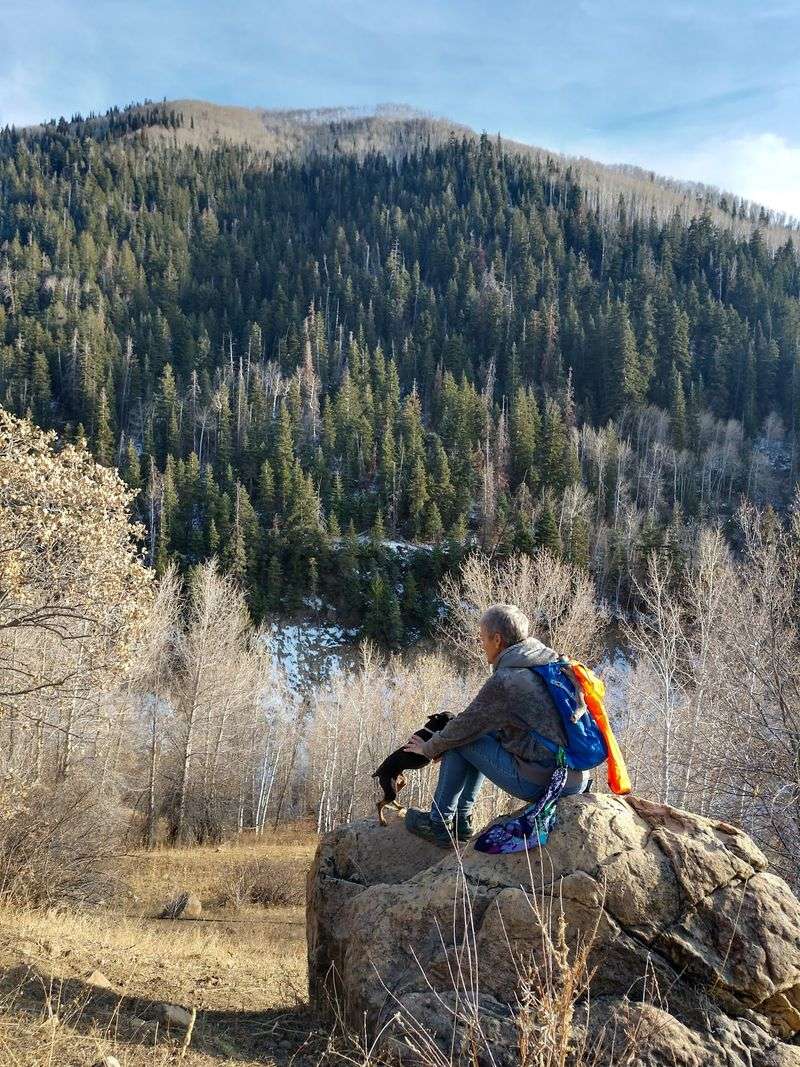
The Tushar Mountains do not always get the same casual name recognition as Utah’s national parks, which is useful when the goal is autumn color without a parade of cars. South Fork Of North Creek Trail sits in this high country near Beaver, where elevation gives fall a head start.
The area is part of the Fishlake National Forest, and the Tushars include some of the highest peaks in the state. On South Fork Of North Creek Trail, hikers are looking at a mountain setting shaped by drainages, conifers, aspens, and the kind of terrain that asks for real shoes, not flip-flops with ambition.
Because this is a forest trail rather than a polished city path, practical planning matters. Confirm access conditions, carry water, and expect weather to behave like weather, meaning it may ignore your calendar and your fleece vest.
The reward is a quieter autumn outing in southern Utah’s high country. South Fork Of North Creek Trail belongs on this list because it offers color in a less obvious corner, where the mountains feel spacious and the route still has some rough edges.
4. Shingle Creek Trail, Uinta Mountains
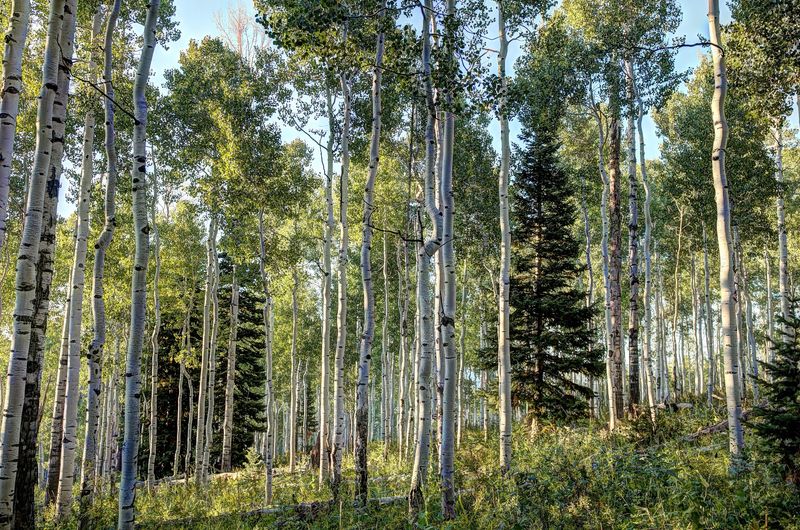
Near Kamas, the Uinta Mountains start doing that helpful thing where the road climbs and the temperature drops, as if nature has politely adjusted the thermostat. Shingle Creek Trail uses that elevation to its advantage, giving early autumn leaves a chance to appear before lower valleys catch up.
The trail is in the Uinta-Wasatch-Cache National Forest, a huge public land area known for high lakes, forested drainages, and mountain routes. Shingle Creek Trail follows a creek drainage and is often used as an access point for longer trips into the western Uintas, so day hikers should pay attention to distance and turnaround plans.
For a crowd-avoidance strategy, the appeal is not a famous overlook or a single photo stop. It is the slower mix of water, trees, and trail, with aspens adding gold among evergreens when the season cooperates.
Forest roads and trail conditions can change, especially after storms, so check current access before committing. Shingle Creek Trail is best for hikers who enjoy a less packaged outing and do not need a gift shop to confirm they had fun.
5. Jardine Juniper Trail, Logan Canyon
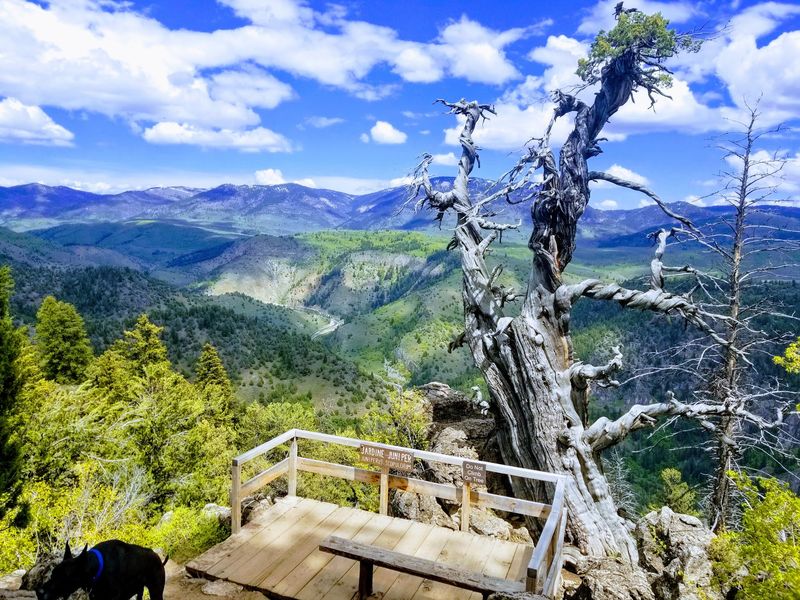
A tree can become the punchline to a very long joke about patience. Jardine Juniper Trail leads hikers to the Jardine Juniper, an old Rocky Mountain juniper in Logan Canyon that has been widely noted for its great age.
The route is longer than several easy leaf walks on this list, and it climbs through varied terrain in the Wasatch-Cache National Forest. Along the way, early fall color can appear in patches of maple and aspen, while the final destination shifts the mood from leaf watching to tree appreciation on a much larger time scale.
Jardine Juniper Trail is not the pick for someone hoping to step from the car, take one photo, and return before their coffee cools. It makes more sense for hikers comfortable with mileage, elevation gain, and a route that rewards steady pacing.
Bring enough water and check trail conditions through current forest sources, especially after bad weather. The old juniper gives the hike its identity, but the changing canyon vegetation gives it an autumn reason to move up the list.
6. Willow Lake Trail, Big Cottonwood Canyon
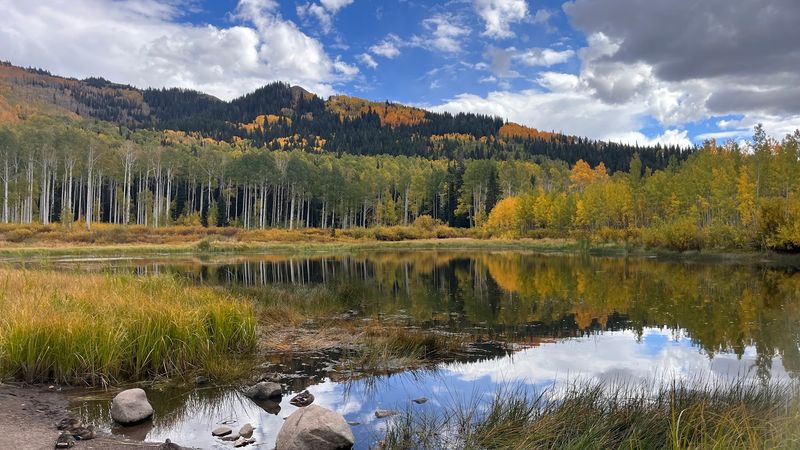
Big Cottonwood Canyon can be busy enough to make a person question every life choice involving a parking lot. Willow Lake Trail helps by offering a shorter mountain-lake hike that still feels tied to the Wasatch without requiring an expedition speech at breakfast.
The trail begins in the Silver Fork area of Big Cottonwood Canyon and climbs to Willow Lake, a small lake surrounded by forest and high canyon terrain. In early autumn, aspens around the drainage can turn bright yellow, giving hikers the classic Utah fall look with less commitment than many longer alpine routes.
Parking in Big Cottonwood Canyon can be limited, and canyon travel is affected by weather, road rules, and watershed protections. Dogs are not allowed in Big Cottonwood Canyon because it is part of a protected Salt Lake City watershed, so plan with that rule in mind rather than negotiating with a sign.
Willow Lake Trail is especially useful for visitors who want color, water, and mountain scenery in one compact outing. The lake is the destination, but the changing aspens carry much of the charm.
7. Blind Lake Trail, Boulder Mountain
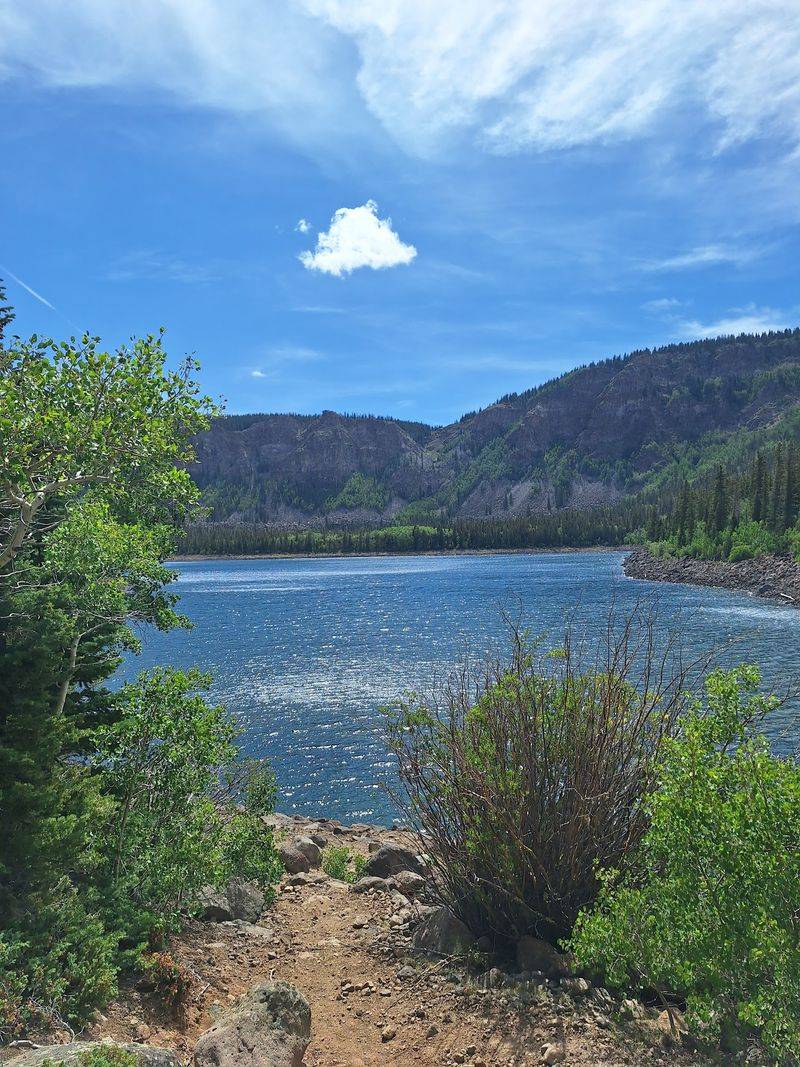
Boulder Mountain is the part of Utah that quietly reminds desert travelers that the state owns more than red rock. Blind Lake Trail, near Torrey on the Aquarius Plateau, brings hikers into high-elevation forest and lake country above the canyon country below.
Blind Lake itself sits on Boulder Mountain within the Fishlake National Forest, an area known for numerous lakes, aspen stands, spruce, fir, and open meadows. That mix makes early autumn especially interesting, since golden aspen leaves can appear around dark evergreens and mountain water.
This is a higher, cooler landscape, so conditions may differ sharply from nearby Capitol Reef country. A traveler can leave warm sandstone scenery and find jacket weather higher up, which feels like a practical joke played by elevation.
Check current road and trail access before heading out, particularly after storms or as the season advances. Blind Lake Trail earns its place because it shows a very different side of Utah fall, one where alpine color and plateau geography share the same map.
8. North Fork Park Waterfall Trail, Liberty
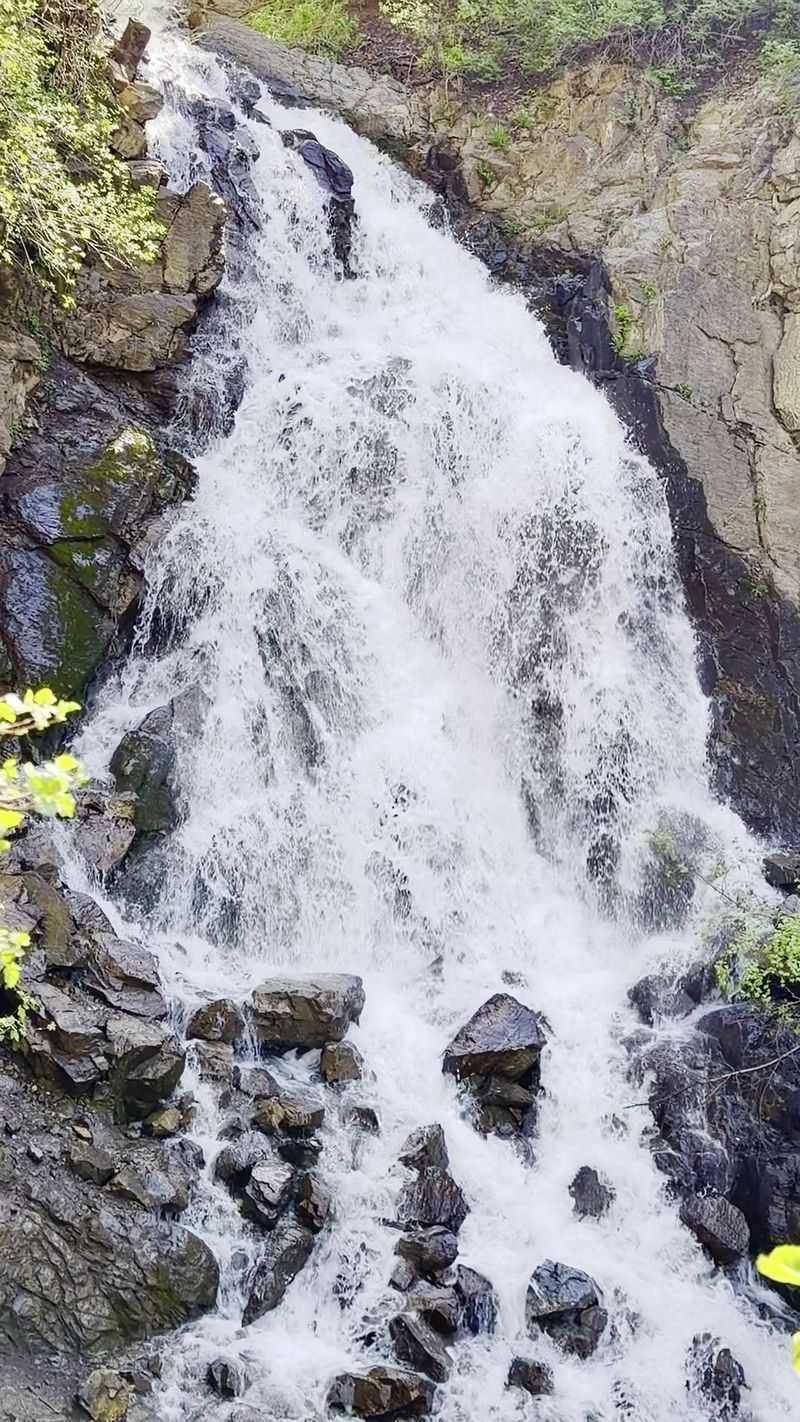
Not every fall hike needs to involve a summit, a heroic snack inventory, and someone pretending trail mix is lunch. North Fork Park Waterfall Trail near Liberty offers a shorter objective inside North Fork Park, a Weber County park in Ogden Valley.
North Fork Park is known for trails, camping areas, and dark-sky recognition, but the waterfall route gives day visitors a specific target. In early autumn, the surrounding mountain vegetation can add color without requiring hikers to commit to a long backcountry route.
The park sits north of Ogden in the Liberty area, away from the better known canyon stops that often get more attention. That location helps it fit the less-crowded theme, though smart visitors should still check Weber County park information for seasonal access, camping rules, and any current trail notices.
North Fork Park Waterfall Trail is a practical choice for families or casual hikers who want movement, leaves, and a clear turnaround point. The waterfall gives the walk a little punctuation mark, which is helpful for anyone hiking with people who ask how much farther every six minutes.
9. Wheeler Creek And Icebox Canyon Loop, Ogden Valley
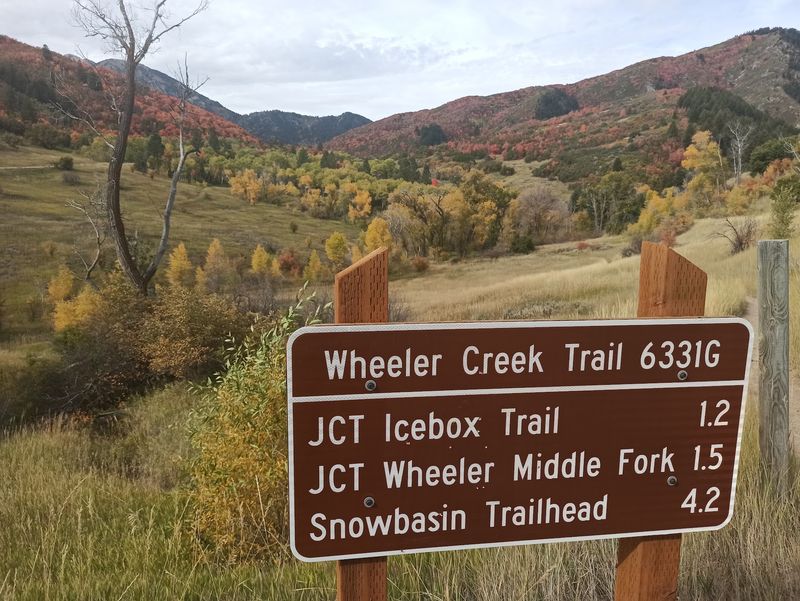
Some trail names undersell themselves, but Icebox Canyon makes its point quickly. Wheeler Creek And Icebox Canyon Loop combines two Ogden-area canyon routes into a forested walk with creekside stretches, canyon walls, and good odds of seeing early fall color in the vegetation.
The route is associated with the Wheeler Creek trail system near Ogden Canyon and Ogden Valley, managed within the Uinta-Wasatch-Cache National Forest area. Hikers use it for a loop that can feel varied without requiring travel far from northern Utah population centers.
Because the trail system has junctions and multiple access points, bring a reliable map rather than assuming every path is politely heading where you meant to go. Autumn color is a bonus, but navigation is the adult in the room.
Wheeler Creek And Icebox Canyon Loop suits hikers who want a canyon outing with more texture than a straight out-and-back. It has enough variety to hold attention, especially when leaves start changing along the drainage, yet it remains close enough to Ogden Valley to keep planning manageable.
10. Grotto Falls Trail, Nebo Loop
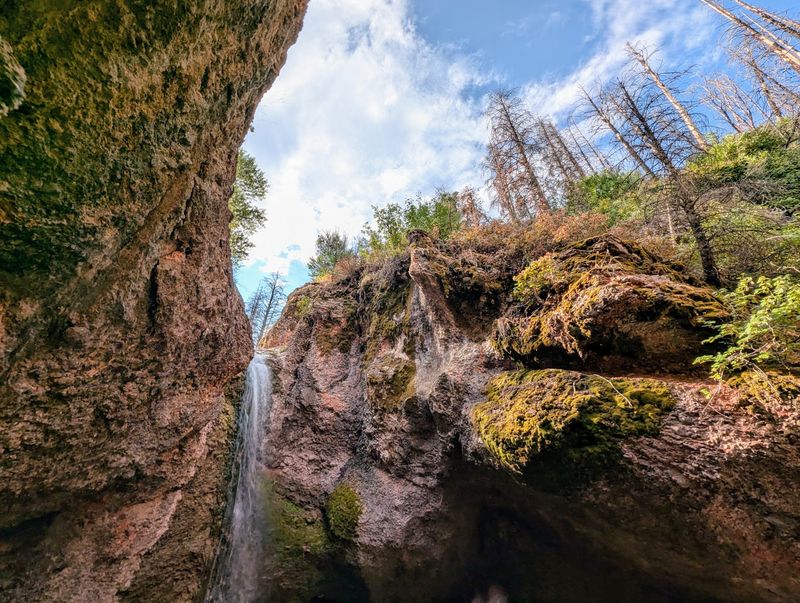
A short waterfall trail can save a fall outing from becoming a family negotiation. Grotto Falls Trail, along the Nebo Loop near Payson, is a brief walk to a small waterfall in the Uinta-Wasatch-Cache National Forest.
The Nebo Loop is officially recognized as a scenic byway, traveling through mountain terrain below Mount Nebo, the highest peak in the Wasatch Range. That setting gives Grotto Falls Trail a strong autumn advantage, since the drive and the walk can both show changing leaves when the timing lines up.
The trail is generally known as short and approachable, but visitors should still use caution around wet rock and changing weather. The Nebo Loop is a mountain road, and seasonal conditions can affect access, especially later in fall.
Grotto Falls Trail closes the list with the simplest promise: leaves, a canyon setting, and a waterfall without turning the day into a logistical spreadsheet. For travelers near Payson, it is one of Utah’s more manageable early autumn hikes, with enough payoff to satisfy the sensible people and the waterfall people at the same time.