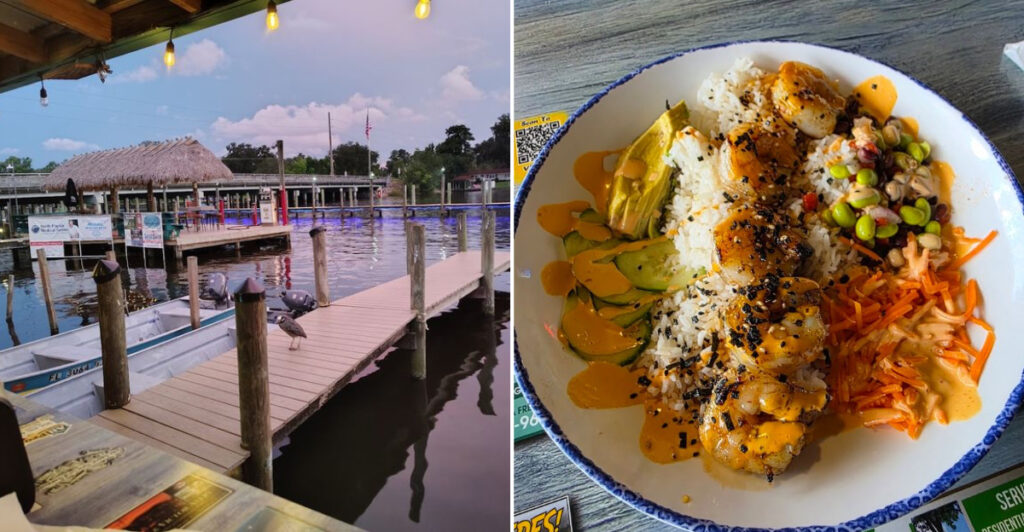
This waterfront fish camp in Florida has been getting fried catfish right for decades.
This is the kind of place I would recommend for an easy afternoon with good food and no complicated plans.
You can arrive by car or boat! How cool is that? Grab a table near the water, and settle in with cornmeal-crusted catfish, hush puppies, and sweet tea.
The catfish should be your first order, but the smoked fish dip and fried green tomatoes deserve space too. Grouper, redfish, and shrimp give anyone avoiding the fryer plenty to consider.
What I like most is how relaxed the whole visit sounds. Families return across generations, boaters use the dock, and longtime locals still treat it like a regular stop.
Go early on a busy weekend, ask for outdoor seating, and bring a serious appetite. This is not a quick meal anyone forgets easily afterward.
A Fish Camp With Roots Deeper Than The River Beside It
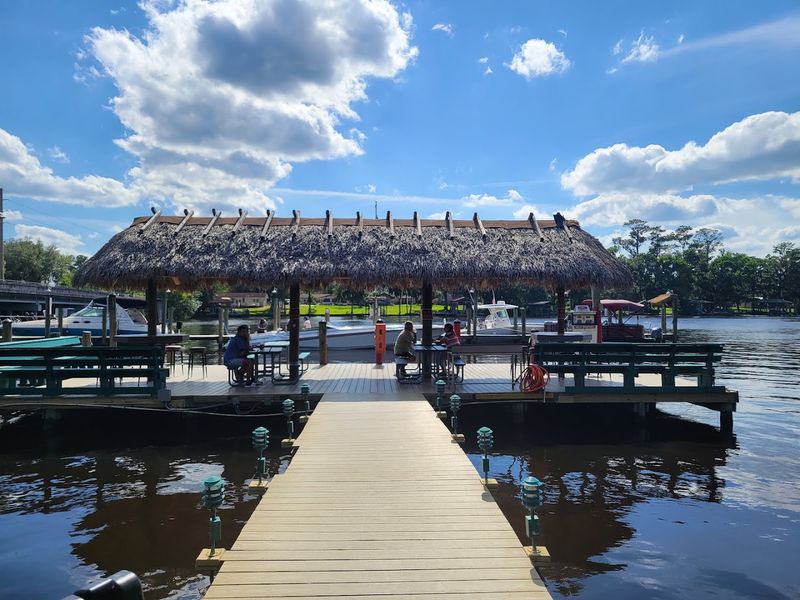
Whitey’s Fish Camp has been part of Clay County’s dining landscape since 1963. Its earliest identity was tied directly to fishing, boating, and the practical waterfront culture surrounding Swimming Pen Creek.
That history still gives the restaurant more character than a recently built waterfront space could imitate. The dock, outdoor seating, and long local memory all connect the property to its original purpose.
Renovations and menu updates have changed parts of the experience over time. The core attraction, however, still centers on Southern seafood and a setting shaped by the nearby water.
Families who first visited decades ago now return with younger generations. That pattern says more than any redesign ever could.
A restaurant can replace furniture and add new dishes. Recreating sixty years of shared meals is much harder.
The Way To This Beautiful Place
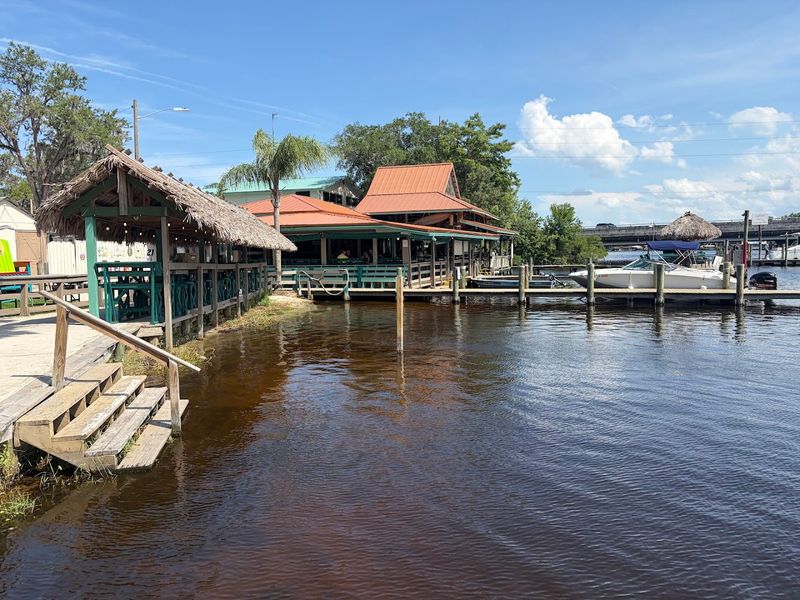
Fleming Island places the restaurant within reach of Jacksonville while keeping a quieter, more local atmosphere. The approach becomes increasingly residential and waterfront as diners move away from the busiest commercial stretches.
Most guests arrive by car, though the dock gives boaters another option. That second entrance changes the outing from a standard dinner stop into something more connected to the river.
Weekends can bring larger crowds, particularly when comfortable weather draws people toward the patio. Arriving earlier can make parking and seating less complicated.
The surrounding Black Creek area explains much of the restaurant’s staying power. Water access, neighborhood loyalty, and familiar Southern food create a combination difficult to duplicate elsewhere.
Once the dock and dining room come into view, the destination makes immediate sense. The drive was never the complicated part.
Choosing between catfish and grouper is where the real trouble begins.
Fried Catfish That Will Win You Over
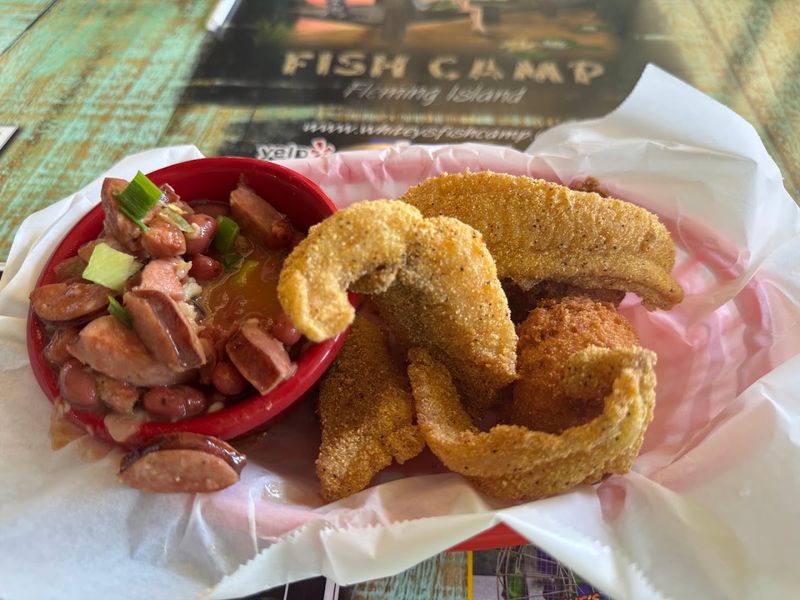
Fried catfish is still the dish most closely connected to Whitey’s long history. The fillets receive a cornmeal coating that creates a rougher, crisper exterior than a soft flour breading.
The texture is important because catfish itself is mild and delicate. A well-seasoned crust adds contrast without overwhelming the fish beneath it.
Proper frying keeps the coating golden while the fillet stays moist. Too much time in the oil can dry the fish, while poor temperature control leaves the crust heavy.
The kitchen has had decades to refine that balance. The result is straightforward Southern cooking built around timing rather than unnecessary additions.
A catfish and shrimp combination gives diners a useful introduction to two popular preparations. Still, the catfish usually controls the memory afterward.
Eat it while hot, before conversation distracts the table. Crisp crusts are patient with tradition, but not with long delays.
Fried Green Tomatoes Worth The Trip Alone
Fried green tomatoes bring tartness and crunch to the beginning of the meal. Their firm centers hold up beneath the coating far better than fully ripened tomatoes would.
Thickness becomes important. Slices that are too thin disappear into breading, while oversized pieces can stay unpleasantly firm.
The version here lands between those extremes. Each piece keeps enough tomato flavor to justify the name while still delivering the crisp exterior diners expect.
They also provide a lighter contrast before fried fish or a richer seafood entrée. Sharing one order gives the table something warm without filling every available inch of appetite.
Other starters may sound more dramatic, but the tomatoes keep earning repeat orders through simple execution.
Their greatest weakness is speed. A plate placed in the center usually empties before anyone can establish fair ownership.
The Grouper Dishes Deserve Their Own Spotlight
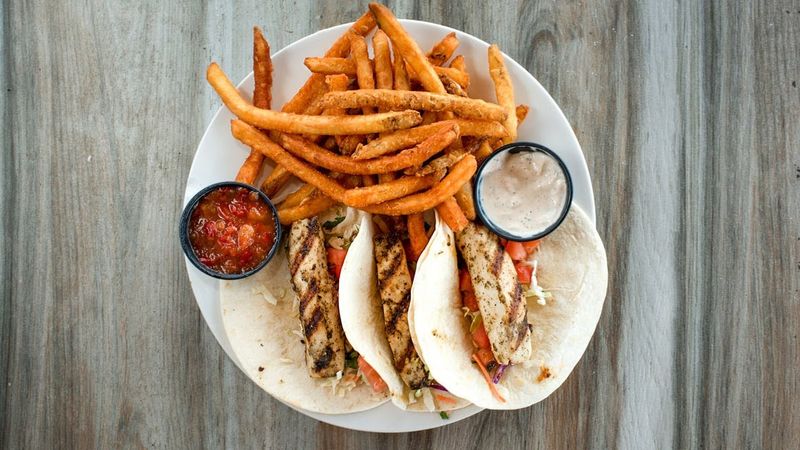
Grouper gives the menu a distinctly Florida direction beyond the famous catfish. Its firm flesh handles sauces, crusts, and different cooking methods without losing its structure.
It gives the menu another distinctly Florida option beyond the famous catfish. Its firm, mild flesh holds up well beneath a crisp fried coating without losing its delicate character.
Careful heat control is essential.
Grouper can turn dry when overcooked, and its clean flavor offers little protection against careless timing.
The kitchen’s broader seafood experience becomes visible in these preparations. They show that the menu can move beyond the fryer while keeping the same coastal identity.
For diners who already know the catfish, grouper offers a smart second-visit order.
The older favorite may own the restaurant’s history, but grouper arrives with enough confidence to borrow the spotlight.
Outdoor Seating With A Gorgeous Water View
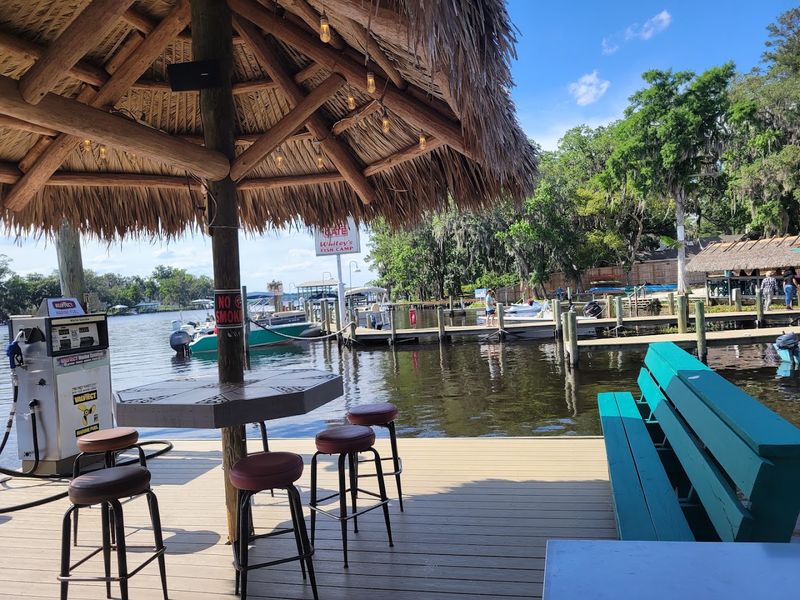
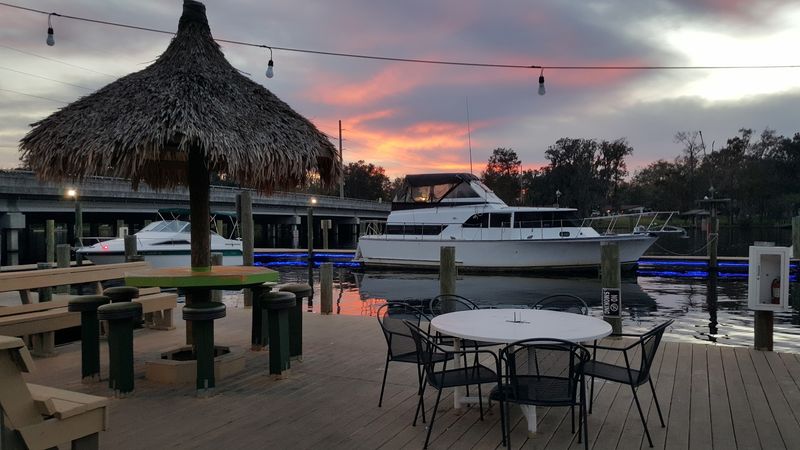
The outdoor area sits close enough to Black Creek for passing boats and changing water conditions to shape the meal. This is not a distant decorative pond placed beyond a parking lot.
On comfortable days, the patio delivers the strongest version of the fish-camp experience. Water movement, open air, and dock activity make a casual plate seem more closely tied to its setting.
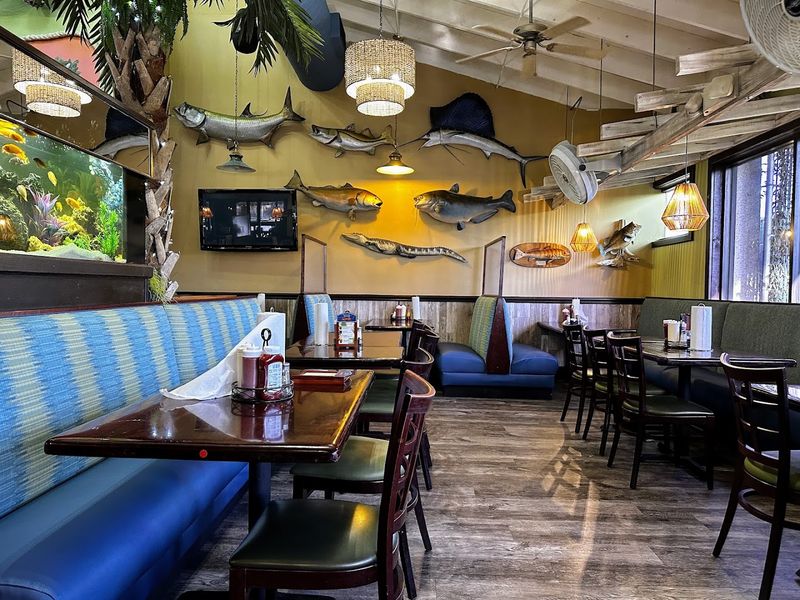
Indoor seating is useful when heat, rain, or humidity become less cooperative. The water still influences the restaurant, even when diners choose air conditioning.
Live entertainment has also been part of the outdoor experience at different times. The best evenings allow music, conversation, and the waterfront to share attention without one overpowering the others.
Florida weather never signs a reliability contract. When it cooperates, though, the patio earns every table it fills.
Boat Access Makes This Place Genuinely Unique
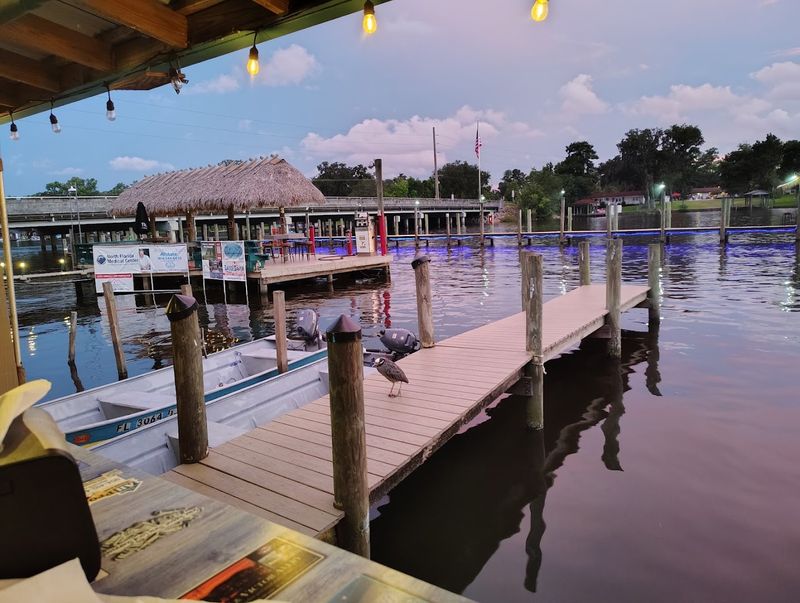
Arriving by boat gives Whitey’s a practical connection to Black Creek rather than a purely visual one. The dock functions as an entrance, not merely scenery beside the dining room.
Boaters can turn a day on the water into a meal stop without loading equipment back onto a trailer first. That convenience has helped the restaurant stay familiar within the local boating community at 2032 County Road 220, Fleming Island, Florida.
Approaching from the creek also reveals the property from a different angle. The restaurant appears as part of the waterway rather than another roadside business.
Even guests arriving by car benefit from the boat traffic. Vessels docking and departing keep the view active throughout the meal.
Few dining stories sound better than reaching fried catfish by river. Finding an ordinary parking space has never competed particularly well with that entrance.
The Menu Has Evolved Without Losing Its Identity
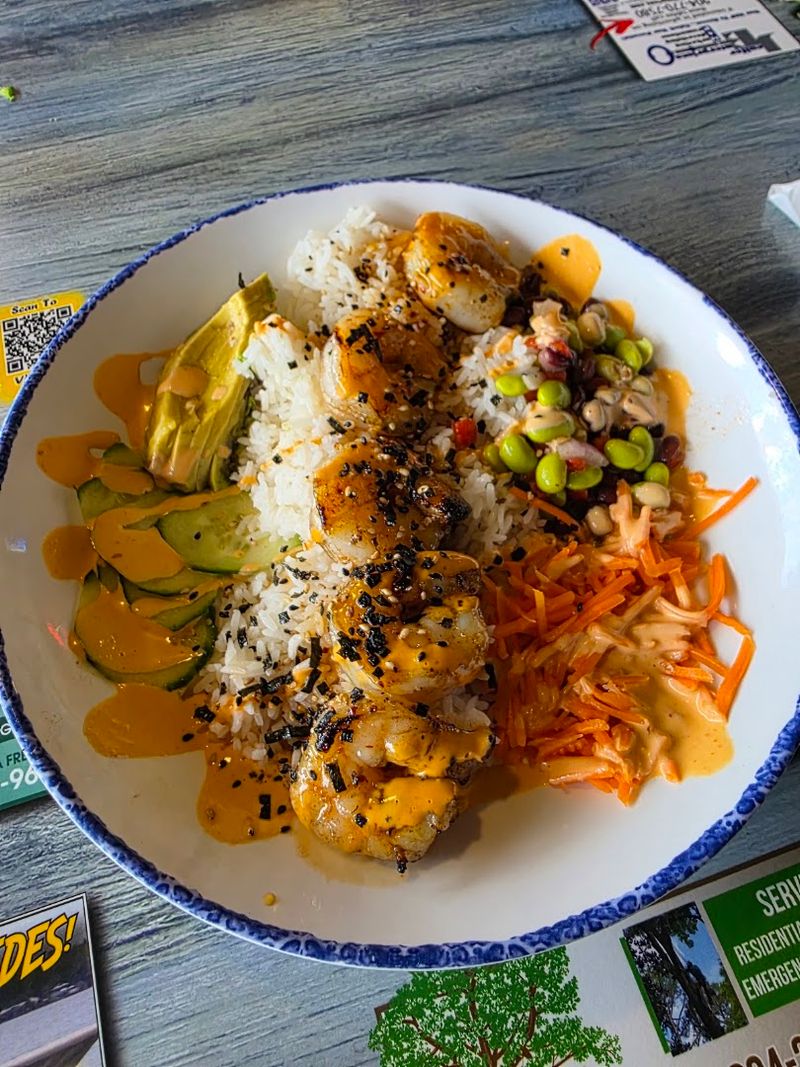
The menu has expanded beyond the traditional fried platters associated with older fish camps. Rice bowls, baked seafood, tacos, and other newer preparations provide choices for diners seeking something lighter or different.
That evolution helps the restaurant serve several generations at once. Longtime guests can return to cornmeal-coated catfish, while younger diners explore dishes built around blackened shrimp, salmon, or updated combinations.
A focused menu also gives the kitchen a better chance to maintain consistency. More choices are not automatically useful when preparation begins to suffer.
Classic sides still provide familiar structure. Fries, coleslaw, macaroni and cheese, and hushpuppies keep Southern comfort close to the seafood.
Change succeeds here when it adds range without erasing memory. The menu can move forward while the catfish continues holding its original seat.
Smoked Fish Dip Starts Things Off Right
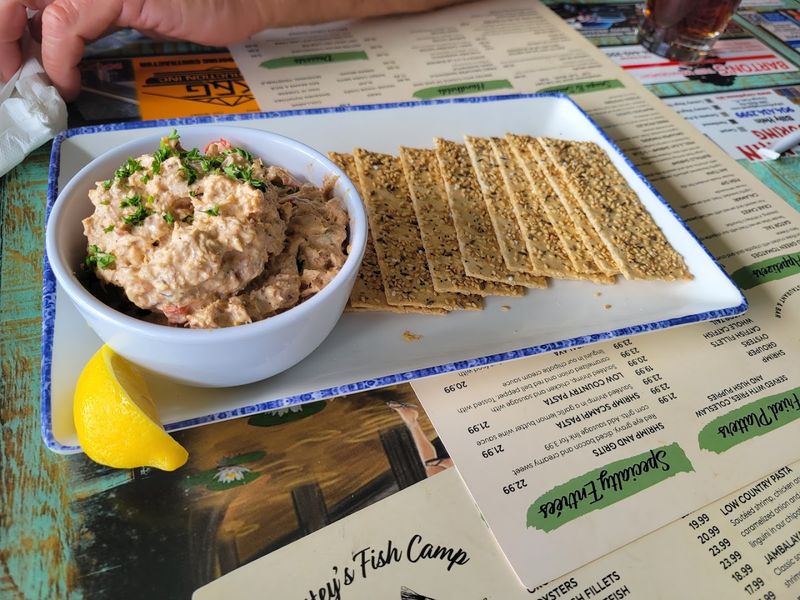
Smoked fish dip belongs naturally on a Florida seafood menu. The best versions combine a clear smoky flavor with enough creaminess to spread easily across crackers.
Salt, seasoning, and smoke must stay balanced. Too much of any one element quickly hides the fish itself.
At Whitey’s, the appetizer provides a practical opening before hot entrées arrive. It can be shared easily, travels around the table without much ceremony, and pairs naturally with the waterfront setting.
The dip also introduces a preparation method completely different from frying. That variety keeps the first course from repeating the texture of the main meal.
Sharing is polite, although nobody should expect perfect fairness once the bowl reaches the center.
Start slowly. Smoked fish dip has a quiet ability to use appetite intended for catfish.
Why This Spot Has Outlasted Nearly Every Trend In Florida Dining
Restaurant trends can change faster than a waterfront tide. Whitey’s has survived because its strongest qualities were never tied to temporary fashion.
The location cannot be copied easily. Black Creek, the dock, and generations of local familiarity give the property an identity built over time.
The same applies to the food. Cornmeal-coated catfish, Southern sides, smoked fish dip, and fresh seafood do not require reinvention every season.
Updates have helped the restaurant stay useful to current diners. Newer dishes, refreshed spaces, and broader choices can extend a tradition when they respect what people already valued.
Longevity does not mean refusing every change. It means knowing which parts deserve protection.
Here, the answer is clear: keep the water close, the catfish crisp, and the welcome familiar.