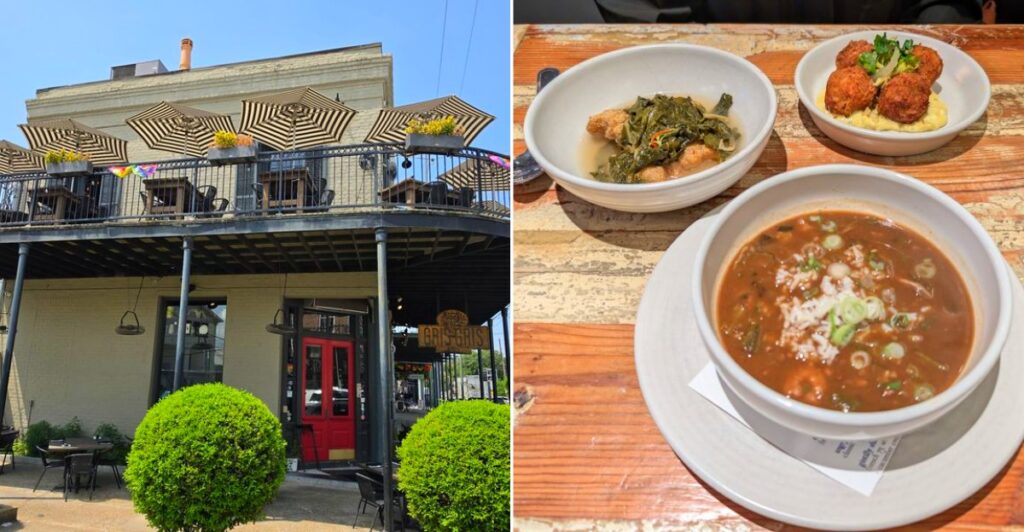
Louisiana gumbo is the kind of food that turns dinner into an argument, mostly because everyone is certain their preferred bowl is the correct one. Some arrive dark and smoky, others lean briny, peppery, or deeply earthy, but the memorable versions always taste like more than a recipe.
For this ranking, I followed ten standout bowls across New Orleans and Metairie, from classic Creole preparations to more modern interpretations with plenty of personality.
Few dishes capture Louisiana food culture as completely as gumbo, where roux, seafood, spice, history, and family tradition meet in one steaming bowl.
Ranking them was harder than expected. Even the lower spots served gumbo that would be a headline dish in plenty of other cities.
What separated the best was balance: depth without heaviness, seasoning without noise, and that mysterious quality that makes you scrape the bowl clean while already thinking about the next one.
10. Pêche Seafood Grill
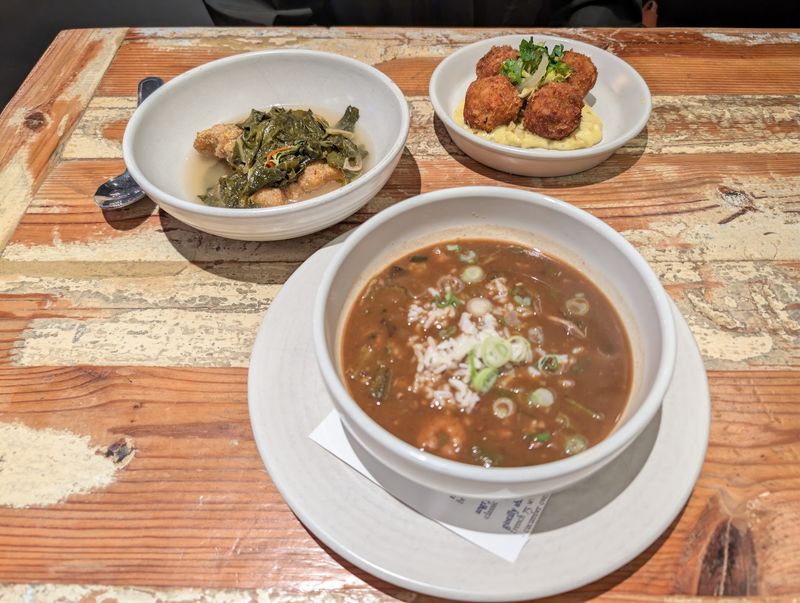
A seafood restaurant built around fire has an obvious advantage when the goal is coaxing as much depth as possible from the Gulf.
Inside 800 Magazine Street, New Orleans, LA 70130, the kitchen keeps seafood at the center of nearly everything, and its gumbo follows the same philosophy. The current menu simply calls it seafood gumbo, which feels almost comically understated beside a lineup built around Gulf shrimp, smoked fish, oysters, crab, and whole fish cooked over flame.
What earns this bowl its place in the ranking is restraint. It does not need to become impossibly thick or bury the seafood beneath spice to feel substantial.
The roux provides toasted depth, but the marine character remains clear enough that each spoonful still tastes connected to Pêche’s broader identity.
I would order a cup early rather than treating it as an afterthought beside a large entrée. Gumbo this focused is easier to appreciate before several other strong flavors arrive at the table.
The restaurant itself is lively and contemporary, but the bowl avoids showing off.
That contrast works.
Plenty of Louisiana gumbos win through abundance. This one feels more disciplined, letting seafood, roux, and seasoning occupy their own space.
9. Gris-Gris
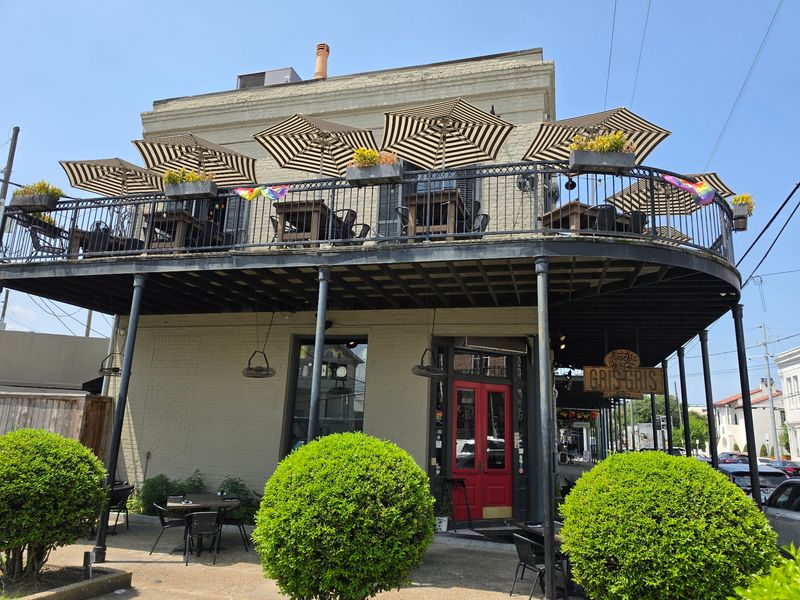
The first spoonful tastes considerably more rural than the Lower Garden District dining room around it.
Chef Eric Cook draws directly from his Vermilion Parish background for the chicken-and-andouille gumbo served at 1800 Magazine Street, New Orleans, LA 70130. The current menu even describes it as Vermilion Parish-inspired and pairs it with Louisiana popcorn rice, immediately telling you that this is not simply a generic New Orleans gumbo added because tourists expect one.
The bowl leans into savory comfort rather than theatrical darkness. Chicken gives the broth body, andouille supplies smoke and salt, and the rice catches enough of the roux to make every spoonful feel complete.
That apparent simplicity is deceptive.
Chicken-and-sausage gumbo leaves fewer places to hide than seafood versions crowded with shellfish. The roux has to carry weight, the sausage has to contribute without overwhelming everything, and the broth needs enough seasoning to remain interesting from the first spoon to the last.
Gris-Gris gets that balance right.
The restaurant also gives you several environments for eating it, from the open-kitchen counter downstairs to the upper level and balcony.
I would choose a slower lunch when possible.
This is not gumbo designed to shock anyone.
8. Herbsaint
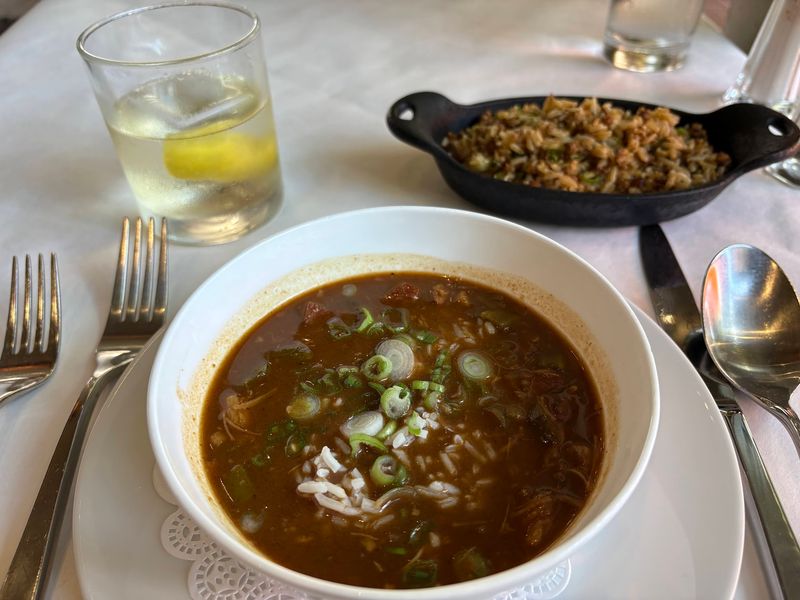
A lighter-looking bowl can still carry an enormous amount of flavor.
At 701 St. Charles Avenue, New Orleans, LA 70130, Herbsaint currently serves gumbo made with chicken, tasso, and andouille, a combination that stacks three different kinds of savory depth without needing a parade of additional ingredients.
Tasso is the detail that makes the bowl particularly interesting. The heavily seasoned smoked pork brings a sharper, more concentrated character than sausage alone, while chicken rounds things out and gives the gumbo a softer foundation.
Andouille contributes smoke without having to do all the work.
The result fits Herbsaint’s broader cooking style: rooted in Louisiana but unusually controlled.
This is not the thickest or darkest bowl in the ranking, and that may initially disappoint anyone using roux color as a scoreboard. Give it another spoonful.
The appeal is in how clearly the individual components remain readable.
Donald Link opened Herbsaint in 2000, and the restaurant became an important early piece of the group that later produced several major New Orleans restaurants, including Cochon and Pêche.
The dining room still feels more neighborhood bistro than culinary monument.
That helps the gumbo.
Instead of arriving as a ceremonial “Louisiana dish,” it simply belongs on the menu.
7. The Munch Factory
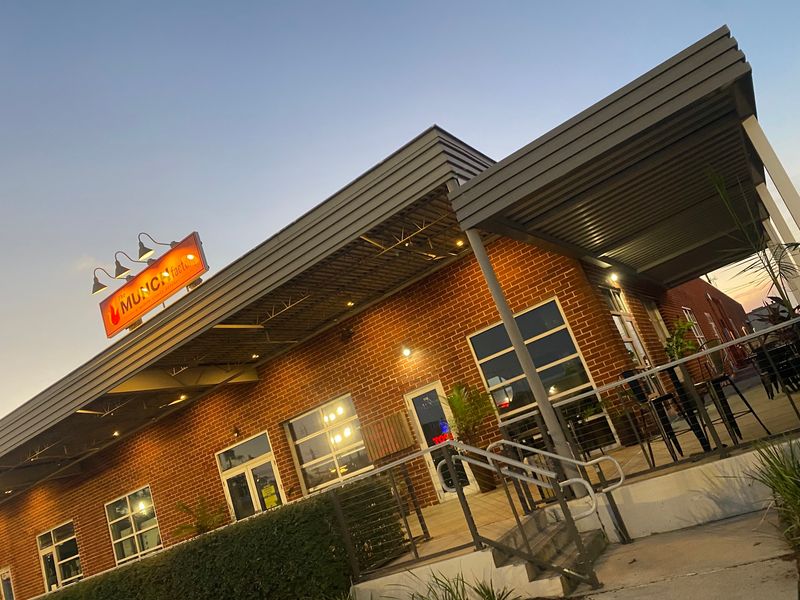
There is enough meat and seafood in this bowl to create complete chaos, which makes its clarity especially impressive.
The current gumbo at 4141 Bienville Street, New Orleans, LA 70119 combines seafood, sausage, hot sausage, and ham in a dark roux, with rice served alongside for takeout orders. It is an unapologetically crowded formula, but the kitchen somehow keeps the broth from becoming a muddy collection of competing flavors.
The roux is the anchor.
Dark, silky, and deeply savory, it gives the seafood and multiple sausages somewhere to meet rather than simply coexist. Hot sausage contributes extra spice and richness, while ham adds another salty layer that is easy to miss until you compare this bowl with simpler versions elsewhere.
This is one of the most generous gumbos in the ranking, both in ingredient count and personality.
The restaurant itself is family-owned and casual, with Alexis and Jordan Ruiz building their reputation around modern Creole cooking that still feels grounded in the food they grew up around.
I would order the bowl rather than the cup.
Not because subtlety suddenly disappears at larger volume, but because this gumbo changes slightly from spoon to spoon depending on what you pick up.
6. Li’l Dizzy’s Cafe
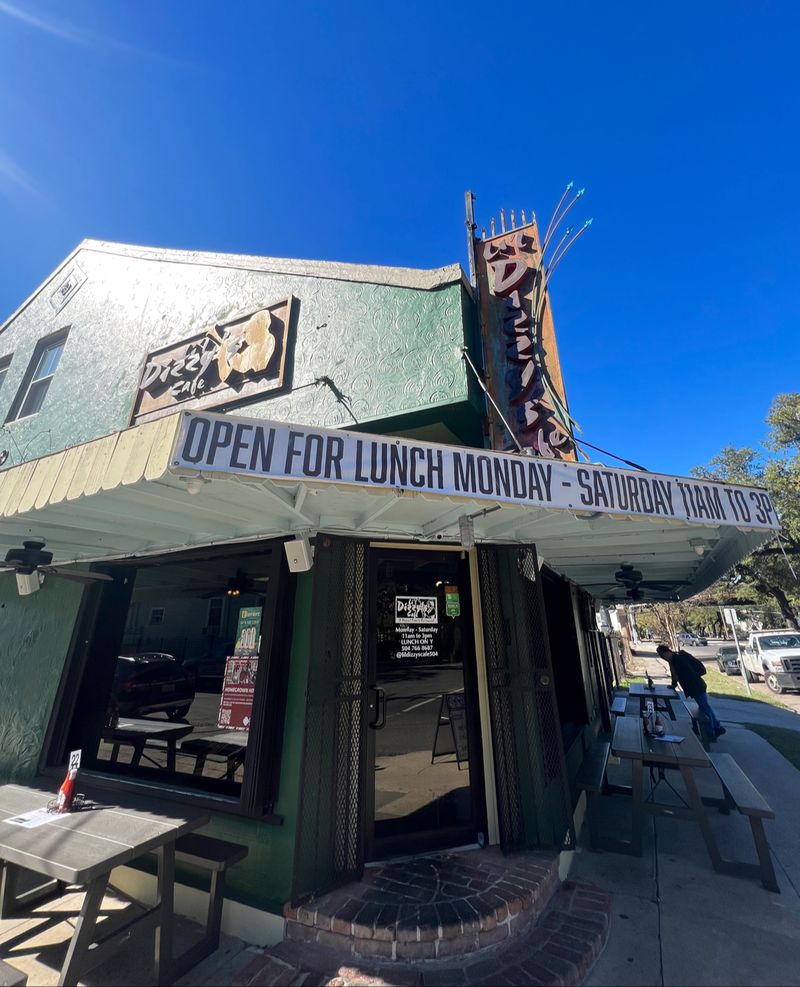
Family recipes carry a different kind of authority when the family has spent generations feeding New Orleans.
At 1500 Esplanade Avenue, New Orleans, LA 70116, the Baquet family serves a Creole filé gumbo that reaches directly into that history. The restaurant currently lists gumbo as a regular soup, while its own shop also sells Baquet’s filé gumbo mix—a small clue to how central the preparation is to the family’s cooking tradition.
Filé changes the personality of gumbo.
Made from ground sassafras leaves, it contributes an earthy fragrance and a subtle thickening quality that feels completely different from simply making the roux heavier. Here, that character gives the bowl a lingering herbal finish rather than relying solely on smoke and spice.
The café itself is part of the experience.
Lunch service can be busy, tables turn quickly, and plates of fried chicken, seafood, and Creole sides move through a room that feels like an active neighborhood restaurant rather than a preserved institution.
Instead, the gumbo still tastes like lunch.
I would order it alongside something else rather than making it the entire meal. A bowl followed by fried chicken gives you two very different expressions of the same kitchen.
5. Dooky Chase’s Restaurant
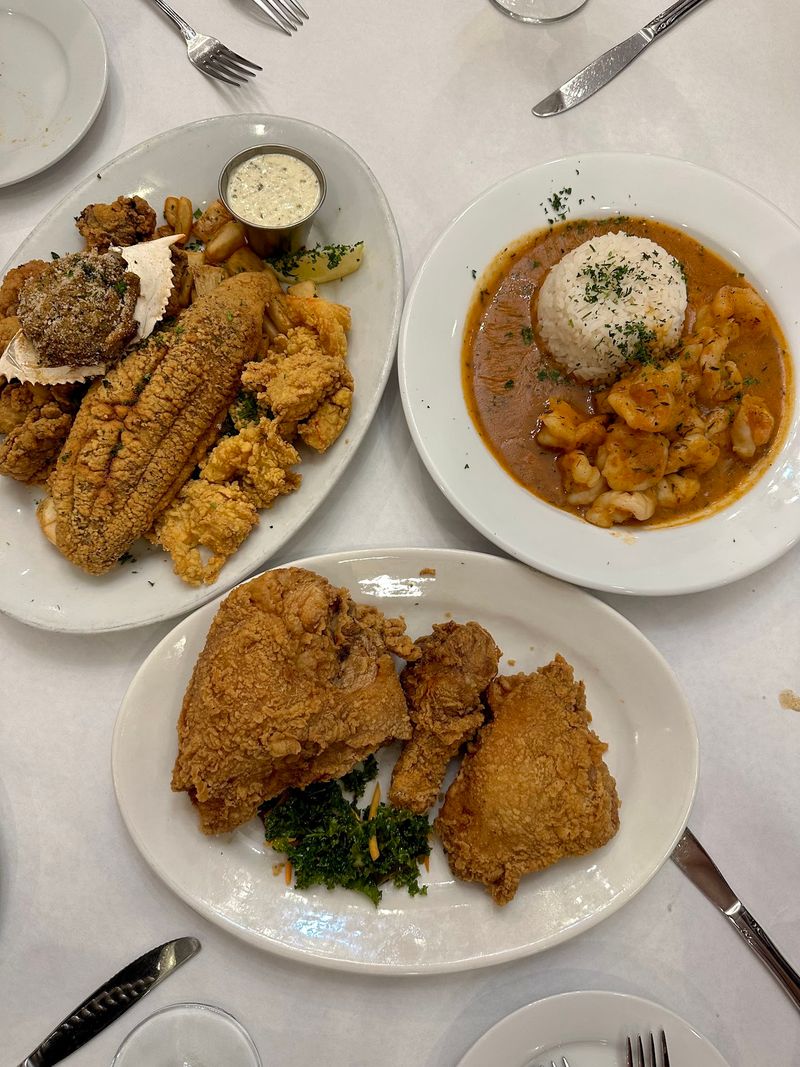
Some bowls are inseparable from the room in which you eat them.
At 2301 Orleans Avenue, New Orleans, LA 70119, gumbo arrives inside one of the most culturally important restaurants in the city. Dooky Chase’s began in 1941, and under Leah Chase it became both a cornerstone of Creole cuisine and a gathering place for civil rights organizers during segregation.
The restaurant still lists gumbo among its essential New Orleans lunch dishes today.
That history could easily overwhelm the food if the bowl were merely symbolic.
It is not.
The gumbo works through the same qualities that made Leah Chase’s cooking so influential: careful roux, deep seasoning, clarity, and a refusal to confuse richness with excess.
Nothing needs to arrive stacked vertically or explained tableside.
The point is the accumulated flavor.
I would pair it with red beans and rice or another Creole staple if this is your first visit because the comparison reveals how consistently the kitchen handles foundational Louisiana dishes.
The dining room deserves attention too, particularly its African American art collection and the knowledge that politicians, musicians, activists, and neighborhood families have all eaten within these walls.
4. Brigtsen’s Restaurant
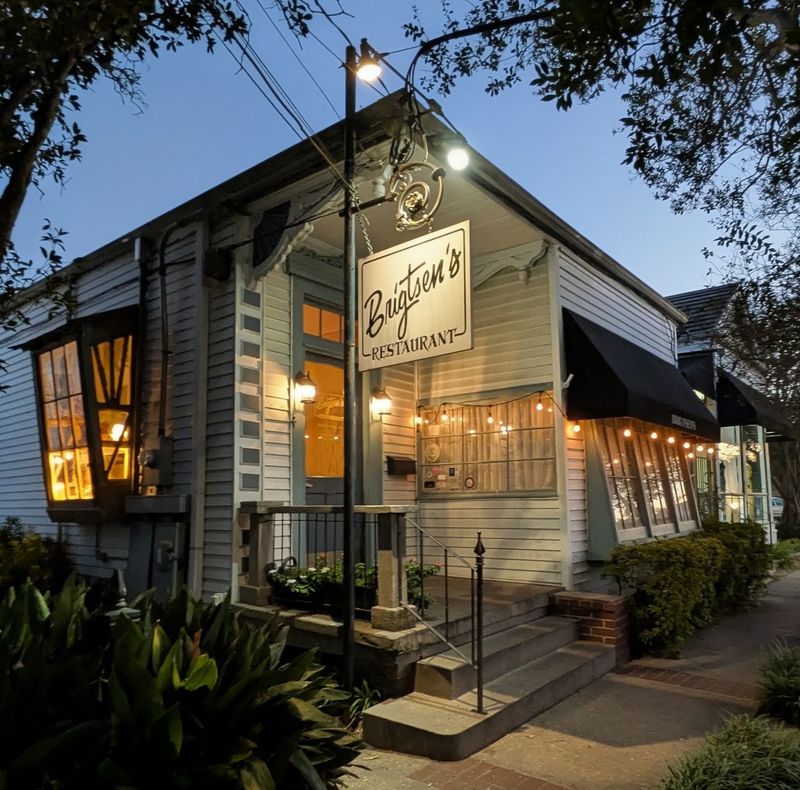
Eating gumbo inside a converted Uptown cottage immediately changes the pace.
There is no giant dining hall or dramatic open kitchen at 723 Dante Street, New Orleans, LA 70118. Instead, chef Frank Brigtsen’s restaurant unfolds through several small rooms, creating the feeling that dinner has somehow been moved into somebody’s exceptionally accomplished home.
The current filé gumbo contains chicken, andouille sausage, and aromatic Jazzmen rice.
That ingredient list looks simple beside several bowls in this ranking, but simplicity is exactly where Brigtsen’s excels.
Frank Brigtsen came through the kitchen of legendary Louisiana chef Paul Prudhomme before opening his own restaurant in 1986, and his cooking has long been associated with deeply traditional flavors handled with unusual precision.
The gumbo demonstrates that approach beautifully.
Chicken provides richness without heaviness, andouille gives the broth smoke, and filé contributes its distinctive sassafras character. The rice is not merely filler waiting at the bottom; its aroma becomes part of the overall impression.
I would resist adding anything before tasting several spoonfuls.
3. Restaurant R’evolution
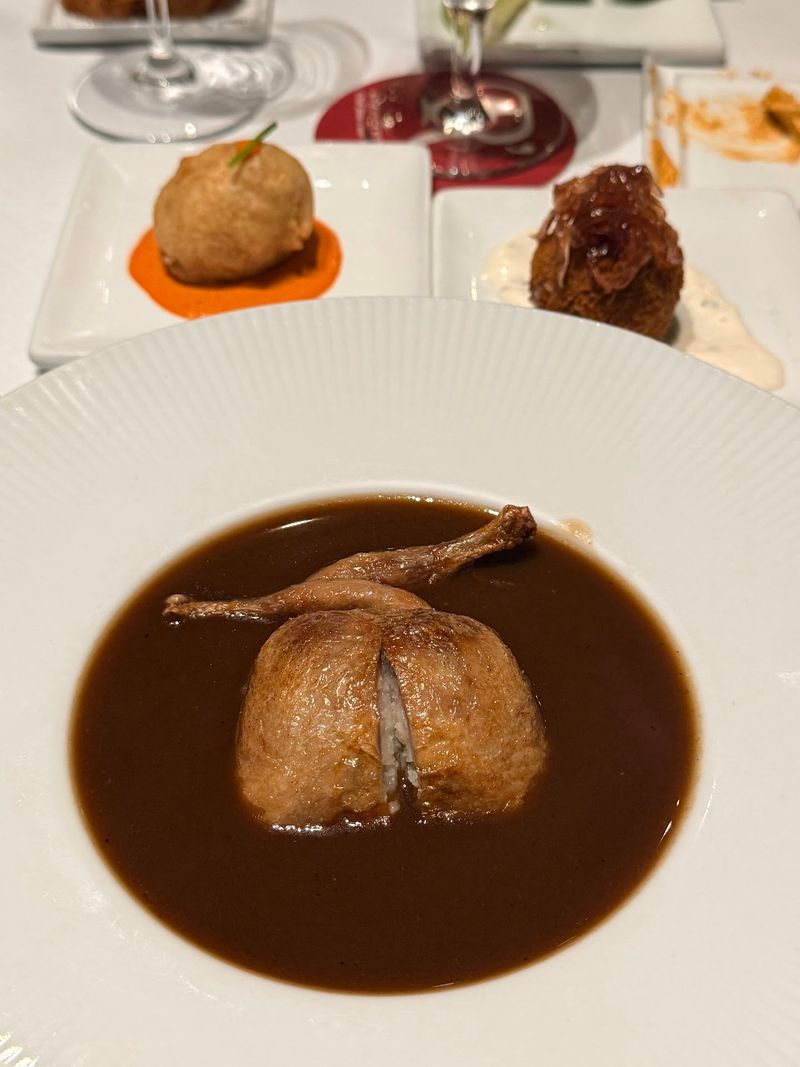
Most gumbo does not arrive with an entire roasted quail waiting in the middle.
That alone tells you what kind of experience Restaurant R’evolution has planned at 777 Bienville Street, New Orleans, LA 70130.
The signature Death by Gumbo remains on the current menu, built around whole-roasted quail, andouille, oysters, and filé rice before dark broth completes the dish. The restaurant also serves a more conventional Louisiana seafood gumbo, but Death by Gumbo is clearly the version that turned the dish into a destination.
The danger with food this theatrical is that presentation can become more memorable than flavor.
Fortunately, the construction makes culinary sense.
Quail provides richness and game flavor, oysters bring salinity, and andouille contributes the smoke expected from a Louisiana gumbo. Once the bird begins breaking apart into the broth, the dish becomes increasingly traditional in spirit even if it looked anything but traditional when it arrived.
Chef John Folse helped build the restaurant around exploring Louisiana’s culinary history, and this bowl captures that philosophy particularly well.
It respects gumbo enough to understand its structure before pushing it somewhere extravagant.
I would order it as a centerpiece rather than squeezing it into an already oversized meal.
2. Chef Ron’s Gumbo Stop
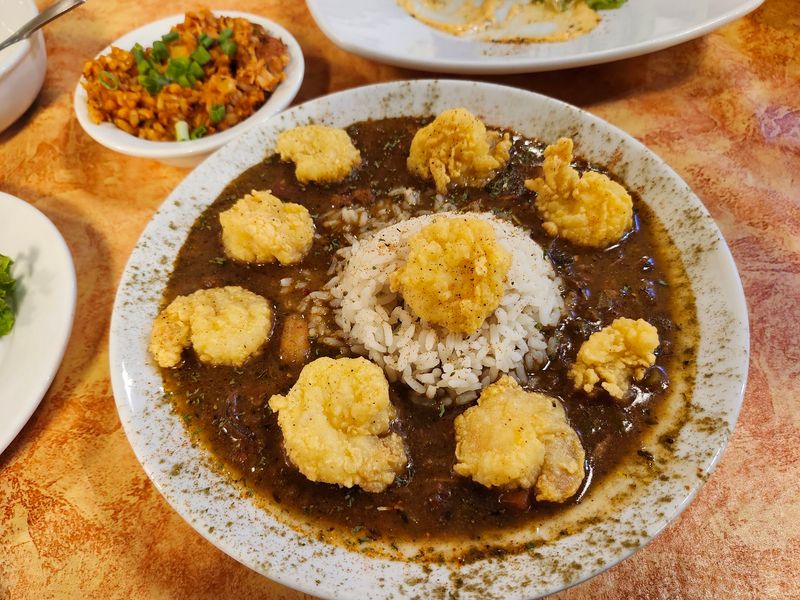
Putting the word “gumbo” in the restaurant name creates a dangerous level of expectation.
Fortunately, this Metairie spot at 2309 North Causeway Boulevard, Metairie, LA 70001 treats the dish less like one sacred formula and more like an entire category worth exploring.
Chef Ron Iafrate’s current offerings include chicken-and-sausage gumbo as well as his signature “stuffed gumbo” concept, where fried Louisiana seafood can be added directly to the bowl. The restaurant proudly identifies itself as the home of stuffed gumbo.
That approach will probably horrify purists before it delights everyone else.
Chef Ron grew up cooking Italian family recipes before eventually studying Cajun food professionally, and that background helps explain why his gumbo feels comfortable with abundance, variation, and improvisation rather than strict rules.
The broth still has to work first.
Without a properly developed base, piling fried seafood on top would simply become culinary camouflage. Instead, the gumbo carries enough roux, smoke, and seasoning to remain recognizable beneath the extras.
I would actually try a straightforward version before graduating to the stuffed options. It gives you a baseline and makes the more extravagant bowl easier to appreciate.
Louisiana food history was never built entirely by people agreeing with one another.
1. Neyow’s Creole Cafe
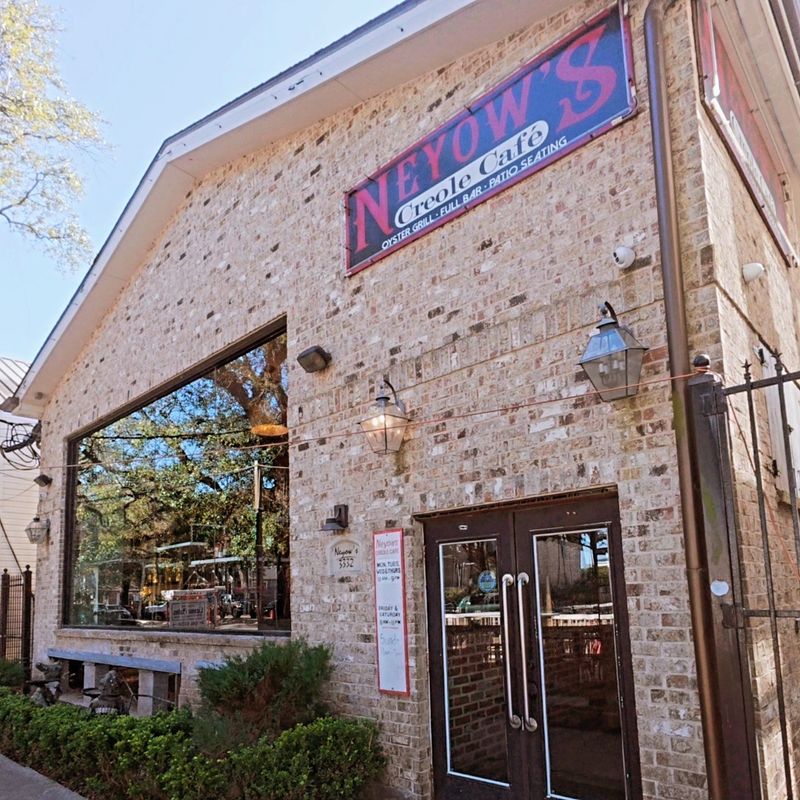
A great neighborhood gumbo should taste like the kitchen expects you to return next week.
That is the feeling at 3332 Bienville Street, New Orleans, LA 70119, where the current filé gumbo combines shrimp, smoked sausage, ham, seasoning, and white rice.
The ingredient list explains why the bowl feels so complete.
Shrimp supplies sweetness and Gulf character, smoked sausage brings fat and smoke, while ham deepens the savory base without becoming the obvious star. Filé adds the earthy sassafras note that separates this style from roux alone.
Nothing feels placed there simply to make the menu description longer.
Neyow’s was founded by Tanya Dubuclet and grew from family recipes into one of Mid-City’s busiest Creole restaurants. The room can be lively, portions are generous, and the menu stretches across chargrilled seafood, red beans, fried chicken, stuffed dishes, and other New Orleans staples.
Yet gumbo makes an unusually useful starting point because it tells you so much about the kitchen in one bowl.
I like the balance most.
It has enough richness to feel substantial, enough seafood to taste distinctly coastal, and enough smoke to keep the broth from becoming one-dimensional.
That combination is why it finishes so strongly in a brutally competitive field.