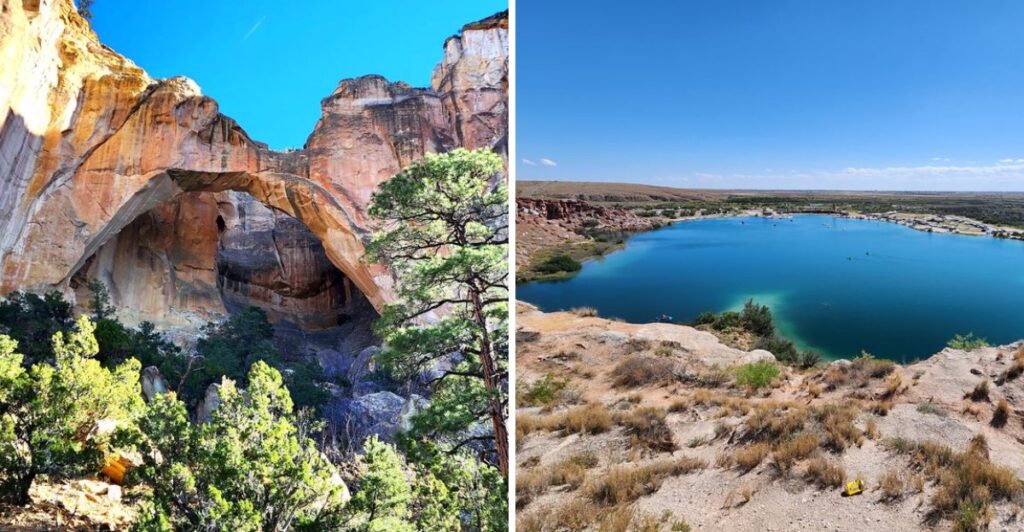
It is easy to spend less than $60 and still come home with a camera roll of wild scenery. New Mexico packs an unusual amount of drama into day trips that cost far less than many weekend attractions.
Think brilliant gypsum dunes, deep underground caverns, or a tram ride that climbs above Albuquerque. Several stops are free, and many others charge modest entrance fees that leave plenty of room for gas or lunch.
The variety is what makes the list fun. One day can mean hiking through volcanic country, while another can put ancient cliff dwellings right in front of you.
These are not quick roadside pullovers with one photo and done. They are places where a few hours can disappear fast.
These affordable outings deliver huge scenery, memorable trails, and enough surprise to make the drive feel worthwhile without turning the day into a major splurge.
1. White Sands National Park, Alamogordo
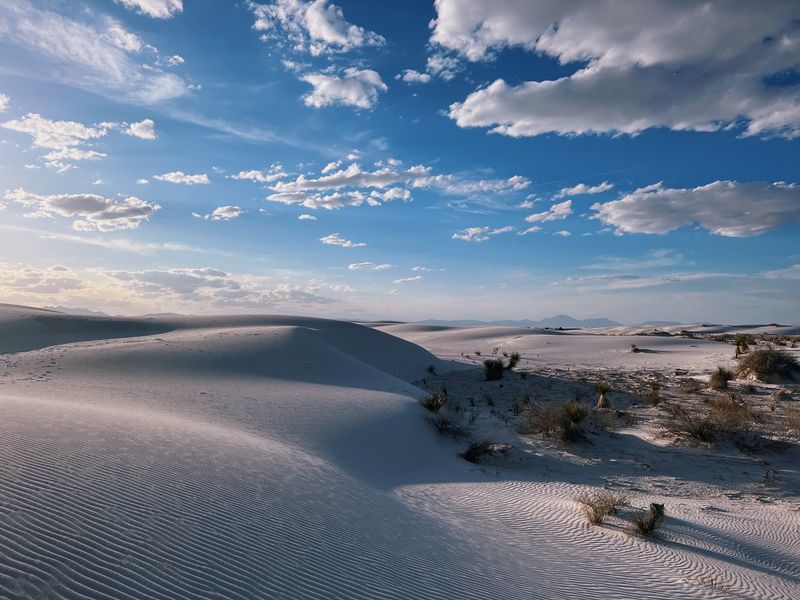
Sledding down a hill of soft white sand in the middle of the desert sounds made up, and yet it happens daily in the Tularosa Basin. The world’s largest gypsum dune field sits along Highway 70 west of Alamogordo, and it once rested beneath ancient water.
Entry runs $25 per private vehicle for seven days, or $15 per person walking or biking in. Gates open around 7 AM and stay open until sunset, with Dunes Drive closing roughly half an hour after the sun drops.
The visitor center generally runs 9 AM to 5 PM.
Walking the dunes, driving deeper into the white expanse, and buying a sled are the big three activities here. Summer heat can climb near 110 degrees, and spring often kicks up strong sandstorms.
Weekday closures sometimes happen because of missile testing at the neighboring range, so a quick check before leaving saves a wasted drive. Arriving before 9 AM helps with parking and cooler sand underfoot.
2. Bandelier National Monument, Los Alamos
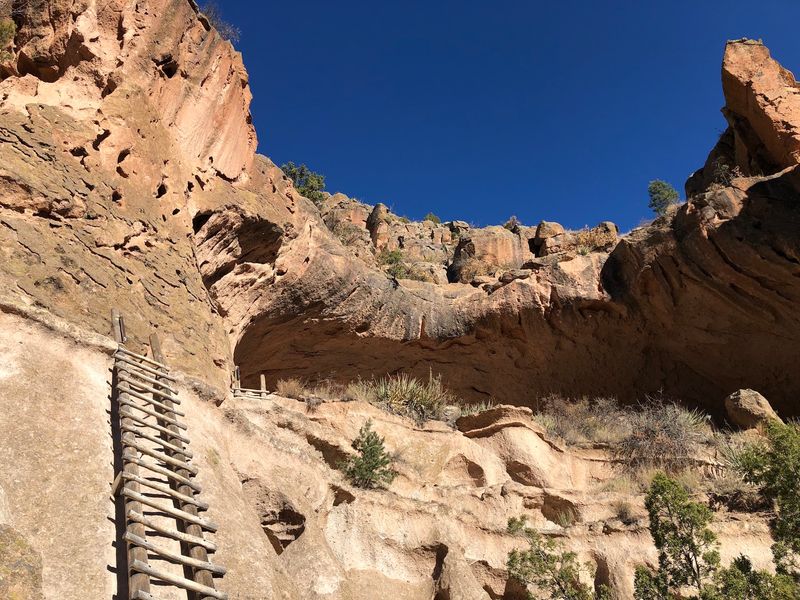
Wooden ladders leaning against soft volcanic cliffs tell you right away that this park expects some climbing. Bandelier National Monument sits at 15 Entrance Rd in Los Alamos, protecting a slice of the Pajarito Plateau where ancestral Pueblo people lived for centuries.
A vehicle pass costs $25 and covers seven consecutive days, while walkers and cyclists pay $15 each. The visitor center generally runs 9:00 AM to 4:30 PM in winter and 8:00 AM to 6:00 PM in summer, and snow or ice can shut down certain areas.
Frijoles Canyon holds the main attraction: cavates, which are small caves hollowed into the rock, plus pueblo ruins spread along the canyon floor. The Main Loop Trail keeps things manageable, and the Alcove House Trail asks for nerve on those ladders.
Ranger programs run often and fill in details about Puebloan culture that signs alone cannot cover. Standing inside a cavate makes ancient daily life feel surprisingly close.
3. Kasha-Katuwe Tent Rocks National Monument, Cochiti Pueblo
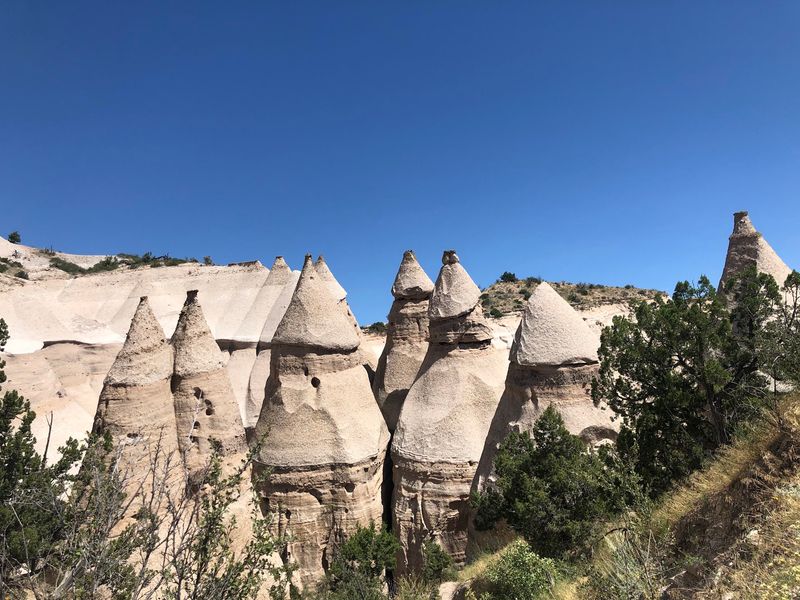
Cone-shaped rocks that look like a field of stone tents rise between Santa Fe and Albuquerque, along Indian Service Route 22 at Cochiti Pueblo. Erosion carved volcanic pumice, ash, and tuff into these formations, with the tallest reaching about 90 feet.
The Keresan name means white cliffs.
Two things are needed for entry: a Bureau of Land Management ticket totaling $6 per person, plus a Cochiti Pueblo Tribal Access Pass at $20 for adults over 16 and $10 for ages 2 through 16. That puts an adult visit near $26.
Open Thursday through Monday, 8 AM to 4 PM, with last entry at 1 PM. Closures cover Tuesdays, Wednesdays, December 15 through January 31, and cultural observances.
The 1.2-mile Cave Loop stays easy; the 1.5-mile Canyon Trail squeezes through a slot canyon before a steep 630-foot push to mesa-top views. Only service animals allowed, and climbing formations is off limits.
4. Valles Caldera National Preserve, Jemez Springs
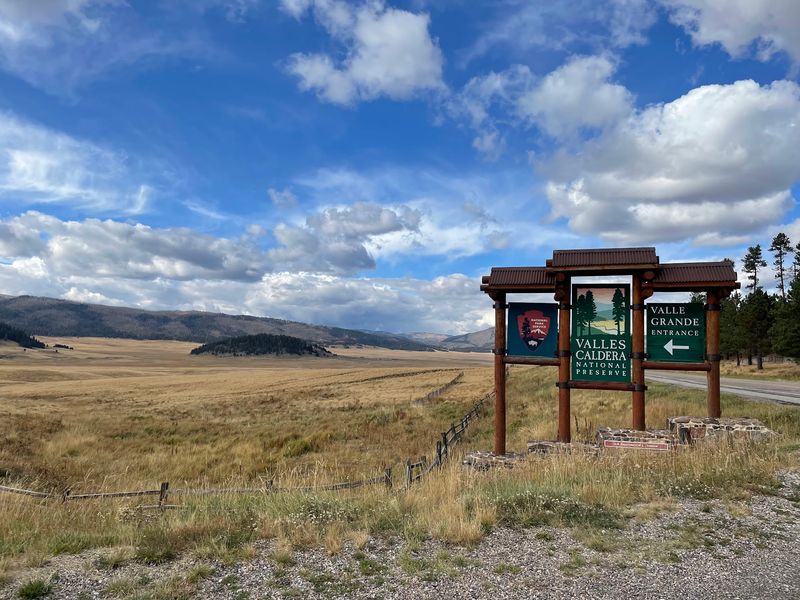
An ancient volcanic collapse left behind a bowl of grassland so wide that elk herds look like scattered dots across it. Valles Caldera National Preserve sits at 39201 NM-4 near Jemez Springs, filling a circular depression roughly 13 to 14 miles across.
Fees stay gentle at $25 per vehicle or $15 per person age 16 and older. The Valle Grande Visitor Center runs daily 9 AM to 5 PM, with closures on Thanksgiving, Christmas, and New Year’s Day.
Backcountry vehicle travel generally opens only in the summer stretch, weather permitting.
Hiking, fishing, mountain biking, and wildlife watching fill most itineraries here, and the preserve holds New Mexico’s second-largest elk herd. Meadows, streams, and thick forest trade places as the road climbs.
Cold months flip the script entirely, turning the valley into snowshoeing and cross-country skiing country. Layers of Native ancestral history and old ranching days sit quietly beneath all that grass.
5. Carlsbad Caverns National Park, Carlsbad
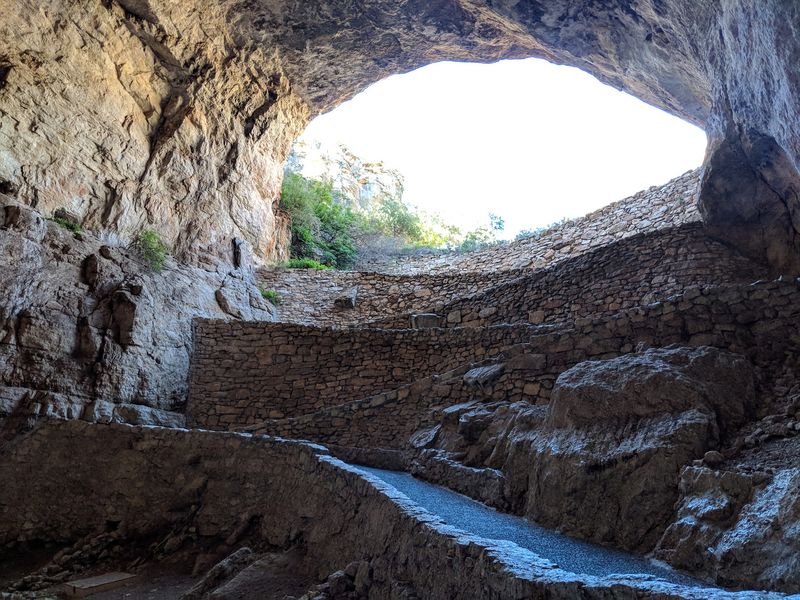
Below the desert floor of southeastern New Mexico waits a chamber called the Big Room, plus miles of stone shapes dripping from ceiling and rising from floor. Carlsbad Caverns National Park sits at 727 Carlsbad Caverns Hwy, and the scale down there genuinely resets your sense of indoors.
Admission costs $15 per person for ages 16 and up, free for children 15 and under, valid three days. A timed entry reservation runs about $1 and helps avoid crowded entry windows.
The visitor center opens daily 9 AM to 5 PM, with cavern entry between 9:30 AM and 2:30 PM. Walk down the Natural Entrance Trail for the slow reveal, or ride the elevator straight into the depths.
Late May through October brings evening ranger programs featuring Brazilian free-tailed bats streaming out at dusk. Closed-toe shoes with grip matter, since paths turn wet and steep, and everyone crosses bio-cleaning mats on the way out.
6. Sandia Peak Tramway, Albuquerque
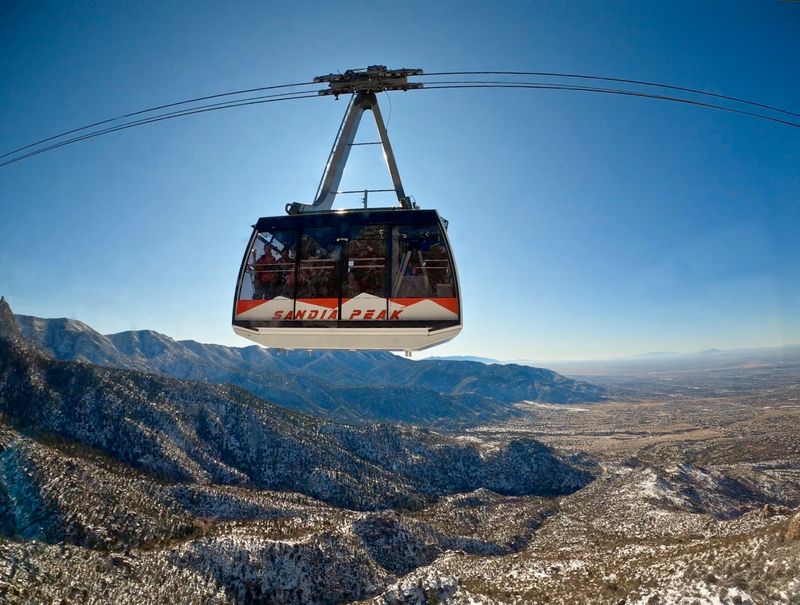
Few rides deliver as much altitude per dollar as the cable car climbing out of 30 Tramway Rd NE in Albuquerque. The Sandia Peak Tramway glides above Cibola National Forest terrain to a summit topping 10,378 feet.
Round-trip adult tickets sit around $35, which leaves budget room for lunch. Operation continues year-round, though hours shift with seasons and weather, so checking the schedule before driving over is smart.
Views from the top reach across roughly 11,000 square miles, and city lights start flickering below as evening settles in. Warm months open up hiking and high-desert exploring at the summit, while winter brings skiing and snowboarding, with separate lift tickets required.
Dining spots operate at both the base and the top, so a meal with an enormous window comes standard. Sunset from that ridge must paint the whole valley in color, and few rides feel this cheap for such reach.
7. Bisti/De-Na-Zin Wilderness, Farmington
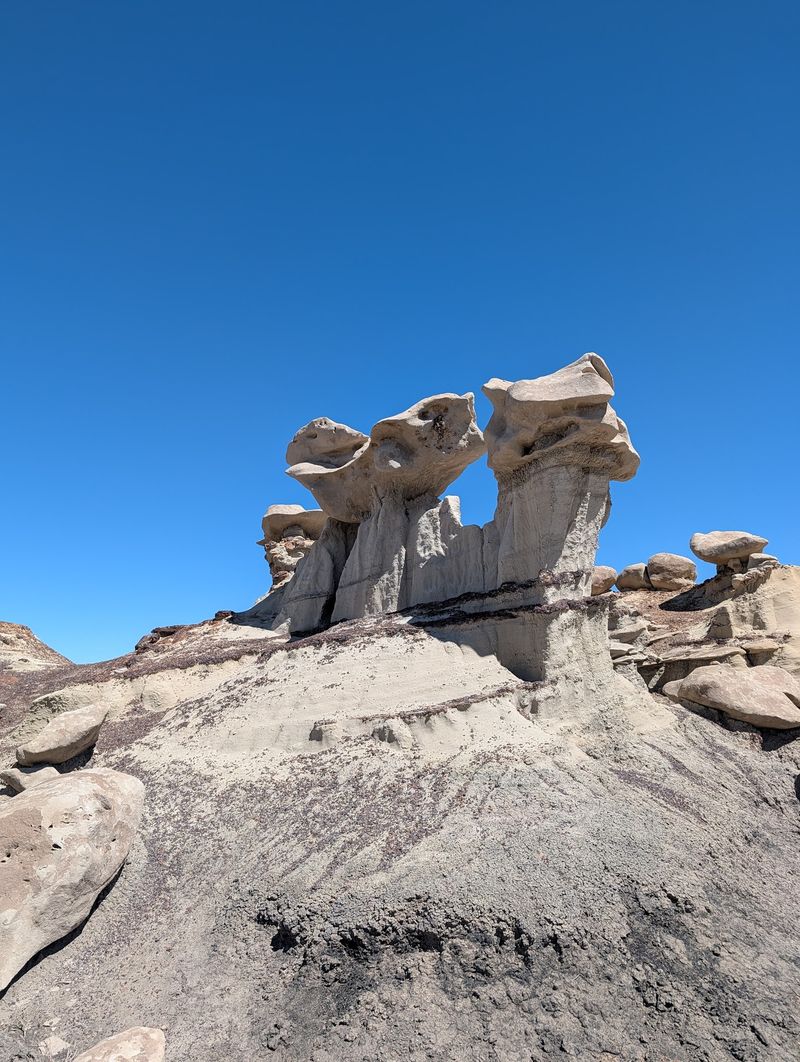
Zero entrance fee, zero marked trails, and rock shapes that look sculpted by a very imaginative wind. The Bisti/De-Na-Zin Wilderness spreads across badlands southeast of Farmington, reached by County Road 7297 in New Mexico.
Open year-round, this designated wilderness stays undeveloped on purpose. Hoodoos, petrified wood, and oddly balanced formations draw hikers and photographers who do not mind navigating on their own.
Because no trail signs exist, a map, compass, or GPS unit belongs in the pack. No potable water is available, while the Bisti trailhead has a vault toilet and a shaded group picnic area for visitors.
Spring and fall bring the friendliest temperatures, since summer bakes and winter can turn cold and snowy fast. Solitude out here runs deep, and the quiet feels heavier than in most parks.
Anyone driving in from Arkansas for southwestern scenery would find this one of the strangest landscapes on the itinerary. Free admission and alien rock make an unbeatable pairing.
8. Chaco Culture National Historical Park, Nageezi
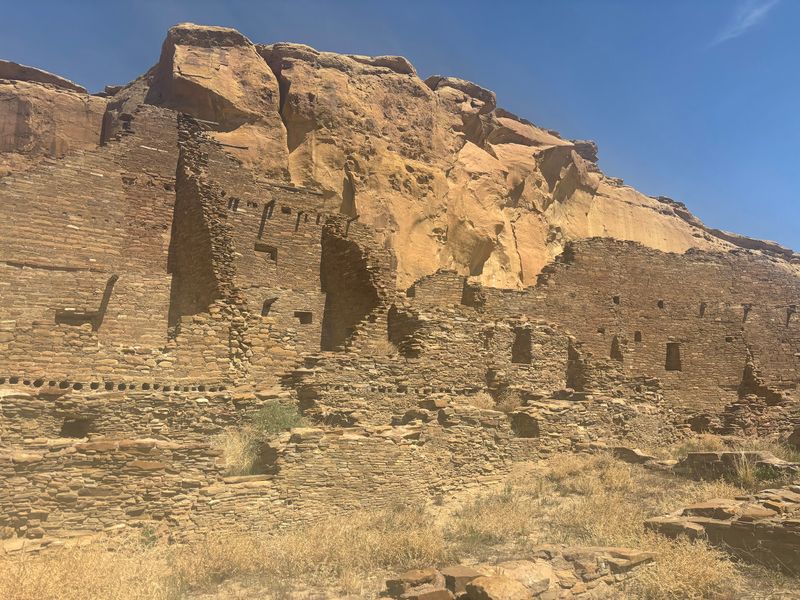
Massive stone great houses standing in an open desert canyon still puzzle engineers who study them. Chaco Culture National Historical Park, at 1808 CR 7950 near Nageezi, holds a UNESCO World Heritage designation in the Four Corners region.
Vehicle entry runs $25 for seven days, or $15 per person on foot or bicycle. Gates stay open year-round except Thanksgiving, Christmas, and New Year’s Day, and the nine-mile Canyon Loop Drive keeps longer hours in spring and summer.
The visitor center runs daily 9 AM to 5 PM.
Six major sites line the loop, including Pueblo Bonito, Chetro Ketl, and Casa Rinconada. Self-guided booklets work well, and ranger-led walks of Pueblo Bonito happen year-round.
Four backcountry trails reach ancient roads and petroglyphs, with free permits available at the visitor center. As an International Dark Sky Park, Chaco also hosts summer observatory programs, and the night sky here rivals anything in the Southwest.
9. Capulin Volcano National Monument, Capulin
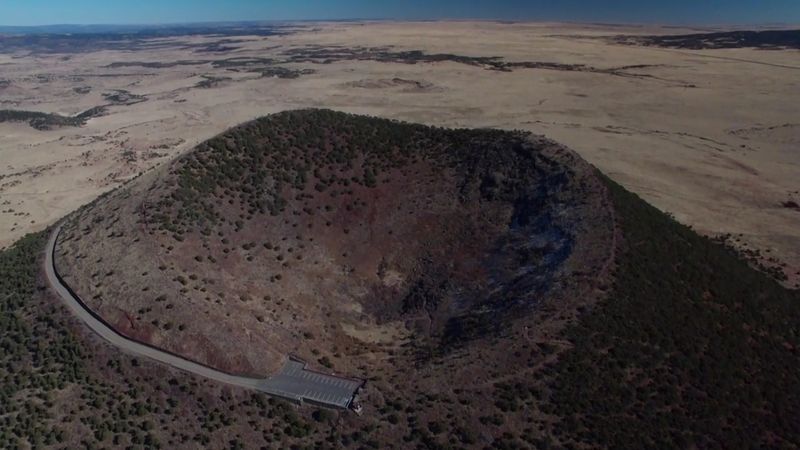
A road that spirals up the side of an extinct cinder cone counts as one of New Mexico’s best bargains. Capulin Volcano National Monument sits at 46 Volcano Hwy in the state’s northeastern corner, part of the wide Raton-Clayton Volcanic Field.
Vehicle entry costs $20, covers up to 15 people, and lasts seven days. An annual monument pass currently costs $35.
Lower trails open dawn to dusk, the visitor center runs 8:30 AM to 4:30 PM daily, and Volcano Road typically operates 8:30 AM to 4:00 PM.
From the rim, views stretch across four states, and the crater below measures about 130 meters deep and 440 meters wide. The paved Crater Rim Trail circles the top, while another path drops inside toward old lava flows.
Night skies here rank among the darkest in the country, with a 24-hour viewing area available. October through March brings thinner crowds than the busy June and July stretch.
10. El Malpais National Monument, Grants
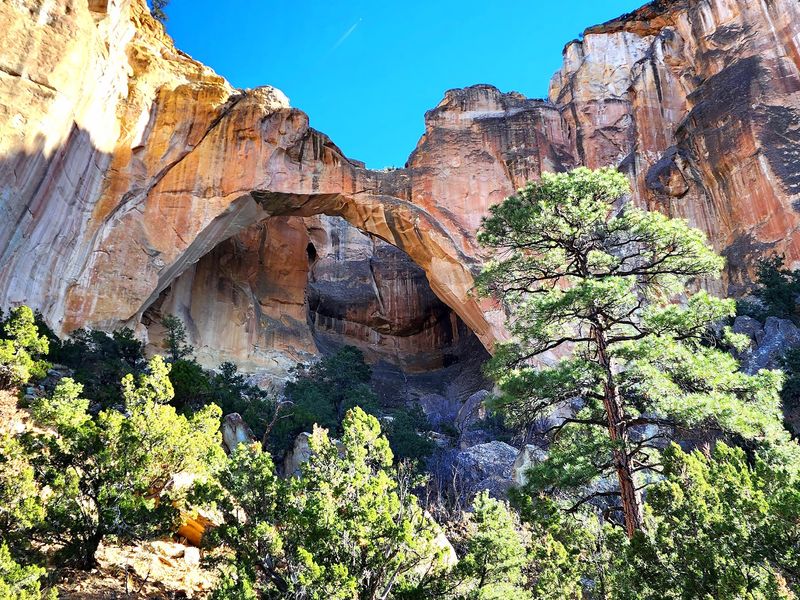
Black lava spreading across western New Mexico earned this place a name meaning the badlands. El Malpais National Monument, with a visitor center at 1900 E Santa Fe Ave in Grants, mixes lava flows, cinder cones, lava tube caves, and tall sandstone bluffs.
Outdoor areas are generally free, which is hard to beat, though nearby privately owned attractions such as the Ice Caves charge separately. Trails and trailheads stay accessible around the clock, while Sandstone Bluffs Overlook runs sunrise to sunset.
The visitor center at Exit 85 off I-40 opens daily 9 AM to 5 PM.
El Calderon Trail and Lava Falls Trail cross hardened flows that crunch underfoot. Lava tubes like Junction Cave require a free permit plus your own flashlight and sturdy shoes.
Dirt backcountry roads can turn impassable after heavy rain or snow, so road conditions deserve a check first. The bluff overlook rewards the drive with a black, rippled horizon.
11. El Morro National Monument, Ramah
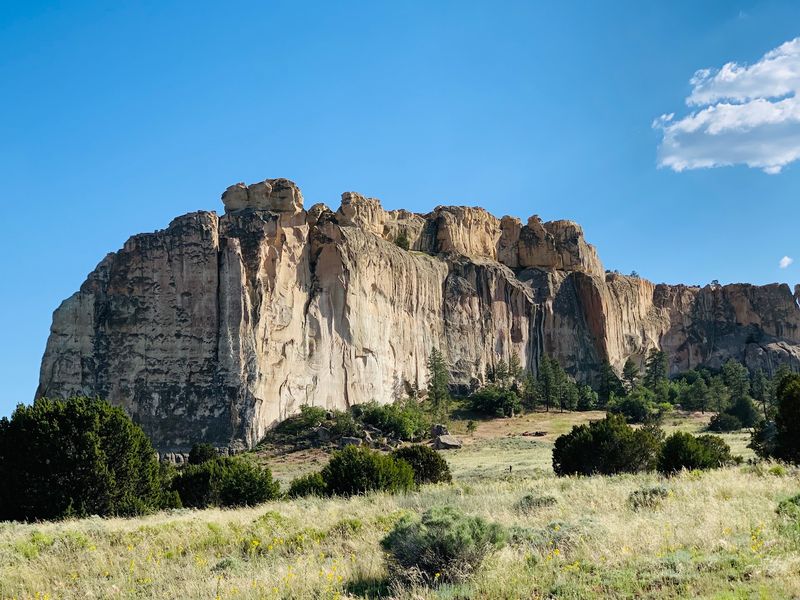
Travelers once carved their names into a sandstone bluff the way people sign guestbooks today. El Morro National Monument, at Mile Marker 44.6 on Hwy 53 near Ramah, guarded a reliable watering hole that made it a landmark for centuries.
Entrance is free, with no ticket or reservation required. Summer hours run seven days a week, 9 AM to 5 PM, while mid-October through late May shifts to Thursday through Monday with the same hours, closed Tuesdays and Wednesdays.
Timing matters: last entry for the longer Headland Trail is 2:30 PM, and 4 PM for the Inscription Loop Trail. That loop passes hundreds of carvings, including the well-known Paso por aqui markings left by Spanish explorers.
The steeper Headland Trail climbs to the mesa top and the ruins of Atsinna, an ancestral Pueblo village. The campground stays open around the clock year-round, and reading centuries of signatures on one wall is oddly moving.
12. Gila Cliff Dwellings National Monument, Mimbres
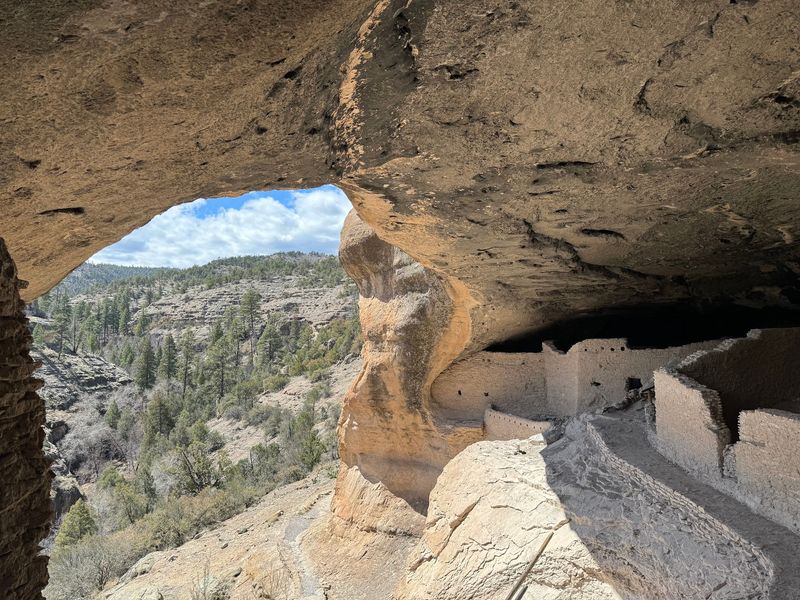
Stone rooms built inside natural caves sit high above a canyon in the Gila Wilderness. Gila Cliff Dwellings National Monument, at 26 Jim Bradford Trail near Mimbres, preserves homes built by the Mogollon people within the Tularosa Mountains.
Entry is free, and no entrance pass is required today. The monument no longer charges admission to visitors.
The visitor center and main trail generally run 9 AM to 4 PM daily, with seasonal and weather adjustments, and closures on Thanksgiving, Christmas, and New Year’s Day.
Hiking the trail up to the dwellings is the main event, letting visitors step through rooms where families once stored crops and raised children in the late 1200s. Surrounding wilderness adds longer hikes, backpacking routes, and natural hot springs for anyone with extra time.
Winding mountain roads make the drive itself part of the outing, so allow more time than the map suggests. Seeing how neatly these builders worked with stone is humbling.
13. Ghost Ranch, Abiquiu
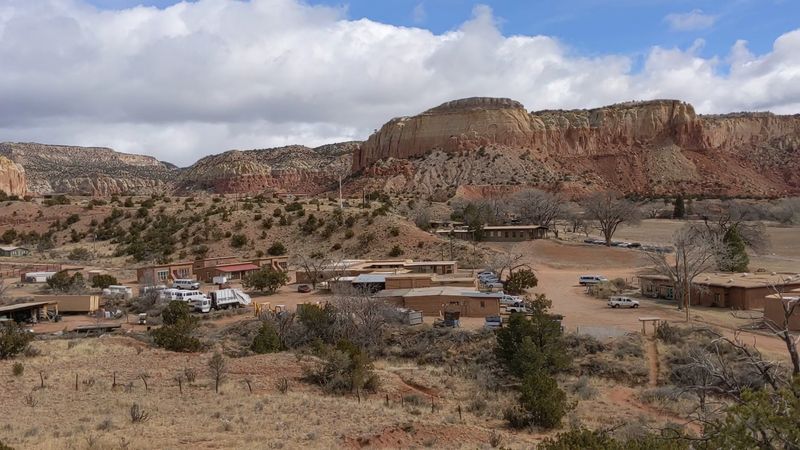
Red cliffs, striped mesas, and enormous sky made this Rio Arriba County property famous through the paintings of Georgia O’Keeffe, who lived on the land for years. Ghost Ranch sits at 280 Private Drive 1708 near Abiquiu, sprawling across roughly 21,000 acres.
A day pass costs $10 per adult over 18, with children free, covering hiking trails, the labyrinth, and two museums. The Ruth Hall Museum of Paleontology and the Florence Hawley Ellis Museum of Anthropology open Tuesday through Saturday, 9 AM to 5 PM with a lunch break from noon to 1 PM, plus Sunday afternoons, and stay closed Mondays.
Paleontology fans come for Triassic fossils, including the well-known Coelophysis. Trail choices range from the demanding Chimney Rock route with sweeping views to the shadier Box Canyon walk.
Guided tours cover archaeology and film locations for an added fee. Ten dollars for museums and O’Keeffe country is a rare bargain.
14. City Of Rocks State Park, Faywood
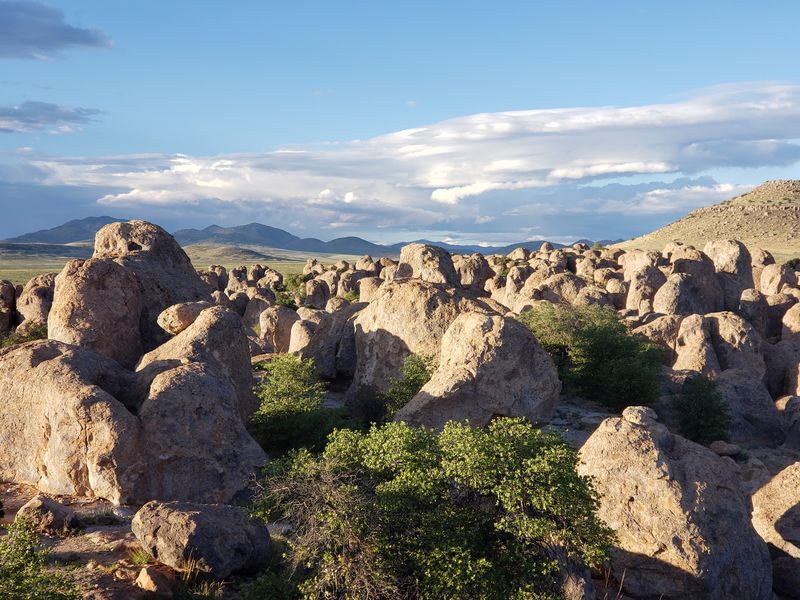
Nature built something resembling a stone neighborhood here, complete with narrow lanes between towering pinnacles. City of Rocks State Park sits at 327 Highway 61 near Faywood in southwestern New Mexico, and geological formations like these appear in only a handful of spots worldwide.
Day-use vehicle fees run $5 for New Mexico residents and $10 for non-residents, while walk-in and bicycle entry is free. Gates stay open daily from 7 AM to 9 PM.
Wandering the maze of rock columns tops most agendas, followed by birdwatching, photography, and stargazing under famously dark skies. A cacti garden adds color, and occasional Star Parties happen at the park observatory, so calling ahead about schedules pays off.
Mimbres people occupied this area until around 1200 A.D., leaving arrowheads and pottery shards behind. Cooler months between October and April suit hiking and night sky watching best.
Free walk-in entry makes this one of the cheapest big-scenery stops in the state.
15. Bottomless Lakes State Park, Roswell
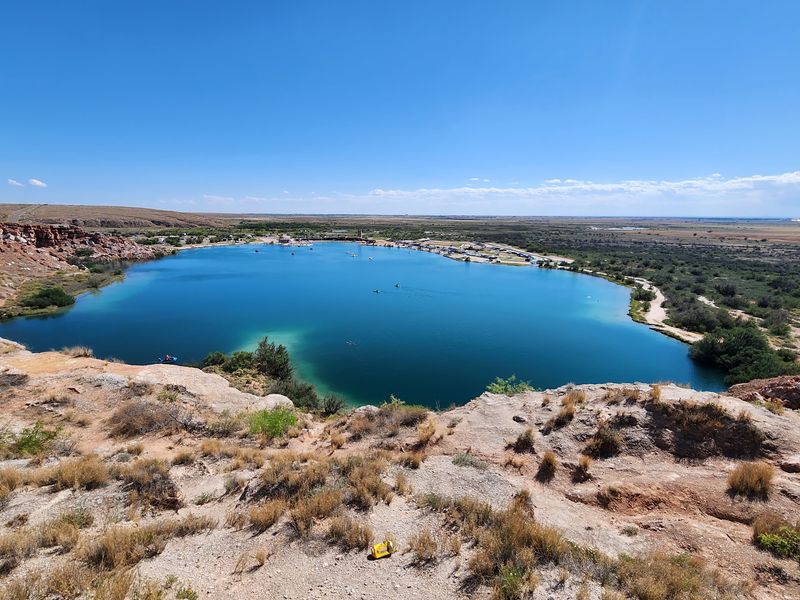
Deep blue-green water in the middle of dry country tends to stop conversation mid-sentence. Bottomless Lakes State Park, at 545 A Bottomless Lakes Rd near Roswell, protects eight water-filled sinkholes created when gypsum caverns collapsed.
The name oversells the depth, but the color does not disappoint.
Day-use entry costs $5 for New Mexico residents and $10 for non-residents, while walk-in and bicycle entry is free for visitors. Visitor center hours vary.
Each lake has its own personality. Lea Lake, the largest and easiest to reach, offers swimming and a sandy beach, while others suit fishing for rainbow trout, paddleboarding, or kayaking.
Hiking trails climb for views over the lakes and the surrounding Chihuahuan Desert, home to plenty of plants and wildlife.
Roswell’s UFO reputation sits just up the road, adding a quirky detour for anyone with time to spare. Road trippers from Arkansas often pair this stop with the caverns farther south, and that near-impossible blue lingers in memory.