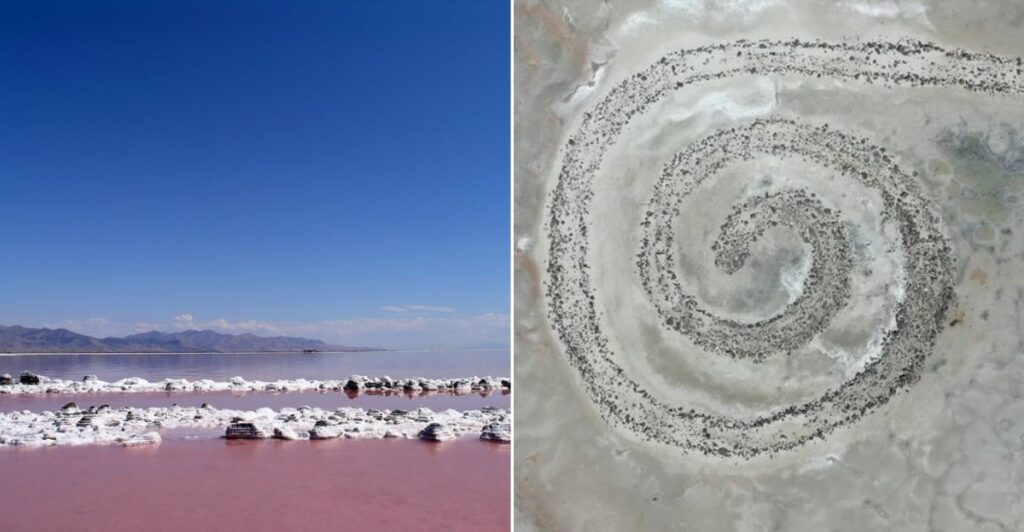
Some art asks you to stand politely in a gallery. This one asks you to drive into the middle of nowhere and meet it on a salt-crusted shore.
Built from rock and earth in 1970, the coil curls into the lake like a question written across the landscape. The setting feels especially surreal in northern Utah, where silence, open sky, and changing water levels can alter the experience from one visit to the next.
Getting there takes intention, which is part of the point. You do not simply stumble across something this strange, remote, and deliberate.
The reward is a rare collision of land art and raw geography, with no velvet rope telling you where to stand. For travelers willing to plan ahead, this corner of Utah offers an encounter that feels less like sightseeing and more like discovering a giant idea someone left behind for the desert to finish.
A Spiral That Makes The Plan Feel Worth It
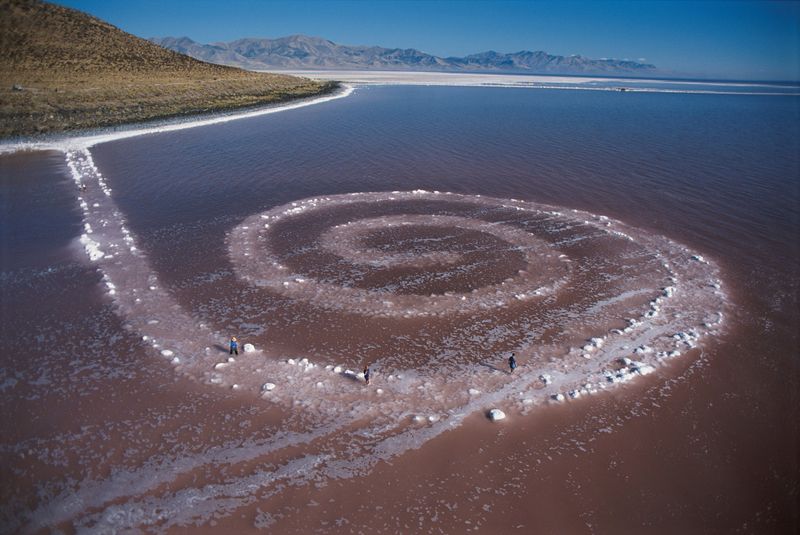
Some outings announce themselves with neon signs. Spiral Jetty does the opposite, sitting far out on the north arm of the Great Salt Lake like a thought someone drew in stone and then left for the lake to edit.
The official visitor listing places Spiral Jetty near Corinne, UT 84307, at Rozel Point in Box Elder County. That address sounds simple, but the trip is more like following a breadcrumb trail through northern Utah, past paved roads and onto gravel routes where good directions matter more than guesswork.
Robert Smithson built the earthwork in 1970 using basalt rock, earth, and salt crystals from the area. The coil stretches about 1,500 feet and is roughly 15 feet wide, large enough to feel less like a sculpture on land and more like land deciding to make a shape.
For travelers, the appeal is refreshingly clear: there is one main thing to see, and it is unlike the usual weekend stop. Pack water, check road conditions, and give the place time.
Spiral Jetty is not a quick photo errand. It is the plan.
Robert Smithson’s Big Idea In Black Basalt
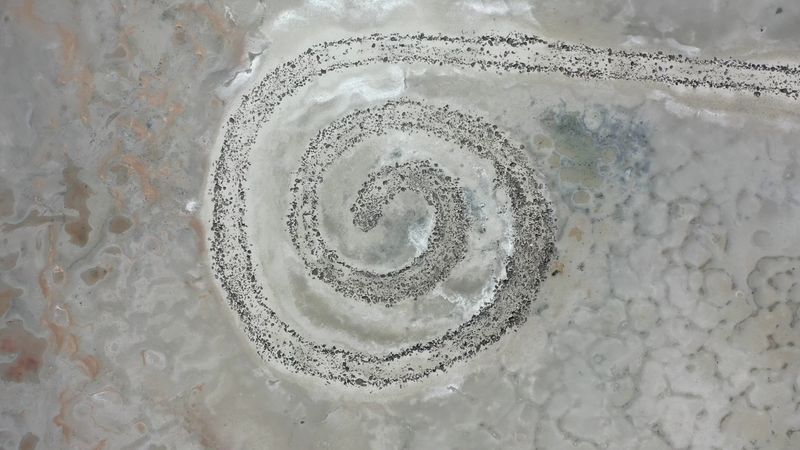
A spiral is a simple shape, which is probably why it works so well here. Nobody needs an art degree, a headset tour, or a solemn museum whisper to understand that Robert Smithson made a giant coil and placed it where nature would keep changing the terms.
Spiral Jetty belongs to the land art movement, a period when artists worked outside traditional galleries and used landscape as both material and setting. Smithson chose Rozel Point because of its geology, its remoteness, and the unusual water colors found in the lake’s north arm.
The black basalt came from the surrounding area, giving the work a strong contrast against pale salt and lake water. That choice matters.
Spiral Jetty does not look imported or polished. It looks made from the same rough vocabulary as the shore around it.
The idea is easy to grasp, but not small. A person can walk the coil, study it from higher ground, or simply stand back and notice how the shape changes with distance.
It is both artwork and place marker, which is a neat trick for a pile of rocks that refuses to behave like a pile of rocks.
Great Salt Lake Water Levels Keep Rewriting The View
The Great Salt Lake does not hold still for anyone, including famous artists. That is part of the reason Spiral Jetty keeps people talking more than five decades after it was built.
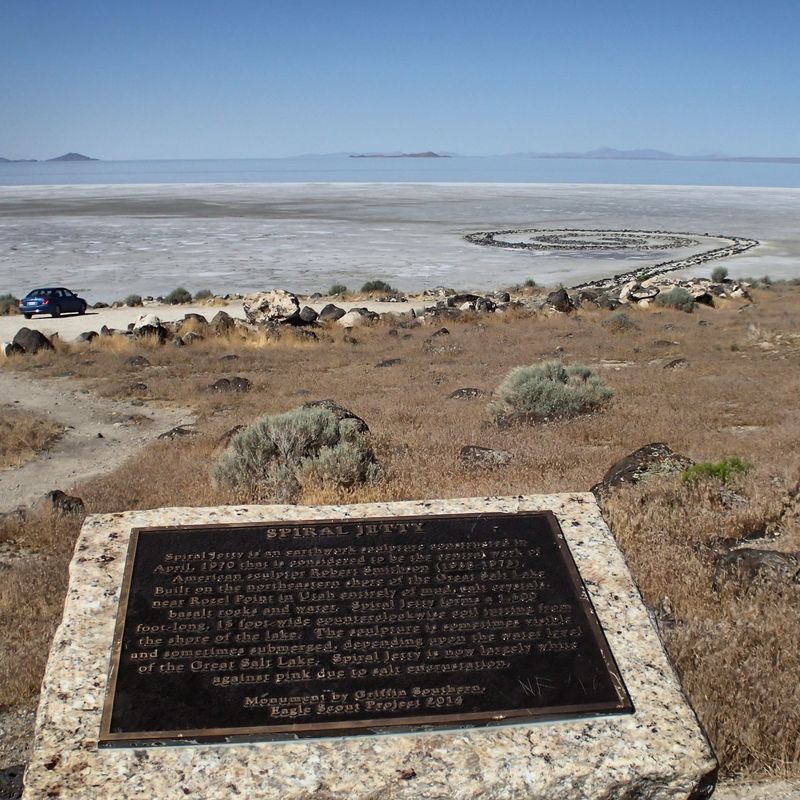
After its completion in 1970, rising lake levels covered the earthwork for many years. It became widely visible again in 2002, and since then its appearance has shifted with water levels, salt crust, and exposed shoreline.
Some visitors may find water near the spiral. At other times, the lake can sit farther away, leaving the coil dry against a pale, salty surface.
That changing condition is not a flaw in the visit. It is central to the artwork.
Smithson was interested in time, erosion, and entropy, which is a fancy word for the way ordered things slowly change. At Spiral Jetty, the lesson is not tucked into a wall label.
It is sitting under your shoes.
Practical planning helps here. Before driving out, check current reports from official sources and recent lake information when available.
A low water year will not cancel the site, but it may change what you expect to see. The lake has opinions, and it rarely asks travelers for input.
Rozel Point Gives The Artwork Its Odd Gravity
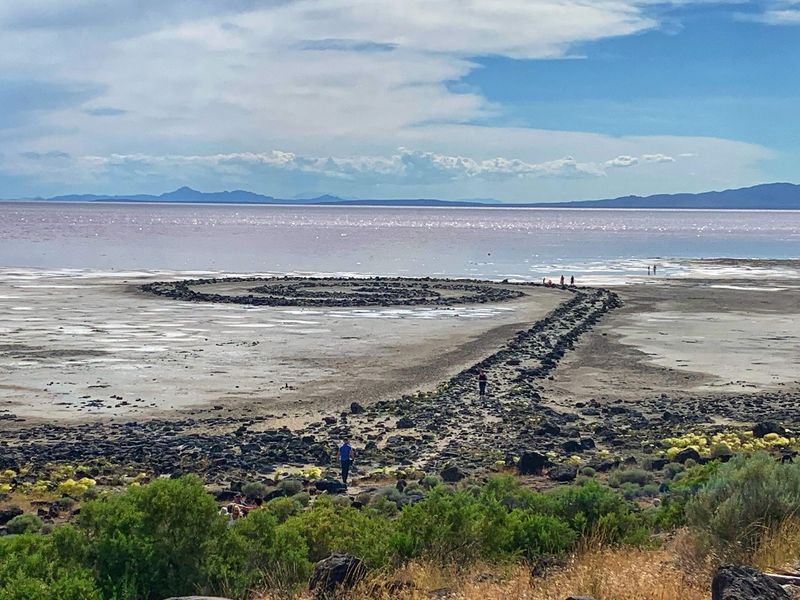
Move Spiral Jetty to a city park and it would lose the plot. Rozel Point is not background scenery.
It is part of the artwork’s engine.
The site sits on the north arm of the Great Salt Lake in Box Elder County, a part of Utah where the landscape feels wide, exposed, and not especially interested in entertaining impatience. The location includes dark volcanic rock, salty shoreline, and open views across a lake famous for its mineral rich water and changing edges.
Smithson’s choice of place was deliberate. The north arm can show reddish or pinkish tones because of salt tolerant algae and bacteria, especially when conditions line up.
The color is not guaranteed on command, which may disappoint people who expect nature to behave like a vending machine. Still, the possibility adds another layer to the visit.
Rozel Point also explains why the artwork feels so different from an indoor sculpture. There are no polished floors, no climate control, and no tidy frame.
Spiral Jetty lives in a landscape that keeps shifting around it. That gives the piece a strange authority, as if the lake and the rocks are equal collaborators, though only one of them had a construction crew.
The Drive Is Part Of The Commitment
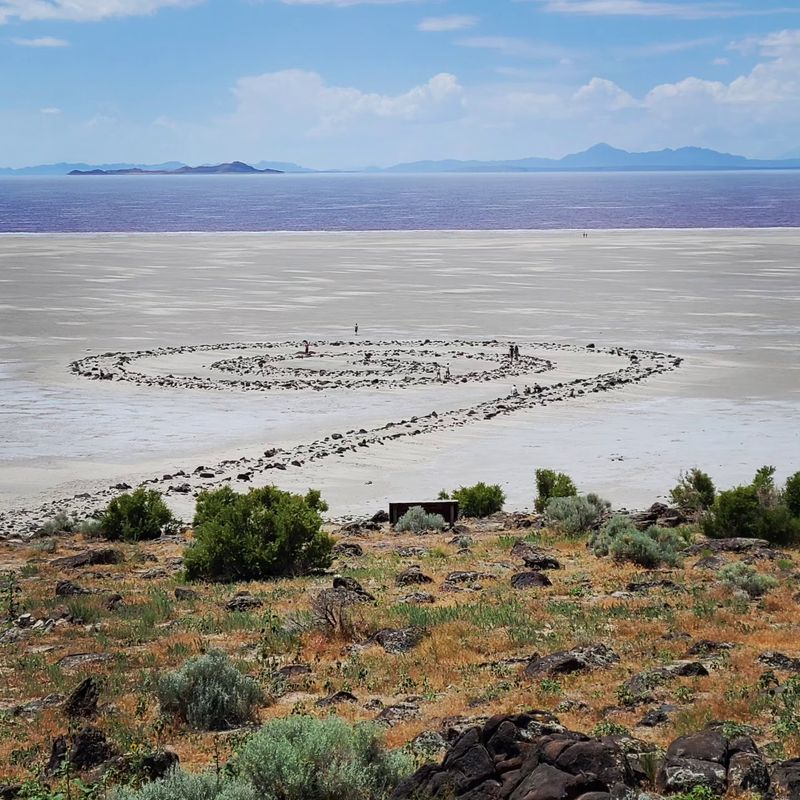
Spiral Jetty asks for a little seriousness before it gives you anything back. Not gloomy seriousness, thankfully.
More like the kind that says, fill the gas tank, download directions, and do not treat a remote gravel road like a mall parking lot.
Visitors generally reach the site by traveling through northern Utah toward Golden Spike National Historical Park and then continuing on unpaved roads toward Rozel Point. Official directions should be checked before leaving, because the final approach includes gravel and dirt sections where weather can affect conditions.
That drive filters the experience in a useful way. By the time the spiral comes into view, the usual trip chatter has had time to settle.
The distance also makes the artwork feel properly placed. A 1,500 foot coil of basalt deserves more than a turn lane and a convenience store next door.
Road trippers should plan with ordinary caution. Bring water, snacks, sun protection, and a spare tire that is not just decorative optimism.
Cell service can be unreliable in remote areas, so saved maps are smart. Spiral Jetty rewards people who prepare without overcomplicating the day.
Nobody wants an outing that requires a spreadsheet, but this one does ask for a checklist.
A Famous Artwork With No Museum Manners
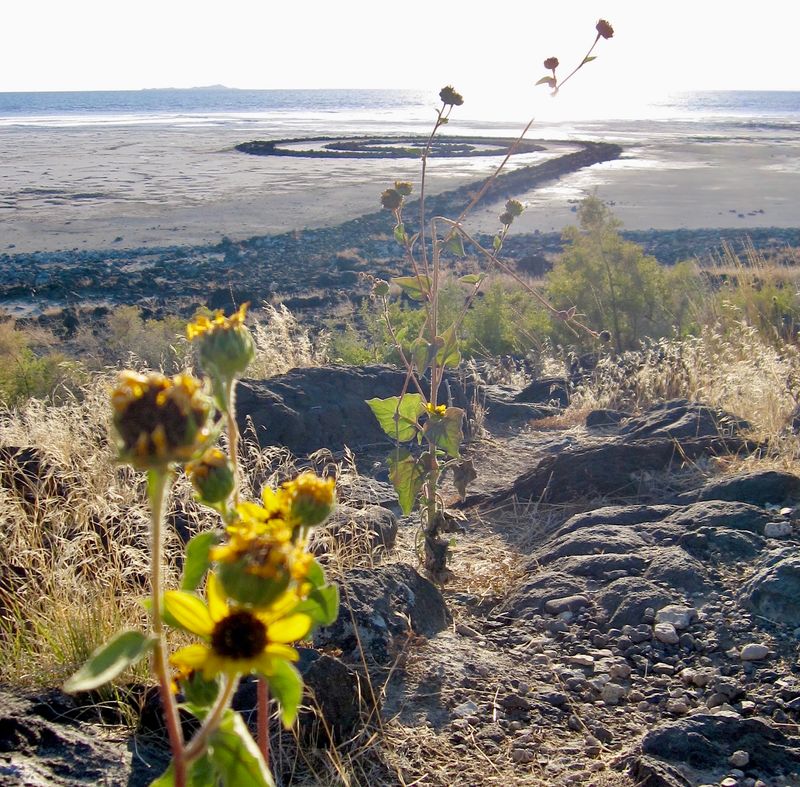
Most famous artworks come with guards, velvet ropes, and people pretending not to take crooked phone photos. Spiral Jetty skips that entire script.
The site is stewarded by Dia Art Foundation, with important regional partners including the Utah Museum of Fine Arts and the Holt Smithson Foundation. Even with that serious art world care behind it, the visitor experience remains plain.
There is no standard museum building at the spiral, and the artwork itself is the reason for going.
That simplicity can be freeing. Families do not have to keep children silent in a gallery.
Couples can take their time without feeling moved along by a timed entry slot. Solo travelers can look at the form, the lake, and the horizon without pretending to understand everything immediately.
Spiral Jetty also has formal recognition. Utah designated it as the state work of land art in 2017, and it was listed on the National Register of Historic Places in 2024.
Those honors confirm what the site already makes clear: this is not roadside decoration. It is a major American artwork, sitting out in the weather with the calm confidence of something that has never needed a lobby.
Walking The Coil Turns Scale Into Something Personal
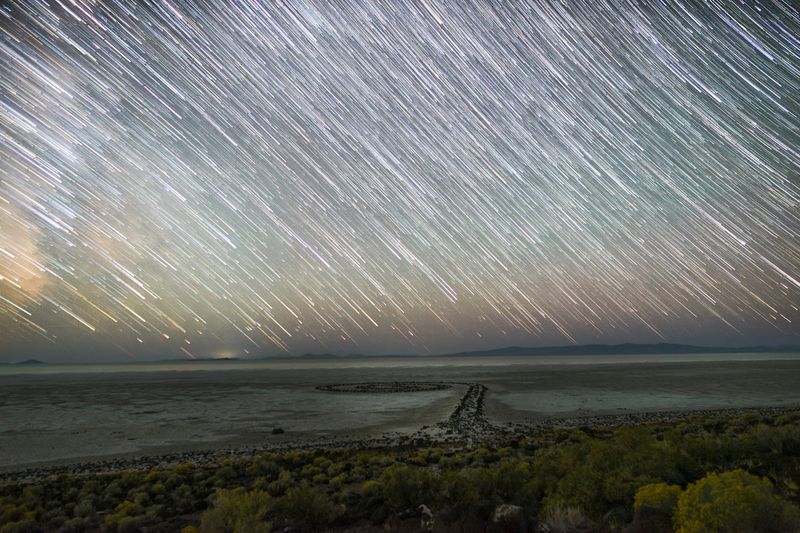
Numbers help, but they do not do all the work. Saying Spiral Jetty is about 1,500 feet long gives the brain a measurement.
Walking along the coil gives the body a better explanation.
The spiral is roughly 15 feet wide, built from thousands of tons of rock and earth. From above or from nearby higher ground, the shape reads clearly as a counterclockwise coil.
Up close, it becomes a path, uneven in places, made of dark stones set against salt and lakebed.
That change in perspective is one of the site’s best lessons. A family may start by spotting the whole form, then slow down once the scale becomes real underfoot.
A solo visitor may find the geometry gives the visit a natural pace, with no need for a formal route map. Weekend travelers get a destination that is active without being programmed.
Common sense still applies. Wear sturdy shoes, watch your step, and remember that this is an outdoor earthwork rather than a paved attraction.
Lake and shoreline conditions can vary, so the ground near the artwork may look different from one season to another. Spiral Jetty is simple to understand, but it is not softened for convenience, which is exactly why it stays interesting.
Pink Water Is Possible, But Not Promised
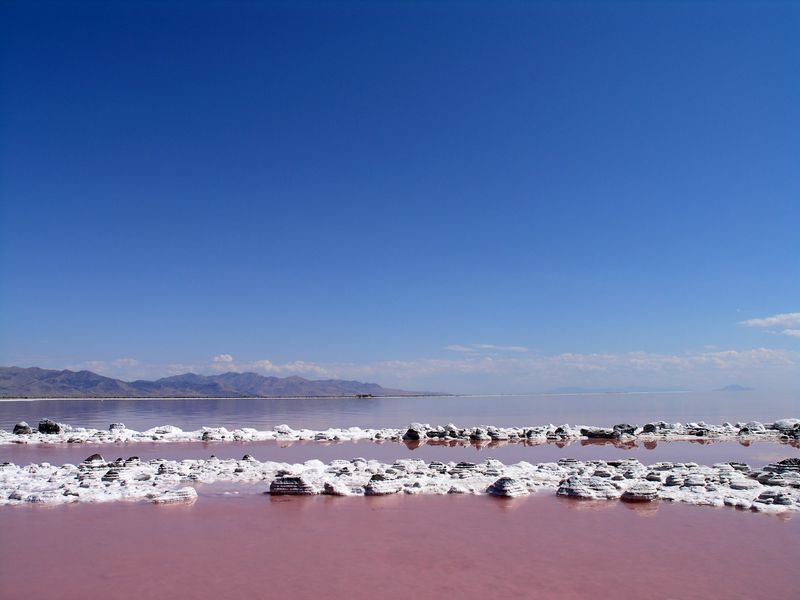
The pink water gets attention, and fair enough. A lake that can blush around an enormous rock spiral is not exactly behaving like the neighborhood pond.
Near Rozel Point, the north arm of the Great Salt Lake can appear reddish or pinkish because of salt loving microorganisms that thrive in highly saline water. That color has become part of the public image of Spiral Jetty, especially in photographs taken when lake level, light, and biological conditions cooperate.
Still, planning a visit only around bright pink water is a fine way to let a lake win an argument. Conditions vary.
Sometimes the water is distant. Sometimes the color is subtle.
Sometimes salt crust and exposed lakebed dominate the view instead. None of those versions makes the artwork disappear, but they do change the mood of the day.
A better approach is to treat the color as a bonus rather than the whole reason to go. The black basalt, white salt, open shoreline, and huge spiral shape carry the experience even when the lake is not showing off.
Utah has many landscapes that reward patience, and Spiral Jetty belongs to that category. Bring curiosity, not a rigid photo checklist.
Nature has never been great at taking direction from weekend planners.
Families Can Treat It Like A Field Lesson Without The Clipboard
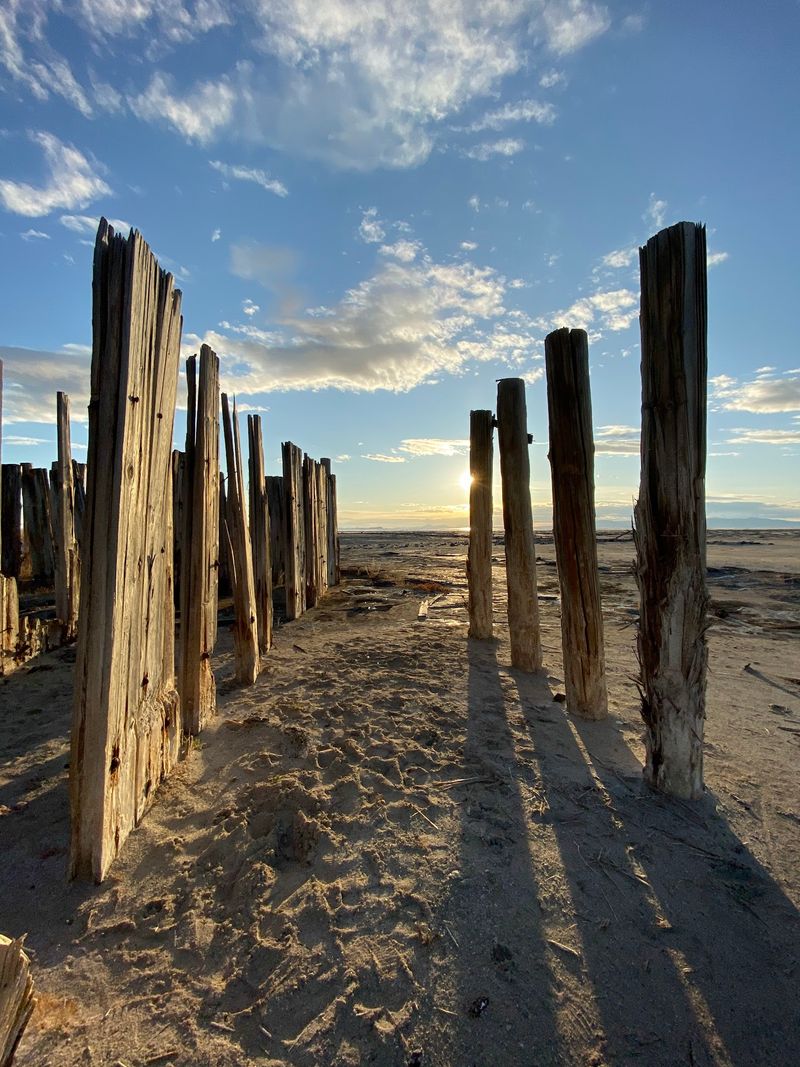
Children often understand Spiral Jetty faster than adults. It is big, it is shaped like a spiral, and it sits in a place that looks nothing like the usual school parking lot.
That is a solid start.
For families, the site can turn art, geology, and environmental change into one outdoor lesson without anyone needing to say the word lesson too loudly. The basalt connects to volcanic rock in the area.
The salt points to the Great Salt Lake’s mineral rich water. The changing shoreline shows that landscapes are active, not frozen pictures in a textbook.
The practical side matters. There are limited services at the earthwork, so families should bring water, snacks, sunscreen, and anything younger travelers may need before the return drive.
Restroom availability should not be assumed at the spiral itself. Remote outings are more pleasant when basic needs are handled before the last gravel stretch.
Spiral Jetty may work best for families who enjoy open ended stops rather than packed schedules. There is room to observe, ask questions, take photos, and move at a reasonable pace.
The site does not provide rides, games, or exhibits, which is not a failure. It gives families a rare thing instead: one clear object of attention in a very large place.
Couples And Solo Travelers Get Space To Think
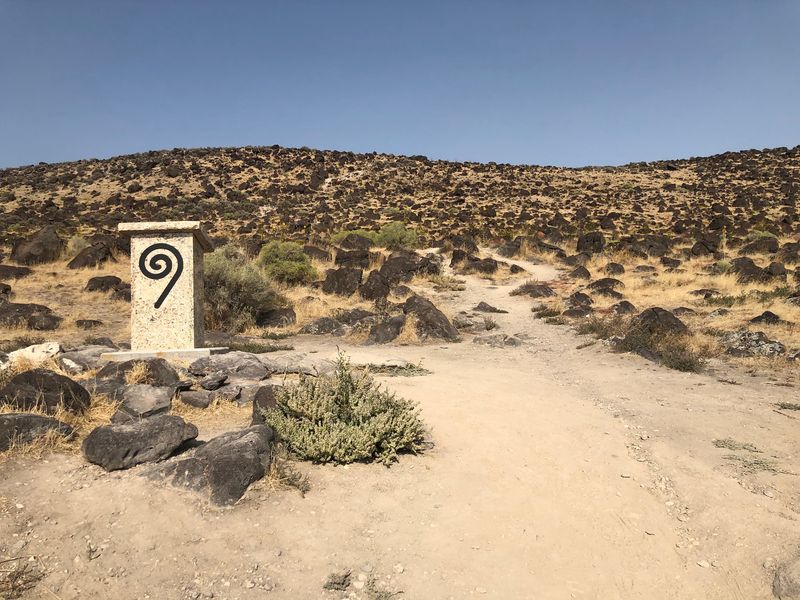
Some places are better without a packed agenda. Spiral Jetty gives couples and solo travelers a reason to be quiet without making the silence awkward, which is more than many weekend plans can claim.
For couples, the shared effort of reaching Rozel Point can make the visit feel like a small expedition. The payoff is not dinner reservations or a ticketed show.
It is time around a major artwork in a remote setting, with enough space to talk, pause, or simply look at the same strange coil from different angles.
Solo visitors may appreciate how legible the place is. There is no complicated layout to master and no need to join a group.
The spiral gives the visit a natural center, while the lake and shoreline create context. Bring downloaded directions and let someone know your general plan, because practical caution and independent travel should remain on speaking terms.
Professionals looking for a mental reset may also find the site useful, especially after days spent answering messages that multiply like desert weeds. Spiral Jetty does not offer productivity.
Blessedly, it offers the opposite. It asks you to look at rock, salt, water, and time, which is a pretty efficient way to make a crowded calendar feel less important.
A Simple Saturday Detour Still Needs Smart Supplies
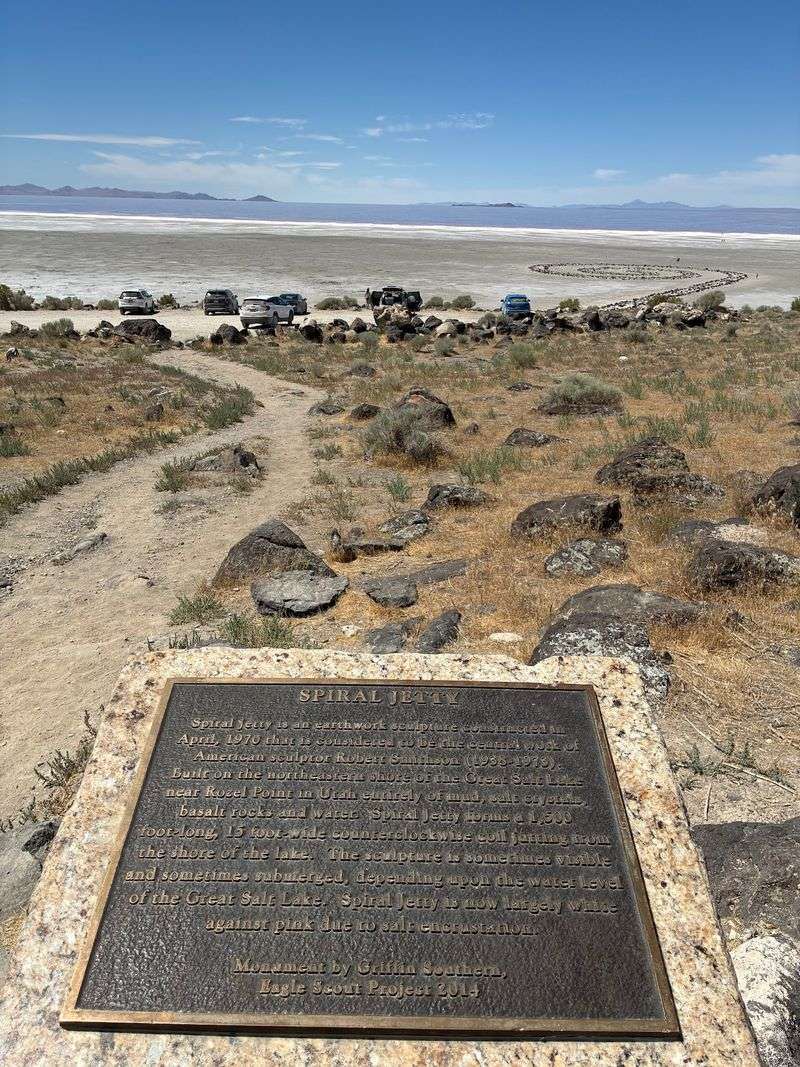
A simple Saturday detour sounds casual until the road turns remote. Spiral Jetty can absolutely fit into a weekend plan, but it is the kind of outing that prefers preparation over improvisation.
Use current official directions for Spiral Jetty near Corinne, UT 84307, and do not rely only on a signal that may fade before you need it. Download maps, check road and weather conditions, and leave with enough fuel.
The final approach includes unpaved roads, so recent rain or seasonal conditions can matter.
Supplies do not need to be dramatic. Water, snacks, sun protection, sturdy shoes, and a basic vehicle check go a long way.
A spare tire, in actual working order, is the kind of boring detail that becomes fascinating only when ignored. Remote Utah has a talent for making small planning choices feel wise.
Keep the outing simple. There is no need to build a complicated itinerary around the earthwork unless you have already verified other stops and their hours.
Give yourself enough time for the drive, the walk around the spiral, and the return. Spiral Jetty is best treated as the main event, not a filler stop squeezed between errands.
The landscape will not hurry just because your calendar does.
Why This Remote Coil Stays With People
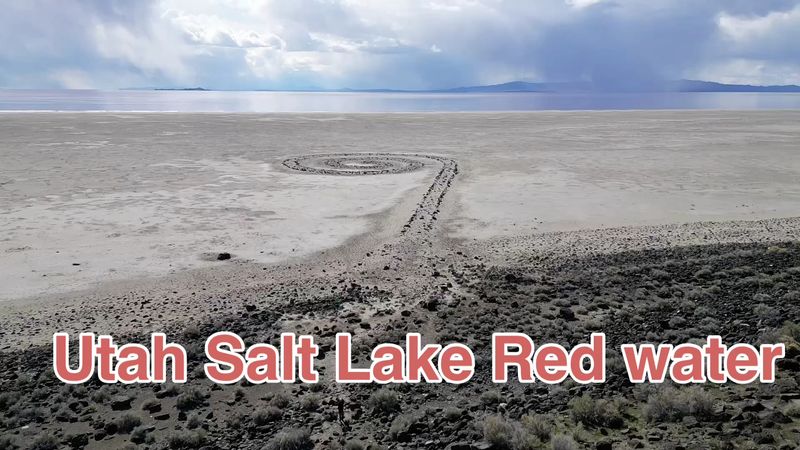
Long after the practical details fade, Spiral Jetty leaves behind a clean mental image: a dark coil reaching across salt and lakebed in a place that seems too open for ordinary decoration.
Its staying power comes from several verified facts working together. Robert Smithson made it in 1970.
It measures about 1,500 feet. It uses materials from its own setting.
It has disappeared under water and reappeared as lake levels changed. It is recognized as Utah’s state work of land art and listed on the National Register of Historic Places.
Those facts matter because they explain why the site feels different from a sculpture simply placed outdoors. Spiral Jetty is tied to process.
The lake alters its edges. Salt gathers and recedes.
The view changes without asking permission from art history or travel calendars. That restless partnership between human design and natural change is the real draw.
For travelers, the value is refreshingly specific. You go to see one monumental artwork in the exact landscape that gives it meaning.
No gloss is required. No grand speech is needed at the end.
Just tell a friend, bring water, save the map, and expect a giant spiral of black rock to make northern Utah feel wonderfully strange for an afternoon.