A road trip gets more interesting when the best stop is the one you almost drove past. Beyond the famous parks and red rock landmarks, smaller towns can turn an ordinary drive into something far more memorable.
Along backroads and old highways, Utah rewards the traveler who actually parks the car instead of racing toward the next headline attraction. Main Streets still matter here, especially when historic storefronts, local theaters, museums, and walkable blocks give you a reason to linger.
Some stops take twenty minutes. Others somehow eat an entire afternoon, and that is usually when the trip starts getting good.
You might browse a shop, notice an old marquee, then realize dinner can wait. By the time the sun drops lower, Utah can feel completely different from the version printed on travel posters.
Sometimes the smartest road-trip move is simply pulling over when a small town looks interesting enough.
1. Helper, Utah
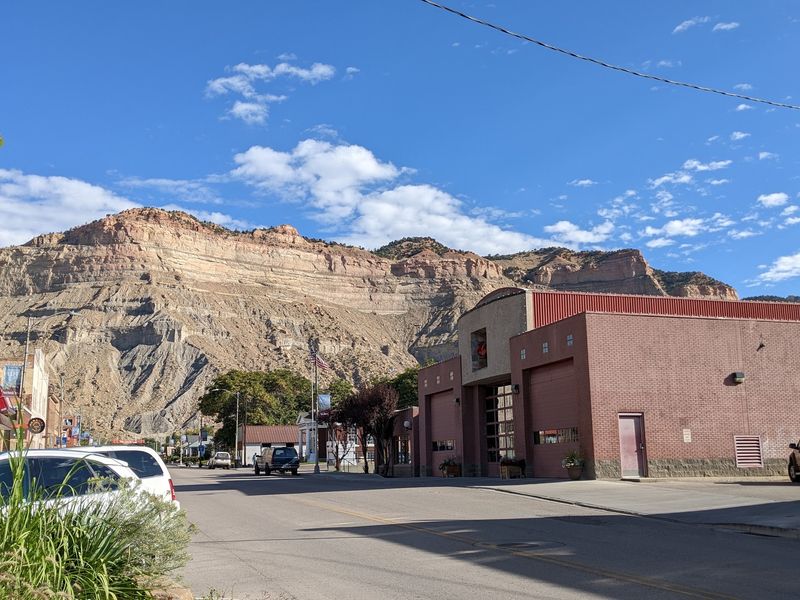
Helper has the rare small-town skill of making a short walk feel like a proper afternoon plan. Its historic Main Street sits in a compact downtown where galleries, restaurants, shops, the Helper Museum, and the Rio Theatre are close enough that the car can stay put for a while.
The town grew with railroading and coal mining in Carbon County, and that background is not just decorative. The Helper Museum, housed in the former Hotel Utah building, focuses on mining, railroads, and local life, giving the storefront stroll more weight than a quick snack stop usually gets.
Helper also has an active arts identity, with galleries and public art adding a newer layer to the old commercial blocks. For road trippers crossing eastern Utah, it works especially well because the appeal is concentrated rather than scattered.
Plan on walking both sides of Main Street instead of treating Helper as a fuel-and-go pause. The town rewards the slower traveler who likes a theater sign, a museum door, and an old building doing useful work.
2. Panguitch, Utah
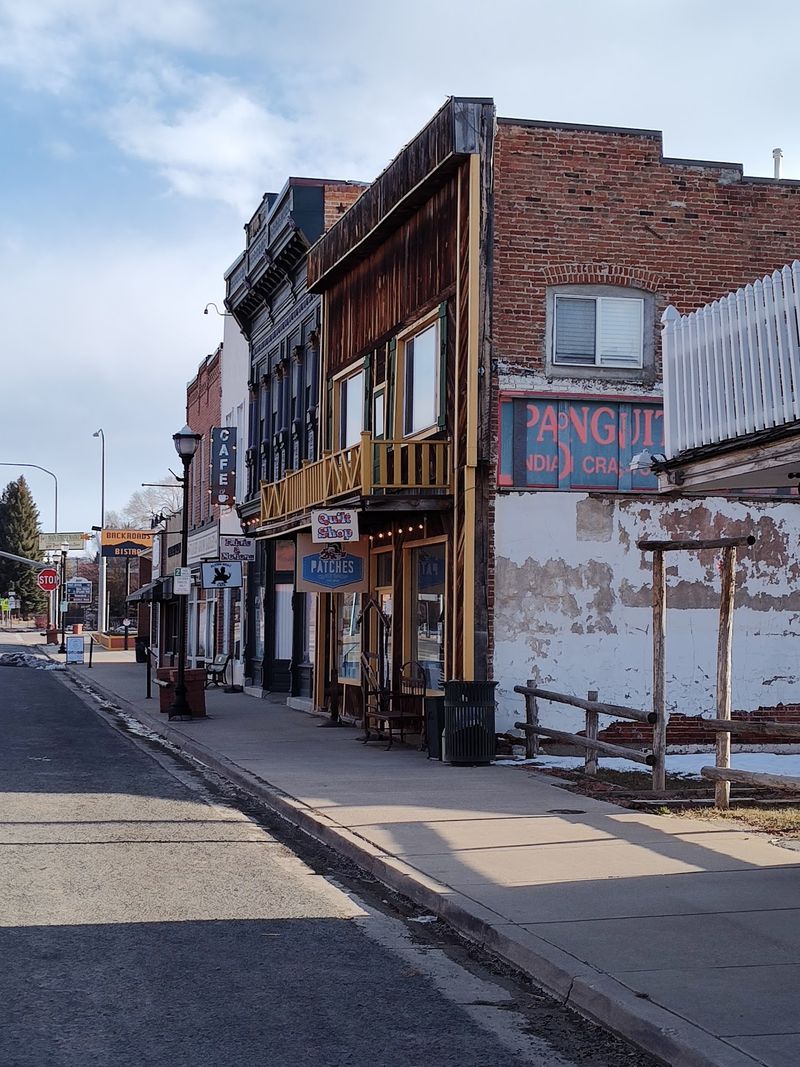
Panguitch looks as if brick got organized and decided to become a town. The historic Main Street corridor includes locally owned shops, antique stops, and the Gem Theatre, which gives the commercial strip a strong center instead of a random roadside feel.
A large portion of Panguitch’s main commercial area is listed on the National Register of Historic Places, and that fact matters when you are wandering. Many buildings reflect the town’s late 19th and early 20th century development, with red brick giving the street a visual rhythm that is easy to notice even if architecture is not usually your hobby.
Panguitch also sits in a useful position for southern Utah travelers, especially those moving between Bryce Canyon country and other high plateau routes. That can make it tempting to hurry through, which would be a small planning error.
Give yourself time to browse, eat, and look up at the older facades. Panguitch is not asking you to solve a complicated itinerary.
It is asking you to slow down long enough to realize the main drag has been doing its job for generations.
3. Parowan, Utah
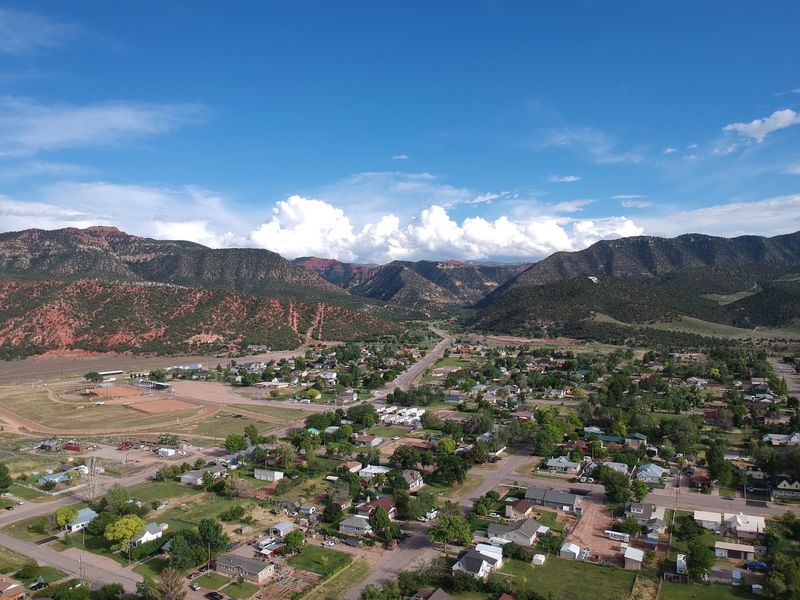
Parowan is the sort of southern Utah town where the scale works in the traveler’s favor. The downtown core is small enough to understand quickly, yet old enough to give a walk some texture beyond the usual pass-through errands.
Founded in 1851, Parowan is often described as one of the earliest Anglo settlements in southern Utah, and its older buildings help explain that long civic timeline. Main Street includes local shops and restaurants, with preserved historic structures mixed into the working town rather than staged apart from it.
The walkability is the practical advantage here. You are not chasing one famous attraction across town, then driving three blocks because the sidewalk gave up.
Parowan’s Main Street core keeps the experience close, which is helpful for families, couples, or solo travelers who just want a sensible road-trip pause.
Parowan also sits near the route many travelers use between Cedar City and Brian Head, so it can fit naturally into a larger drive without becoming a scheduling project. The best approach is simple: park, walk, read the buildings, and let the town’s age speak in a normal indoor voice.
4. Mount Pleasant, Utah
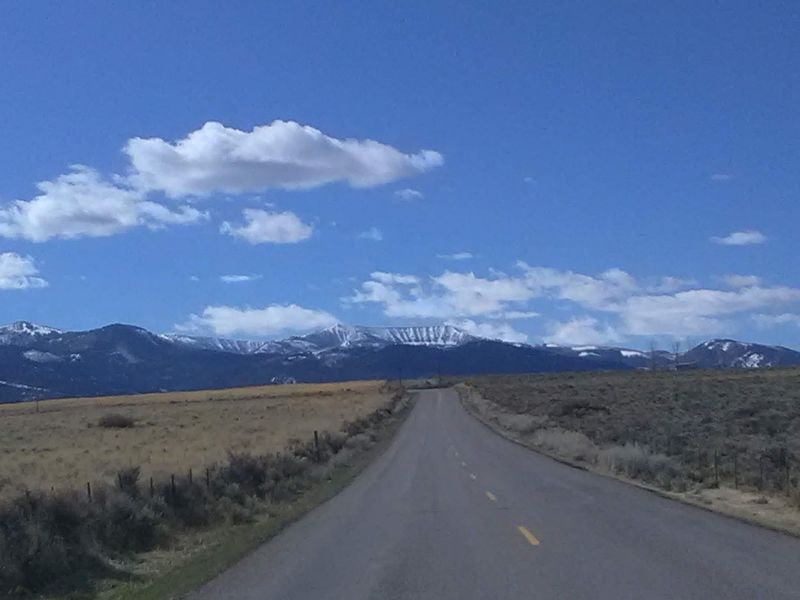
Mount Pleasant has a quiet confidence that suits the Sanpete Valley. It does not need a giant roadside sign announcing that the downtown is historic, because the district itself provides the evidence block by block.
The Mount Pleasant Commercial Historic District is substantial enough that Utah preservation officials have organized dedicated walking tours focused on its buildings. That is a useful clue for travelers: the Main Street area is not merely old in a vague way, it has enough documented architecture and history to reward a closer look.
Expect a low-key pace rather than a polished resort-town routine. The point of a Mount Pleasant stop is to notice the traditional commercial buildings, the valley setting, and the way a small town still holds its center together.
For a road trip through central Utah, Mount Pleasant pairs well with the kind of day where the best stops are measured in sidewalks, not ticket lines. Bring comfortable shoes and a little curiosity.
The downtown gives you the structure; your job is mostly not to rush past it while checking the map for the next big thing.
5. Spring City, Utah
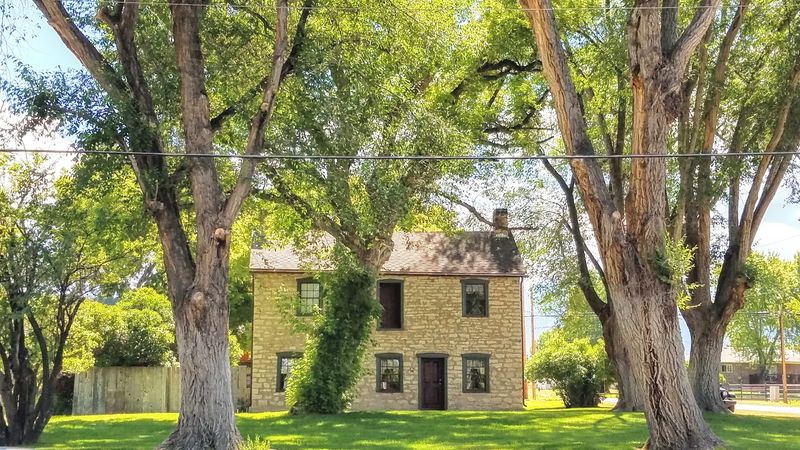
Spring City proves that a tiny town can be the main event without raising its voice. In Sanpete County, the town is known for historic architecture, and its Main Street is less about racing between attractions than paying attention to the buildings themselves.
Spring City’s historic district is recognized for its concentration of well-preserved 19th-century buildings, many tied to early settlement patterns in central Utah. Stone, brick, and adobe structures give the town a distinct look, and the spacing of the streets makes wandering feel more like reading a neighborhood than browsing a display case.
Another reason to watch Spring City in 2026 is its role as an active Utah Main Street community. That program focuses on strengthening traditional downtowns, which fits a place where the street and architecture are already the primary attraction.
Do not come expecting a long checklist. Come for a slower loop, a few careful photos from public sidewalks, and a better understanding of how much character a small grid of streets can hold.
Spring City is a reminder that sometimes the itinerary is simply the town itself.
6. Price, Utah
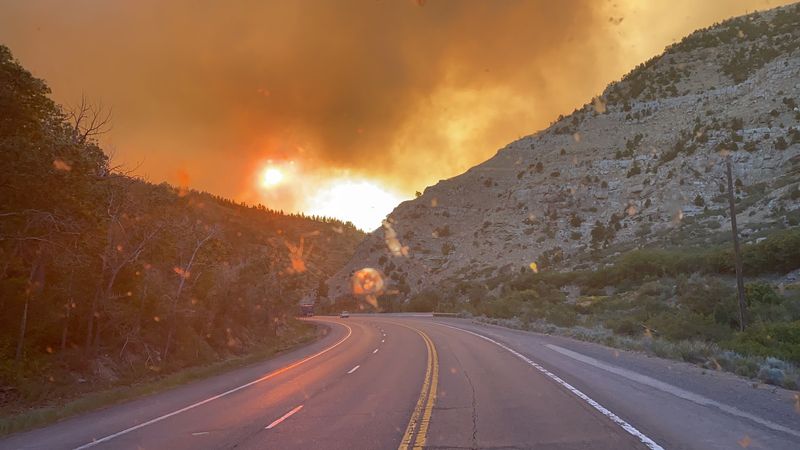
Price is bigger and busier than some towns on this list, which is exactly why it earns a place here. Its traditional commercial downtown gives eastern Utah travelers a real town-center stop rather than a single attraction floating beside the highway.
Price was one of Utah’s original Main Street pilot communities, and it remains active in the program in 2026. That continuity helps explain why the downtown corridor feels like a civic project as much as a shopping street, with attention placed on the older commercial heart of town.
The city also makes a practical base or break point for travelers interested in Carbon County history. Nearby, the Prehistoric Museum at Utah State University Eastern is known for regional paleontology and archaeology collections, which adds another reason to linger in Price before or after walking downtown.
Main Street here is not pretending to be a tiny postcard village. It is a working commercial district with history, services, and enough structure to make a walk useful.
For road trippers crossing the state’s eastern side, Price supplies the rare combination of errands, context, and a downtown that still has a spine.
7. Brigham City, Utah
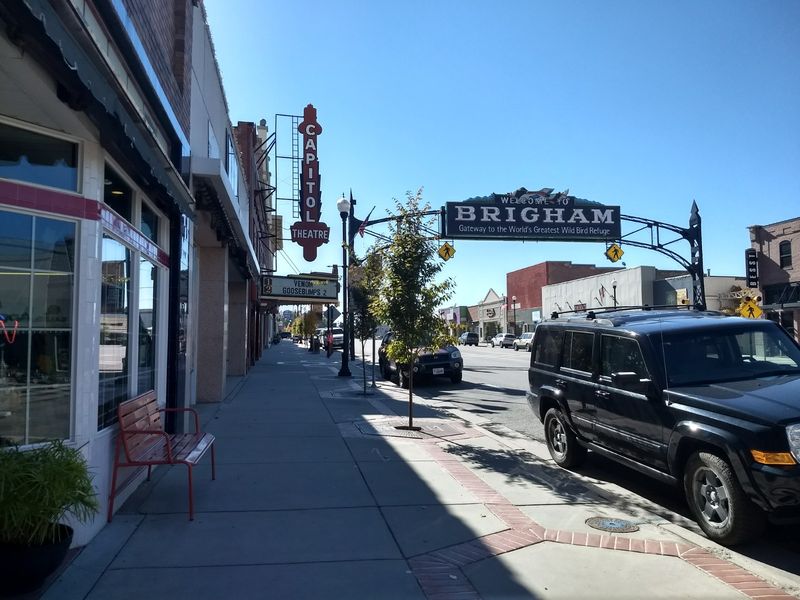
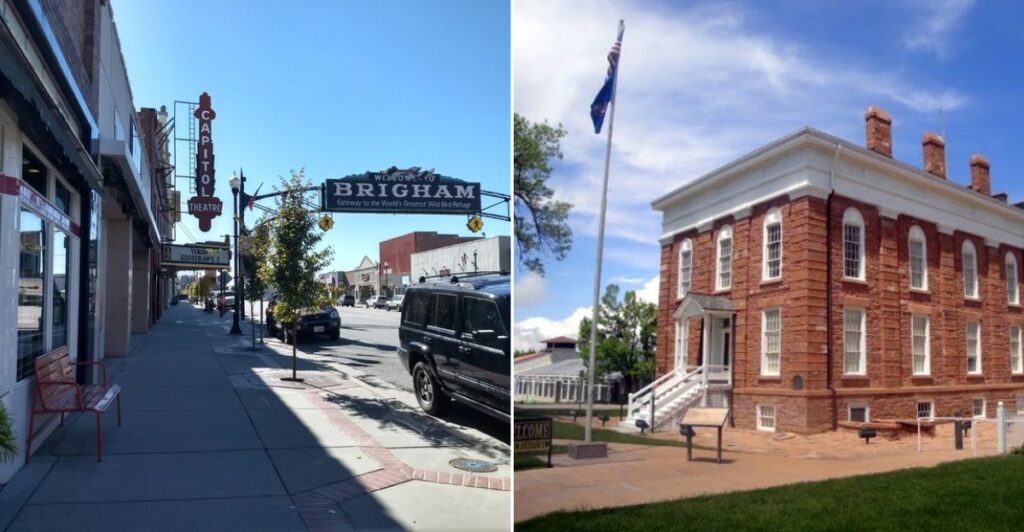
Brigham City gives northern Utah travelers a downtown corridor they can recognize immediately, which is more helpful than it sounds. Instead of scattering the experience across town, Main Street provides a clear place to start walking, browsing, and making reasonable snack decisions.
The city’s historic center reflects its long role as a Box Elder County hub, and Brigham City remains part of Utah’s Main Street network in 2026. That program connection signals ongoing attention to the downtown corridor, not just a nostalgic plaque nailed to the past.
Brigham City is also closely associated with the Brigham City Tabernacle, a late 19th-century landmark owned by The Church of Jesus Christ of Latter-day Saints, and the Box Elder County Courthouse area helps anchor the civic side of town. Those features give the main district a stronger sense of place than a quick highway exit can offer.
For travelers heading toward Bear River Migratory Bird Refuge or continuing through northern Utah, downtown Brigham City works as a grounded pause. The appeal is practical and visual: a real street, recognizable landmarks, and enough history to justify stretching your legs longer than planned.
8. Vernal, Utah
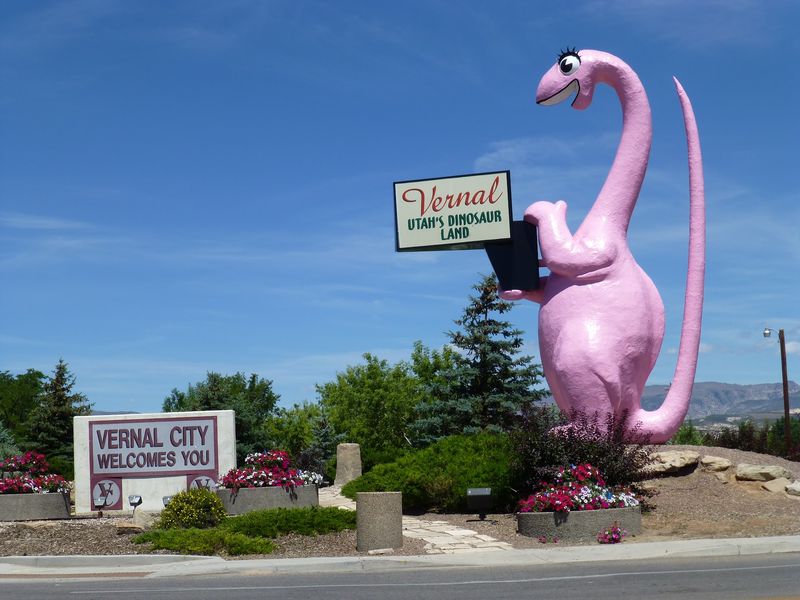
Vernal wears its dinosaur connection proudly, but the downtown story is not fossilized. Main Street has seen storefront, streetscape, public-space, and walkability improvements, and the city continues working on its downtown in 2026.
That matters because Vernal is often used as a launch point for Dinosaur National Monument, where the Quarry Exhibit Hall protects a famous wall of Jurassic dinosaur bones. A traveler could easily focus only on the monument and miss the fact that Vernal’s own Main Street has become a more deliberate place to spend time.
The town is more substantial than the tiniest entries here, so expect a broader range of services and a more developed commercial strip. For families, that can be a gift: after a day of geology, bones, and big landscapes, a walkable downtown gives everyone a normal place to regroup without another long drive.
Vernal’s road-trip value comes from that mix of practical town and themed identity. The dinosaurs may get the billboards, but Main Street gives the visit a human scale, which is useful after your brain has been thinking in millions of years.
9. Fillmore, Utah
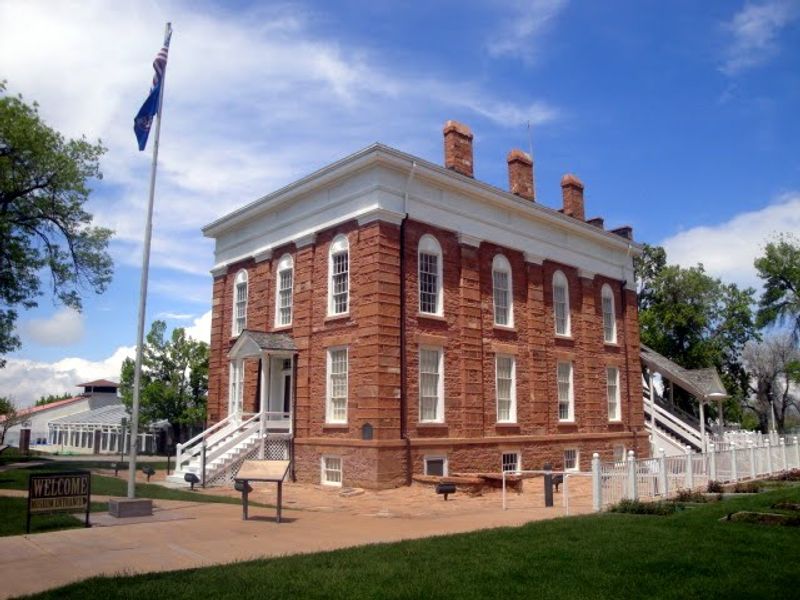
Fillmore has one of the better historical calling cards in central Utah, and it does not need to shout about it. The town served as Utah Territory’s first capital, and the Territorial Statehouse State Park Museum preserves the original south wing of the planned capitol building.
That heritage makes Fillmore a natural road-trip stop for travelers who like their Main Streets with context. The downtown is quiet compared with the state’s national-park gateway towns, but that is useful if the goal is to wander, read signs, and connect the street grid to a bigger Utah story.
Fillmore has joined Utah’s Main Street network, adding current preservation and downtown-revitalization attention to its older territorial identity. The combination keeps the town from feeling like a history footnote you only meet in a school textbook.
Because Fillmore sits along Interstate 15, it is easy to mistake it for a simple exit. Give it more credit.
A short downtown walk plus the statehouse museum area can turn a routine break into a compact lesson in territorial ambition, civic planning, and how even unfinished buildings can leave a long shadow.
10. Milford, Utah
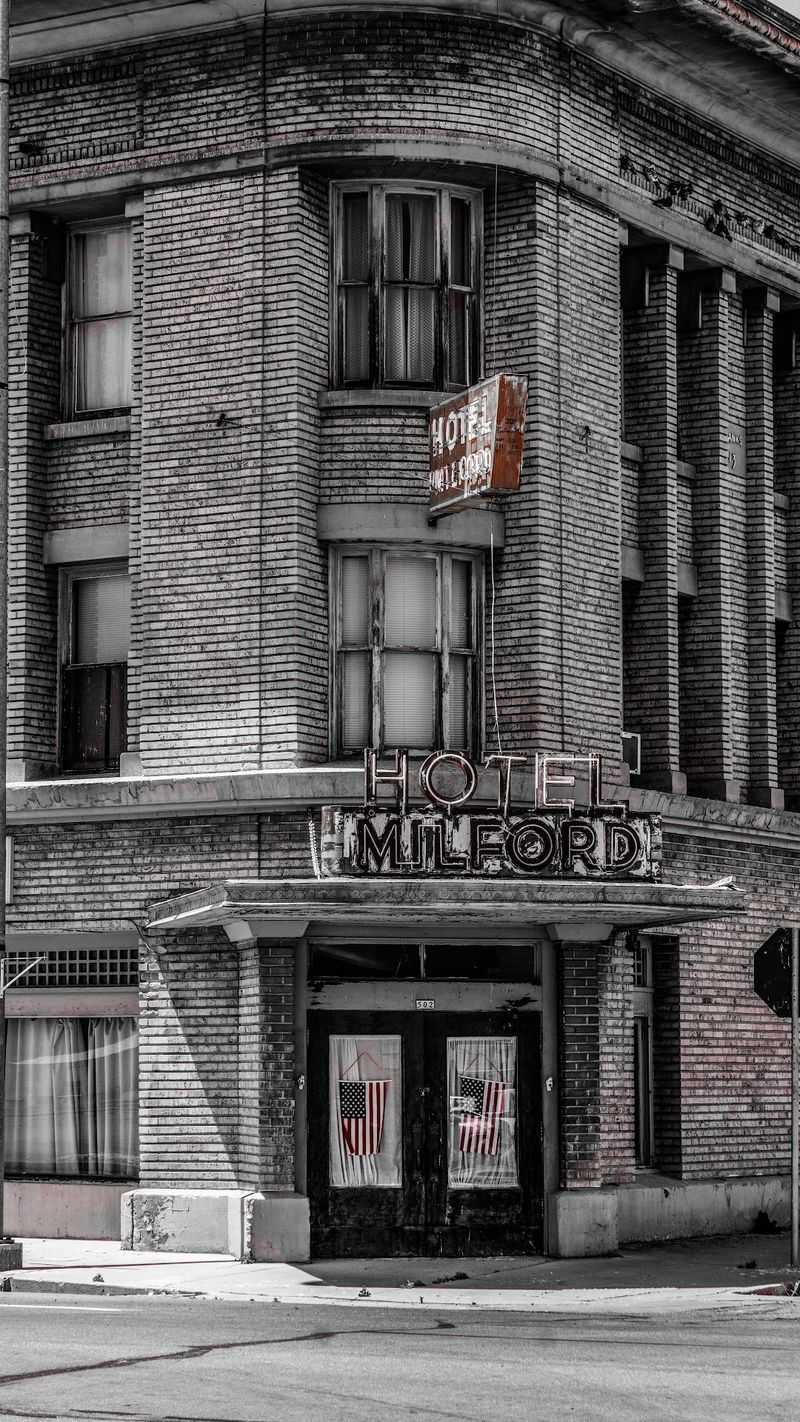
Milford is the list’s useful curveball, the kind of place that makes a road trip feel less prepackaged. This small southwest Utah railroad town is an active Utah Main Street community in 2026, which gives travelers a fresh reason to pay attention rather than roll through on autopilot.
The railroad piece is central to Milford’s identity. The town developed as an important rail and ranching center in Beaver County, and that transportation history still shapes how the community is understood.
Main Street wandering here is not about polish; it is about seeing a working small town that has kept its place on the map through movement, freight, and regional services.
Milford also sits far from the most repeated Utah tourist loops, so expectations should be sensible. Plan for a modest downtown walk, a look at the street layout, and a stop that adds geographic variety to a southwest Utah itinerary.
For travelers who enjoy towns with more utility than theater, Milford has real appeal. It reminds you that Main Street programs are not only for already-famous places.
Sometimes they are most interesting where the story is still being actively steadied.
11. Green River, Utah
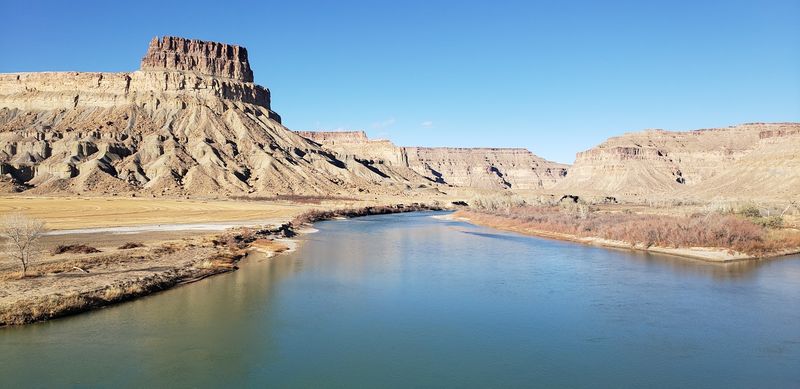
Green River feels like a road-trip town in the most literal sense: travelers arrive with miles behind them and more miles ahead. Its Main Street scale is small, but the town’s location in eastern Utah gives it outsized usefulness on long desert drives.
The city sits along the Green River and near Interstate 70, and it is known regionally for Green River melons, a real agricultural identity in a dry part of the state. That detail gives the town more personality than its size might suggest, especially for travelers who enjoy places tied to a specific crop, river, or route.
Green River is also participating in Utah’s Main Street program in 2026, placing it among communities working on downtown vitality rather than letting the highway define everything. For a visitor, that makes a Main Street wander feel connected to current local effort, not just old travel habits.
Keep expectations right-sized. Green River is tiny, practical, and geographically memorable.
Stop for the river-town context, stretch your legs downtown, and let the place serve as a reminder that Utah’s small-town map includes more than mountain valleys and red-rock gateways.