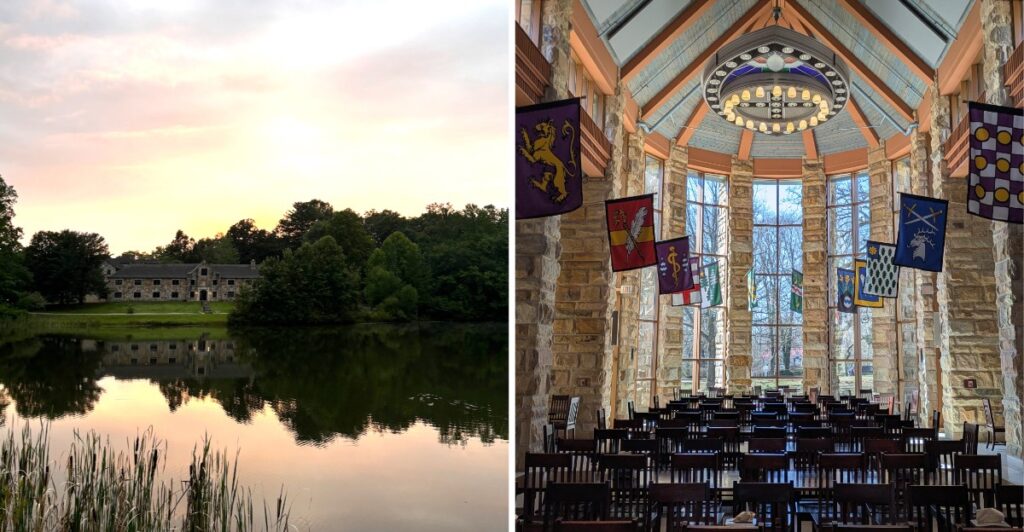
Most campuses have a quad. This Tennessee one has caves.
The university sits inside a 13,000-acre Domain on the Cumberland Plateau, where classrooms share space with forests, bluffs, lakes, trails, and an entire village.
That scale gets even stranger when you remember the undergraduate population is only around 1,700.
So daily college life can mean heading to class, then ending up on a trail without ever really leaving campus.
The setting is not just decoration either. Students use the land for research, recreation, and everyday routines, which helps explain why the school keeps earning national attention for getting people outside.
I’d need a map before orientation.
And probably hiking shoes before the syllabus.
The Domain Covers 13,000 Acres On The Cumberland Plateau
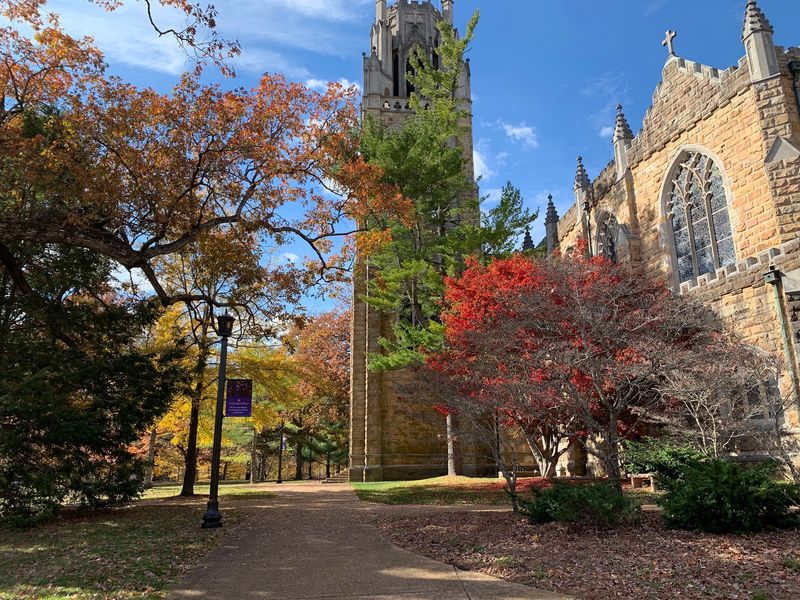
Sewanee’s scale starts with the Domain. The university owns about 13,000 acres on the western face of the Cumberland Plateau, combining the central academic campus with residential areas, the village of Sewanee, lakes, forests, meadows, caves, and surrounding bluffs.
Only a fraction of that land looks like a conventional college campus. The property includes a 382-acre academic campus, 783 acres of adjacent commercial and residential areas, and roughly 11,838 acres of natural lands.
The natural land serves several purposes at once. It is used for recreation, scientific study, environmental education, conservation, and land management. Students can leave the central campus and reach field sites without treating research as something that happens far from school.
You can spend time around academic buildings and still see only a small part of university property. If the Domain itself interests you, build the day around one or two outdoor areas rather than trying to see everything as though Sewanee were a compact downtown campus.
The size matters most when you move beyond the central buildings. Roads, trails, woods, lakes, and overlooks stretch outward from the academic core, making the larger landscape impossible to separate completely from the university around it.
Forests, Lakes, Caves And Trails Double As A Living Laboratory
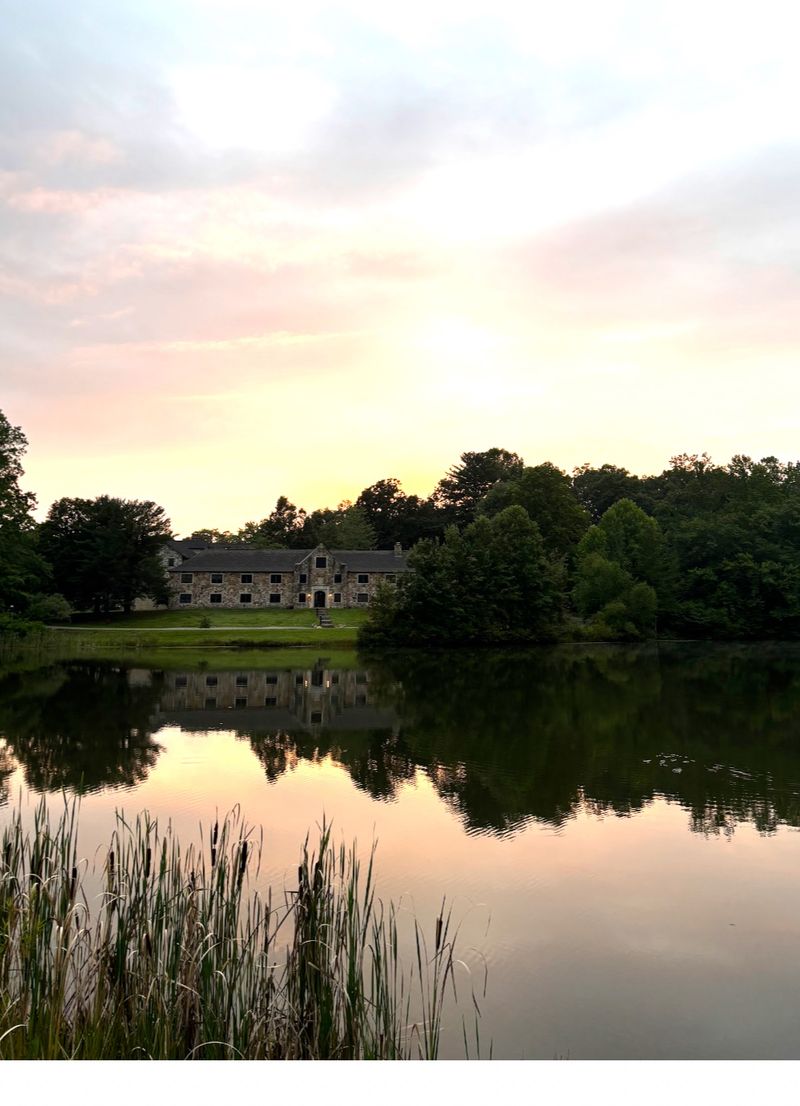
The Domain is not simply preserved land surrounding the classrooms. Sewanee uses it as a living laboratory, with environmental programs taking advantage of woodlands, lakes, trails, caves, bluffs, and a working farm for field study and research.
Students can study forest ecosystems, geology, wildlife, climate, land use, and conservation without leaving university property. Research projects have examined subjects ranging from salamanders and climate change to bat populations and underground features.
Recreation runs alongside that academic work. About 65 miles of trails cross the Domain, including the Perimeter Trail, a 20-mile loop around much of the property. Hiking, climbing, caving, and other outdoor activities are built into student recreation through the Sewanee Outing Program and the trail network.
You do not need to cover dozens of miles. Pick one trail or outdoor area that matches the amount of time you have. A short walk can show how quickly the landscape changes once you move away from the central buildings.
Decide whether your visit is mainly academic or outdoors-focused. If the woods and bluffs are the priority, leave enough daylight for them instead of treating the Domain as a quick add-on after a campus tour.
A Small Undergraduate Population Makes This A Highly Residential College
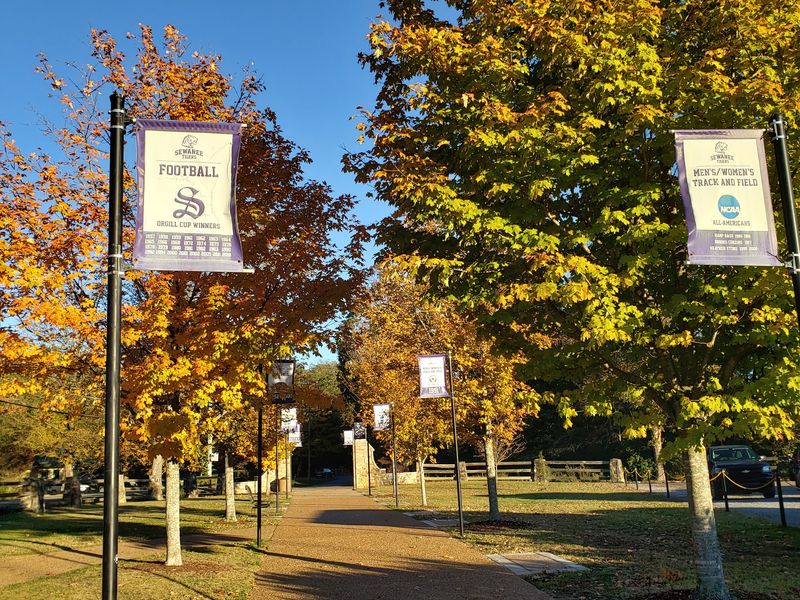
Sewanee enrolls about 1,735 undergraduates in the College of Arts and Sciences, and 99 percent of undergraduates live on campus. That combination creates a college where residential life is closely tied to the university grounds rather than spread widely through off-campus neighborhoods.
Living on campus also keeps everyday routines concentrated. Students move between residences, classrooms, dining, activities, and outdoor areas without leaving the larger university setting. The Domain becomes something they encounter repeatedly rather than a park reserved for occasional weekends.
For a prospective student, that residential figure is worth testing on foot. Walk a normal route between a residence hall, the academic core, dining, and an outdoor access point rather than staying only on the central paths. You will get a clearer sense of how the college functions on an ordinary weekday.
A place can own thousands of acres and still feel compact in daily life, so the useful question is how the spaces you would actually use connect to one another.
If you are visiting as a prospective student, pay attention to the distances that matter in ordinary life rather than the full 13,000-acre number. Notice where dining, student spaces, classrooms, residences, and trail access sit in relation to the places you would use most often.
Small Classes Sit Beside A Broad Liberal Arts Curriculum
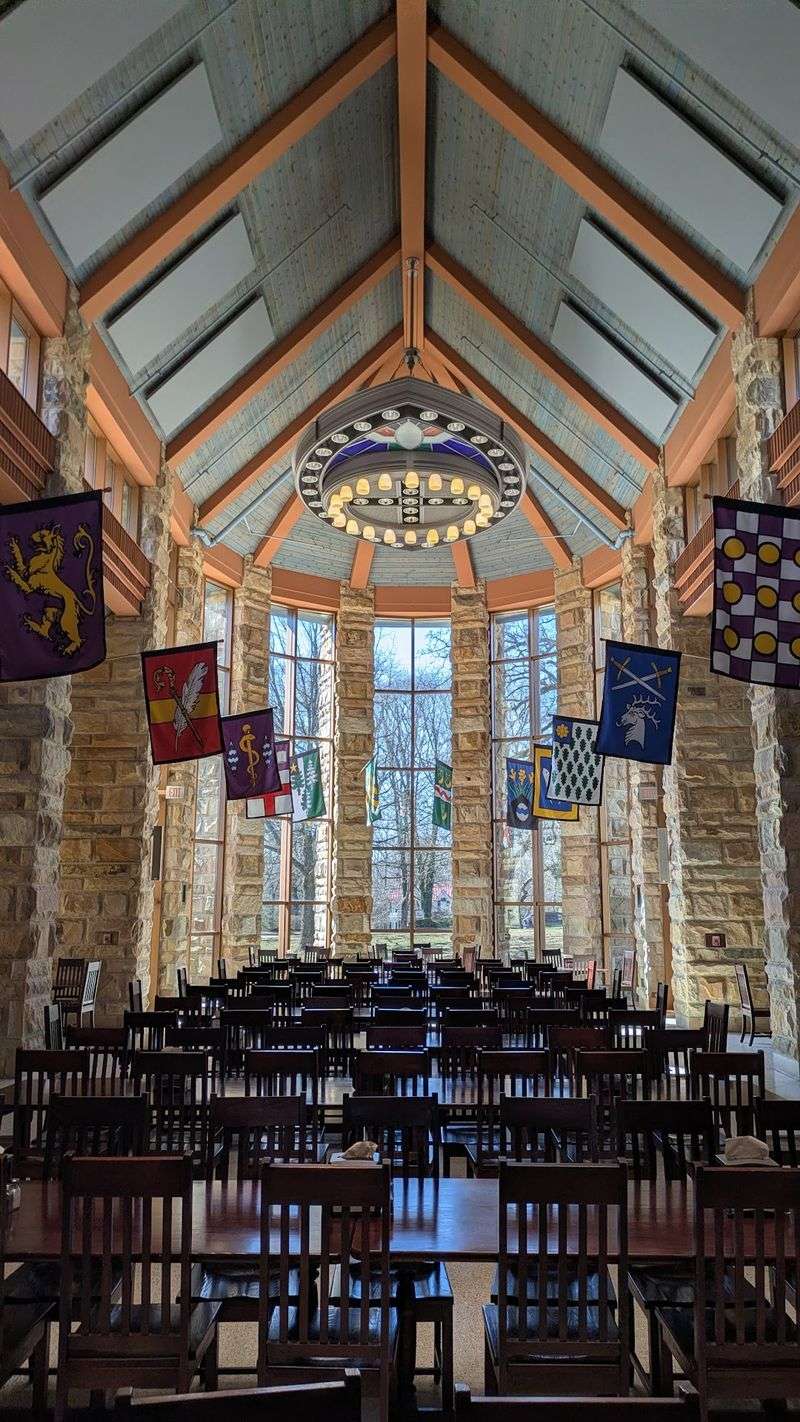
The size of the student body carries into the classroom. Sewanee has a 10-to-1 student-faculty ratio and an average class size of 16, giving the academic side of the university a much smaller scale than the acreage might suggest.
Sewanee offers 40 majors along with 46 minors and certificates of curricular study. Options stretch across the humanities, arts, social sciences, sciences, environmental fields, languages, and interdisciplinary programs. Student-initiated majors are also possible when an approved course of study cannot be met through an established major.
The Domain connects directly to some of that curriculum. Environmental studies and related programs use university land for fieldwork, while other departments draw on Sewanee’s collections, laboratories, arts spaces, and research opportunities.
Postgraduate awards add another measure of the university’s academic reach. Sewanee counts 28 Rhodes Scholars among its alumni, along with 54 Watson Postgraduate Fellows and 35 NCAA Postgraduate Scholars.
For a prospective student, the useful question is not the raw program count. Start with the subject you are most likely to study, then look at the courses, faculty, field opportunities, and related programs around it. A small class average matters most when the academic options you want are actually there.
Sewanee Appears On National Best Value Lists
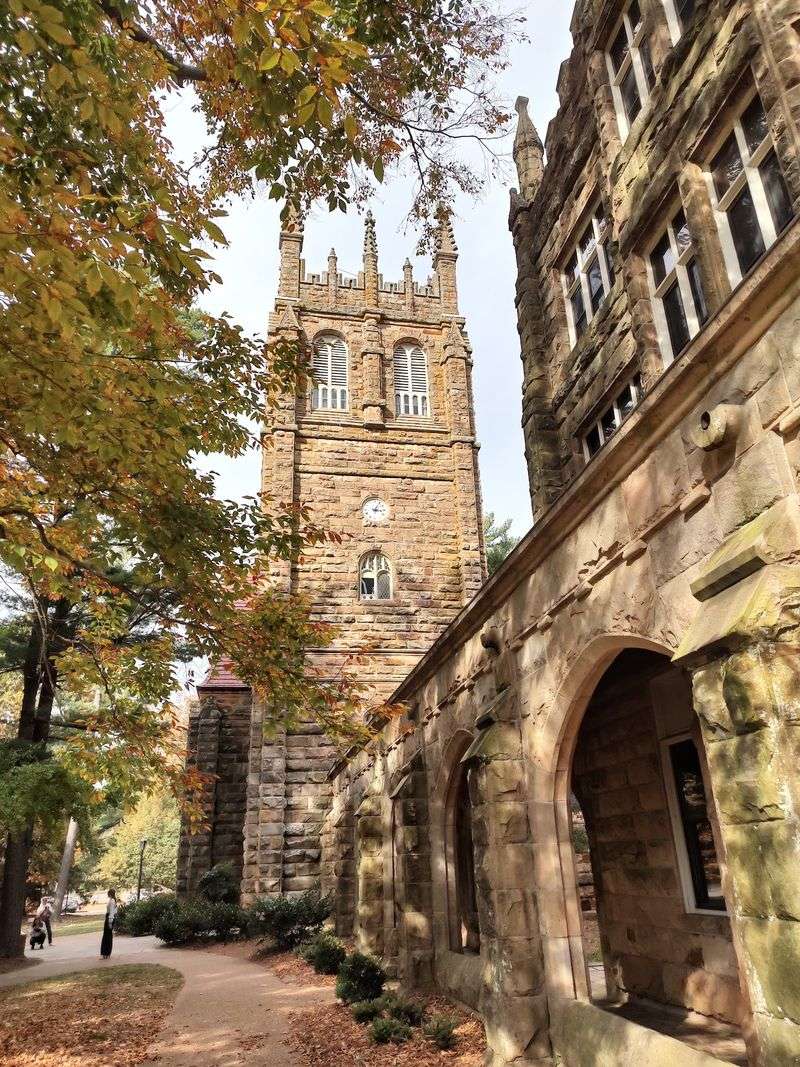
Two national college rankings currently place Sewanee on their best-value lists. In August 2026, The Princeton Review included the university among its 209 Best Value Colleges. Its methodology considers academics, affordability through price or financial aid, and career prospects.
U.S. News also placed Sewanee at No. 70 on its 2026 Best Value Schools list among national liberal arts colleges. In the same edition, the university ranked No. 45 among national liberal arts colleges.
Those rankings do not determine what any individual student will pay. Financial aid, household circumstances, scholarships, and other factors can change the actual amount significantly. If value is central to your decision, compare the aid offer and expected net cost rather than relying on a ranking alone.
Career outcomes add another data point. For the Class of 2025, destination information was collected for 326 of 421 graduates. Of those graduates with known outcomes, 93 percent were employed, continuing their education, serving in the military, or participating in a fellowship or service commitment within six months.
That knowledge rate matters because the percentage describes graduates whose outcomes were known rather than every member of the graduating class.
The Princeton Review Ranked Sewanee First For Getting Outdoors
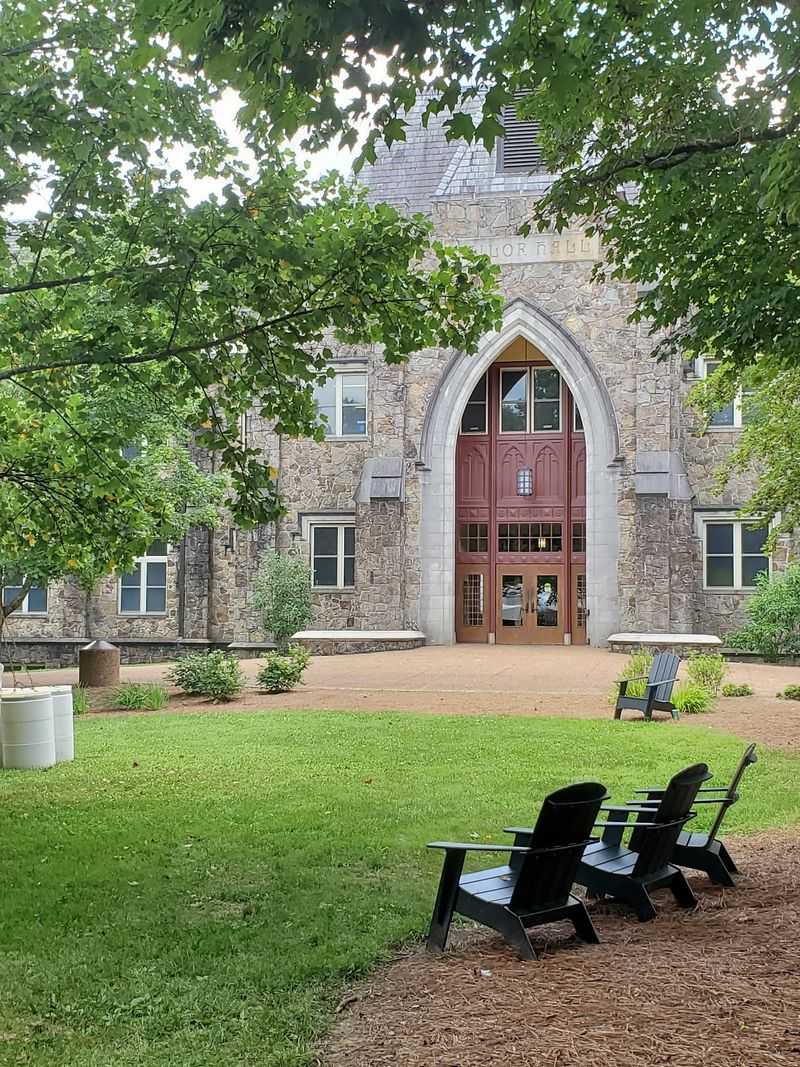
The Domain also helped Sewanee earn a national distinction that is unusually specific to student life. In The Princeton Review’s 2027 edition of The Best 392 Colleges, Sewanee ranked No. 1 in the “Great Outdoors: Students Get Outside” category.
The category is based on student responses about outdoor use. At Sewanee, that result sits alongside a 13,000-acre Domain, about 65 miles of trails, the Sewanee Outing Program, environmental research, caves, lakes, bluffs, and easy access from the central campus.
The same 2027 edition placed Sewanee No. 2 for Most Beautiful Campus. That ranking is also based on student survey responses.
You can test the outdoor part of the experience more directly during a visit. Add a trail walk to a standard campus tour, or spend time around one of the Domain’s accessible natural areas after seeing the academic core.
That combination shows why outdoor access matters here. The woods are not miles away from student life. They begin around the same university grounds where classes, residences, research, and student activities are already happening.
For someone who wants academics and outdoor access to overlap instead of competing for time, that setup deserves a closer look.
Visitors Can Tour The Academic Core And Explore Beyond It
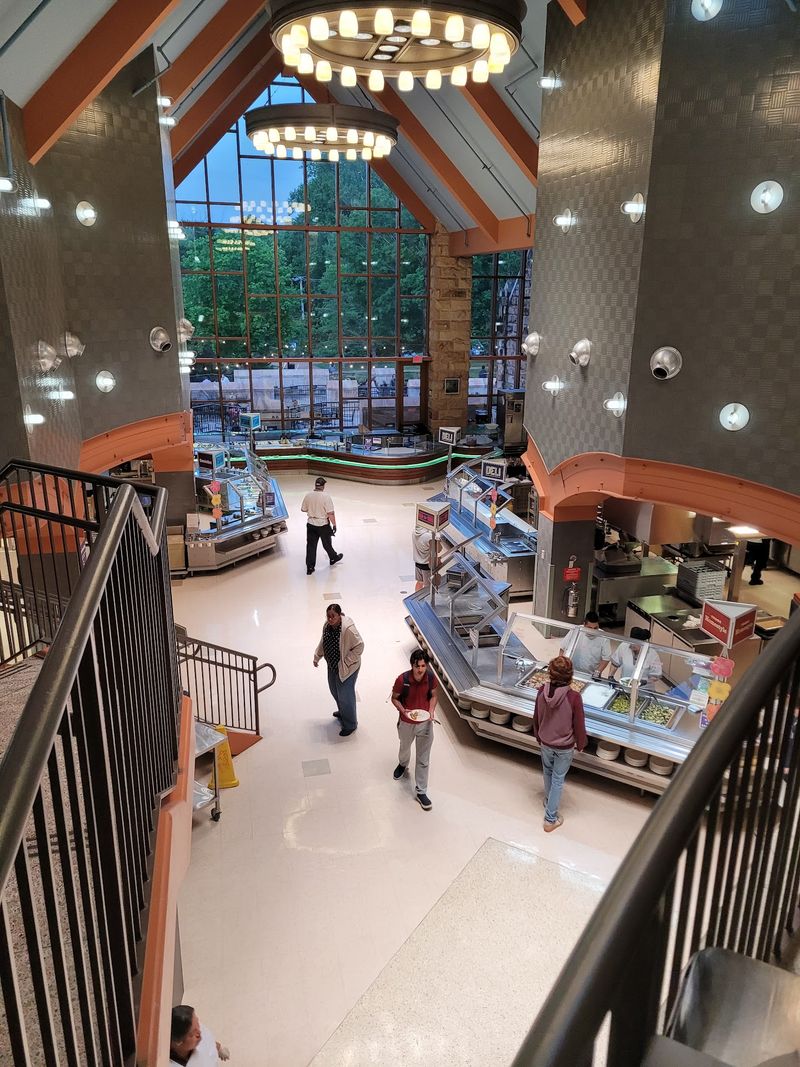
Sewanee welcomes prospective students and other visitors, and the admissions office offers guided and self-guided ways to see the central campus. A standard prospective-student visit can include an information session and student-led walking tour, while self-guided options let you move at your own pace.
The university’s general address is 735 University Avenue, Sewanee, TN 37383. Fulford Hall, where admission visits begin, uses the same street address. Sewanee operates on Central Time, which is worth remembering if your trip crosses from another Tennessee time zone.
A guided tour organizes the academic story, residence life, and student perspective. A self-guided visit gives you more freedom to linger around buildings or adjust the route. Neither covers the entire Domain.
Add one outdoor stop if time allows. The Perimeter Trail and other Domain routes offer options of very different lengths, so match the walk to your schedule and experience rather than choosing the longest trail simply because it is there.
Sewanee’s scale makes more sense once you see both halves of the place. Spend time where students study and live, then step into the larger landscape around them. That is when 13,000 acres stops sounding like a statistic and starts becoming part of the college itself.