I know a day trip is working when I stop caring what time I left home and start wondering how much I can squeeze in before sunset.
That is the sweet spot these Kansas escapes aim for. They are close enough to keep the planning easy but far enough to make the day feel properly different.
You can trade familiar streets for small towns, open landscapes, local food, or a surprising attraction without turning the whole outing into a weekend commitment.
The best part is coming home with the sense that you actually went somewhere.
One of my favorite day trips started with nothing more than a full tank and a vague direction.
I found a place I had never planned to visit, ate lunch somewhere completely unplanned, and took the long way back just because the road looked better.
By evening, the trip felt much bigger than the distance on the map. That is exactly the kind of escape I want from a free day.
1. Strataca, Hutchinson
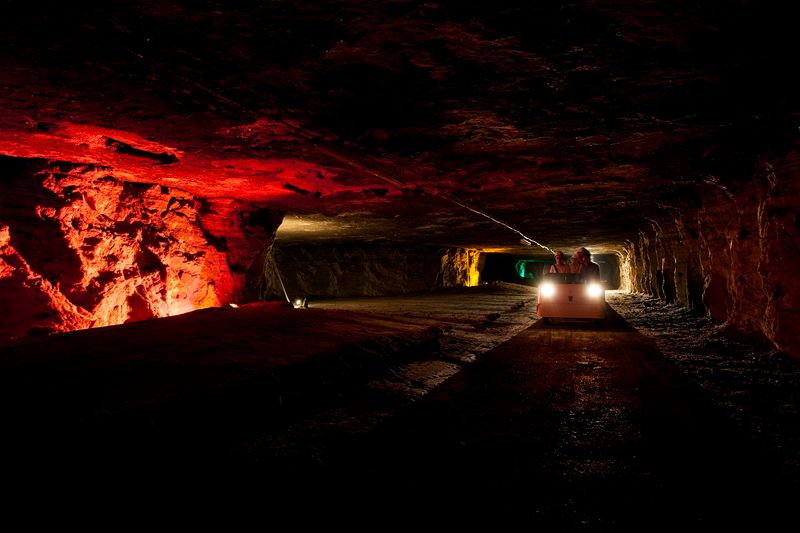
Six hundred fifty feet below a Kansas wheat field sits a museum carved into a working salt mine, with walls and floors made of rock salt.
Strataca sends visitors down a hoist into a working salt deposit that formed roughly 275 million years ago.
The air stays around 68 degrees year round, which makes it a brilliant escape in August and a cozy one in January.
A Dark Ride and optional Salt Safari roll through corridors where old mining equipment, lunch sacks, and discarded boots sit exactly where workers left them decades ago.
One of my favorite details is the vault section, where Hollywood studios store original film reels and other materials because the salt keeps humidity almost nonexistent.
Plan on about two and a half hours for the experience, wear sturdy shoes, and reserve ahead in summer since walk-ins are not always guaranteed.
Every guest gets a free salt chunk souvenir, which somehow becomes the most treasured item in the car on the way home.
Strataca sits at 3650 East Avenue G in Hutchinson, Kansas, about an hour northwest of Wichita.
2. Cosmosphere, Hutchinson
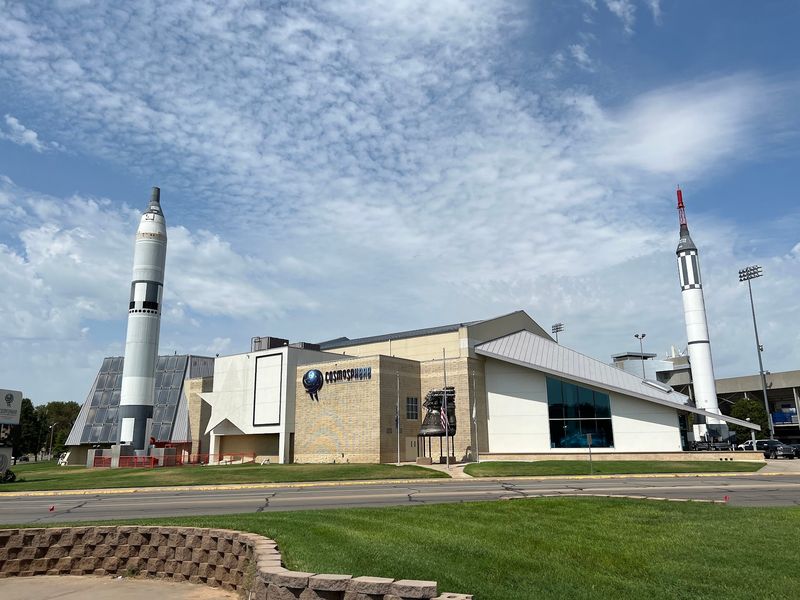
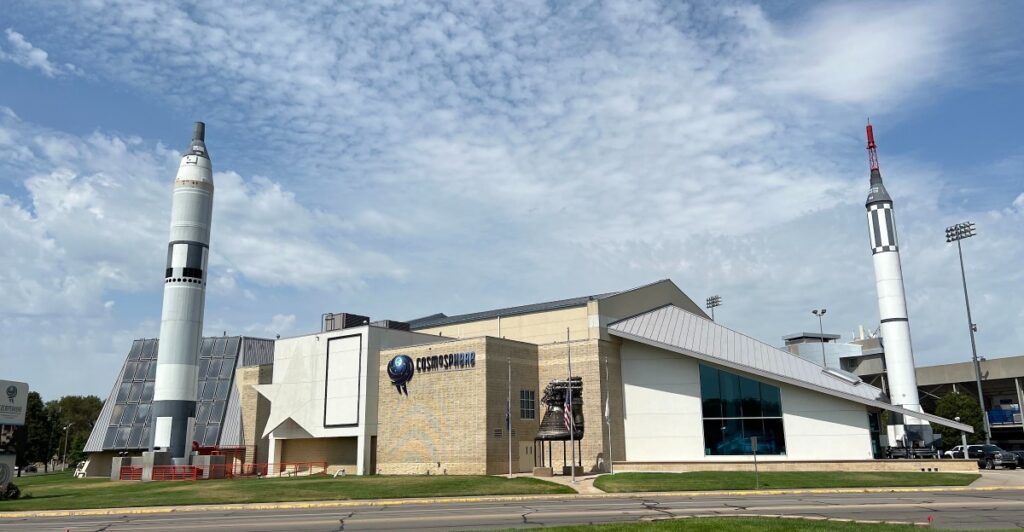
A small prairie town holding one of the biggest space collections on the planet feels like a plot twist.
The Cosmosphere in Hutchinson houses the actual Apollo 13 command module, a genuine Mercury capsule, and a Soviet Vostok spacecraft, plus the largest gathering of Russian space artifacts outside Moscow.
Walking through the Hall of Space galleries moves chronologically, starting with German V-2 rockets and ending with shuttle era hardware, so the story builds instead of just sitting in glass cases.
An SR-71 Blackbird hangs above the lobby, and the planetarium shows rotate often enough that repeat visits still feel fresh.
Here is the part people underestimate: the restoration work happens on site, and the museum has rebuilt flown spacecraft for NASA itself.
Give yourself three hours, grab a combo ticket that bundles the dome theater, and go on a weekday morning if crowds bother you.
Pairing the Cosmosphere with the salt mine makes for one seriously full Saturday, and both are within a few minutes of each other.
Find it at 1100 North Plum Street in Hutchinson, Kansas.
3. Lindsborg, Kansas
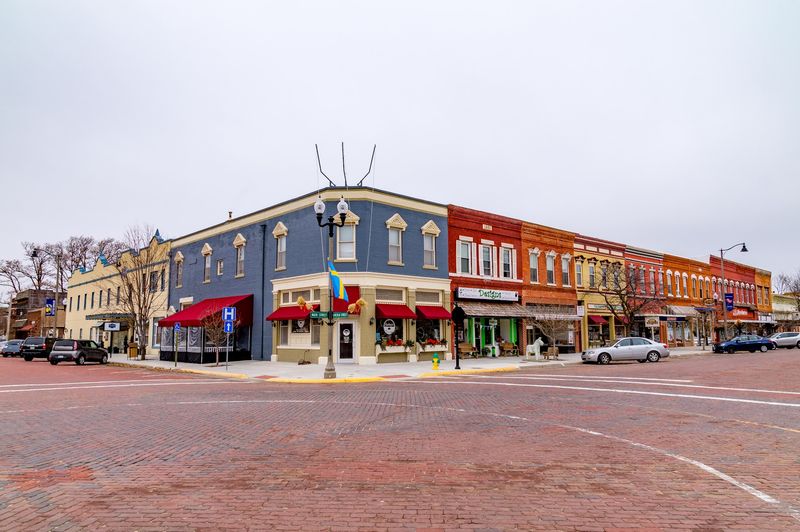
Brightly painted wooden horses stand guard on nearly every corner of this little Swedish town.
Lindsborg earned the nickname Little Sweden USA thanks to settlers who arrived in the 1860s and never let go of their traditions.
Dala horse sculptures line the sidewalks, shop signs carry Swedish words, and bakeries turn out cardamom rolls that vanish fast.
The downtown stretch along Main Street is compact and walkable, filled with pottery studios, a broom shop where brooms are still made by hand, and galleries tied to the local art college.
Fun bit of history: the community has performed Handel’s Messiah every year since 1882, making it one of the longest running traditions of its kind in the country.
Spring and fall bring the best weather for wandering, and the Svensk Hyllningsfest festival in odd numbered Octobers packs the streets with folk dancing.
Climb Coronado Heights just outside town for a castle-like stone lookout with views across the Smoky Hills.
Lindsborg sits in McPherson County, Kansas, roughly ninety minutes north of Wichita.
4. Maxwell Wildlife Refuge, Canton
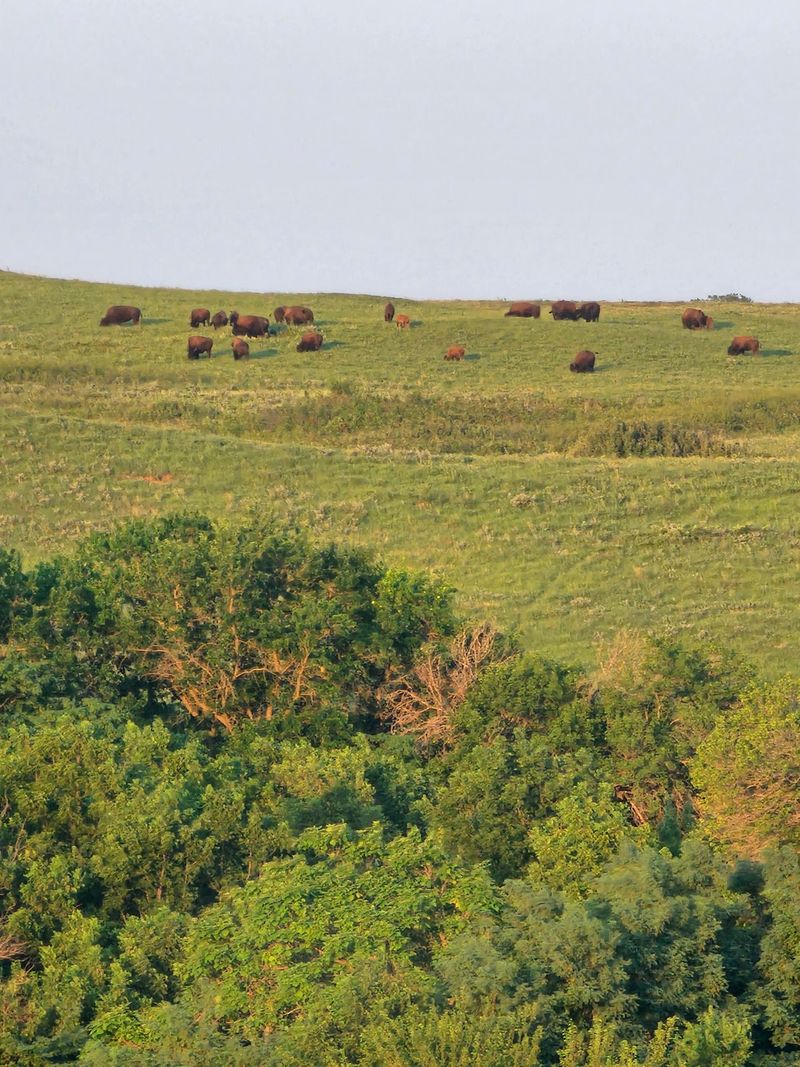
Bison do not care about your schedule, which is exactly why seeing them feels earned.
Maxwell Wildlife Refuge near Canton protects about 2,560 acres of native prairie and keeps a herd of bison alongside a herd of elk, both roaming freely behind fences you can actually see over.
Tram tours run by reservation and get you close enough to hear hooves in the grass, while roadside viewing areas let you scan the pasture on your own; the old observation tower has been removed.
Early morning and late evening are prime viewing hours, especially in September when elk begin bugling across the hills.
Bring binoculars, because the animals sometimes park themselves on the far ridge just to be difficult.
Adjacent McPherson State Fishing Lake adds picnic tables and shade if you want to stretch the visit into a lazy afternoon.
Maxwell Wildlife Refuge is located at 2565 Pueblo Road near Canton, Kansas, about an hour and fifteen minutes from Wichita, and tram reservations are strongly recommended.
5. Mushroom Rock State Park, Marquette
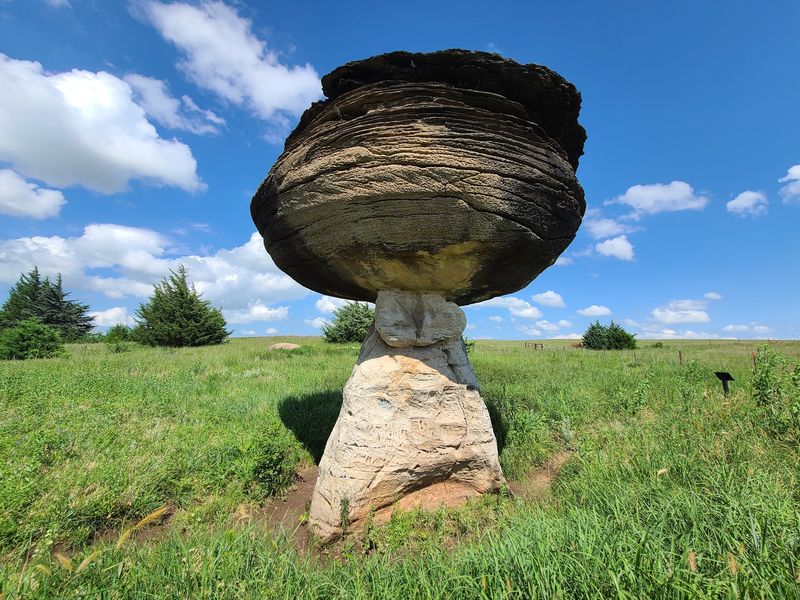
Kansas keeps its smallest state park stocked with rocks that look wildly out of place.
Mushroom Rock State Park covers just five acres near Marquette, yet those few acres hold sandstone formations balanced on skinny stems, the largest standing about 27 feet across.
Geologists credit Cretaceous era beach deposits and stubborn mineral cement for the shapes, which erosion carved out while the softer rock around them washed away.
Native peoples and later pioneers used the formations as landmarks, and both Kit Carson and John Fremont reportedly passed through as part of frontier expeditions.
Visiting takes maybe thirty minutes, so treat it as a stop rather than a destination. Pair it with nearby Kanopolis Lake or a swing through Lindsborg for a fuller day.
Climbing on the formations is discouraged since the sandstone crumbles easily, but photographers get rewarded in the golden hour when shadows stretch long across the grass.
There is no entrance booth, just a small gravel lot off Kansas Highway 141 in Ellsworth County, Kansas.
6. Tallgrass Prairie National Preserve, Strong City
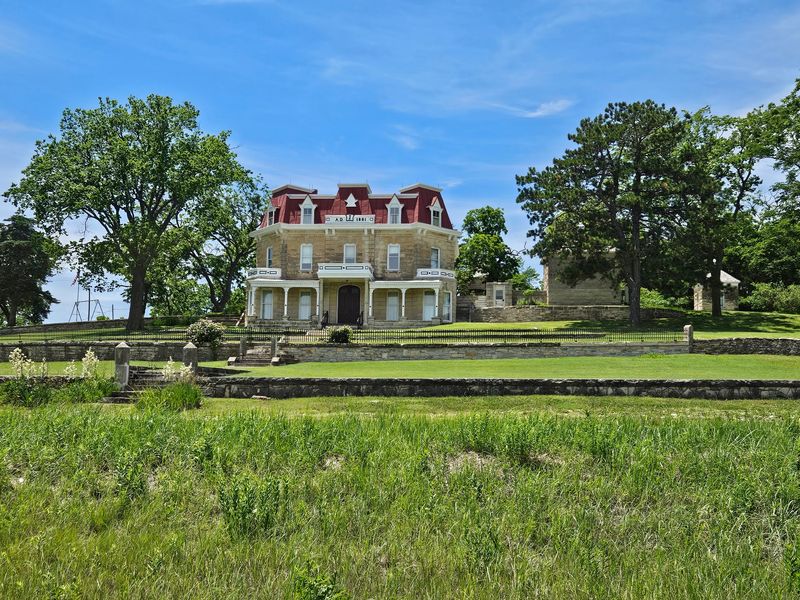
Less than four percent of North America’s tallgrass prairie still exists, and a big surviving piece sits in the Flint Hills.
Tallgrass Prairie National Preserve near Strong City protects nearly 11,000 acres of grass that can grow taller than a person by late summer.
Hiking trails range from an easy stroll around the historic Spring Hill Ranch to the longer Southwind Nature Trail and the more ambienti Bottomland loops.
A genuine bison herd wanders the backcountry, so trail closures happen occasionally for everyone’s safety.
The 1881 limestone ranch house and three story barn anchor the visitor area, and ranger led tours explain how cattle ranching kept this landscape from becoming cropland.
Late spring paints the hills with wildflowers, while October turns the grasses copper and gold.
Wind is constant, shade is scarce, and cell service gets spotty, so carry water and a hat.
Tallgrass Prairie National Preserve is located at 2480B Kansas Highway 177 near Strong City, Kansas, about a ninety minute drive northeast of Wichita.
7. Council Grove, Kansas
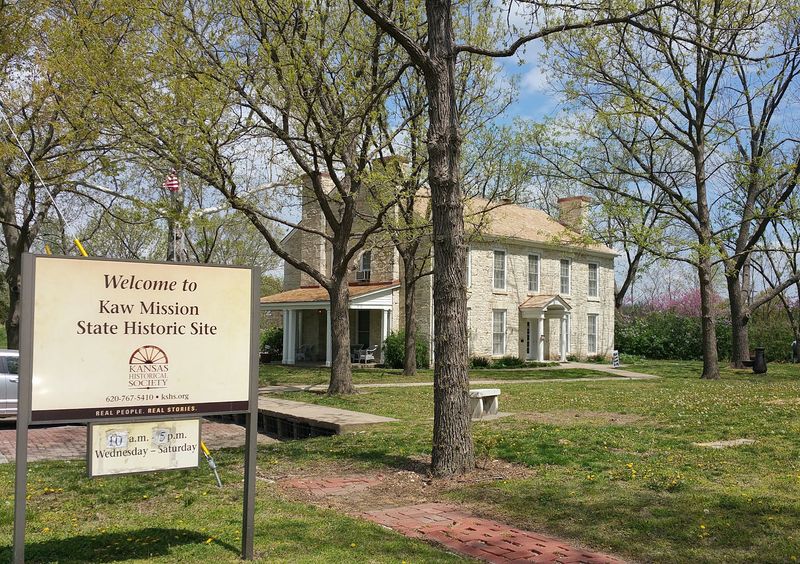
Wagon trains once used a single oak tree here as a mailbox, and the story only gets better from there.
Council Grove served as the last reliable stop for supplies and timber on the Santa Fe Trail, and the town still marks that history with more than a dozen historic sites within walking distance.
The Post Office Oak, Last Chance Store, Kaw Mission, and Madonna of the Trail monument all sit along or near Main Street, each with signage that actually explains what happened.
A treaty signed under Council Oak in 1825 gave the town its name and opened safe passage for traders heading west.
Council Grove Lake just north adds fishing, boating, and a decent stretch of shoreline for a picnic once you have had your fill of plaques.
Autumn is lovely along the Neosho River, and the town stays quiet enough that parking is never a puzzle.
Council Grove is in Morris County, Kansas, roughly two hours from Wichita by way of the Flint Hills.
8. Eisenhower Presidential Library, Museum And Boyhood Home, Abilene
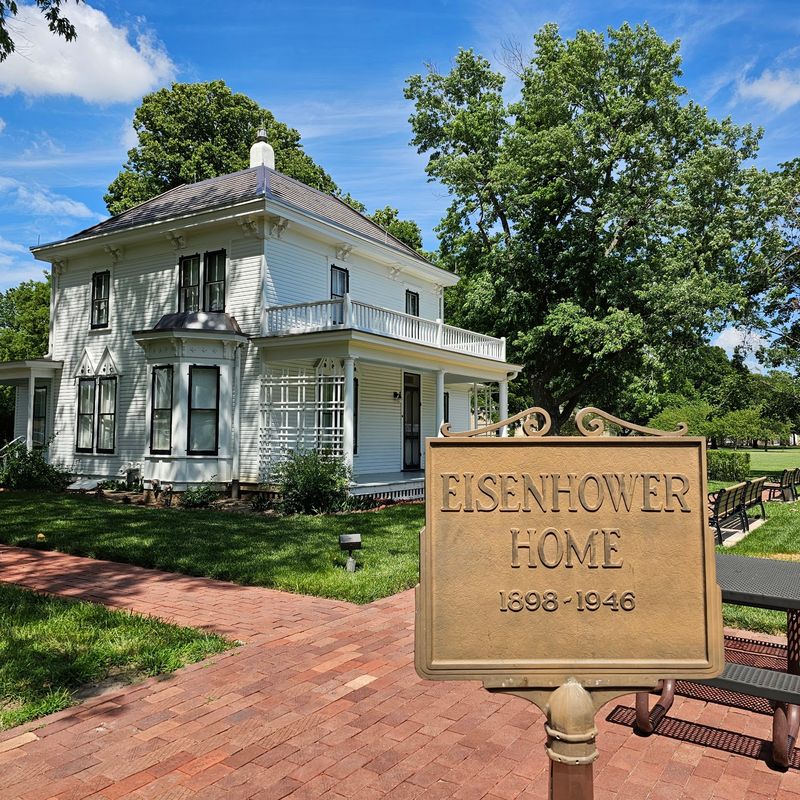
Before he commanded armies in Europe, a future president chased chores around a small white house in Abilene.
The Eisenhower Presidential Library, Museum and Boyhood Home preserves that modest home exactly where it always stood, along with a museum tracing the path from Kansas boyhood to the Oval Office.
Galleries walk through the D-Day planning rooms, the interstate highway system, and the 1950s in general, with plenty of original artifacts rather than just text panels.
The 22 acre campus includes a visitor center, the library building used by researchers, and the Place of Meditation where the Eisenhower family rests.
Allow three hours if you read the exhibits, less if you mainly want the home tour, which is limited to ten guests and requires onsite ticketing.
Downtown Abilene adds a restored 1905 Georgian Revival mansion and seasonal heritage railroad excursions, which makes the drive feel worthwhile even for people who normally skip museums.
The complex is at 200 Southeast Fourth Street in Abilene, Kansas, around two hours northwest of Wichita.
9. Cheyenne Bottoms Wildlife Area, Great Bend
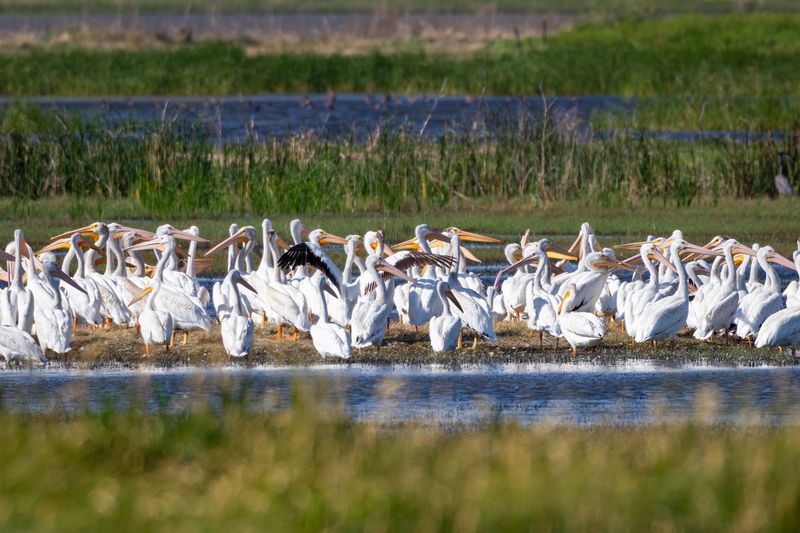
Nearly half of all shorebirds migrating through interior North America touch down at this marsh.
Cheyenne Bottoms basin near Great Bend spans 41,000 acres, while the state wildlife area covers 19,857 acres within the largest inland marsh in the United States, a Wetland of International Importance.
Gravel dike roads let you drive slowly through the pools, which means your car becomes a very comfortable bird blind.
Spring migration in April and May brings whooping cranes, white pelicans, avocets, and enormous flocks that stretch the horizon. Fall delivers waterfowl and a quieter kind of beauty.
Start at the Kansas Wetlands Education Center on Kansas Highway 156, where free exhibits and staff can tell you which pools are holding water and which birds showed up that week.
Bring bug spray in summer, a spotting scope if you own one, and patience for washboard roads.
Cheyenne Bottoms sits just northeast of Great Bend, Kansas, about two hours from Wichita, and dawn visits reward the early risers most.
10. Quivira National Wildlife Refuge, Stafford
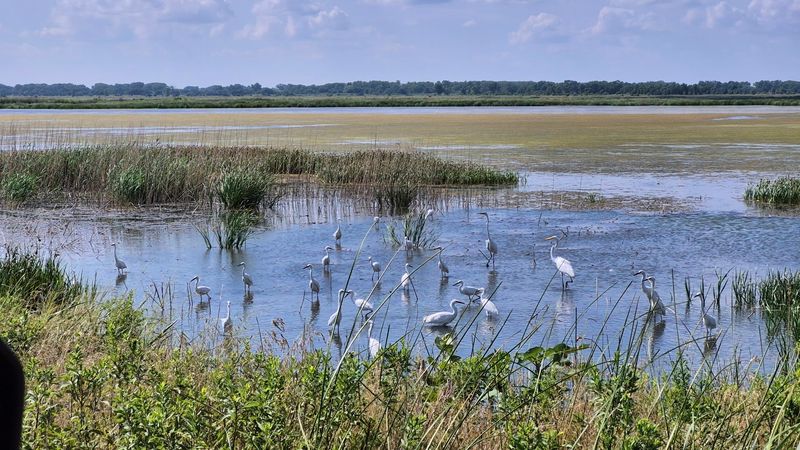
Salt water in the middle of Kansas sounds like a mistake until you stand beside it.
Quivira National Wildlife Refuge near Stafford protects 22,135 acres of inland salt marsh, sand dunes, and prairie fed by naturally salty groundwater that attracts birds by the tens of thousands.
Big Salt Marsh and Little Salt Marsh anchor the refuge, and an auto tour route with pull offs and observation decks makes exploring simple even for first timers.
Sandhill cranes gather here by the thousands each fall, and endangered whooping cranes stop through during migration, which draws birders from across the country.
Deer, coyotes, and the occasional badger show up too, so keep your eyes on the grass and not only the sky.
Roads are gravel and can get soft after rain, so check conditions and keep your speed low.
Quivira National Wildlife Refuge is reached via Northeast 140th Street near Stafford, Kansas, roughly ninety minutes northwest of Wichita, and admission costs nothing at all.
11. S.P. Dinsmoor’s Garden Of Eden, Lucas
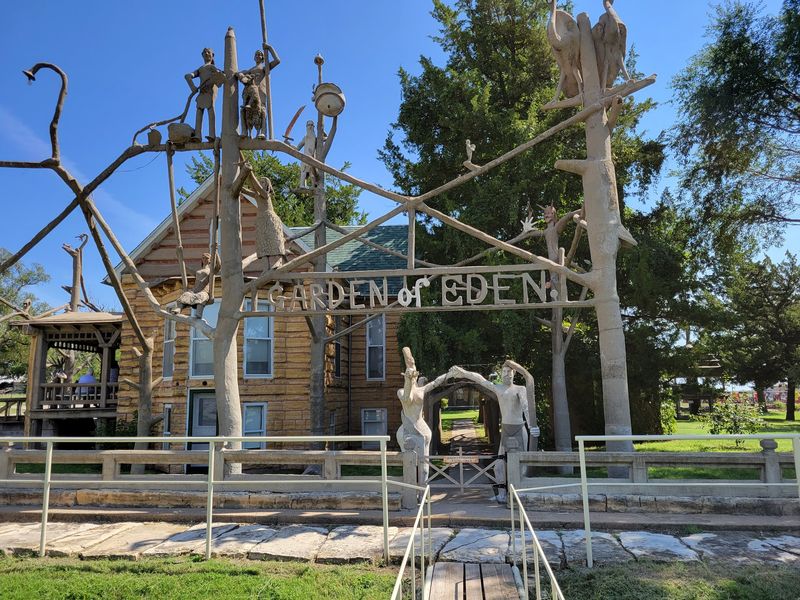
One retired schoolteacher, 113 tons of concrete, and absolutely no interest in blending in.
S.P. Dinsmoor built his Garden of Eden in Lucas starting in 1907, stacking limestone cut to look like log cabin timbers and then filling the yard with towering concrete sculptures.
Biblical scenes share space with pointed political commentary about bankers, lawyers, and preachers, which made the builder a local curiosity for decades.
He kept working into his eighties, and the property includes a mausoleum he designed himself, complete with a concrete coffin he could show visitors while still around to enjoy their reactions.
Guided tours explain the symbolism, which is honestly necessary because the figures do not interpret themselves.
Lucas has leaned fully into its reputation as the grassroots art capital of Kansas, so the Grassroots Art Center and the famously decorated public restroom are both a short walk away.
The Garden of Eden stands at 305 East Second Street in Lucas, Kansas, about two and a half hours from Wichita and worth every mile for anyone who likes their history weird.
12. Fort Larned National Historic Site, Larned
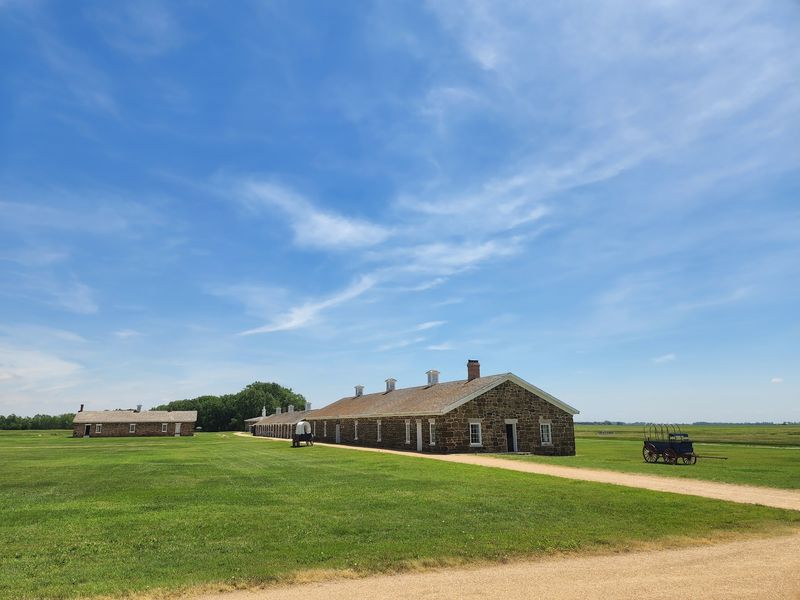
Nine original sandstone buildings still ring the parade ground, which almost never happens at frontier forts.
Fort Larned National Historic Site preserves one of the best kept military posts from the Santa Fe Trail era, established in 1859; its surviving sandstone buildings were constructed between 1866 and 1868.
Rooms are furnished the way they looked in the late 1860s, from the barracks bunks to the blacksmith shop and the commissary shelves.
Costumed interpreters demonstrate cannon firing, cooking, and drill on scheduled weekends, and the park keeps admission free year round.
A separate section a few miles away protects visible wagon ruts from the old trail, which is quietly stunning once you realize how many wheels it took to carve them.
Give yourself two hours for the buildings, longer if you enjoy talking with the staff, who know an impressive amount of detail.
Fort Larned is at 1767 Kansas Highway 156 near Larned, Kansas, about two hours west of Wichita, and mornings tend to be cooler on that shadeless parade ground.
13. Boot Hill Museum, Dodge City
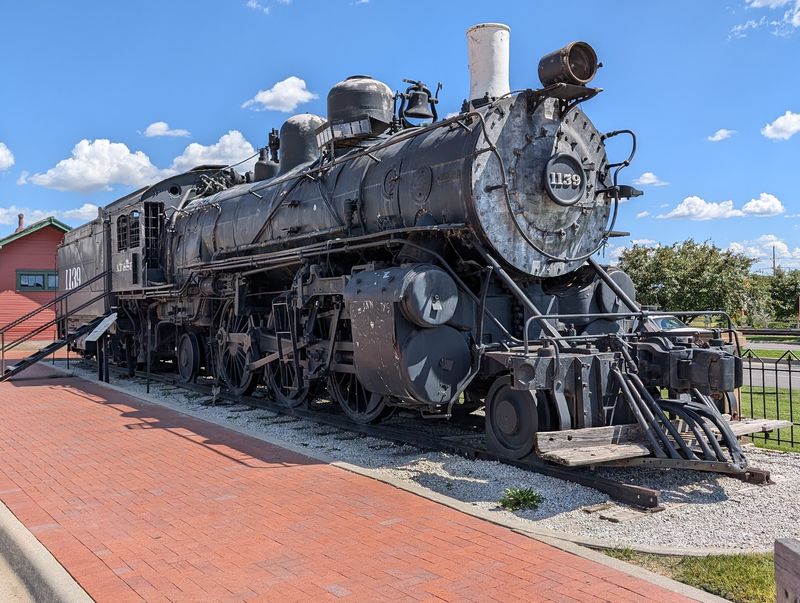
Cowboys, cattle drives, and a street that sounds like an old western movie set to life.
Boot Hill Museum in Dodge City rebuilds a block of 1876 Front Street, complete with boardwalks, a general store, a one room schoolhouse, and a print shop that still smells like ink.
Collections hold more than 60,000 artifacts tied to the cattle trade years, plus firearms, photographs, and belongings of lawmen like Wyatt Earp and Bat Masterson who actually worked here.
Summer brings scheduled gunfight reenactments, stagecoach rides, and variety shows at the Long Branch, which keeps younger visitors entertained between exhibit halls.
The original Boot Hill cemetery site sits on the hill above, named for the boots of those buried in a hurry back when the town had a rough reputation.
Plan two to three hours, and check the seasonal schedule since performances mostly run Memorial Day through Labor Day.
Boot Hill Museum is located at 500 West Wyatt Earp Boulevard in Dodge City, Kansas, roughly three hours west of Wichita and a fitting finish to any Kansas road list.