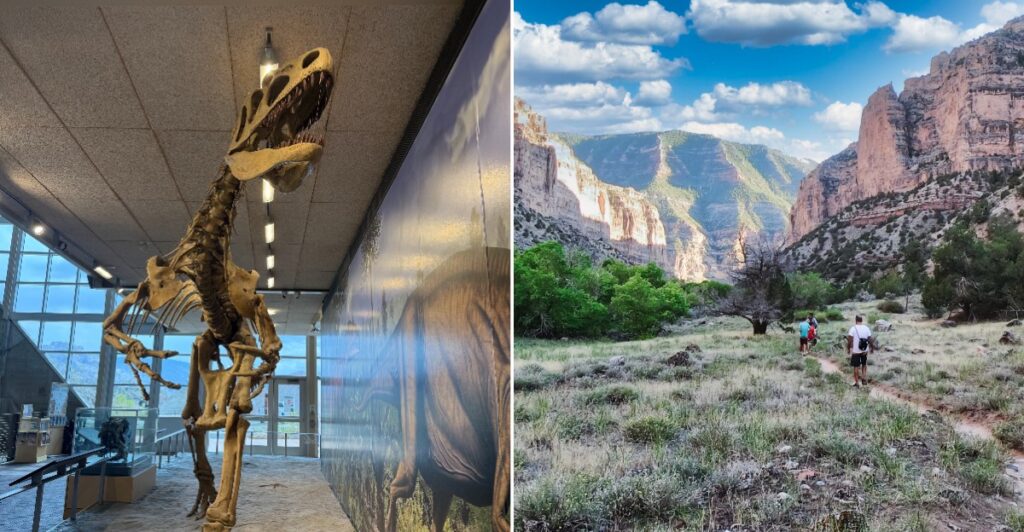
Where else can one weekend jump from river water to dinosaur bones still locked inside stone? The contrast is the whole point here, because the landscape keeps switching scales on you.
One moment you are looking at fossils from creatures that vanished millions of years ago, and the next you are following canyons carved by moving water through northeastern Utah. That combination makes the trip feel less like sightseeing and more like stepping into several chapters of Earth at once.
Rafting adds motion, bones add perspective, and the cliffs make ordinary plans seem wonderfully small. You do not need to choose between adventure and history when both are built into the same outing.
For travelers who like their scenery with a story attached, this corner of Utah delivers an unusually satisfying mix of ancient evidence, wild water, and enormous open space without making the experience feel like a classroom.
The Fossil Wall Makes Deep Time Look Strangely Practical
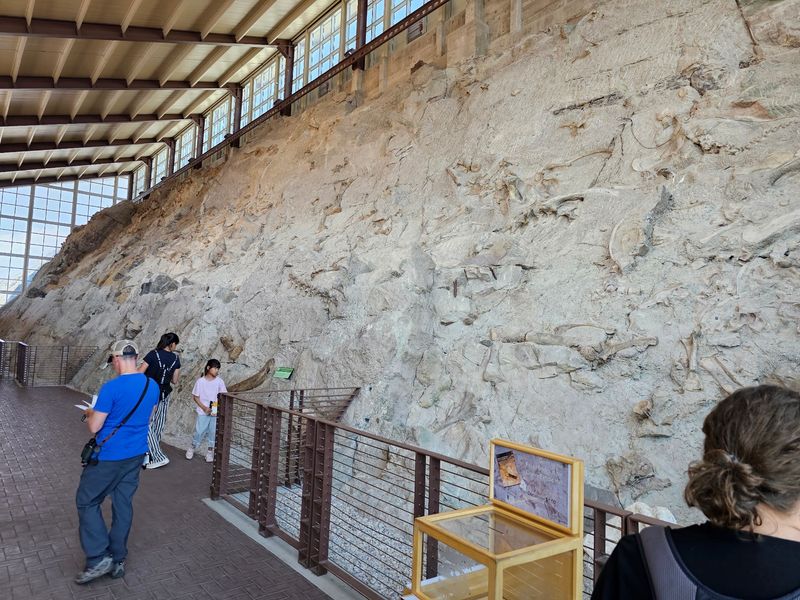
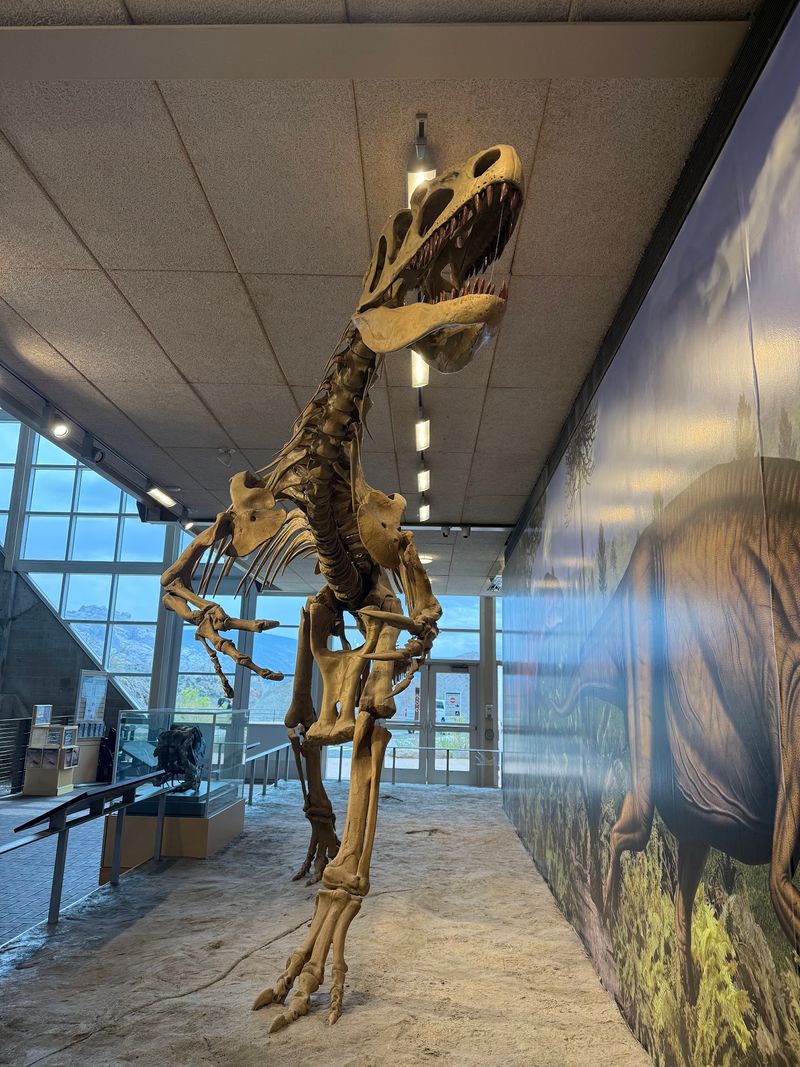
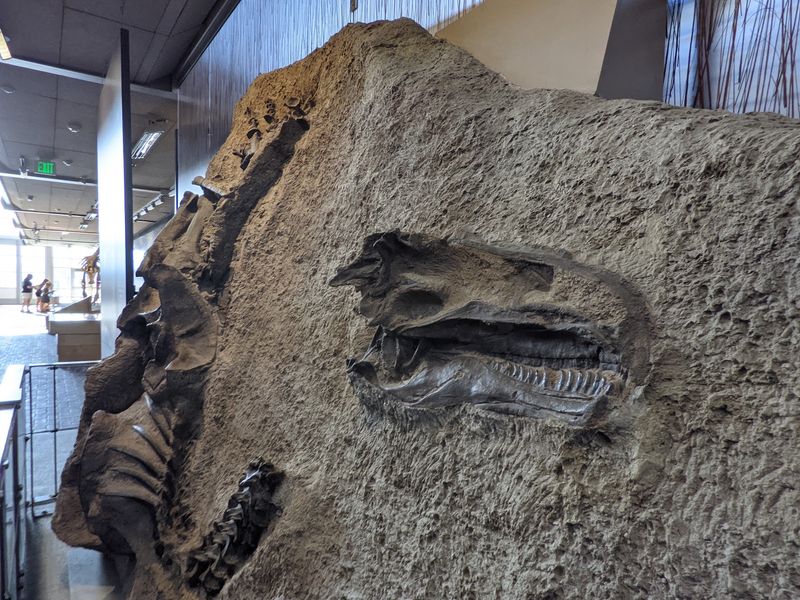
A wall full of dinosaur bones sounds like something a kid might invent to delay bedtime, yet Dinosaur National Monument makes it real and remarkably orderly. The Quarry Exhibit Hall protects a tilted rock face with hundreds of fossils still embedded where paleontologists found them.
Many bones come from dinosaurs of the Late Jurassic period, roughly 150 million years ago, when this part of Utah looked nothing like today’s dry canyon country. Visitors can see fossils from animals such as Allosaurus, Apatosaurus, Camarasaurus, Diplodocus, and Stegosaurus, which is a stronger lineup than most family group chats.
The hall is reached from the Quarry Visitor Center near Jensen, and access may involve a shuttle during busier seasons. Check the National Park Service schedule before going, because hours and transport can change by season.
What makes the stop work is its clarity. You are not staring at a replica and politely pretending to be impressed.
Dinosaur National Monument lets visitors look at actual fossil bones in the rock, with exhibits that explain how they were buried, found, and protected for public viewing.
The Green River Adds Motion To A Very Old Story
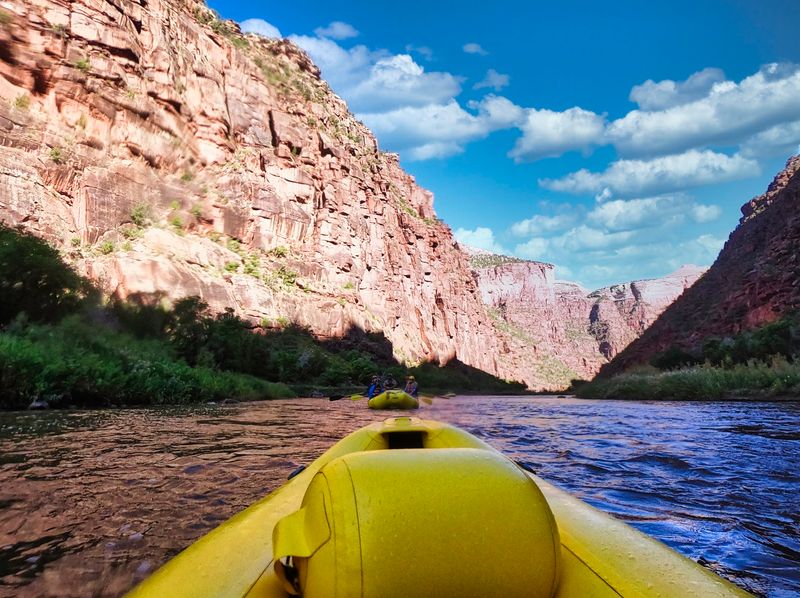
The Green River gives Dinosaur National Monument a second personality. One moment the monument is asking you to think in millions of years, and the next it is asking whether your sandals are river ready.
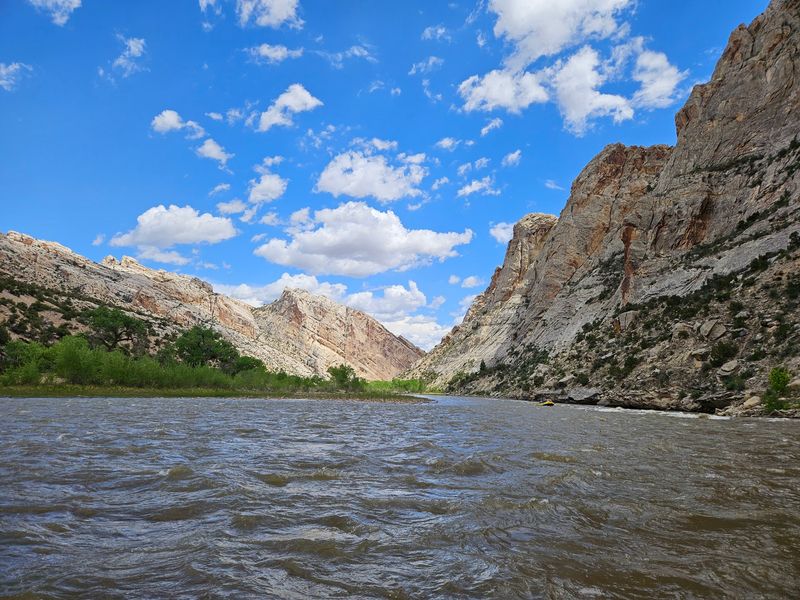
Commercial rafting trips operate on the Green River through sections of the monument, including canyon routes that show off cliffs, bends, and geologic layers from the water. The National Park Service notes that private boating also requires proper planning and permits, so this is not a casual inflatable raft situation from the garage.
River trips vary by length, season, and water conditions. Anyone planning to raft should work with authorized outfitters or review current park boating guidance before choosing a date, especially because desert rivers do not care about your calendar app.
The appeal is not just thrill seeking. Floating the Green River places visitors inside the same protected landscape that surrounds the fossil beds, giving the monument a living, moving contrast to the stillness of the Quarry Exhibit Hall.
At Dinosaur National Monument, the old bones and the flowing river do not compete. They make the place easier to understand from two very different angles.
Jensen Is The Utah Gateway For The Famous Bones
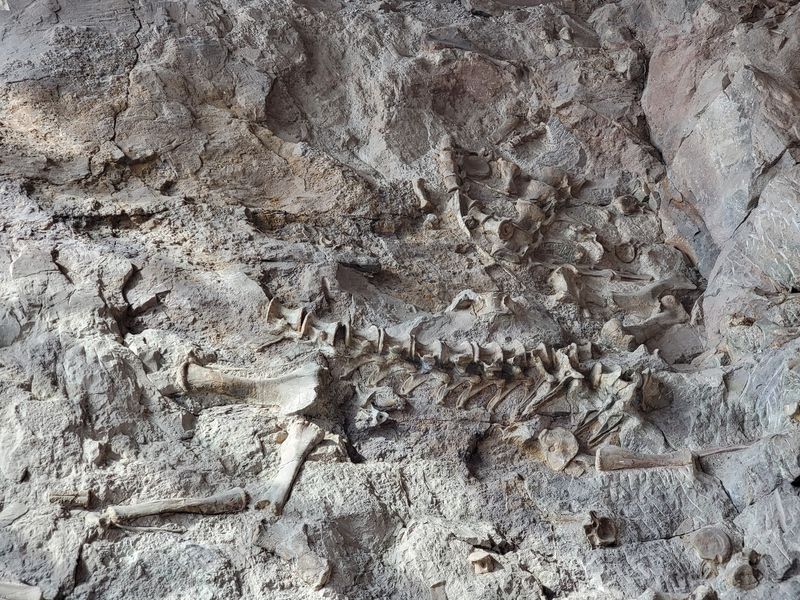
Jensen may be small on the map, but it has the important job here. The well known dinosaur quarry section of Dinosaur National Monument is on the Utah side near Jensen, while the monument itself stretches across Utah and Colorado.
The Quarry Visitor Center is the main starting point for seeing the fossil wall. Its verified visitor address is 11625 E 1500 S, Jensen, UT 84035, which is useful information to have before phone service begins acting like it has other plans.
This distinction matters because Dinosaur National Monument covers more than one landscape and more than one state. The river canyons reach far into remote country, while the fossil experience most people recognize from photos is tied closely to the Jensen entrance area.
For a simple visit, start with the Utah quarry area before trying to build a larger monument itinerary. That keeps the day focused and prevents the classic western road trip mistake of assuming every map distance behaves politely.
Jensen gives travelers a clear door into the fossil story, and for many visitors, that is the right first move.
The Monument Is Bigger Than A Dinosaur Exhibit
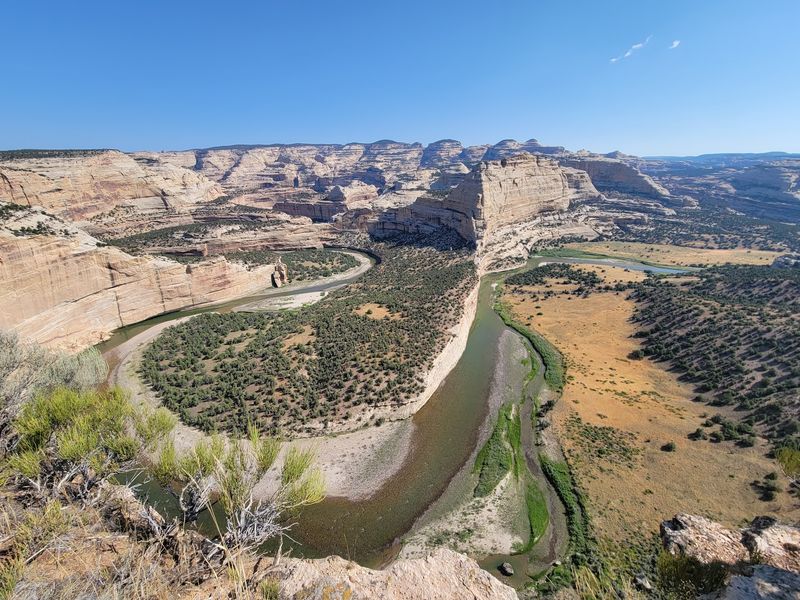
Calling Dinosaur National Monument a fossil stop is accurate, but a little unfair, like calling a library a room with chairs. The monument protects more than 210,000 acres across Utah and Colorado, with dinosaur fossils, river canyons, desert plateaus, historic traces, and scenic roads.
The original monument was established in 1915 to protect the dinosaur quarry discovered by paleontologist Earl Douglass. In 1938, the protected area expanded to include the dramatic canyon country of the Green and Yampa rivers.
That history explains why the place feels larger than a single exhibit hall. The fossil wall is the headline, but the surrounding land gives context to the rock layers, erosion, and long geologic processes that made the bones visible in the first place.
Travelers should plan with scale in mind. Some areas are easy to reach from the Jensen side, while others require more time, road awareness, and current condition checks.
Dinosaur National Monument rewards curiosity, but it also appreciates visitors who read the practical details before wandering toward a very large horizon.
Petroglyphs And Pictographs Add Human History To The Route
The dinosaurs get top billing, naturally. They were enormous, photogenic in fossil form, and not available for follow up questions.
Still, Dinosaur National Monument also protects evidence of people who lived in and moved through this region long after the Jurassic world was gone.
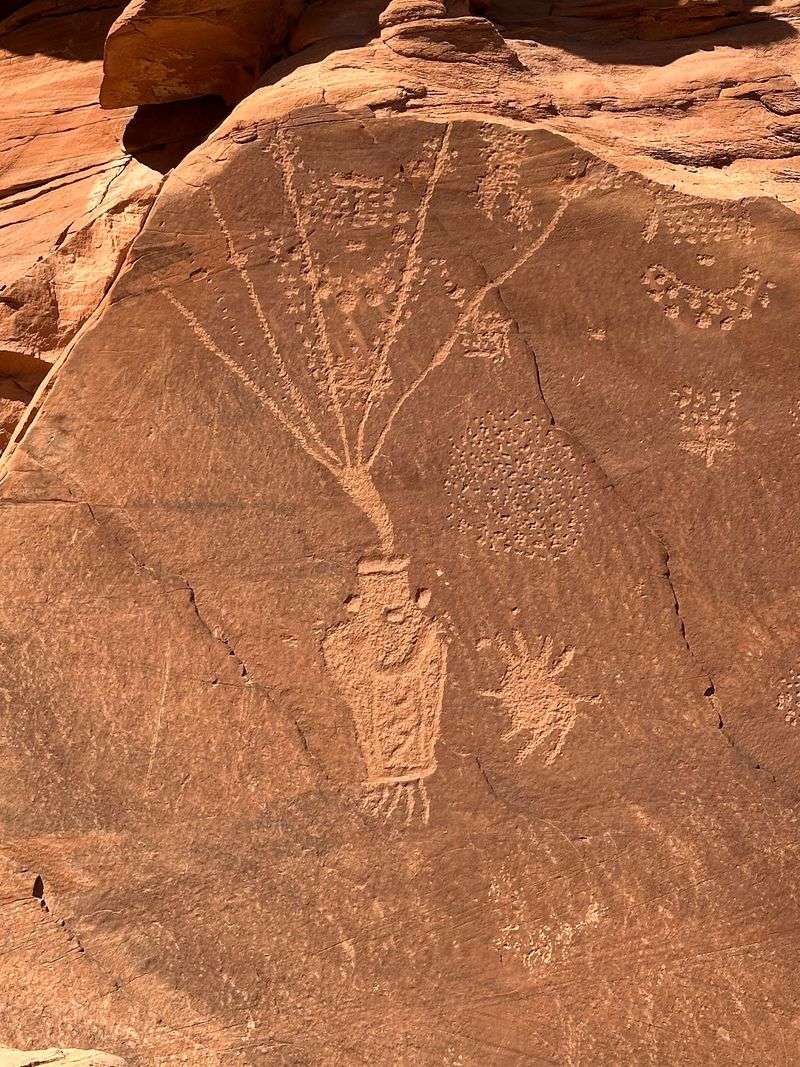
Several rock art sites in the monument include petroglyphs and pictographs associated with the Fremont culture. These images are protected resources, and visitors should view them without touching, tracing, or adding anything to the rock surfaces.
On the Utah side, accessible viewing areas can be part of a broader visit when roads and conditions allow. The National Park Service provides guidance on where visitors may see rock art and how to treat these places with care.
Including the rock art changes the rhythm of a trip. The fossil wall asks you to imagine life 150 million years ago, while the human history sites bring the timeline closer to something easier to grasp.
At Dinosaur National Monument, the land holds more than one kind of record, and the best visits leave room for both.
Short Trails Help Visitors Read The Rock Layers
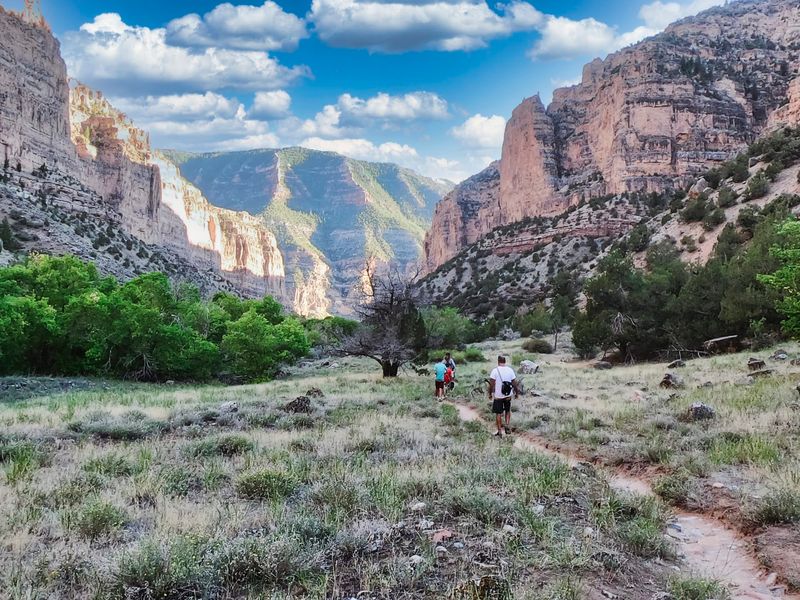
Not every walk at Dinosaur National Monument needs to become a heroic saga involving new boots and bad snack math. Near the quarry area, shorter trails help visitors connect the exhibit hall to the actual landscape outside.
The Fossil Discovery Trail links the Quarry Visitor Center area with the Quarry Exhibit Hall area and passes exposed rock layers, including parts of the Morrison Formation. Depending on current access and conditions, visitors may use it to see geology up close rather than only through indoor displays.
Trail conditions, heat, and seasonal access matter in this part of Utah. Carry water, check current park information, and avoid treating a short distance as automatic proof that the walk will be effortless.
The reward is a clearer sense of how the fossil story sits in the ground. Rock layers stop being colored bands on a sign and become the visible structure of the place.
Dinosaur National Monument is strongest when visitors can move between explanation and landscape, then realize the two have been talking to each other all along.
Families Can Learn Without Turning The Day Into Homework
Children do not need much persuasion to care about dinosaurs. Adults, meanwhile, may appreciate that Dinosaur National Monument gives that excitement a real setting instead of another plastic figure hiding under the car seat.
The Quarry Exhibit Hall is especially useful for families because the main attraction is direct and visual. Fossils remain in the rock wall, exhibits explain the science in approachable ways, and the Junior Ranger program can give younger visitors a task that feels more like a mission than schoolwork.
The practical side matters too. Starting at the visitor center helps families ask about current shuttle service, trail conditions, restrooms, and what is realistic for the day.
In a desert setting, water and sun protection are not personality traits. They are basic supplies.
Dinosaur National Monument works for mixed ages because it does not require everyone to share the exact same attention span. A child can be amazed by a giant bone, an adult can care about geologic time, and nobody has to pretend a long lecture was the main event.
Couples And Solo Travelers Get Room To Choose Their Pace
Some destinations quietly demand consensus. Dinosaur National Monument is kinder than that.
A couple can split the day between fossils and scenery, while a solo traveler can move at museum speed in the quarry and then slow down outdoors without negotiating snack timing with a committee.
The Jensen area gives visitors a manageable starting point, especially for those who want the fossil experience first. From there, choices can stay simple: spend focused time in the Quarry Exhibit Hall, take a short trail if conditions fit, or plan a river trip with a permitted operator.
Weekend travelers should remember that the monument is large and not all areas connect neatly by quick roads. A little planning keeps the outing from becoming a geography lesson delivered by a tired dashboard.
For professionals trying to turn limited time into something that feels different from the weekday loop, Dinosaur National Monument offers a clean mental reset. It is factual, physical, and quiet in the way big western landscapes can be quiet.
Utah supplies the scale; the monument supplies the reason to stop and pay attention.
A Simple Saturday Detour Can Still Feel Enormous
A visit does not have to become a multi day expedition with laminated schedules. For many travelers, Dinosaur National Monument can begin as a simple Saturday detour, especially when the goal is to see the quarry area near Jensen and keep the plan sensible.
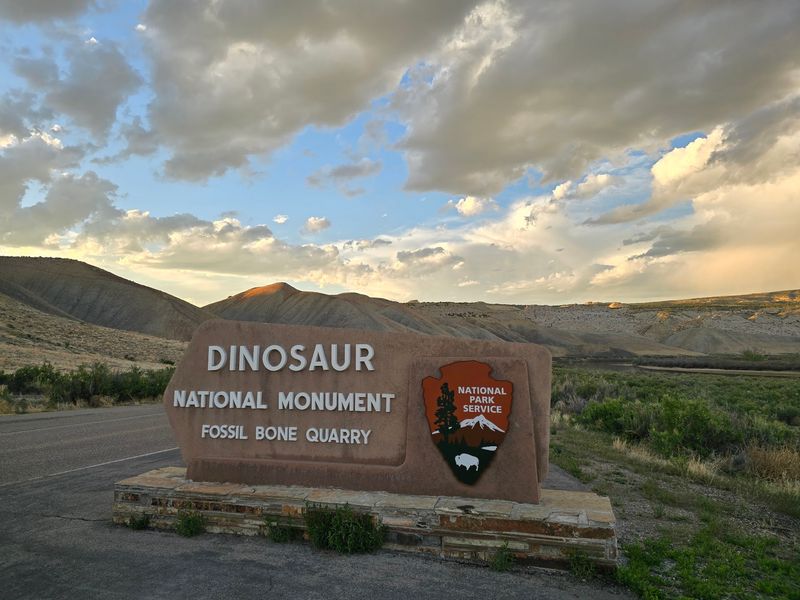
Use 11625 E 1500 S, Jensen, UT 84035 for the Utah quarry visitor area, then confirm current National Park Service hours before leaving. Seasonal shuttle operations, road conditions, and building access can affect how the day unfolds.
Once there, keep the first outing focused. Start with the visitor center, continue to the Quarry Exhibit Hall, and add a short walk or scenic stop only if time, weather, and energy cooperate.
Nobody wins a medal for turning a good afternoon into a forced march.
This approach is especially helpful for road trippers passing through northeastern Utah. Dinosaur National Monument has enough substance for repeat visits, but the fossil wall gives even a shorter stop a clear center.
You can leave knowing you saw the thing that makes the Jensen side nationally significant, which is a rare and pleasant kind of travel efficiency.
The Best Memory Is The Odd Pairing Of Bones And Water
The lasting surprise of Dinosaur National Monument is how neatly it refuses to be only one thing. A visitor can stand near fossils from the Jurassic period, then think about rafting a living river that continues shaping the canyons outside.
That pairing gives the monument its unusual pull. The fossil wall is specific and almost unbelievable, yet the Green River keeps the experience from feeling sealed behind glass.
One part of the place points to ancient life, while another keeps moving through the present landscape.
For families, couples, solo visitors, and weekend planners, that mix helps the trip feel useful rather than overbuilt. You do not need to be a paleontologist to understand the wonder of real dinosaur bones, and you do not need to be a professional river runner to appreciate why guided rafting belongs in the conversation.
Dinosaur National Monument in Utah earns attention because it makes deep time visible and gives it a river route. The Jensen side offers the clearest path to the famous quarry, while the wider monument adds room for a bigger trip later.
Text your most practical friend this: real dinosaur bones first, Green River plans second, snacks before both.