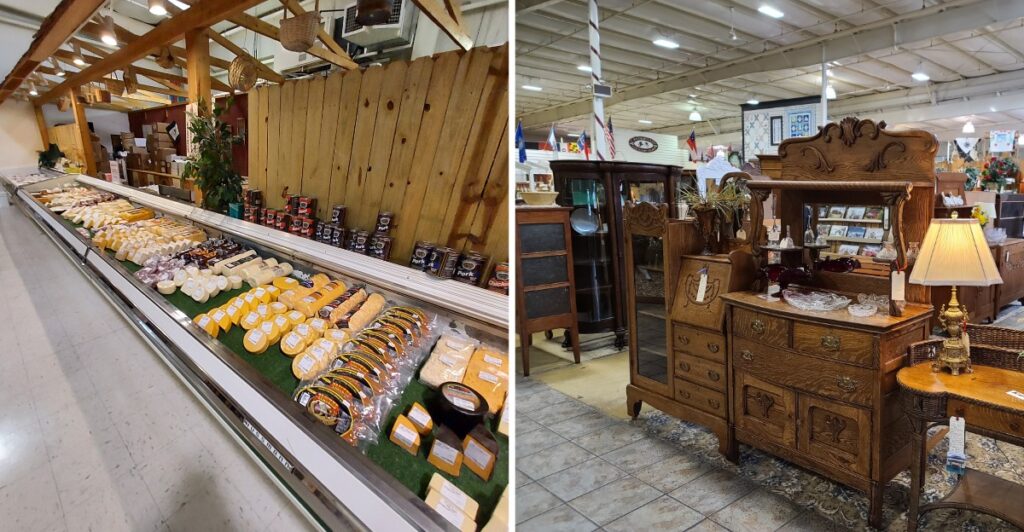
Antiques, quilts, furniture, pantry goods, and a café have somehow agreed to share the same Virginia address.
That makes this market less like one store and more like a small collection of temptations under one roof.
You can move from old finds to handmade pieces without crossing a parking lot, then slow down outside near the water gardens before heading back in for another round.
The interstate sits close by, but the place does not behave like a highway stop.
It is built for wandering.
With more than twenty locally owned shops in the mix, which doorway would you open first?
More Than 20 Local Shops Turn This Into Much More Than A Quick Market Stop
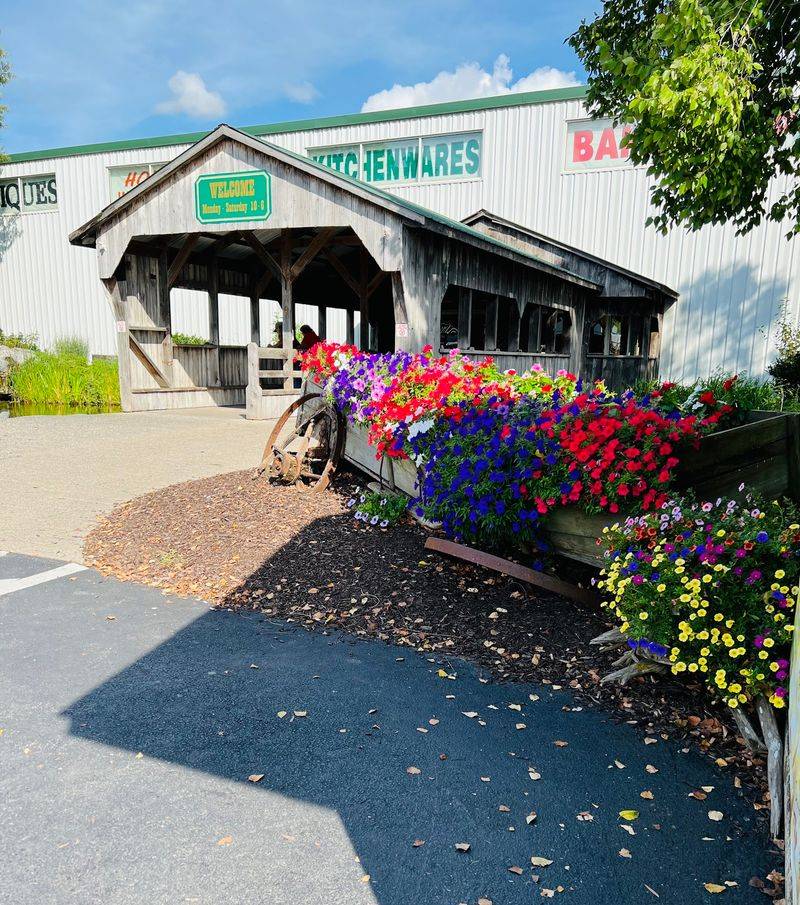
More than twenty locally owned and operated shops share the property, giving Shenandoah Heritage Market the scale of a small shopping village rather than one oversized store.
Each business keeps its own identity, so moving through the market means crossing between separate storefronts instead of walking through departments run by one retailer.
The mix covers very different interests without making the visit seem scattered. Antiques, sewing supplies, toys, kitchenware, Western gear, handcrafted items, furniture, gifts, and specialty foods all have their own spaces.
Outdoor merchants add produce, kettle corn, storage buildings, and other practical finds.
That variety changes the pace of a visit. You can spend half an hour in one shop, cross a short distance, and suddenly be looking at something completely different. There is no need to drive across Harrisonburg to switch from home goods to food or from antiques to gifts.
Water gardens and park benches provide places to pause outside, and the property has room for RV and bus parking.
Pick a starting point and let the market unfold one storefront at a time.
The Large Antique Mall Gives Treasure Hunters Plenty To Dig Through
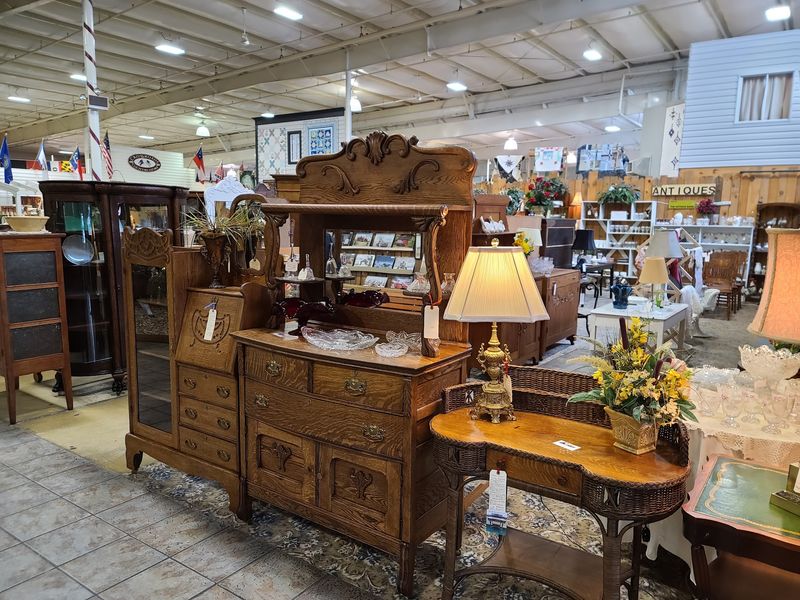
The Antique Barn gives the market a dedicated space for vintage and collectible finds. Multiple vendors contribute to the selection, so the assortment can change as pieces move out and different items arrive.
That gives the antique section a different rhythm from a standard retail shop. Furniture, household objects, decorative pieces, books, signs, glassware, and smaller collectibles can all appear within the same general area without following one fixed product line.
One aisle may look completely different from the next. Large furnishings catch the eye first, while smaller pieces can hide on shelves or tables beside them.
If you enjoy decorating with older objects or simply seeing what has survived from earlier decades, this section can easily take more time than expected.
The antique mall also fits naturally with the rest of the market. Traditional furnishings, country goods, and newer handcrafted pieces sit nearby, so the transition from old to new happens without seeming forced.
A Friday visit gives you enough time to browse patiently instead of treating the antique section like a quick pass-through.
The property also benefits from contrast. A few minutes spent looking through old household pieces can lead straight into newer handcrafted furniture, food, or gifts.
That back-and-forth keeps the afternoon moving without making the market seem like one long aisle of similar merchandise.
Amish-Made Furniture Adds A Handcrafted Side To The Market
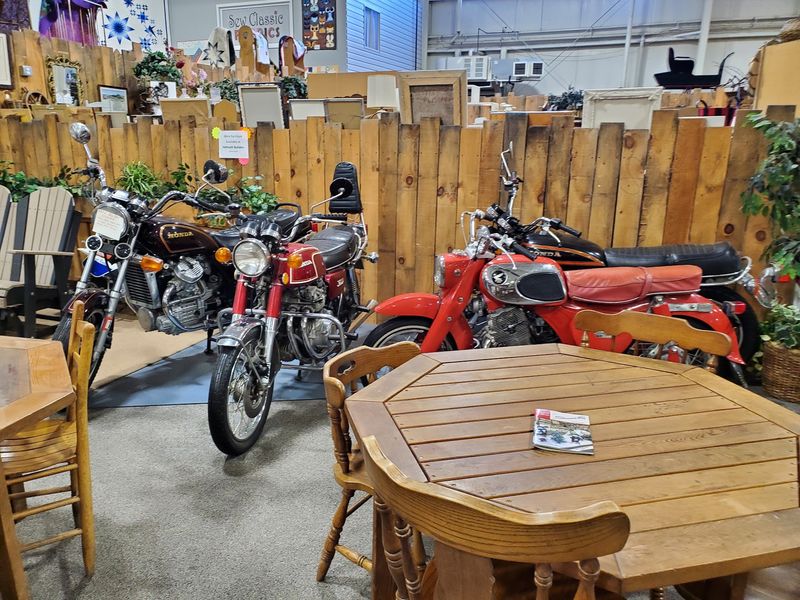
Amish-made furniture is part of the shopping mix, alongside custom handcrafted pieces and outdoor structures. That gives the property a substantial home-furnishing side beyond smaller gifts and pantry goods.
Seeing furniture in person makes details easier to judge. Wood tones, construction, finish, scale, and proportions can look very different in a room than they do in a photograph. If you are considering a larger piece, bringing basic measurements can save guesswork later.
Custom work adds another option for shoppers who need something suited to a particular space. Tables, seating, storage pieces, and other furnishings can become the kind of purchase that requires more thought than an ordinary impulse buy.
The outdoor side of the property broadens the craftsmanship theme. Helmuth Builders, a family-owned business dating to 1989, makes utility sheds and also carries structures and outdoor pieces.
Such as: cabins, gazebos, play structures, chicken coops, and outdoor furniture.
That means one stop can move from dining-room ideas to backyard projects without changing destinations.
Even without a purchase in mind, handcrafted wood pieces and outdoor structures add another layer beyond antiques and food.
Bulk Foods, Baked Goods And Homemade Treats Fill The Food Side
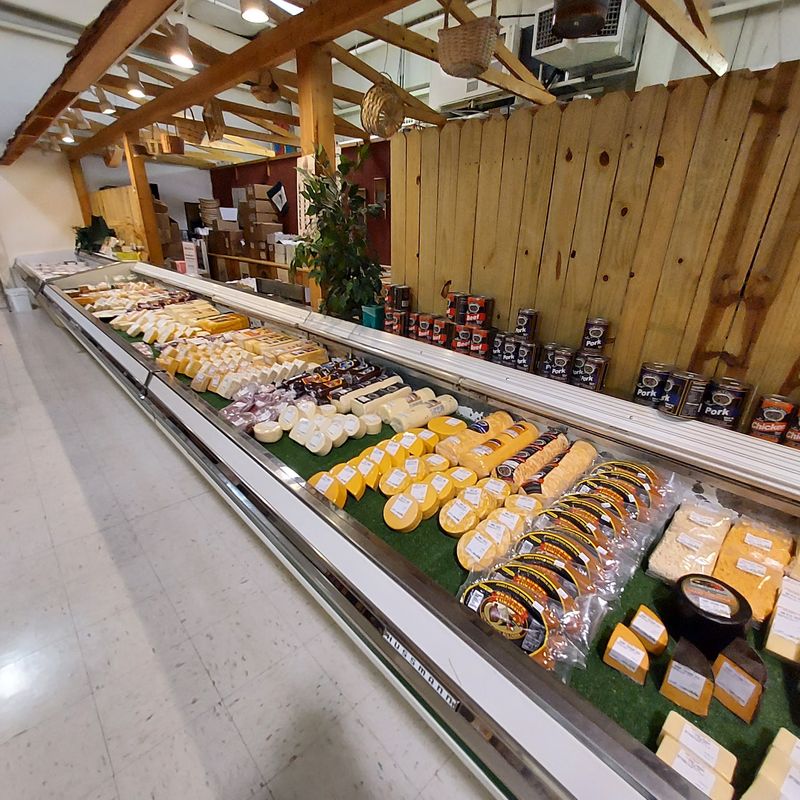
Food shopping is spread across several merchants instead of being concentrated in one supermarket-style section. That keeps the experience closer to a collection of specialty counters, with each shop handling a different part of the pantry.
Grandma’s Pantry covers a broad range of bulk foods and everyday staples, including baking ingredients, snacks, dried goods, spices, and other shelf-friendly items. It is the kind of stop where a few practical purchases can quickly share a basket with something purely for fun.
The Country Canner adds a separate focus on preserved foods. The business dates to 1996 and grew from a small selection of apple butter, jams, pickles, relishes, and pie filling into a much wider canning operation.
Outdoor offerings add a seasonal element with produce, greenhouse goods, and kettle corn, giving the food side another reason to step outside between indoor shops.
Treat the food side as part of the larger visit rather than a single grocery run. Pick up a pantry item, add something preserved, and leave room for the next storefront.
That pace suits a country market where food is one part of the afternoon rather than the entire reason to stop.
A Country-Style Café Makes It Easy To Stay Through Lunch
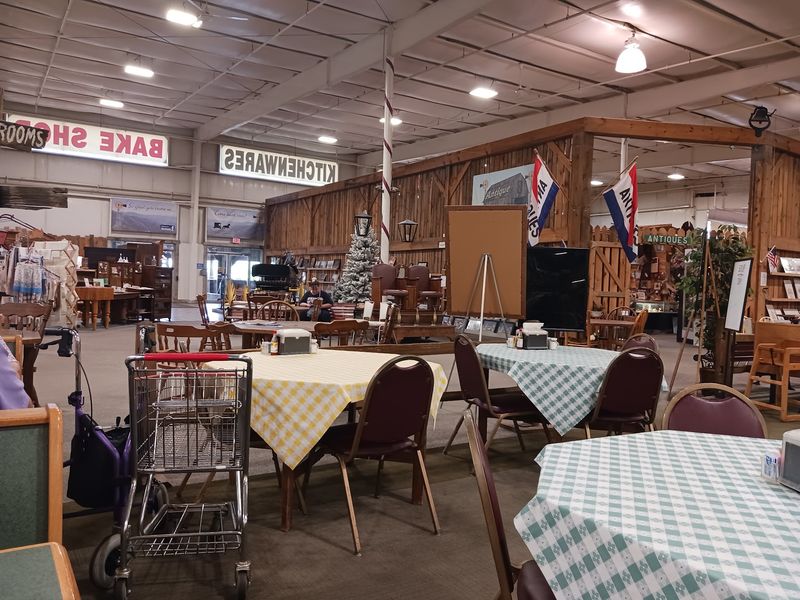
Hungry Farmer Country Café gives shoppers a place to sit down without leaving the property when lunchtime arrives. The menu covers casual comfort food, with wraps, salads, burgers, baked goods, coffee, and other café choices available in the same market complex.
Its location makes a longer visit much easier. You can browse antiques in the morning, stop for lunch, and continue toward fabric, furniture, toys, or pantry goods afterward without getting back in the car.
That break matters on a property with more than twenty shops. Trying to cover everything in one uninterrupted stretch can turn an easygoing afternoon into a checklist. Sitting down for a meal gives the visit a natural midpoint.
The café also works as an easy meeting place when people in the same group want to linger in different stores. One person may still be looking through antiques while another has already moved toward home goods or sewing supplies.
A Friday trip can therefore include shopping and lunch as one continuous outing.
The entire market is at 121 Carpenter Ln, Harrisonburg, VA 22801. Once you park, the café, indoor shops, outdoor merchants, and resting areas all sit within the same destination.
Quilts, Gifts And Handcrafted Goods Keep The Shopping Going
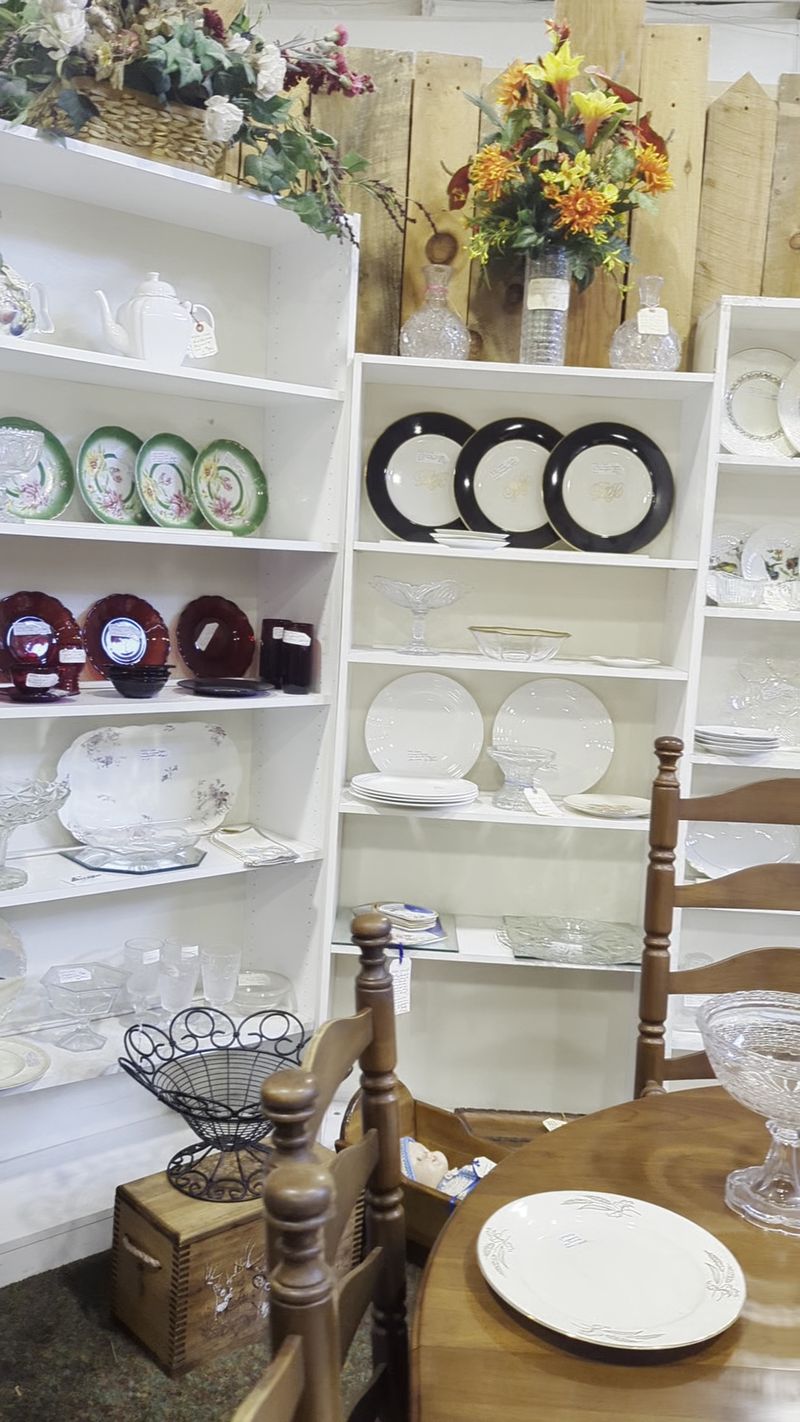
The craft and gift side reaches well beyond one type of souvenir. Quilt fabrics and sewing notions, home décor, toys, kitchenware, Western apparel and tack, historical books, handcrafted pieces, and gifts all have dedicated space around the market.
Crossroads Country Store adds patterned quilts, home décor, historical books, flags, and other country-style goods. Elsewhere, sewing supplies, toys, kitchen goods, and Western gear broaden the mix without forcing every category into one shop.
Arriving without a rigid shopping list leaves room for unexpected finds. A practical purchase can sit beside something decorative, and one storefront can point you toward a hobby or project you had not planned on before walking in.
Each storefront has its own focus without breaking the broader country-market theme. The shift from fabric to home goods or Western gear keeps the browsing varied, while the compact property makes those changes easy to follow on foot.
A Friday afternoon can move through several completely different categories before you circle back to the section that caught your attention first.
Friday Is One Of Six Days Each Week You Can Explore The Entire Market
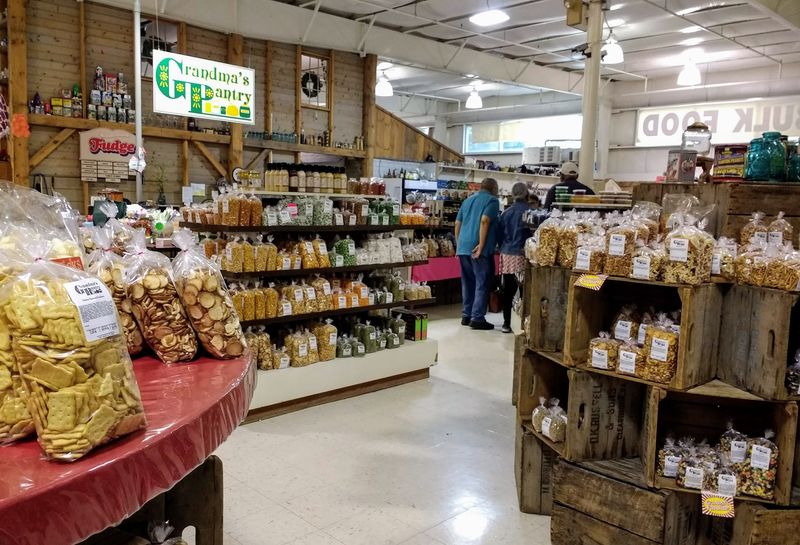
Shenandoah Heritage Market is open Monday through Saturday from 10 a.m. to 6 p.m. and closed Sunday. Friday therefore comes with the same full eight-hour schedule offered on the other operating days.
Getting there from Interstate 81 is straightforward. Take Exit 243, turn onto Route 11 South, and continue for about half a mile. Two windmills on the left help mark the market area.
Once you arrive, there is room to make the stop last. Water gardens and park benches provide outdoor places to pause, while RV and bus parking makes the destination workable for travelers arriving in larger vehicles.
Friday also leaves Saturday open for another part of the Shenandoah Valley. The ten-to-six schedule leaves enough time for lunch, antiques, furniture, food shopping, and a slow browse through the smaller stores without compressing everything into a short stop.
More than twenty shops, an antique mall, Amish-made furniture, food merchants, a café, fabrics, gifts, toys, and outdoor vendors all share the same property. You can begin with one category and end up spending most of the afternoon somewhere you never expected.
By the time you leave, a simple Friday shopping trip can become a full Shenandoah Valley outing.