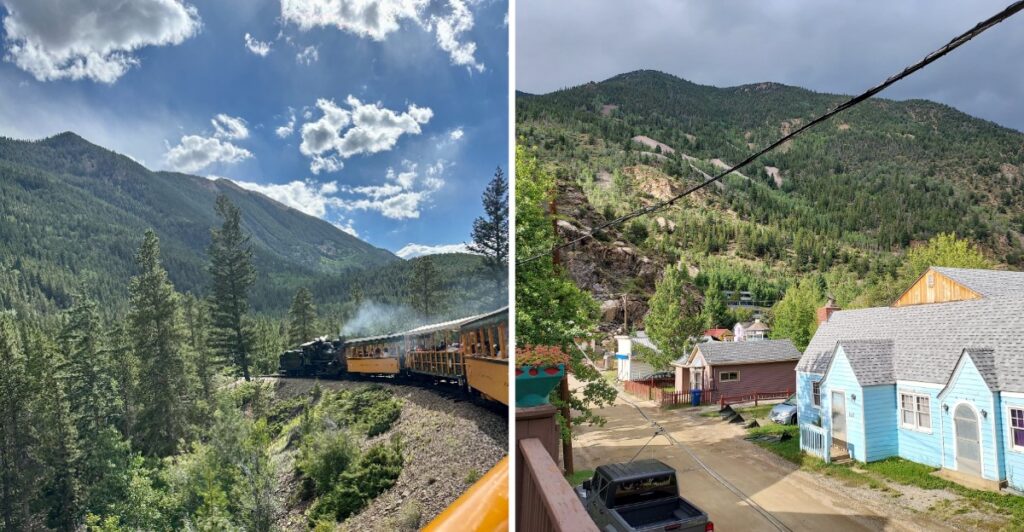
Colorado has plenty of mountain towns that know they are pretty. This one seems almost unaware of it.
High in the Rockies, an old silver-mining community still sits beneath steep slopes with a population barely above two hundred.
The streets stay quiet. Historic buildings keep the mining years close, and the railroad still threads through the mountain setting much as it has for generations.
There is no resort-town rush trying to compete for your attention here.
Instead, old tracks, weathered structures, and nearby trails make the place feel like somebody pressed pause and forgot to come back.
So how did this tiny Colorado town manage to stay this quiet while the interstate runs right past it?
Barely 200 People Call This High-Mountain Town Home
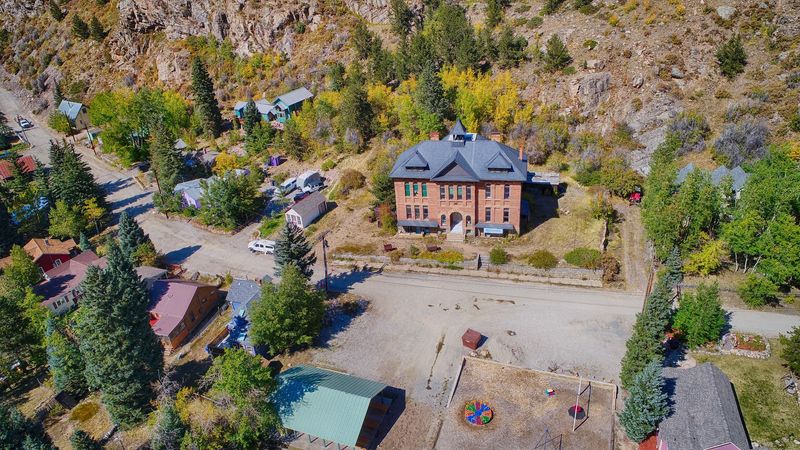
Fewer people live here than fill many apartment buildings. The 2020 U.S. Census counted 207 residents in Silver Plume, confirming just how small the community remains.
Silver Plume is officially a Home Rule Town in Clear Creek County. Its municipal scale is modest, with local government, residences, historic structures, and a handful of community spaces spread through a narrow mountain valley.
The town’s physical setting reinforces that compact size. Homes and older buildings sit beneath steep slopes, and Interstate 70 passes nearby without turning Silver Plume into a large commercial center.
Georgetown is only a short distance away, but Silver Plume remains its own incorporated town with a separate history and identity.
Railroad history is visible throughout the community, while older houses and streets preserve the footprint of a settlement that once supported a much larger mining population.
The contrast between that boom-era past and today’s 207-person census count is one of the clearest ways to understand how much Silver Plume has changed.
The current town website lists a population figure close to 200 and describes Silver Plume as a very small, old, rural mining town.
Can you picture yourself exploring a mountain town where just over 200 people make up the whole community?
Silver Plume Sits More Than 9,000 Feet Above Sea Level
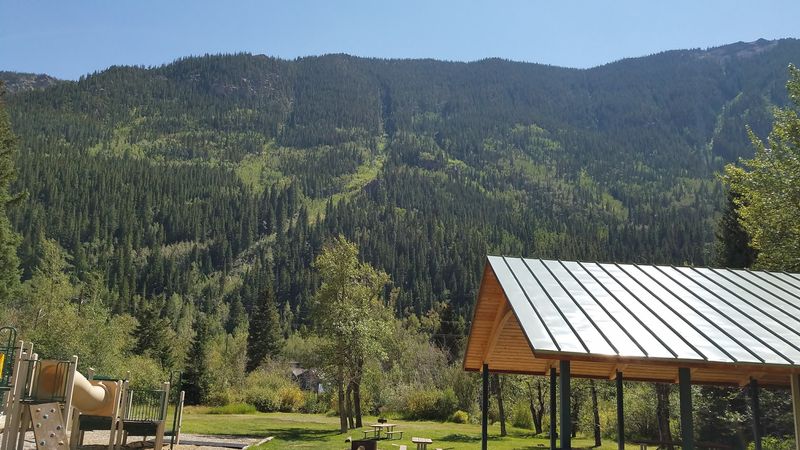
Take a deep breath here and the elevation quickly makes itself known. Silver Plume sits at 9,116 feet above sea level, placing it firmly in Colorado’s high country.
That altitude shapes daily conditions and the visitor experience. Temperatures can be cooler than they are along the Front Range below, mornings may start brisk, and people arriving from lower elevations can notice the thinner air while walking uphill.
Drinking water, using sunscreen, and carrying an extra layer are sensible choices at this elevation. Mountain weather can change quickly, and conditions around the Georgetown Loop Railroad can shift during the day.
The railroad itself advises visitors to prepare for outdoor conditions at roughly 9,000 feet.
The setting is steep and enclosed.
Silver Plume sits along Clear Creek in the Front Range, with mountain slopes rising close to town. Historic rooftops, railroad structures, evergreen-covered hillsides, and rocky terrain occupy the same narrow valley.
The elevation also influenced transportation and settlement. Moving people, ore, supplies, and equipment through this terrain required engineering that eventually produced the Georgetown Loop Railroad and its network of curves, grades, and bridges.
Even a short walk through town takes place more than 9,000 feet above sea level.
Historic Streets Still Tell The Story Of Colorado’s Silver Boom
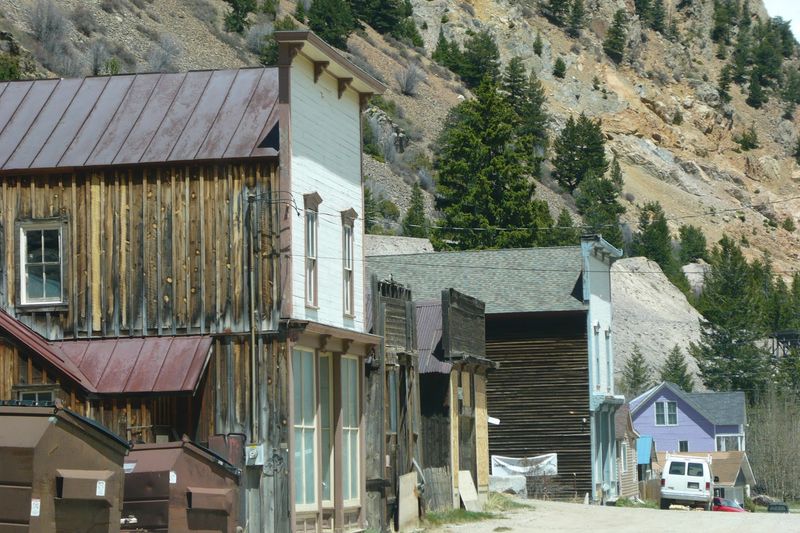
Silver Plume grew from the mining rush that transformed this part of Colorado during the 19th century. By 1872, roughly 500 people had settled here as mining activity expanded in the surrounding mountains.
The population later climbed above 2,000 before the silver industry declined after 1893. The repeal of the Sherman Silver Purchase Act that year dealt a major blow to Colorado’s silver economy, bringing Silver Plume’s principal boom period to an end.
Many surviving structures and streetscapes still reflect that mining-era development. Historic homes, older commercial buildings, wood siding, porches, and the town’s narrow street pattern connect modern Silver Plume to its 19th-century growth.
Mining communities needed housing, transportation, stores, public buildings, and links to larger population centers. Silver Plume developed those pieces as its population grew, and the railroad became especially important for freight, ore, passengers, and access through difficult terrain.
The historic district includes a broad collection of resources associated with that era, including houses, commercial buildings, schools, civic structures, mines, mills, and railroad features across the Georgetown-Silver Plume area.
Look toward the mountain slopes above town and the relationship between settlement and mining country remains easy to see.
The Town Is Part Of A National Historic Landmark District
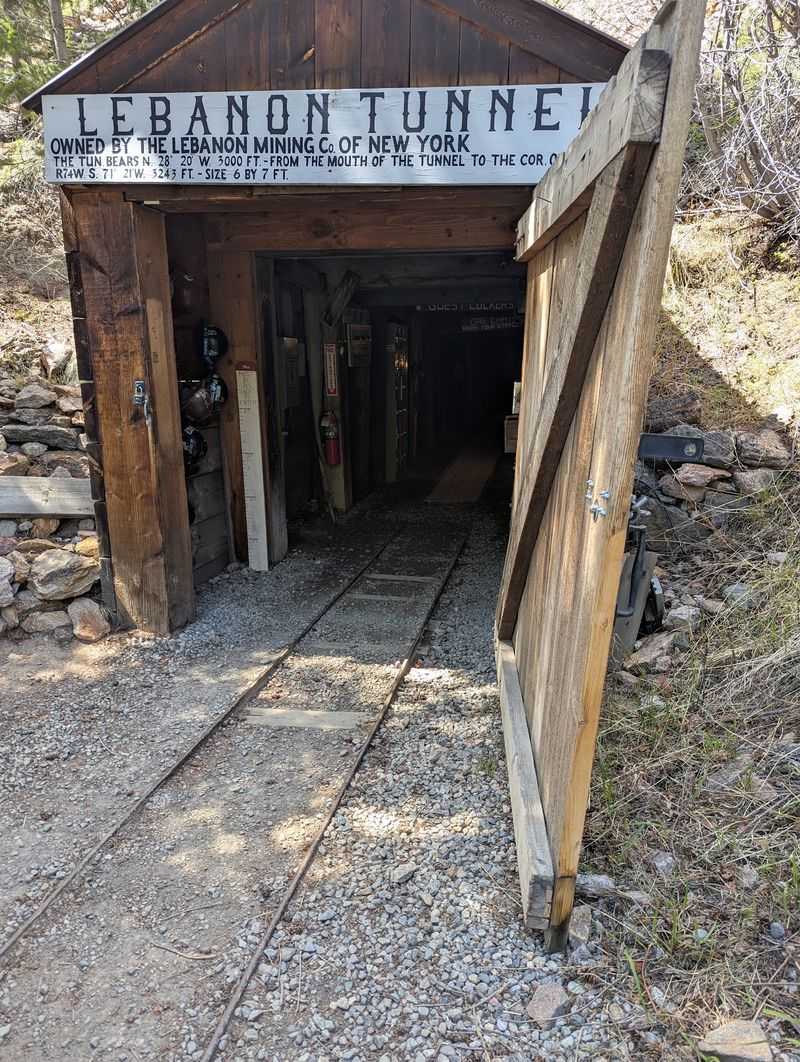
Silver Plume forms part of the Georgetown-Silver Plume National Historic Landmark District, which received federal designation on November 13, 1966.
The designation recognizes Georgetown and Silver Plume for their national significance in the history of mining, settlement, and transportation. The district also includes the Georgetown Loop Historic Mining and Railroad Park between the two towns.
National Historic Landmark designation recognizes nationally significant historic resources, but it does not automatically prevent private property owners from making changes.
Under federal rules, owners generally remain free to alter private property when federal funding, licensing, or permits are not involved. State laws and local ordinances can create separate requirements.
The district contains physical evidence of the region’s mining frontier, schools, civic buildings, mills, mines, and railroad infrastructure.
Its period of significance extends across the years when mining reshaped this section of Clear Creek County.
Silver Plume’s compact layout keeps many of those historic elements close together. Older buildings stand against steep mountain terrain, while the railroad corridor links the town physically and historically with neighboring Georgetown.
That combination of town, mining landscape, and transportation history earned the area national recognition more than half a century ago.
A Famous Mountain Railroad Still Stops Right In Silver Plume
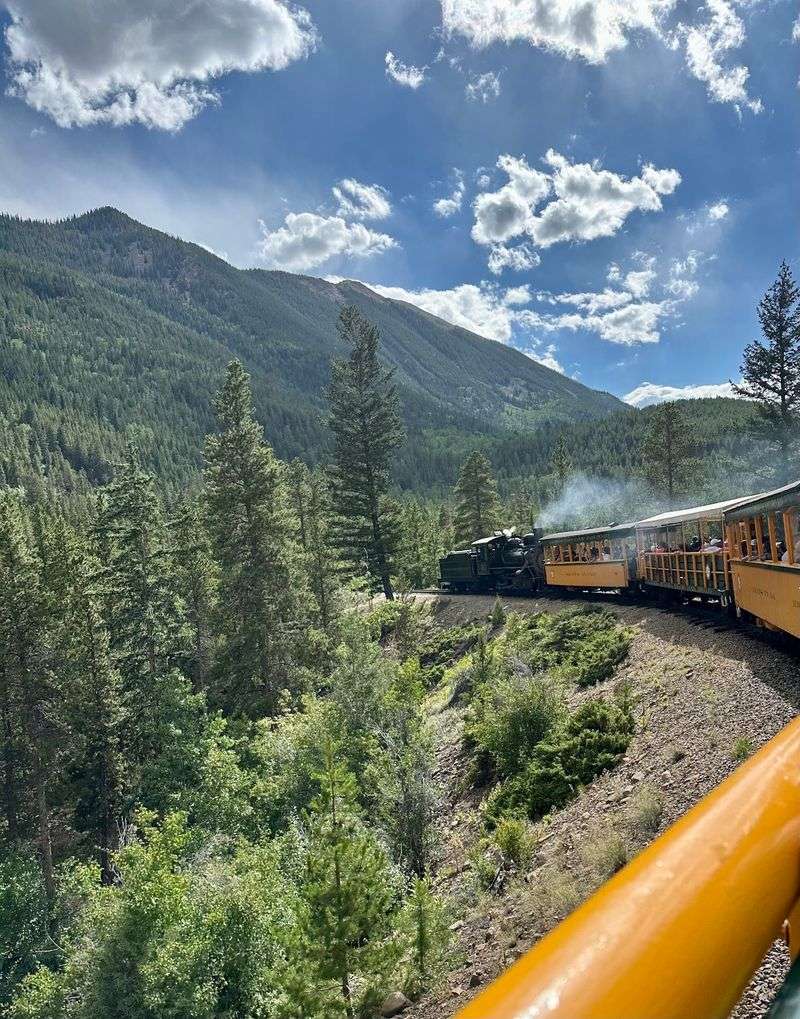
The whistle of a historic train still echoes through these mountains. The Georgetown Loop Railroad links Georgetown and Silver Plume along a route first developed during Colorado’s mining era.
Railroad construction reached Georgetown in 1877. Engineers then faced the challenge of gaining elevation through the narrow valley toward Silver Plume. A system of curves and bridges reduced the grade, and the first trains reached Silver Plume in 1884.
The line carried passengers and freight and also became an early scenic attraction. Railroad service eventually declined as automobiles became more common, and the original line through the area was dismantled after service ended in 1938.
Reconstruction began decades later. Tracks returned in stages during the 1970s and 1980s, and the reconstructed Georgetown Loop was completed in 1984. History Colorado now owns the railroad as an official historic site.
Silver Plume has its own seasonal boarding station, with the station closed during spring and winter. The Silver Plume Depot sits at 825 Railroad Avenue, Silver Plume, CO 80476. The historic depot was restored in 1985.
Interpretive markers, exhibits, trails, restrooms, and other visitor facilities were added around the railroad park after reconstruction. The route still connects Silver Plume with Georgetown while interpreting the mining and railroad history of Clear Creek County.
Hiking Trails And Mountain Views Begin Close To Town
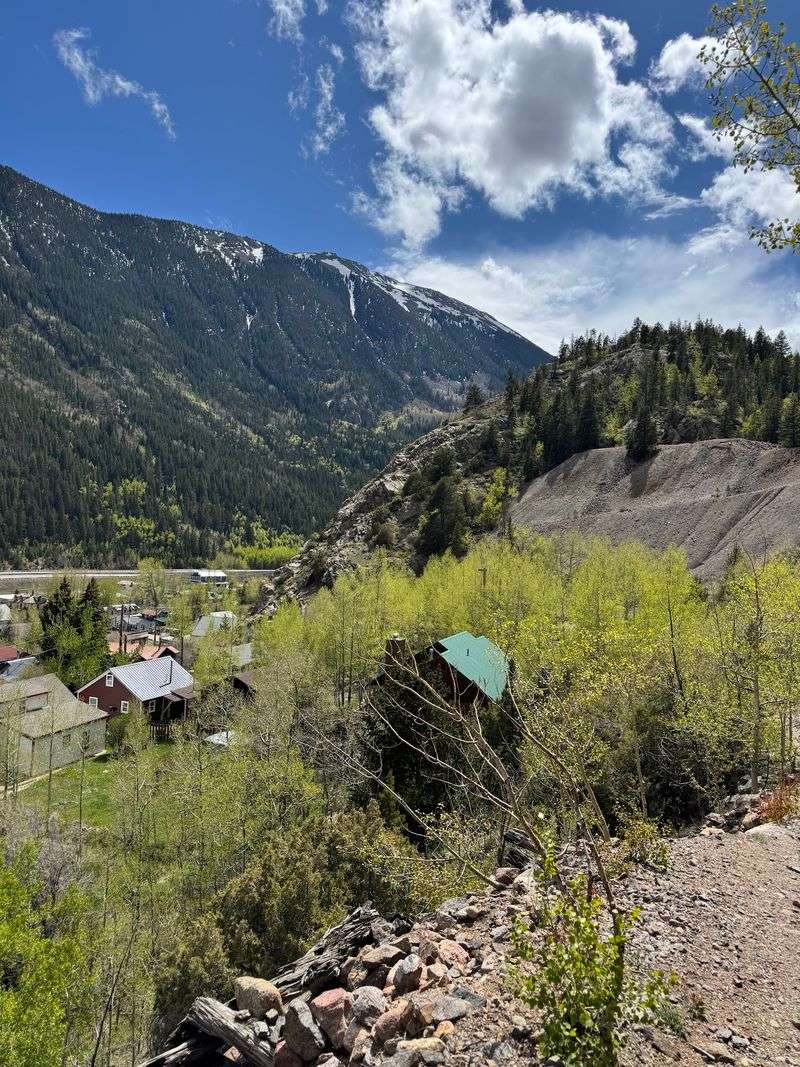
Several walking and hiking routes begin in or near Silver Plume, including paths tied directly to the area’s railroad and mining history.
The Silver Plume to Georgetown Express Trail is a paved segment of the Clear Creek Greenway running between the Silver Plume and Georgetown Loop Railroad stations.
It measures about 1.5 miles one way and is rated easy by the Clear Creek County Tourism Bureau.
The route gains about 541 feet and includes views of the railroad and surrounding valley. Its western trailhead is at the Silver Plume Depot, while the eastern end reaches the Georgetown Loop Railroad area near Georgetown.
Another option is the 7:30 Mine Trail, an intermediate route following a narrow mining road. The tourism bureau lists it at about 4.5 miles round trip, with historical markers and mining artifacts along the way.
The Griffin Monument sits roughly two miles up the route, with the 7:30 Mine farther beyond it.
The Argentine Central Railroad Grade also begins near Silver Plume. This intermediate trail follows remnants of an old railroad route and stretches about 3.2 miles one way toward Pavilion Point and surrounding mountain terrain.
These routes combine outdoor access with visible pieces of the region’s transportation and mining history. At elevations above 9,000 feet, water, sturdy footwear, weather-ready layers, and a measured pace remain practical considerations.
Life Here Moves At A Very Different Pace From Colorado’s Resort Towns
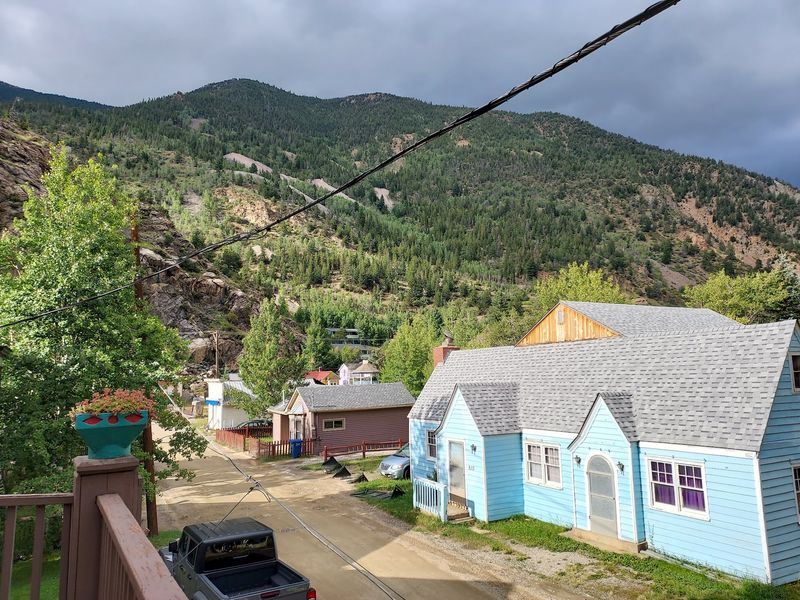
Silver Plume differs sharply in scale from Colorado’s major resort communities. Its population remains close to 200, and the town’s official website describes it as a peaceful rural mining town whose residents value the serenity of mountain life.
There is no large resort core or dense shopping district. Historic homes, municipal buildings, the railroad, trails, and mountain terrain make up much of what visitors encounter within the town and its immediate surroundings.
The railroad and seasonal events can bring additional visitors on certain days. Summer and fall train operations create more activity around the depot, while quieter periods reflect the town’s small permanent population.
The town’s history is never far from view. Railroad tracks trace the valley, old buildings line local streets, and trails climb toward former mining areas above town. Interstate 70 runs nearby, yet the community retains a physical scale rooted in its 19th-century origins.
A visit can include a walk through historic streets, time along the greenway, a railroad excursion during its operating season, or a closer look at the mining landscape that once supported thousands of residents.
The surroundings leave plenty of room for slower moments too. Mountain slopes rise above the rooftops, trains periodically move through the valley, and the compact streets make it possible to see much of the town without rushing from one stop to another.
Sometimes the best souvenir is a slower heartbeat and a clear head. Doesn’t that sound like a trip worth taking?