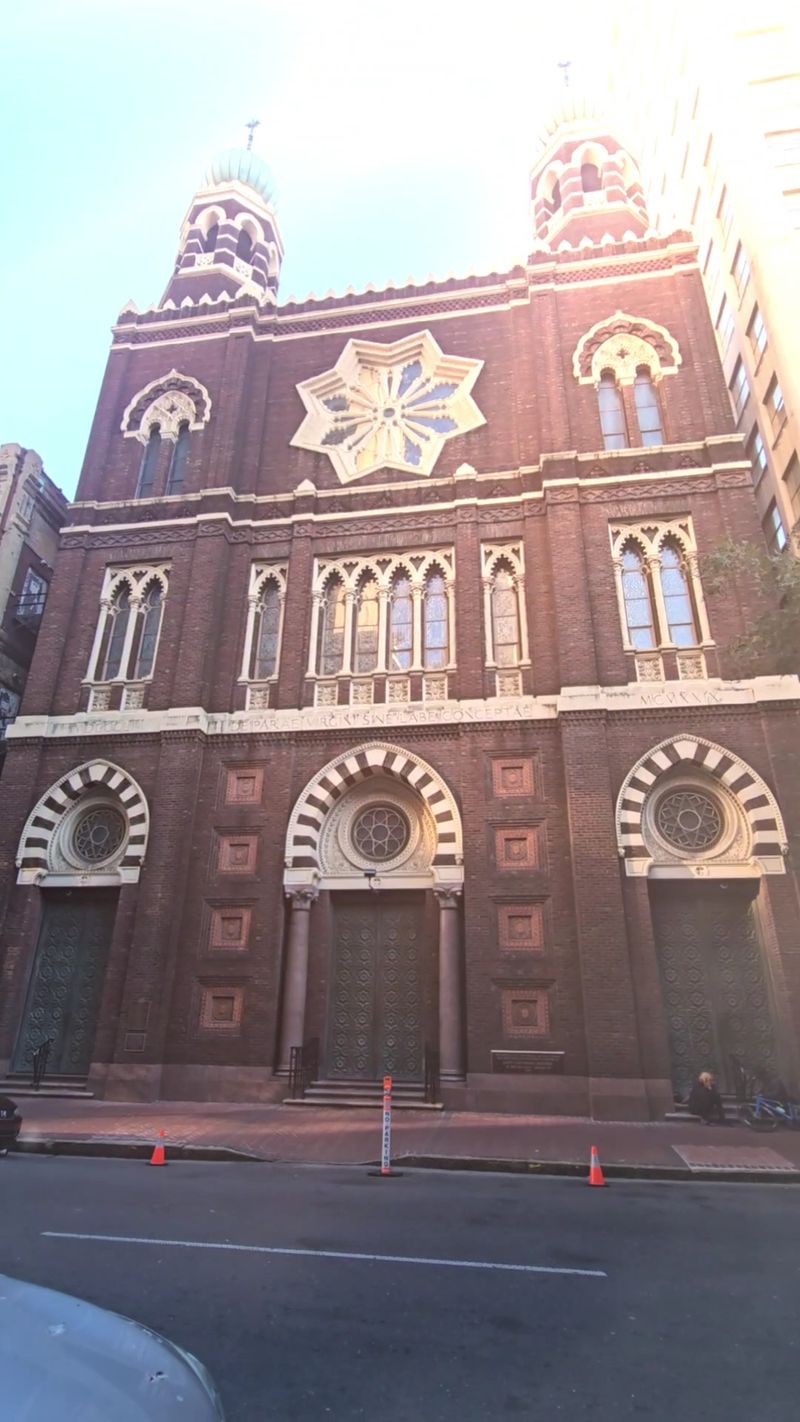
Walk down Baronne Street in the middle of the New Orleans business district, past hotels and office towers, and you might miss it. But step through the heavy bronze doors of Immaculate Conception Church, and the modern city behind you disappears.
The soaring ceilings, twisting columns, and gold-plated altar look like they belong in southern Spain or a French cathedral, not a block from Canal Street. This is the church locals simply call the Jesuit Church, and it surprises nearly everyone who wanders inside.
The Church Hiding In Plain Sight On Baronne Street
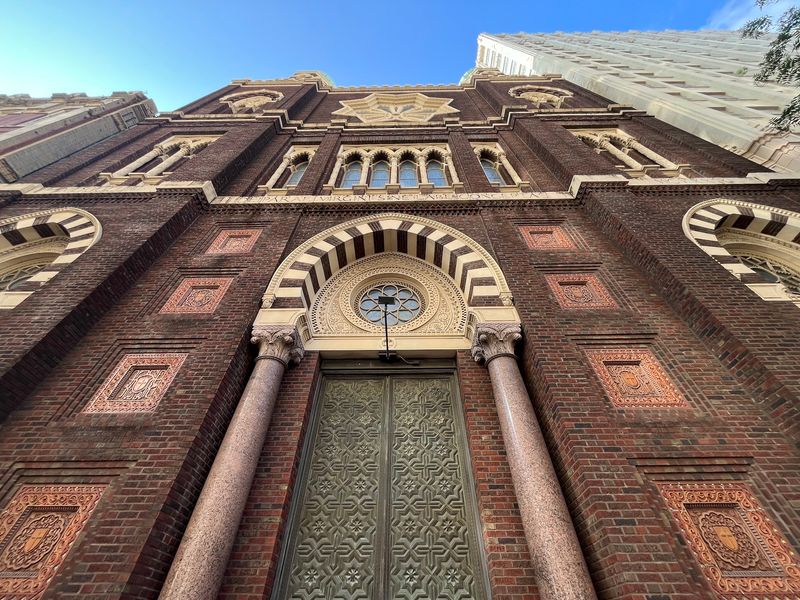
Set at 130 Baronne Street in the Central Business District, this Roman Catholic church sits close enough to hear the noise of Canal Street just a couple of blocks away. Tall office buildings crowd around it, and visitors often say it looks small and half swallowed by the city until they get close.
Run by the Jesuits, it goes by the nickname the Jesuit Church, and it has served as an active parish for generations. The exterior alone has intrigued passersby for years, with its unusual shape and detailing standing out sharply against glass and concrete neighbors.
What makes the setting so striking is the contrast. Two blocks from one of the busiest party corners in the country sits a quiet, ornate sanctuary that feels transported from another continent.
Visitors describe it as a wonderful counterpoint to the energy outside.
Sitting across from the Roosevelt Hotel, it is easy to reach on foot for anyone staying downtown. Many people admit they stumbled upon it by accident while looking for something to do, then walked out amazed by what they found tucked behind the doors.
A Design Born From One Priest’s Love Of Moorish Spain
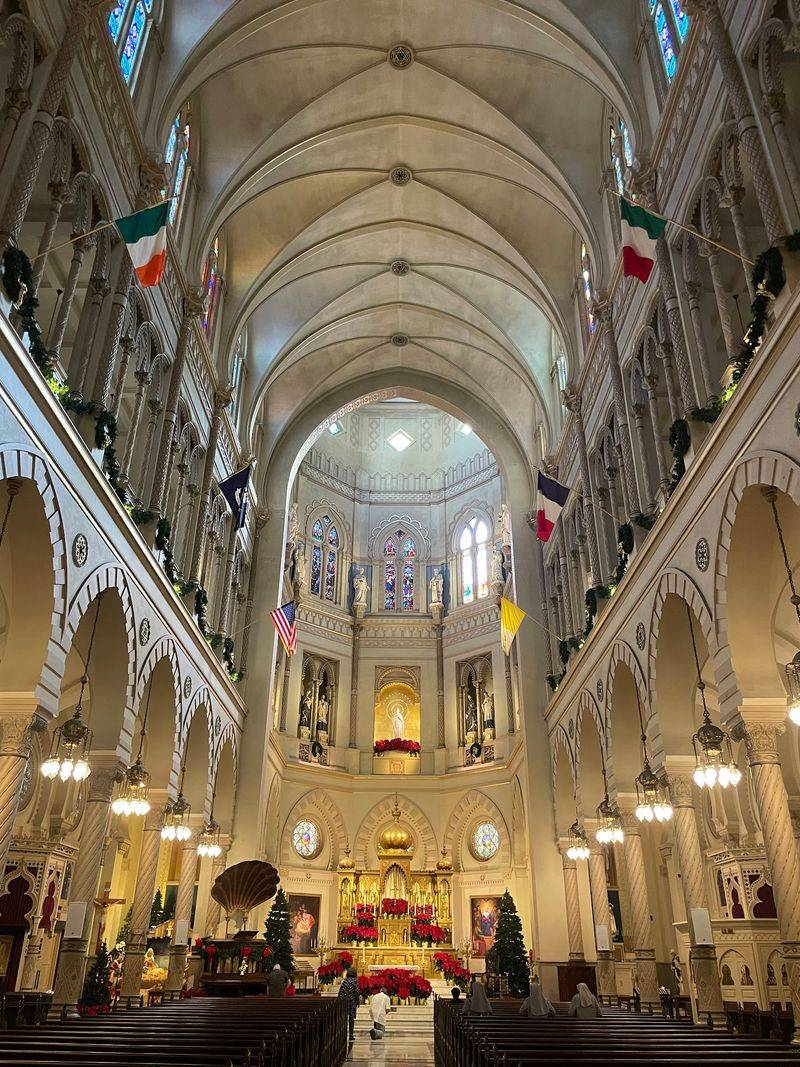
The story of this sanctuary starts with Jesuit Father John Cambiaso, a native of Lyon, France, who carried a deep admiration for Moorish architecture picked up during years living in Spain. That fascination shaped everything visitors see today.
His inspiration came from a period in Spanish history when Christian, Jewish, and Muslim communities shared their cultural and intellectual traditions. Both the interior and exterior carry symbols reflecting those blended influences, making the church a rare example of harmonious cultural mixing in the American South.
Step inside and the nave rises with a verticality unusual among New Orleans churches. The columns do not simply hold up the roof.
They climb through carved niches, each holding a small statue of an archangel, before twisting into Solomonic forms that seem to spiral upward.
Visitors frequently point to that soaring height as the first thing that grabs them. One person described sitting in awe of the architecture and detail, and that reaction is common.
The design speaks less about single-minded devotion and more about shared beauty, offering a contemplative space unlike any other nearby church.
The Gold Altar That Won First Prize In Paris
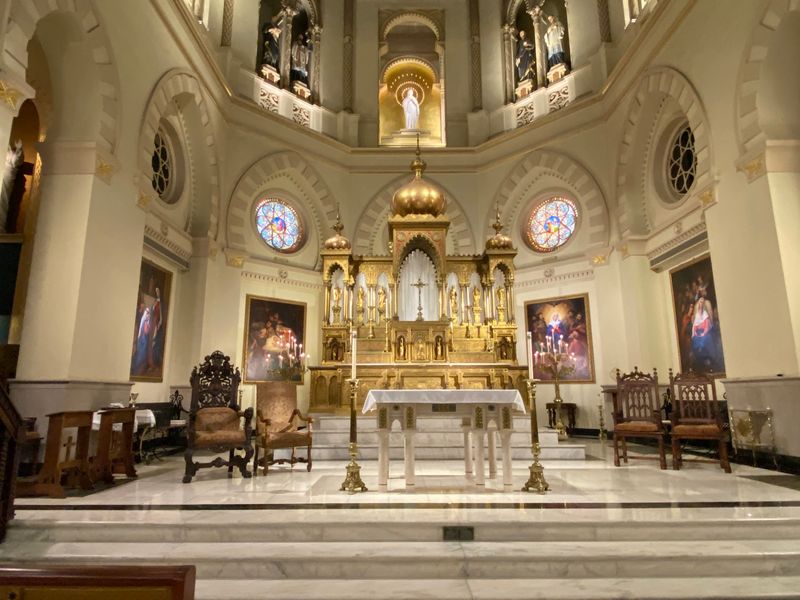
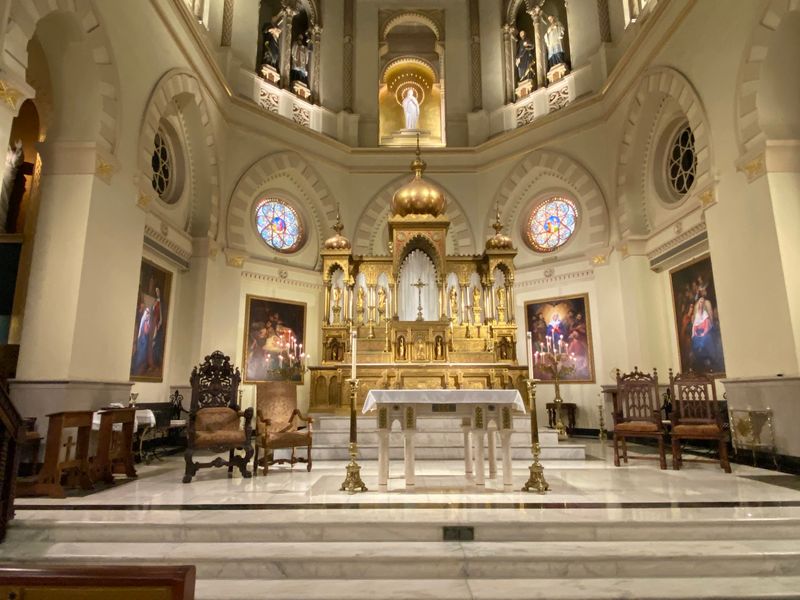
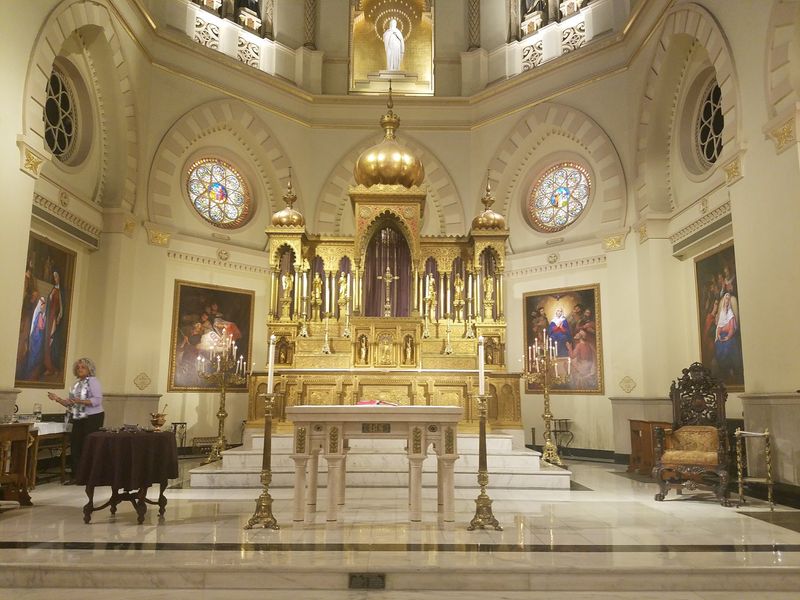
At the heart of the sanctuary gleams an altar that stops people in their tracks. Forged from gilded bronze and plated in 24-karat gold, it was handmade in Lyon, France, and took first prize at the Paris Exposition of 1867.
Assembled from more than 600 individual pieces, the altar carries delicate Moorish domes and miter-shaped arches that match the architecture around it. The design came from New Orleans native James Freret, tying the church directly to the finest craftsmanship of 19th-century Europe.
Visitors regularly single out the high altar as the standout feature. Several describe it as stunning and perfect, and it is easy to see why once the light catches all that gold.
The altar anchors the whole room, drawing the eye forward the moment you walk in. Its scale and shine feel out of place for a church this size, which only adds to the surprise.
For anyone who has admired grand European cathedrals, seeing that same level of workmanship sitting quietly in downtown New Orleans is a genuine jolt.
Mary’s Niche And The Statue Behind The Altar
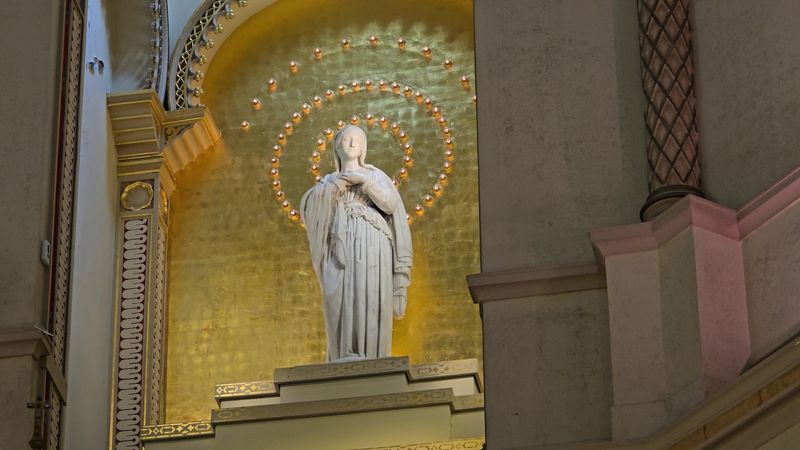
Rising above and behind the main altar, a solid-marble statue of the Blessed Virgin sits in what the parish calls Mary’s Niche. Placed before a gilded, lit background, the figure seems to glow, and four statues of saints flank it on either side.
People who visit often name this as their favorite detail. One described the statue of the Blessed Mother above the main altar as stunning, and that response comes up again and again among those who linger in the pews.
Nearby sits a smaller altar used for daily Mass, decorated with hand-carved designs that hint at the elements of the Holy Sacrifice. Wheat, bread, and grapes are worked into the carving, each pointing to the Eucharist celebrated there every morning.
Together the two altars give the sanctuary a layered focal point. The grand one draws attention with gold and height, while the daily altar rewards a closer, slower look.
It is the kind of place where returning visitors keep spotting things they missed before, and several mention seeing something new on every trip inside.
Stained Glass Made In France That Tells Jesuit Stories
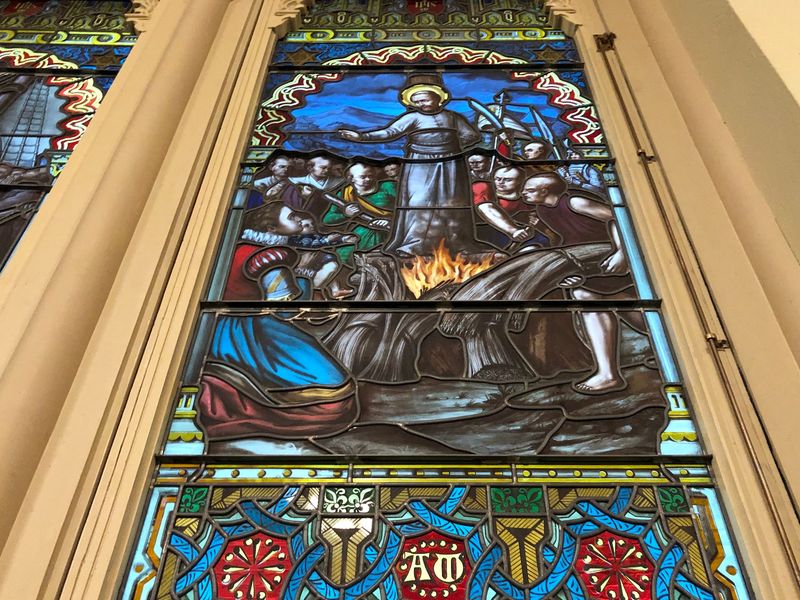
Light pouring through the windows turns the interior into shifting color, and the glass itself is worth the visit. Three levels of stained glass fill the walls, with the most ornate and historically important set on the first floor.
Those lower windows depict scenes from the early history of the Society of Jesus, including tributes to the North American Martyrs. Many were crafted in Le Mans, France, adding yet another direct thread back to Europe.
Up in the balcony, images and symbols of 36 saints form a long litany of familiar and lesser-known figures.
Visitors notice that the Stations of the Cross are not arranged the usual way, appearing above the windows instead. Several mention studying the windows that tell the stories of Jesuit saints, since the parish has long been run by that order.
The scale of the glass is hard to picture until you hear the numbers. A 2019 restoration covered nearly 7,000 square feet across dozens of lancet and rose windows, made up of more than 662,000 individual pieces, all set into medieval-style iron frames called ferramenta.
Bronze Doors And Cast-Iron Pews You Can Actually Touch
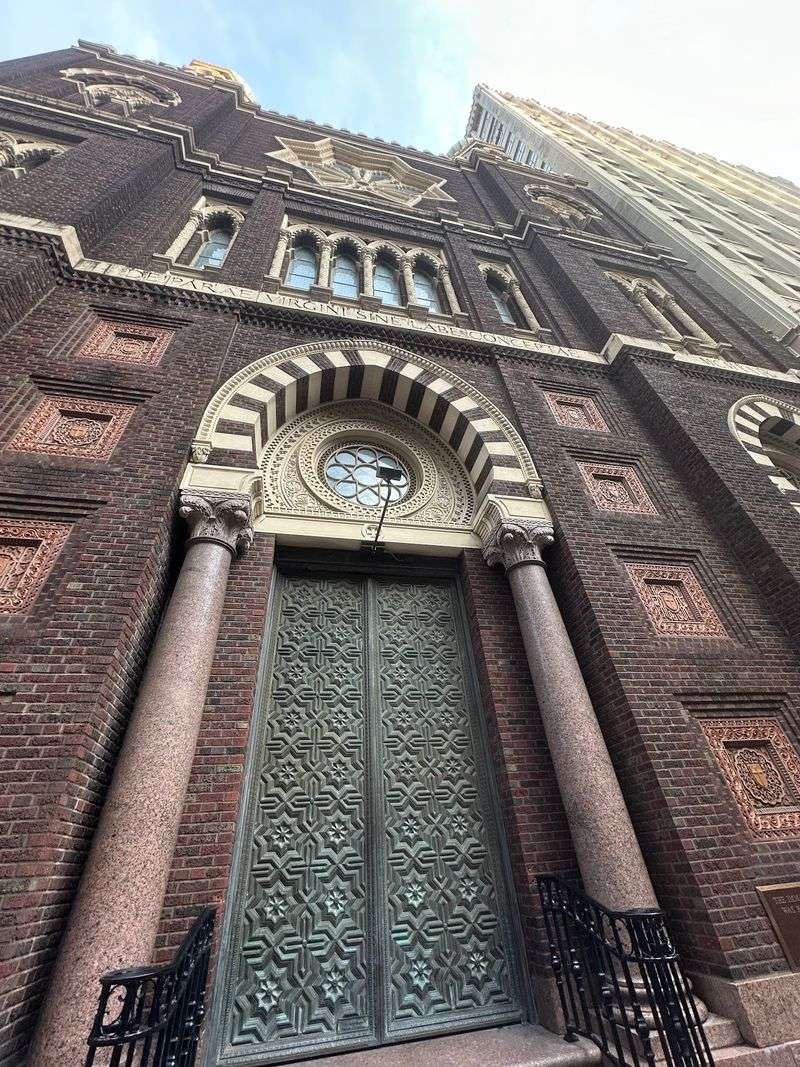
Before you even reach the sanctuary, the bronze entry doors make a statement. Covered in geometric patterns typical of Moorish architecture, each door weighs a hefty 1,500 pounds and functions as artwork in its own right.
Inside, the seating catches people off guard. The pews are cast iron rather than wood, decorated with Moorish tracery, rosettes, and designs that carry scriptural references.
Visitors have singled out the seats for their Celtic, Gothic, and Byzantine symbols, calling them surprisingly artistic for something you simply sit on.
Those cast-iron pieces, along with the confessionals and columns, were produced in Baltimore, Maryland, during the 1850s. That detail mixes American industrial skill with European-inspired ornament, a combination you rarely find in a single building.
The result rewards curiosity. Instead of glancing at a bench and moving on, visitors find themselves leaning in to trace the ironwork.
It is one more reason people describe returning several times and still discovering fresh details on the walls and furnishings each visit.
The Bronze St. Peter With A Worn-Down Foot
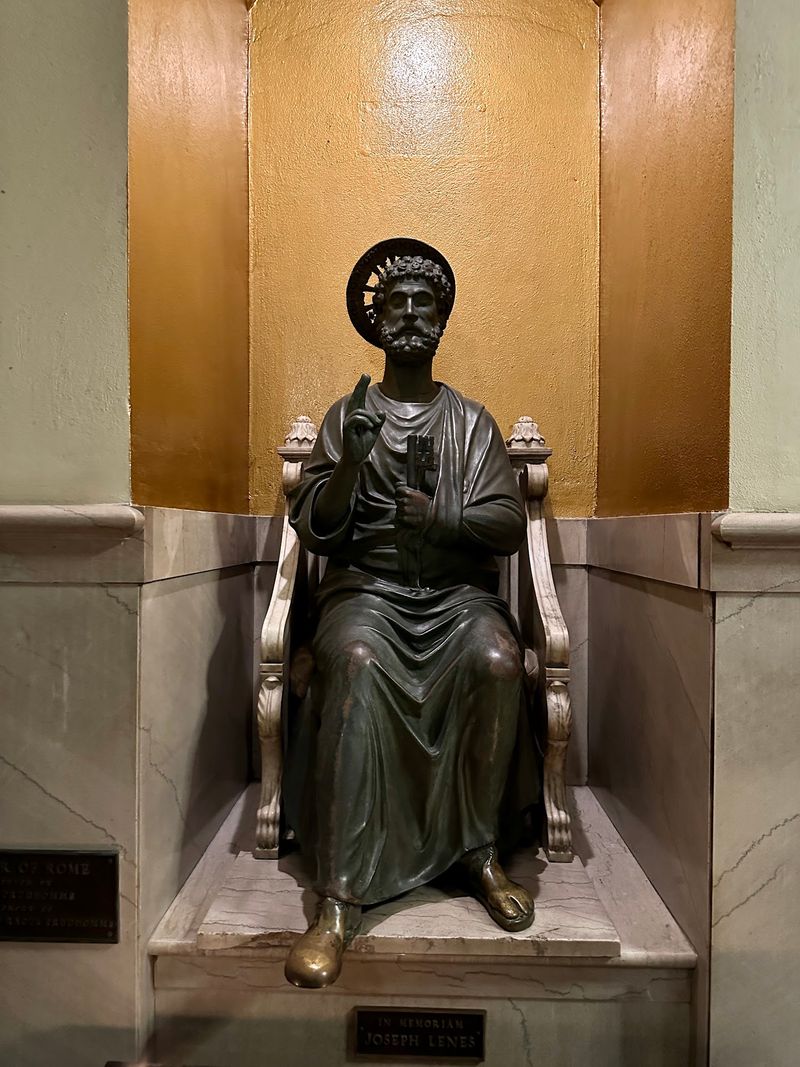
Tucked among the fixtures is a bronze statue of St. Peter, a smaller copy of the famous figure inside St. Peter’s Basilica in Rome. It offers a tangible link between this downtown church and the center of the Catholic world.
Follow the tradition and touch the statue’s foot, and you will find the bronze worn smooth from decades of hands. The wear mirrors exactly what has happened to its Roman counterpart, where countless visitors have done the same over the centuries.
Overhead, fine bronze chandeliers light the space, their forms borrowing from both Moorish and Byzantine styles. They add another layer to a room already packed with detail from floor to ceiling.
Even the holy water fonts, installed in 1933, carry a personal story. The faces of the four angels supporting the bowls were modeled after family members of the pastor at the time, Father Facundus G.
Carbajal. Small touches like these make the church feel lived-in rather than staged, and they reward the kind of slow wandering that visitors keep coming back to do.
Built On A Drained Cypress Swamp
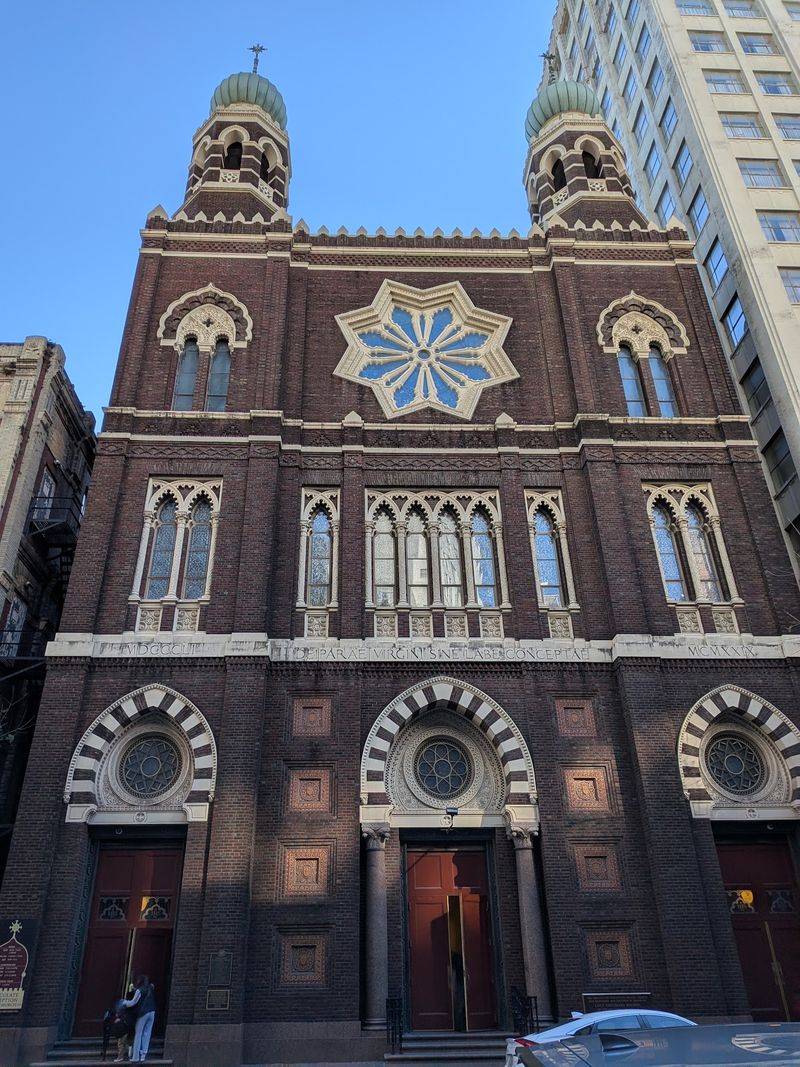
Raising an elaborate stone building in New Orleans has never been simple, and this church proves it. The ground it stands on was once a water-covered cypress swamp, home to alligators and muskrats before anyone thought to build here.
Turning that soggy terrain into solid footing took extraordinary effort, with the land drained inch by inch. Father Cambiaso laid the original 1857 foundation using a double row of large red cedar planks, topped with oyster shells set in mortar and reinforced with iron bars.
On top of that base, workers built a wall five to seven feet wide from fire-bricks and heavy mortar. For its era, the engineering was a genuine achievement, holding an ornate structure steady on ground that fought back at every step.
Knowing that history changes how the church feels. What looks like a slice of old Europe actually rose from Louisiana delta muck through sheer stubbornness.
One visitor called the fact that it still stands almost miraculous, and once you understand the foundation beneath it, that word starts to make sense.
Taken Apart Brick By Brick And Rebuilt
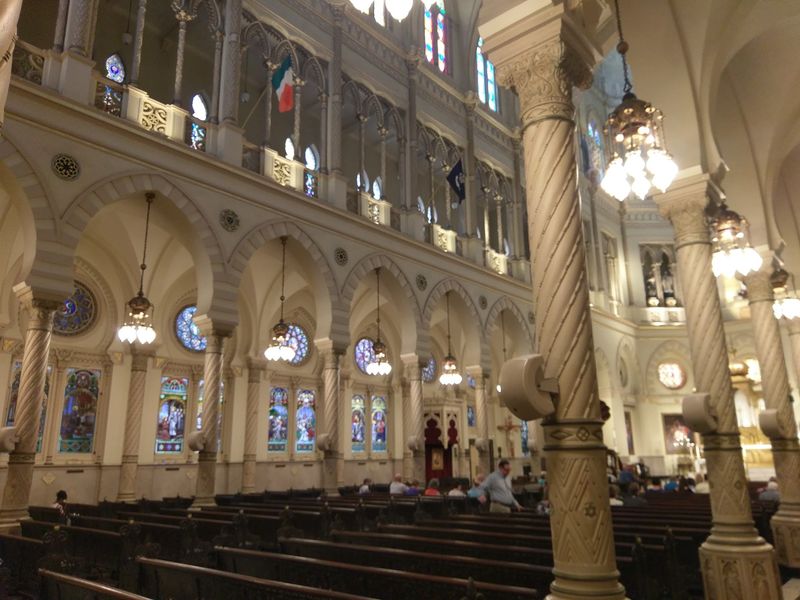
The church you see today is not quite the original, and the reason is dramatic. When the towering Pere Marquette building went up next door in the mid-1920s, the vibration shook the older Moorish structure to its core.
The damage was serious. Half the rear columns shifted forward an inch, the uptown wall lifted, the tile floor cracked in several spots, and windows jammed shut.
The old church held up through the heavy pile driving, but later construction work nearby finally left the building unsafe.
Rather than tear it down and start fresh with something new, the parish chose a far harder path. In 1928 workers carefully disassembled the church brick by brick, then rebuilt it as a near-duplicate, keeping many of the original fixtures.
The rebuilt sanctuary opened its doors again in 1930, preserving Father Cambiaso’s vision instead of replacing it. That decision is why the altar, the ironwork, and the Moorish detailing still feel authentic today.
Visitors who learn the story often describe it as one of the more fascinating parts of the whole place.
The Atmosphere Two Blocks From The Party
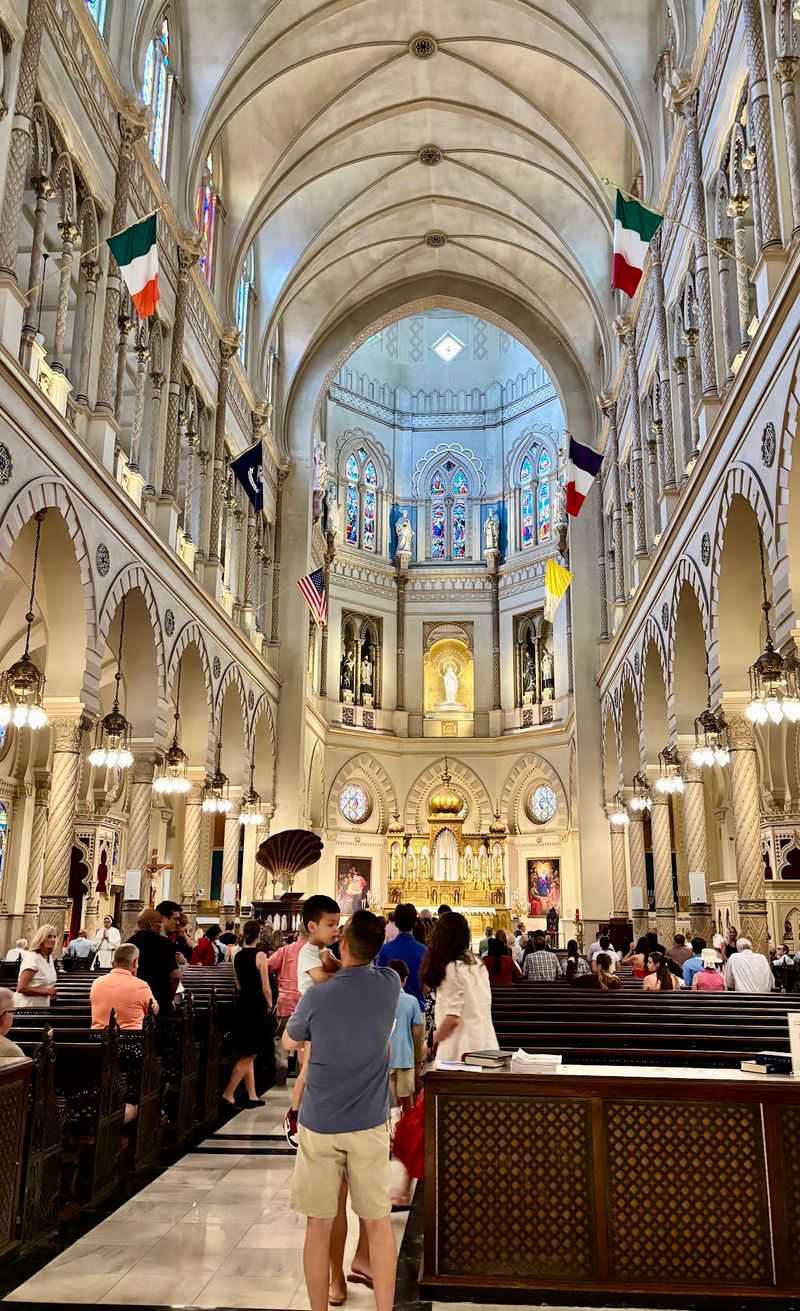
Part of what makes stepping inside so memorable is the quiet. Just two blocks from one of the loudest corners in New Orleans, the sanctuary offers a calm that feels almost startling by comparison.
Visitors describe a strong sense of reverence the moment they walk through the doors, whether they came for Mass or simply to look. Several mention slipping in during the morning to start their day with a few minutes of stillness before heading back out into the city.
People who worship elsewhere find it welcoming too. One Christian Orthodox visitor called it a fitting place for morning prayer, praising the marriage of Catholic and Moorish design.
That openness runs through many accounts of the space.
The parish community adds to the warmth. Guests mention friendly parishioners, warm priests, and even coffee after Mass, where a kind stranger struck up a long conversation and made them feel at home.
Between the hush of the architecture and the friendliness of the people, the church suits both quiet reflection and a genuine sense of belonging.
Attending Mass And Joining The Parish Life
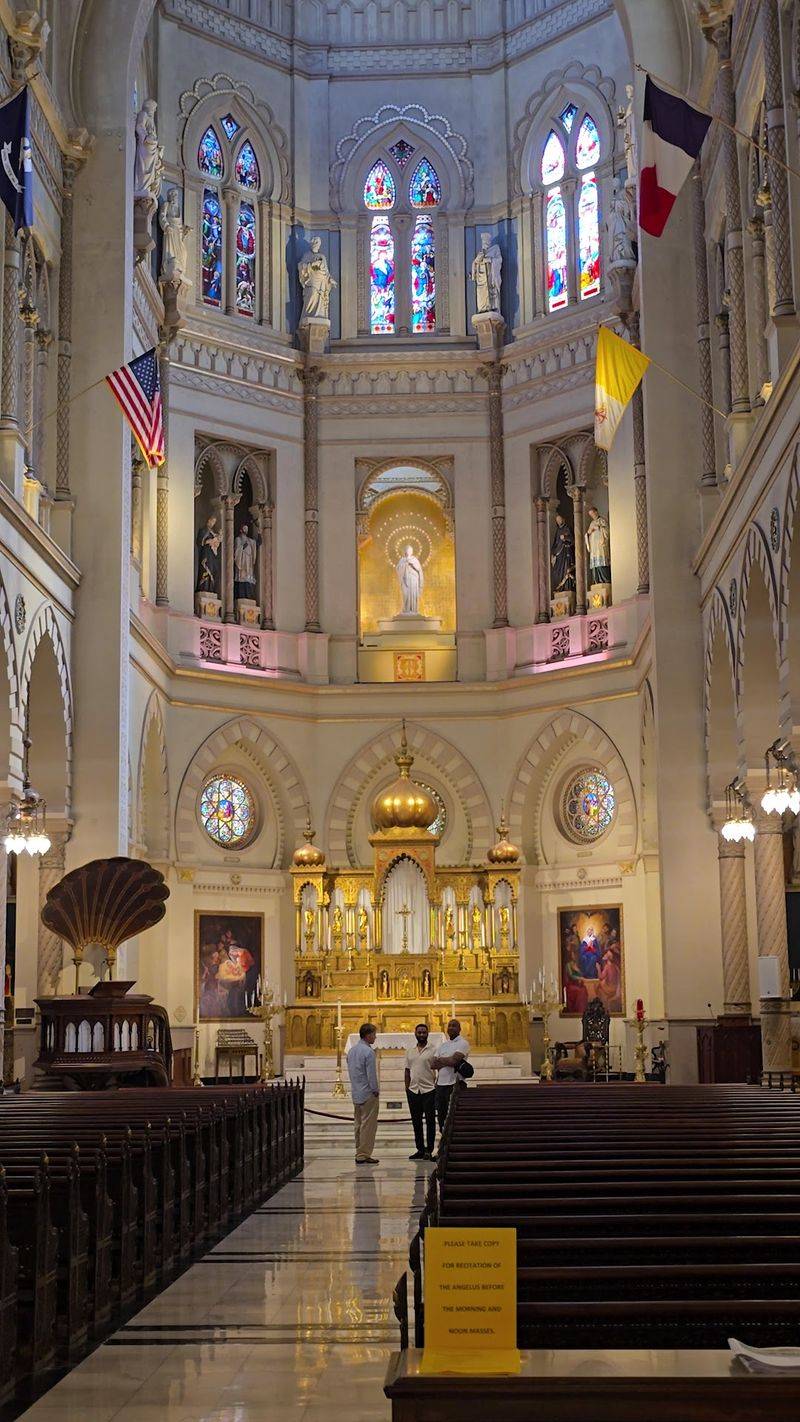
Because this is a working parish and not a museum, the best way to experience it is often during Mass. Visitors traveling through New Orleans frequently pop in for a service and leave impressed by both the setting and the liturgy.
A 4:00 p.m. Saturday vigil Mass has become a favorite for out-of-towners who want something later in the day.
Others attend the early weekday services, described as quick and timely, or the Sunday morning and evening liturgies.
People consistently praise the priests. Homilies get called concise, clear, and relevant, and more than one visitor noted how warm and welcoming the clergy felt.
The cantor draws compliments too, adding to the sense that the music matches the surroundings.
The church even hosts weddings, and one family recalled a service made personal by two priests who happened to be brothers. Whether you are a devout Catholic or simply curious, sitting through a service here lets the architecture come alive in a way that a quiet walkthrough cannot fully match.
Many guests say they now make it their regular stop whenever they return to the city.
Free Saturday Tours And When To Visit
For anyone who wants the full backstory, the parish offers free guided tours every Saturday at 3:15 p.m., and appointments can be arranged as well. The walkthrough runs about 30 minutes and covers far more history than the website can hold.
Visitors who caught the tour before the Saturday vigil Mass called it informative and well worth arriving early. The guides point out details easy to miss on your own, from the unusual placement of the Stations of the Cross to the stories behind the windows.
General hours run Monday through Friday from 6:30 a.m. to 3:45 p.m., with a break on Saturday morning and afternoon, plus Sunday morning and evening. The address is 130 Baronne Street, and the parish can be reached at 504-529-1477.
A couple of practical notes come up from regulars. Parts of the church have been under restoration, though visitors still describe it as beautiful throughout the work.
One person also cautioned against handing money to a panhandler stationed outside, so keep your focus on the doors and the wonders waiting behind them.
Why This Church Rewards The Detour
Few buildings pack this much surprise into such a compact footprint. Between the gold altar from Paris, the French stained glass, the Moorish doors, and a foundation drained from swampland, every corner has a story that feels bigger than the block it sits on.
Visitors keep landing on the same reaction. Several say it may be the most beautiful church in New Orleans, some even ranking it above the Cathedral, which is no small claim in a city full of grand houses of worship.
The mix of influences is what people remember most. One described spotting touches of Spain, Ireland, France, Italy, and beyond all under a single roof, an architectural blend that genuinely earns the comparison to Europe promised at the door.
Set aside more time than you think you need. Guests who returned again and again still found new details on the walls, in the ironwork, and up in the windows.
Walk in expecting a quick glance, and you may leave an hour later, still craning your neck at the twisting columns and gold overhead.