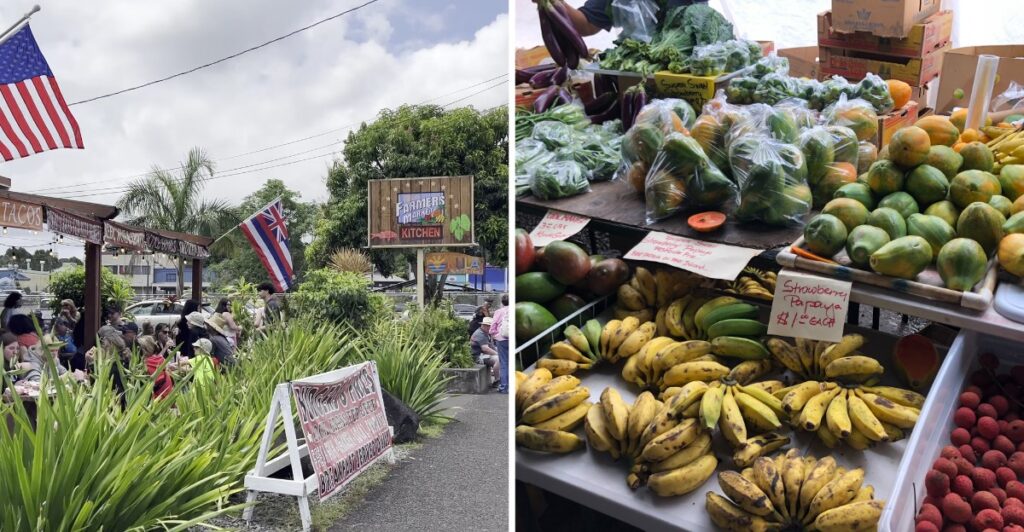
Papaya is showing off before breakfast even starts.
Cut one open in Hilo and suddenly toast feels like it did not prepare for the assignment.
That is the kind of morning this market encourages.
Some days are quieter. Wednesday and Saturday turn up the volume, with far more vendors and plenty of reasons to keep circling.
Hawaii Island helps explain the fruit obsession. The east side grows a lot of papaya, so the market sits close to the source instead of treating tropical fruit like decoration.
I would give the unfamiliar stuff a fair chance too.
That oddly shaped fruit? Ask about it. Something warm from a food stall?
Fair game.
Just keep an eye on the bag.
Papayas are innocent individually. In groups, they start looking like checked luggage.
Tropical Fruit Gives You Plenty To Compare
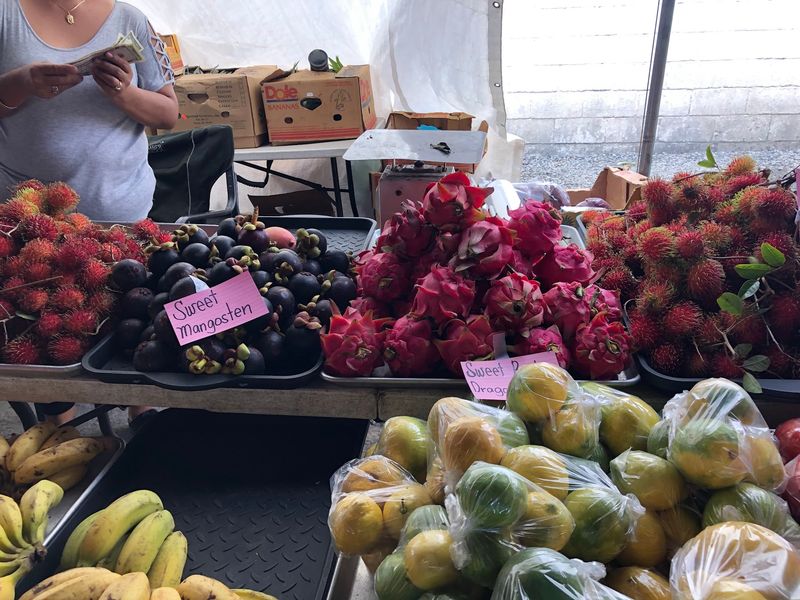
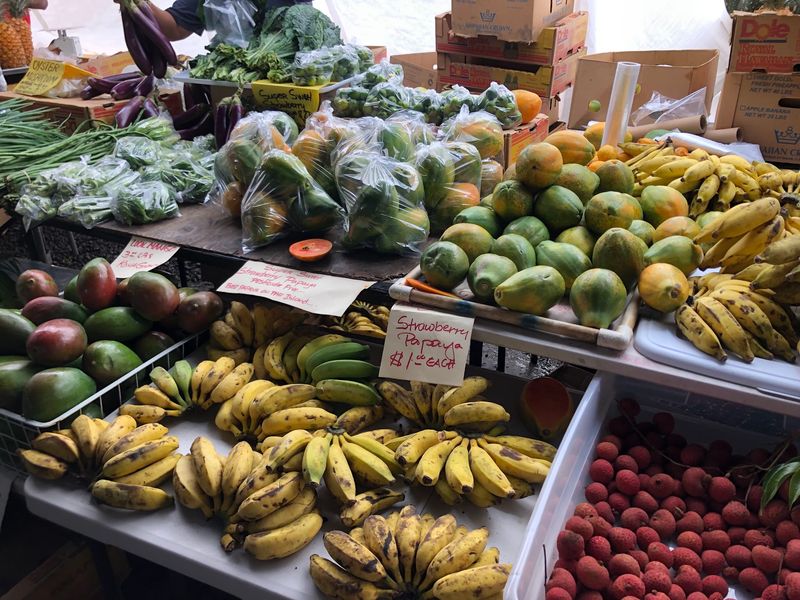
Locally grown papayas and other tropical produce appear among the stalls, with the exact mix changing as crops move through their seasons.
That makes flexibility useful. Arriving with one specific fruit in mind can work, but the better strategy is to see what looks good that morning and adjust from there. A fruit you have barely noticed before may end up being the thing that gets eaten first.
If you are unfamiliar with something, ask before buying. Growers can help explain how ripe fruit should feel, whether it needs another day on the counter, and how to cut or eat it.
That little conversation is especially handy with produce that does not show up often in mainland supermarkets.
The market’s location also means locally grown food does not have to travel far before reaching downtown Hilo. Shorter distances between farm and stall can make it easier to encounter fruit at stages of ripeness that would be less practical for long-distance shipping.
Do not assume every piece should be eaten immediately, though. If the fruit is meant for tomorrow’s breakfast or a drive later in the week, say so.
Picking the right stage of ripeness can save you from carrying a bag of tropical produce that all demands attention on the same afternoon.
Papayas Have An Especially Strong East-Side Connection
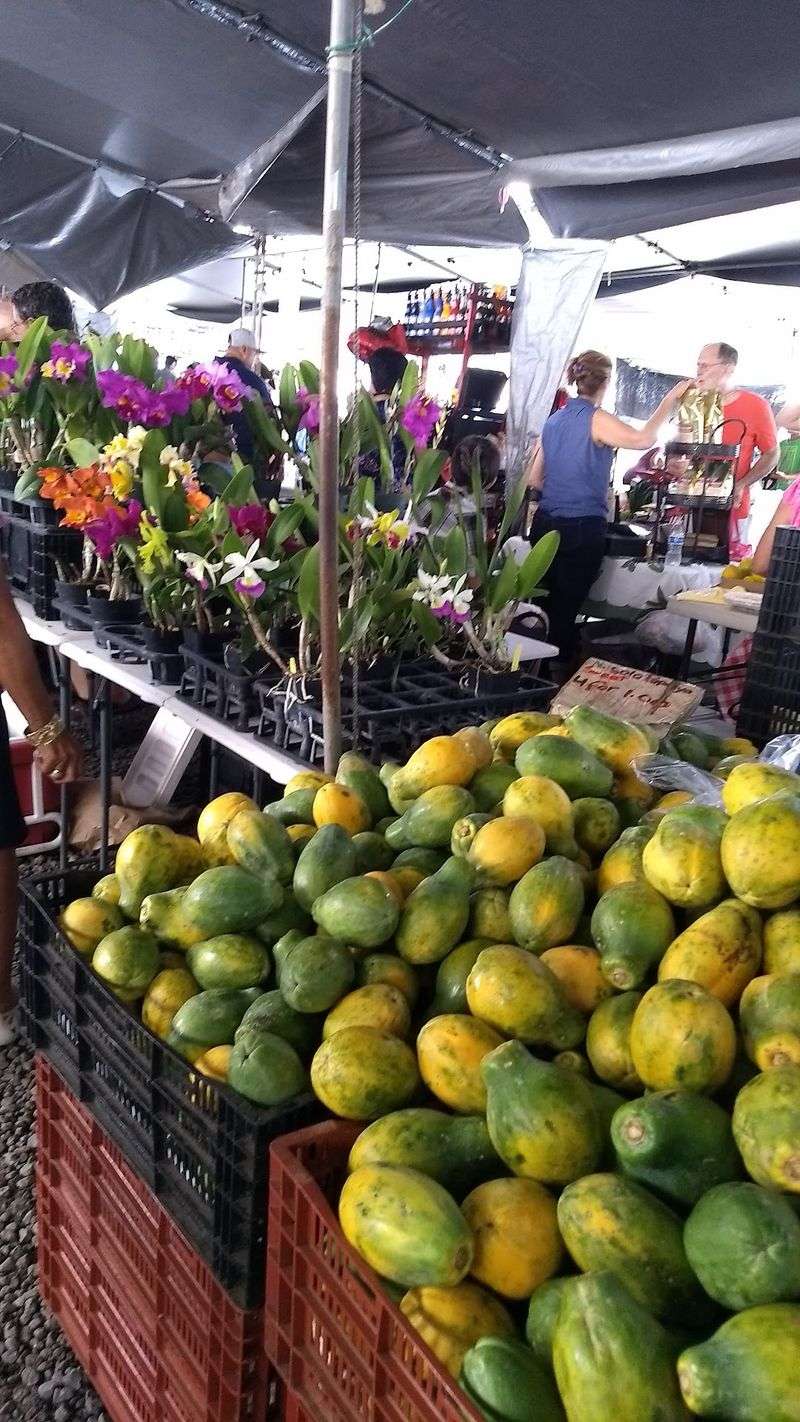
Papayas deserve their own pause here because Hilo sits beside one of Hawaiʻi’s most important growing regions.
About 95 percent of Hawaiian papayas are grown on the east side of Hawaiʻi Island, putting the market close to the farms behind a major share of the state’s crop.
Strawberry papayas are one variety worth watching for. Their flesh is pinkish-orange, and they are known for a sweeter, juicier profile than many standard papayas.
If you are buying one to eat soon, look for fruit that has softened rather than staying completely firm. If it still feels hard, give it more time.
That becomes an easy decision when the rest of the day includes sightseeing and you do not want to open a papaya in the passenger seat.
Papaya is also one of the simplest market purchases because it does not need much help once ripe. Cut it, scoop out the seeds, and eat it as it is. A squeeze of citrus works if you want a sharper edge, but the fruit can easily carry breakfast on its own.
The market is not limited to one variety or one season, so treat the papaya stalls as a starting point rather than the whole produce section. Other seasonal fruit and produce can compete for the same bag space.
Wednesday And Saturday Bring The Largest Market Days
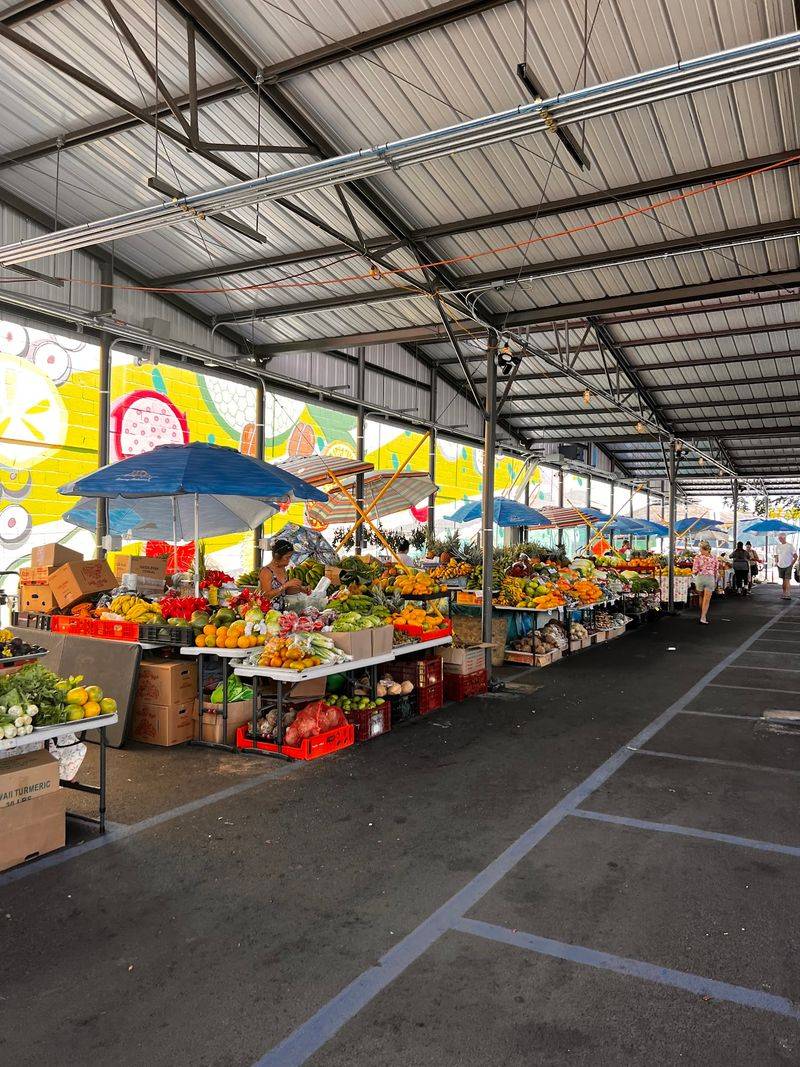
The market currently operates seven days a week from 7 a.m. to 3 p.m., but Wednesday and Saturday are the big-market days. Those two days feature more than 150 vendors, while regular market days generally have around 50 to 80.
That difference can completely change the feel of a visit. Wednesday and Saturday give you the broadest selection of farmers, food vendors, craftspeople, flowers, and other stalls. A quieter weekday gives you fewer choices but more breathing room.
If the market itself is a major part of the Hilo itinerary, choose one of the big days. If you mainly need fruit, coffee, or a few snacks before continuing elsewhere, an ordinary market morning may be enough.
Early hours have another advantage. The market recommends the 7 to 9 a.m. window for strong produce selection, cooler temperatures, and easier parking.
You do not need to arrive at opening unless your schedule already has you awake. Still, earlier shopping gives you more time to compare before the warmest part of the day and before the busiest stretch of the morning.
The market closes at 3 p.m., so this is better treated as a morning or early-afternoon stop than something saved for the end of a long sightseeing day.
Flowers And Crafts Pull You Away From The Produce
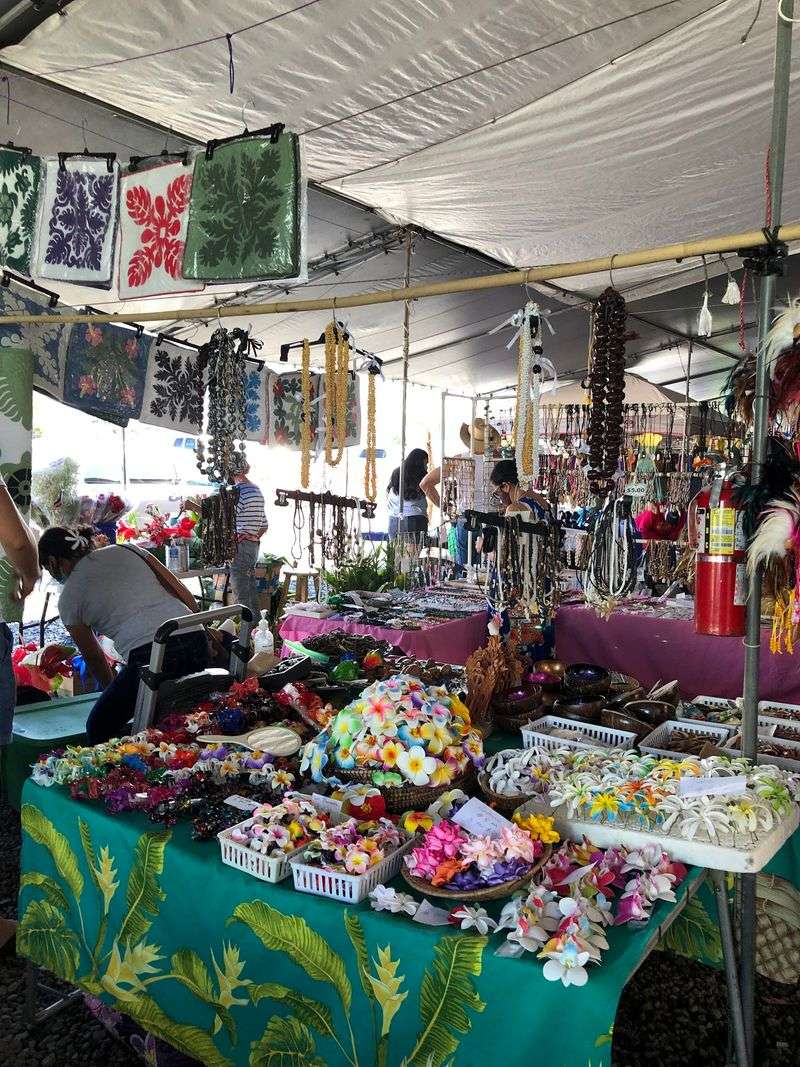
Fruit may fill the bag first, but it is not the only reason to slow down. Orchids, anthuriums, handmade jewelry, tropical clothing, koa wood pieces, etched glass, leis, and other crafts are part of the broader mix.
That makes the market useful when not everyone in the group wants to spend twenty minutes debating papayas. One person can stay with produce while someone else heads toward flowers or handmade goods.
The flower stalls are especially hard to ignore because tropical blooms add a completely different shape and color to the market.
If you are staying somewhere with room for flowers, a small bunch can be an easy purchase. If you are flying soon, pause before buying plants or agricultural items and check what can legally travel with you.
Craft shopping deserves the same patience as fruit shopping. Walk a little before choosing. With more than 150 vendors on the largest days, buying the first souvenir you see can mean missing something more interesting two rows later.
Koa wood goods, locally made jewelry, clothing, and other handmade pieces give you alternatives to generic souvenir shopping. The point is not to collect everything. It is to leave enough time to notice who actually made what you are looking at.
Downtown Hilo Makes The Market Easy To Work Into The Day
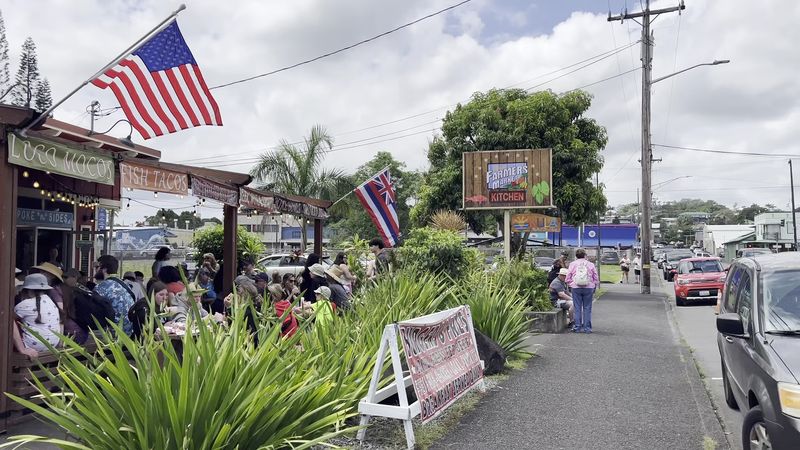
Hilo Farmers Market is at 20 Mamo St, Hilo, HI 96720, at the corner of Mamo Street and Kamehameha Avenue in historic downtown Hilo.
That location makes the market easy to pair with a downtown walk rather than treating it as a separate excursion. Hilo Bay is nearby, Moʻoheau Park sits across from the market area, and other downtown stops are within walking distance.
Parking is available on surrounding streets, with additional spaces around nearby side streets and Moʻoheau Park. Arriving earlier generally improves the odds of finding a closer spot.
If you are already staying downtown, walking can be simpler than moving the car for a short market visit. That also solves the problem of trying to find another parking space after breakfast.
The daily 7 a.m. opening gives the market a useful place at the beginning of an itinerary. Grab fruit, coffee, or something baked, then continue through Hilo while the rest of the day is still wide open.
On Wednesday and Saturday, expect the footprint to feel busier because the vendor count jumps. On other days, the same location is easier to cover without feeling like you need a strategy for every aisle.
Coffee, Snacks And Prepared Food Can Turn Shopping Into Lunch
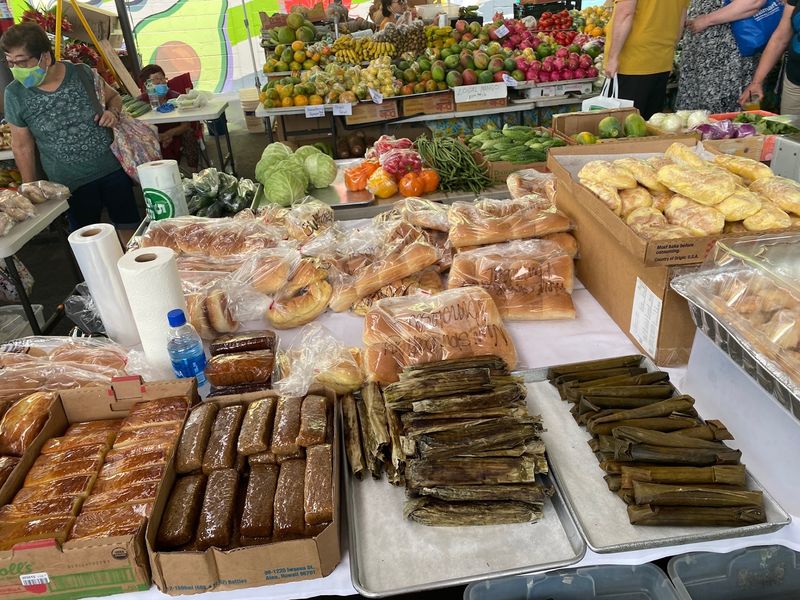
You do not have to leave the market with only groceries. Locally grown and roasted coffee, baked goods, jams, jellies, macadamia nuts, sweet treats, and prepared foods all appear within the broader vendor mix.
That makes hunger easy to handle without abandoning the market. If breakfast was light, pick up something while browsing. If lunch is approaching, check the food stalls before filling every hand with produce bags.
Butter mochi is one of the Hawaiian sweets highlighted among the market’s food offerings, while locally grown coffee gives you an easy way to keep the morning going.
The trick is pacing. Buying a full meal immediately can make fruit shopping less appealing five minutes later, especially when ripe produce starts looking like dessert.
A better plan is to walk one pass before deciding. See what fruit is available, notice the prepared-food options, and then decide whether the visit is breakfast, lunch, shopping, or some combination of all three.
Cash is useful to carry because some vendors may prefer it. Payment methods can differ among independent sellers, so a little flexibility saves you from finding the perfect snack at the one stall that does not match your preferred payment method.
Early Morning Is The Easiest Time To Shop
The market opens at 7 a.m., and the first couple of hours offer several practical advantages. Produce selection is still strong, temperatures are cooler, and parking is generally easier than during the busiest part of the morning.
That does not mean everything disappears by lunch. The market stays open until 3 p.m., and vendors remain active through the day. An afternoon visit can still work when the morning belongs to another part of the island.
For the fullest version, though, combine an early arrival with Wednesday or Saturday. You get the largest vendor count while still beating some of the later traffic around the stalls.
Bring a reusable bag if you have one, especially if fruit is the goal. Fruit, jars, coffee, flowers, and snacks become awkward quickly when every purchase arrives in a separate small bag.
Then give yourself permission to change the list. Farmers markets are better when the season gets a vote.
Maybe you arrive expecting one kind of fruit and leave with another. Maybe breakfast becomes butter mochi and produce from a nearby farm. Maybe the flower stall wins before you even reach the coffee.
Hilo Farmers Market is easiest when you treat it as a place to browse first and decide second. The fruit may get you through the entrance, but there is enough happening around it to keep the visit from becoming a simple grocery run.