The river does most of the navigation for you, which leaves more brainpower for window-shopping.
Follow the water a while, and the old downtown keeps appearing just uphill. Wander back whenever something catches your attention.
Maybe it is a brick storefront. Maybe an old theater marquee. Or it is coffee that suddenly feels like the correct next move.
I like a downtown that does not make you work too hard for the good bits.
Here, Michigan history sits close to everyday life. The buildings have stories, but nobody is asking you to study for a quiz before enjoying them.
You can walk for a bit, stop, then change direction without turning the afternoon into an endurance event.
Forget counting miles.
The better measure is how many times you say, “Hang on, what’s over there?”
The Riverwalk Keeps Downtown Close To The Water
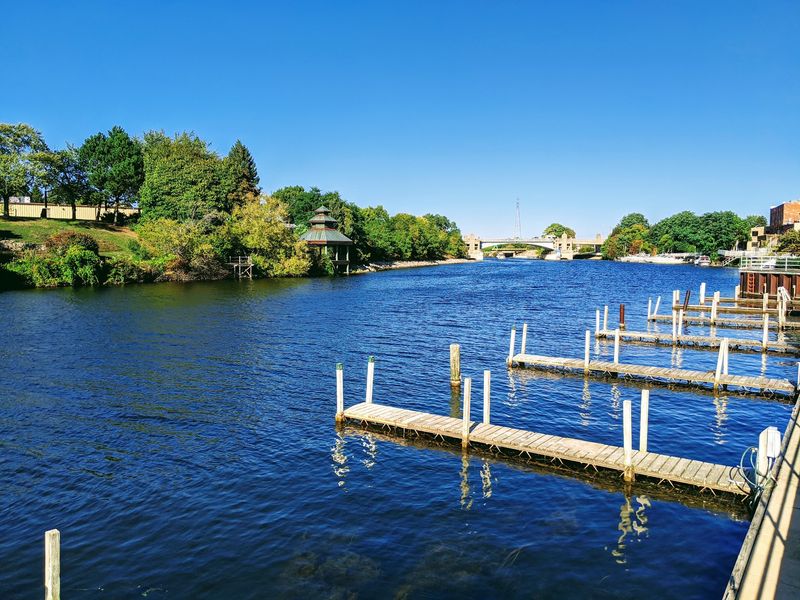
The Manistee Riverwalk gives the day an easy starting point because it runs directly through downtown rather than circling somewhere beyond it.
The south stretch runs for roughly a mile and a half through downtown, with 25 historic markers sharing photographs and stories about buildings and sites that once lined the water.
Along that route, 25 historic markers use photographs and short histories to explain buildings and sites that once stood beside the river. They turn a simple waterfront walk into a loose timeline of the port city without requiring a formal tour.
The channel is still active, too. Great Lakes freighters can travel through the river on their way to industries upstream, so a very large ship may occasionally become part of the view. That is something to treat as a bonus rather than a schedule.
Benches and fishing areas give you reasons to pause, while River Street sits just above much of the route. When shopping starts sounding better than another half mile of walking, the transition back downtown is simple.
The Riverwalk is also fully accessible, which makes it useful for groups with different walking speeds.
Start near the water, read a few markers, and let the river handle navigation until coffee begins making a stronger argument.
The Outpost Mixes Clothing With Coffee And Tea
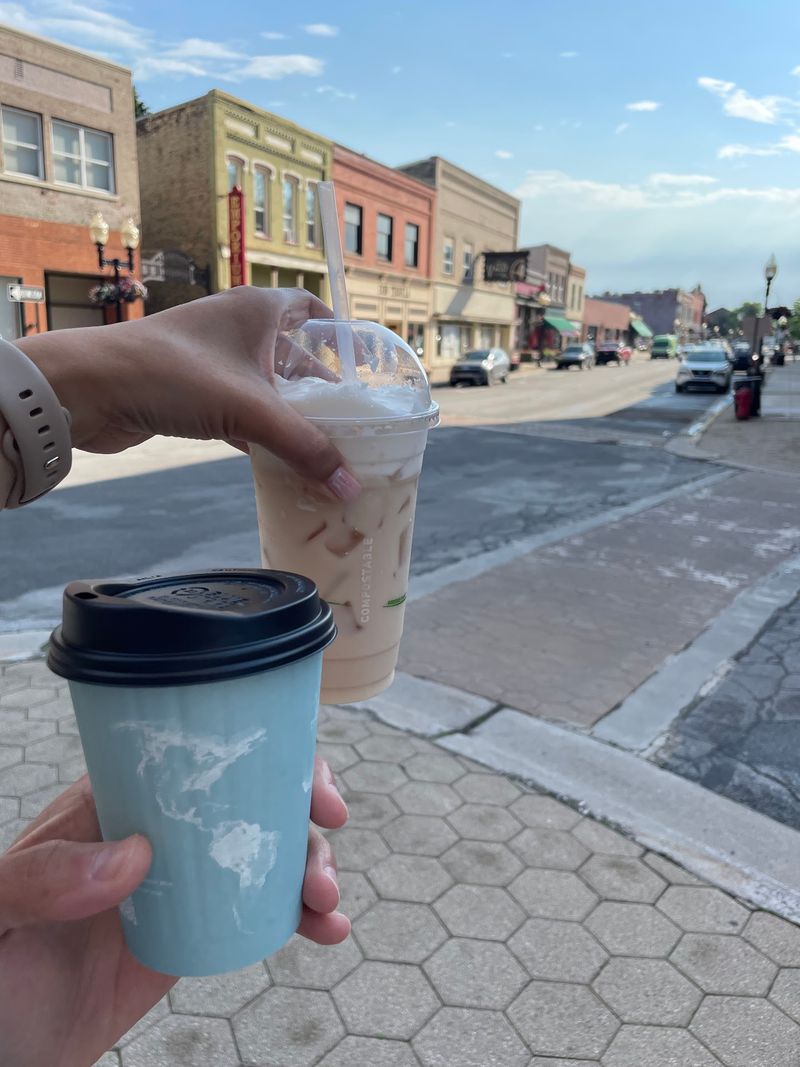
Back on River Street, The Outpost of Manistee combines apparel and outdoor-oriented clothing with coffee and tea, which gives you an excuse to solve two small problems at once.
The shop carries men’s and women’s clothing from outdoor and casual brands, while its drink side includes locally roasted coffee and locally grown and blended organic tea.
That combination fits easily into a downtown walk because you do not have to choose between browsing and taking a warm drink with you.
The building adds another layer. City historic-building records identify the storefront as the Aarons Building, an early twentieth-century River Street commercial structure.
Clothing retail still occupies the space today, fitting neatly into a district where older storefronts continue to house active businesses.
You do not need the backstory before stepping inside, but it becomes more interesting once you notice how many River Street businesses occupy older commercial buildings.
If the day is cool, start with coffee before continuing. If the weather already feels warm enough, browse first and keep both hands free.
Either way, this is a useful early stop because it lets the downtown walk begin without turning the morning into a race from one landmark to the next.
Port City Emporium Keeps The Shopping Local
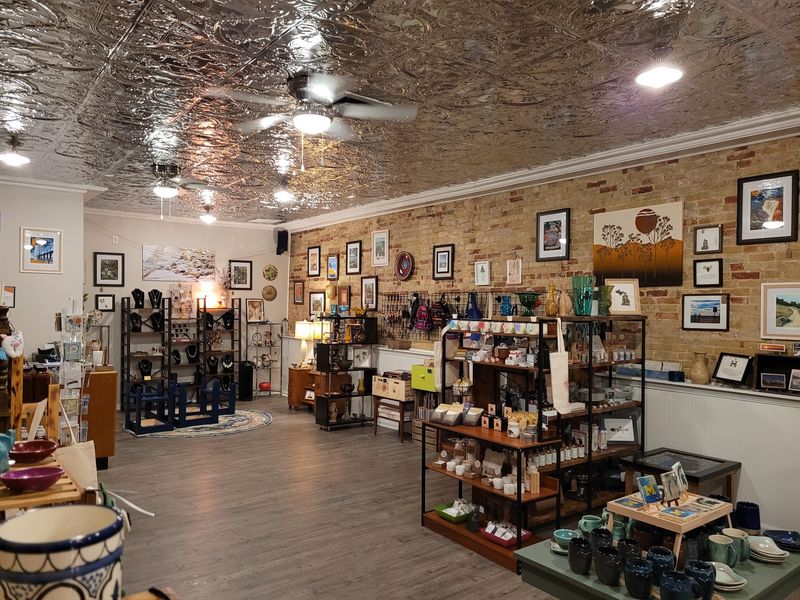
A few steps away, Port City Emporium focuses on gifts, art, home goods, and small-batch products, with work from local makers sharing space with vintage and repurposed pieces.
The shop currently carries local art along with items such as decor, furniture, lamps, classic candy, records, and one-of-a-kind gifts. That range makes it easier to browse without arriving with a specific shopping list.
Port City Emporium moved into its current River Street location in 2022 after opening elsewhere downtown in 2020. The move kept the business in the same walkable district while giving it a storefront near several other independent shops.
Inventory naturally changes when artists, vintage pieces, and small-batch goods are involved, so there is little reason to plan around one exact item. Look at what is there that day instead.
That approach also keeps the stop from becoming overly serious. You might leave with artwork, a record, something for the house, or nothing more than an idea for a future gift.
If you are shopping for someone else, give yourself a few extra minutes. If you are supposedly not shopping for yourself, perhaps avoid making any promises before you walk in.
The Vogue Still Shows Movies In Its Art Deco Home
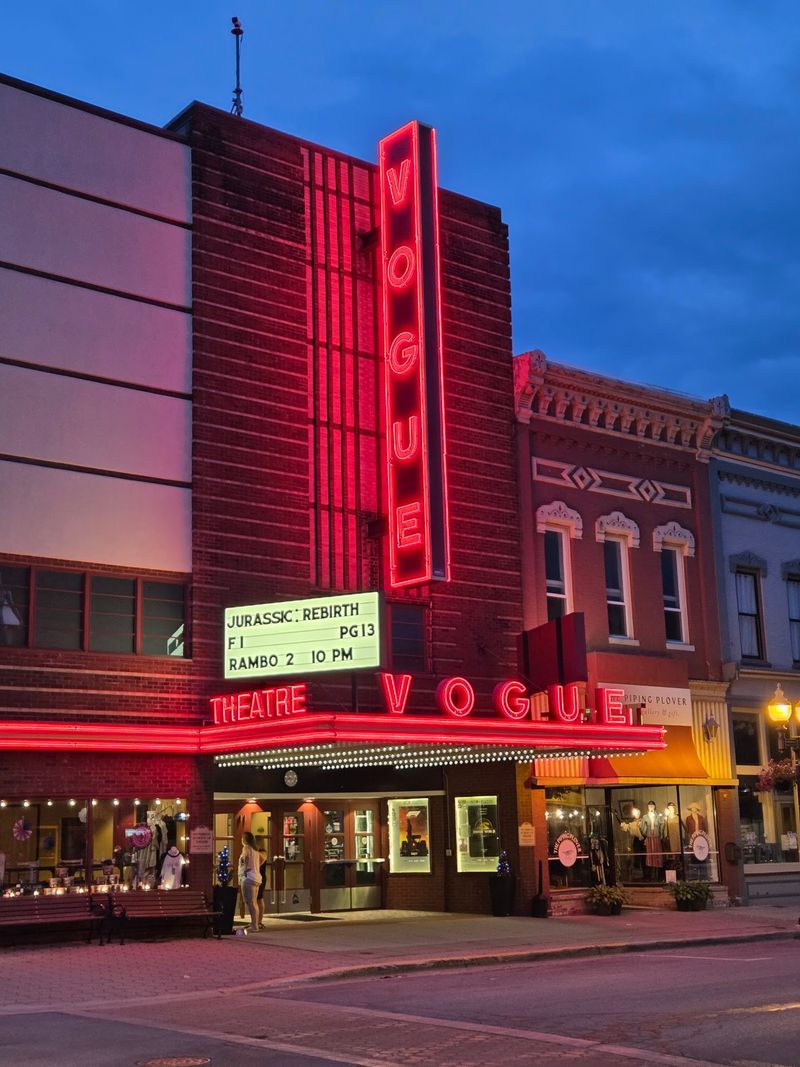
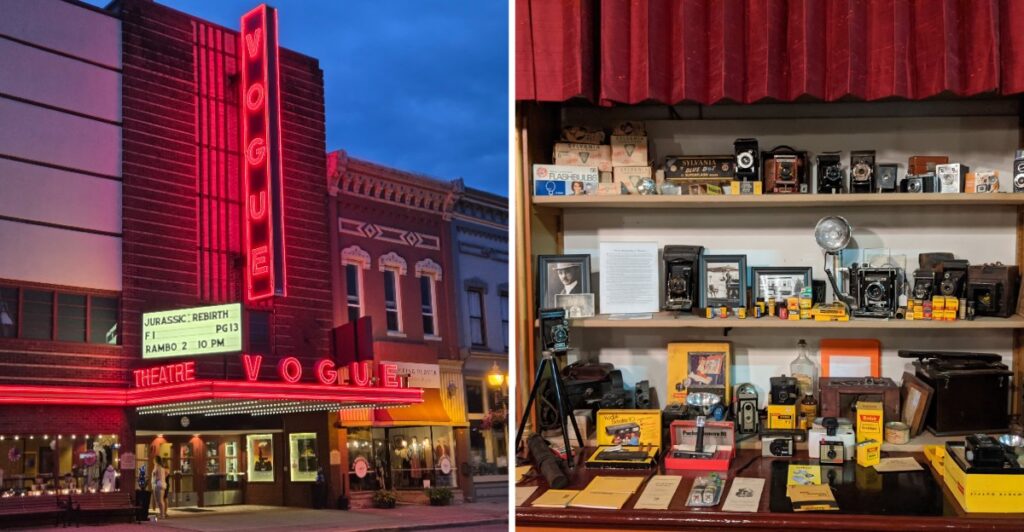
River Street also has a working piece of movie history. The Vogue Theatre was built in 1938, designed by Chicago architects Pereira and Pereira as a northern Michigan version of Art Deco.
The original auditorium held 935 seats. The building later stopped operating regularly, but a major rehabilitation returned it to use, and the theater reopened in December 2013.
Today, the Vogue operates with two screens and remains open seven days a week.
Its schedule mixes current films with classics and special community programming, so checking showtimes can turn a daytime downtown walk into an evening plan without adding another drive.
The restoration kept the building’s historic identity while adapting the interior for modern cinema use. That makes the theater more than a facade you glance at from the sidewalk.
If a film fits your schedule, save it for later in the day when your feet are ready to sit down. If nothing lines up, the exterior still gives you a clear change from the Victorian commercial buildings nearby.
A downtown can tell its history through museums and markers, but a theater still doing its original job adds a different kind of continuity.
Maryann’s Antiques Gives Browsing A Slower Pace
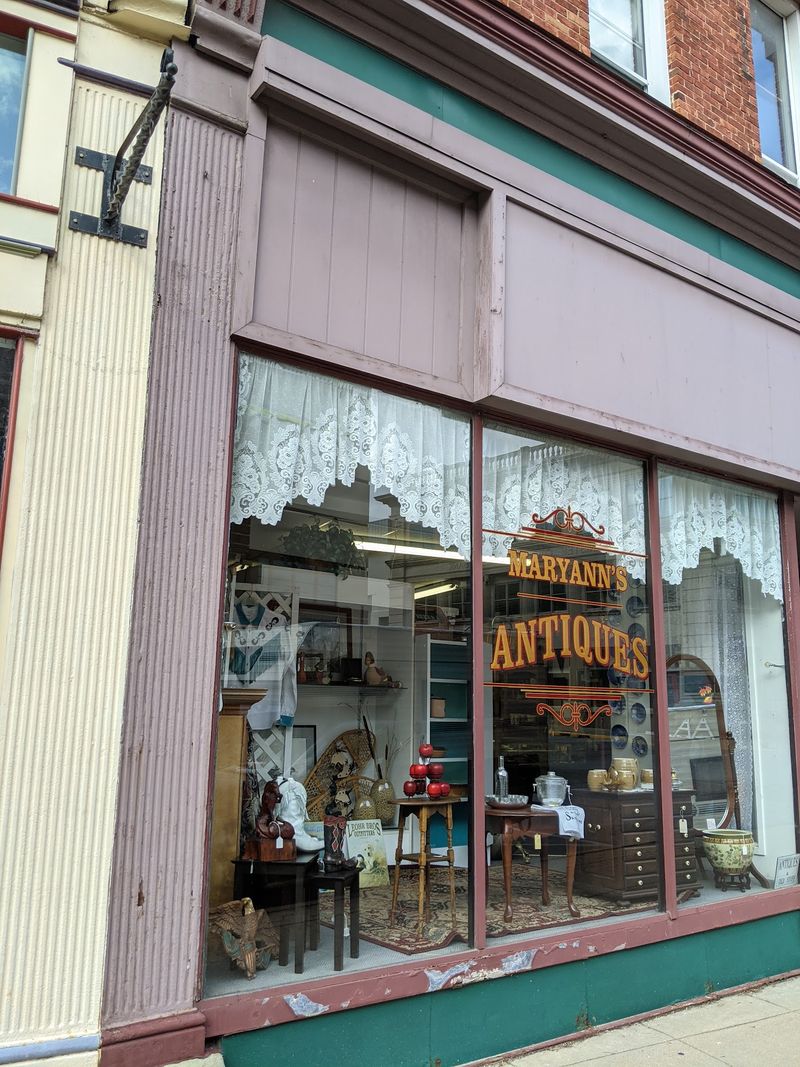
Antique shopping changes the rhythm of a downtown walk because speed stops being useful. Maryann’s Antiques currently operates on River Street with vintage furniture, glassware, collectibles, and other older pieces spread through the shop.
This is the stop for looking rather than checking boxes. A cabinet, lamp, record, or piece of glass can take longer to inspect than an entire rack of new merchandise because part of the interest comes from not knowing what will be there.
The building adds history before you even start browsing. City records identify the commercial block containing the shop as the Maryland Block, dating to about 1887, so the antiques sit inside a storefront with its own long timeline.
Stock changes by nature, so exact finds are never guaranteed. That uncertainty is useful on a walking day because it keeps the stop open-ended.
If you collect something specific, start there. If you do not, pick one shelf and work outward rather than trying to scan the whole room at once.
Antique stores can quietly stretch a schedule, so check the time before you disappear into another aisle. The Vogue, museum, and other River Street stops will still be waiting when you come back outside.
The Historical Museum Fills In The Downtown Backstory
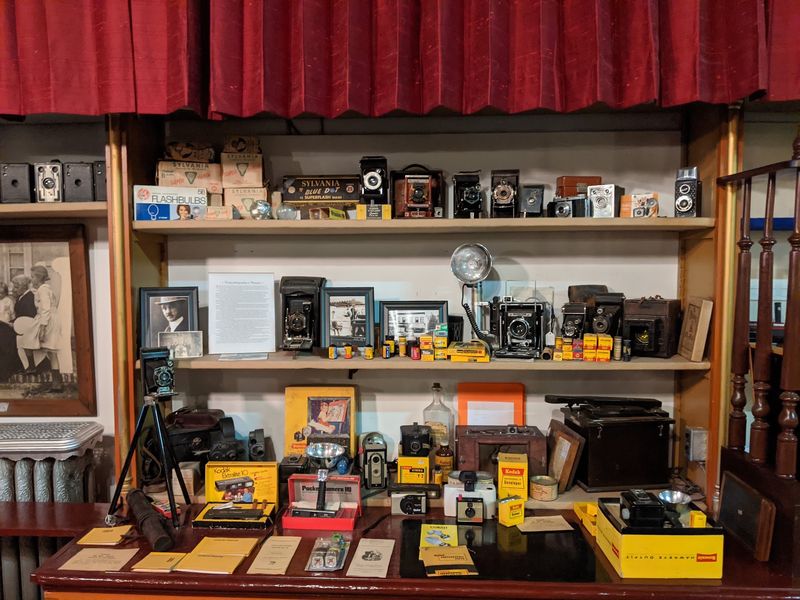
The Manistee County Historical Museum gives the walk a place to connect buildings, river commerce, industry, and everyday life. It occupies the historic Lyman Building at 425 River Street, Manistee, MI 49660.
The A.H. Lyman Drug Company expanded into this location in 1892 after becoming a major regional drug business. The store continued here for decades, and the White family donated the building for museum use in 1960.
A historic pharmacy exhibit preserves part of that earlier commercial story. Other displays cover wider parts of Manistee County history, so the museum works well after you have already seen Riverwalk markers and several historic storefronts outside.
That order matters because names and industries encountered on the walk begin to have more context once photographs, objects, and reconstructed spaces enter the picture.
The museum operates year-round, with hours that change seasonally, so check the current schedule before building the day around an indoor visit.
You do not need to read every label to make the stop useful. Pick the sections that connect most closely with what you noticed outside, then leave a few exhibits for another visit.
Downtown will look slightly different when you step back onto River Street.
The Ramsdell Keeps Performing Arts In The Historic District
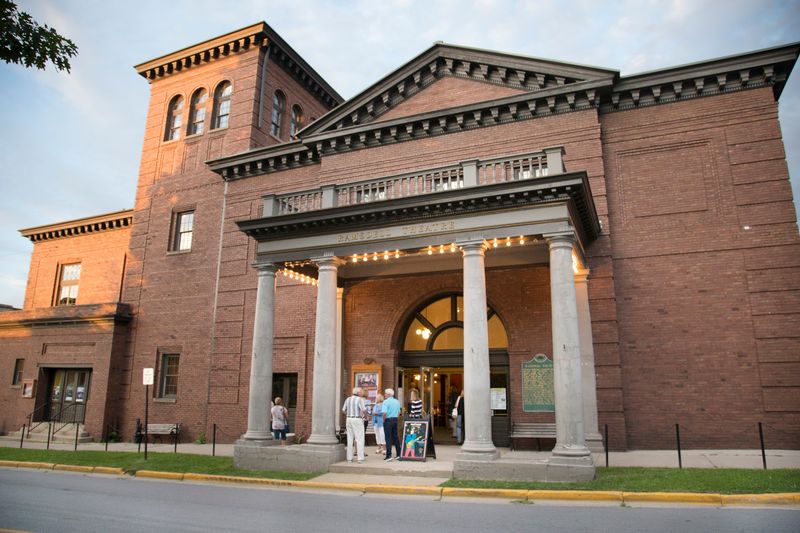
A few blocks from River Street, the Ramsdell Theatre carries downtown history into live performance. Built in 1903 by local lawyer and philanthropist Thomas Jefferson Ramsdell, the building was designed by Chicago architect Solon Spencer Beman.
Its theater was created for traveling productions at a time when opera and vaudeville were major forms of entertainment. The building later went through extensive restoration, while much of its original architectural character remained in place.
The Ramsdell is still active as a performing and visual arts center, with theater, music, exhibitions, educational programs, and community events appearing on its calendar.
That makes it an easy final stop conceptually, even when you are not attending a performance. The downtown walk begins with the river and commercial history, moves through shops and a cinema, and ends with another building still being used for the arts.
Check the event calendar if you want the day to finish with a show. If not, use the Ramsdell as the point where you turn back toward River Street or the waterfront.
The pieces of downtown sit close together. The river, shops, museum, cinema, and performance spaces do not require separate day trips. You can keep walking until the next doorway, marquee, or stretch of water gives you a reason to stop.