Your toaster has ancestors, and some of them look like they had a much harder job.
Here, ordinary household machines get a second life as conversation pieces.
Things people once used without much thought now look clever, complicated, and occasionally a little mysterious.
The collection includes thousands of artifacts. Only part of it appears at one time, so the displays can keep changing.
California gives all that machinery an unusual setting.
Instead of a plain gallery, the exhibits sit inside a historic house. Period rooms show how these objects fit into everyday life.
That changes the mood completely.
A refrigerator becomes more than an old appliance. A hand-powered gadget starts looking surprisingly ambitious.
And suddenly your own kitchen seems very modern.
Ready to meet the gadgets that came before yours?
A Hand-Powered Vacuum Started The Collection
The museum’s story begins with a vacuum cleaner that did not plug into anything.
Frank Livermore, a Menlo Park accountant with a growing interest in mechanical devices, came across an antique Standard Vacuum Sweeper in a local secondhand shop.
The machine used brushes and a bellows rather than an electric motor, so operating it required human effort.
That purchase opened the door to a much larger collection. Livermore began gathering mechanical and electrical objects that had once been useful in homes and offices but were being replaced by newer technology.
Typewriters, cameras, adding machines, toasters, curling irons, Dictaphones, and other devices joined the growing assortment.
By 1985, the Museum of American Heritage had been incorporated. It opened to the public at an earlier Palo Alto location in 1990, with Livermore’s collection forming the core of the museum.
The vacuum still makes a fitting starting point because it turns a familiar chore into something visibly mechanical.
Modern vacuum cleaners hide most of their work behind motors, plastic shells, sensors, and batteries.
The older sweeper lets you see the idea in a more basic form.
If you start there, look at the object before reading too much. Guess how it worked, then see how close you came.
More Than Eight Thousand Artifacts Extend Beyond The House
The museum’s full collection is much larger than the rooms visitors walk through in Palo Alto. More than 8,000 technological, mechanical, electrical, and electronic artifacts belong to the collection.
Most date from the nineteenth and twentieth centuries, with the museum concentrating on technologies that changed American life before the digital age became dominant.
The bulk of the collection is stored in a 13,000-square-foot facility in San Carlos. Objects move from storage into rotating exhibitions at the Williams House.
This way, the museum can keep changing what is on view without trying to squeeze thousands of pieces into one historic residence.
The museum has collected the kind of objects that once filled separate corners of everyday life. A camera was a camera. A calculator was a calculator.
A telephone handled calls, a radio handled broadcasts, and a typewriter handled documents.
Now one pocket-sized device can replace several of them.
Spend a little time comparing the size, weight, and controls of older machines. Many were built to make one task easier, and that single-purpose design is often the first thing that feels unfamiliar.
The Early Twentieth-Century Kitchen Makes Convenience Visible
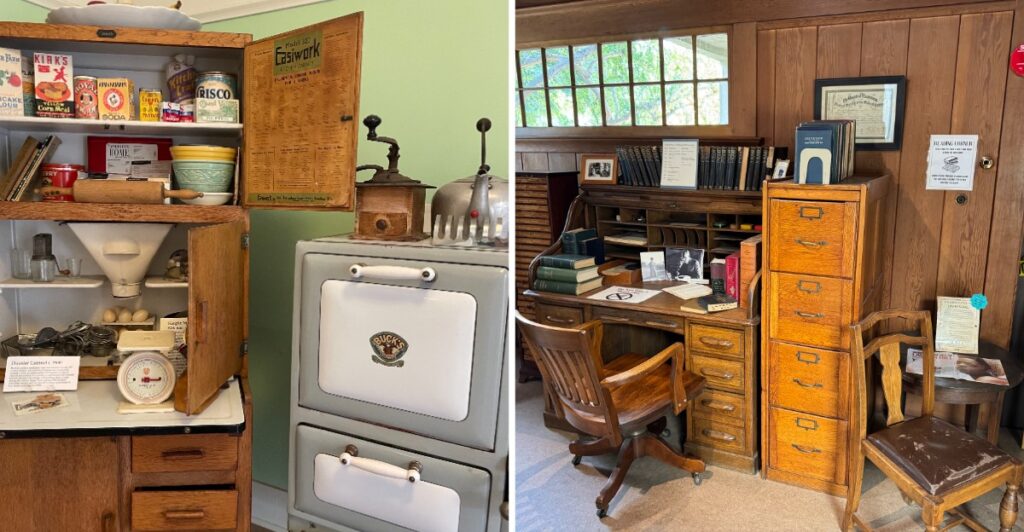
The permanent kitchen exhibit turns household technology into something you can understand at a glance.
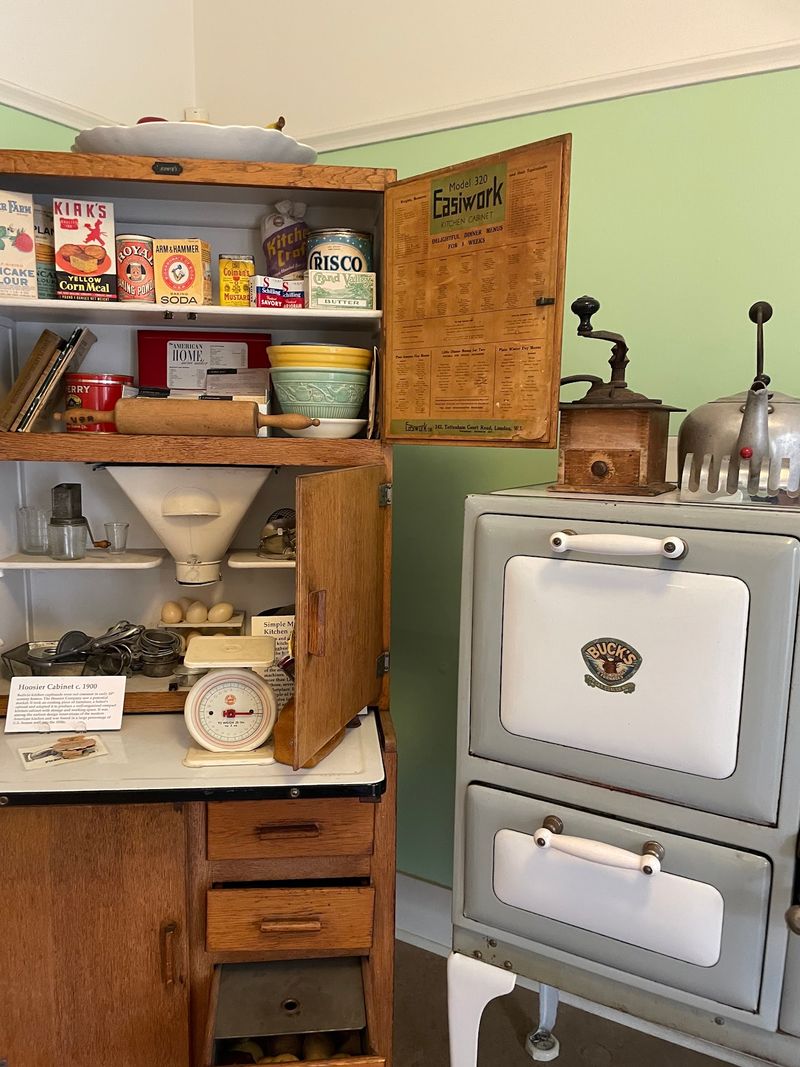
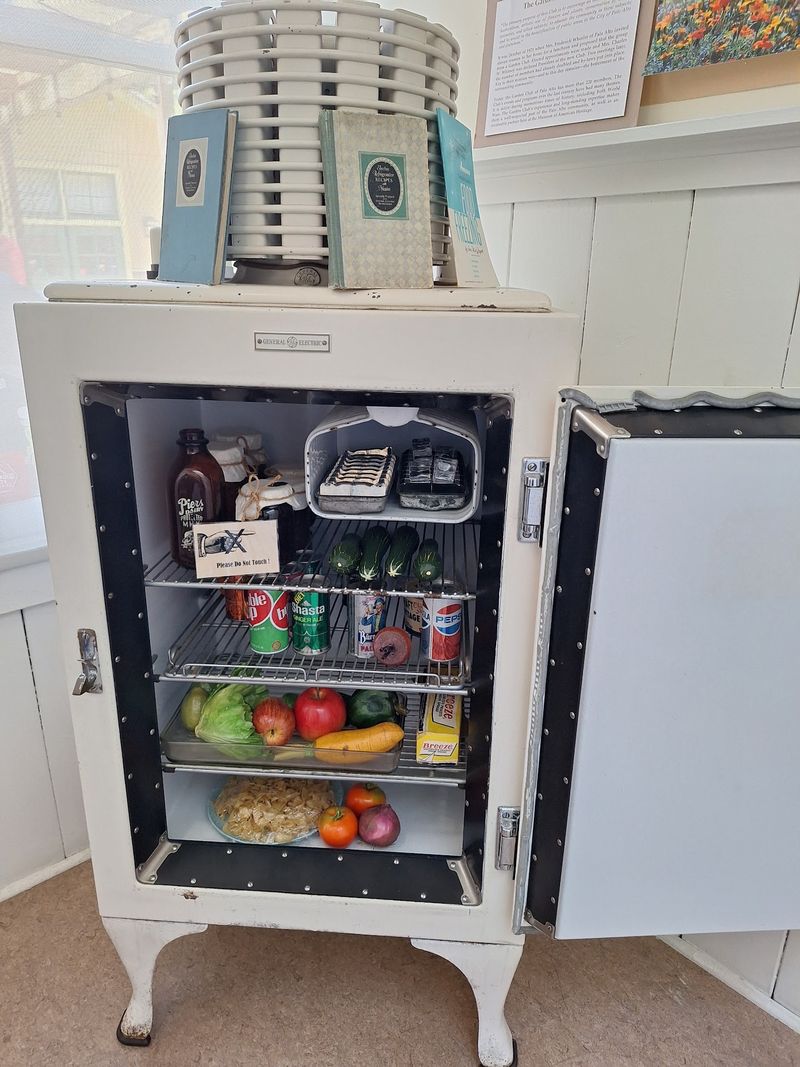
The room is arranged as an early twentieth-century kitchen, with a 1930s Monitor Top refrigerator among its most recognizable pieces. Its rounded cooling unit sits above the cabinet instead of disappearing behind a smooth modern door.
A Hoosier cabinet adds another layer. These cabinets combined storage, work surfaces, bins, and baking tools in one piece of furniture, giving home cooks a compact workstation before built-in cabinetry became standard.
The room does not need a dramatic explanation to make the contrast clear. Handles, hinges, controls, containers, and work surfaces do most of it. The refrigerator and cabinet also show how many familiar kitchen functions once depended on separate pieces of equipment.
If you cook often, this is a good place to slow down. Imagine preparing one ordinary meal with the tools available in the room, then compare that routine with opening a modern refrigerator, pressing a button, or pulling out an electric appliance.
The kitchen also keeps the collection grounded in daily life. These were not machines built only for factories or laboratories. They changed breakfast, baking, food storage, and the amount of work waiting at home.
The General Store Recreates Shopping Before Self-Checkout
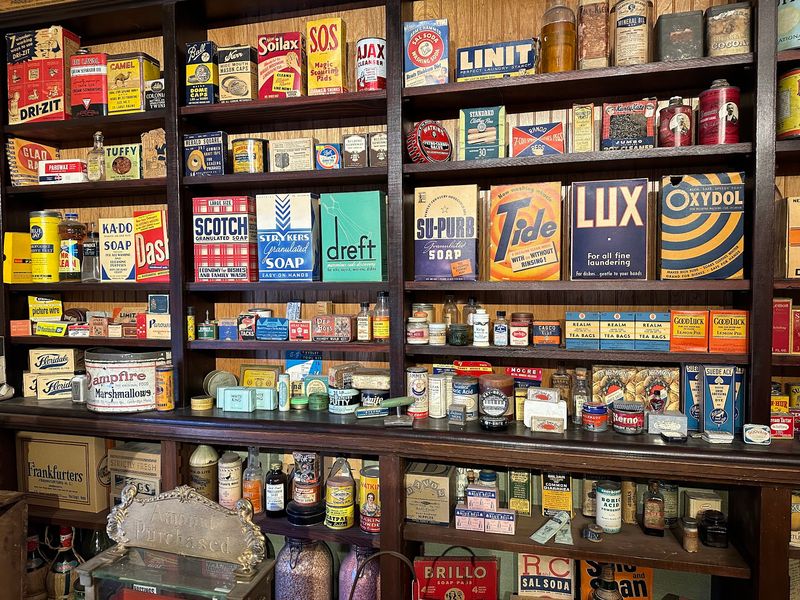
Another permanent room steps away from the home and into a 1920s neighborhood store.
The exhibit recreates a Chicago general store once operated by Helena and Jozef Kormanak, grandparents of a museum board member. Historic grocery packaging, counters, and retail materials fill the space.
Shopping worked differently when many products sat behind a counter and a clerk gathered items for customers. There were no barcode scanners, touchscreens, or long rows of identical packages under bright supermarket lights.
The packaging deserves as much attention as the shelves. Typography, colors, container shapes, and brand names show how companies tried to make products recognizable before digital advertising entered daily life.
Pick one item and imagine its modern equivalent. A package may have become lighter, brighter, resealable, disposable, or completely unnecessary. Another product may still exist with a design that barely resembles its earlier version.
You can move through the display quickly, but the labels become more interesting when you compare them with things you bought recently.
The next grocery run may look a little less ordinary afterward.
The Garage Keeps Early Automotive Technology In Working Context
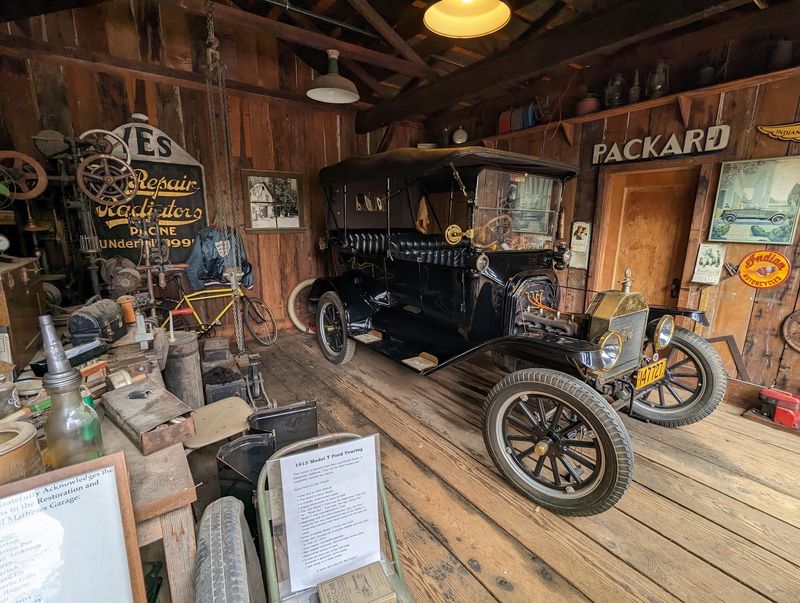
The Marshall Mathews Garage shifts the story from kitchens and stores to tools, engines, and early automobile maintenance.
The permanent exhibit recreates an auto repair shop from the 1920s through the 1940s. A 1915 Ford Model T Touring car currently sits inside, surrounded by the kind of equipment that makes more sense beside an automobile than isolated in a display case.
The setting helps explain how much hands-on maintenance early motoring could involve. Cars became part of everyday American life, but keeping them moving required mechanical knowledge, tools, replacement parts, and a growing network of repair businesses.
The Model T also provides scale. Photographs can make early cars look almost toy-like, but standing near one gives the body, wheels, seating, and mechanical layout more presence.
This is also a useful stop when the household exhibits begin to blur together. The garage changes the setting without leaving the museum’s main subject: technology that moved from novelty into ordinary life.
Give the car a full lap if space allows. Different angles reveal details that disappear in a front-facing photograph.
The Williams House Gives The Machines A Real Home
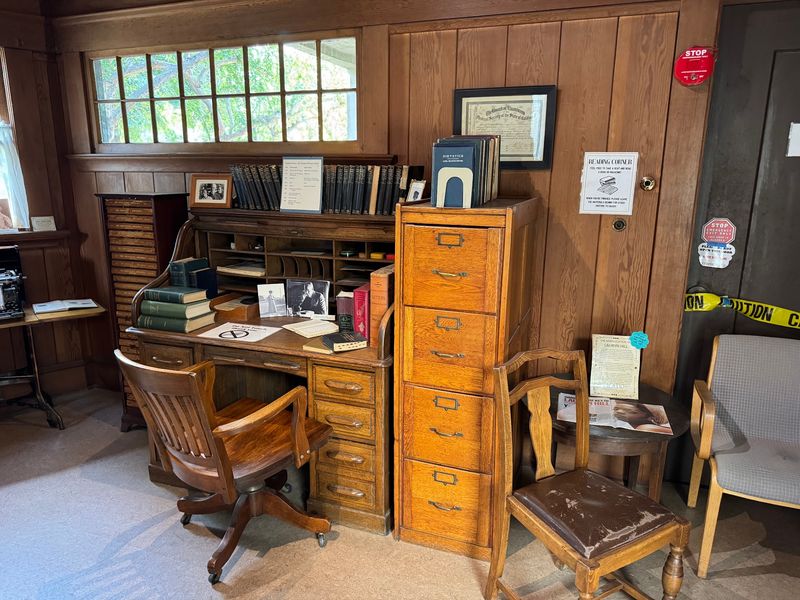
The museum has occupied the historic Williams House since reopening there in 1998. The Tudor Revival residence was designed by Bay Area architect Ernest Coxhead and completed in 1907 for physician Thomas Marion Williams and his wife, Dora Moody Williams.
The house originally combined family living space with a medical wing, so technology, domestic life, and professional work were already sharing the property long before the museum arrived.
Today, that setting keeps the collection from feeling detached from the lives that used these objects.
A refrigerator in an old kitchen, a household tool near period architecture, or a machine inside a former family home carries a different sense of scale than the same item under warehouse lighting.
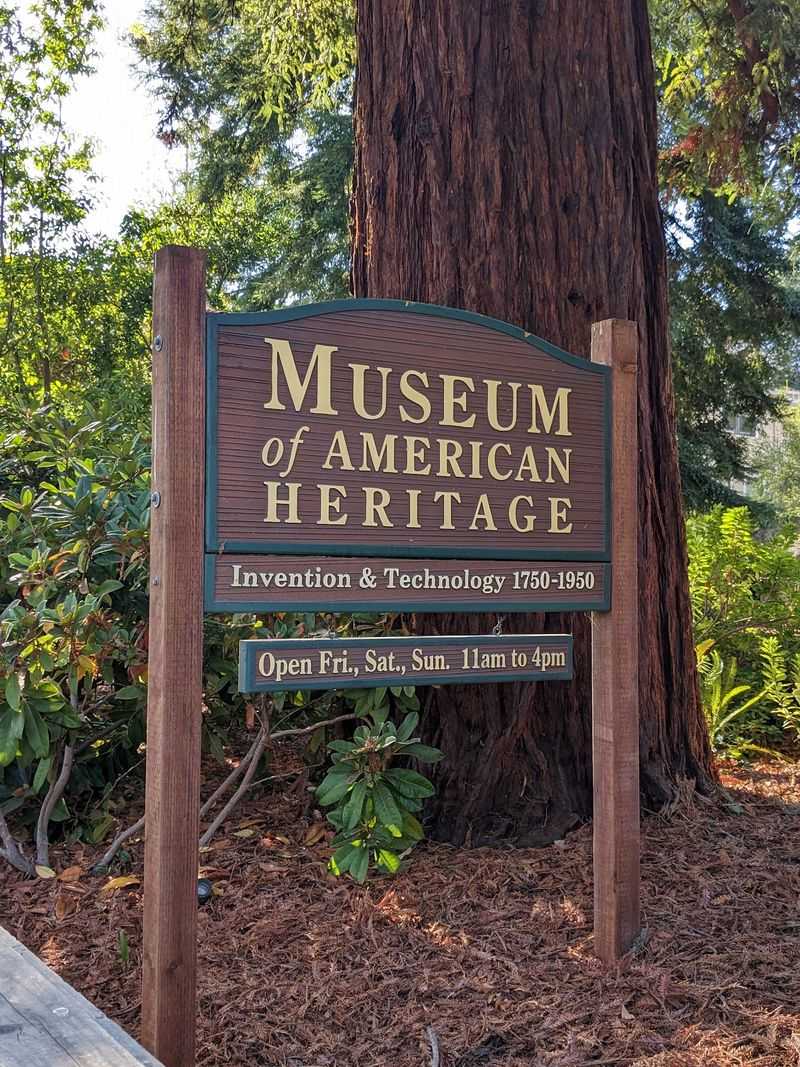
The museum is at 351 Homer Avenue, Palo Alto, CA 94301. Current public hours are Friday, Saturday, and Sunday from 11 a.m. to 4 p.m., and general admission is free.
Street parking is available along Homer Avenue. The property is ADA-compliant, and one accessible visitor parking space is available in the staff lot. Because public hours run only Friday through Sunday, confirm the current calendar before making a special trip.
If you have time, do not rush directly from the last display to the sidewalk. The property is part of the museum too.
Rotating Exhibits Keep Everyday Technology From Standing Still
Permanent rooms provide the backbone, but rotating exhibitions let the museum pull different objects from its larger collection and build new connections around them.
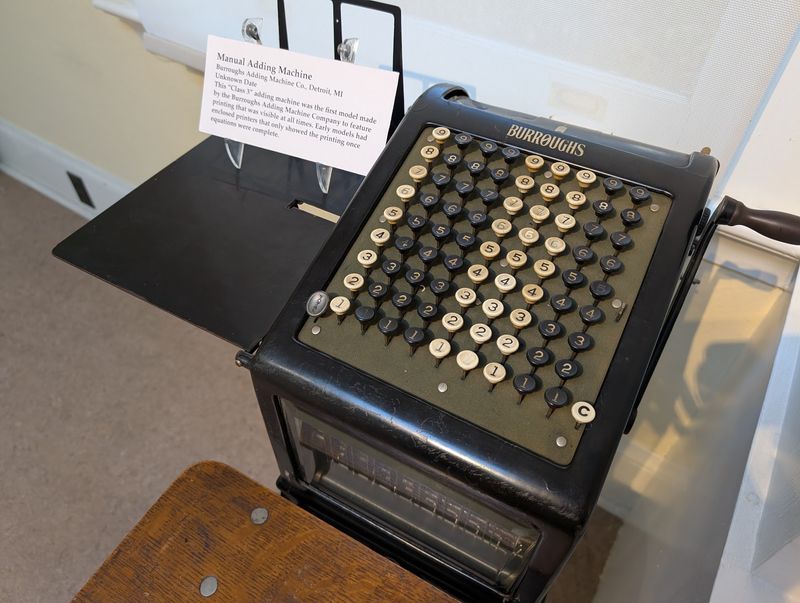
That flexibility matters with more than 8,000 artifacts in storage. Adding machines, calculators, hairstyling tools, communication devices, cameras, entertainment equipment, and other specialized objects can move into view when an exhibition calls for them.
It also means you should not expect every object mentioned in an older article, photograph, or previous visit to be sitting in the same room today. The museum changes displays while the kitchen, general store, garage, house, and collection history provide continuity.
Use the permanent exhibits as anchors, then see what has rotated in around them.
An adding machine may look cumbersome until you remember that it once made office work faster.
An early curling device can look awkward until you compare it with the heated tools on a modern bathroom counter.
A camera can seem enormous until you think about how much of its job moved into a phone.
The contrast becomes clearest when familiar tasks stay recognizable even when the objects look completely different.
By the end, your own home may feel briefly futuristic. Then you will probably notice a charger, remote, or old phone lying around and wonder what a museum visitor might make of it a century from now.