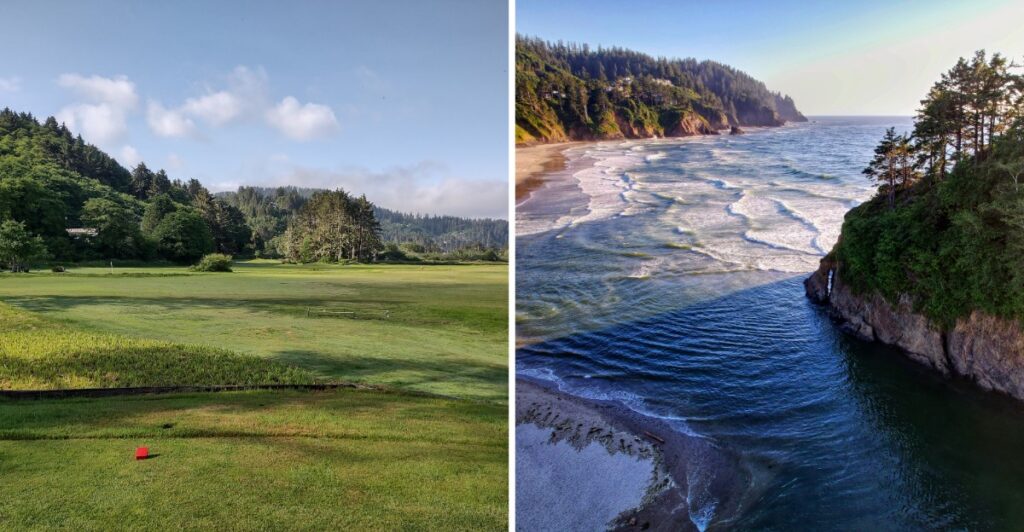
The beach here has a disappearing act built into the schedule.
At low tide, pieces of an ancient forest can suddenly reappear from the sand. A few hours later, the Pacific starts rearranging the scene again.
That should tell you how much control your itinerary has.
This little Oregon Coast village keeps the man-made distractions to a minimum. The ocean does most of the showing off, with an offshore rock, wide beach, and forested headlands nearby.
Even the weather gets a vote.
A sunny walk can become a misty one. A planned hike may lose to the tide, or the beach may look too good to leave in the first place.
So maybe skip the minute-by-minute schedule.
Out here, the Pacific clearly did not receive a copy.
Neskowin Keeps The Village Side Of The Coast Small
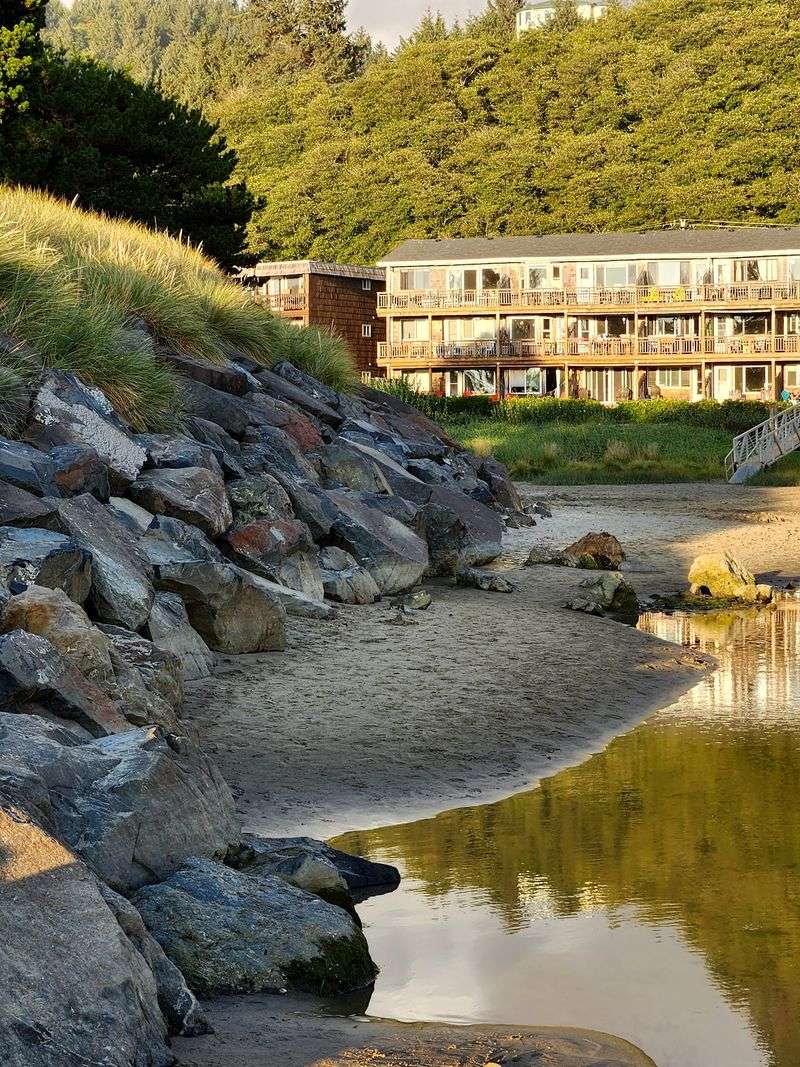
Neskowin does not need a long commercial strip to give visitors somewhere to start. The community has a general store, a restaurant, ocean cottages, and a golf course close to the beach, while larger coastal towns remain within driving distance.
That gives the village an off-the-beaten-track feel without leaving basic stops completely out of reach.
The golf course adds an unexpectedly old piece of local history. Neskowin Beach Golf Course opened in 1932 and continues as a nine-hole community course. Its nonprofit operation also preserves open space and provides a gathering place for the community.
That smaller scale changes how a visit feels. There is less incentive to bounce between blocks of shops, and more reason to organize the day around the beach, tides, and nearby trails.
Meals deserve a little thought before everyone gets hungry. Neskowin has fewer food and grocery choices than a larger coast town, so relying on endless options is not a great plan.
Bring what you need for the day, then let any café or market stop fit naturally between beach time and walking.
The first big decision may simply be beach now or beach after lunch.
The Beach Gives The Village Its Main Walking Route
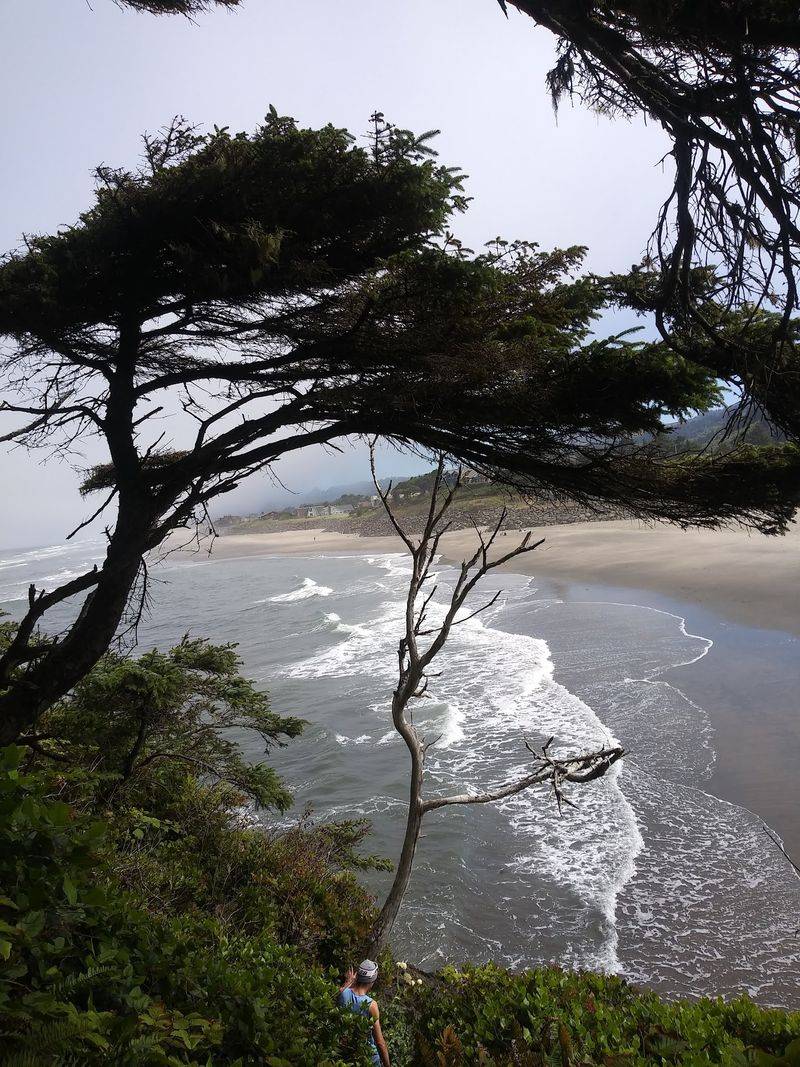
Neskowin Beach State Recreation Site provides public access to a long stretch of shoreline with Cascade Head visible to the south.
The beach itself becomes the easiest way to understand the setting, because the village stays close while the Pacific immediately takes over the view.
Walking north or south changes the scenery without requiring another drive. Neskowin Creek crosses the sand near Proposal Rock, and the shoreline points toward larger headlands and estuary country farther along the coast.
The beach is also where timing begins to matter. Low tide exposes more sand and can reveal portions of the Ghost Forest. Higher water changes creek crossings and reduces the room available near some shoreline features.
Layers belong in the day bag even when the inland forecast looks friendly. Wind off the Pacific can cool things quickly, and wet sand has little interest in keeping shoes clean.
The ocean deserves attention as well. Rising tides, sneaker waves, and changing surf are normal Oregon Coast considerations, so stay aware of the water instead of treating the shoreline like a static backdrop.
Turn around when the wind, tide, or appetite gives you a reason.
Proposal Rock Gives The Shoreline An Easy Landmark
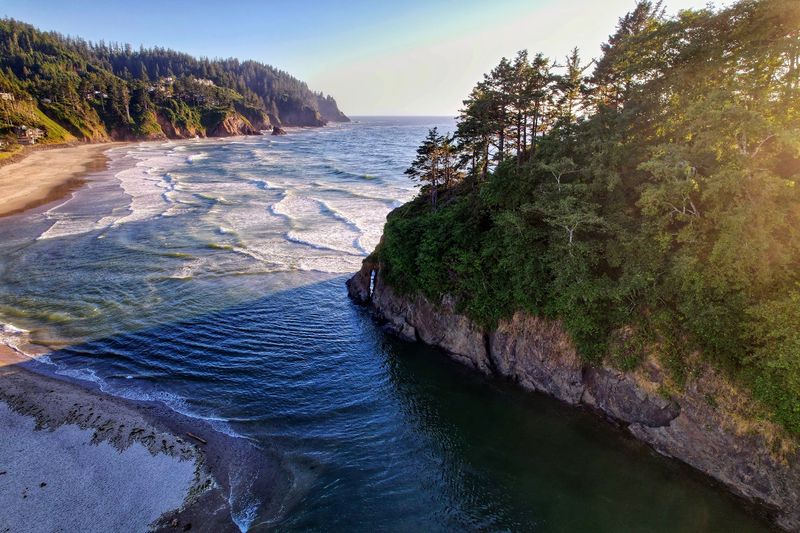
Proposal Rock rises just offshore near the mouth of Neskowin Creek, with trees covering the top and open sand spreading around it when conditions allow. It makes navigation pleasantly simple.
Walk the beach, glance toward the rock, and you immediately know where you are in relation to the village.
Local lore ties the name to a marriage proposal around the turn of the twentieth century.
Creek depth and ocean conditions change with the tide, so access around the base of the rock can look different from one visit to the next.
The view from the beach already gives the rock plenty of presence, especially when clouds, mist, or evening light change the background. There is no need to turn the landmark into a climbing objective.
Save a little patience for photography. Gray skies make the trees look darker, clear evenings sharpen its outline, and a lower tide can add the Ghost Forest to the same stretch of beach.
The landmark stays put. The picture around it keeps changing.
The Ghost Forest Rewards Good Tide Timing
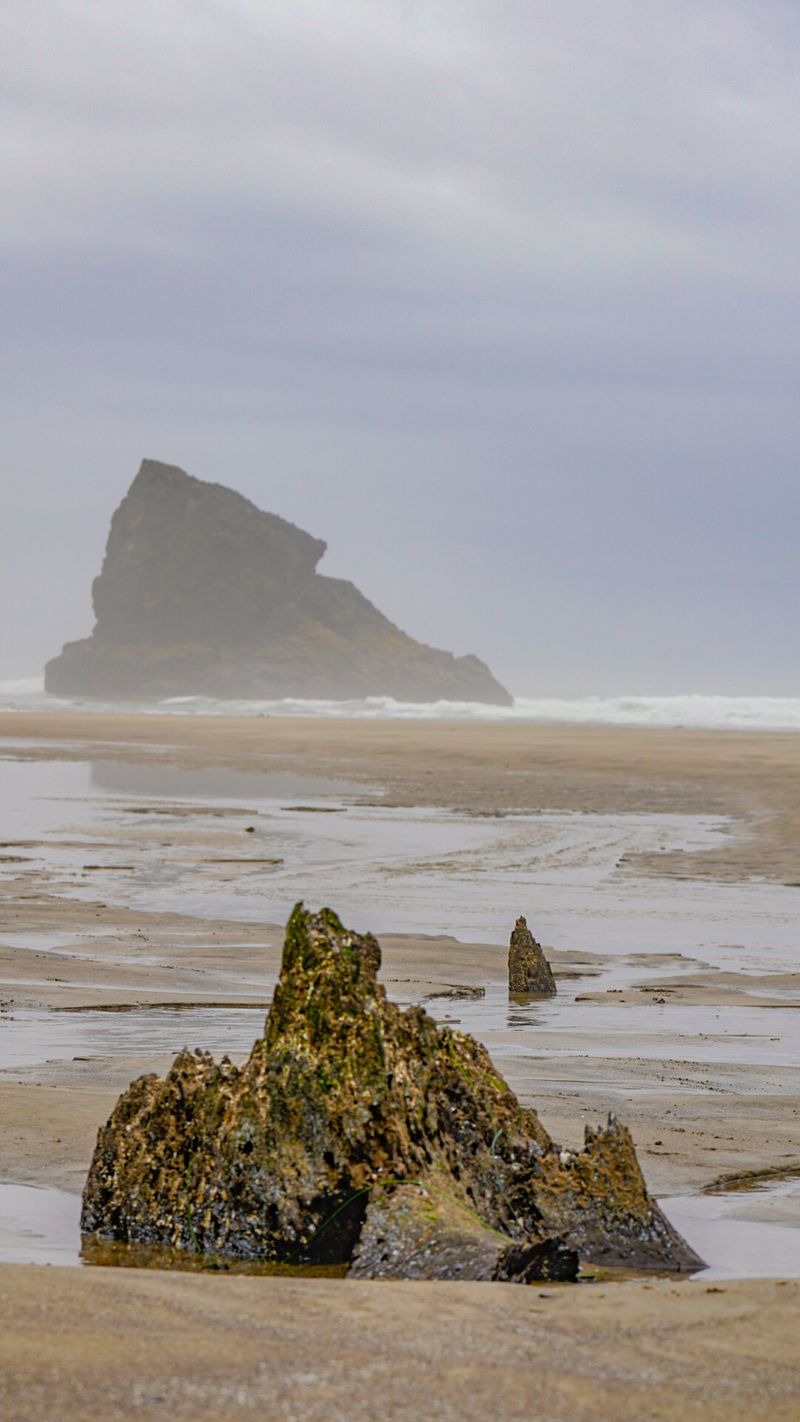
The Neskowin Ghost Forest is not a collection of recently cut stumps. These are the remains of an ancient Sitka spruce forest, with some of the preserved wood dating back roughly two thousand years.
Exactly how the forest became buried is still debated. One long-standing explanation connects the remains to coastal subsidence and earthquake activity, while more recent work has argued for gradual burial by sand dunes over many decades.
What visitors can see depends heavily on the beach. At low tide, portions of the old tree remains emerge from the sand and shallow surf. Winter and spring can expose more after strong wave action removes sand, while summer buildup can hide much of the forest.
That variability makes a tide table more useful than a rigid sightseeing schedule. Arrive with enough time before low tide to walk without rushing, and remember that incoming water changes the route back.
The remains sit south of Proposal Rock, so both features can fit into the same shoreline walk. From the main public access, the Ghost Forest is roughly a half-mile walk along the beach.
A normal beach starts revealing pieces of a landscape that existed long before the present shoreline. That is plenty of drama without adding anything to it.
Cascade Head Brings Coastal Forest Above The Ocean
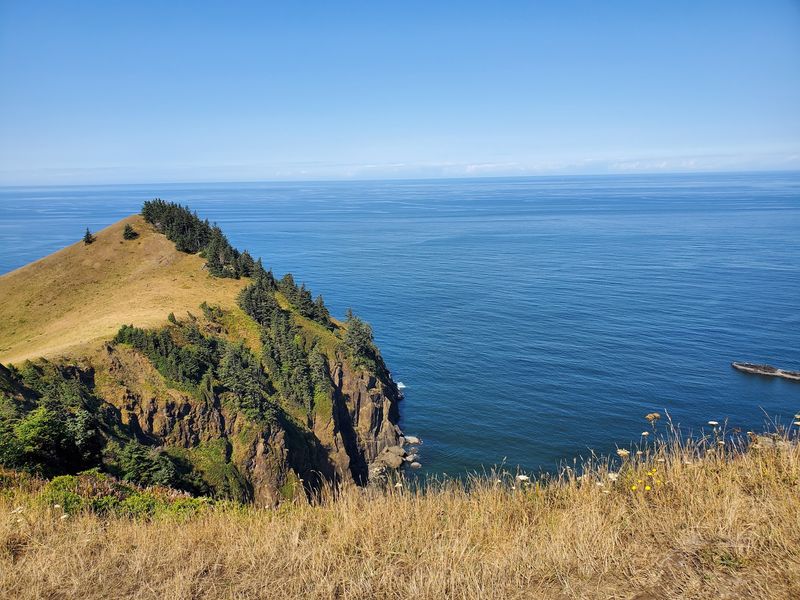
Cascade Head gives Neskowin its greener side. Forest on the headland includes Sitka spruce and western hemlock, while open grassland higher on the preserve creates broad views over the ocean and Salmon River estuary.
The lower Nature Conservancy trail is currently the dependable hiking option. It begins near Knight Park and climbs through forest before reaching grassland viewpoints.
The route is steep in places, and sections can be slippery, so sturdy footwear matters more than vacation-photo shoes.
Pets are not allowed on the preserve, even on leash. The restriction protects sensitive wildlife and habitat, so anyone traveling with a dog will need a different plan during hike time.
Forest Road 1861 remains closed to vehicle traffic because of landslide damage, which blocks the usual drive to the upper Nature Conservancy trailhead and affects access toward the Harts Cove trailhead. The lower trail from Knight Park remains open.
That makes current access part of the day plan rather than an afterthought. Conditions can change on this wet, steep stretch of coast.
The reward for choosing the open route is straightforward: coastal forest first, exposed headland later, and the Pacific spread below.
The Golf Course Adds A Different Kind Of Green
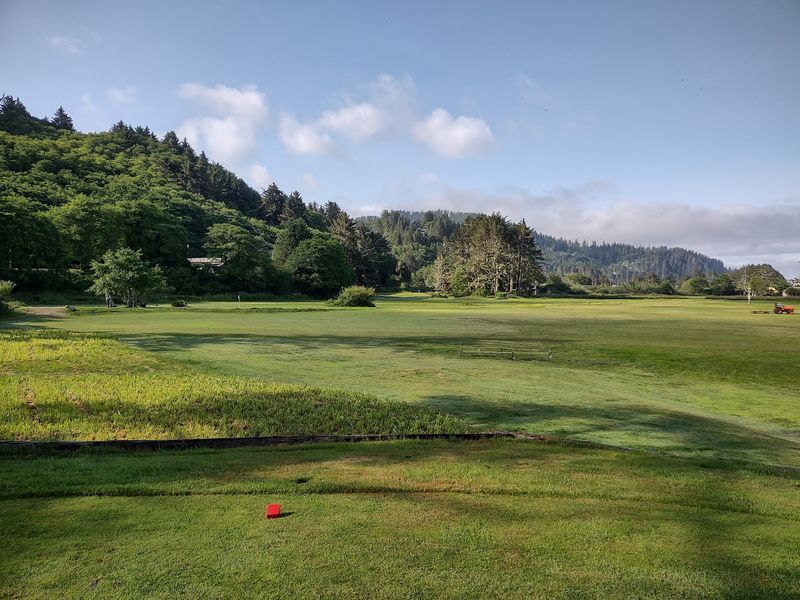
Not every green space around Neskowin requires hiking boots. Neskowin Beach Golf Course sits within the community and dates to 1932, making it one of the older golf courses on the Oregon Coast.
The nine-hole course was designed by Ercel Kay and now operates as a public charity serving Neskowin and surrounding communities. Its mission includes preserving open space for wildlife and recreation as well as maintaining a community gathering place.
That history fits the village scale. The course is woven into the residential area and gives the community an open grassy counterpoint to beach, forest, and wet coastal weather.
Even travelers who never swing a club can appreciate the change of scenery. The course shows another side of a community whose outdoor spaces are not limited to sand and hiking trails.
Neskowin Beach Golf Course is at 48405 Hawk St, Neskowin, OR 97149.
For golfers, checking current course conditions before arriving is sensible, especially during wetter parts of the year. For everyone else, it is another reminder that people have been coming to this stretch of coast for generations.
Beach in the morning, forest later, and nine holes somewhere between them makes a surprisingly flexible day.
Tides And Trail Access Should Decide The Schedule
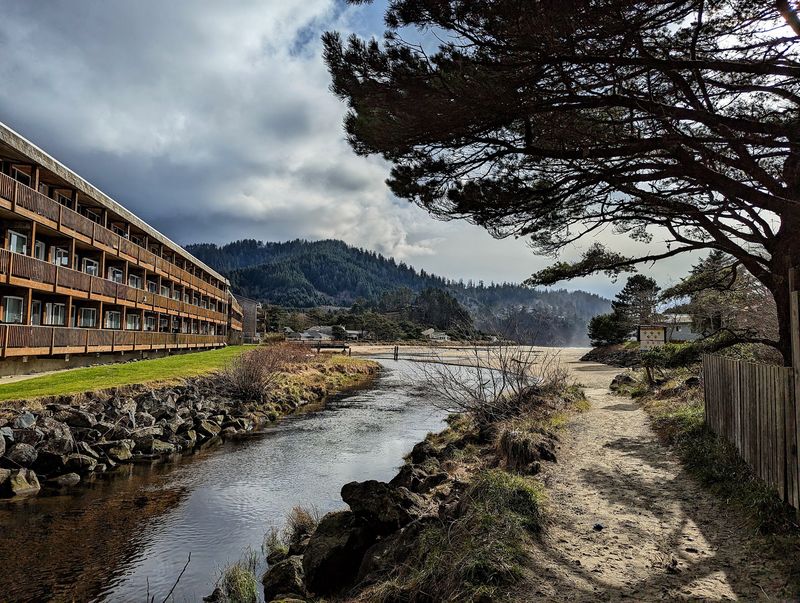
Neskowin is easier to enjoy when the ocean gets the first vote. Check the tide before deciding when to visit Proposal Rock and the Ghost Forest, then build hiking plans around current access at Cascade Head.
The lower Nature Conservancy trail remains open from Knight Park, while the road to the upper trailhead is closed to vehicles because of landslide damage.
Harts Cove Trail also has a seasonal closure from January through mid-July, so access deserves a quick check before hiking.
The beach itself stays simpler. Start from the state recreation site, watch the tide, and leave enough time to walk back without racing incoming water.
Parking can become tighter during busy periods, particularly when seasonal events use the wayside, so an earlier start can make the practical side easier.
Food and supplies deserve the same straightforward planning. Neskowin has basic options, but Lincoln City and Pacific City offer broader choices if the day requires more.
Then stop planning. Fog may cover the headland. The Ghost Forest may show only a few pieces.
The beach may hold everyone’s attention longer than expected.
That is a perfectly good Neskowin day. Forest, ocean, and a small village already give the schedule enough to work with.