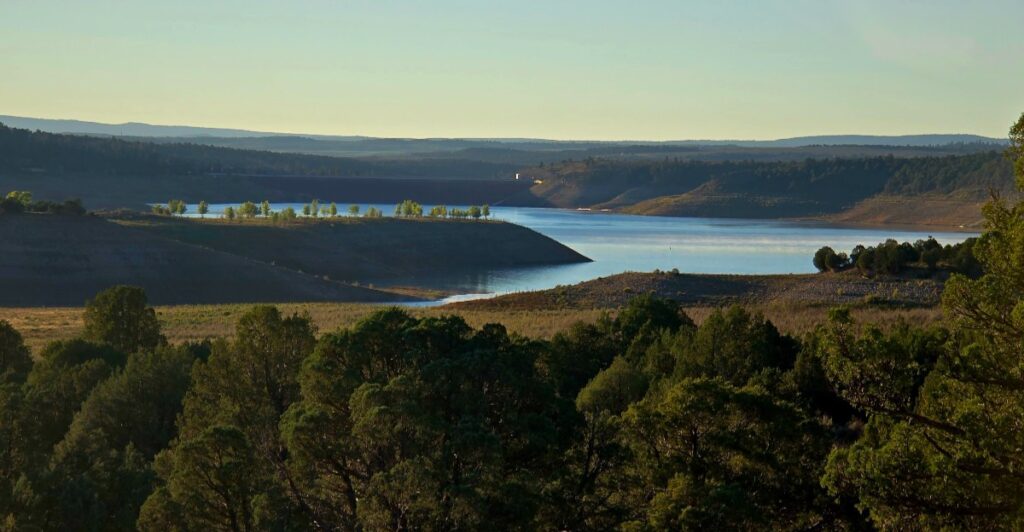
At first glance, it is easy to see only the water. Look a little closer, though, and this northern New Mexico reservoir starts telling a much stranger story.
A lumber town once stood in the valley below, busy enough to support a community and a railroad connection before the timber industry faded. Then came the dam, and the old town site disappeared beneath the reservoir.
That history still gives the lake a slightly haunting edge, especially during periods when water levels drop and more of the valley floor comes into view. The scenery has its own pull too.
Mountain ridges rise beyond the shoreline, bald eagles spend winter in the area, and a trail links the park with nearby Heron Lake. It is the kind of place that gets more interesting the longer you stay.
The view is striking, but the story underneath it is what really sticks with you.
A Forgotten Town Sleeps Beneath The Water
Long before boats and campers arrived, a busy lumber town stood in this valley. Workers came here in the early 1900s to cut timber from the surrounding forests and run a sawmill.
A narrow gauge rail line once carried logs and lumber in and out of the settlement. Homes, a company store, and mill buildings gave the place a lively feel during its best years.
The timber business eventually slowed, and many families packed up and moved on. By the time engineers planned a dam on the Rio Chama, much of the town had already gone quiet.
When the reservoir filled in the mid-1930s, the old town site slipped under the rising water. I love that a simple name on a map still carries the memory of that whole community.
Today, few signs of the old settlement remain above the surface. Visitors who know the story often look at the calm lake a little differently, imagining streets and rooftops far below.
The town shared its name with the lake that now covers it, a fitting way to keep the past alive. That name lives on at El Vado Lake at El Vado State Park, NM-112, Tierra Amarilla, NM 87575, in northern New Mexico.
Mountain Walls Rise Beyond The Shore
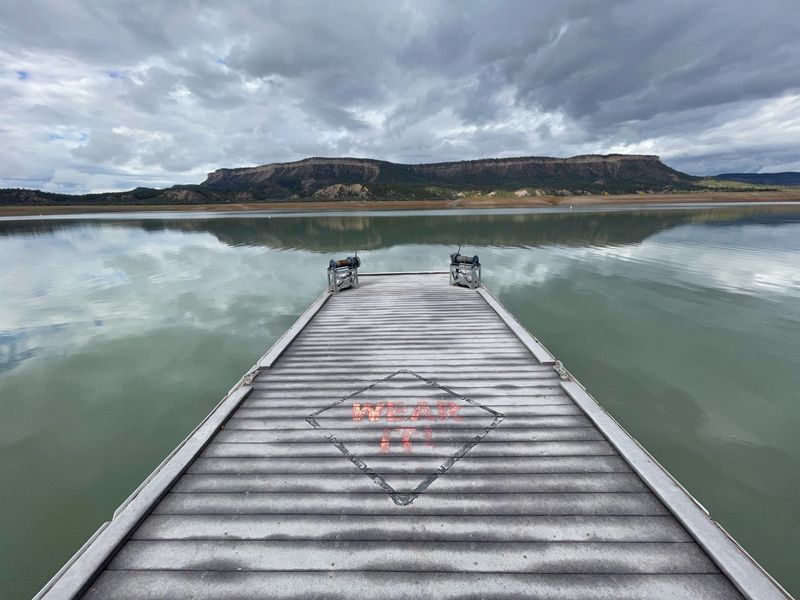
High desert meets mountain country in a big way around this lake. The park sits at roughly 7,200 feet above sea level, so the air feels crisp and the sky looks extra blue.
Rocky mesas and forested ridges frame the water on nearly every side. Pinon and juniper trees dot the hills, mixing with silvery sagebrush that smells wonderful after a summer rain.
The views change with the seasons, which keeps things interesting all year. Spring brings green grass to the open meadows, while autumn paints the higher slopes in warm gold.
Wildlife adds even more charm to the scenery. Elk herds wander through the park, and prairie dogs pop up across the grassy flats like tiny lookouts on duty.
Honestly, I could stare at those layered ridges for hours without getting bored. The colors shift as clouds drift by, so no two glances ever look quite the same.
Photographers find plenty to work with here, especially in the softer light of early morning. The campgrounds at Grassy Point and Elk Run offer wide, open views of the lake and hills.
Out here, the mountains are the main event, and the lake is happy to share the stage.
Quiet Coves Hide Along The Reservoir
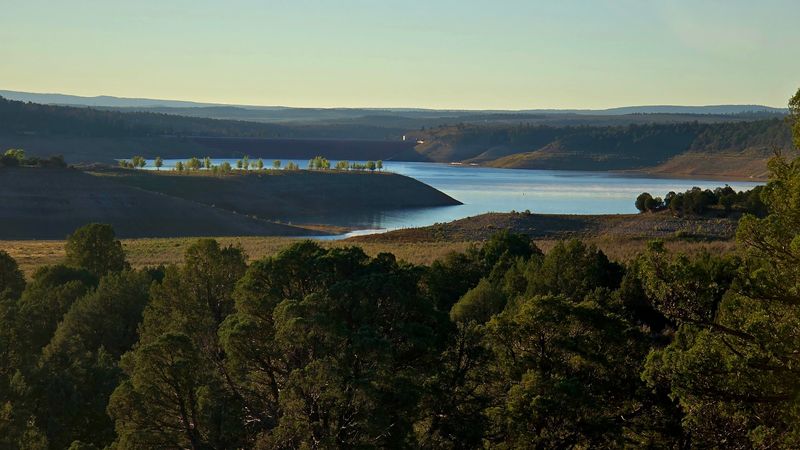
Crowds are rare at this lake, and that is a big part of its appeal. Small inlets and coves curl along the shoreline, offering calm spots away from the main boat ramp.
Pinon Beach is a favorite for anyone who likes a more woodsy camping feel. Its sites sit among pinon and juniper trees, with vault toilets instead of water hookups.
Paddlers enjoy the coves on still mornings when the water lies flat. Afternoon winds often pick up, though, so early outings tend to be smoother and more relaxing.
Anglers also seek out these quieter corners of the reservoir. The lake holds trout and kokanee salmon, which makes for a fun surprise in the middle of the desert.
I have to admit, freshwater salmon in this landscape feels like a fishy plot twist. It is one of those details that makes the lake stand out among mountain reservoirs.
Cell service is spotty or missing in much of the park. For many visitors, that silence becomes part of the charm rather than a problem.
Without phone buzzes, the loudest sound in a cove might be a fish splashing at dusk.
One Massive Dam Reshaped The Valley
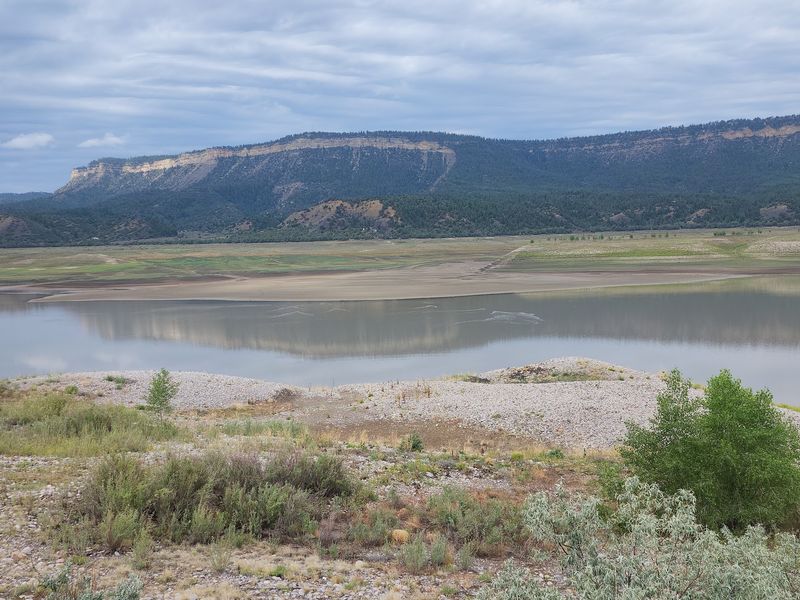
Back in 1935, workers finished a dam that changed this valley forever. Built on the Rio Chama, it was designed to store water for farms downstream in the Middle Rio Grande Valley.
El Vado Dam is a rolled gravel-fill dam with a steel membrane on its upstream side. That unusual design made it stand out among dams of its era.
The structure turned a stretch of river into a long reservoir winding through the hills. Farmers far downstream came to rely on the water it held back each year.
Water releases for irrigation usually begin in spring. As summer goes on, the lake level often drops, sometimes by quite a lot.
Reclamation is studying long-term dam safety repairs, while the reservoir can now operate normally below its approved maximum level when river flows allow. The Bureau continues monitoring the dam as repair alternatives are evaluated.
I think it is impressive that a structure nearly a century old still does such an important job. Its work helps feed fields and orchards across a wide region.
A dam rarely gets fan mail, but this one has certainly earned a few thank-you notes.
Low Water Can Expose The Lake’s Past
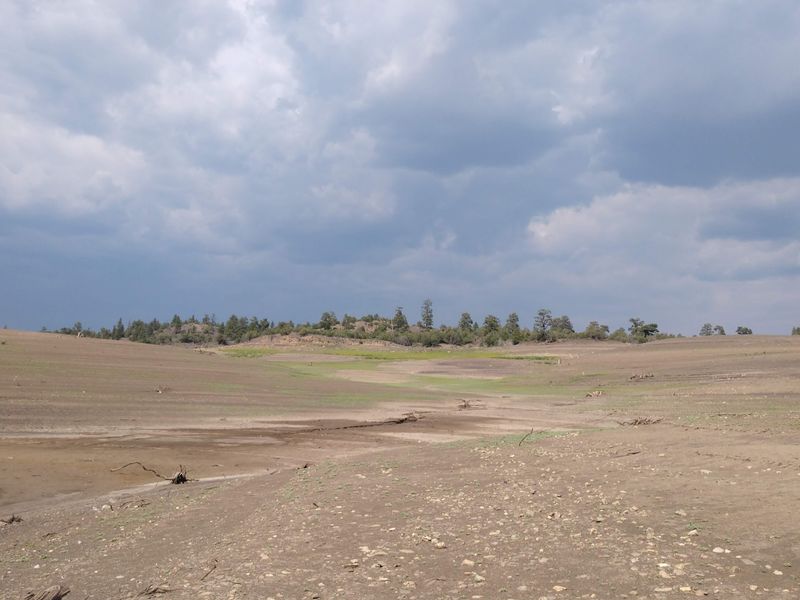
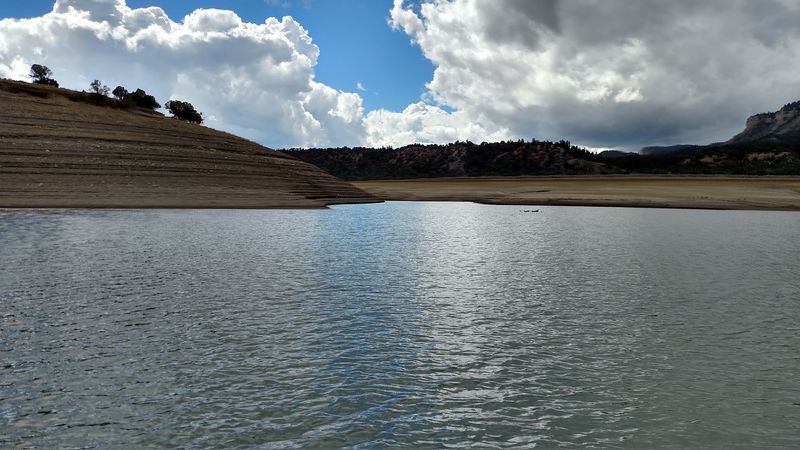
Water levels at this reservoir rise and fall a lot, sometimes dramatically. During dry years and dam repairs, wide stretches of old lakebed can appear where boats once floated.
When the water drops, the original river channel often comes back into view. Rings on the surrounding hills show just how high the lake once reached.
Low water also gives curious visitors a rare look at the valley floor. Remnants tied to the old settlement and its rail line have been known to surface in very dry periods.
Any old objects found here belong to history, so they should be left in place. Taking photos is the best way to bring home a piece of the story.
Camping during low water has its own perks. The campgrounds tend to be extra quiet, and the park keeps facilities clean even when water service runs on limited hours.
Showers and flush toilets have sometimes been available only for a short window each afternoon during repair work. Checking the state park website before a trip helps avoid surprises.
An empty lake sounds disappointing, yet it often tells the most interesting stories. Sometimes the past simply needs the tide to step aside.
A River Trail Slips Into The Wild
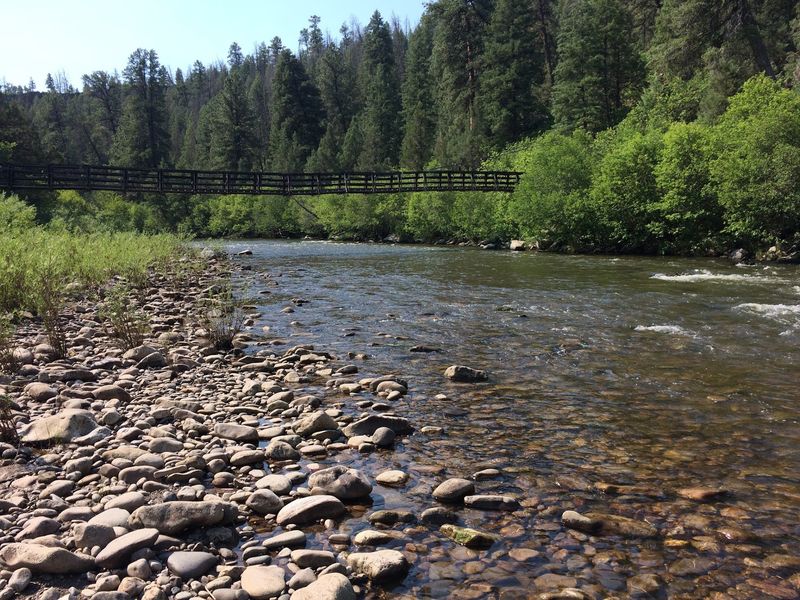
The Rio Chama Trail links El Vado Lake to nearby Heron Lake, but trail access is currently closed for construction. The route runs about 5.5 miles one way through rugged canyon country.
Rocky stretches, pinon slopes, and sweeping views define the route. A trekking pole can help on the uneven sections once public trail access resumes.
One notable feature is a suspension bridge stretching across the Rio Chama. The bridge sits near the Heron Lake side of the trail and crosses the river below.
The footbridge adds a point to what is already a scenic route. State Parks still lists the trail as a connection between the two neighboring lake parks.
Water sources along the way are limited until close to the river crossing. Future hikers and their dogs should carry plenty to drink, especially on warm summer days.
Mile markers count down from the Heron Lake side rather than from El Vado. That small quirk can confuse anyone trying to track their progress.
For now, visitors should check park alerts before planning this hike. The route remains listed by State Parks, but public trail access is closed during construction.
Winter Eagles Take Over The Sky
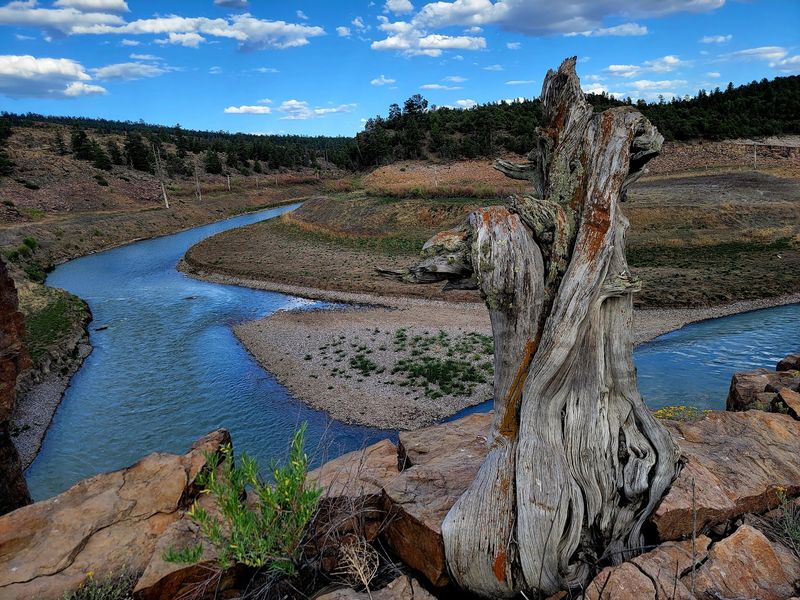
Cold months bring some impressive visitors to the Rio Chama valley. Bald eagles arrive in winter, drawn by fish in the lakes and open stretches of river.
These big birds often perch in tall trees near the water, scanning for a meal. Their white heads stand out sharply against snowy hillsides and gray winter skies.
Ospreys are another treat, though they show up during warmer months. Some build their bulky nests on top of tall power poles around the park.
Birdwatchers also spot hummingbirds in summer, along with a wide mix of songbirds. With elk and deer roaming nearby, the park can feel like an outdoor wildlife show.
Personally, I think a single eagle sighting could make any chilly morning worth it. There is real magic in seeing such a powerful bird glide over quiet water.
Binoculars and warm layers make winter wildlife viewing much more comfortable. Temperatures at this elevation can dip well below freezing, especially overnight.
Patience pays off, since eagles tend to sit still for long stretches between hunts. Feathered royalty clearly has no reason to hurry.
Sunset Turns The Water To Glass
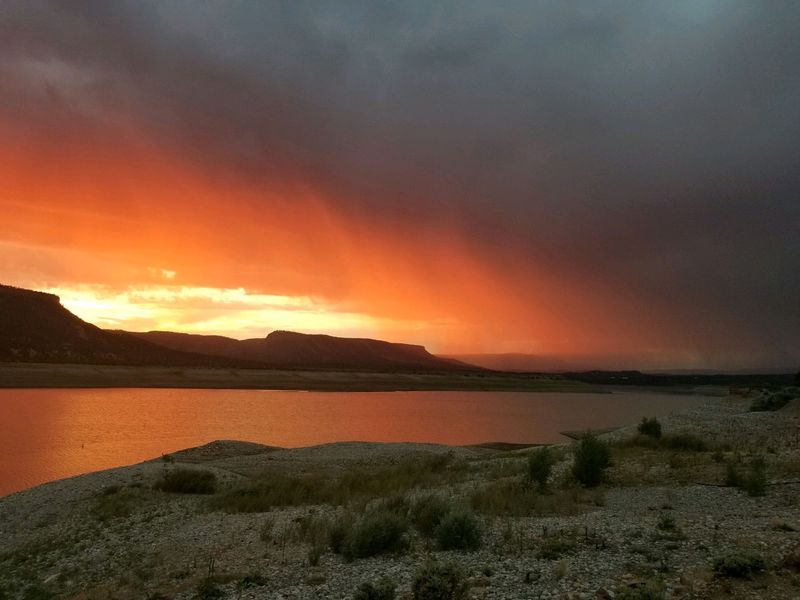
Evenings at the lake are pure calm once the afternoon wind settles down. The water often goes still, reflecting the sky so clearly it looks like polished glass.
Orange and pink light spills across the mesas as the sun sinks low. Pinon trees turn into dark silhouettes along the shoreline, framing the glowing scene.
After sunset, the show simply changes channels. With almost no city lights nearby, the night sky fills with stars in a way many people rarely see.
The Milky Way often stretches across the sky on clear, moonless nights. Campers at Pinon Beach and Grassy Point enjoy front row seats without leaving their sites.
Spring through fall offers the most comfortable weather for evening lounging. The park website shares current details on camping, water levels, and seasonal services.
All of these quiet moments bring the story full circle. A lake built over a forgotten town now gives visitors peaceful evenings worth remembering, and that feels like a fitting second life for this valley.
The old town may be hidden below, but the sunsets keep its spirit glowing above.