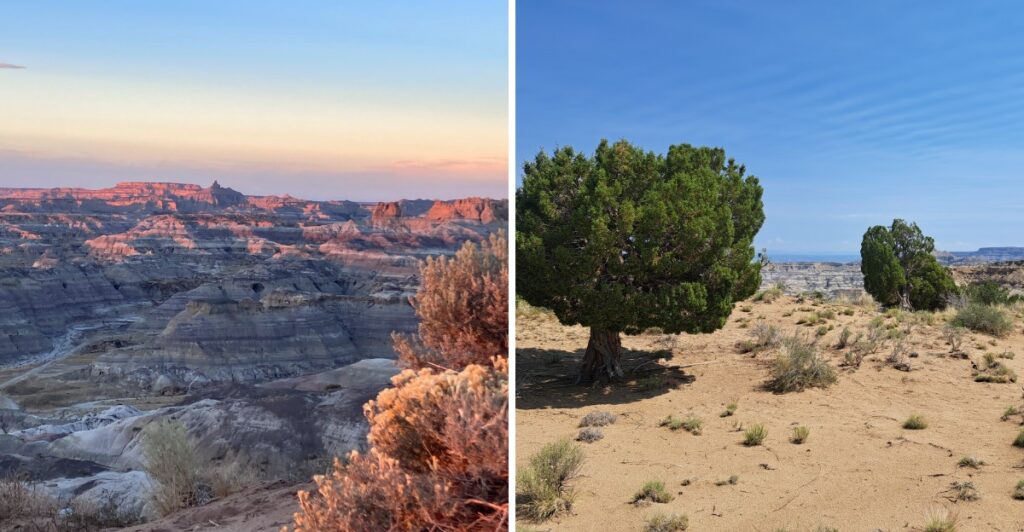
This overlook delivers the kind of view that can make a quick roadside stop turn into a much longer break. Layered badlands drop below the rim, strange rock formations catch the light, and Angel Peak stands beyond the canyon.
The surprise is closer to your feet. Rattlesnakes live in this dry corner of New Mexico, where rocky slopes and desert cover give them plenty of places to disappear.
Visitors do not need to treat the area like a danger zone, but paying attention around brush and crevices is a smart part of the visit. The drive in is short, the scenery arrives fast, and several developed picnic areas sit along the route.
Short walking options make it easy to stretch your legs without committing to a serious hike. Bring water, stay aware near the rim, and take your time.
The landscape has more going on than the first glance suggests.
Snake Habitat Winds Through The Badlands
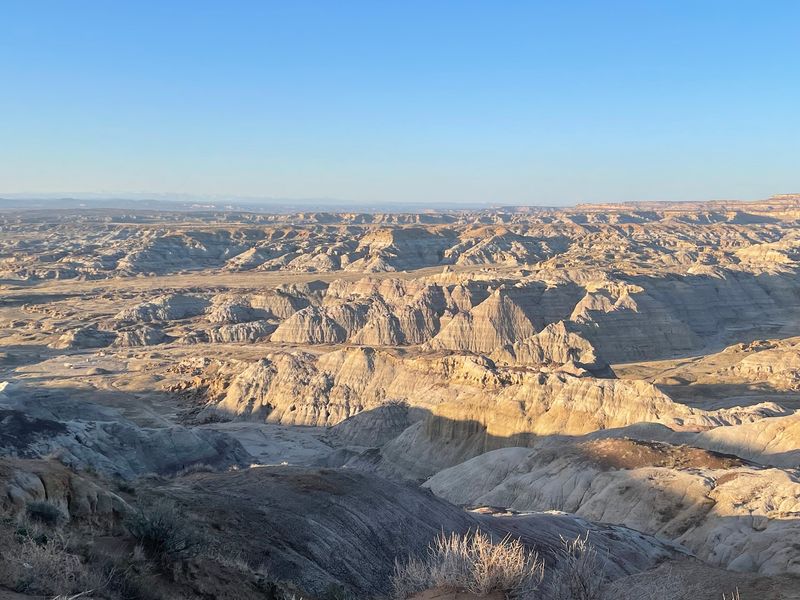
Picture a maze of crumbly clay ridges stretching for miles under a wide blue sky. Snakes see that maze as prime real estate, complete with free sunshine and zero rent.
The surrounding scenic area covers roughly 10,000 acres of public land managed by the Bureau of Land Management. Much of it is made up of dry washes and soft slopes dotted with scrubby desert brush.
Rattlesnakes are among the desert inhabitants documented in this part of the San Juan Basin. The barren slopes and broken terrain give these reptiles plenty of places to blend into the surrounding ground during a typical visit.
I find it interesting that an overlook can seem so open while wildlife still disappears easily among rocks and brush. Rattlesnakes are best given plenty of room whenever one happens to appear near a trail, picnic area, or viewpoint.
Warm months bring the most activity, especially during the cooler hours of morning and evening. Watching where feet and hands land is the simplest way to keep any meeting peaceful.
Snakes also play a helpful role by keeping rodent numbers in check across the scrubland. Without them, the badlands would host a much busier mouse population.
All of this wild, wiggly habitat sits just below Angel Peak Badlands Overlook in Bloomfield, NM 87413, New Mexico.
Badlands Drop Sharply Below The Overlook
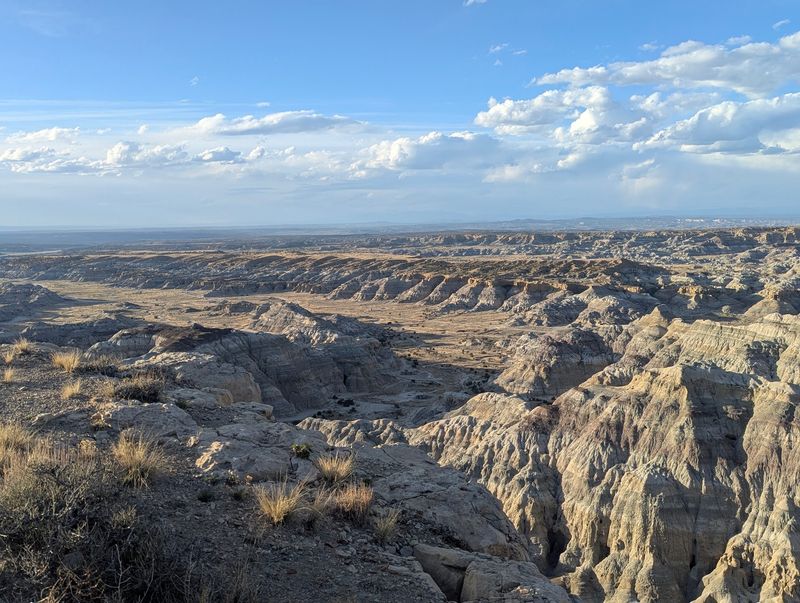
One step past the parking area, the ground simply falls away. The rim gives way to steep, layered slopes that tumble into a deep canyon full of ridges and gullies.
Those colorful bands belong to the Nacimiento Formation, which built up around 60 million years ago. Ancient rivers dropped layers of mud and sand here long before anyone thought to put a picnic table on top.
Speaking of tables, several sit near the edge along with benches for soaking up the scenery. Covered shelters add some welcome shade when the high desert sun turns up the heat.
Honestly, a lunch spot with this kind of drop-off view seems almost unfair to every other rest stop. The canyon glows warm and golden at sunrise and sunset, when the stripes look painted on.
The slopes below are loose and crumbly, so they are better admired than climbed. Soft clay can slide underfoot, and the steep angles hide plenty of nooks where reptiles rest.
Families with small kids will want to keep little explorers close to the rim area. The edge is wide open, with nothing between the view and the long way down.
Up top, the scenery stays dramatic without anyone needing to get closer.
Desert Trails Feel Wilder Than They Look
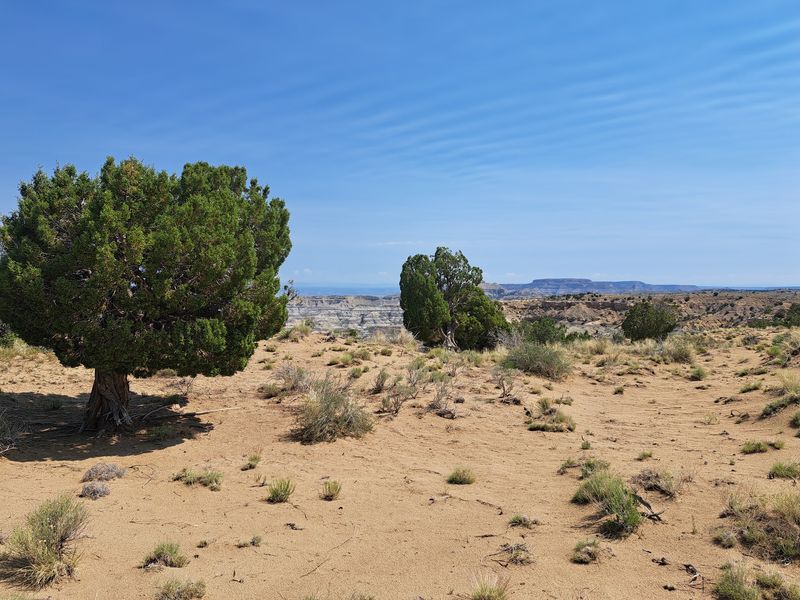
A short rim trail gives visitors a closer look at the badlands without requiring a long hike along the rim. The desert can still make a simple stroll feel like a small adventure.
The campground also has a short nature trail, measuring less than 0.2 mile, that leads toward a canyon overlook. Elsewhere, developed viewpoints along the rim provide visitors with fresh angles on the eroded ridges.
Shade is hard to find once the trail leaves the picnic shelters behind. Summer afternoons can get very hot, so plenty of water belongs in every daypack.
Footing changes quickly between packed dirt and loose gravel. Sturdy closed-toe shoes beat sandals here, both for balance and for protection near brushy edges.
Snakes like to rest beside trails where rocks soak up warmth. Staying on the path and avoiding tall grass or rock piles keeps surprises to a minimum.
I appreciate that the walking options are short because the views arrive fast without demanding a marathon. Even a brief trail delivers that quiet feeling the badlands are known for.
A hiking stick can help on loose spots and gently check the ground ahead. Cell service can be spotty in parts of the area, so a downloaded map is handy.
Small trails, it turns out, can carry big personality.
Rocky Slopes Create Natural Hiding Places
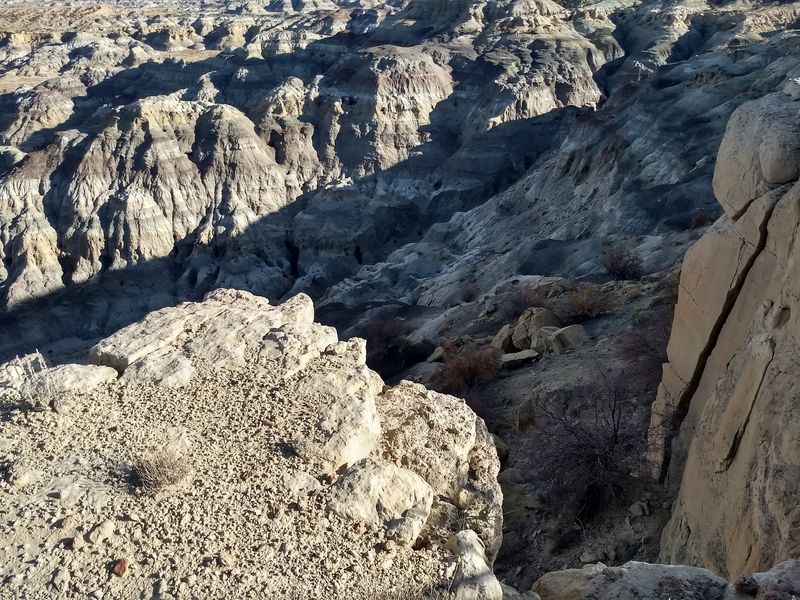
Every crack in these hillsides is basically a tiny apartment for wildlife. The badlands are full of broken rock, loose ledges and shaded gaps that stay cooler than the open ground.
Snakes cannot control their body heat the way people can. They move between sunny rocks and shady crevices all day to stay comfortable.
Rodents dig burrows into the soft clay and sandy soil around the slopes. Those burrows become handy shelters for reptiles, and they also attract snakes looking for a meal.
I have to admit, the snakes have picked a very smart neighborhood. Food, shade and warm basking rocks all sit within a few feet of each other.
For visitors, this means hands should stay out of places eyes cannot see. Reaching under ledges or flipping rocks is a quick way to startle a resting resident.
Stepping onto rocks rather than over them gives a clear view of what sits on the other side. Moving slowly also gives any nearby snake time to slip away quietly.
Most snakes would much rather avoid people altogether. If one appears, backing away calmly and giving it plenty of room usually ends the moment with no fuss.
Out here, good manners go a long way, even with neighbors who have scales.
Hoodoos Rise Beyond The Rim
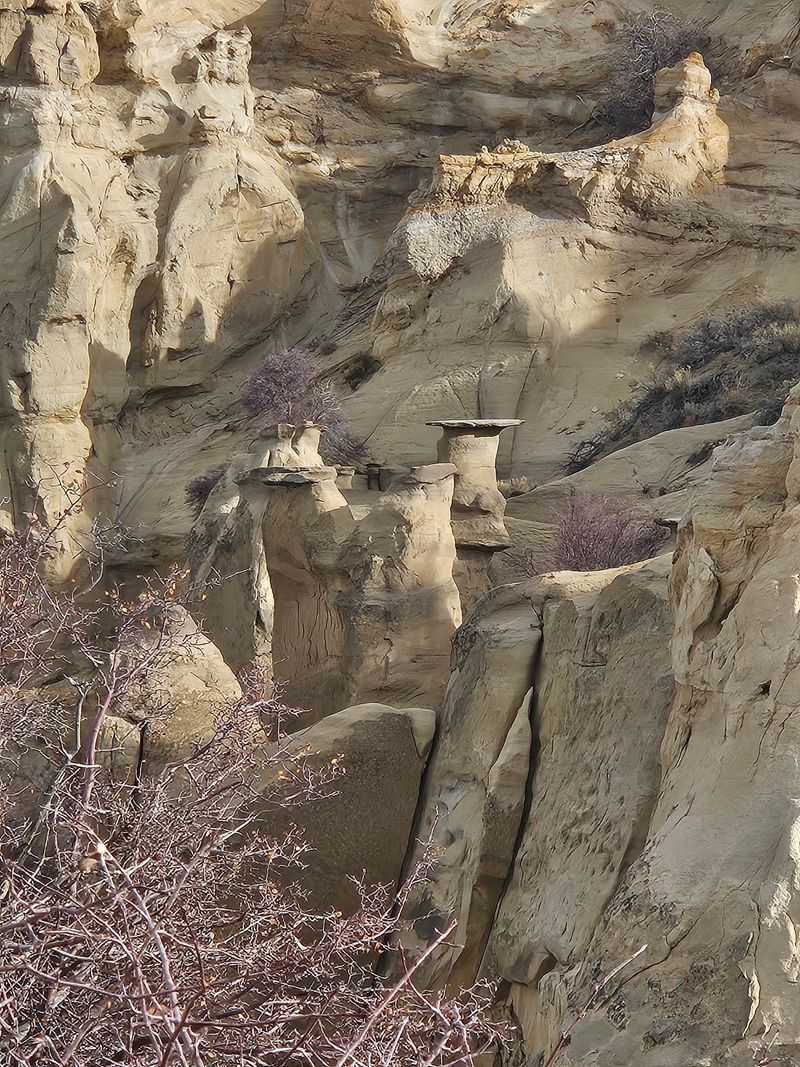
Far across the canyon, Angel Peak rises above the badlands. Its name comes from formation’s resemblance to an angel with outstretched wings, a shape visible from miles away.
Angel Peak tops out at close to 7,000 feet above sea level. Its shape comes from harder sandstone layers resting on top of softer shale that wears away more quickly.
That same push and pull between tough rock and soft rock creates hoodoos throughout the area. These odd towers look a bit like stacks of stone mushrooms waiting for a giant to pick them.
Castle Rock is another standout, and it even has its own overlook a little farther down the road. I think the name fits perfectly, since the formation really does seem ready for a royal parade.
Wind and rare desert rainstorms keep reshaping these formations year after year. The changes are slow, but every flash of water carves away a little more clay.
Hoodoo bases often collect loose rubble and shady pockets. Those spots make cozy hangouts for lizards and the occasional snake hoping to stay out of the sun.
Photographers tend to love the warm light near sunrise and sunset here. Long shadows make each spire pop against the striped canyon walls.
Some rocks, it seems, were simply born to show off.
Wild Terrain Surrounds The Viewpoint
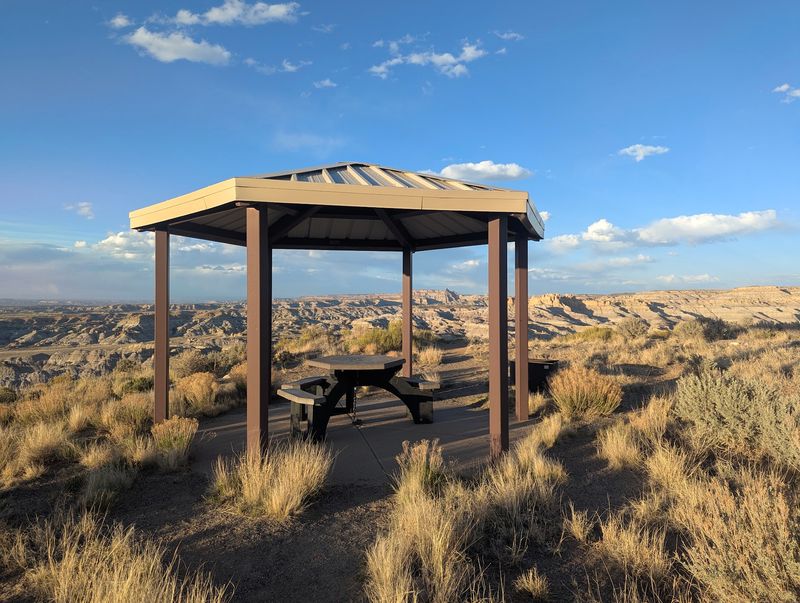
Getting here is half the fun, assuming bumpy roads count as fun. The overlook sits off US Highway 550 south of Bloomfield, reached by County Road 7175.
The gravel road is wide but often rippled like a washboard. Most cars handle it fine at slow speeds, though a rattling dashboard is part of the package.
Beyond the first viewpoint, the road continues to more overlooks, including Castle Rock and the Cliffs Picnic Area. The Cliffs area has covered shelters and a vault toilet, while the first stop has few facilities.
Dry camping is allowed on this public land, with stays limited to 14 days. Campers need to bring their own water and pack out everything they bring in.
Small oil and gas sites dot parts of the surrounding landscape. I find that mix of industry and wild scenery strangely fitting for such a working corner of the West.
Brushy flats around the parking areas can hide reptiles too, not just the canyon below. A quick scan before stepping out of the car or setting up a tent is a smart habit.
Picnic tables and fire grills appear at some of the sites along the route. Nights get very dark, and the stars come out in impressive numbers.
Rough roads, it turns out, lead to smooth views.
Open Desert Makes Wildlife Easy To Miss
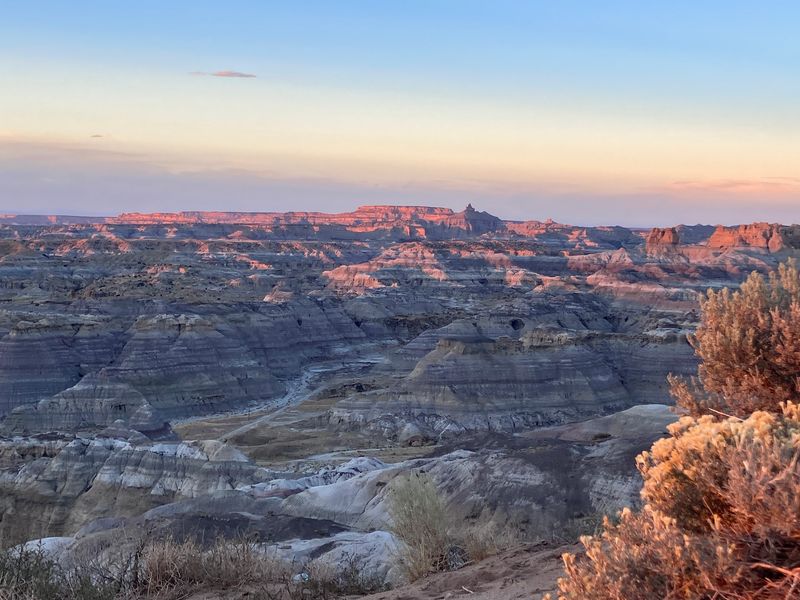
Wide open land should make spotting animals easy, yet the opposite often happens. Desert creatures are masters of blending in with sand, rock and dry brush.
Snakes here wear earthy browns and tans that match the ground almost perfectly. A coiled bullsnake can rest near a path and look like just another tangled stick.
Lizards dart between rocks so quickly that they seem to vanish mid-step. Ravens and hawks circle overhead, keeping a sharp eye on the same small animals visitors overlook.
Jackrabbits and coyotes also roam the scrubland, mostly during cooler hours. Early mornings and evenings offer the best odds of catching any of them out and about.
I love that the quietest stop on a road trip can hold so much hidden life. A few minutes of stillness on a bench often reveals movement that was there the whole time.
Binoculars help a lot for watching wildlife without getting too close. Keeping a respectful distance protects both the animals and the people admiring them.
Feeding wildlife is a bad idea, even when a curious critter seems friendly. Human snacks can upset their health and teach them to wander toward picnic areas.
The desert rewards patience more than speed, every single time.
The Landscape Feels Beautifully Untamed
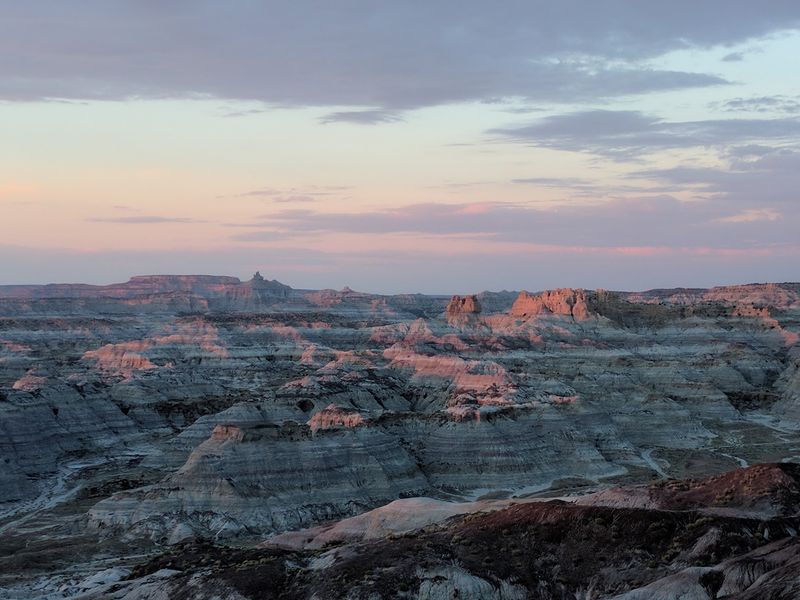
Silence is the loudest thing at this overlook on most days. Wind brushes across the rim, and the badlands stretch out without a single billboard in sight.
Entry to the scenic area is free, which feels like a sweet bonus for such a big view. Picnic tables invite travelers to slow down for a meal or a quiet reading break.
The land is fragile, and it stays wild partly because visitors treat it kindly. Staying on established paths protects the soft clay and the plants holding it together.
BLM rules allow limited casual collection of rocks and petrified wood unless a site has stricter restrictions. Vertebrate fossils and cultural objects must remain where visitors find them.
Snakes are simply part of that untamed character, not a reason to skip the stop. Calm awareness lets people and reptiles share this rugged corner of New Mexico just fine.
I keep coming back to how rare it feels to find a place this peaceful just minutes off a highway. Many drivers zoom right past without ever knowing it exists.
Wild places stay special when they are left a little wild.
Angel Peak proves that a quick detour can hold ancient rock layers, glowing sunsets and a few secret slithering neighbors. With sharp eyes and steady steps, this corner of New Mexico offers a view that sticks around long after the dust settles.