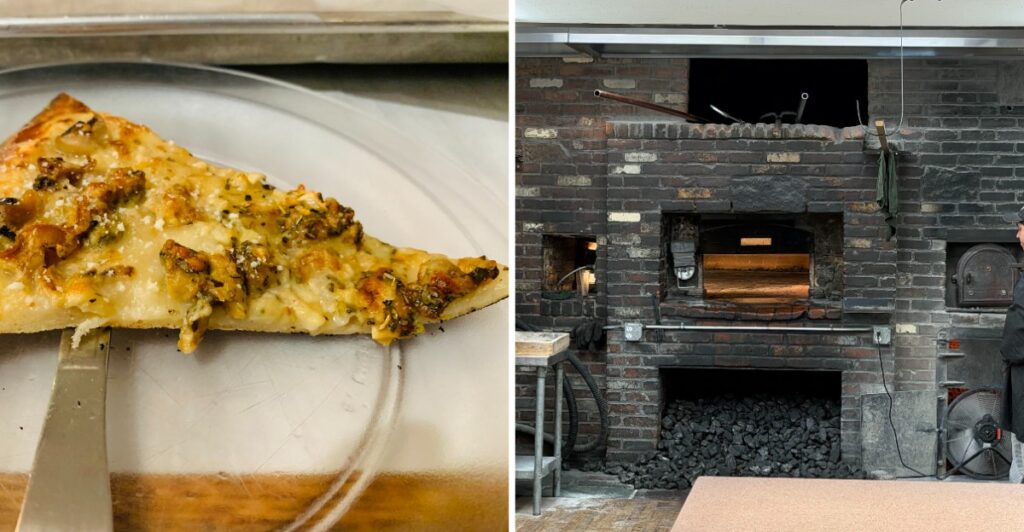
This pizza practically comes with a birth certificate.
The story starts in 1925, when the first pies went into a coal-fired oven on Wooster Street.
A century later, the family story is still going strong.
Not bad for a pizza tradition with serious seniority.
The pizza kept evolving too. Thin, charred crust became part of the New Haven style, while the White Clam Pizza eventually earned its own place in the story.
Connecticut has plenty of pizza history, but this one still feels unusually close.
You can taste the clam pie, notice the blistered crust, and then look around knowing generations of people came here chasing the same thing.
My move?
Order first. Read the history later.
Cold pizza is no way to celebrate a hundred-year story.
The Story Starts On Wooster Street
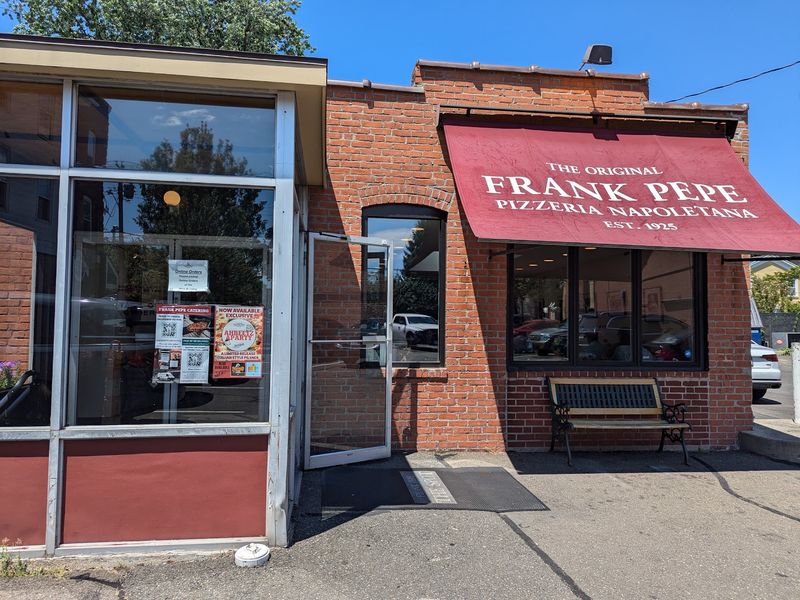
Frank and Filomena Pepe opened their pizzeria on Wooster Street in 1925 after immigrating to New Haven from Italy. The original operation began in a smaller building that later became known as The Spot.
The early menu was built around simple tomato pies baked in a coal-fired bread oven. Frank had experience working in bakeries, and that bread-oven approach helped shape the style that would become closely associated with New Haven apizza.
As the business grew, the family moved into a larger building next door in the mid-1930s. That space became the main restaurant, while the smaller original shop remained part of the neighborhood’s pizza history.
The restaurant has expanded far beyond New Haven since then, but Wooster Street remains the center of the story.
For a first visit, there is no need to memorize a timeline before ordering. The useful part is simpler. You are eating in the neighborhood where the business began, beside the original building, with a pizza style that still depends on the same kind of intense coal-fired heat.
The Original 1925 Oven Still Works At The Spot
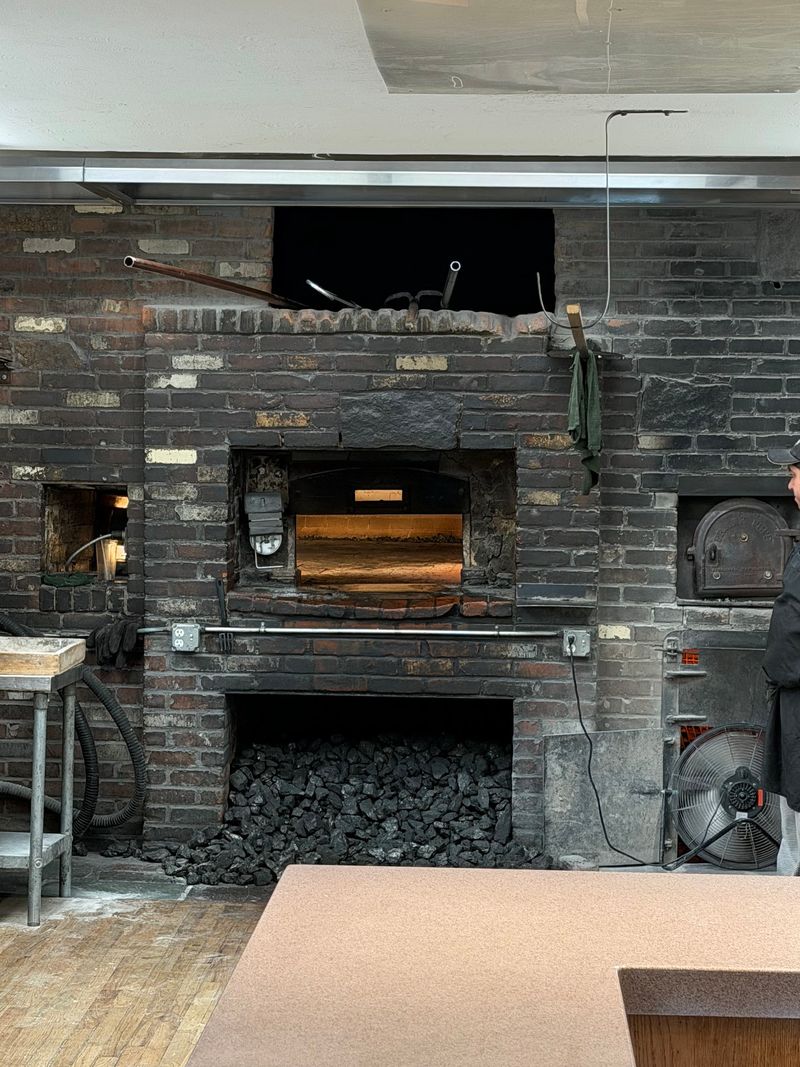
The Spot is the original 1925 pizzeria building, and its oven is still in use.
After Frank Pepe moved the main operation into the larger neighboring building, the original shop continued under other operators for years. The Pepe family later regained the space, restored it, and reopened it in 1981 as an annex to the main restaurant.
The oven remained.
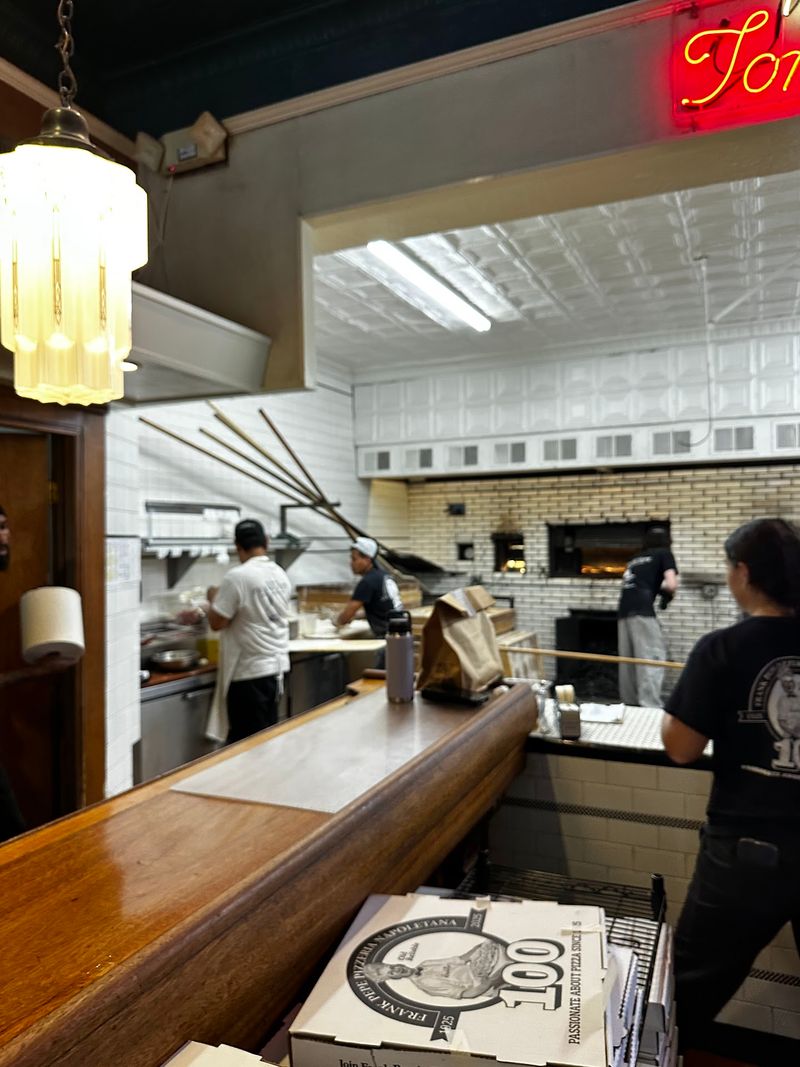
That original coal-fired brick oven is one of the most tangible links between the early pizzeria and the present-day operation. Long peels carry pies into the chamber, where the dry heat cooks the crust quickly and leaves the darkened edges associated with New Haven apizza.
The main restaurant uses a coal-fired brick oven built in the same tradition. Across the wider Frank Pepe operation, ovens are made as replicas of the original Wooster Street design, even down to details based on the old cast-iron door molds.
If you are seated at The Spot, the history is right there in the working kitchen rather than behind glass.
Order first, eat while the pie is hot, and look around when there is a quiet moment between slices. A century-old oven is easier to appreciate when it is still busy doing its job.
White Clam Pizza Joined The Menu In 1964
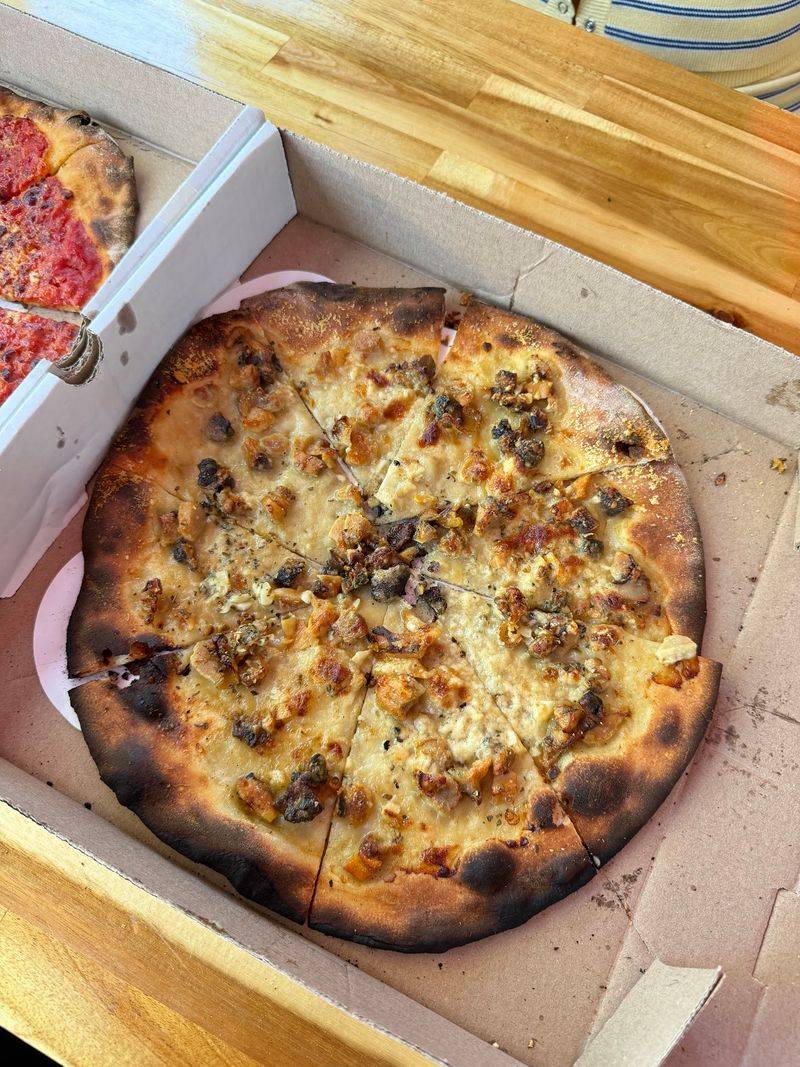
The White Clam Pizza was not part of Frank Pepe’s original 1925 lineup. It arrived in 1964.
Clams were already being served on the half shell, and Frank eventually put freshly shucked clams onto pizza with olive oil, garlic, oregano, and grated cheese. The combination became one of the pizzeria’s defining pies.
That later arrival gives the menu an interesting split. The oven tradition reaches back to the beginning, while the clam pie came nearly four decades afterward.
The current White Clam Pizza keeps the ingredient list focused: fresh clams, garlic, oregano, grated Pecorino Romano, and olive oil. There is no tomato sauce, so the clams and garlic stay at the center of the flavor profile.
For someone who usually orders tomato-based pizza, the easiest approach is to share. Put a clam pie beside an Original Tomato Pie and let the table compare two very different sides of the same pizzeria.
The clam pie heads in the opposite direction without becoming complicated.
One lunch can cover a surprising amount of New Haven pizza history without requiring more than a couple of pies and enough people to help finish them.
Fresh Clams Keep The Pie Focused
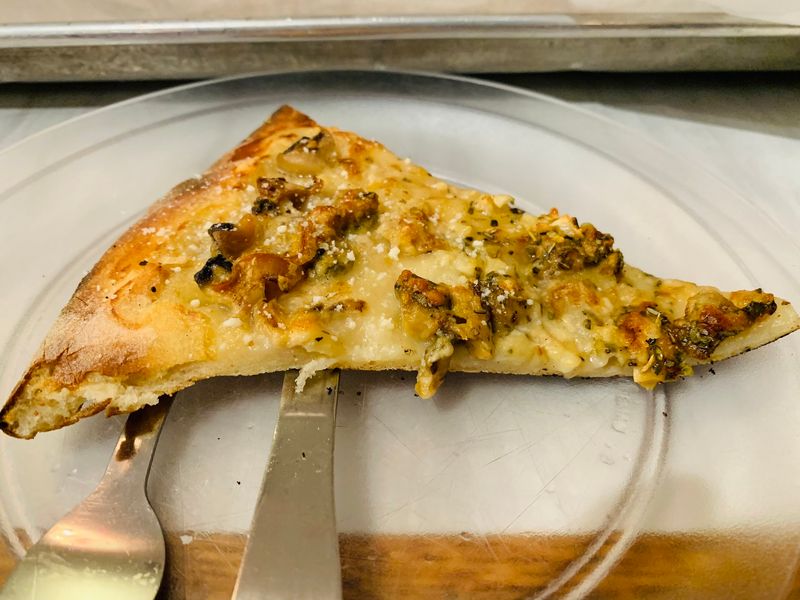
The White Clam Pizza depends on a short ingredient list, which means each part has a clear job.
Fresh clams bring the briny, savory center. Garlic adds sharpness, oregano brings an herbal note, Pecorino Romano contributes salt and nuttiness, and olive oil carries those flavors across the crust.
Without tomato sauce underneath, there is less cushioning between the toppings and the dough. That puts more attention on the clams and on the crust itself.
The pie is also served without mozzarella as part of its standard build. Anyone expecting the stretchy cheese layer of a typical white pizza gets something much leaner and more direct instead.
Eat the first slice while it is hot, before steam from the toppings has much time to soften the crust. The garlic and oregano are easiest to pick out when the pie first reaches the table.
If the clam pie sounds like too much of a leap, split it with someone and add a more familiar second pizza. There is no rule saying the whole table has to commit to clams.
One pie can satisfy curiosity, while another keeps the meal closer to the pizza you already know.
Coal Heat Shapes The Crust
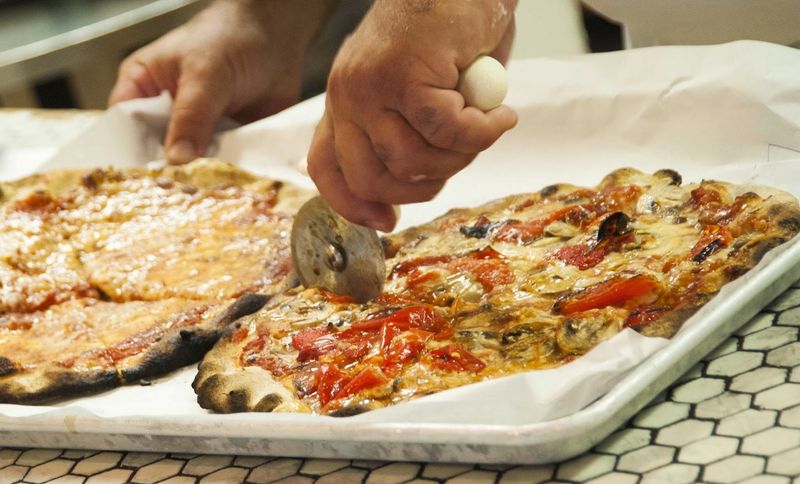
Coal-fired baking gives Frank Pepe’s pizza much of its visual character.
The ovens are large brick structures built for dry, intense heat. The dough is relatively wet and ferments for a long time, and the combination of that dough with the oven produces a thin crust with dark spots and blistered edges.
Those marks are part of the style rather than a sign that something went wrong.
The contrast is what makes the crust interesting. The edge can be crisp and charred in places while the center remains more flexible. Because the pizzas are thin, the crust stays noticeable even under stronger toppings such as clams and garlic.
This is where personal preference enters the meal. Some people head straight for the darkest slice, while others choose a piece with less char. A shared pie usually gives everyone room to find the edge they like.
The coal-fired method also separates New Haven apizza from thicker, softer pizza styles. You are not waiting for a deep layer of dough to carry the meal. The crust, toppings, and heat all show up at once.
That is especially clear with the White Clam Pizza, where there is no tomato sauce to hide the structure underneath.
The Flagship Keeps The Original Neighborhood Close
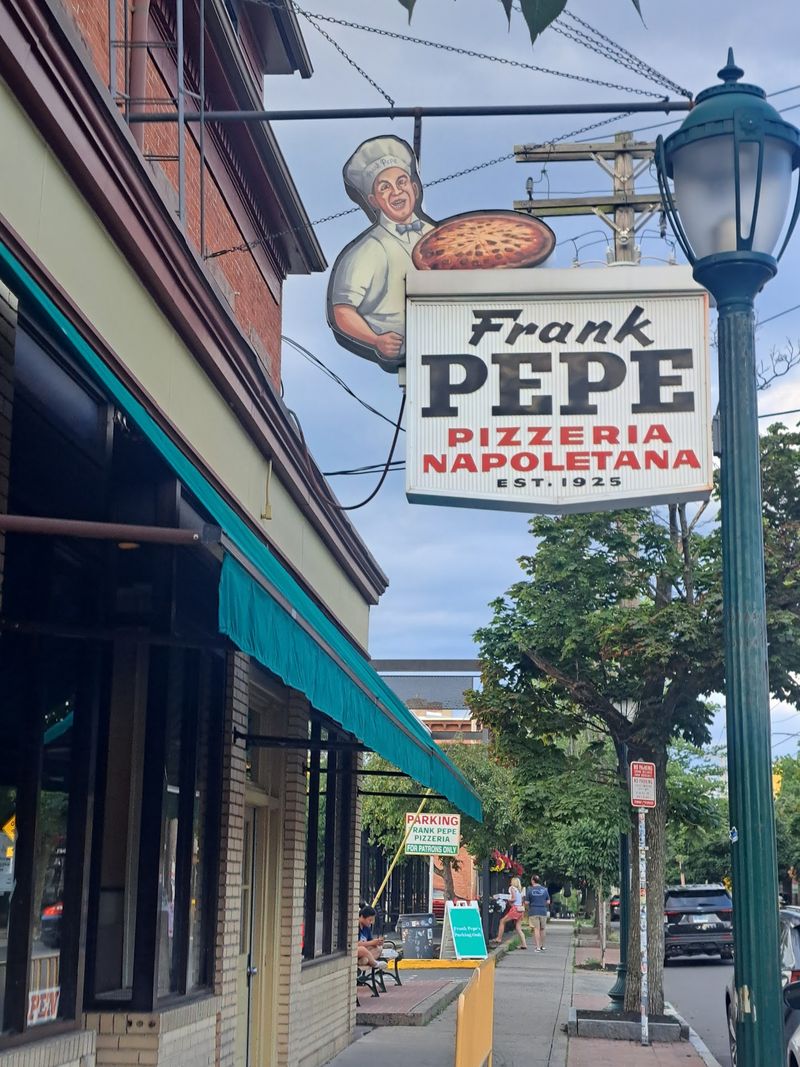
The restaurant is open from 11 a.m. to 10 p.m. every day, giving you plenty of room to choose between lunch, an early dinner, or a later evening meal.
The New Haven location operates on a walk-in basis, so timing can matter when you are building the stop into a larger day around the city.
An earlier meal leaves more time to wander Wooster Square afterward, while dinner lets the pizza become the final plan rather than the first.
The current menu still keeps the oldest parts of the story visible. The Original Tomato Pie remains, and the White Clam Pizza continues as one of the signature choices.
The Spot shares the same menu and staff as the main restaurant, so being seated there does not mean giving up the core pies.
If the original oven matters to you, The Spot adds another layer to the visit. If the flagship is where you land, the essential experience is still there: coal-fired apizza on the same Wooster Street block where the family built the business.
Either way, the neighborhood keeps the past close without making you chase it across town.
Frank Pepe Pizzeria Napoletana is at 157 Wooster St, New Haven, CT 06511, with The Spot next door as part of the same New Haven operation.
A Century Of Apizza Still Fits On One Table
A first visit does not need an elaborate ordering strategy.
Start with the White Clam Pizza if that is the reason you came. Fresh clams, garlic, oregano, Pecorino Romano, and olive oil give you the pie most closely associated with Frank Pepe’s later history.
Add an Original Tomato Pie when the table wants contrast. Its crushed tomatoes, grated cheese, and olive oil take the menu back toward the simpler style that helped build the pizzeria in the first place.
From there, appetite can make the remaining decisions. Pepperoni, Margherita, and other current pies give a group room to branch out without losing the thin, coal-fired foundation.
The restaurant’s history is easy to notice, but the meal does not need to feel ceremonial. Fold a slice if you want, argue over the darkest edge, trade pieces across the table, and order another pie only if everyone still has room.
That relaxed approach suits a place where the method has lasted longer than almost anyone sitting in the dining room.
The original oven is still working next door. The White Clam Pizza is still on the menu. Wooster Street is still the place where the story began.
Sometimes a century of pizza history really can fit on one table.