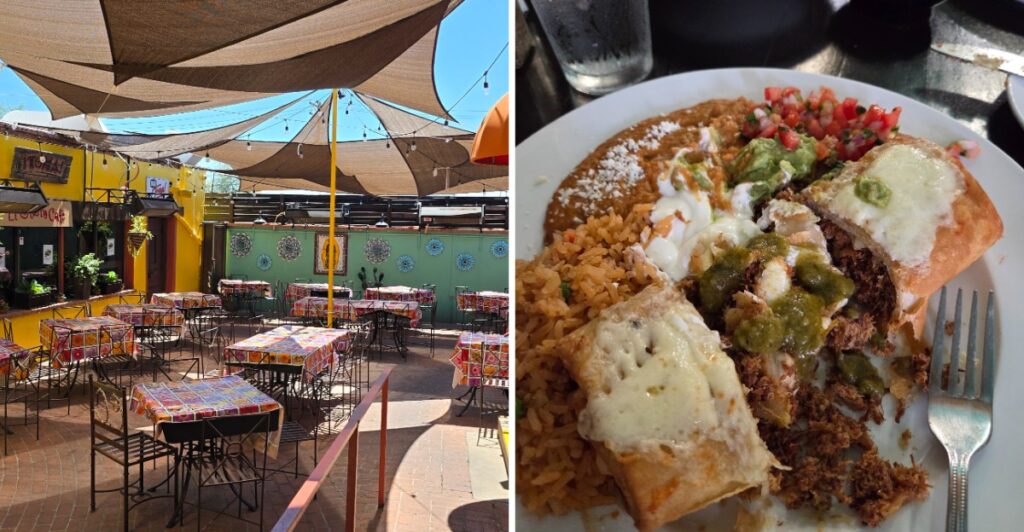
Some kitchen accidents get cleaned up.
This one ended up famous.
The family behind this longtime Tucson restaurant has credited its founder with accidentally creating the fried burrito in the 1920s. Other origin stories exist, but Arizona has been happily holding onto this version for generations.
The restaurant itself goes back to 1922, which means the story is still tied to the same family behind the business.
You can absolutely order the dish that started all the conversation.
Just do not stop reading the menu there.
Carne seca brings another local favorite into the picture. Fresh corn tamales and Sonoran specialties make a strong case for branching out.
I would give the famous order its moment, then see what else grabs you.
After all, the accident already made history.
Lunch does not have to repeat it.
The Restaurant Has Been Serving Tucson Since 1922
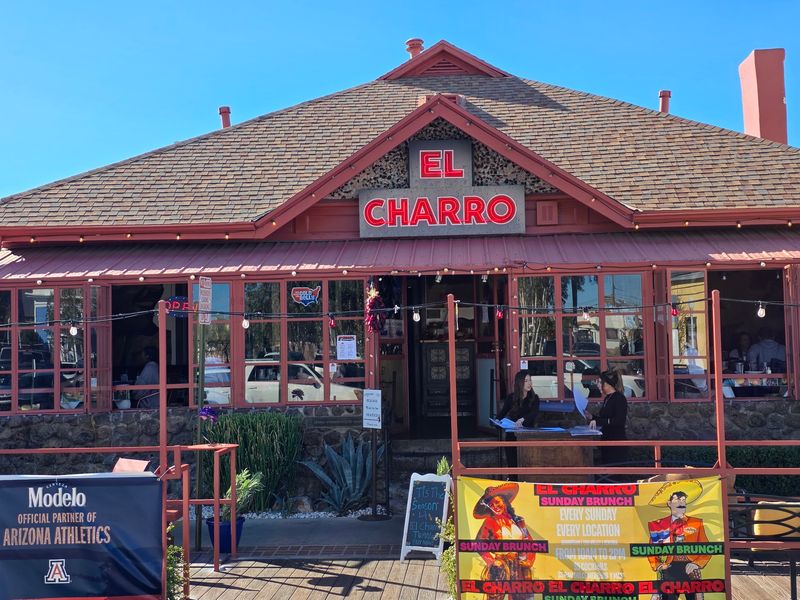
El Charro traces its beginning to 1922, when Monica Flin opened a small Mexican café in Tucson. More than a century later, the restaurant remains in the same family.
It is recognized as the oldest Mexican restaurant in the United States continuously operated by the same family, giving the business a rare line of continuity across generations.
The downtown location adds another historical layer. The building that houses the restaurant was originally the Flin family residence, built in 1896 by Monica’s father, Jules Flin.
That means the history here is not limited to an old recipe or a date on a wall. The restaurant itself occupies a building directly tied to the family behind the business.
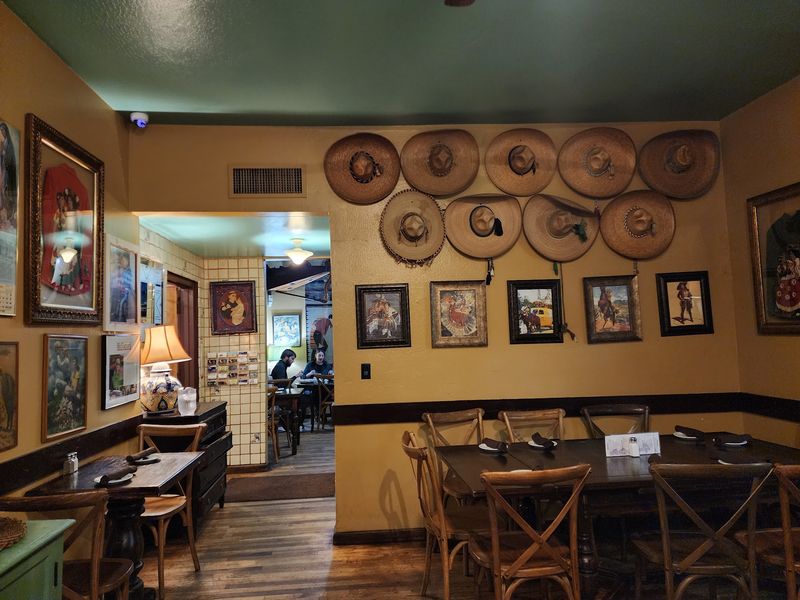
Inside, photographs, artwork, and other decorative details keep that long history visible without turning the meal into a museum visit.
For a first stop, there is no need to study every date before ordering. The simple timeline is enough: family home in the late nineteenth century, restaurant beginning in 1922, and generations of continued operation after that.
That background becomes more useful once the chimichanga story enters the picture, because the dish is tied to the same founder who started the café.
Monica Flin Is At The Center Of The Chimichanga Story
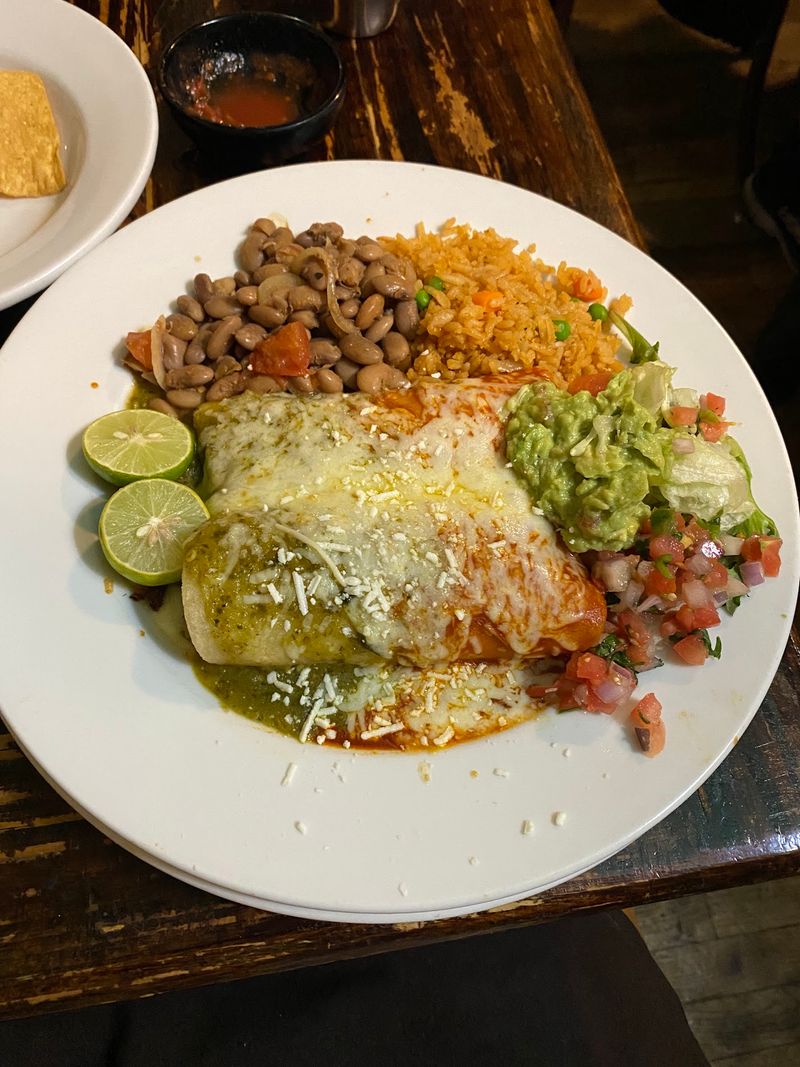
Monica Flin is more than a name attached to the beginning of El Charro. She is also the central figure in the restaurant’s best-known food story.
She opened the café in 1922 and became the family member most closely associated with the chimichanga claim that followed.
The family still refers to her as Tia Monica, and that name remains connected to the dish on the menu.
Her role also places the restaurant’s history within the broader story of Sonoran cooking in southern Arizona. The food at El Charro grew from traditions connected to the borderlands of Arizona and northern Mexico, rather than from a single novelty dish invented for tourists.
The chimichanga sits alongside carne seca, tamales, calabacitas, and other regional dishes rooted in the same Sonoran cooking tradition.
The family connection has also continued well beyond Monica’s lifetime. Later generations still operate the business, keeping the founder’s name and history close to the restaurant’s identity.
So if the chimichanga is what gets you through the door, Monica’s larger story gives the meal more context. The famous fried burrito is one chapter in a much longer family restaurant history.
The Famous Accident Involved A Burrito And Hot Oil
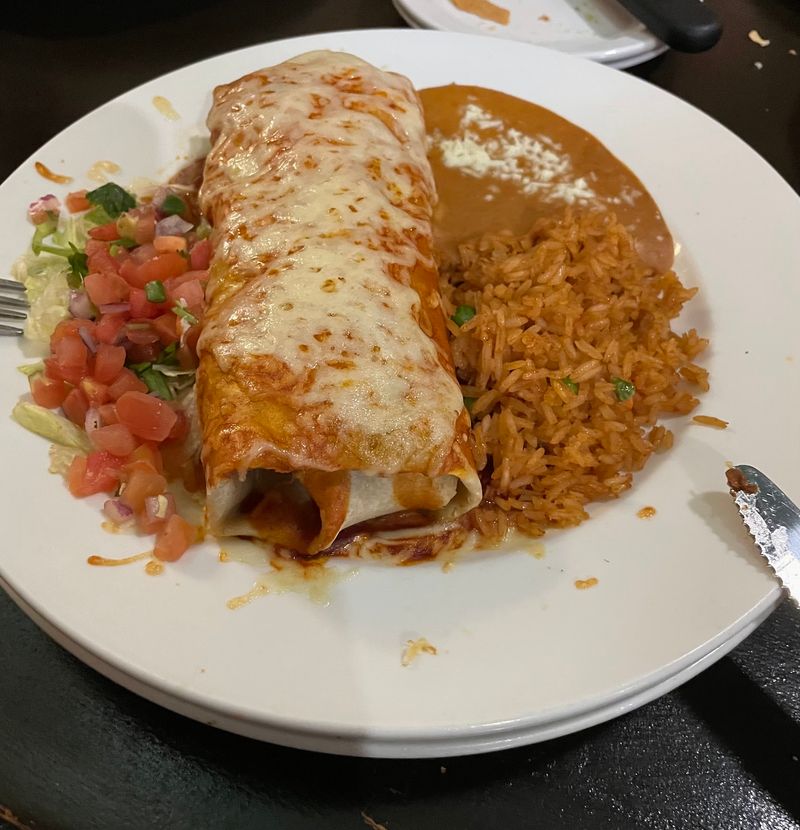
The chimichanga story begins with an accident, at least in El Charro family lore.
Monica Flin is said to have accidentally dropped a burro into hot frying oil. As the story goes, she began to utter a Spanish curse, caught herself, and substituted the word “chimichanga” instead.
That version has become the restaurant’s signature origin tale.
Other cooks and restaurants have also been linked to the chimichanga’s invention, leaving its exact origin disputed.
Other origin claims remain part of the chimichanga’s history, leaving the El Charro account as one prominent version of a story with more than one claimant.
The connection between Monica Flin and the dish has remained part of the family story for generations, while the chimichanga itself remains on the menu.
You do not need to choose a winner in the origin debate before lunch. Order the dish if you are curious, keep the competing claims in mind, and let the history stay a little messy.
Food stories often are.
Chimichanga Style Still Appears On The Menu
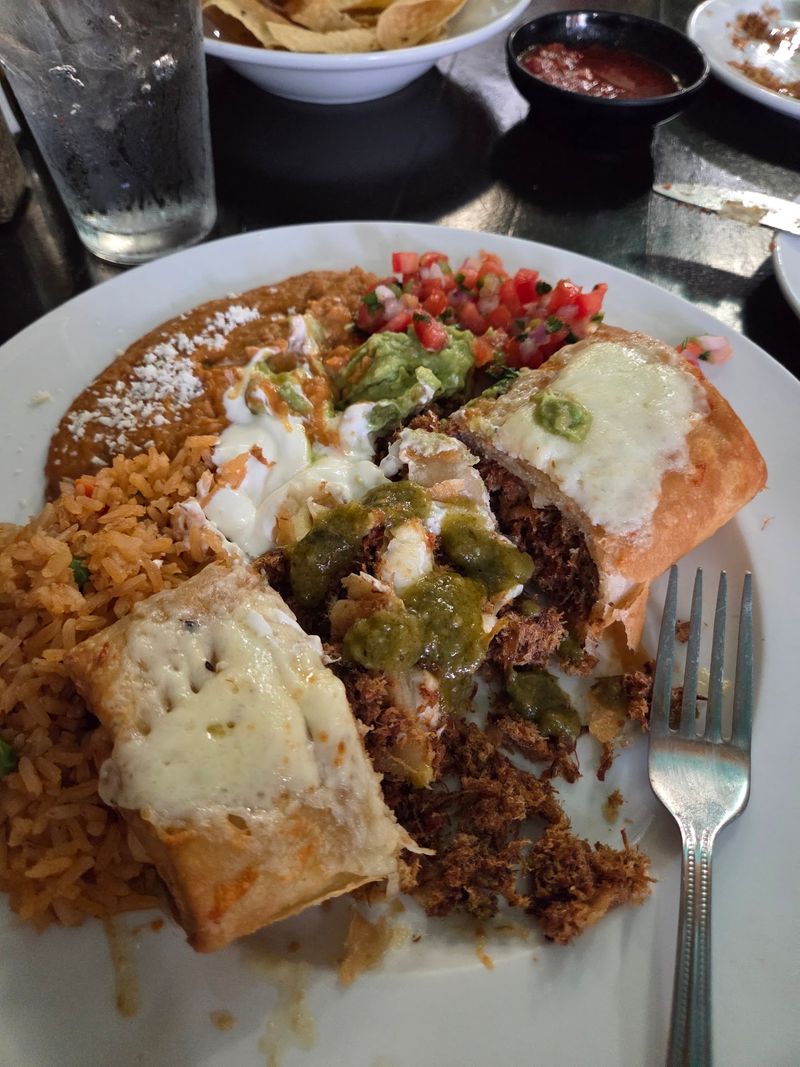
The chimichanga is not just a story attached to El Charro’s past. Chimichanga Style remains part of the current menu.
Rather than appearing only as one fixed plate, it is offered as a way to prepare a burro, giving you some choice over the filling while keeping the fried preparation that defines the dish.
Carne seca is one option that connects two long-running El Charro traditions in a single order.
The restaurant’s carne seca begins with Angus beef dried in the Sonoran desert sun before being shredded and grilled with green chile, tomato, and onions.
That makes the combination useful if you want to try the chimichanga preparation without ignoring one of the kitchen’s other signature techniques.
Other fillings give the same fried format a different direction, so the first decision is really about what you want inside the tortilla.
The practical part is simple: Chimichanga Style adds frying to the burro, creating a crisp exterior around the filling.
It is a fork-and-knife meal rather than something you need to rush through. If the table is also ordering starters or sides, build around appetite rather than trying to sample everything at once.
There is plenty more menu ahead.
The Court Avenue Location Keeps The History Close
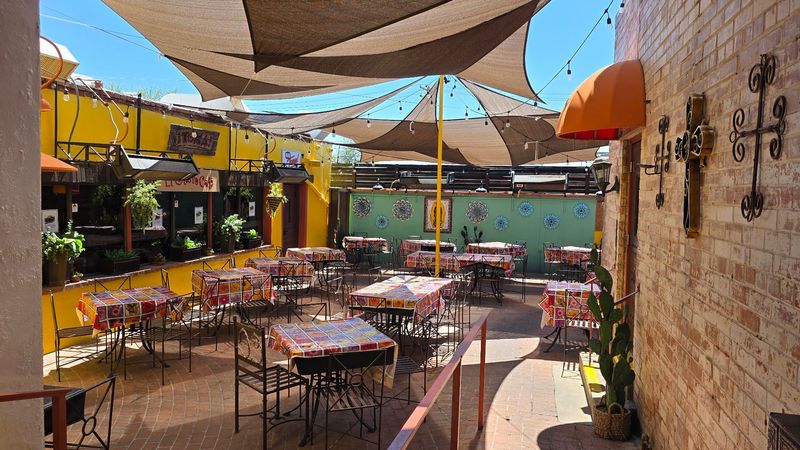
The downtown location sits in the former Flin family home, connecting the restaurant directly to the family history behind it.
The property dates to 1896, decades before El Charro opened in 1922.
That makes the building more than a backdrop for the meal. It is part of the timeline.
The downtown setting also puts the restaurant within easy reach of other Tucson stops, so lunch can fit naturally into a larger day without requiring a separate drive far from the center.
Parking takes a little planning. Street parking is available, meters are free after 5 p.m. and on weekends, and the public lot across the street is paid.
Once that is sorted, the visit itself is straightforward.
The address is: 311 N Court Ave, Tucson, AZ 85701.
Arizona heat can make the timing of any downtown walk matter, especially in warmer months, so an earlier meal or a shorter walk from parking may be more comfortable when temperatures climb.
Inside, the historic setting gives you plenty to look at while the food remains the reason to sit down.
History first or chimichanga first? Appetite usually settles that argument quickly. If you are exploring downtown on foot, the central location also makes it easy to keep lunch from taking over the entire day.
Sonoran Cooking Shapes The Rest Of The Menu
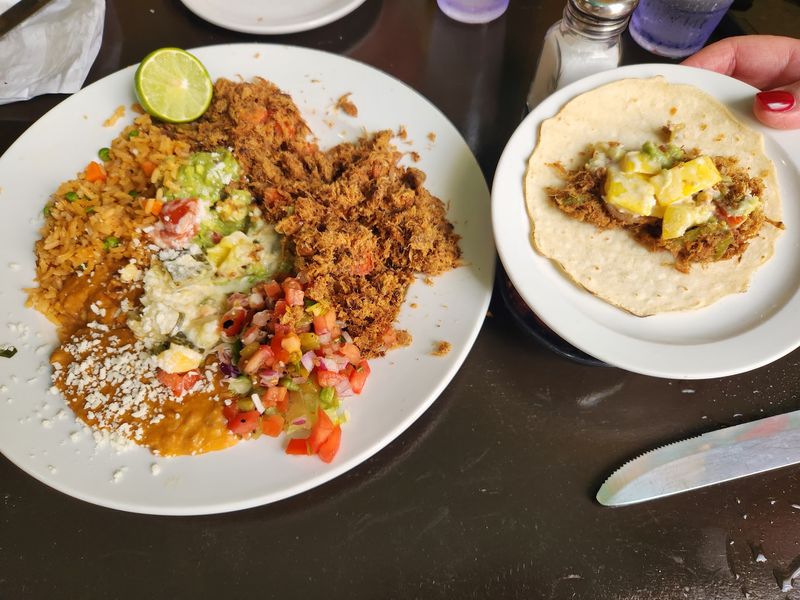
Chimichangas may carry the biggest origin story, but they are only one part of El Charro’s Sonoran-style menu.
Carne seca remains one of the clearest links to that regional cooking tradition. The beef is dried in the Sonoran desert sun, then shredded and grilled with green chile, tomato, and onions.
Fresh corn tamales give the table another direction, while calabacitas bring squash into the mix.
Cheese crisps are another Arizona-Sonora staple worth knowing before you order. They start with a large flour tortilla topped with melted cheese and baked until the tortilla develops crisp edges.
Tableside guacamole gives you a starter built around avocado rather than fried food, which can make sense if a chimichanga is already doing the heavier work later.
The current menu also includes plant-based choices, so the table does not have to follow one single route through the meal.
That range makes sharing useful without turning lunch into a checklist.
One person can lean toward carne seca, another toward tamales or calabacitas, and someone else can keep the chimichanga story at the center.
The common thread is Sonoran cooking, not one single famous plate.
More Than A Century Later The Chimichanga Story Remains Part Of El Charro
More than a century after El Charro opened, the chimichanga story remains tied to Monica Flin and the family restaurant she founded.
The restaurant still operates under the same family line, Chimichanga Style remains on the menu, and the Court Avenue location keeps the story connected to the place where El Charro’s history began.
The origin question itself remains open enough to be interesting.
Other chimichanga claims exist, so there is no need to present the El Charro version as settled fact.
What remains is a family story, a disputed food origin, and a dish closely connected with Arizona’s culinary history.
That leaves you with a simple choice when you sit down.
You can order the chimichanga because you want to taste the dish tied to the legend, or you can let carne seca, tamales, calabacitas, or another Sonoran dish take the lead.
Either way, the meal stays connected to a restaurant that has been part of Tucson since 1922.
The history gives you something to talk about. The menu gives you plenty to decide after that.