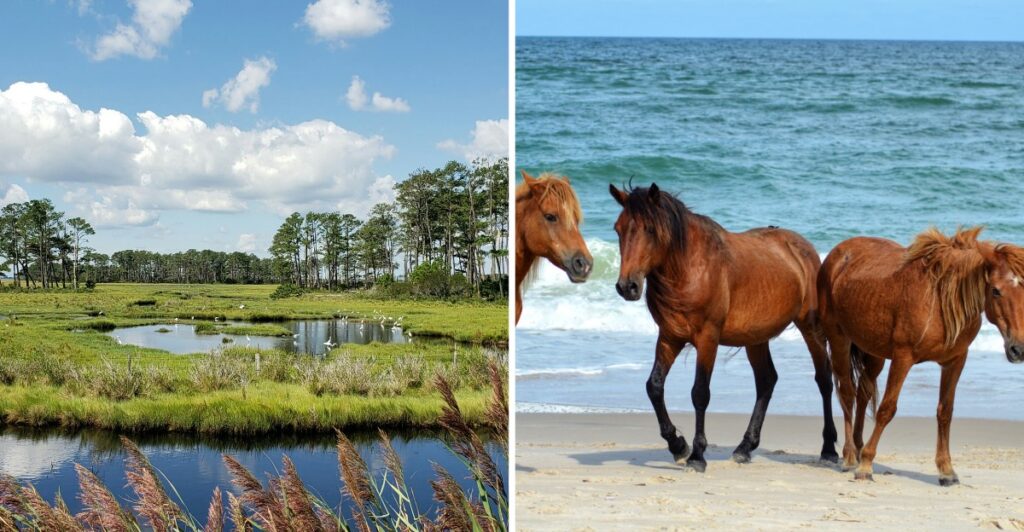
Wild horses are not big on appointments.
You might spot one on the beach. Another could be near the road. Or you may spend ten minutes scanning the marsh before anything moves at all.
That is what keeps your eyes moving.
On this Maryland barrier island, the horses go where they please. Beach, dunes, marsh, campground. They are not waiting in one neat viewing area for visitors to arrive.
They have been part of this landscape for generations, and seeing them feels better when you let the moment happen naturally.
Keep your distance. Bring binoculars if you have them. Give the animals plenty of room.
Then keep looking.
Around here, the horses make the plans.
You just get lucky enough to cross paths with them.
Wild Horses Have Lived On The Island For More Than 300 Years
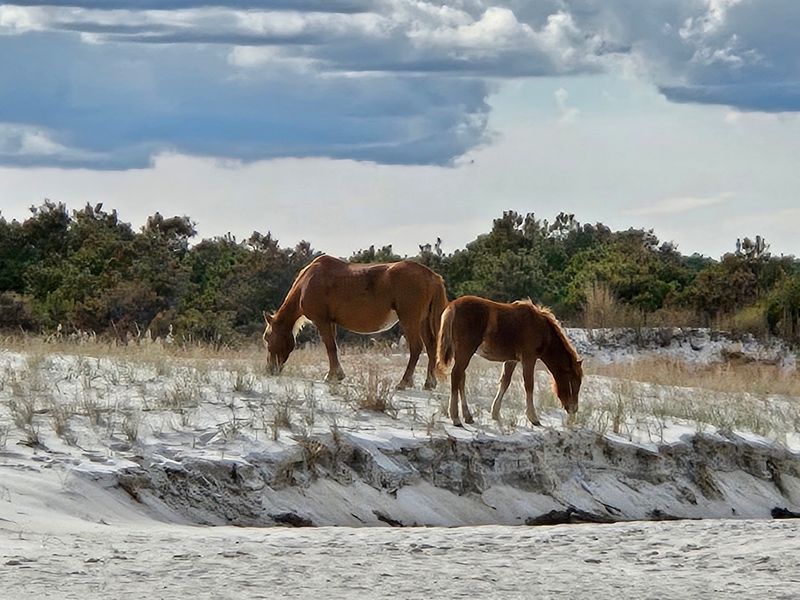
Long before beach towels and sunscreen showed up, horses were already grazing these sandy shores.
Records show domestic horses on Assateague as early as 1669. Their descendants have remained on the island for well over three centuries, adapting to a coastal environment shaped by salt, wind, heat, insects, and storms.
The Maryland horses now live without routine feeding or shelter from people. They graze on saltmarsh cordgrass and other vegetation available across the barrier island.
Their coats and condition can change with season, weather, and life on the barrier island. Sand, wind, and marsh mud are part of the landscape they move through every day.
The animals are still horses, not tame beach pets.
That distinction matters the moment you see one near a road or picnic area. A horse may appear calm around people and vehicles while still reacting quickly if someone gets too close.
Watch from a distance instead of trying to close the gap.
Binoculars or a zoom lens make it easier to notice coat color, markings, and behavior while staying well outside the 40-foot minimum.
You can observe coat markings, grazing, and movement while remaining outside the 40-foot minimum.
The Herd Descends From Horses Brought To The Island Centuries Ago
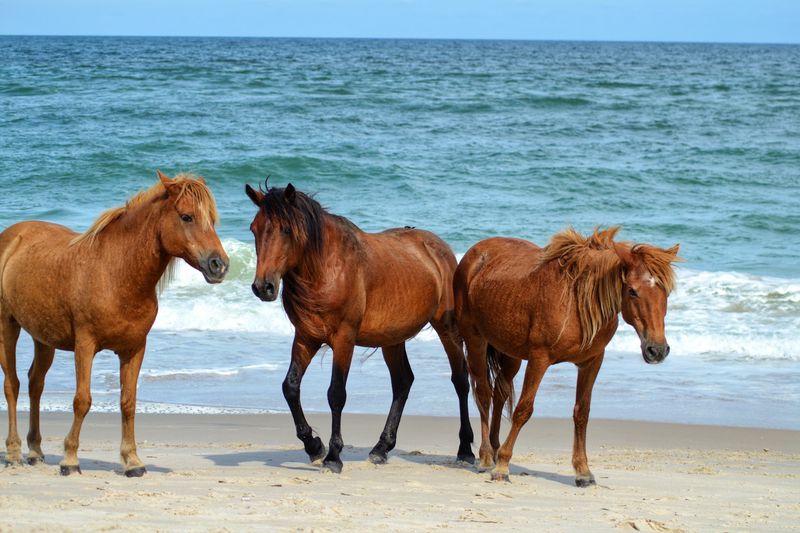
The Maryland herd traces back to domestic horses that lived on Assateague centuries ago.
Stories about how the first horses arrived have circulated for generations, but the documented record places domestic horses on the island by the late 1600s.
Over time, their descendants became a free-roaming population shaped by the island’s changing conditions.
That history explains why the animals are sometimes described as feral horses rather than truly wild horses in the strict biological sense. Their ancestors were domestic, but today’s Maryland herd lives independently on the barrier island.
Do not let their familiarity with roads, campgrounds, and people suggest that they are tame.
The horses can bite and kick, and approaching, touching, or feeding them is prohibited.
If one walks toward you, create more space rather than waiting for the horse to move first.
Food also needs attention. Keep coolers, bags, and picnic supplies secured because unattended food can attract horses to vehicles and campsites.
Keep your distance and allow the horses to move without being approached or blocked.
Stand back, watch how a horse moves through the landscape, and notice how easily it shifts from road edge to marsh grass or open sand without needing any direction from people.
Beaches, Dunes Marshes And Forests Give The Horses Room To Roam
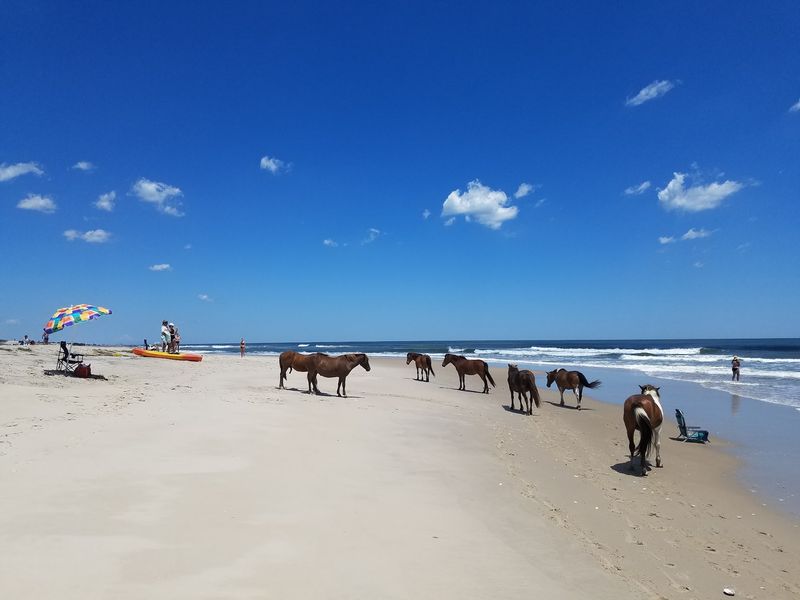
Assateague is not one continuous strip of open beach.
The barrier island includes Atlantic shoreline, dunes, salt marshes, shrublands, forests, grasslands, and calmer bay-side habitats.
Maryland’s horses move through that mix freely.
You may see them grazing in marsh vegetation, crossing roads, walking near campgrounds, or moving along open sand. Where they appear changes with conditions, season, food, insects, and the animals’ own movements.
Binoculars let you watch horses across marshes, beaches, and open ground without approaching them.
They let you scan wider areas without approaching the herd, and they are especially handy when horses are across a marsh or farther along the beach.
Keep the 40-foot rule in mind even when a horse seems occupied with grazing.
If the animal moves closer, you are responsible for creating distance.
The island itself also deserves attention while you wait for a sighting. Dunes protect inland habitats, marshes spread across the bay side, and wooded areas break up the open coastal landscape.
Bring water, sun protection, and insect repellent in warmer months.
A horse sighting may happen quickly, or you may spend more time scanning the landscape. Either way, the route through the Maryland district gives you plenty of habitat to watch along the way.
Scientists Have Tracked The Maryland Herd Since The 1970s
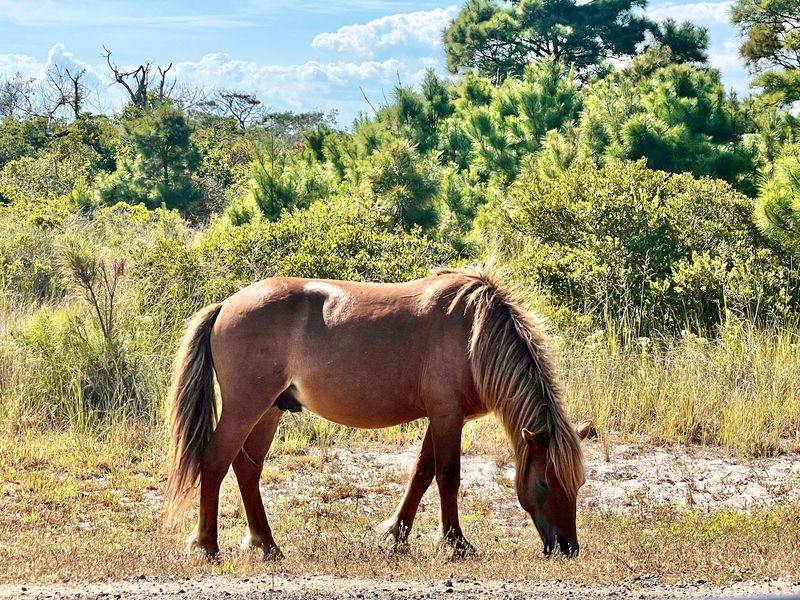
The modern monitoring story starts with the creation of Assateague Island National Seashore in 1965.
At that time, only 10 horses were inside the new park boundaries.
The National Park Service took ownership of the Maryland herd in 1968, when the population within the park had grown to 28 horses.
Formal scientific study began in 1975.
Today, surveys cover about 21 miles from Ocean City Inlet south to the Virginia state line. The herd is surveyed six times a year, giving managers a detailed record of individual animals and long-term population changes.
Researchers track age structure, sex ratio, maternal ancestry, foaling frequency, mortality, and other herd information.
Those records are used to track long-term population changes and individual horses.
The monitoring is detailed enough that individual horses can be followed across years through physical characteristics and family relationships.
For visitors, the practical side is simple.
Give the horses space, never feed them, and let the animals move without being surrounded or blocked.
Those small choices reduce conflicts with people and help keep the herd’s behavior focused on the island rather than on human food.
The horses may roam freely, but the population itself is far from unobserved.
Every Horse Can Be Identified By Its Individual Markings
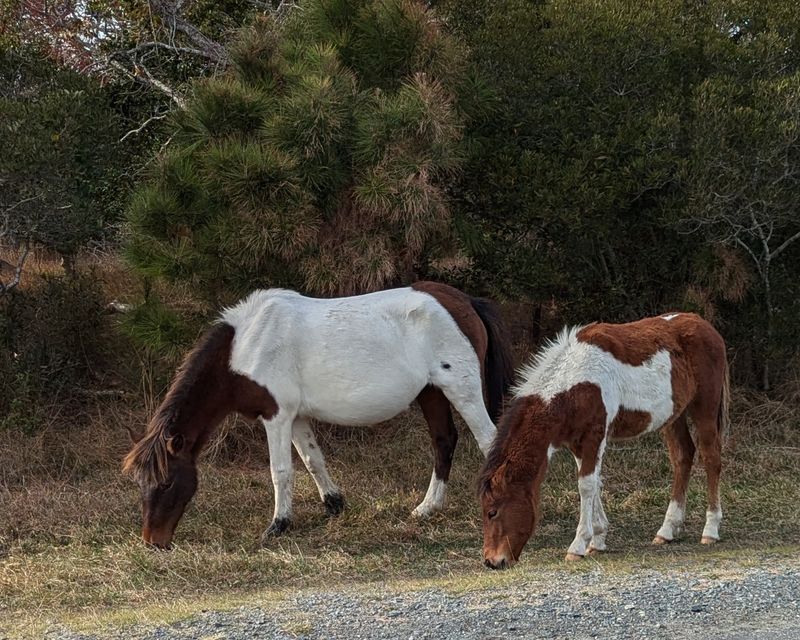
Look closely from a safe distance and the herd starts to look less uniform.
Individual Assateague horses can be identified by combinations of coat color, sex, markings, and scars.
A blaze on the face, white socks on the legs, patches of color, or a distinctive scar can help separate one animal from another.
Those markings give you specific details to compare without moving closer.
Use binoculars first, then a zoom lens if you want photographs that show markings clearly.
You can also compare visible features between horses in the same band.
One may have a broad white marking on the face, while another has a smaller star or different leg markings. Those details are part of how individual animals are distinguished during surveys.
Use visible markings such as coat color, blazes, socks, and scars to compare individual horses.
A scar tells you that an injury happened at some point, but not necessarily how it happened unless the history is known.
The same applies to behavior. A horse may stand alone, graze near a road, or move away from a group for reasons that are not apparent to visitors.
Focus on visible markings and behavior rather than assigning a story to what a horse is doing.
The Barrier Island Is Constantly Being Reshaped By Nature
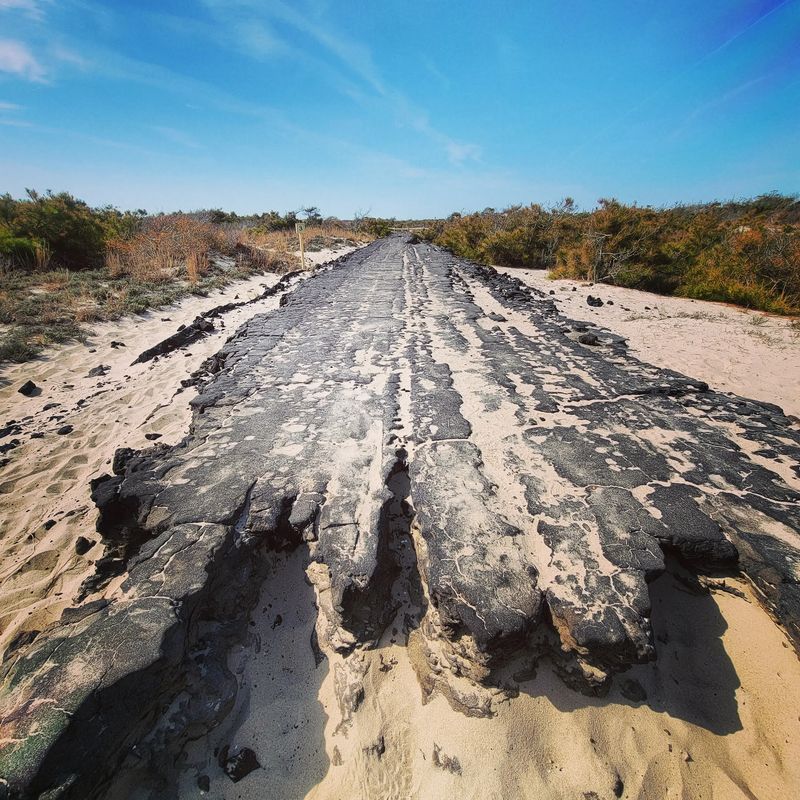
Assateague is a moving landscape.
Storms, waves, currents, overwash, and sea-level rise continually reshape beaches, dunes, and marshes along the barrier island.
Sand shifts southward and westward over time, and individual stretches of shoreline can look different from one season to the next.
The island extends about 37 miles along the Maryland and Virginia coasts, with ocean beaches on one side and bay-side marshes, forests, and other habitats on the other.
The horses move through that changing environment along with deer, shorebirds, crabs, and other wildlife.
Weather can alter a visit quickly.
Strong wind, summer heat, thunderstorms, and coastal storms all affect what is comfortable or accessible, so check conditions before heading out.
Warm months can also bring heavy insect activity around marshes and wooded areas.
Pack insect repellent if you plan to walk trails or spend time away from the open beach.
The shifting landscape is not just scenery behind the herd.
It determines where dunes form, where marshes expand, where vegetation grows, and how routes across the island change over time.
Watch the dunes, marshes, shoreline, and other wildlife as you move through the district.
Visitors Can See The Horses While Exploring The National Seashore
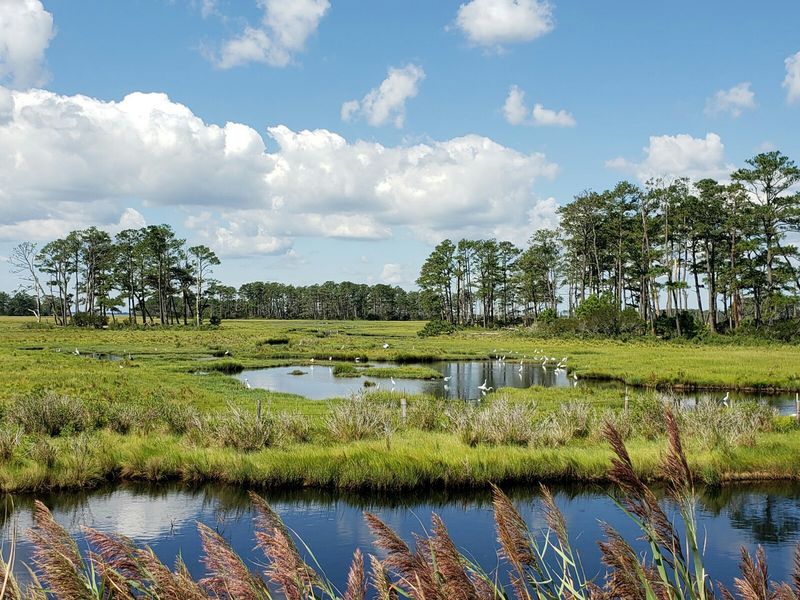
The Maryland district sits at the end of Route 611, south of Ocean City, and combines wildlife watching with beaches, trails, camping, paddling, fishing, and over-sand vehicle access.
Assateague Island Visitor Center is at 11800 Marsh View Lane, Berlin, MD 21811.
Start there if you want current conditions and practical information before entering the seashore.
Once you are inside the Maryland district, stay alert around roads and parking areas because horses can move through developed spaces as well as beaches and marshes.
Keep at least 40 feet away at all times.
Do not touch or feed the horses, and back away if one approaches you.
Secure food in vehicles, campsites, picnic areas, coolers, and bags so horses are not drawn toward people for a meal.
Short trails through marsh and forest habitats add easy ways to explore beyond the beach, while longer stretches of shoreline give you room to scan for horses from a distance.
Plan around weather, insects, and changing conditions rather than expecting the same visit every season.
The horses choose where they move.
Your job is simpler: watch, keep your distance, and leave them enough room to continue across the island on their own terms.