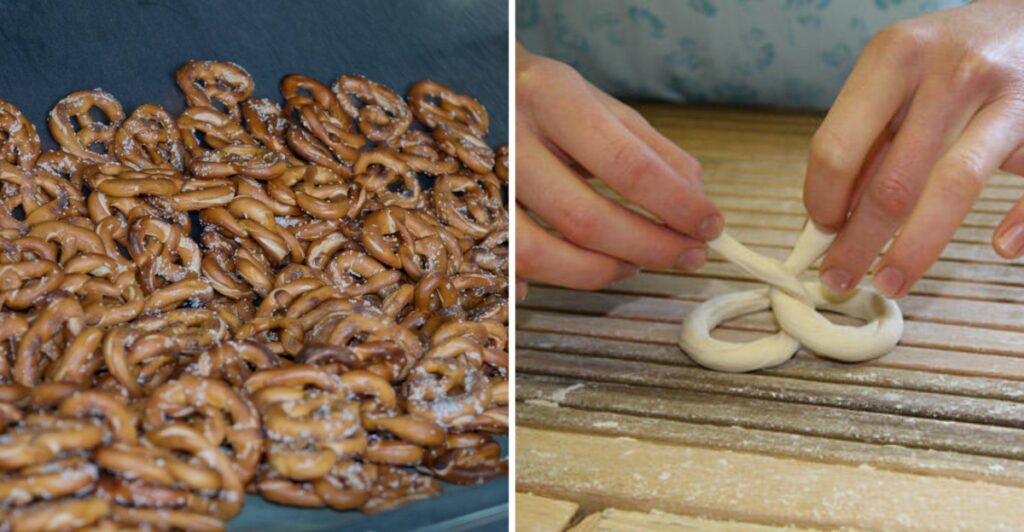
A good hard pretzel should make itself heard.
Snap.
That is the sound you are chasing here.
These sourdough pretzels are still twisted by hand, baked on a stone hearth, and dried until they reach that serious crunch. The family recipe has been doing the job since 1983.
Pennsylvania feels right at home in that kind of tradition.
You can stick with the original twists or wander toward something darker, sweeter, or a little more broken-in.
And if you are curious about how all that crunch happens, there is a chance to peek toward the production area too.
I would start with the classic.
Then see how long the bag stays closed on the ride home.
A Family Pretzel Bakery That Started In Mohnton In 1983
Back in May 1983, a husband and wife named Alvin and Elva Martin baked the first pretzels at Uncle Henry’s Pretzel Bakery.
Their son Alvin was involved from the beginning, when he was 17 years old. What started as a family operation became a business that continues to make traditional Pennsylvania Dutch hard pretzels.
In 1997, the younger Alvin and his wife purchased the bakery. A third generation is now involved, extending the family’s work beyond its first four decades.
The recipe has remained unchanged through those years.
The original sourdough pretzels still depend on familiar ingredients and a production method that includes hand-rolling, hand-twisting, and baking on a stone hearth.
Start with the original variety for a taste of the family recipe that began in 1983. The pretzels are shaped, salted, baked, dried, sorted, and packed before reaching the bag. For a second choice, pick up the extra-dark version and compare the deeper-baked flavor later in the day.
The Original Sourdough Recipe That Has Stayed The Same For Over 40 Years
Forty years is a long time to leave a recipe alone. At Uncle Henry’s, the family sourdough recipe used for its original hard pretzels has continued since the bakery began in 1983.
The original formula remains part of the daily work, from mixing fresh dough to shaping each twist.
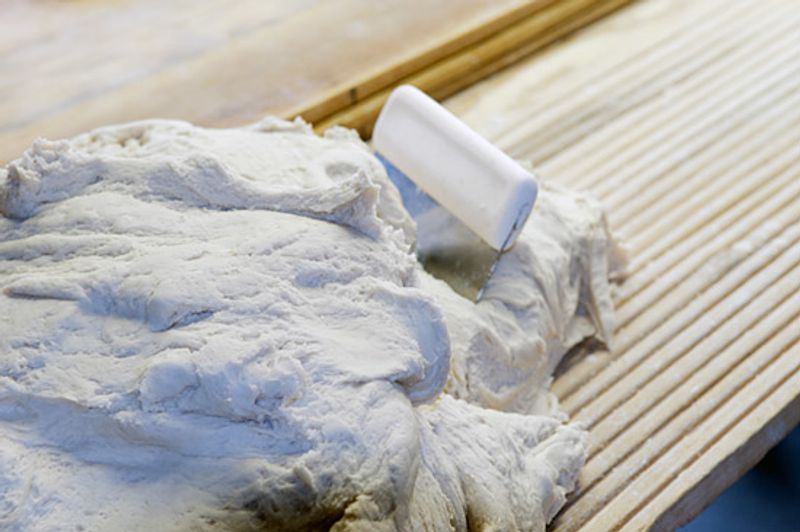
The ingredients are unbleached flour, water, yeast, and salt. The original pretzels contain no added oil, sugar, sweeteners, or preservatives. Fresh batches of dough are mixed each production day, with the amount adjusted to the baking schedule and orders.
Sourdough contributes a subtle tang that works alongside the salt. The finished pretzels are not soft, warm twists meant to be eaten immediately after baking.
They are hard pretzels, baked and dried until they have a crisp, snappable texture. Pack a bag for the drive, or set out a few twists alongside lunch when something salty and crisp sounds good.
Mixing is only the beginning of the workday. Dough is portioned, rolled, twisted, treated, salted, baked, dried, sorted, and packed. Different stages of production keep the bakery busy well beyond the shaping table.
Take a moment to taste an original pretzel before trying a flavored or chocolate-coated option. Then decide whether the next handful should be extra-dark, made with another grain, or covered in chocolate.
How Uncle Henry’s Traditional Pretzels Are Still Rolled And Twisted By Hand
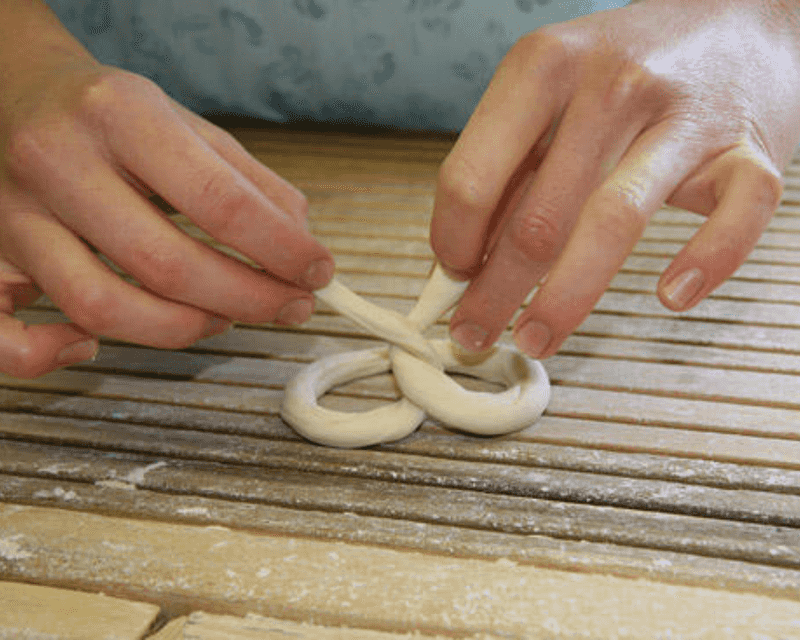
Ever tried twisting a pretzel yourself? The familiar outline requires a length of dough to be shaped into loops and crossed in the middle, all while keeping the piece together. At this bakery, workers continue to do that shaping by hand.
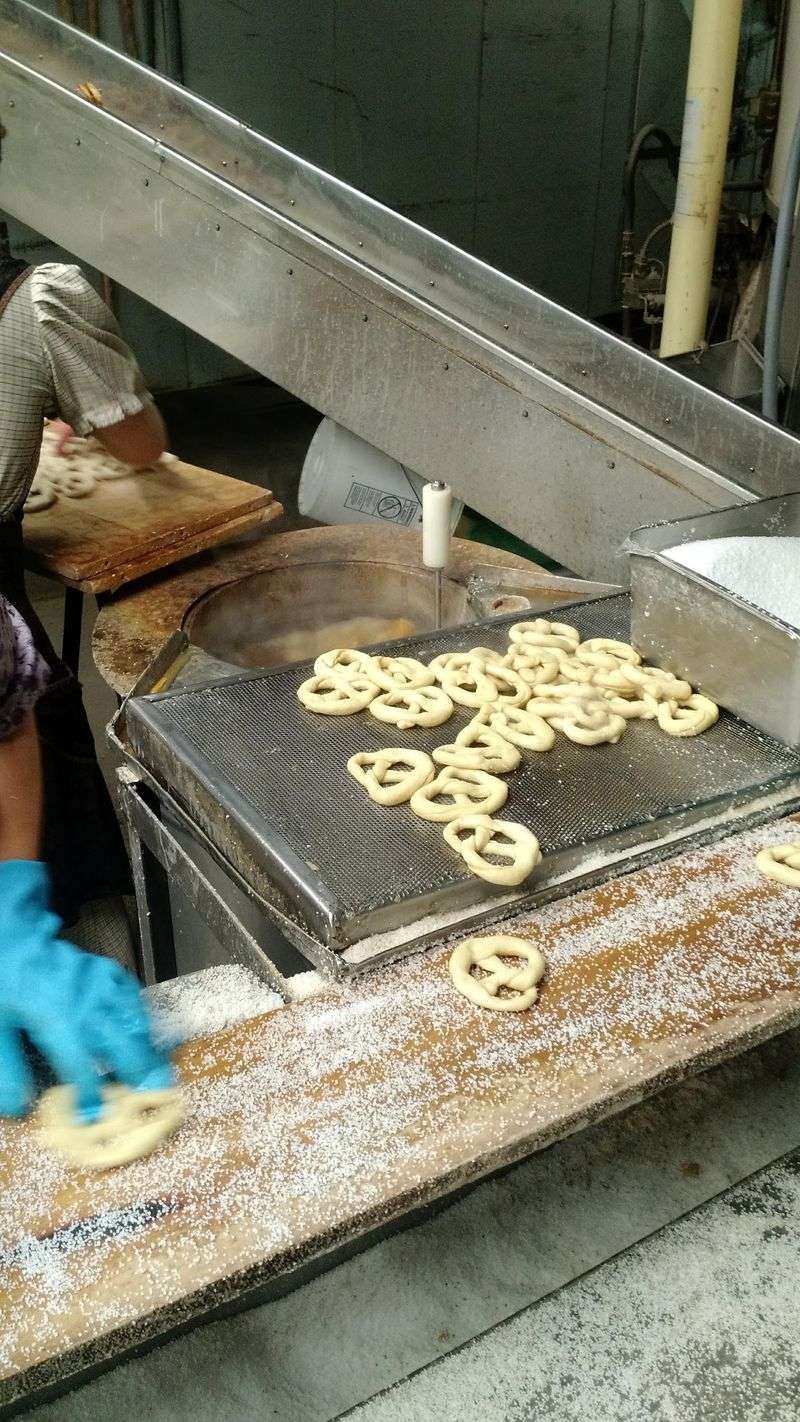
The mixed dough is first rolled into long, rough sections. A hand-cranked machine cuts those sections into smaller pieces, which are then rolled and twisted individually. The shaped pretzels go onto long trays for the next stage of preparation.
No two hand-shaped pretzels need to look precisely alike. Some loops can be slightly wider or narrower, and the central crossing may sit a little differently from one piece to another.
Salting is another hands-on part of the process. After the appropriate wet treatment, workers apply salt according to the variety being produced.
Uncle Henry’s uses equipment where it is useful, including during dough cutting, without replacing the hand-twisting stage.
Look at a few pretzels side by side after opening a bag. Notice the loops, the crossed centers, and the slight differences from one twist to the next.
A Traditional Stone Hearth Oven Gives These Pretzels Their Signature Crunch
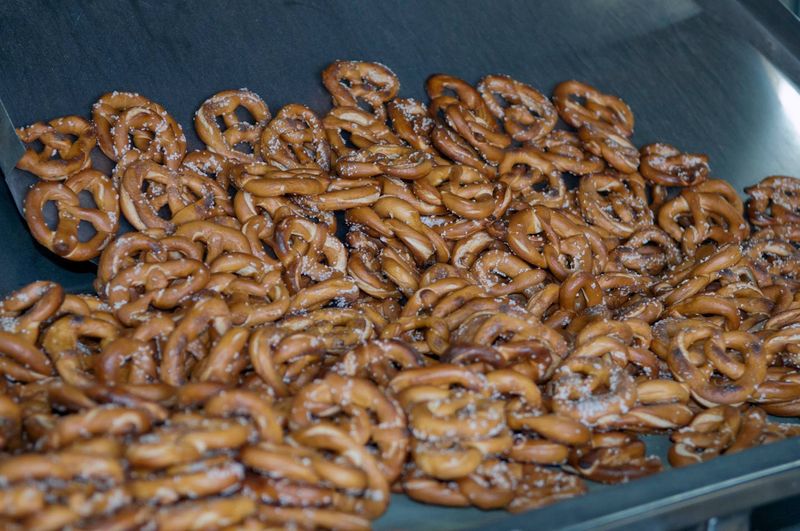
Snap. That sharp break is one of the defining characteristics of a Pennsylvania Dutch hard pretzel, and baking is only part of how Uncle Henry’s achieves it.
After being shaped, the pretzels receive a water-and-soda treatment, are salted by hand, and are placed in a stone-hearth oven.
Workers use wooden peels to move the prepared pretzels onto the oven’s rotating table. The pretzels bake there before going through a separate drying stage. During drying, the pretzels lose more moisture and develop a firmer, snappier texture than soft pretzels.
The extra-dark pretzels offer another look at how baking changes the final product. They stay in the oven longer and develop a much darker color, sometimes approaching black. The extended baking produces a more pronounced toasted character than the standard version.
The choice comes down to how toasted you like your pretzels. Start with the original for the familiar sourdough taste, or choose extra-dark when a darker-baked flavor sounds better.
Taking one bag of each creates a simple comparison without needing any additional toppings.
Keep some for an afternoon snack, add them to a packed lunch, or bring a sealed bag along on a road trip. Seal the bag between snacks to keep the remaining twists crisp.
The Simple Ingredients Behind These Pennsylvania Dutch Hard Pretzels
A plain sourdough twist is only the beginning of the selection. Anyone picking up several bags can compare a classic salted pretzel with a darker bake, a different grain, or a reduced-sodium alternative. Save the chocolate-coated pieces for a separate snack break.
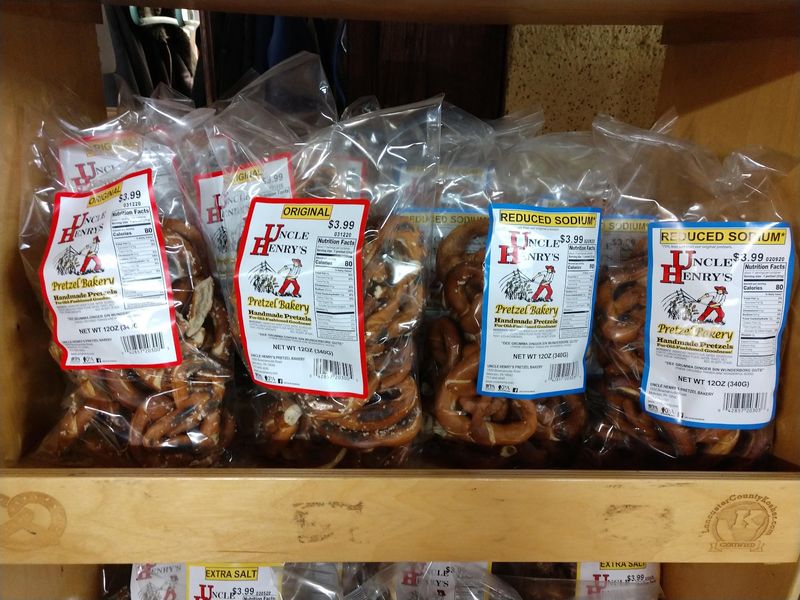
Uncle Henry’s also produces pretzels in several different styles. Alongside the classic twists are extra-dark, whole-wheat, oat-bran, and reduced-sodium options. Each gives shoppers a different choice without leaving the category of traditional hard pretzels.
A bigger appetite, or a household with several preferences, may call for more than one bag. Choose the original as a baseline, then select a whole-wheat or oat-bran version to compare the grain varieties.
For someone looking to moderate sodium, the reduced-sodium product offers a separate option from the standard salted pretzel.
Broken pretzel pieces are another part of the bakery’s product range. They are packed as pieces rather than complete twists, making them useful for grabbing a small handful or scattering over food for extra crunch.
There is no need for a perfectly shaped pretzel when the pieces will be crushed anyway.
For something sweet, chocolate-covered pretzel pieces and chocolate-coated nuggets add a coating to the crunchy base.
Watch Pretzel Makers At Work Through The Bakery’s Viewing Windows
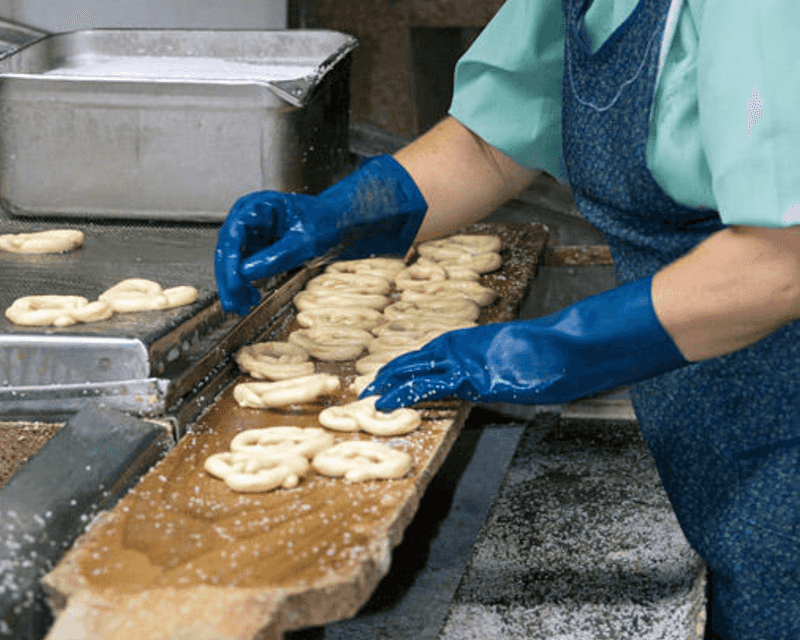
The retail shop has large windows overlooking the pretzel-making area. Customers can ask to view them, adding a look at production to a stop for packaged snacks.
Full bakery tours are no longer offered. The windows are the available option for a look into the production space, and the activity visible will depend on the baking schedule. A visit does not guarantee that every production step will be underway at the same moment.
The process includes mixing dough, rolling it into longer pieces, cutting it, and twisting individual pretzels. After their wet treatment and hand salting, the pieces are baked, dried, sorted, and packed.
From the designated windows, the view may include workers shaping the dough or another stage of that daily routine.
For curious children and grown-ups alike, the windows offer a look at the dough and the work behind a familiar packaged snack.
Keep the visit simple: browse the pretzel varieties, ask about the viewing windows, and allow the production schedule to determine what is visible.
Since tours are not available, do not plan around a guided walk through the workspace. A bag of pretzels can still travel home even when the mixing or twisting stations are not in view.
Where To Find Uncle Henry’s Pretzel Bakery
Country roads and farmland form part of the approach to Uncle Henry’s Pretzel Bakery. It operates in rural Lancaster County, near the Berks County area, rather than in a downtown shopping district.
The retail shop shares the production location, with packaged pretzels available to purchase on-site.
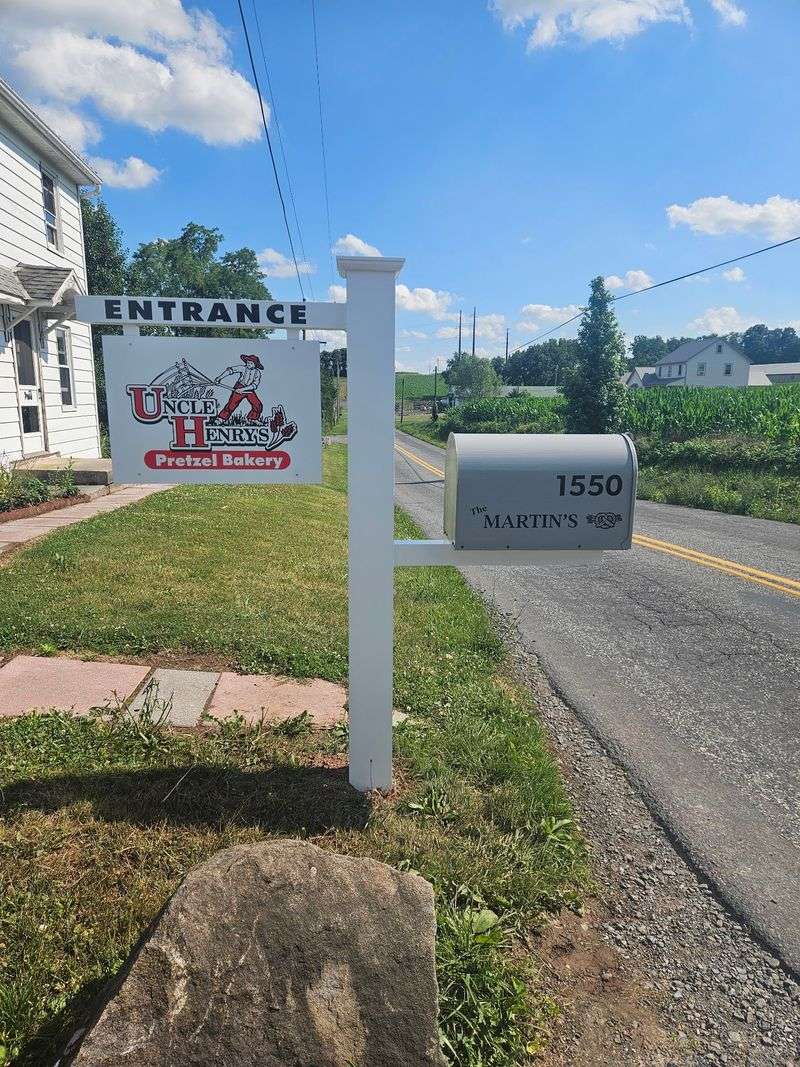
Drivers coming from the Reading or Lancaster areas can use Route 222 and Route 272 before turning toward Bowmansville Road. The bakery has a sign in the yard, a useful detail when the last stretch of the drive leads away from the larger highways.
Inside the shop, the choice extends beyond original sourdough twists. Extra-dark pretzels offer a deeper-baked flavor, broken pieces provide a smaller snacking format, and chocolate-covered products offer a sweeter alternative.
Pick a variety based on whether the bag is intended for the drive, a lunch break, or sharing later.
The retail store is open Monday through Friday from 7 a.m. to 5 p.m. and closed Saturday and Sunday. Check for holiday changes before setting out, particularly if the drive is a long one. Products can also be ordered online for shipping within the contiguous United States.
For navigation, the bakery is at 1550 Bowmansville Road, Mohnton, PA 19540. Plan the stop for a weekday, choose a few bags for the road, and ask whether the viewing windows are available before heading back toward the highway.