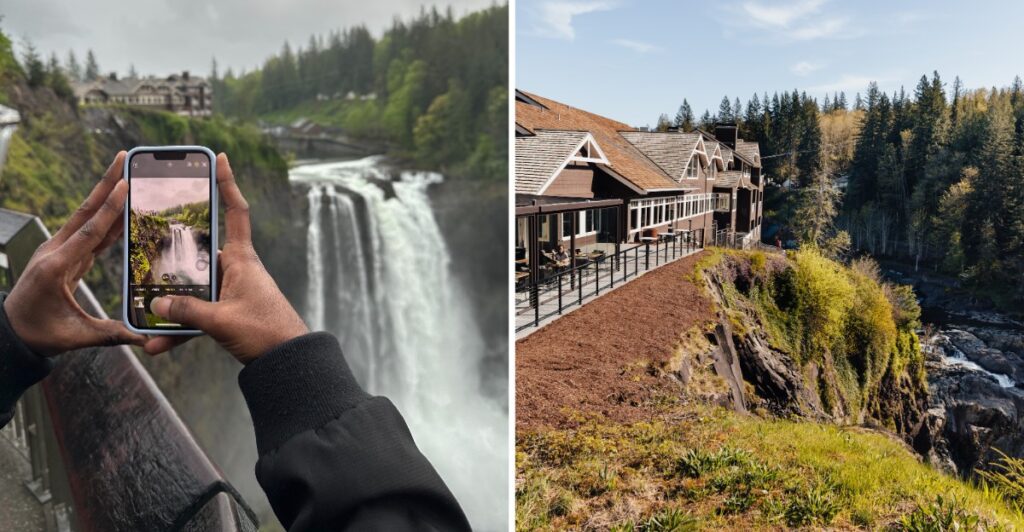
I love a huge view that does not demand a huge hike first.
Here, a short walk gets you face-to-face with 268 feet of rushing water. That feels like a pretty fair deal.
The waterfall drops into a forested gorge in Washington, and the mood changes fast with the weather. Rain gives it more muscle. Sun can catch the mist and brighten the whole scene.
There is plenty of story behind the view, too. The falls hold deep cultural meaning for the Snoqualmie Tribe.
And if the scenery looks oddly familiar, yes, “Twin Peaks” beat you to it.
You can admire everything from above or head lower for another perspective.
So, how much effort would you put in for a view like this?
A Thundering Plunge Into A Deep River Gorge
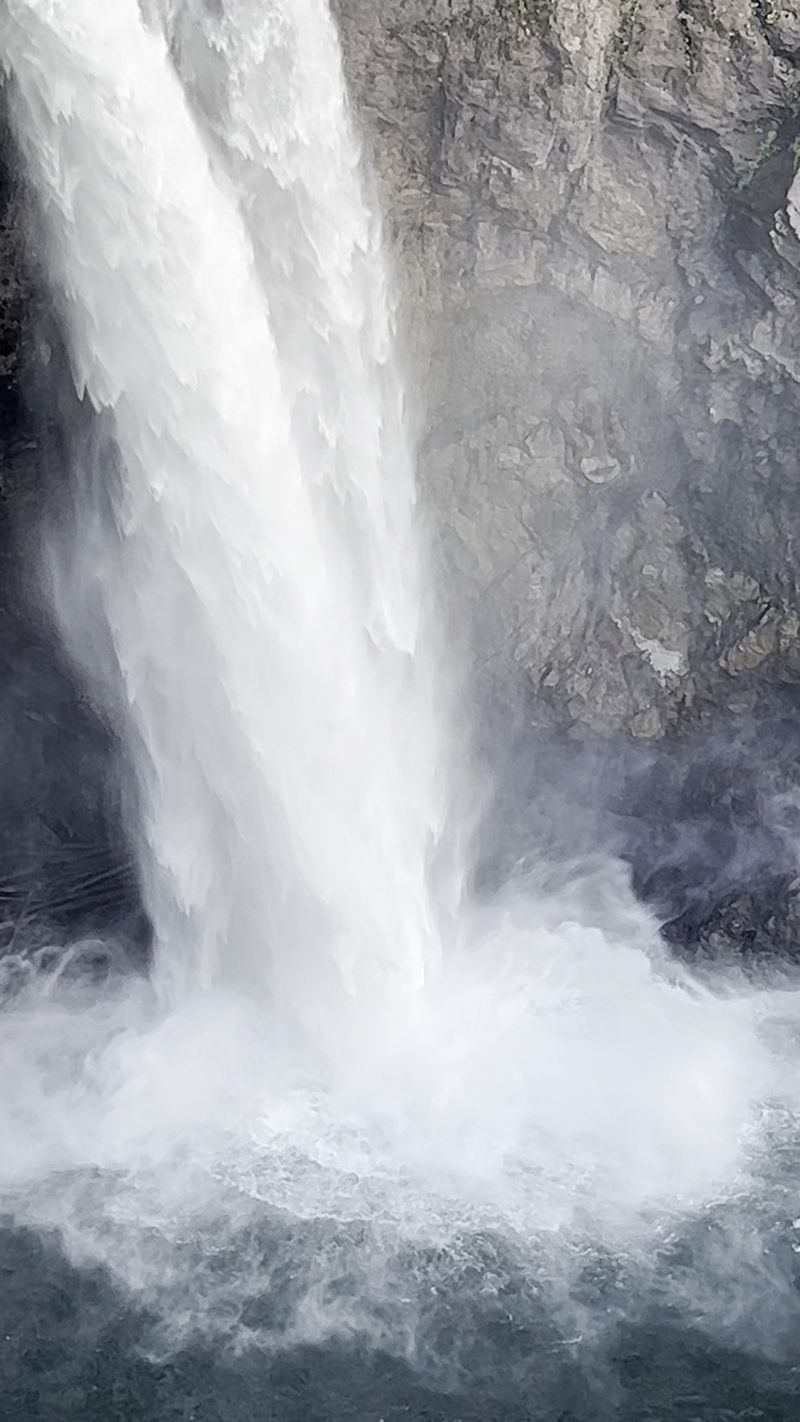
You’ll probably hear the waterfall before reaching the railing. The Snoqualmie River drops 268 feet over a rocky cliff, sending water into a deep gorge surrounded by evergreen forest.
The amount of water changes throughout the year. Heavy rainfall and spring snowmelt can increase the flow, while drier periods often reveal more of the rock face behind the falling water.
During high-flow conditions, spray rises from the base and drifts through the gorge. Wind direction and temperature influence where the mist travels, so the view can look different even during the same visit.
Evergreen trees frame the river, while mosses and ferns grow in the damp conditions around the gorge.
Snoqualmie Falls is also sacred to the Snoqualmie Tribe, whose connection to this landscape extends back generations. The falls are central to the Tribe’s cultural and spiritual traditions.
If you’re planning a visit after heavy rain, bring a waterproof layer and shoes suited to wet pavement. More water can create a broader cascade, but changing weather also means you may encounter slippery surfaces.
The upper viewpoints offer several opportunities to watch the river disappear over the cliff.
Only A Few Steps Stand Between You And The View
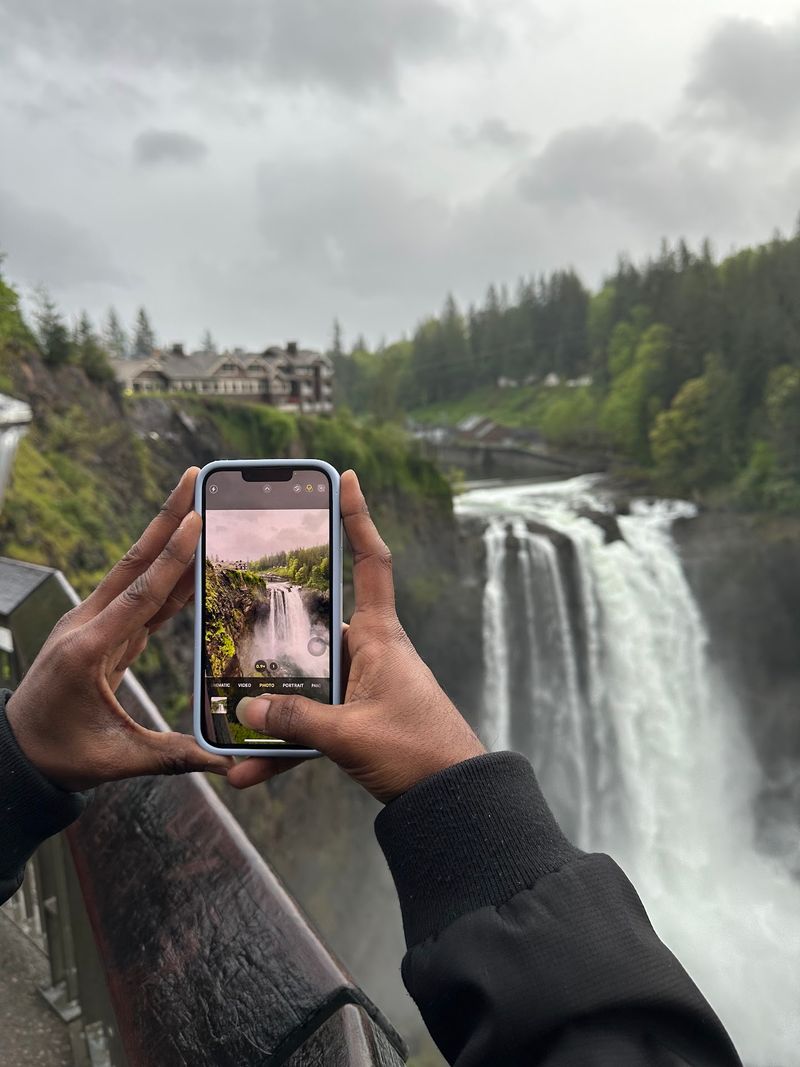
Good news if steep hikes aren’t your idea of a relaxing afternoon: reaching the upper viewing area requires relatively little walking.
The closest parking area sits approximately 200 feet from the main upper observation platform. A paved, wheelchair-accessible route connects the parking area with the viewpoint.
There’s an important parking distinction, though. The lot closest to the falls requires payment, while a larger free parking area sits across the road. Visitors using the free lot reach the upper park by crossing a pedestrian bridge.
Choose the parking arrangement that suits your group, particularly if you’re traveling with someone who prefers shorter distances.
The upper park contains multiple observation areas, allowing you to see the waterfall from different positions along the gorge.
You can enjoy the main scenery without committing to a lengthy hike.
For visitors bringing strollers or using mobility equipment, the paved upper viewing route is the most accessible option. The lower forest trail has different conditions and isn’t wheelchair accessible.
Once you’ve reached the railing, there’s no need to hurry toward the next activity. Watch how the mist moves across the gorge, and notice how the river’s appearance changes from one viewing position to another.
A Taller Drop Than Niagara Falls
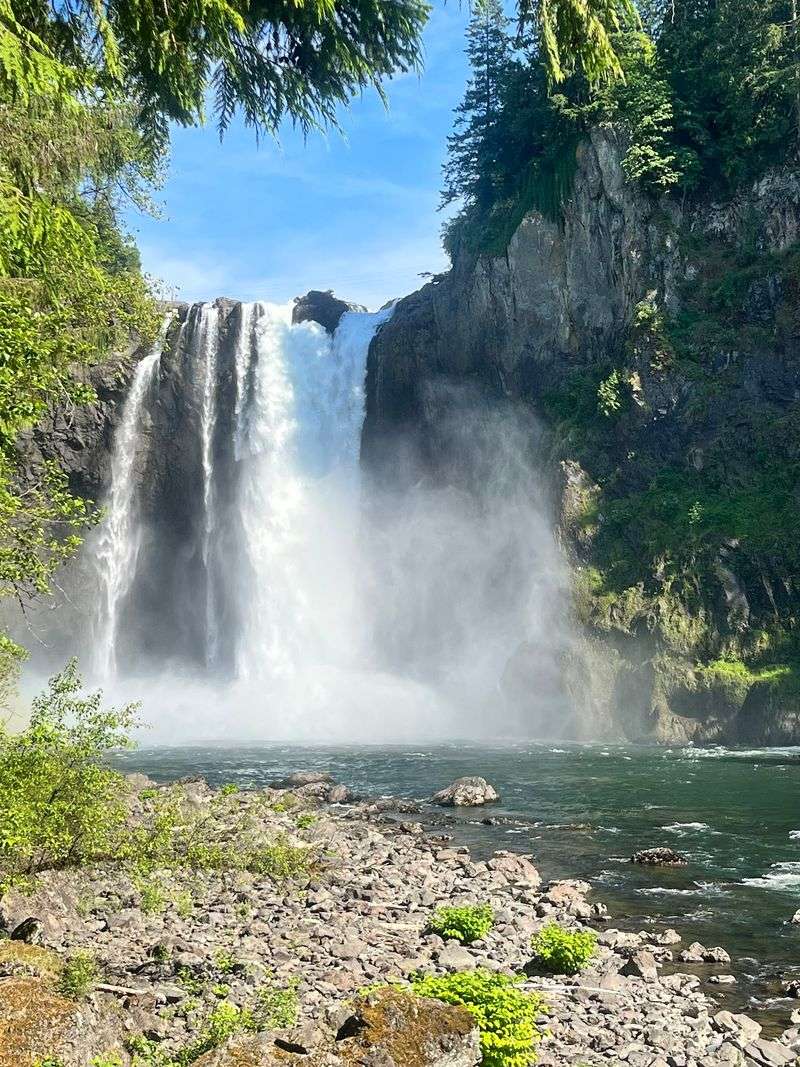
Snoqualmie drops 268 feet, while Niagara’s famous Horseshoe Falls measures approximately 188 feet from its crest to the river below.
That makes Snoqualmie noticeably taller, although not twice as tall when comparing those measurements.
The waterfalls are different in other ways. Niagara is especially notable for its enormous volume of water and broad crest, while Snoqualmie sends the Snoqualmie River over a narrower section of cliff.
From the upper viewpoint, you can look across the gorge toward the point where the river begins its descent. The water accelerates over the edge before reaching the pool below.
During periods of stronger flow, the falling water can form a continuous white curtain. When the river carries less water, portions of the rocky cliff become more visible.
For a photograph emphasizing the height, try including both the upper edge and lower section of the waterfall in your composition.
Here, the waterfall sits among wooded hills rather than a heavily developed waterfront. Look for the contrast between the bright water, dark rock, and green trees when choosing a place to take your photograph.
Trade The Railing For A Trail Down To The River
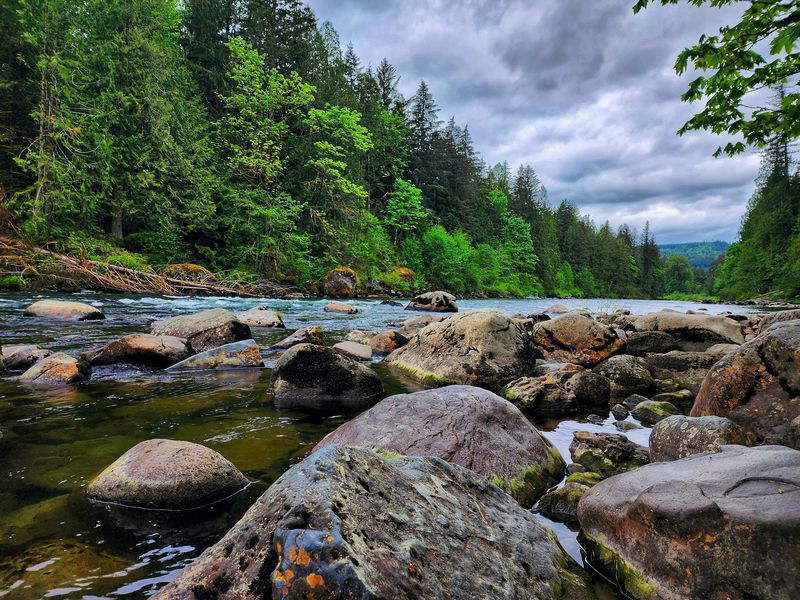
Feeling ready to stretch your legs? The trail connecting the upper and lower park areas offers a longer way to explore Snoqualmie Falls.
The route descends approximately 250 feet through a forested hillside, passing tall trees and vegetation before reaching the lower park.
Unlike the paved upper viewing area, this trail includes uneven terrain and steeper sections. Comfortable walking shoes with reliable grip are particularly useful after rain.
At the bottom, a riverside boardwalk leads toward a designated observation platform. From here, you can see the falls from a lower angle, with the gorge rising around the river.
Stay on the marked route and use the established viewing areas. The lower platform isn’t an invitation to approach the plunge pool or climb onto rocks beside the rushing water.
A separate parking area also serves the lower park. If you’re interested in that viewpoint but not the full descent from above, check the current parking arrangements and access conditions.
There’s no reason to turn the climb into a race.
Bring water, take breaks where appropriate, and check trail conditions before setting out. If the path is closed, the upper viewing areas still offer a complete look at the falls.
Have time for both viewpoints? Start above the falls, then follow the forest trail down for a different look at the gorge.
Mist, Rainbows, And A Soundtrack Of Rushing Water
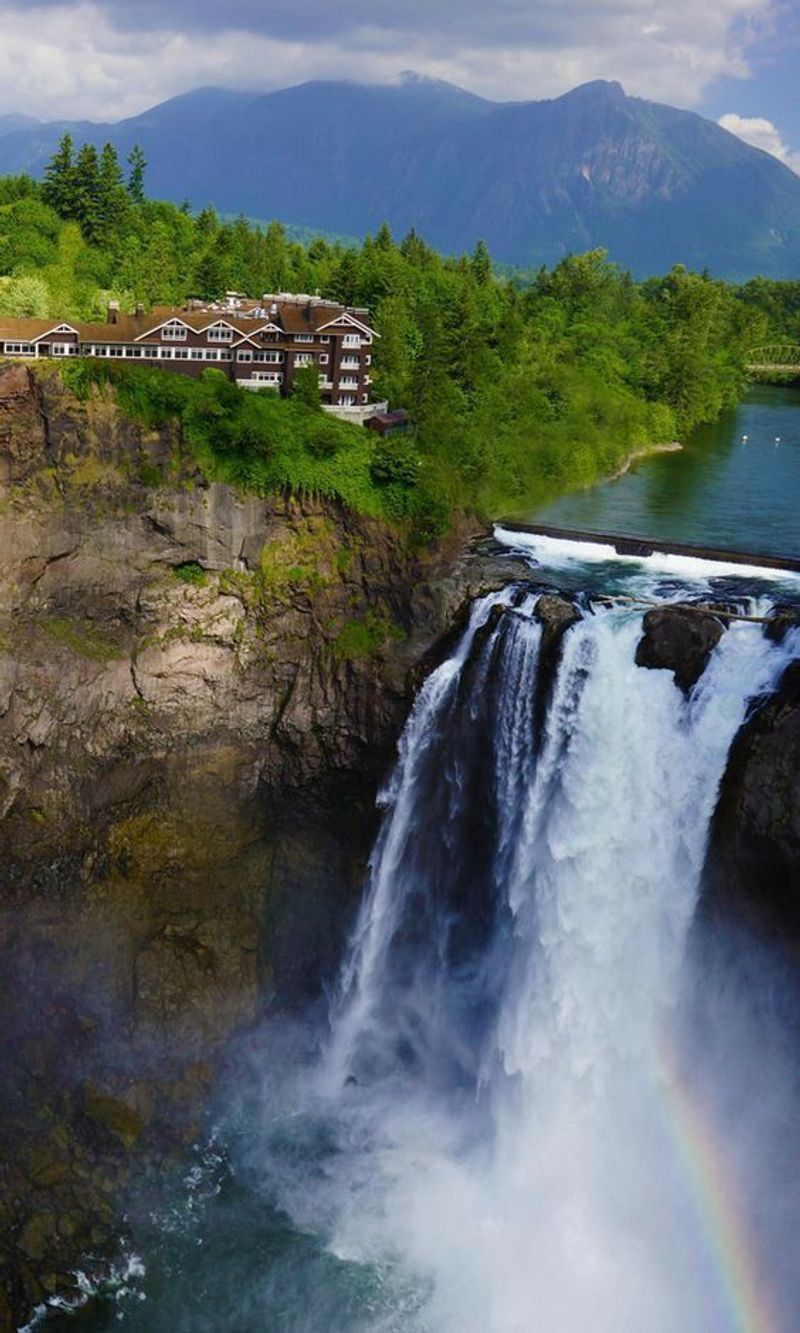
Mist is part of the scenery at Snoqualmie Falls, especially when the river is carrying substantial water.
As the cascade reaches the gorge below, spray can rise toward the observation areas. Wind sometimes moves it across the scene, briefly changing how clearly the waterfall is visible.
That shifting spray can also create rainbows when sunlight reaches it from a suitable angle.
Rainbows aren’t guaranteed, so treat one as a possible bonus rather than the reason to schedule your visit.
The sound of rushing water is another distinctive feature. Its intensity changes with river flow and your position around the gorge.
At the upper viewpoints, you can watch the water gathering speed before it drops. The lower viewing area offers a different perspective on the water and surrounding rock walls.
If you’re bringing a camera, pack a soft cloth for the lens. Moisture can collect on glass surfaces, particularly when the wind carries spray toward the viewing platform.
A protective cover or weather-resistant bag is useful during rainy conditions.
For photographs, experiment with different viewpoints rather than relying on a single position. Including trees, cliff edges, or sections of the river can give the waterfall a stronger sense of scale.
Cloudy weather can produce softer lighting, while sunny conditions may highlight the mist.
A Starring Role In Twin Peaks
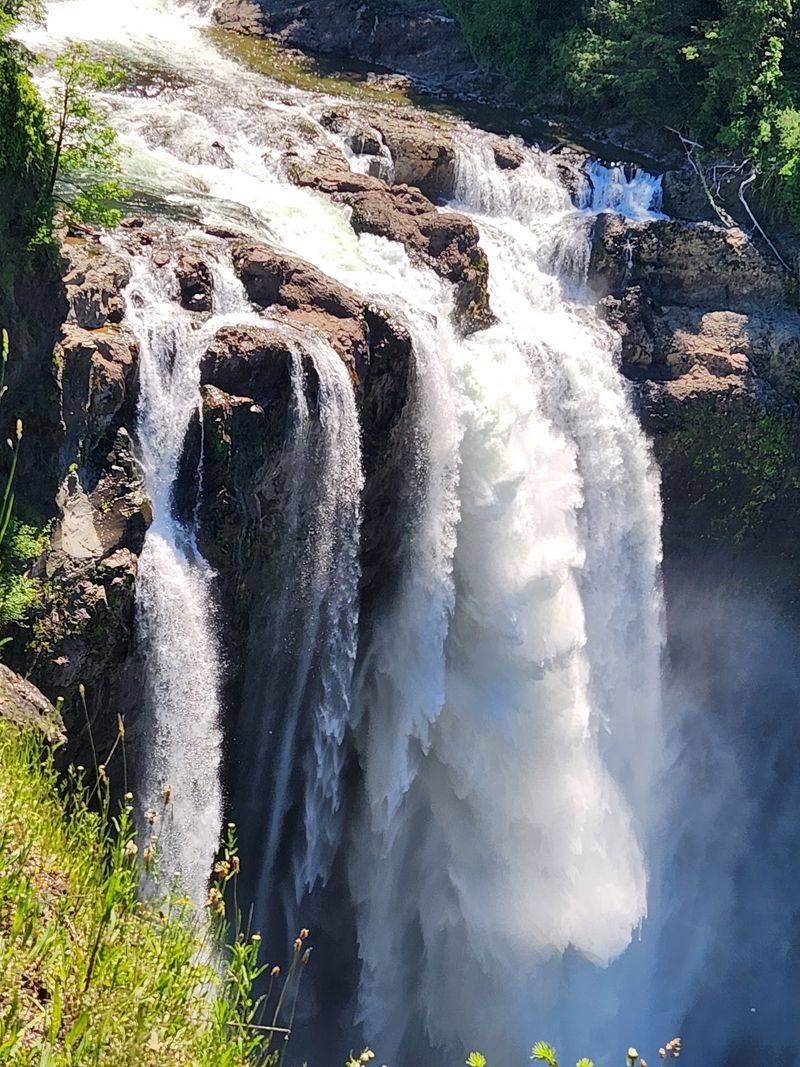
Television fans might recognize Snoqualmie Falls before they recognize the nearby town.
The waterfall appeared in the opening credits of “Twin Peaks,” the mystery television series that debuted in 1990.
Its rushing water and forested surroundings helped establish the Pacific Northwest setting associated with the show.
The nearby Salish Lodge also played an important role, providing the exterior of the fictional Great Northern Hotel.
For fans, seeing both locations in person offers a chance to connect the familiar television images with the real landscape.
You don’t need to recreate a particular camera angle to enjoy the connection. The upper viewing areas already provide broad perspectives on the waterfall and its surroundings.
Snoqualmie and nearby communities contain other filming locations, so the waterfall can be a starting point for a longer trip exploring the show’s Washington settings.
If you’re planning several stops, organize them around practical driving distances rather than assuming every filming location sits beside the falls.
And if the series has left you thinking about coffee and cherry pie, the surrounding area offers opportunities to continue the theme.
A Clifftop Lodge With A Front Row Seat
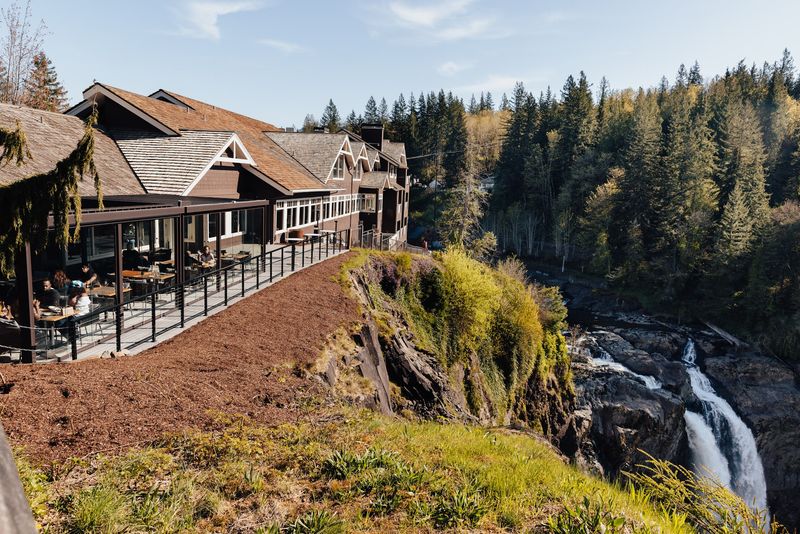
Salish Lodge & Spa sits beside the upper portion of Snoqualmie Falls, adding a historic building to the landscape surrounding the waterfall.
The lodge began as a small inn in 1916 and now offers guest rooms, dining, and spa facilities.
Room features vary by accommodation category, with certain rooms offering fireplaces, soaking tubs, or views of the surrounding landscape.
You don’t need an overnight reservation to enjoy a meal at the lodge.
The Restaurant serves breakfast, lunch, and dinner, with weekend brunch available. The Lounge provides another dining option in a more casual setting.
One longstanding tradition involves honey served over warm biscuits. The lodge’s Honey from Heaven presentation uses honey from its on-site apiary, connecting the dining experience with another part of the property.
If you’re considering breakfast or brunch, reservations are recommended. Dining arrangements and service hours can change, so check them when planning your visit.
Salish Lodge & Spa is located at 6501 Railroad Avenue SE, Snoqualmie, WA 98065, beside the upper falls area.
Before leaving, take another look at the waterfall from the designated viewpoints. Whether you came for a short walk, a forest trail, or a meal overlooking the gorge, Snoqualmie Falls makes it easy to shape the visit around your own pace.