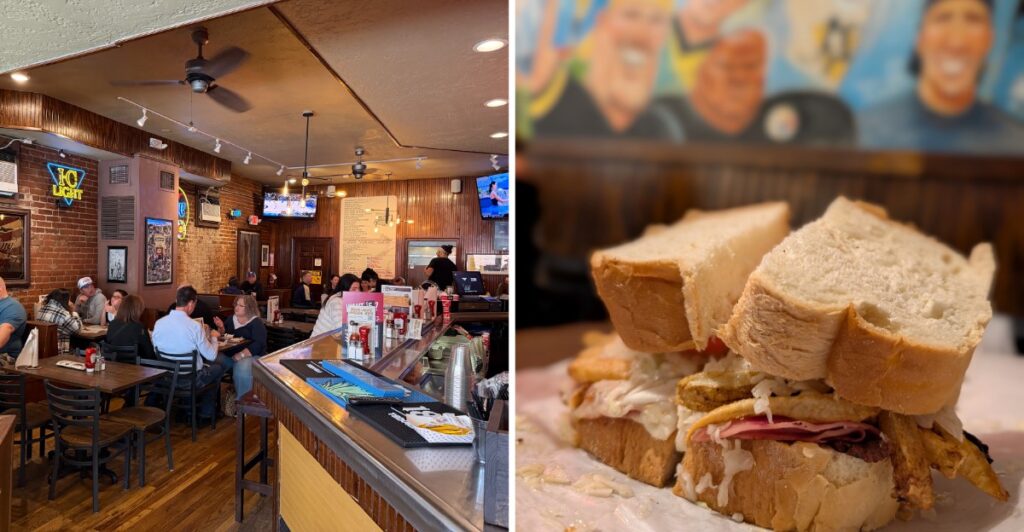
Fries on the side?
Not here. They go straight into the sandwich.
That move helped turn a working lunch into a Pittsburgh classic. Meat and cheese handle the base, while slaw, tomato, and those fries pile in between thick slices of bread.
It is a lot, which is also kind of the point.
The sandwich dates back to the Great Depression, when filling food mattered more than keeping every part of lunch on a separate plate. Pennsylvania has been happily sticking with the idea ever since.
You still get to choose what goes in the middle.
I’d start with pastrami, mostly because I want to see what happens when the fries meet something smoky and salty.
The burger version can wait for round two.
And after eating lunch with the side dish already built in, a separate basket of fries is just showing off.
How A Humble Cart Grew Into A Pittsburgh Legend
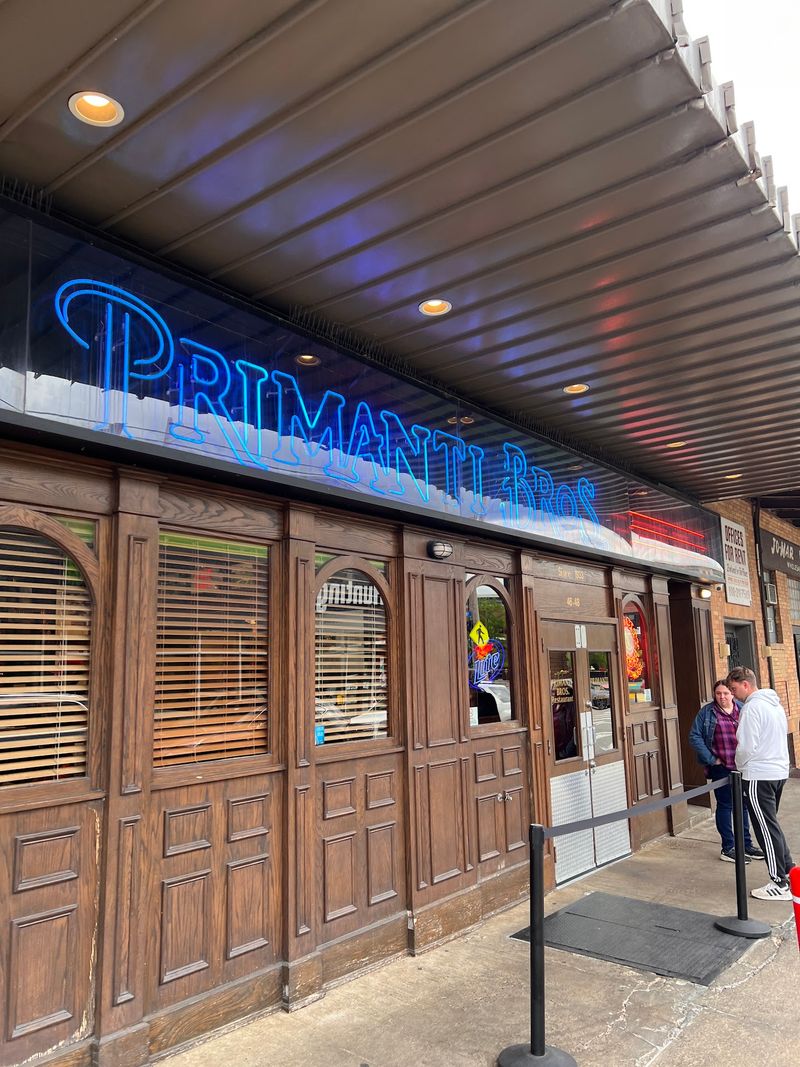
Pittsburgh’s Strip District was already a working commercial neighborhood when Joe Primanti began selling sandwiches from a cart during the Great Depression.
Produce deliveries, warehouses, and long shifts brought workers through the district at hours when a filling meal was useful.
Strong sales helped Joe establish a storefront in 1933. His brothers Dick and Stanley later joined the operation, serving sandwiches suited to the district’s working schedules.
The original location remains on 18th Street near Smallman Street, within the neighborhood where the business began. Other Primanti Bros. locations now operate around the region, but this is the address associated with the first storefront.
Walk the surrounding blocks before your meal and look at the old commercial buildings. The Strip District still has food shops and markets alongside newer businesses, giving you plenty of nearby stops on foot.
The business later expanded beyond the original neighborhood. Other locations serve Primanti-style sandwiches, while the Strip District storefront remains the starting point of its history.
Fries Belong Inside The Bread, Not Beside It
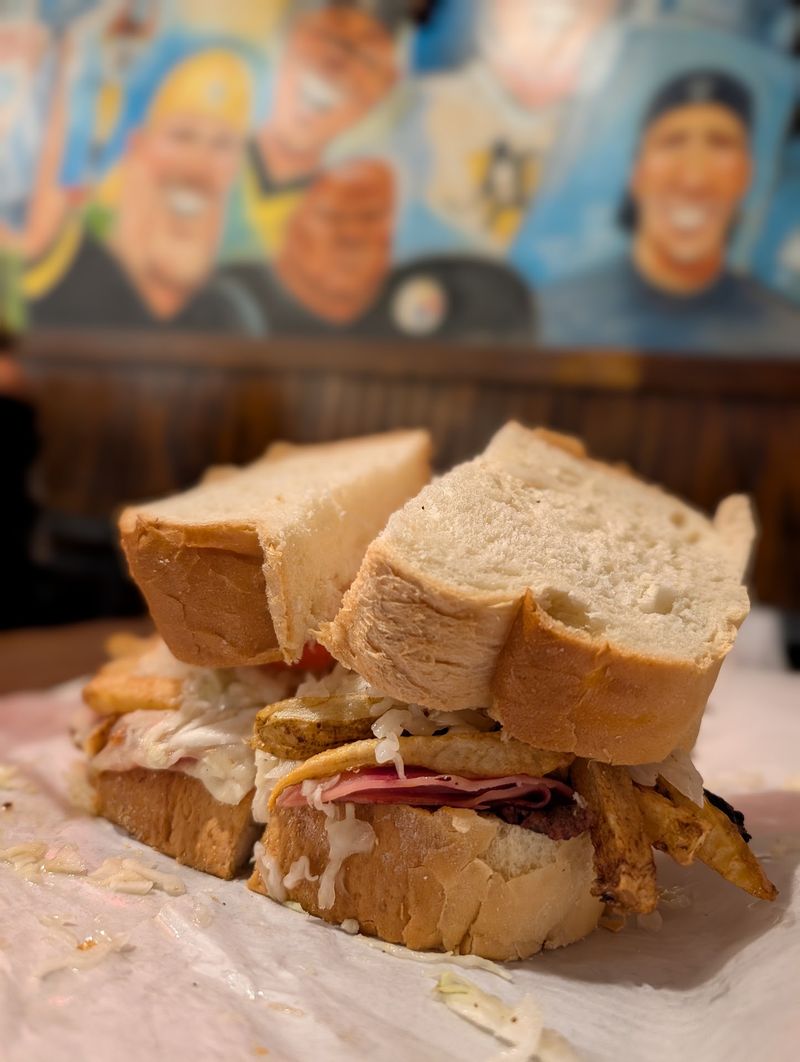
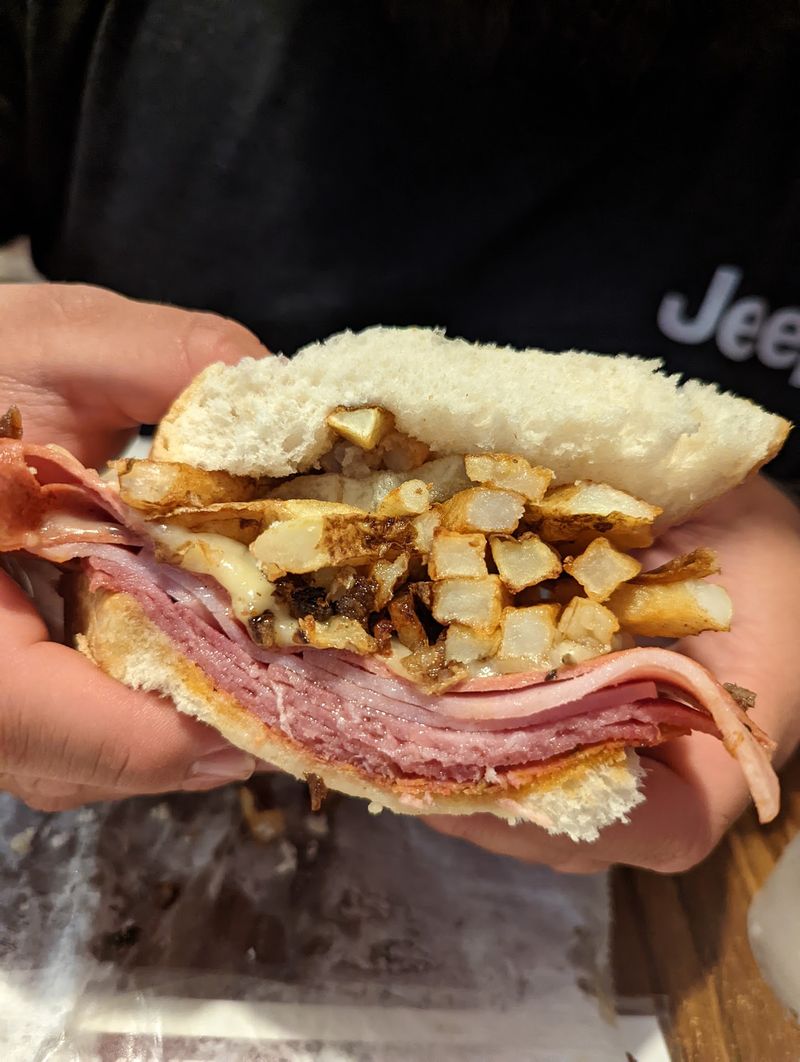
Most diners expect fries on the side of a plate. Primanti Bros. puts them right inside the sandwich, tucked between the bread with the meat, cheese, tomatoes, and coleslaw. Order one and the potatoes arrive as part of the main event.
The fries became part of the sandwich in its early years. One account of the origin involves a delivery of potatoes, fries cooked on the grill, and customers asking to add them to their sandwiches.
The slaw matters just as much. Instead of a thick, mayonnaise-heavy dressing, Primanti’s version is sweet and tangy, with a vinegar-forward character. It sits alongside warm ingredients and fresh tomato slices, all within the same two pieces of bread.
Take a look at the sandwich before lifting it. You can see the layers extending toward the edges, particularly the fries and shredded cabbage. Pressing the bread gently with both hands makes the stack easier to handle.
Ask about ingredient changes when ordering, or start with the standard combination. Some menus offer fries separately, although the sandwich already includes them.
Breakfast Rush Roots In The Strip District
The Strip District developed as a hub for food distribution and other industries near Pittsburgh’s Allegheny River. Trucks and workers once moved goods through its warehouse-lined streets, often beginning well before the usual lunch hour.
Primanti Bros. was built around those schedules. The early shop served truck drivers and shift workers, and its opening story is inseparable from the businesses operating nearby. A sandwich with fries folded inside gave workers a substantial handheld meal.
Today the surrounding district has specialty grocers, food shops, markets, and restaurants. You can walk along Penn Avenue or Smallman Street to see older commercial buildings mixed with stores serving the neighborhood’s present-day customers.
If you are arriving by car, decide where to park before turning onto 18th Street. The area has narrow blocks and street activity that can change with the time of day. Check posted parking limits carefully.
A short walk from a legal parking spot may be easier than circling directly outside the restaurant, particularly when nearby shops are open.
Leave room in your plans for a stroll along nearby blocks. A bakery, produce market, or grocery stop can turn one sandwich into a wider look at the district’s food history, without needing a long drive between stops.
The district’s former warehouses and commercial buildings remain visible along the walk.
Layer By Layer, A Sandwich Built To Satisfy
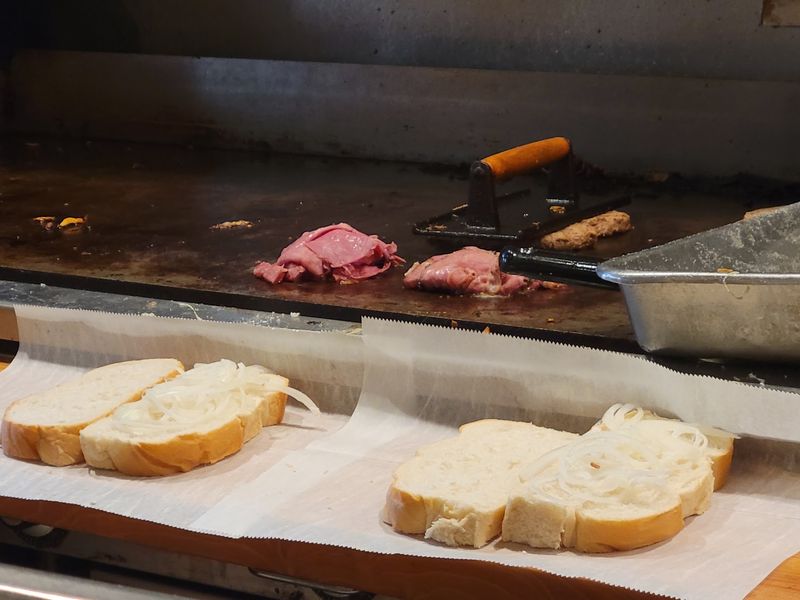
The sandwich starts with two thick slices of Italian bread. Rather than a narrow roll, the bread forms a broad base for the ingredients that follow. The meat, cheese, tomatoes, slaw, and fries spread across the slices, leaving plenty to hold with both hands.
The protein depends on your order. Pastrami, capicola, a seasoned burger patty, and other fillings appear among the restaurant’s established choices. Standard Almost Famous sandwiches typically include provolone, but ingredients differ with the chosen sandwich.
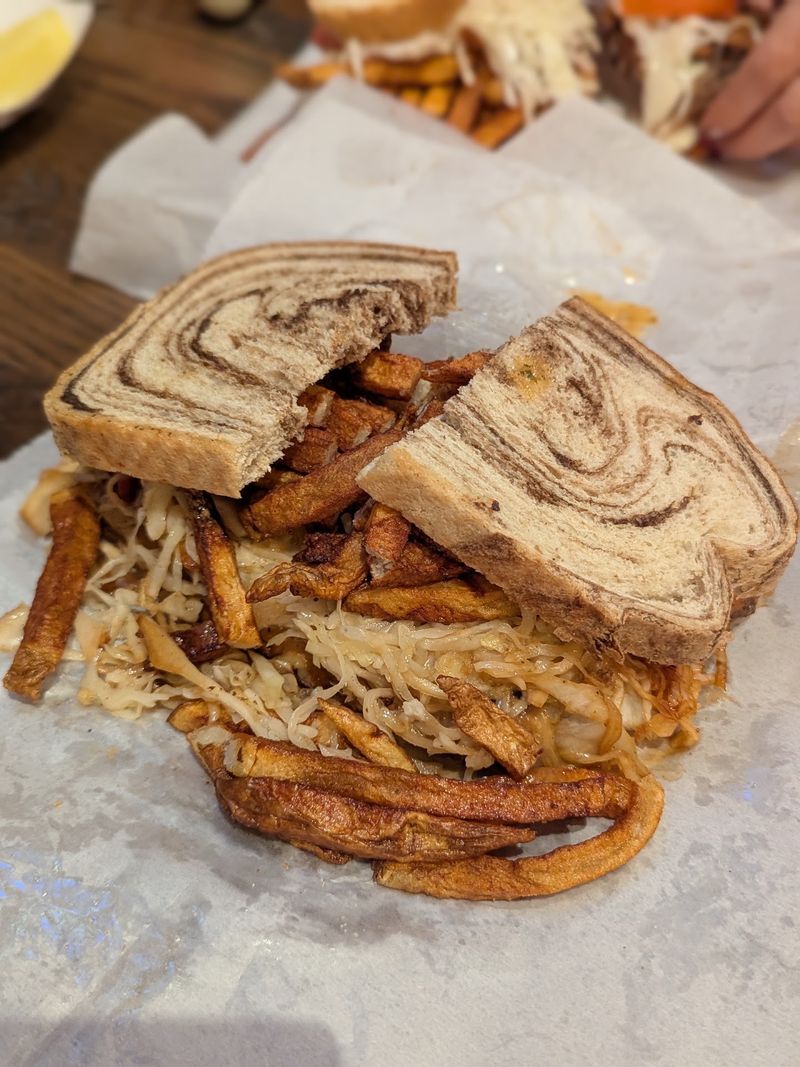
The PB Reuben, for instance, uses marble rye and its own combination of fillings, so do not assume every item follows the same bread-and-toppings formula.
Slices of tomato add a cool, juicy layer. The fries contribute warm potatoes, while the slaw adds shredded cabbage and a contrasting tang. Put together, those ingredients produce the sandwich’s recognizable cross-section.
Look for the pale bread around a stack of fries and slaw. You can see individual pieces of cabbage and tomato along the edges. The bread gives you somewhere to grip, though a napkin nearby is useful.
Different fillings change the center of the sandwich without replacing the familiar outer layers on the classic versions.
The combination is substantial, so consider whether you want a separate side before ordering. A standard sandwich already includes the component that other shops would place next to the plate.
The result is a handheld meal built from meat, bread, and the sides that might otherwise arrive separately.
Capicola, Pastrami, And The Pitts-Burger Showdown
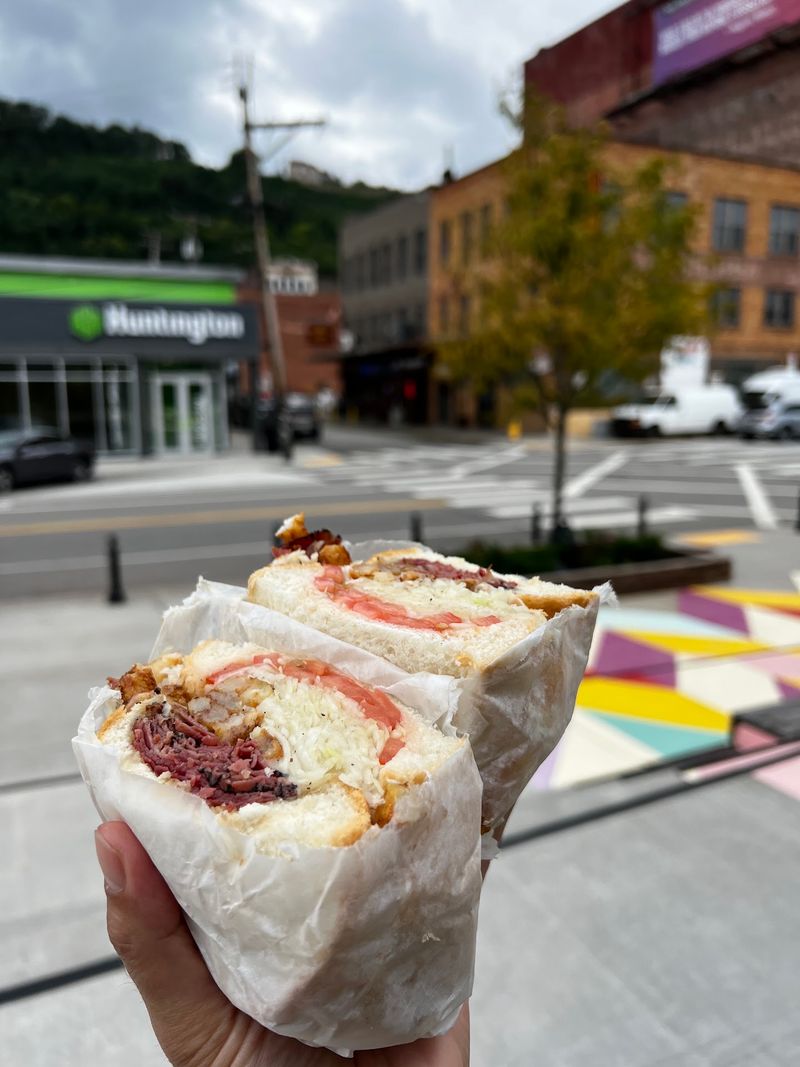
Choosing your filling is the main decision after you have settled on a Primanti-style sandwich. Pastrami and cheese pairs seasoned beef with the standard bread, tomatoes, fries, slaw, and melted cheese.
It is a useful starting point when you would rather focus on the signature construction than compare a long list of extras.
Capicola and cheese offers a different direction. Capicola is a seasoned Italian-style pork cold cut, with the spicy flavor of Italian ham. It brings a more pronounced seasoning to the stack without changing the signature toppings.
Then there is the Pitts-Burger and Cheese, made with a seasoned beef patty. The burger version uses the same basic idea as the other sandwiches, so the fries and coleslaw still belong inside the bread rather than on a separate plate.
The PB Reuben offers another direction, combining corned beef, pastrami, Swiss cheese, Parmesan horseradish mayo, and grilled slaw on marble rye. It is a different build from the Italian-bread sandwiches with fries and tomato.
Other sandwiches may be available, but selection differs by location. Check the Strip District menu for additional choices.
Want to compare two fillings? Order different sandwiches with a companion and exchange portions at the table. A pastrami sandwich and a Pitts-Burger provide two distinct meat choices while retaining the same familiar toppings.
Check the current price when ordering, especially if adding an extra item.
A Hometown Favorite Passed Down Through Families
The Primanti name began with a family business. Joe’s brothers Dick and Stanley joined the venture, and the original shop became part of Pittsburgh’s twentieth-century food history.
The business expanded into a regional chain, while the Strip District storefront remained its point of origin.
The sandwich remains recognizable: Italian bread, a chosen filling, cheese, tomatoes, fries, and slaw. At the original storefront, the familiar stack is still the centerpiece.
Pittsburgh’s industrial history is easy to encounter elsewhere in the city, from riverfront infrastructure to former mill sites and warehouse districts. The sandwich began amid those busy shipping and distribution routes, when workers needed meals during irregular hours.
You can compare the restaurant’s early setting with the Strip District of today by exploring nearby streets on foot. Look for the substantial brick buildings and loading areas that reflect the neighborhood’s commercial past.
The James Beard Foundation honored Primanti Bros. with an America’s Classics award in 2007.
Planning Your Trip To The 18th Street Original
The original Primanti Bros. shop is in the Strip District at 46 18th Street, Pittsburgh, PA 15222. That puts it close to other food businesses and market streets, so you can easily include the stop in a wider neighborhood walk.
The Strip District location opens at 8 a.m. every day. It closes at midnight Sunday through Thursday and at 2 a.m. on Friday and Saturday. Holiday schedules can differ, so check before an unusually early or late trip.
Menus and ordering options also differ between locations. If you have a particular sandwich in mind, review the current Strip District menu rather than assuming that every item advertised elsewhere is available here.
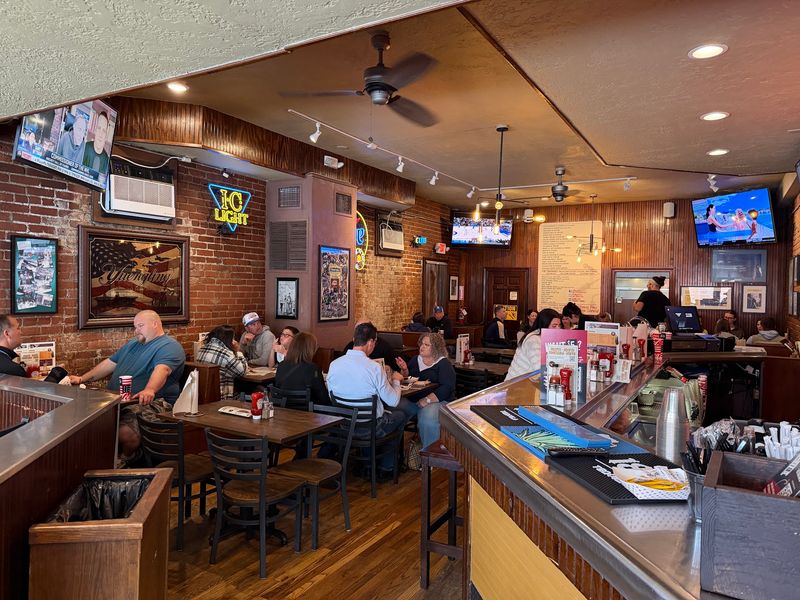
The original shop has seating for dining in. At busier times, allow flexibility rather than counting on an immediately available table.
Parking options change from block to block. Pay attention to posted restrictions and keep crosswalks, loading areas, and business entrances clear. If you are sightseeing on foot, combine several nearby stops so you do not have to move the car repeatedly.
Once seated, choose your filling, decide whether to keep the standard toppings, and set a napkin within reach. The fries and coleslaw are already inside the sandwich, ready for the first bite.