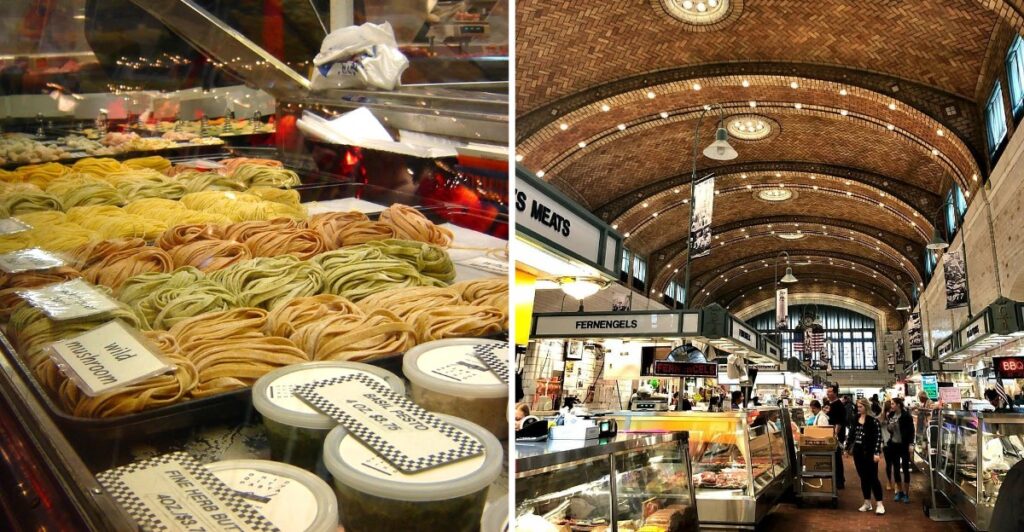
This market turns indecision into cardio.
You pick a direction. Something looks good. Then another counter changes your mind.
Fair warning: lunch may take a few laps.
This Ohio landmark has been doing that to shoppers since 1912. The vendors keep things lively, but choosing is the real challenge.
Then you look up. That ceiling is far grander than anything you expect over a grocery run.
I’d probably spend half the visit deciding what to eat.
The other half?
Wondering how grocery shopping ended up looking this impressive.
By the time you finally commit to lunch, one thing is almost guaranteed. Someone nearby will be carrying the thing you wish you ordered.
A Cleveland Food Tradition That Began More Than A Century Ago
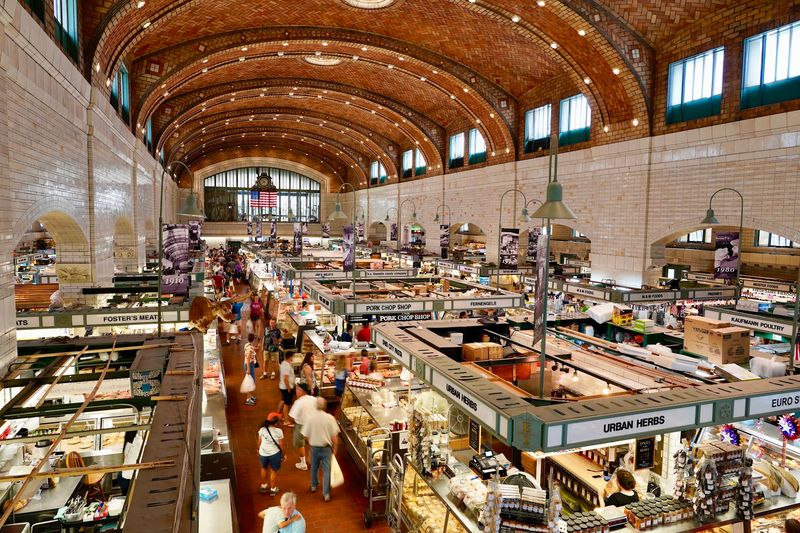
November 2, 1912, marked the opening of the West Side Market in the building that still anchors Ohio City. It replaced the older Pearl Street Market, a neighborhood market with roots in the nineteenth century.
The new structure offered stalls for meat, dairy, bread, groceries, and other foods under one roof.
The market was part of a larger network of public food halls in Cleveland. Broadway Market and Central Market once served their own neighborhoods, but West Side Market is the survivor of those three historic institutions.
The date on the building belongs to the hall itself, not to the beginning of outdoor trading in the neighborhood.
The City of Cleveland owns the property.
Since April 2024, the nonprofit Cleveland Public Market Corporation has handled day-to-day operations. Independent food merchants continue to operate their stalls inside the city-owned building.
The building opened with 109 indoor stands. Produce vendors originally traded from curbside locations before a dedicated produce arcade was added in the following years.
You can still divide a visit between the enclosed main hall and the separate produce area, with different kinds of shopping in each.
Look Up At The Soaring Tile-Vaulted Ceiling Of The Main Hall
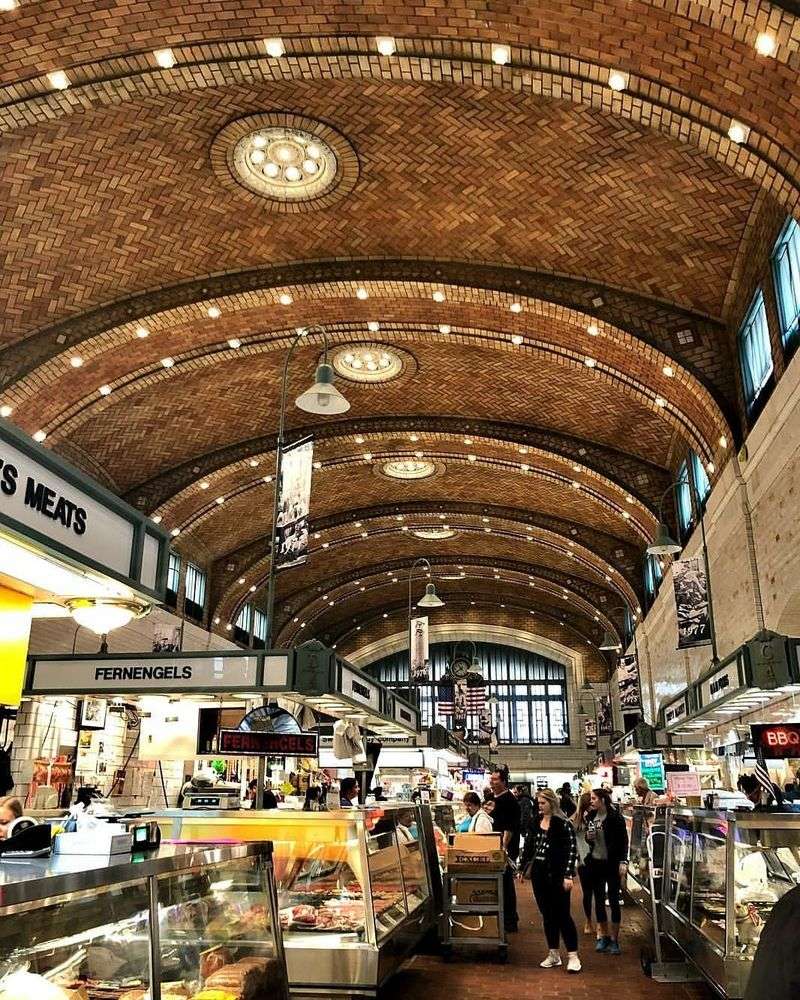
The first thing to notice indoors may not be food at all. Above the main aisle, the ceiling rises about 44 feet, with curved sections formed from Guastavino tile. Those layered tiles create the broad vaults that give the hall its distinctive overhead pattern.
Architects Benjamin Hubbell and W. Dominick Benes designed the market, and the building’s scale is part of the experience. The main hall measures roughly 241 feet long and 124 feet wide.
Its generous central space lets you see rows of stalls while still catching details of the ceiling above them.
Take a few steps back from a counter before looking up. The arched windows and repeated curves are easier to see from an open stretch of aisle. There is plenty to examine without interrupting merchants serving customers.
A self-guided historical tour adds another way to explore the architecture.
Information points around the market include QR codes and printed material covering the building, the produce arcade, and neighborhood history.
The route is optional, so you can pause whenever a bakery case or a display of produce catches your eye.
Keep all shopping and viewing on the public ground level. You do not need access to an upper floor to appreciate the vaults or photograph the hall.
Why This Market Outlasted Cleveland’s Other Historic Halls
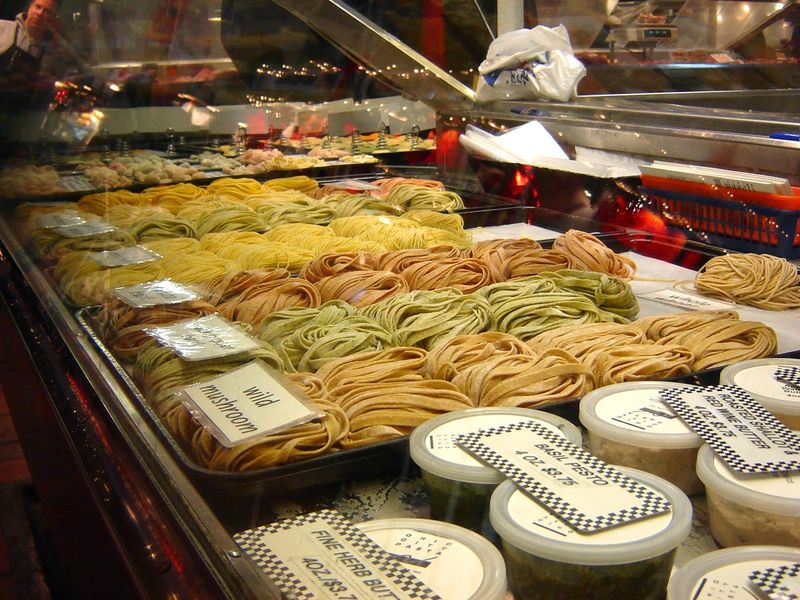
The main hall still serves its original practical purpose: people come here to buy food. That continuity stretches back to an era when public markets were central to neighborhood grocery shopping.
Unlike Cleveland’s former Broadway and Central markets, this one remains in operation.
Its history also includes changes rather than a perfectly frozen interior. The produce arcade was built after the main hall opened, and a major project in 2004 enclosed and heated that produce section. Repairs and improvements have continued as the building has aged.
West Side Market received national recognition in 2008 when the American Planning Association selected it as one of America’s Great Public Places. Everyday shopping still means weighing produce, selecting meat, choosing baked goods, and packing purchases for home.
Today the city retains ownership, while the Cleveland Public Market Corporation oversees operations and a larger transformation effort. Construction and improvements can affect parts of a historic working market, so allow flexibility when navigating between stalls.
Need a loaf, a cut of meat, or ingredients for dinner? Begin at the relevant counter rather than trying to cover every aisle at once. With dozens of individual businesses, a simple plan makes the shopping more manageable.
Pierogies, Sausages, And Other Flavors Worth The Trip
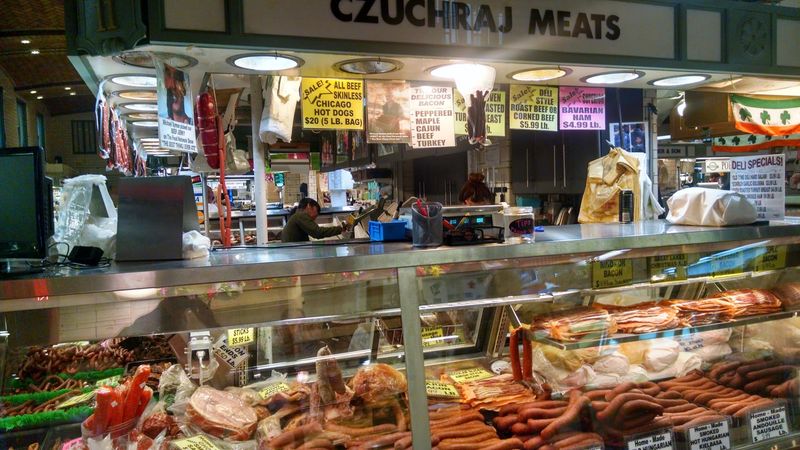
A lunch decision can begin with pierogies. Pierogi Palace is among the market businesses offering the filled dumplings, while other counters concentrate on baked goods, meat, seafood, or prepared meals.
There is no single fixed menu for the entire building; each merchant runs its own stand.
Cleveland’s sausage traditions are well represented. Frank’s Bratwurst and several meat merchants are among the choices for shoppers interested in sausages or cuts to cook at home.
A butcher counter is also a useful stop when you have a particular recipe in mind and need to compare what’s available.
Bread makes another sensible starting point. Bakeries such as Theresa’s Bakery, Vera’s Bakery, and Mediterra Bakehouse appear among the market merchants.
Their individual selections can differ, so look through the cases rather than assuming every baker carries the same loaf or pastry.
For something ready to eat, the vendor lineup includes Steve’s Gyros, Crêpes de Luxe, and other prepared-food businesses. One person can choose a savory lunch while another heads toward a pastry or a cup of coffee or tea.
The Cheese Shop provides another place to browse, and produce stands fill out the shopping possibilities with fruit and vegetables. Fresh seafood, spices, and sweets give you additional stops without leaving the market.
Generations Of Immigrant Vendors And The Recipes They Carried
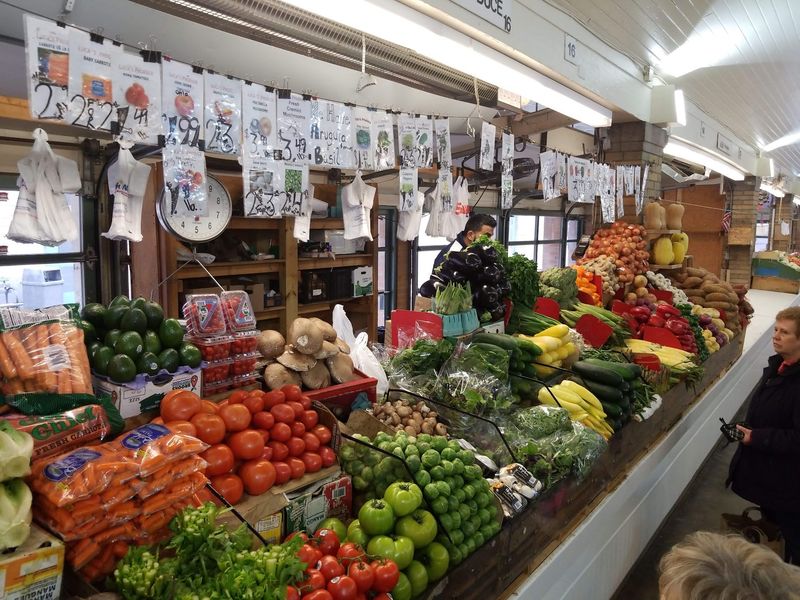
The market grew in a city shaped by immigration. Cleveland’s early public markets supplied neighborhoods with customers and merchants from many backgrounds, and foods from Central and Eastern Europe became part of the area’s everyday shopping traditions.
Pierogies, sausages, breads, and specialty groceries are among the foods through which that history remains visible. They share space with businesses offering other cuisines, from Mexican prepared food to Cambodian dishes and a variety of spices and sauces.
Stalls include Orale! Contemporary Mexican Cuisine, Kim Se Cambodian Cuisine, and Narrin Asian Spice & Sauce. Check their offerings for different prepared foods, ingredients, and seasonings before deciding what to take home.
Curious about an unfamiliar ingredient? Start by reading its label or asking a specific question about preparation.
A simple question such as how to store an item or what accompanies a dish can make a shopping decision easier, without assuming a merchant has time for a long conversation.
A 137-Foot Clock Tower Keeping Time Over Ohio City
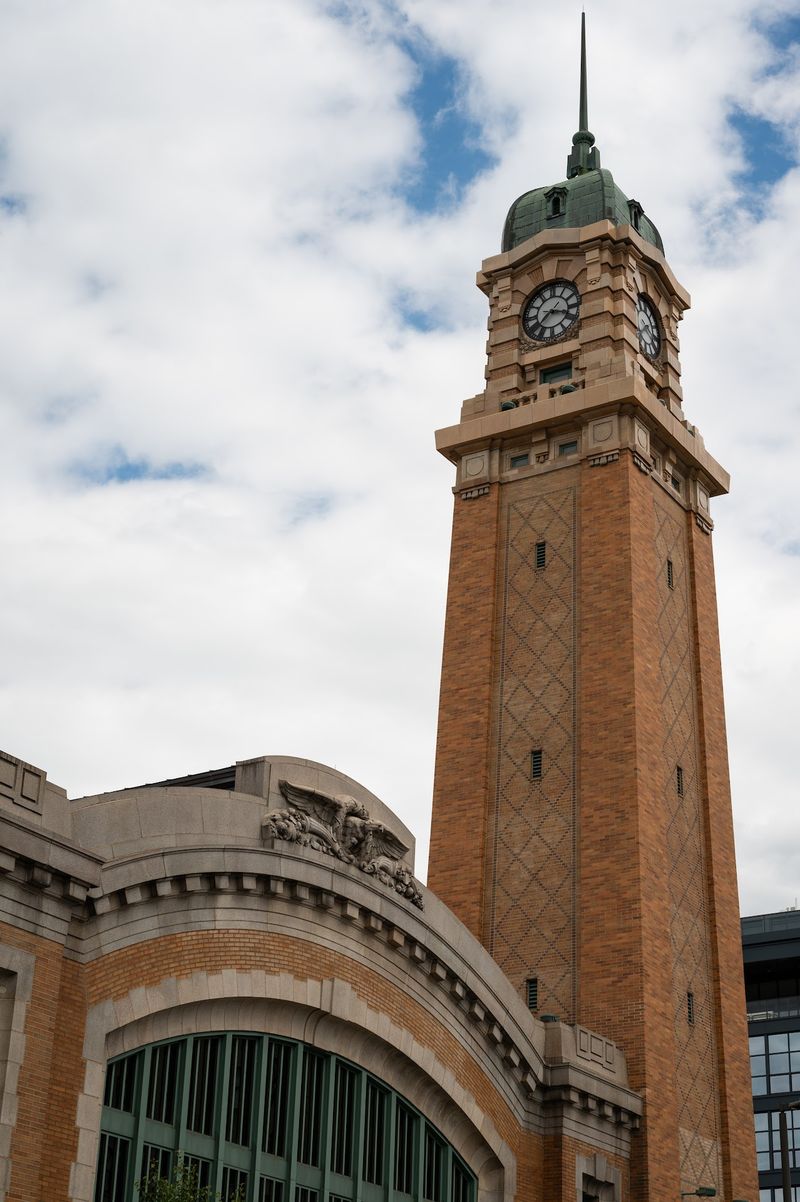
Before heading inside, look toward the 137-foot clock tower above the market. The tower was part of the original building completed in 1912, and its height makes it a useful landmark along West 25th Street.
The clock was designed and manufactured by the Seth Thomas Clock Company. Against the yellow-brick building, the tower provides a different set of architectural lines from the tile vaults inside. Stand back far enough to take in both the tall shaft and the roofline below it.
The tower also helps you orient yourself in Ohio City. The market occupies the corner of West 25th Street and Lorain Avenue, close to the neighborhood’s shops and other businesses.
You can photograph the exterior from public sidewalks before going inside to shop.
Another architectural detail is easy to miss: the building was dedicated on October 31, 1912, two days before it opened to shoppers. Its tower, main hall, and original brickwork belong to that same early twentieth-century construction project.
If you only have time for one photograph, frame the tower together with part of the hall. Then head through the entrance for the contrast between the exterior brick and the bright tile patterns inside.
Your Game Plan For A Rewarding Market Visit

Choose your day before packing the shopping bags. The market is open Monday, Wednesday, Friday, and Saturday from 8 a.m. to 5 p.m., and Sunday from 10 a.m. to 4 p.m. It is closed Tuesday and Thursday, except for occasional holiday schedule exceptions.
Most vendors accept credit or debit cards, although individual stalls can have different minimums. An ATM is available inside. Bring a reusable shopping bag and consider a small insulated carrier if you’re buying seafood, poultry, or other perishable foods.
Public transit is an option. The West 25th Street/Ohio City Red Line station is across the street, and buses also serve the area. Drivers can reach the market parking lots from Lorain Avenue or West 24th Street.
Parking terms may change, so read the posted signs before leaving your car.
All vendor stalls are on the ground level. An accessible restroom is located in the Market Cafe, and service animals are permitted inside even though pets are not. Photography is allowed throughout the public market areas.
The market is at 1979 West 25th Street, Cleveland, OH 44113. Plan enough time for both the main hall and the produce arcade, especially if you want to shop rather than simply walk through.
Once the bags are packed, decide whether your purchases are for tonight’s dinner or a few meals later in the week.