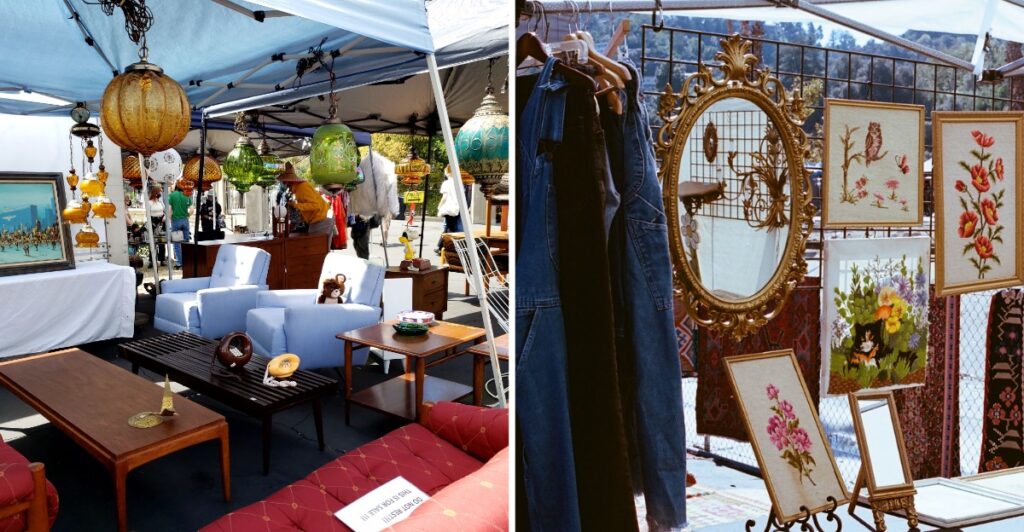
A stadium parking lot should not be this tempting.
Once a month, the pavement disappears under rows of things you suddenly need to inspect.
That old jacket? Worth a look. That strange lamp?
Also worth a look.
And somehow California has turned a parking lot into the kind of place where three hours can vanish between aisles.
The market returns on the second Sunday of each month, but the merchandise never feels exactly the same twice. That keeps the hunt interesting.
Some people arrive early with serious shopping energy. Others wander until something stops them in their tracks.
Either way, your feet will earn their keep.
The real challenge is not finding something good.
It is walking past it and convincing yourself you do not need it.
From A Small Start In 1968 To A California Classic
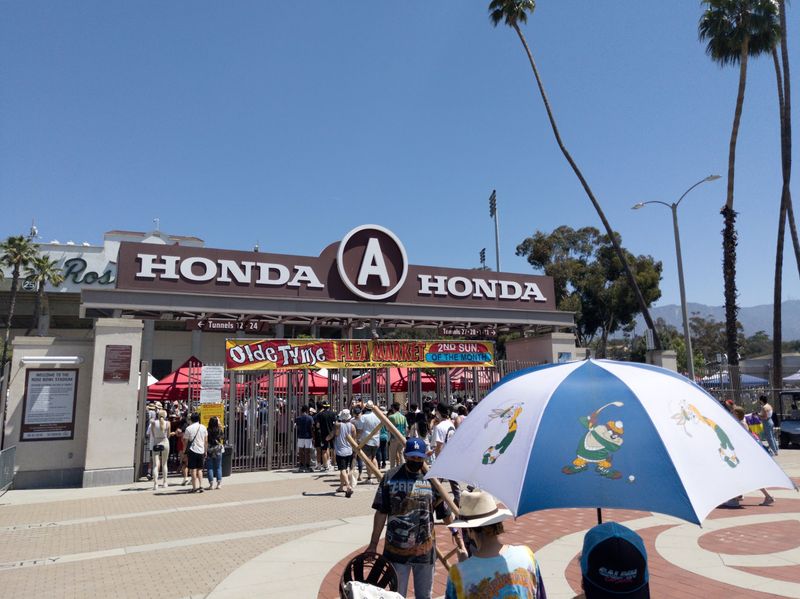
The market began in 1968, establishing a monthly shopping tradition outside one of Pasadena’s defining landmarks.
It has continued through changing tastes in furniture, clothing, and collectibles while retaining the same second-Sunday schedule.
That long history is visible in the mix of merchandise, from older household objects to contemporary designs.
R.G. Canning Enterprises organizes the event, which brings together more than 2,500 vendors across the stadium grounds.
The individual lineup changes from month to month, so a booth holding pottery on one visit may not have the same pieces when you return.
This isn’t an indoor antiques store with fixed shelves. Sellers bring their inventory to temporary spaces around the stadium, and displays can include clothing racks, folding tables, furniture, framed pictures, and boxes of small collectibles.
Some sellers specialize in a narrow category, while others bring a varied assortment.
A Sea Of Stalls Around A Legendary Stadium
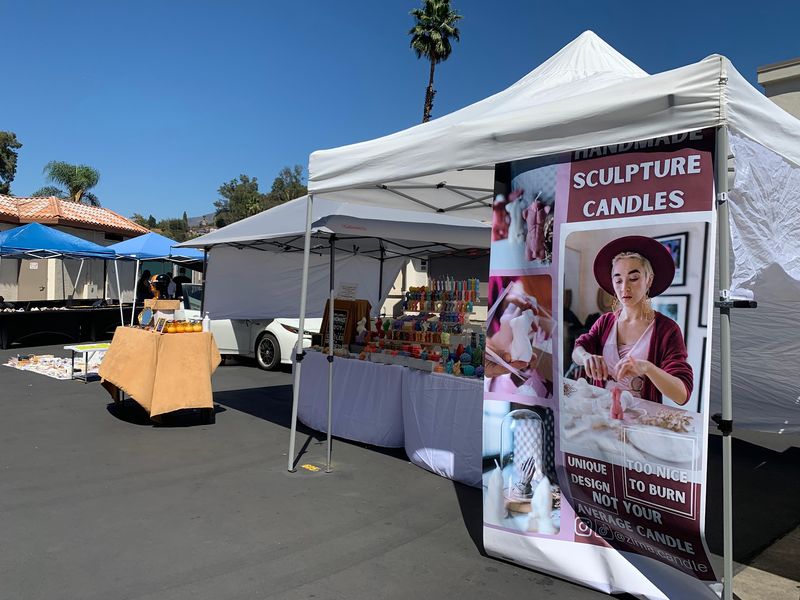
Rows of tents, racks, and tables occupy the paved areas surrounding the Rose Bowl. The stadium itself provides an unmistakable backdrop, but most of the day’s activity happens outside, where you can move between sections rather than following a single indoor aisle.
The market divides selling spaces into designated areas. The Orange Area has a strong focus on antiques and collectibles, making it a useful starting point for anyone hunting furniture, decorative objects, or older household goods.
Other sections include vintage clothing, contemporary merchandise, arts, and assorted goods.
Take a moment to orient yourself at the entrance. A quick look at the event layout can help you work out where you’d like to begin and how far you’ll need to walk before doubling back.
Photographing a nearby sign or noting a landmark can also make it easier to find a booth again.
Restrooms are available at the event, including accessible facilities. Accessible parking is also available. Wheelchairs and strollers are not rented on site, so bring any mobility equipment you need.
Vintage Denim And Retro Threads Worth The Hunt
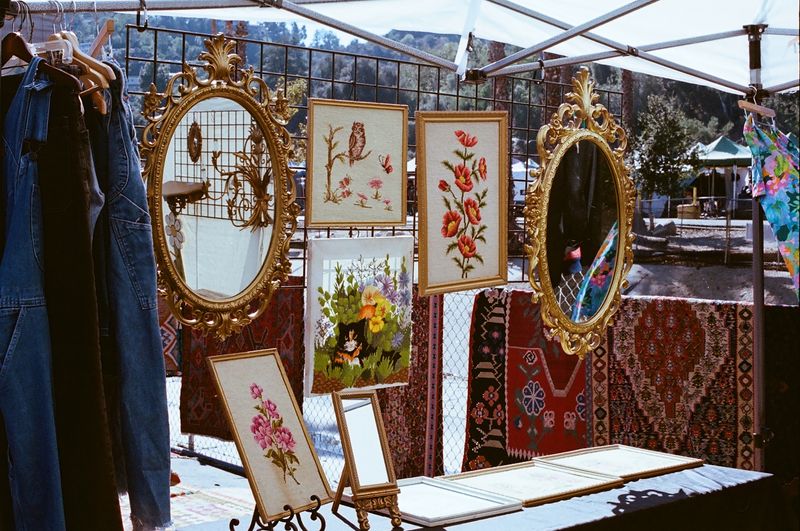
Start with the clothing areas if old denim, printed shirts, jackets, and secondhand accessories are high on your list. A flea market lets you browse garments from different periods, labels, and styles without expecting every rack to carry the same sizes or colors.
Look over the fabric and seams before paying. On jeans, check the waistband, hems, zipper, and pockets. For jackets, inspect the lining and closures.
A faded patch or worn edge may be part of the look you’re after, but a missing button or damaged seam is worth noticing before you head to the next booth.
Sizes on older clothing may not match those used by today’s brands. Carry a few measurements for garments that fit you well, especially waist, inseam, chest, and shoulder width.
A small measuring tape weighs almost nothing and can save a guess when a label is missing.
Trying clothing on can be less straightforward in an outdoor stall than in a department store. Wear layers that make it possible to hold a jacket against your shoulders or slip a shirt over a fitted top, and ask before using any space for changing.
Prices depend on the piece, its condition, and the individual seller. Check a few booths before committing if you’re shopping for something common. When you find a distinctive item in the right size, decide whether you’d still want it after a closer inspection.
Antique Furniture And Mid-Century Pieces For Your Home
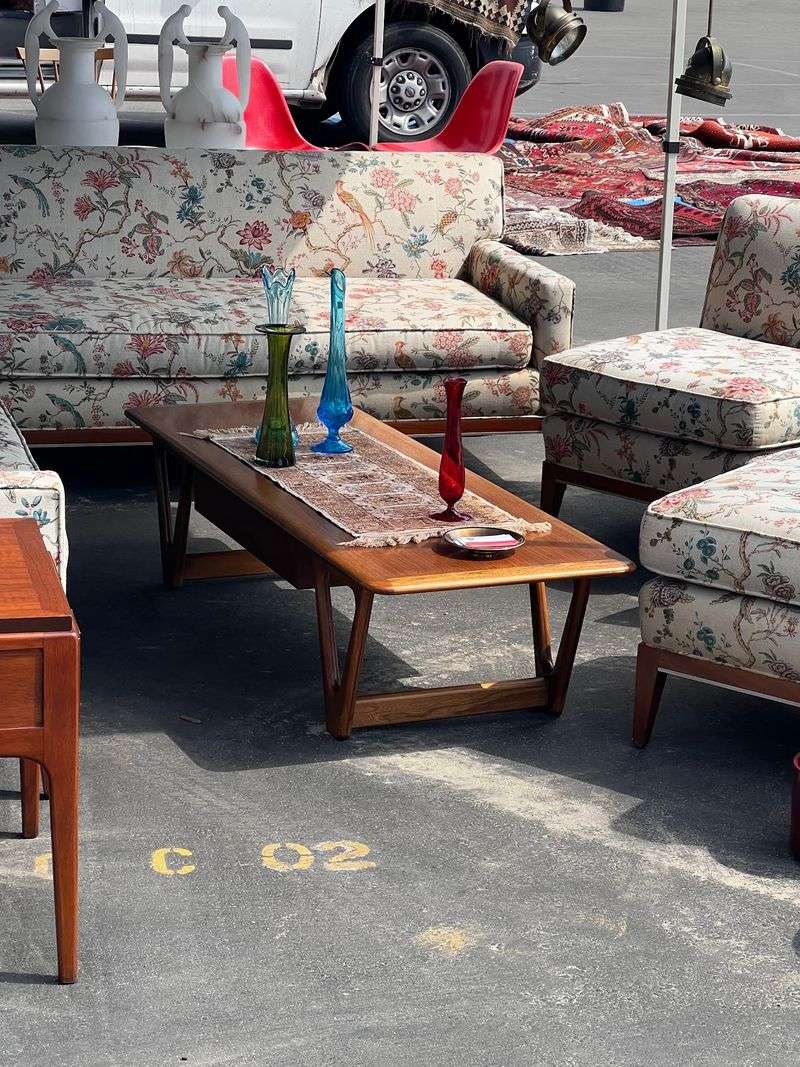
The Orange Area is the natural next stop for antique furniture, collectibles, and decorative objects.
You may encounter chairs, side tables, lamps, mirrors, pottery, signs, or framed artwork, but the precise selection depends on which vendors attend and what they bring that month.
Furniture deserves a different approach from a stack of shirts. Take measurements of the space at home, including doorway widths and the route through hallways or stairs.
A cabinet that looks manageable in an open parking lot may be difficult to move through a narrow entrance.
Inspect wooden pieces for wobbling legs, loose joints, and uneven drawers. Open and close cabinet doors if the vendor permits it. With lamps, check for missing parts and ask about electrical condition instead of assuming older wiring is ready for immediate use.
Mid-century shapes may catch your eye, but condition and construction deserve as much attention as appearance. Look beneath a chair or table for signs of repair.
If an object’s age or designer matters to the price, ask the seller what they know and make your own decision about the available evidence.
Before paying for a large purchase, agree on how and when it will leave the booth. Don’t assume that a vendor can store it until the end of the afternoon.
A few practical questions at checkout can spare you a long walk back across the market with something awkward in your arms.
Dealers, Artists, And Objects You Did Not Expect
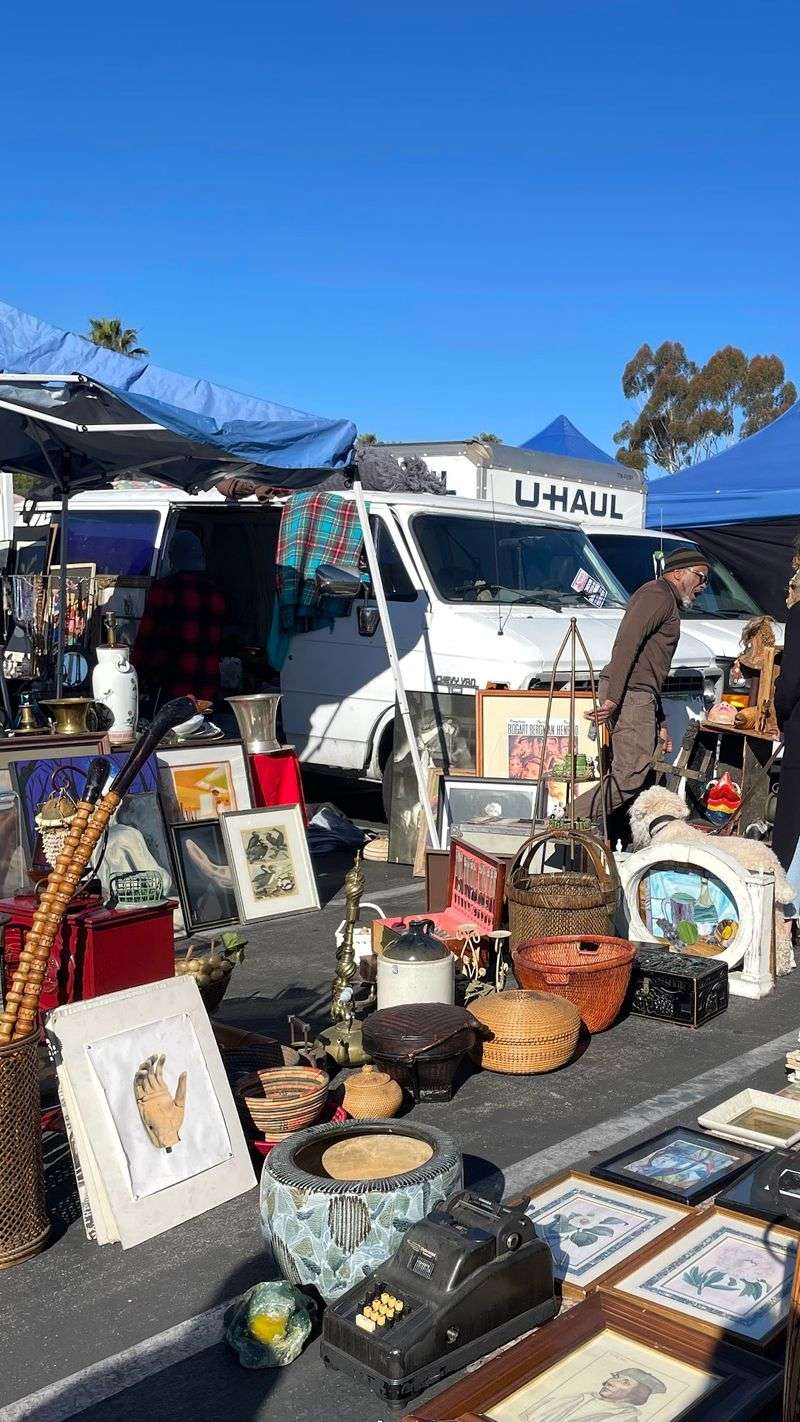
Not every table is devoted to antiques. Alongside used and vintage merchandise, the event includes art, plants, handmade goods, and newer products. That range makes browsing less predictable than entering a store devoted to one category.
Pause at a stall with prints or ceramics if you want something small to carry home. Examine the material, dimensions, and finish.
With handmade work, you can ask the seller about how the piece was made or the care it requires, without assuming that every object has the same production story.
Payment options can differ by seller. Carry a usable mix of payment methods and clarify the price before a purchase. If you plan to negotiate, keep the conversation courteous and be prepared for a vendor to hold firm.
Not every item is offered with room for bargaining.
The simplest discovery may be something practical: a serving dish, an old photograph frame, or a plant for a sunny window. Browse carefully rather than expecting a particular item to be waiting in any one spot.
Rising Early For More Browsing Time
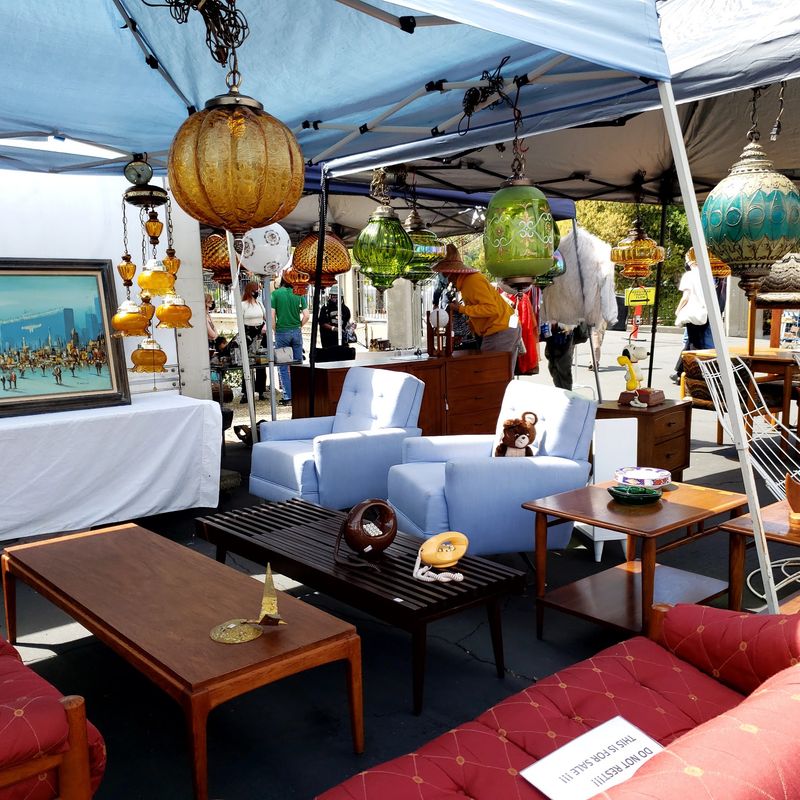
Your arrival time changes the shape of the visit. Early-bird admission starts at 5 a.m., while general admission begins at 9 a.m. The early window offers additional hours for exploring, but it also means arriving before full daylight during part of the year.
Lighting is limited in the earliest hours, and vehicles may still be moving into position. Watch where you’re walking and keep clear of active loading areas. A small flashlight can be useful before sunrise, though it should never replace paying attention to your surroundings.
General admission provides a later start and still leaves several hours to shop. Entry ends at 3 p.m., and the event closes at 4:30 p.m. Vendors may begin packing up from 3 p.m., so don’t make the final hour your only opportunity to visit a particular section.
Decide what kind of browsing day suits you. An early ticket may be useful when you have a specific shopping list or want more time to compare pieces. A general ticket works for a slower morning followed by a concentrated loop through your preferred categories.
Food and nonalcoholic drinks are available on the grounds. If you plan to spend most of the day shopping, work a break into your route rather than leaving it until you’re tired.
Leave enough energy to carry your purchases back to the car, especially if you park far from the entrance.
Second Sunday Essentials For A Smooth Visit
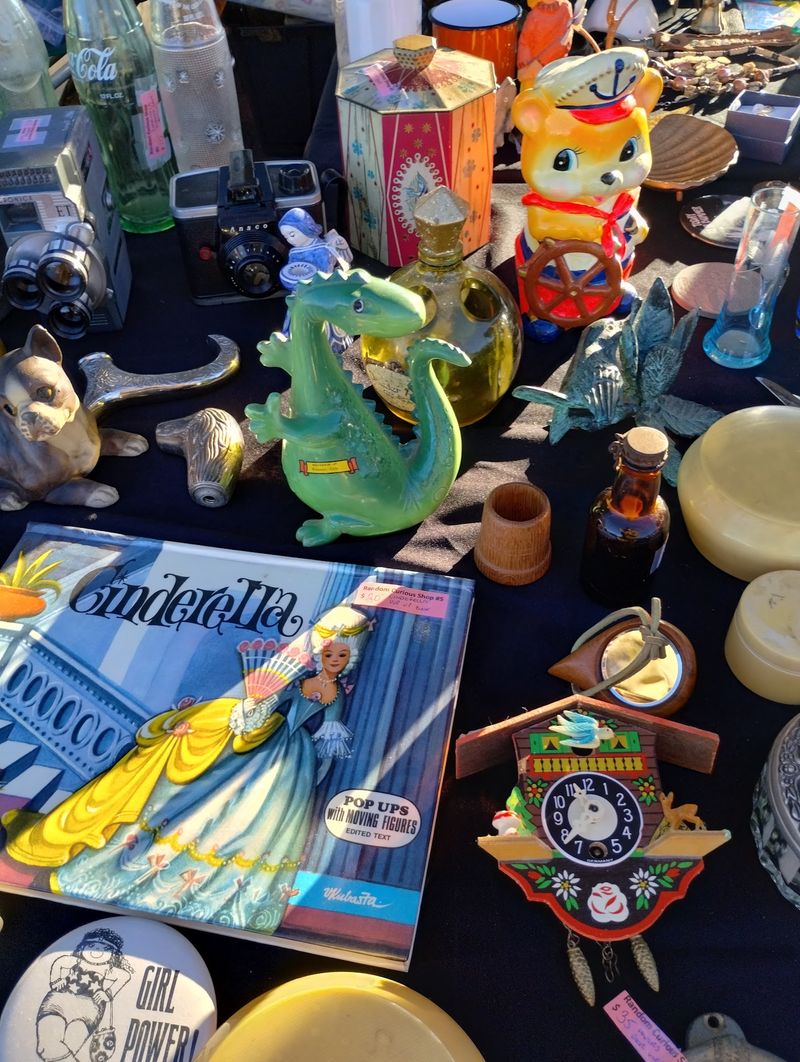
Mark the second Sunday of the month, not the first or last weekend. The market runs rain or shine, and admission tickets are sold online only. Have the ticket’s QR code ready at Gate A when you arrive.
General admission currently costs $15.83 including fees, while early-bird admission is $23.21 including fees. Children under twelve enter free with an adult. Check the ticket details when purchasing because event policies and prices can change.
General parking is free, and preferred parking is available for $20. Accessible parking is also provided. Allow time to find your car at the end of the visit, particularly if you’re carrying a large item or have parked away from the entrance.
Pets are not permitted, except service animals. Pack reusable bags, a water bottle, sunscreen, and any measurements that might help with clothing or furniture. For a long browse, keep your shopping list on your phone but don’t rely on it to dictate every stop.
The market takes place at 1001 Rose Bowl Drive, Pasadena, CA 91103. Set your navigation before departure, choose the ticket that matches your preferred arrival time, and give yourself room to walk. The selection changes from month to month, so the next aisle may hold something entirely different from the last.