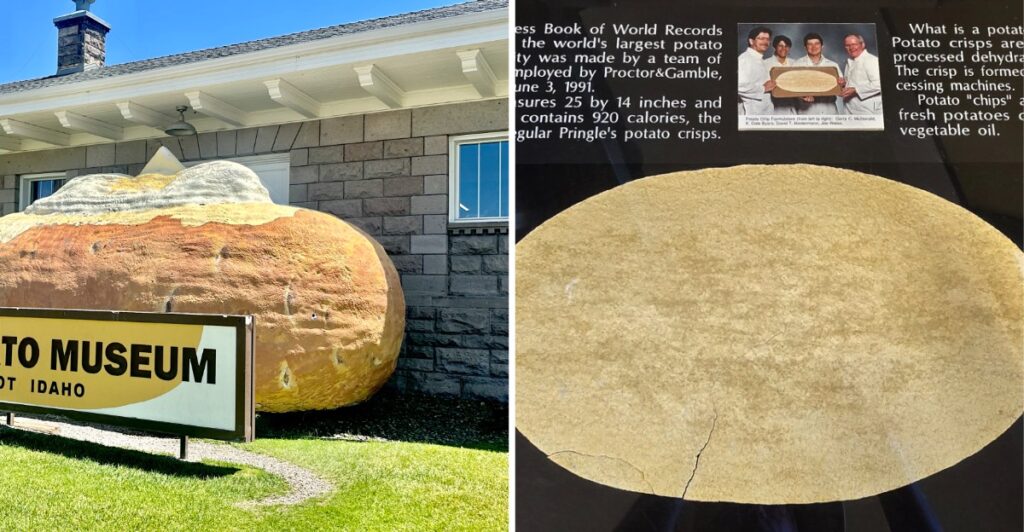
Yes, there is a potato museum. And honestly, Idaho was never going to let the spud stay humble forever.
Inside, you get the story behind the crop without feeling like you signed up for an agriculture lecture. Old equipment shows how the work changed. Displays trace how potatoes made their way here in the first place.
Then things get a little less serious.
There is a giant potato outside. There is potato trivia. And, naturally, there is a café where all that learning can turn into lunch.
You do not need to know anything about farming to enjoy the stop.
A basic appreciation for fries probably helps.
After all, once a potato gets its own museum, skipping the kitchen feels like missing half the story.
Inside The Museum In The Potato Capital Of The World
In Blackfoot, potatoes have long been more than something to serve with dinner. When you drive through southeastern Idaho, fields and agricultural communities are reminders of the crop’s importance to the region.
The museum grew from a local effort to give that story a home. Its earliest public trial took place in June 1988, with a more developed Potato Expo opening later that summer.
What began as a community project became a permanent attraction devoted to the crop’s history, cultivation, and place in everyday life.
Start with the agricultural displays, then follow whatever catches your eye. Maybe that is an old tool, a surprising piece of trivia, or a giant crisp that looks nothing like an ordinary snack.
The museum is operated as an independent nonprofit, supported by visitors and its onsite businesses. If you’re passing through on Interstate 15, it makes a natural break from the highway without requiring a full day.
A Century-Old Railroad Depot Finds A Second Life Celebrating Potatoes
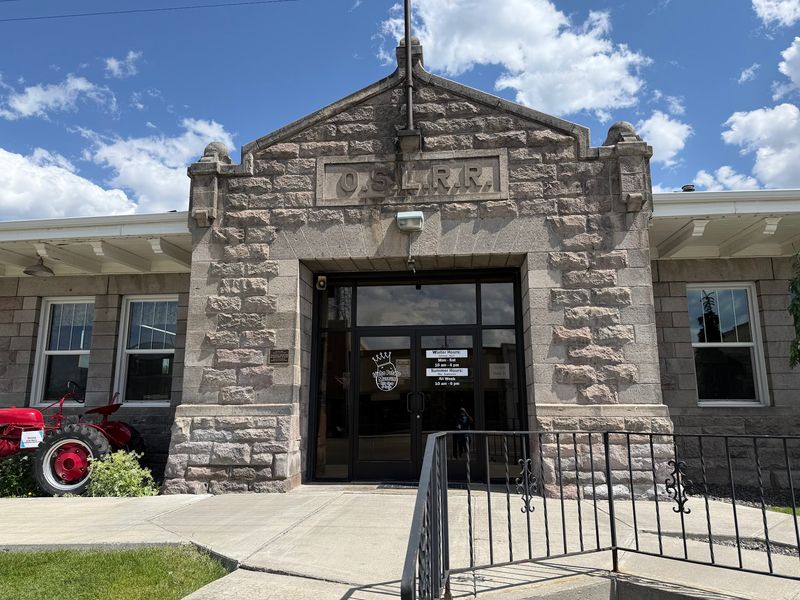
Before the building welcomed museum visitors, it greeted train passengers and handled freight.
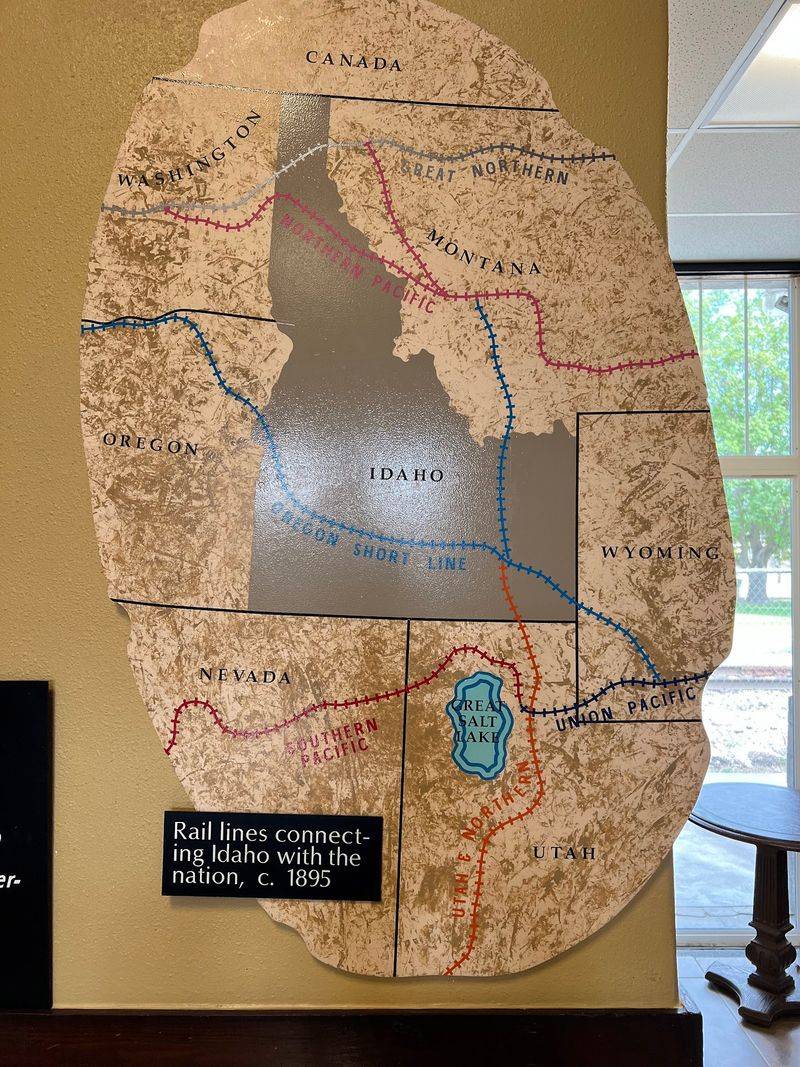
The Oregon Short Line Railroad depot was completed in August 1913, when rail service connected Blackfoot to communities and markets well beyond town.
Its substantial stone walls still give the museum a distinctly different setting from a modern exhibition hall.
The connection between the depot and agriculture goes beyond atmosphere. Rail transportation helped farms move produce toward buyers, making the building part of the larger story of how regional crops reached distant tables.
A stop here offers two histories in one: the rise of a major food industry and the transportation network that served it.
Notice the building’s shape and old freight features as you move around. That contrast makes the colorful potato exhibits especially lively against the older architecture.
Rather than treating the railway years as a separate attraction, the setting lets you imagine how a busy farming community once connected with the wider country.
Take a moment outside before leaving. A look at the stone exterior puts the exhibits inside into a longer Blackfoot story.
The Guinness World Record Potato Crisp And Other Unusual Museum Exhibits
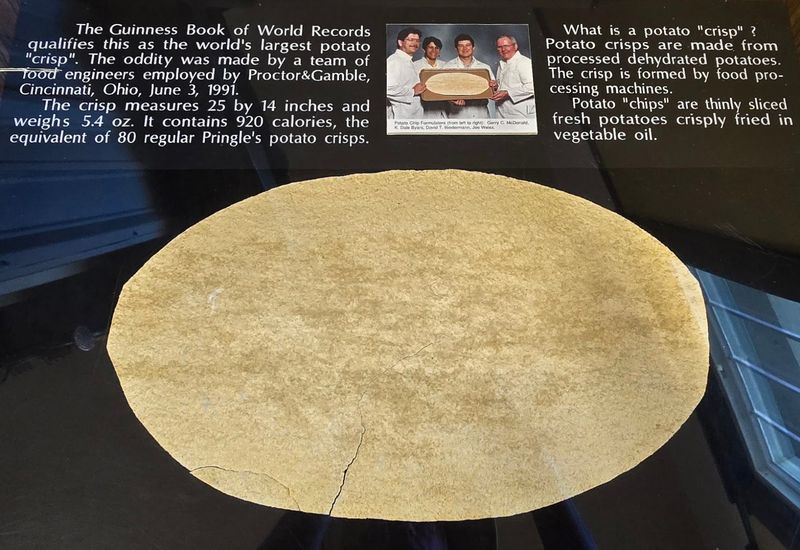
The giant potato crisp is an easy place to begin. Produced by Pringles in 1990, the oversized crisp holds a Guinness World Records distinction and has become one of the museum’s most recognizable displays. It is unmistakably a snack, just on a scale that requires a second look.
From there, the mood shifts between playful and practical. Potato-themed artifacts sit alongside displays about the crop’s cultural impact.
The collection includes potato mashers in many shapes, a useful reminder that even the simplest kitchen job has inspired generations of tools.
Look for the museum’s short films, too. They offer another way to explore how potatoes are grown, processed, and turned into foods that appear on tables across the country. A seated break can be particularly welcome after a long drive.
Packaging, harvest methods, and agricultural trivia all have a part in that story. You can follow the historical details closely or let younger companions choose a topic and investigate it together.
For a little challenge, compare the unusual objects with what you have in your own kitchen. How many potato mashers could one household possibly need? At least here, there is room to find out.
Antique Potato Diggers Reveal How Idaho Farmers Harvested Their Famous Crop
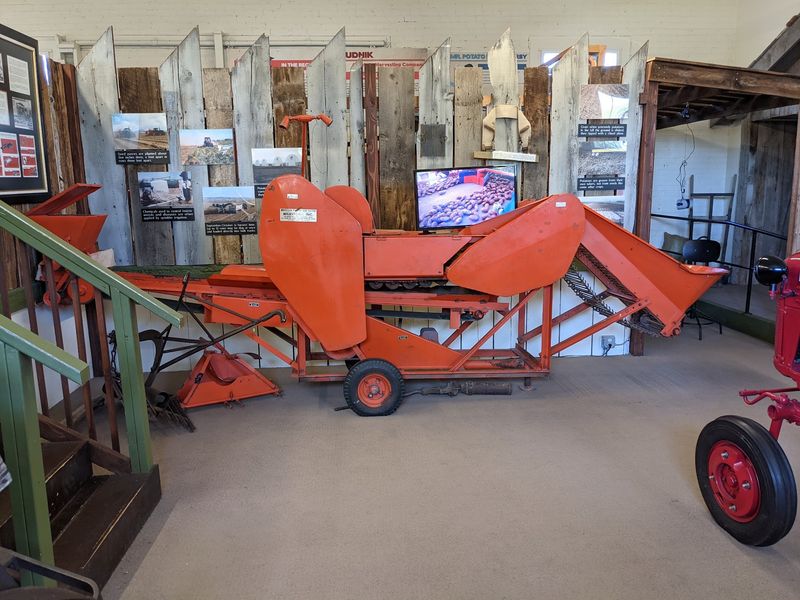
Step toward the farming equipment and the scale of the work becomes easier to grasp. Among the museum’s artifacts is a potato digger used in the late nineteenth century.
Its heavy metal parts belong to an era when producing a crop required considerable physical effort and close attention to soil and weather.
Potatoes grow underground, so bringing them to market means more than picking ripe food from a branch.
Farmers must loosen the earth, lift the crop, separate it from soil, and handle it carefully enough to keep it in good condition. Earlier methods demanded long hours in the fields.
The museum’s equipment helps trace how farming changed as mechanical tools became more capable. Machines eventually reduced much of the repeated digging and handling, although successful harvests still depend on knowledge, timing, and hard work.
Pause at a tool and try to work out its purpose before moving along. The shapes can reveal quite a bit: a part meant to cut into soil, another intended to lift it, or a design made to separate potatoes from clods of earth.
The process starts well before the grocery aisle.
From South American Fields To Idaho Farms, The Potato’s Remarkable Journey
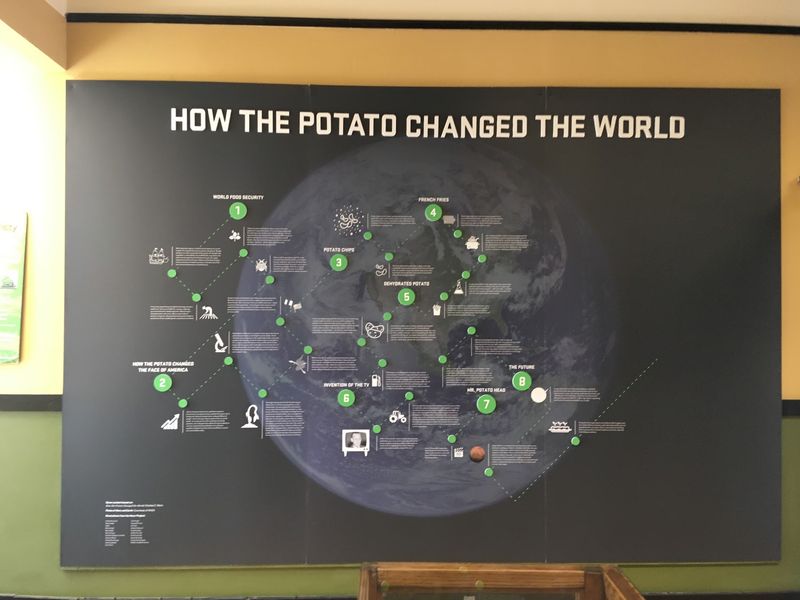
Idaho has made the potato famous in the United States, but the crop’s roots lie much farther south. People cultivated potatoes in the Andes of South America long before the plants traveled across the Atlantic.
As potatoes spread into Europe and eventually other parts of the world, they became a staple in many different cuisines.
The museum follows that long journey with displays connecting agriculture, food, and history. You can trace how a crop once grown in Andean communities became something as familiar as a baked potato, a bag of fries, or mashed potatoes at dinner.
Idaho’s own success grew from several advantages working together. Irrigation supplied water in an often dry region, while productive agricultural land and generations of farm experience supported large harvests.
The state’s connection to potatoes took shape through ongoing work rather than a single lucky season.
Look beyond the familiar russet while exploring. Potatoes come in wide varieties, with differences in skin, texture, shape, and cooking qualities. A variety that works beautifully for baking may behave quite differently in a pot of soup.
Here is a question for the next stretch of road: How many meals from different countries can you name that rely on potatoes? The list might be longer than you expect, especially once you include breads, dumplings, and hearty stews.
Potato Ice Cream, Fresh Fries, And Baked Spuds At The Potato Station Café
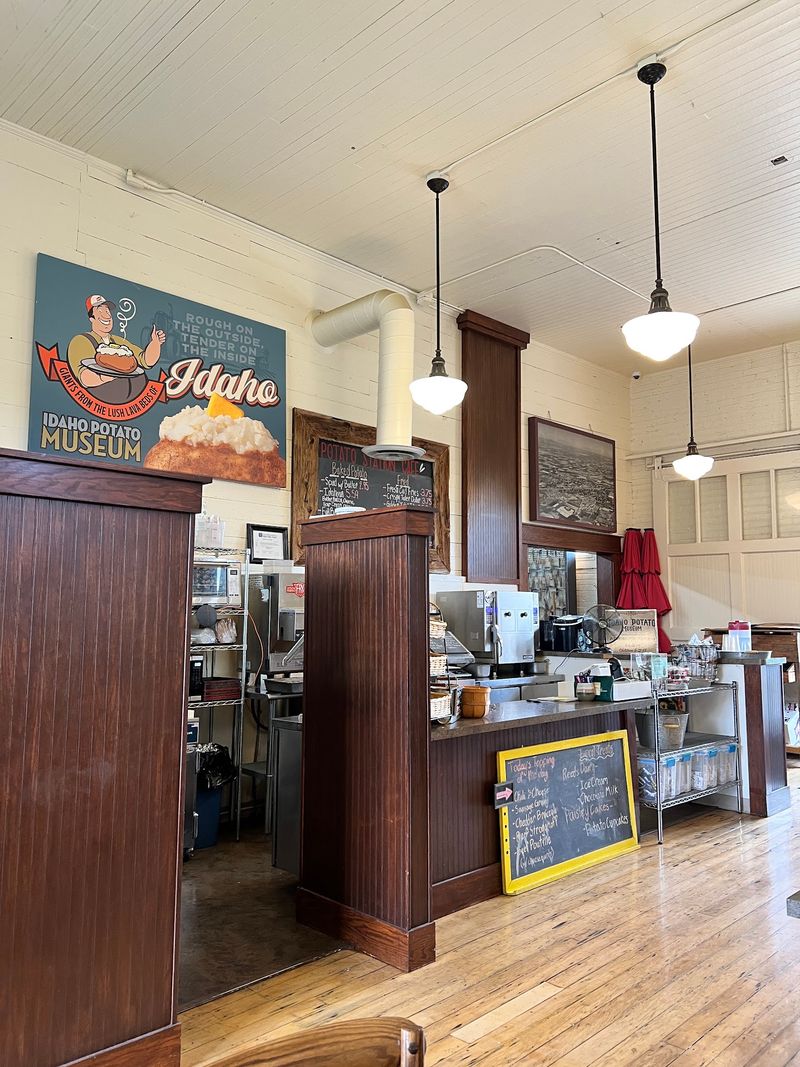
After learning how much work goes into growing potatoes, you can head to the Potato Station Café and enjoy the finished product.
The café serves potato-centered dishes, including baked potatoes and fries, alongside more unexpected treats made with the state’s signature crop.
The menu can take familiar ingredients in cheerful directions. Potato bread and sweet potato-inspired creations give you something to consider beyond the standard baked spud.
Choose whatever suits your appetite, and keep in mind that specific offerings may change with the season or kitchen.
If a baked potato is your priority, plan a little ahead. Order baked potatoes at least two hours in advance to give them time to cook properly. That is especially useful when your museum visit needs to fit between other road-trip stops.
The museum and café have separate seasonal operating schedules, so a visit late in the day deserves a little attention to timing. During the colder part of the year, both close earlier than they do in summer. Avoid leaving your lunch plans until the last minute.
The café makes a natural place to compare favorite ways of eating potatoes. Fries or a fluffy baked potato? Something savory or a more unusual sweet treat?
Fortunately, the question is easier to settle when the kitchen is nearby.
Giant Potato Photos, Quirky Souvenirs, And Free Taters For Out-Of-State Visitors
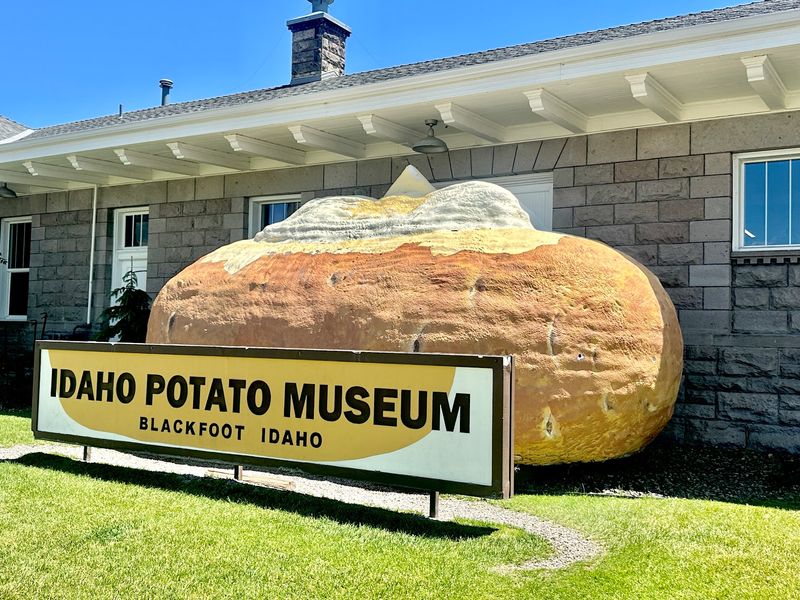
Before returning to the road, look for the giant potato outside. It provides the sort of playful photo opportunity that needs little explanation: stand beside an enormous spud, make room for everyone in the frame, and save the picture for the next family conversation.
Inside, the Spud Sellar gift shop carries potato-themed gifts and souvenirs. Expect the theme to follow you from the exhibits to the shelves, where practical items sit alongside lighthearted reminders of your stop.
Browsing can be as entertaining as shopping, especially when you discover just how many objects can carry a potato joke.
There is also a small tradition for travelers arriving from beyond Idaho. Under the museum’s Free Taters for Out-of-Staters program, qualifying out-of-state guests receive a potato-related gift with paid museum admission.
Ask at the gift shop about the current offering rather than expecting one particular product.
For a straightforward visit, go to 130 NW Main Street, Blackfoot, ID 83221. Parking includes accessible options, and the museum is in downtown Blackfoot.
From September through April, museum hours are generally Monday through Saturday, 10 a.m. to 4 p.m.; from May through August, daily hours are generally 10 a.m. to 6 p.m.
Holiday arrangements may differ.
If you are stopping during a long drive, leave enough time for the exhibits, a meal, and that oversized potato photo. Blackfoot has turned one everyday crop into an unexpectedly varied afternoon.