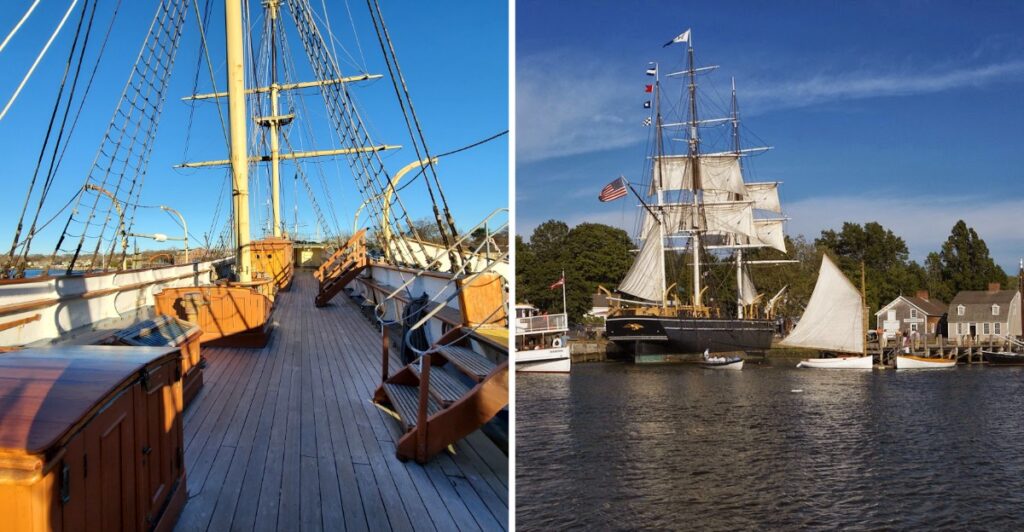
Put me near an old ship, and I get nosy fast.
Who sailed it? What was life like on board? And how did anyone keep track of all that rope?
This place gives that curiosity plenty to work with.
Historic vessels sit right on the waterfront, and the museum spills into a recreated nineteenth-century village.
You can step into old buildings, watch traditional trades in action, and board certain ships when access allows.
The river is what makes this Connecticut museum feel different.
Nothing feels sealed away.
There is movement, noise, and plenty happening beyond the exhibits.
I already know where I would head first.
Straight for the ships.
If my schedule disappears somewhere between the dock and the deck, I can live with that.
Climb Aboard The Charles W. Morgan, The Last Wooden Whaleship
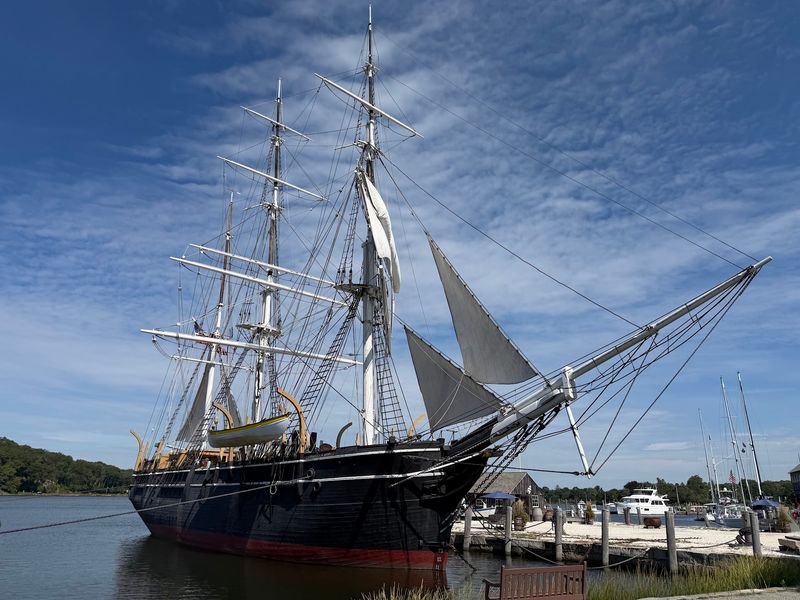
The Charles W. Morgan has been afloat since 1841, which makes its survival remarkable before you even climb aboard.
Built in New Bedford, Massachusetts, the wooden whaleship sailed on long voyages during an era when whale oil and other products were traded around the world.
Today it is the last surviving wooden whaleship, preserved here with much of its working character intact.
Start by looking upward. Masts, rigging, and lines fill the sky, and the scale is easier to understand from the deck than from a photograph. Even the ordinary work of carrying supplies would have required care and coordination.
Below deck, where visitor access permits, the quarters make the contrast between life aboard and modern travel especially clear. Crew members spent extended stretches at sea with little personal space.
The captain’s accommodations provide another perspective on the hierarchy of a nineteenth-century ship.
The vessel also opens a larger conversation about whaling, including the dangerous labor involved and its effect on whales and ocean ecosystems.
It is possible to admire maritime craftsmanship without overlooking those consequences. Take the time to read exhibits and ask an interpreter about the details that catch your eye.
Boarding areas and access may vary with preservation work or weather.
Stroll Through A Recreated 19th-Century Coastal Village
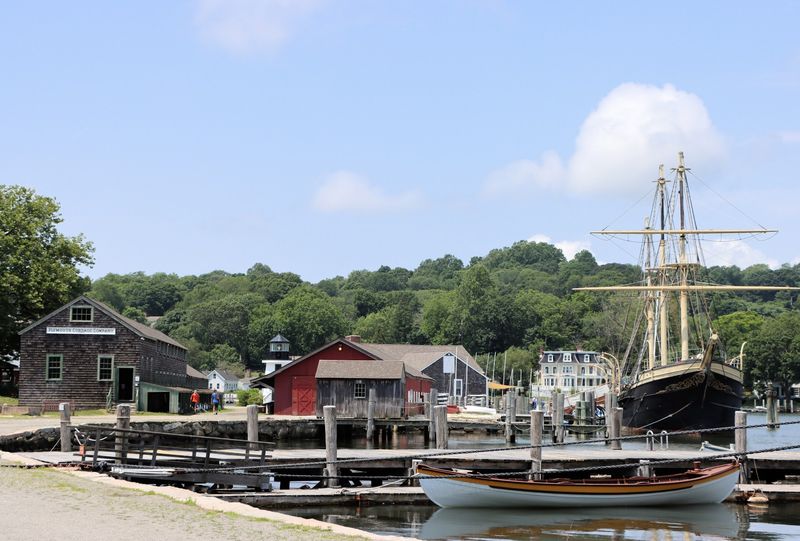
Follow the paths away from the ships, and the waterfront begins to resemble a New England port town from another century.
The village brings together historic buildings, many relocated from other communities, to show how a working seaport supported the people who lived there.
There is plenty to explore beyond the most obvious storefronts. A printing office speaks to the importance of local news and business records. A cooperage recalls the barrels that stored and carried food and cargo.
Other buildings introduce trades and services that kept ships outfitted and coastal commerce moving.
Rather than race through every doorway, choose a few buildings and linger. Watch the small details: a workbench, the size of a shop, or a window looking toward the river. Those ordinary features make the distance between past and present feel shorter.
The museum covers about nineteen acres, so a visit includes a fair amount of walking. Some spaces and demonstrations operate on seasonal schedules. If a particular trade interests you, check the day’s program when you arrive and shape your route around it.
With the river close by, the village feels connected to the ships rather than separated from them, just as a busy port town would have been.
Blacksmiths, Coopers, And Old Trades Spark To Life
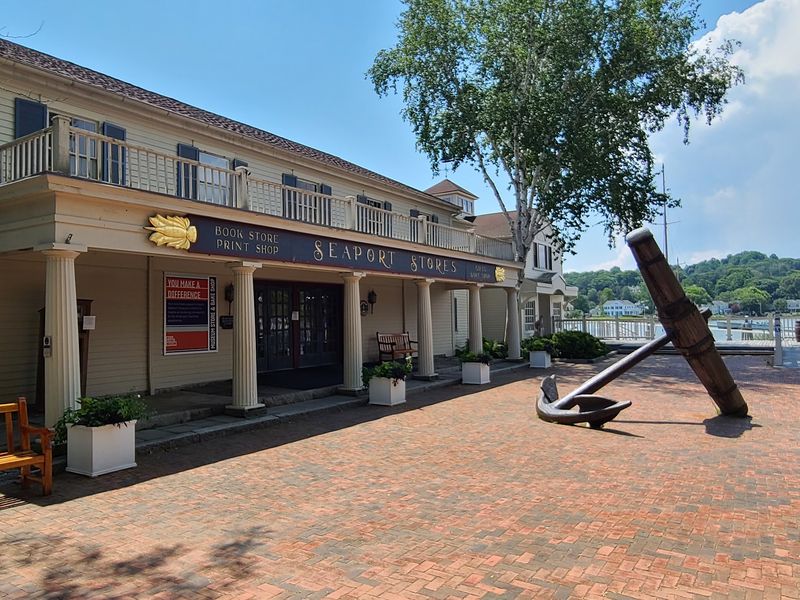
A sharp clang from a workshop can be an excellent invitation to change direction. In the recreated village, skilled interpreters demonstrate trades once essential to shipbuilding and waterfront life.
Their work adds movement and sound to a place already full of historical objects.
The shipsmith’s shop is a good example. Iron fittings helped hold a wooden ship together and made its equipment useful at sea. Seeing metal shaped at a forge, when demonstrations are running, puts an entirely different scale on the phrase handmade.
A piece that looks simple in a display case may require several precise steps.
Then consider the cooper’s work. Wooden barrels traveled everywhere in maritime commerce, carrying food, supplies, and goods. Their curved staves had to fit closely, which takes considerably more skill than stacking pieces of wood into a circle.
Printing and other craft demonstrations broaden the picture of village life. They show that a working port depended not only on sailors but also on people producing everyday objects on shore.
If children are visiting with you, invite them to guess what a tool does before listening to the explanation.
Demonstrations change by day, so the posted schedule is useful. Leave room to follow an unexpected sound down a side street; sometimes that leads to the most interesting stop.
Four Landmark Vessels With Four Very Different Stories
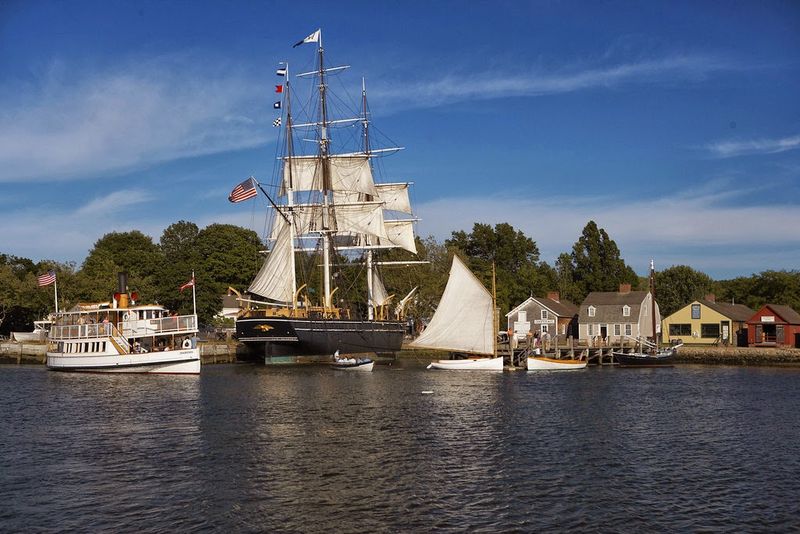
One ship can tell a story about the sea. Four ships can show just how different maritime work used to be. Mystic Seaport Museum preserves four National Historic Landmark vessels, and the contrast between them is part of the attraction.
The Charles W. Morgan represents the far-ranging whaleships of the nineteenth century. Nearby, the Emma C.
Berry offers a more compact story. Built in 1866, this Noank fishing smack served a different kind of working life along the coast. Notice how its shape and scale compare with the larger whaleship.
The L. A. Dunton, built in 1921, is a Gloucester fishing schooner.
It recalls crews who worked offshore in demanding conditions, often for extended trips. Its long hull and rig suggest the practical demands of carrying people, gear, and catches.
Then there is the Sabino, a 1908 steamboat. Instead of relying only on sails, it belongs to an era of engines, boilers, and changing coastal transportation. When cruises are operating, a trip aboard offers a particularly direct introduction to the vessel’s history.
Walk along the docks, look at the hulls, and compare the ways each was built for a particular job. Availability varies by season, preservation needs, and programming, so keep plans flexible. The waterfront is a working museum, not a row of permanently open attractions.
Watch Wooden Ships Get A Second Life At The Preservation Shipyard
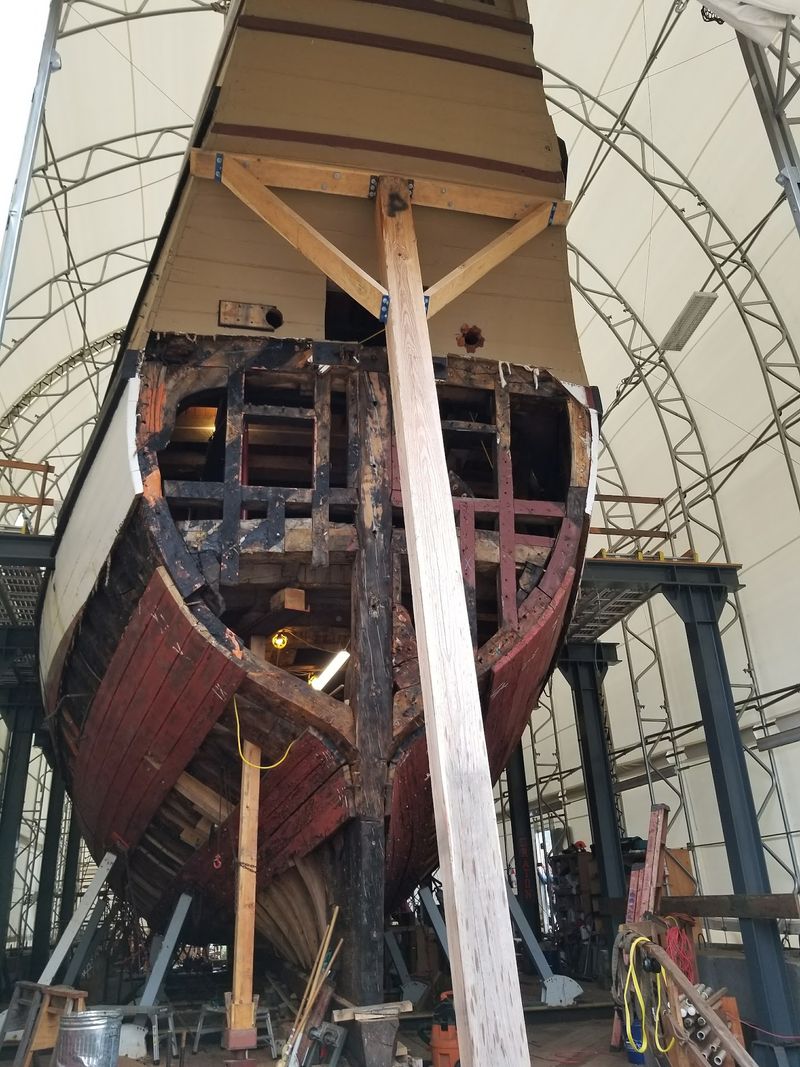
Ships made of wood need constant attention, and the Henry B. du Pont Preservation Shipyard makes that demanding work visible.
This is not simply a display of old tools. It is a place where shipwrights maintain and restore historic vessels using deep knowledge of wood, structure, and traditional methods.
A visit may reveal timber being prepared, a hull undergoing repairs, or a craftsperson working through a problem that cannot be solved by replacing one interchangeable part.
Each historic vessel has its own construction methods and accumulated repairs. Preserving it means learning what the original builders intended while deciding how best to care for it now.
A measured cut or careful adjustment can tell you more about the craft than a dramatic burst of activity. Large restorations progress in stages, and the projects visible on any day will differ.
The shipyard also helps explain why historic vessels sometimes have restricted access. Those interruptions are part of keeping these remarkable craft available for future generations.
If you enjoy woodworking, engineering, or the puzzle of making old things last, leave extra time for the shipyard.
Riverside Views Where Old Buildings Meet Swaying Masts
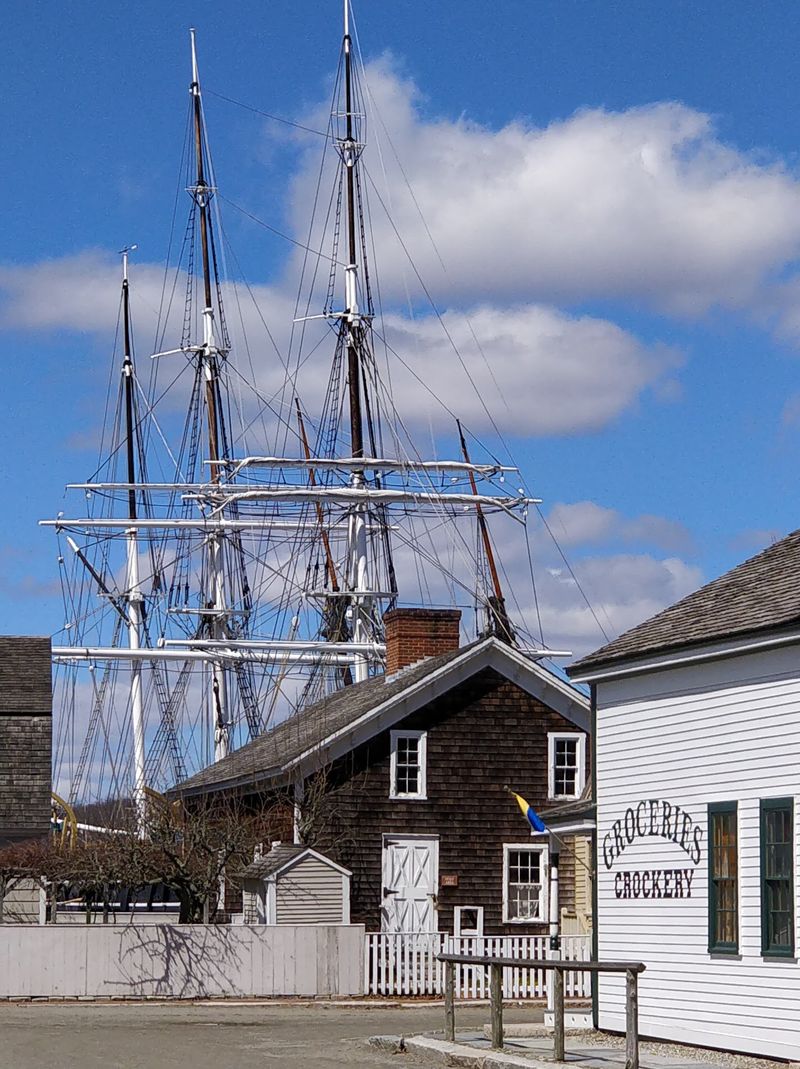
Leave a little unplanned time for the river itself. The museum’s paths connect buildings, ships, and open waterfront, so there are plenty of places to stop between exhibits.
Look back at the village from the docks, and familiar details form a different picture: rooflines, rigging, and boats gathered along the same stretch of water.
The Mystic River is more than an attractive setting. Rivers and harbors supported the movement of people and goods, helping towns such as Mystic develop connections well beyond the shoreline.
Watching present-day boat traffic pass these historic vessels is a neat reminder that the waterway still has a life of its own.
The museum’s collection contains more than 650 historic watercraft, although only a portion are visible on the grounds or afloat at any given time. The collection reaches well beyond what can fit beside the public docks.
In softer afternoon light, reflections gather beneath the hulls and ropes make shifting patterns against the sky. A bench can be a welcome stop after exploring the village.
If you are visiting with a dog, confirm the current pet rules before arrival. Historic buildings and vessels have their own access restrictions, so planning ahead helps everyone enjoy the waterfront comfortably.
River Outings, Whaling Exhibits, And Hands-On Family Fun
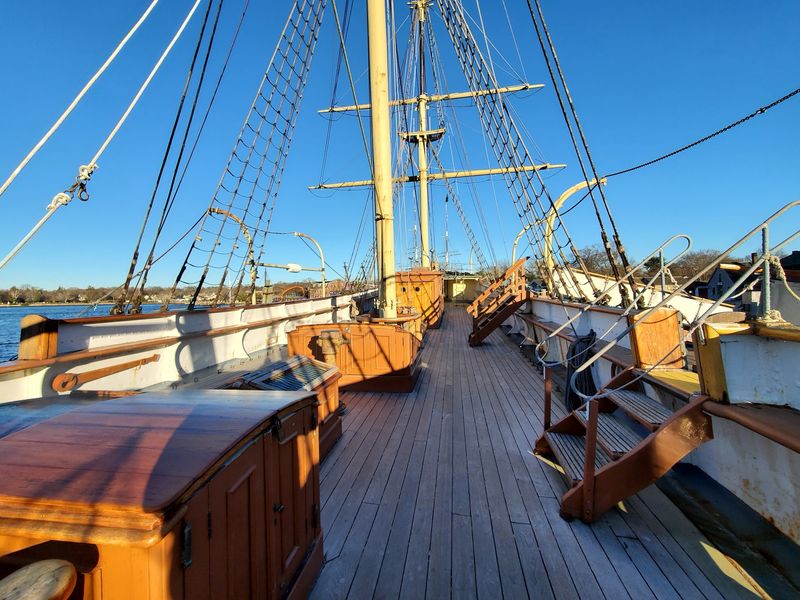
After walking the grounds, you may be tempted to see the museum from the water. Seasonal opportunities can include river cruises aboard historic or traditional vessels and small-boat activities at the Boathouse.
Programs depend on staffing, weather, and the day’s schedule, so ask about availability before choosing your afternoon route.
On shore, exhibition galleries expand the story beyond the ships themselves. Displays explore maritime art, navigation, labor, and the complicated history of industries such as whaling.
That broader view matters: the waterfront’s wooden beauty sits alongside stories of difficult work, changing technology, and environmental consequences.
Families can seek out interactive activities and spaces intended for younger visitors, while the Treworgy Planetarium introduces the night sky and the navigation skills sailors relied upon.
Shows and activities may follow separate schedules, making it sensible to choose one or two highlights rather than pack everything into a single hour.
Allow several hours if you want to explore ships, village workshops, galleries, and the riverfront without constantly checking your watch.
The museum entrance is at 75 Greenmanville Avenue, Mystic, CT 06355. Check the current opening calendar and any vessel access notices before leaving home, then arrive ready to follow whichever ship, demonstration, or riverside path catches your interest first.