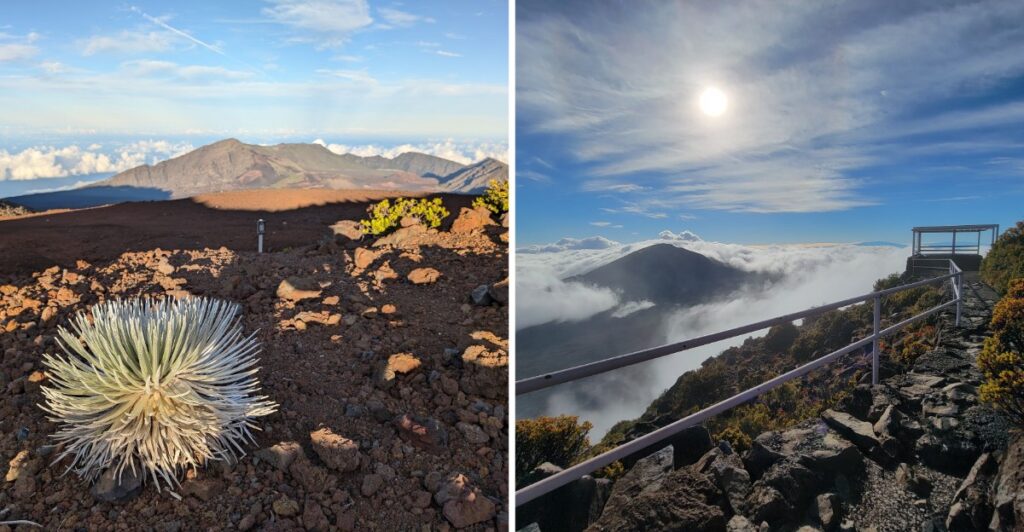
If an alarm goes off before sunrise, the view had better be good.
This one has a strong case.
The road climbs so high that the beaches feel like another trip entirely. By the time morning arrives, you may be standing above the clouds with cold wind reminding you that yes, this is still Hawaii.
Then the light starts changing everything.
What looked dark and empty begins showing off ridges, red volcanic ground, and a landscape that barely resembles the island below.
The early start is only one part of the experience, too. Once daylight takes over, there is more of the summit country to explore.
I’d definitely stay awhile.
If I woke up that early to get there, sunrise is not getting the whole morning to itself.
Haleakalā Crater Rises More Than 10,000 Feet Above The Island Of Maui
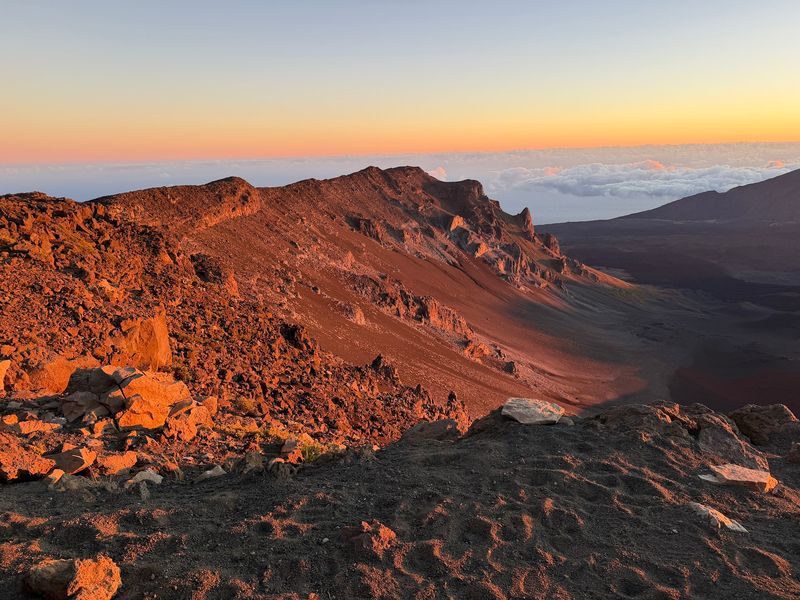
At 10,023 feet above sea level, Haleakalā’s highest point rises well above the warm coast of Maui. The summit feels like another part of the island altogether. Trees thin out on the climb, vegetation changes, and the air can turn sharply colder before you even park.
Look toward the horizon on a clear morning, and you may see neighboring islands beyond layers of cloud.
Haleakalā is a shield volcano, shaped over an immense span of time by repeated eruptions. Its broad profile makes the mountain look gentler from a distance than the upper slopes feel underfoot. The landscape at the top is not simply an enormous volcanic hole.
The feature commonly called Haleakalā Crater is a deep valley shaped largely by erosion and later partly filled with lava flows and cinder cones.
That history gives the summit its striking mix of cliffs, ridges, and rounded volcanic hills. If clouds move across the rim, the view may disappear for a while, then return with a completely different pattern of light.
Keep an extra layer handy and resist the urge to rush from viewpoint to viewpoint.
A few minutes of watching the landscape change can be as interesting as the initial view.
The Pre-Dawn Journey Up A Winding Volcanic Mountain Road
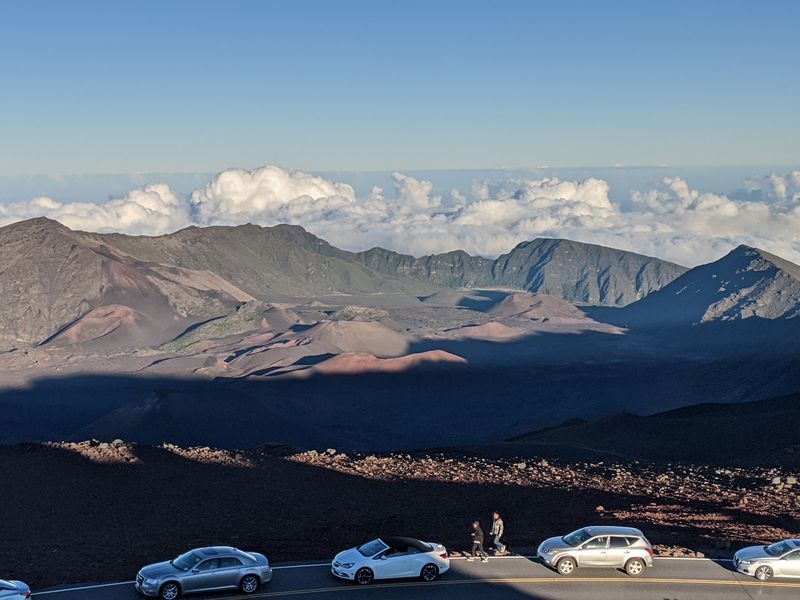
The alarm may go off while the rest of Maui is still asleep. Before leaving, check that you have the required sunrise reservation and a printed reservation and photo ID for the person named on it.
A park entrance pass is separate, and the reservation applies only to its designated date.
Daylight visitors do not need that sunrise booking.
The road to the Summit District climbs through Upcountry Maui on a series of bends. It’s paved, but driving in darkness calls for patience. Watch the posted limits, leave space between vehicles, and be alert for wildlife near the road.
Fog, rain, or strong wind can make the final miles feel much longer.
Travel time depends on your starting point. Even from Kahului, reaching the summit can take around two and a half hours, so plan for the drive rather than treating sunrise like a last-minute stop. Put fuel in the tank beforehand.
There are no gas stations inside the park, and mobile reception is not something to count on.
Keep the printed reservation within easy reach, and use a headlamp for walking in dark parking areas. Save your first cup of coffee for a safe stop, not a winding stretch of mountain road.
Sunrise Above The Clouds Paints The Crater In Brilliant Orange And Gold
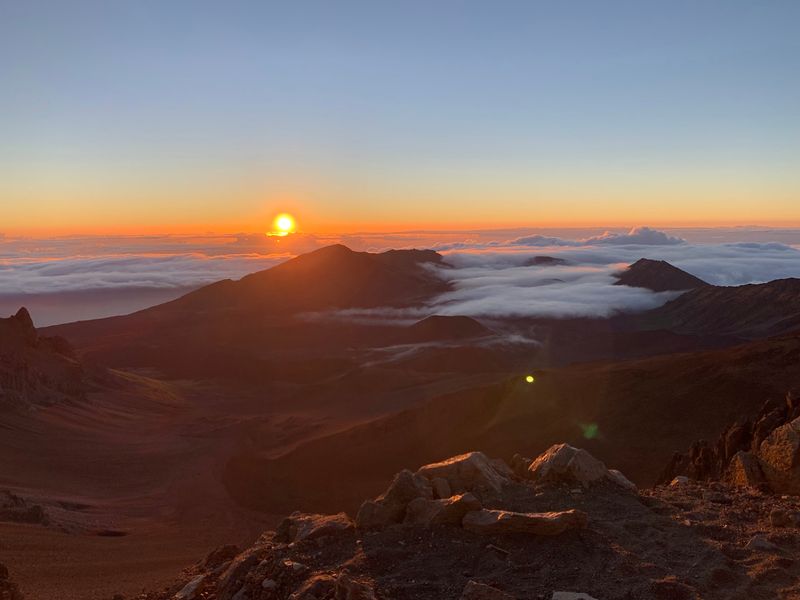
The first hint of daylight can arrive as a pale band beyond the eastern horizon. Then the color begins to spread: blue gives way to pink, clouds catch warmer tones, and the outlines of the summit ridges become easier to see.
Some mornings bring a broad blanket of clouds below the overlook.
Others bring mist at eye level, with little to see until the wind shifts.
Arrive early enough to find parking and walk safely to your chosen viewing area. There is no guarantee of a clear horizon or access to your first-choice lot. That’s part of planning a high-elevation sunrise, not a reason to take chances on the road.
Once you’re settled, keep your jacket zipped and your attention on the changing sky. A few photos are fine, but the light moves steadily, and staring at a screen can make the minutes pass surprisingly quickly. Listen, too.
The summit is an important place in Native Hawaiian culture, and you may hear an oli, a traditional chant, offered at sunrise. Give the people sharing that moment respectful space.
After the sun clears the horizon, don’t hurry to the car. Stronger daylight can bring out the texture of the valley floor and the contrasting colors of its cinder cones.
Four Summit Overlooks Offer Different Views Of Hawaii’s Volcanic Landscape
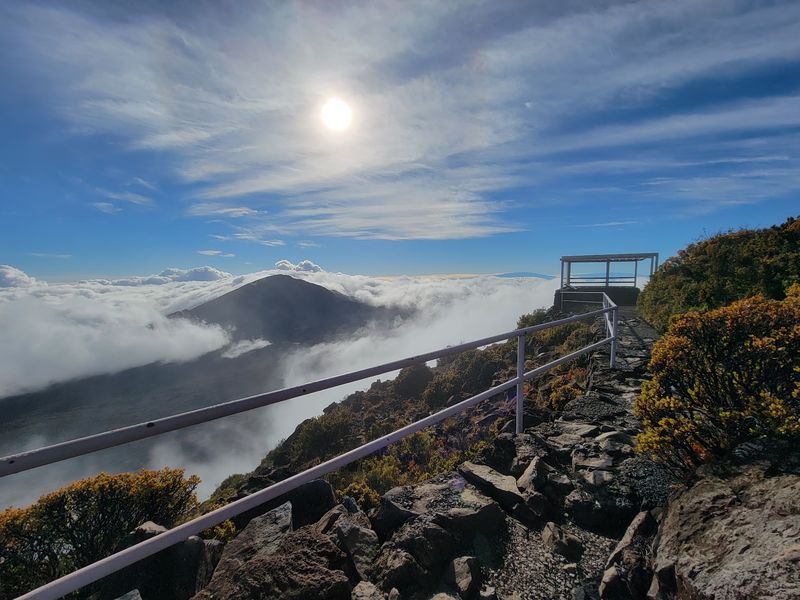
You have four designated sunrise viewpoints to choose from, each with a different elevation and perspective. Puʻuʻulaʻula, also called Red Hill, marks the 10,023-foot high point and offers wide views across the upper mountain.
The Haleakalā Visitor Center area, at about 9,740 feet, sits beside the rim and looks directly into the huge valley.
Farther down the mountain, Kalahaku Overlook opens toward the volcanic landscape from approximately 9,324 feet. Leleiwi Overlook is lower still, at about 8,840 feet, and requires a short walk from its parking area.
The rocky approach there deserves particular care before sunrise, when a flashlight or headlamp is useful.
Parking spaces are limited. Once a lot fills, you may need to continue to another viewpoint rather than circling or stopping in an unsafe spot. Make that decision calmly and follow posted directions.
If you have time after sunrise, stop at a second overlook on the descent. Looking across the same valley from a new angle changes which ridges and cones stand out. Bring a warm layer even for those later stops.
Elevation and wind do not disappear just because the sky is bright.
Red Cinder Cones And Ancient Lava Formations Fill The Vast Summit Depression
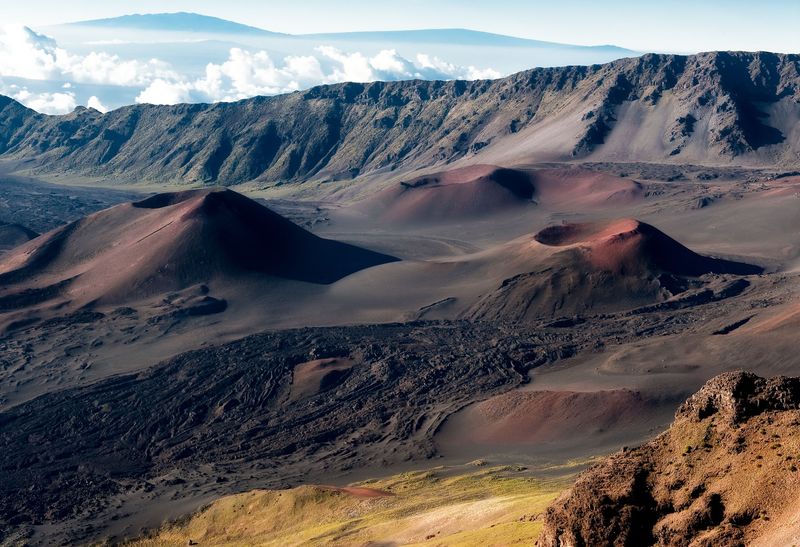
With full daylight, the floor of Haleakalā’s summit valley becomes easier to read. Rounded cinder cones rise among slopes of red, brown, and charcoal-colored material. They formed during volcanic eruptions after erosion had already cut deeply into the older mountain.
Lava and debris partly filled that valley, creating the uneven scene visible from the rim today.
You don’t have to hike down to notice the contrast between the older ridges and younger-looking cones. Watch how shadows outline small gullies and how distant slopes shift from rusty red to gray.
If you do choose to hike, the Keoneheʻeheʻe Trail, also known as Sliding Sands, leads into this exposed volcanic terrain.
The easy mistake is to measure a hike only by how far you go downhill. Every step into the valley adds climbing to the return, often at an elevation where breathing feels harder than at sea level. Turn around while you still have plenty of energy and water.
Sun protection matters even on a chilly morning, and trail conditions may change quickly with wind or rain.
Stay on designated trails and leave rocks where they are. The ground records a long geological story, and you can appreciate it without taking home a piece.
Rare Hawaiian Silversword Plants Survive In The Harsh Mountain Environment
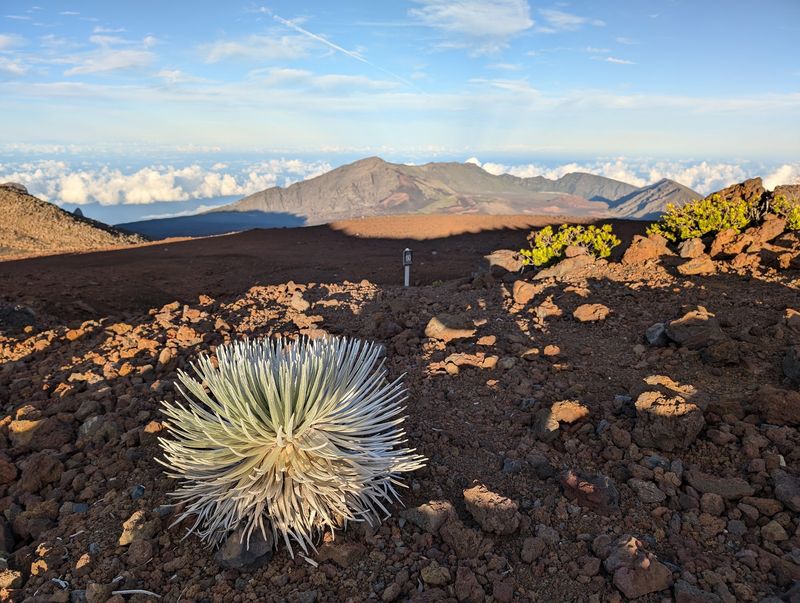
Among the cinders, look for a plant that resembles a silver-green starburst. The Haleakalā silversword, known in Hawaiian as ʻāhinahina, grows in the mountain’s severe conditions. Fine hairs on its narrow leaves help it cope with strong sunlight and moisture loss.
Against dark volcanic rock, its pale rosette is easy to recognize once you know what you’re looking for.
A silversword can live for many years before sending up a tall flowering stalk. It blooms once, produces seeds, and then dies. That life cycle makes each plant worth giving space, whether it’s a small rosette or one surrounded by faded flower heads.
Please don’t touch, pick, or step close enough to disturb the soil around it.
The high slopes are also important habitat for the endangered Hawaiian petrel, a seabird that nests in protected mountain areas. Wildlife can be difficult to spot, so treat an unexpected sighting as a quiet moment rather than an invitation to approach.
If traveling with children, invite them to count how many silversword shapes they can find from a trail without leaving the path. It’s an easy way to slow the pace and notice how much life persists in a landscape that first seems nearly bare.
Sunrise Reservations, Freezing Temperatures, And What To Bring To Haleakalā
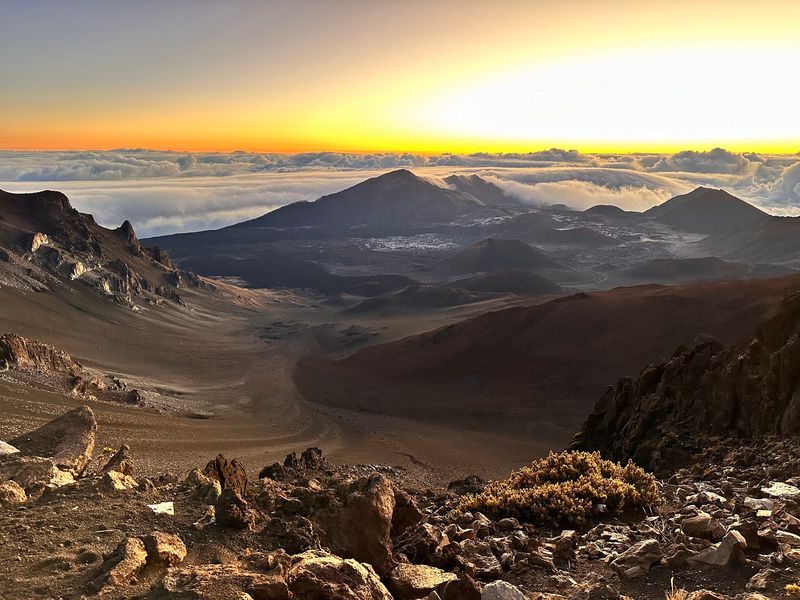
Warm beach clothes won’t do much for a windy summit before sunrise. Temperatures can fall to freezing or below, and damp conditions make the cold feel more intense. Pack a warm jacket, long pants, gloves, closed-toe shoes, and a hat.
A thermos, snacks, and enough drinking water are useful additions, even if you only plan to visit the overlooks.
For sunrise access, vehicles entering the Summit District between 3 a.m. and 7 a.m. need an advance reservation.
Reservations are released up to 60 days ahead, with some additional availability two days before a visit.
The named reservation holder must present the printed reservation and photo ID, and a separate entrance pass is required.
Without a sunrise reservation, plan to enter after 7 a.m. instead. The district generally remains open around the clock, subject to hazardous conditions or temporary restrictions.
For navigation, use 30,000 Haleakalā Highway, Kula, HI 96790. This is a GPS reference for the Summit District entrance, not the summit itself. Allow additional driving time above the entrance station.
Before leaving, check conditions and sunrise timing, then give yourself enough flexibility to enjoy the mountain even if clouds cover the horizon.
And one final practical note: the summit is a place to walk slowly, keep your footing, and take in the view without leaning beyond barriers. Cold hands can warm up later. The landscape deserves your full attention now.