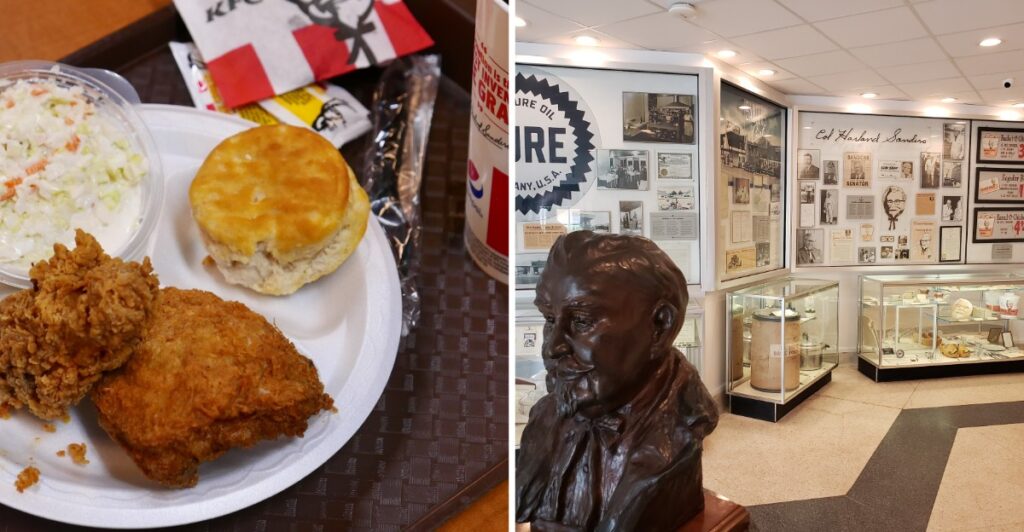
Before the bucket, there was a gas station.
And a man cooking for hungry travelers.
That small roadside setup in Kentucky eventually became something much bigger. It was here that Harland Sanders worked out the recipe that would make his name famous nationwide.
You can still eat there today, which makes the history feel a lot less distant.
Part restaurant, part time capsule, the stop lets you see where the story started before sitting down for the obvious order.
I think that is the part I would enjoy most.
Not just eating fried chicken, but eating it where the whole idea was still small enough to fit inside one roadside kitchen.
Before the empire came the apron.
Colonel Sanders Started Serving Roadside Travelers In Corbin In 1930
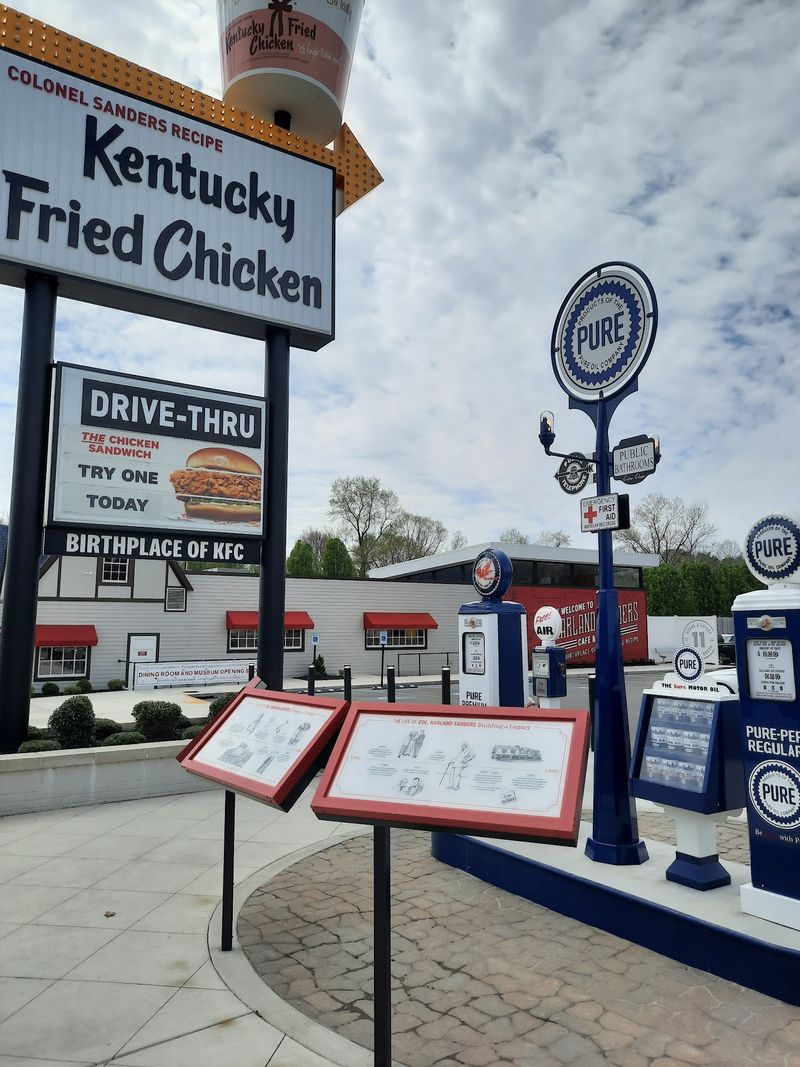
The story begins beside U.S. Route 25 in 1930. Harland Sanders operated a service station in North Corbin, across the road from the site of the present café.
He began preparing meals for motorists, using the space available at the station rather than opening a separate dining establishment immediately.
Sanders’ early arrangement combined those needs in one location. A person traveling through the area could stop at the station and have a cooked meal before continuing along the highway.
The original service station was not the museum building you see today. Sanders moved into larger restaurant facilities as the business developed, and the surviving café dates from a later phase of his work in Corbin.
Start your visit by identifying the early locations on the historical material. The service station, the 1937 café, and the 1940 building are separate stages of the same business, each associated with a different part of the roadside operation.
For travelers arriving by car, the current restaurant is on U.S. Highway 25 West, a short drive from Interstate 75. Its road-facing location still connects the experience with the route that shaped the original enterprise.
A Six-Seat Dining Table Launched Kentucky’s Most Famous Chicken Story
Six chairs at one dining table: that was the early eating space at Sanders’ service station. He served motorists at his own table in the back of the building, with only a small group able to sit down at one time.
It is an unusually compact beginning for a business later associated with restaurants around the world.
By the time Sanders opened a larger café, the dining space had grown well beyond the six chairs at his service station.
Look for the early photographs showing how the space changed.
By 1937, Sanders had developed a café with seating for approximately 142 diners. That gave the food operation its own substantial space and allowed more customers to eat at the roadside property.
The expansion belongs to the period when road travel was becoming an important part of how people moved between Kentucky communities.
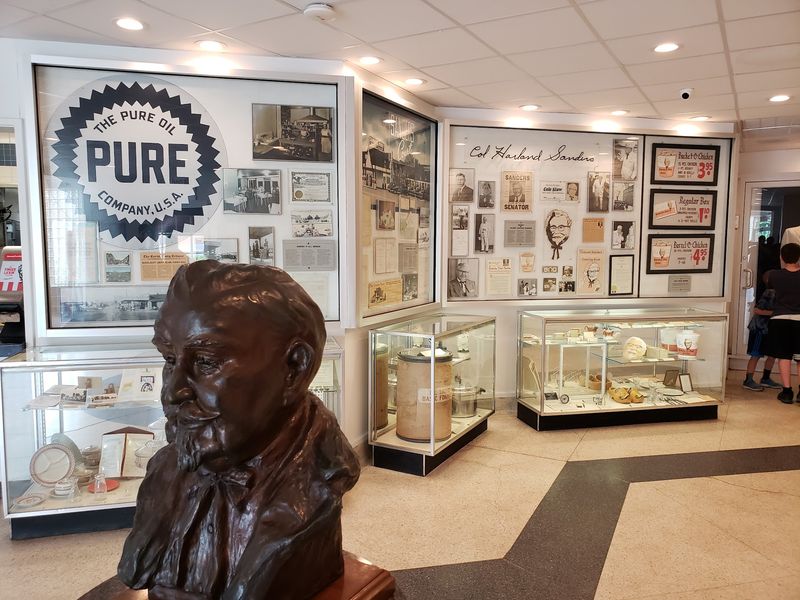
While looking through the displays, pay attention to photographs showing the changes in the buildings and dining areas. Compare the small table arrangement with the later café’s layout, and notice how the operation became more than a place to purchase fuel.
At the museum, compare those early dining spaces with the larger café that opened in 1940. The photographs offer a closer look at the changing rooms and roadside buildings.
The Original Sanders Café Rose From The Ashes Of A 1939 Accident
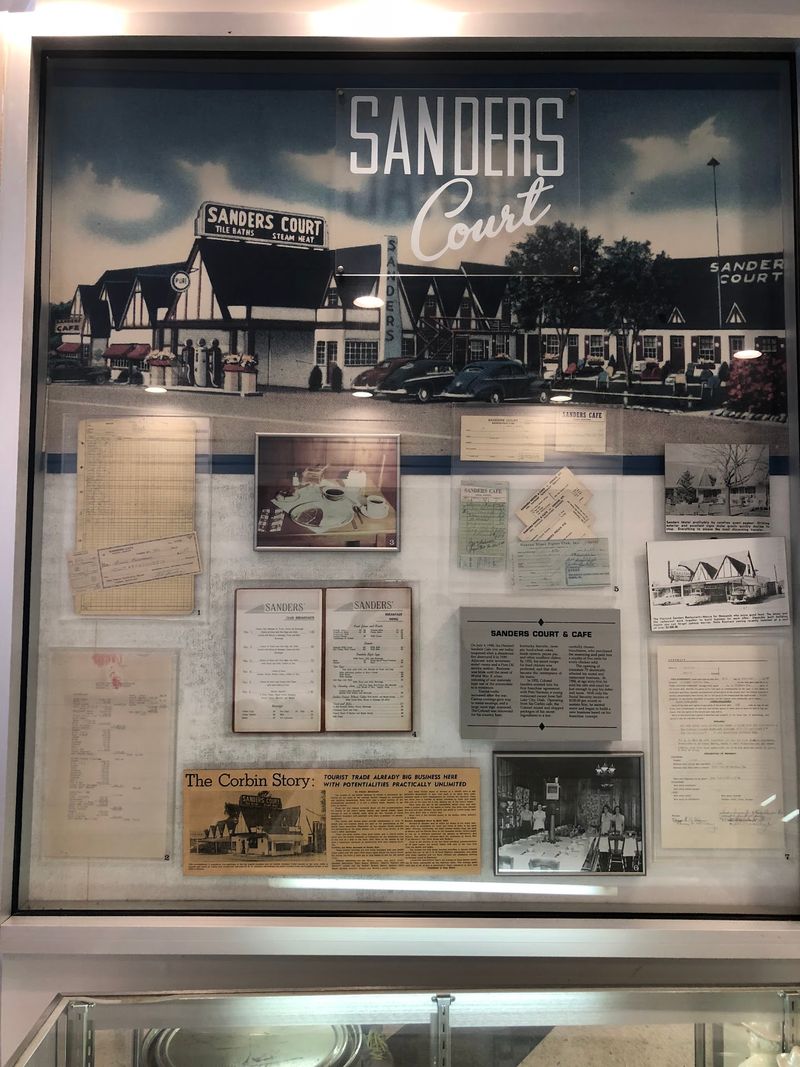
In 1939, a fire damaged the earlier Sanders Café. Work then began on the property that became the present historic restaurant, with a motel included in the roadside complex.
The replacement café and motel opened on July 4, 1940. The new arrangement offered travelers a place to eat and nearby overnight accommodation. Its design reflected an era when roadside services were often grouped together for motorists making longer journeys.
Look for the model motel room among the historic features. It illustrates the accommodation offered at Sanders Court and helps distinguish the former motel operation from the working restaurant.
The café’s historical displays also include materials associated with the years when Sanders was managing the business himself.
The present building was in use under Sanders from 1940 until 1956. Its preserved areas provide a physical connection to that period, even though the property has undergone later alterations and renovations.
The building has been listed on the National Register of Historic Places since 1990. For a closer view of its past, spend time with the images of the earlier restaurant and the reconstructed period rooms before moving to the newer exhibits.
Before heading to the next display, compare the model motel room with the historic café kitchen and photographs of the original roadside complex.
Eleven Secret Herbs And Spices Made Colonel Sanders’ Fried Chicken Famous
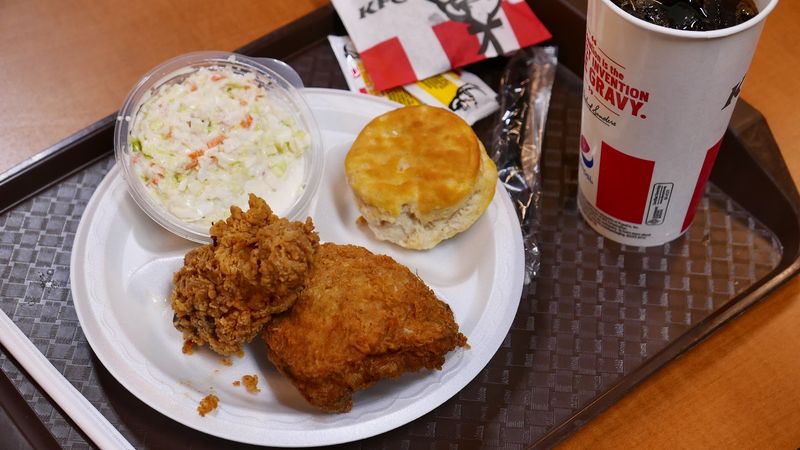
A blend of eleven herbs and spices became the defining feature of Sanders’ Original Recipe chicken. Sanders refined the preparation associated with that recipe while operating his Corbin café in the 1940s.
The exact seasoning formula remains proprietary. Museum material addresses the recipe’s place in the business without giving visitors a complete list of ingredients or a method for reproducing the blend at home.
The recipe was developed alongside changes in the way Sanders cooked chicken. The combination of seasoning and preparation became central to the product that later appeared in franchised restaurants under the Kentucky Fried Chicken name.
As you examine the historical displays, look for the connections between food preparation, the restaurant’s advertising, and the familiar Colonel Sanders image.
Packaging, photographs, and other objects show how a product first prepared in a roadside café became recognizable well beyond Corbin.
The restaurant continues to serve KFC Original Recipe chicken. If you are visiting for both the exhibits and a meal, you can compare the historical descriptions with the chicken served by the present-day operation.
The spice blend remains a secret, so focus on the historic packaging, kitchen equipment, and photographs as you follow the recipe through the café’s history.
Pressure-Fried Chicken Helped Transform A Roadside Café Into KFC
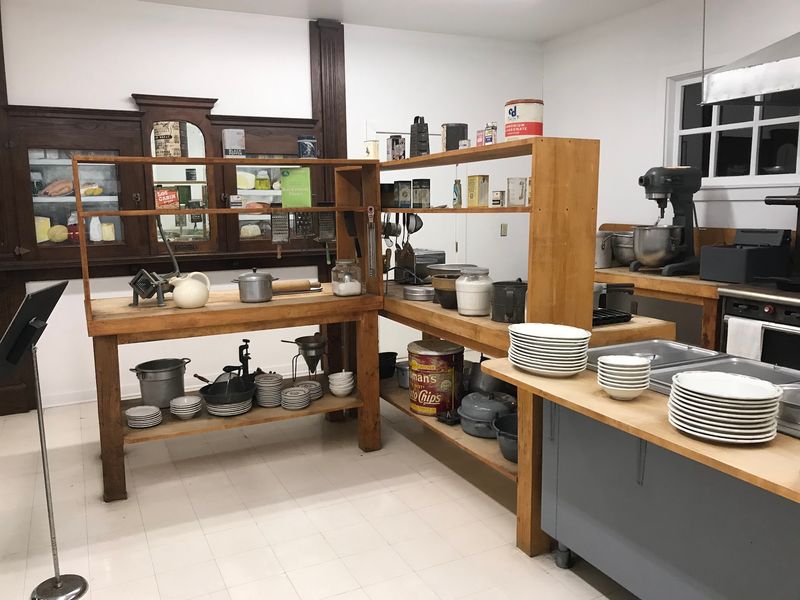
Cooking time mattered at a restaurant serving motorists. Sanders adopted pressure-cooking technology to prepare fried chicken more quickly than conventional pan frying allowed. The technique became an important part of the café’s food operation by 1940.
Along with the seasoning blend, the pressure-frying technique shaped the chicken later sold as Kentucky Fried Chicken. The equipment allowed Sanders to prepare batches for a busy roadside kitchen.
The café’s historic kitchen exhibits bring the early cooking operation into view. Examine the equipment and the model kitchen, then look at the adjoining photographs for details of the workspaces Sanders used during that period.
The present-day restaurant operates in a separate kitchen area.
The first Kentucky Fried Chicken franchise opened in Salt Lake City, Utah, in 1952. The franchise milestone happened outside Kentucky, even though the recipe and the earliest restaurant history were rooted in Corbin.
Sanders operated the Corbin café until 1956. Afterward, his attention shifted toward the chicken business and its growing network of franchises. The story now spans the early service station, the historic restaurant, and the later franchise system.
When planning your stop, allow separate time for the museum material and a meal. The exhibits cover the origins of the operation, while the working KFC functions as a present-day restaurant with its own service areas.
The Historic Sanders Café Museum Preserves The Birthplace Of Kentucky Fried Chicken
The Harland Sanders Café was added to the National Register of Historic Places on August 7, 1990. It reopened as the Harland Sanders Café and Museum on September 9 of that year, bringing historical displays together with the continuing restaurant operation.
The museum has presented memorabilia, historic photographs, the office associated with Sanders, and a kitchen area related to the development of the Original Recipe. A restored model motel room recalls the accommodations once offered alongside the café.
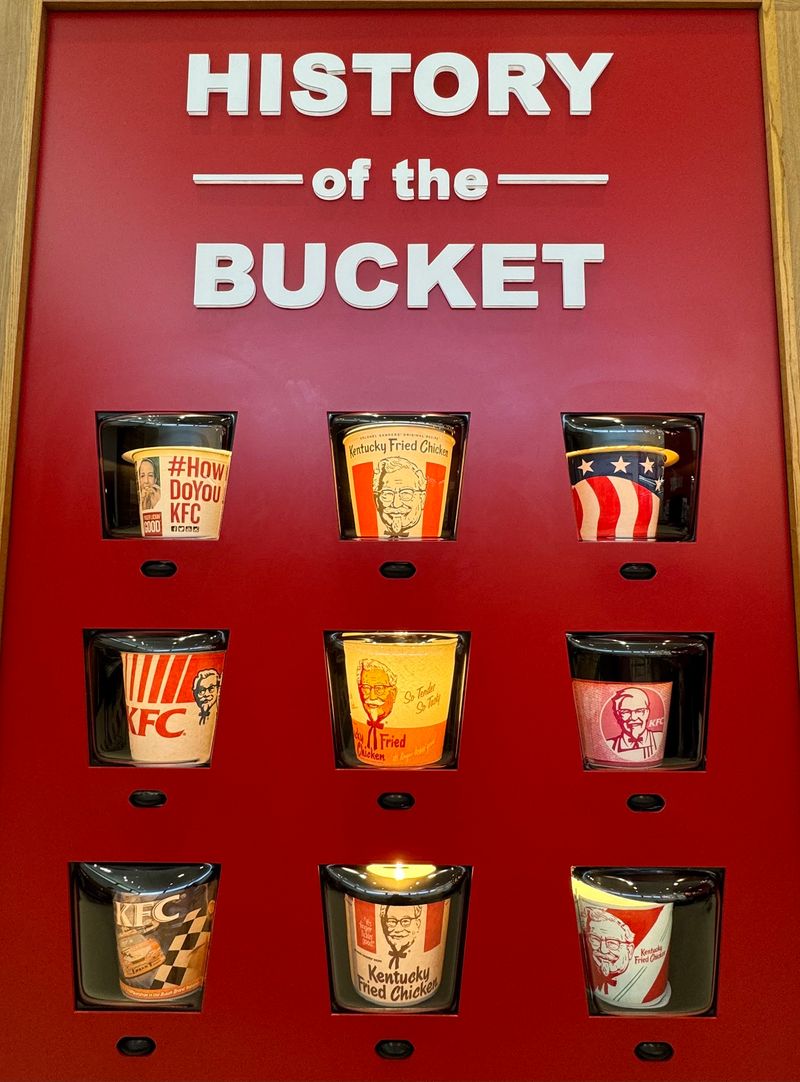
The displays also reflect KFC’s later history, including promotional objects and changing packaging. Look through the older material before moving to more recent items, so the shift from roadside café to restaurant brand is easier to follow.
A modern KFC kitchen was added beside the historic structure during an earlier renovation, connecting food service with museum space.
Later improvement work has included plans for expanded displays, a historical timeline, and an updated area devoted to the herb-and-spice story.
The museum exhibits cover different stages of the business, from the earliest meals to the expanding restaurant network. Follow the historical photographs and displays at your own pace.
The building itself remains an important part of the visit. Its preserved historic rooms, photographs, and original roadside setting connect the museum exhibits with the business Sanders operated in Corbin.
Visitors Can Still Eat Fried Chicken Where The KFC Story Began
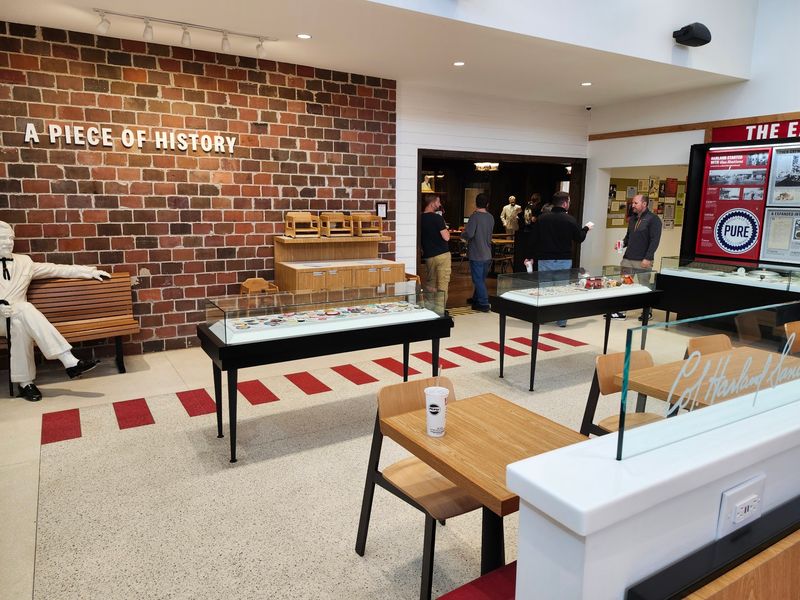
The historic property still operates as a KFC restaurant, so you can stop for a meal as well as look through the museum displays. Dining, carryout, drive-through, and delivery services are offered, although arrangements can change during construction.
The restaurant generally operates daily from 10 a.m. to 10 p.m. Check the schedule before a holiday visit, and confirm museum access while renovation work continues.
Admission to the museum has traditionally been free, and the restaurant operates as a separate food purchase. Allow time for both parts of the stop, since browsing historical displays and ordering a meal involve different areas of the property.
A visit can fit into a longer drive through southeastern Kentucky. The café sits near the major north-south route served by Interstate 75, and the historic roadside connection is visible in its location along U.S. 25 West.
If you have limited time, begin with the historical rooms and displays currently open, then decide whether to sit down for a meal or take your order along for the drive. Museum access can vary during ongoing renovations, so check availability before your visit.
Find Harland Sanders Café and Museum at 688 U.S. Highway 25 West, Corbin, KY 40701. Give yourself time to explore the available exhibits and enjoy a meal before continuing your drive.