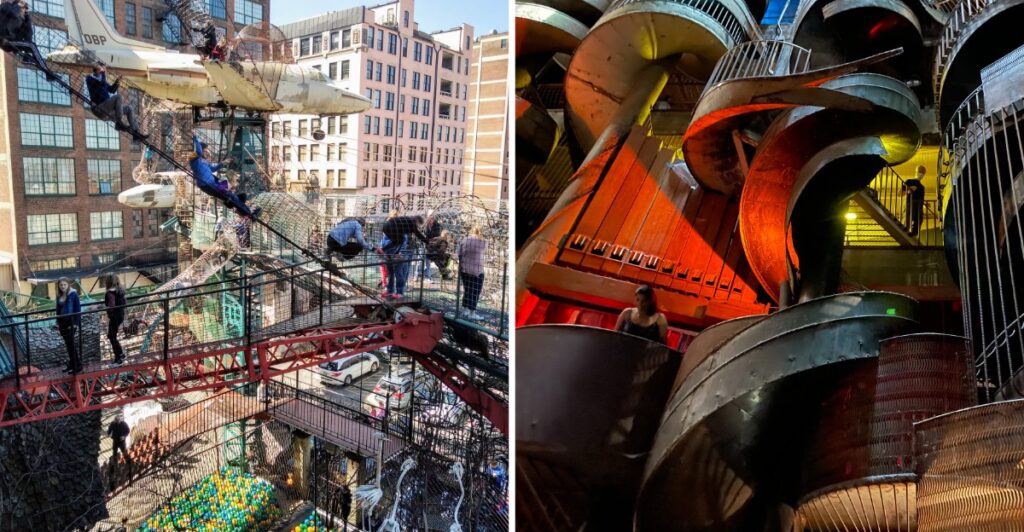
Somebody looked at an old shoe warehouse and thought it needed more tunnels.
And slides.
And places where grown adults suddenly remember they used to climb everything.
That idea became one of Missouri’s strangest places to explore. Instead of moving politely from exhibit to exhibit, you crawl through passages, squeeze into unexpected spaces, and keep finding routes that seem to lead somewhere completely different.
There is plenty indoors, while outdoor sections add even more climbing when conditions allow.
I would wear shoes I trust and forget about trying to see everything in order.
Honestly, if a museum has you asking, “Wait, can I climb that?”
You already know this is not going to be an oridnary afternoon.
The Museum Turns An Old St. Louis Shoe Factory Into A Giant Playground
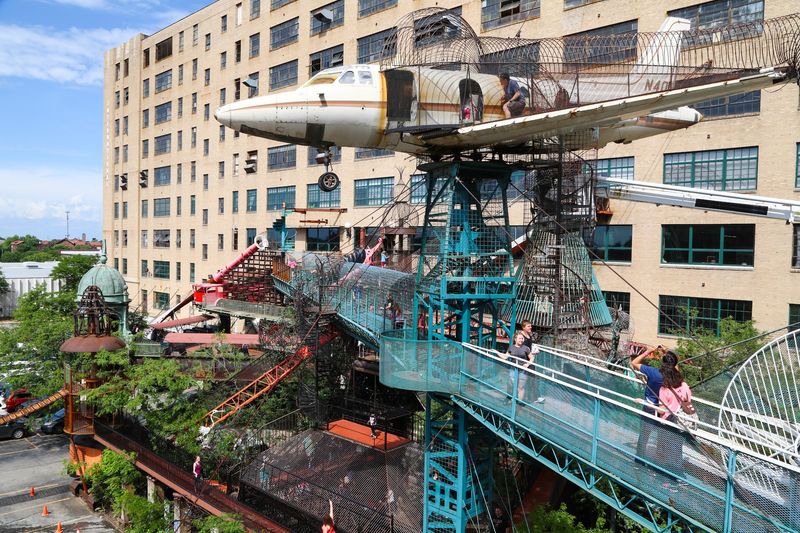
Shoes once moved through this downtown St. Louis building. Today, the former International Shoe Company warehouse holds climbing passages, slides, sculptures, and spaces built for hands-on exploration.
The contrast starts before you have finished looking around the first floor.
The building has roughly 600,000 square feet of space, spread across an imposing industrial structure.
Its scale shows in the columns, high ceilings, and long stretches of brick.
Artists have filled sections of that framework with tunnels, stairways, mosaics, and large sculptures assembled from materials that once had entirely different uses.
You can explore at your own pace rather than following one fixed route. One passage might lead to another level, while a staircase offers an alternative to a narrow opening. Look carefully before heading into a tunnel, since some connections require crawling or climbing.
Wear comfortable clothing and closed-toe shoes with good traction. Long pants and knee pads can make time on the slides and crawling routes more comfortable. Keep loose belongings secure, and bring only what you want to carry through the building.
Set a meeting place with your group before spreading out. With so many connections between floors, sticking together takes a little planning. Start by exploring one area, then move to another when everyone is ready.
Bob Cassilly Created A One-Of-A-Kind Adventure Museum In 1997
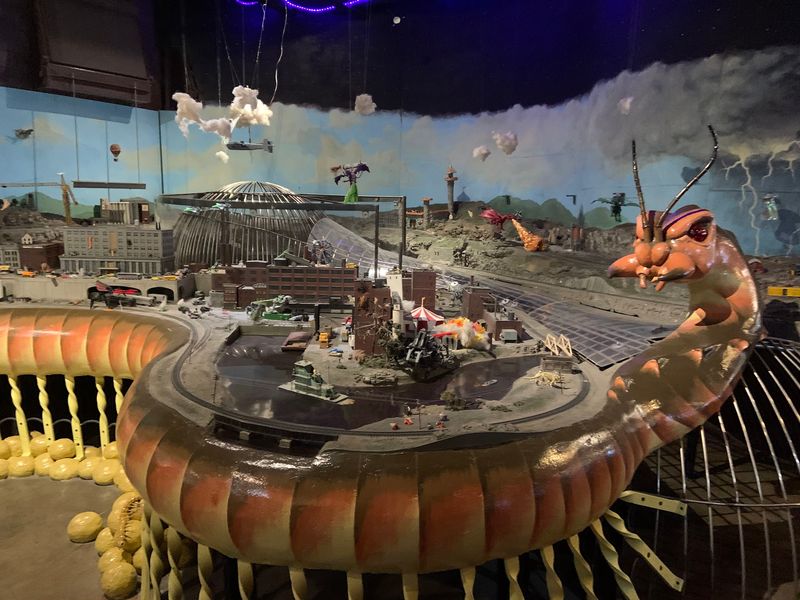
Most museums place their objects behind barriers. At City Museum, many of the artworks are also the spaces you walk through, climb over, or slide down. Sculptor Bob Cassilly founded the attraction, which opened in 1997 with work by a team of artists and builders.
Their materials came from salvaged architectural and industrial pieces, giving older objects new uses inside the warehouse.
Large metal elements become parts of climbing structures, and decorative pieces appear beside stairways and passageways. Look closely at the textures as you move through a room.
The details extend well beyond the largest sculptures.
The original shoe building is part of the experience, too. Its industrial layout and former chutes influenced the museum’s multi-level slides. Rather than hiding the warehouse’s earlier purpose, the installations sit alongside and within its surviving framework.
Try treating your visit as a series of discoveries. Spend a few minutes examining a mosaic or sculptural detail before tackling another climb. If someone in your group prefers to stay on level ground, choose a nearby viewing area while others explore a more demanding route.
The museum has continued adding spaces and attractions beyond its opening-year installations. That makes a current floor guide useful, especially if you are returning after several years and want to locate a particular feature.
More Than 30 Slides Take Visitors Through Multiple Floors
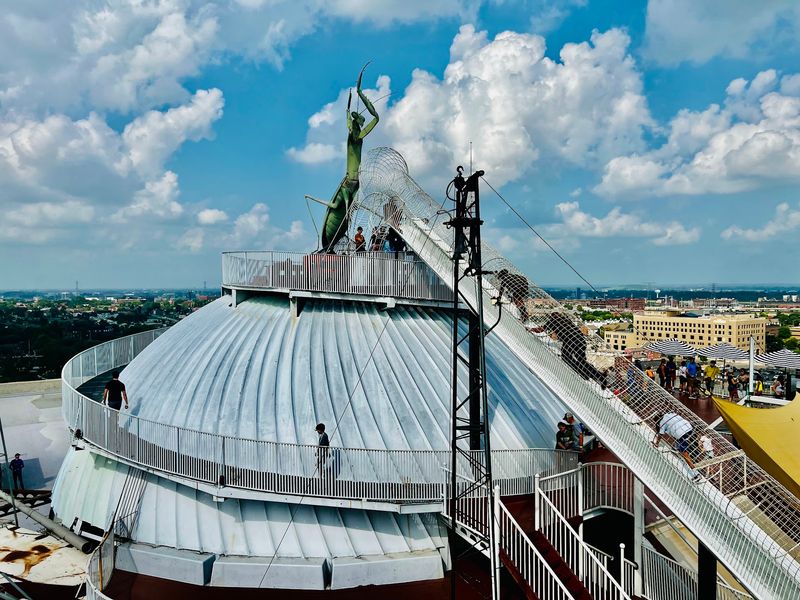
A slide can be a shortcut here, but first check where it ends. City Museum has more than thirty slides distributed through indoor spaces, outdoor installations, and the rooftop. Their sizes and routes differ considerably.
One of the notable indoor options is the five-story spiral slide within the Enchanted Caves. Reaching it involves navigating the cave area, and the descent carries riders through several levels.
Other slides are much shorter, including ones designed for small children in Toddler Town.
Look for posted requirements before joining a slide entrance. The five-story spiral slide requires riders to be at least forty-two inches tall.
The slides also have different height limits, and some routes may be unsuitable for anyone who finds tight openings uncomfortable.
Long pants are a sensible choice for sliding, and shoes should stay secure. Empty your hands before descending and keep your belongings somewhere safe.
If your group separates to try different slides, agree where to meet afterward rather than guessing which exit everyone will use.
You can enjoy the museum without trying every chute. A staircase or ordinary walkway is often the better route if you want to stop and examine artwork between floors. Choose a slide when its posted rules and your comfort level line up.
Hidden Caves And Twisting Tunnels Make Every Corner An Adventure
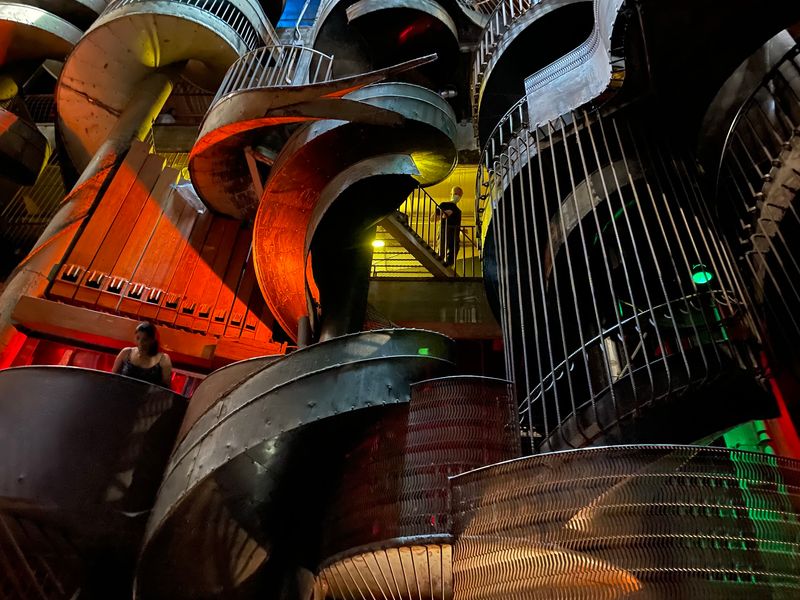
The Enchanted Caves exchange the broad factory rooms for a network of winding passages. Sculpted formations and creatures line parts of the route, and the paths twist through a darker section of the museum.
The caves also contain a historic Wurlitzer theater organ. It is one of several unexpected objects incorporated into the setting.
As you explore, look at the walls as well as the entrances: the details sit at different heights and can be easy to pass on the way toward the next staircase.
Some passages require you to crouch or crawl. Others open into larger areas where you can stand and choose another path. You do not need to enter every narrow opening to explore the caves, and it is fine to turn around when a route does not suit you.
A small flashlight may help with looking into darker corners, although follow any posted rules about equipment. Knee pads are useful for crawling sections. Take your time, especially where a passage turns or the footing changes.
Children younger than sixteen need an adult with them in the Enchanted Caves. Before entering, remind everyone in your group of the meeting place and decide whether you will explore together.
For families with younger children, a short guided wander through one section may be easier than trying to follow every connecting tunnel.
MonstroCity Brings Giant Climbing Structures To The Outdoors
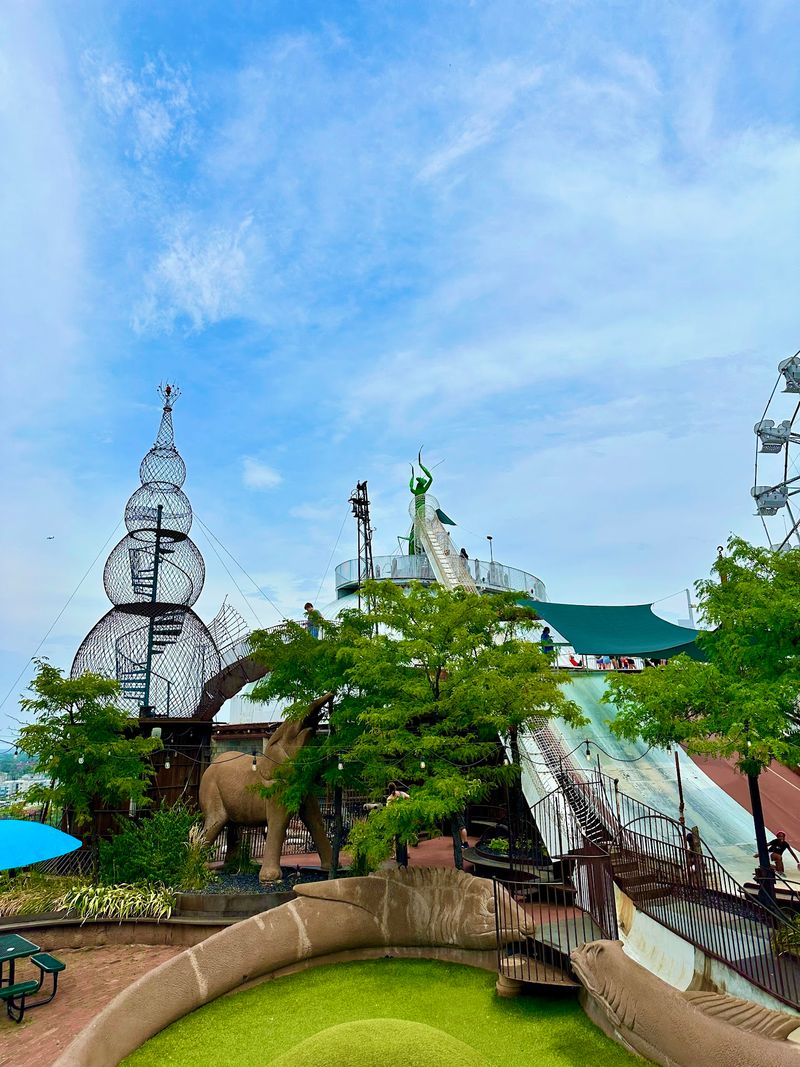
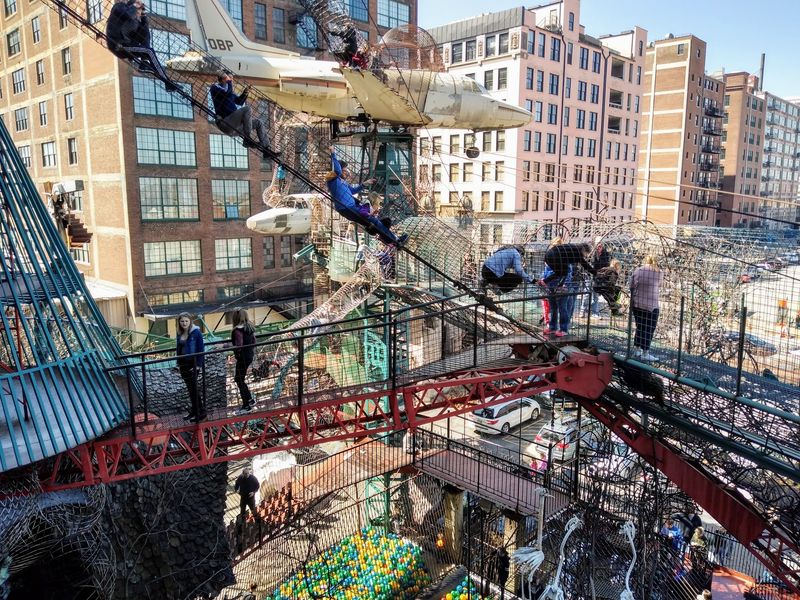
Step outside and MonstroCity brings the museum’s salvaged-material approach into the open air. This large climbing installation includes metal passages, suspended structures, slides, and aircraft fuselages integrated into its network.
A pair of Sabreliner aircraft bodies forms part of the collection. Elsewhere, bridges, towers, and other repurposed objects shape the ways through the structure. You can look up at the network from ground level before deciding how far you want to climb.
Some routes are high above the surrounding area and involve enclosed mesh passages. Keep three points of contact when climbing where appropriate, move carefully, and respect any closures or staff instructions.
Choose an easier section if you are uncertain about a height or narrow crossing.
MonstroCity may close in rain, snow, strong winds, or temperature extremes. Check the day’s conditions before planning an outdoor-heavy visit. The indoor galleries and slides provide alternatives if the outdoor climbing areas are unavailable.
Visitors under sixteen need an accompanying adult in MonstroCity. Families can also make a simple plan before entering: stay in sight where possible and choose a recognizable point to gather after a climb.
Comfortable sneakers and clothing that allows free movement are especially useful here.
A Rooftop Ferris Wheel And Vintage Bus Add To The Museum’s Surprises
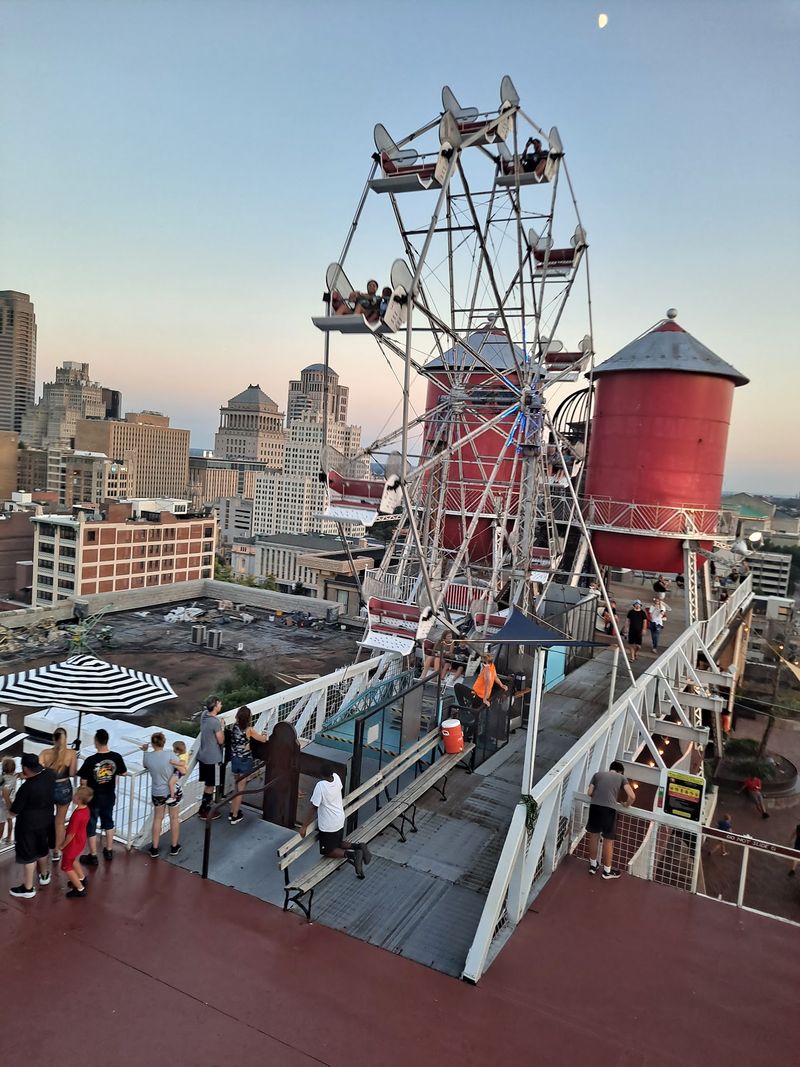
The rooftop has a very different collection of objects from the factory floors below. A Big Eli Ferris wheel stands above downtown St. Louis, while a bus projects from the building and a large praying mantis sculpture occupies another part of the roof.
You can also find slides and climbing features in this elevated area. The mix of reused objects and open views gives you several ways to explore without following one route. Pause to look across the city if conditions are clear, then consider which attraction you want to try next.
Rooftop admission is an additional purchase for standard ticket holders. Access is included with certain passes, so check your ticket before going upstairs. The roof operates when weather and other conditions allow, and it closes after sunset.
Its availability can differ from the museum’s indoor operating hours.
The Ferris wheel has a minimum height requirement of forty-eight inches. Rooftop slides have their own restrictions, too. Check each sign at the entrance and keep your group together if children are moving between attractions.
If the rooftop is a priority, ask about access before buying the add-on. A change in the forecast may affect outdoor operations even when indoor areas remain open. Allow time to return to a favorite indoor installation if the roof is unavailable.
City Museum Offers Hands-On St. Louis Adventures Before 2026 Ends
There is plenty to explore at City Museum before the calendar turns. Start by checking the museum’s operating calendar for your chosen date, since closing times vary and special events can affect access.
Buying the right admission option also matters if you plan to visit the rooftop.
Toddler Town on the third floor offers smaller slides and climbing features for children age six and under. Older children and adults can choose from the indoor slides, caves, and climbing installations, subject to the posted height and supervision rules.
A visit can involve plenty of walking and climbing, so build breaks into the day. Food is available at the museum, and outside meals are generally not allowed. Plastic water bottles are permitted.
Bring a payment card or mobile payment method because the museum operates without cash.
Travel light. Lockers are available for belongings you do not want to carry, and an intact admission wristband permits same-day reentry under the museum’s rules. Keep valuables secure before entering a slide or crawl space.
Different ages and comfort levels can share the same visit without doing identical activities. Some people may want another trip through a cave, while others would rather study the sculptures or take a seated break.
Arrange a meeting point and leave time to find your way back through the building.
For your visit, head to City Museum at 750 North 16th Street, St. Louis, MO 63103. Check current hours and attraction availability before leaving, and wear clothes ready for climbing, sliding, and a little dust.