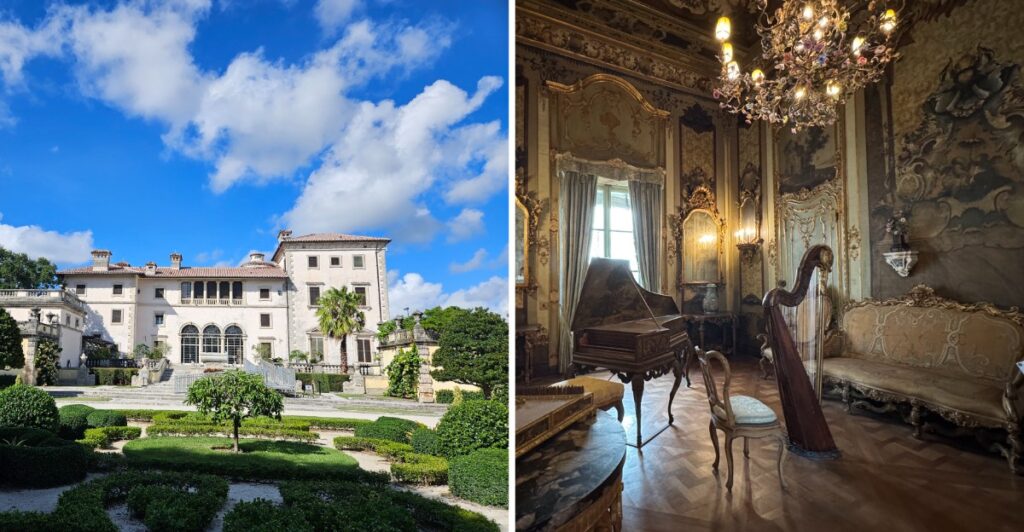
A giant stone boat sits in the water off one Miami estate, and it never sails anywhere.
It’s carved with mythical sea creatures and works as a breakwater for the mansion behind it.
That mansion has fifty-four rooms, filled with European art and antiques dating from the 1400s onward.
Its owner moved in on Christmas Day in 1916. He also had a private telephone system installed, which feels remarkably modern for an Italian-inspired villa.
I like how the whole place mixes old Europe with Florida’s coral stone and tropical plants.
Fountains and statues line the gardens, and some statues once stood near Venice. I can’t imagine a better spot to feel like you left the country without a passport.
So how did a farm machinery fortune end up building a palace on the bay?
A Farm Machinery Fortune Built This Bayside Dream
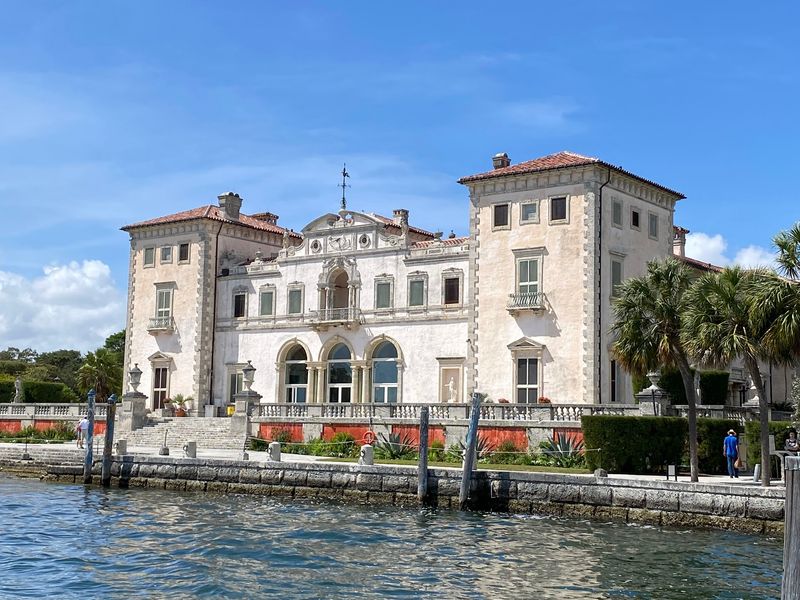
Tractors and harvesters paid for a palace.
Vizcaya Museum & Gardens was the winter home of industrialist James Deering, whose family business made farm equipment.
Construction started in 1914, and Deering moved in on Christmas Day in 1916.
Work on the Main House continued until 1922, and the gardens and village kept going into 1923.
The total price came to about 15 million dollars back then. That’s a lot of plows sold, and it shows in every carved ceiling.
Deering wanted a modern, subtropical take on an 18th-century Italian villa. He looked to the country estates of the Veneto region in northern Italy for inspiration.
Three big names shaped the project. F. Burrall Hoffman served as architect, Paul Chalfin led the design, and Diego Suarez planned the landscape.
The result sits in Miami’s Coconut Grove neighborhood, right on Biscayne Bay. It feels like a piece of Europe dropped onto the Florida coast.
I love that the original property covered about 180 acres. Today the estate spans roughly 43 to 50 acres, which is still plenty of room to wander.
The Stone Boat That Will Never Leave The Dock
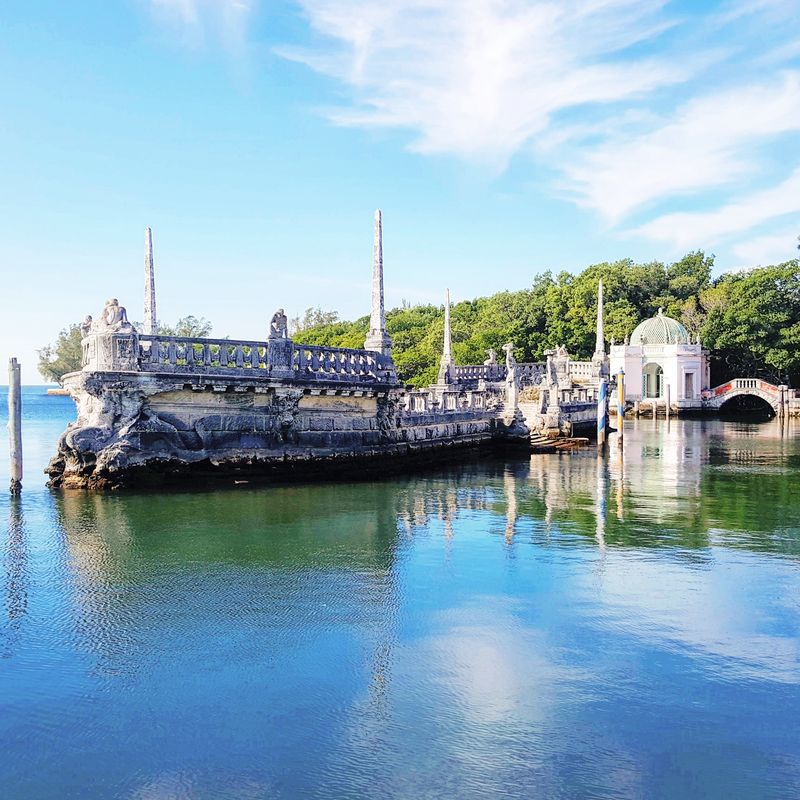
Most rich folks buy a yacht. Deering built a boat out of stone and parked it in the bay forever.
The Barge is a huge, boat-shaped structure sitting just off the estate in Biscayne Bay. It works as a breakwater, shielding the property from waves.
American sculptor Alexander Stirling Calder designed its decorations. Look for carvings of mythical Caribbean creatures wrapping around the stonework.
In Deering’s day, the Barge was even fancier. It held fountains, trees, and a little gazebo, almost like a floating party island.
Today it’s one of the most photographed features on the property. The view across the water from the terrace makes it look like a ship frozen in time.
My tip is simple. Spend a few extra minutes by the seawall and study the carvings up close.
Each figure adds a bit of fantasy to the scene. It’s easy to see why the Barge has become a symbol of the whole estate.
Bring your camera, and maybe some patience. Everyone wants a shot with that stone boat in the frame.
Fifty-Four Rooms And Not One Of Them Is Boring

Fifty-four rooms sound like a lot to clean.
That’s how many the Main House contains, excluding basement service areas, and 34 decorated rooms are usually open to the public.
Inside, you’ll find European art, furniture, and antiques from the 1400s through the early 1800s. Deering collected pieces to make the house feel centuries old.
Several rooms take inspiration from Italian cities. The Music Room nods to Milan, while the Reception Room draws from Palermo.
Venice gets its moment too. The Cathay and Espagnolette bedrooms both lean on Venetian style.
That city-hopping idea makes a tour feel like a quick trip across Italy. One doorway, and suddenly you’re somewhere new.
Restoration work is happening right now, so some rooms may be closed. Because of that, adult admission has been lowered for the time being.
I think that’s a fair trade. The work helps protect these rooms for years to come.
An audio tour is available if you like stories with your sightseeing. Give yourself at least an hour inside so you don’t rush past the details.
Gilded Age Gadgets Hide Behind The Old-World Look
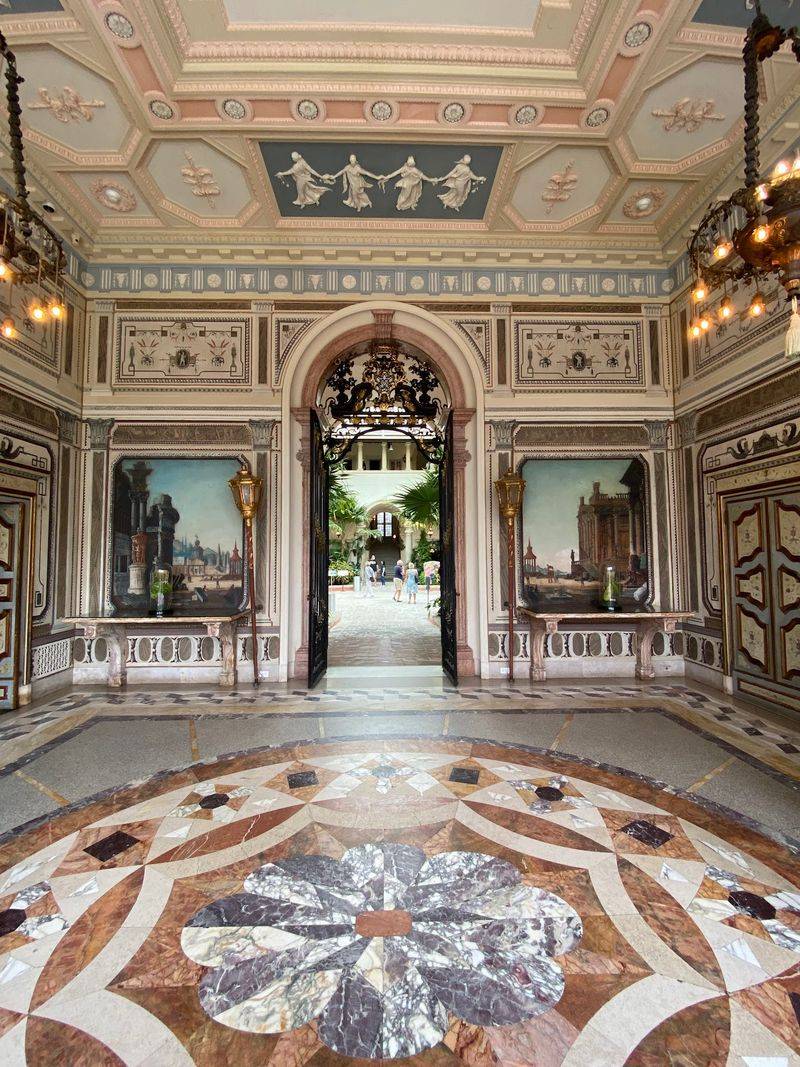
Old paintings on the walls, new gadgets in the walls. Vizcaya Museum & Gardens looked ancient, but it was surprisingly high-tech for its time.
The estate featured its own private telephone switchboard, allowing communication between rooms and different parts of the property.
Picture calling a butler from across a grand mansion, back when telephone technology was still developing rapidly.
Deering mixed his love for history with the latest comforts of the Gilded Age. That contrast is part of what makes the house so fun to explore.
You’re looking at a pretend 18th-century villa built in the 1910s. Then you remember it had modern conveniences tucked behind the fancy decor.
Families with curious kids should point this out during the visit. It turns a museum stroll into a bit of a treasure hunt.
Ask yourself which features seem old and which seem new. The answers aren’t always obvious.
It also shows how wealthy Americans lived a century ago. They wanted beauty, but they wanted comfort too.
Honestly, I can relate. Who wouldn’t want a palace with good phone service?
Ten Acres Of Gardens Will Test Your Camera Storage
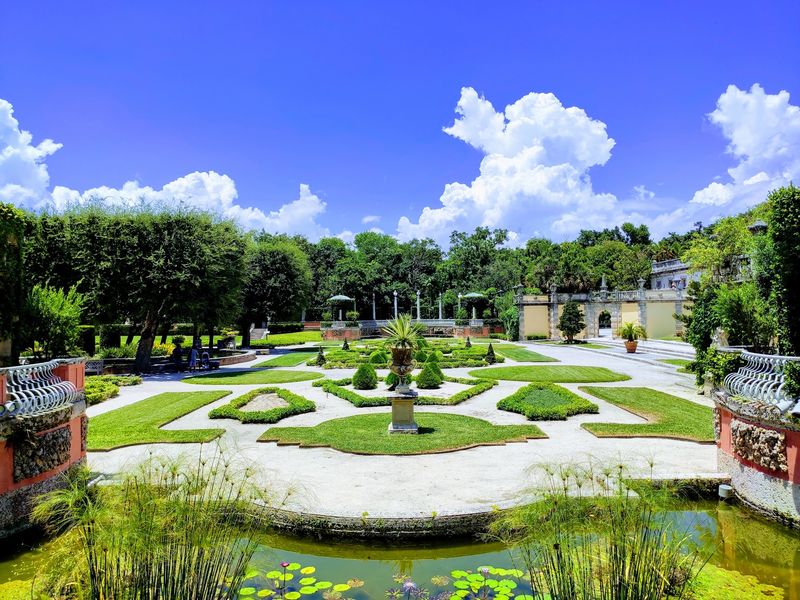
Sculptures that once decorated villas near Venice now stand in a Miami garden. That alone makes the formal gardens worth a slow walk.
They cover ten acres in Italian Renaissance style, with French parterre touches mixed in. Expect fountains, classical statues, hedge mazes, and tropical plants.
The Fountain Garden’s centerpiece was designed in 1722 by Filippo Barigioni. He’s the architect credited with the fountain in front of the Pantheon in Rome.
What makes these gardens special is the blend. Imported European style meets Cuban limestone and Florida coral stone, planted with subtropical and native greenery.
Plan to spend real time out here. Many folks find the gardens just as memorable as the house itself.
Florida sun can get intense, so bring water and a hat. A cloudy morning can make the stroll more pleasant.
Keep an eye out for orchids and lizards too. They add a little life between all those stone statues.
In 2024, Vizcaya earned the American Public Gardens Association’s Sustainability Award. Pretty gardens, and smart ones as well.
Wild Florida Still Grows Right Next Door
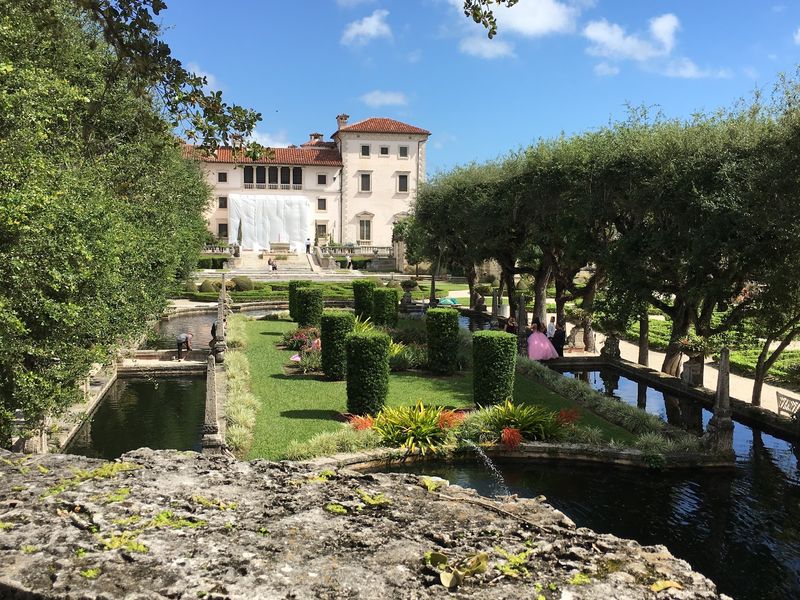
Not everything here got the fancy Italian treatment. Deering actually wanted to protect the natural habitat while building his estate.
Parts of the original native woodland survive today. This type of forest is called a rockland hammock, and it’s rare in South Florida.
The estate also keeps mangrove shores and native forest along the bay. These areas show what the land looked like before the statues arrived.
I find that balance pretty refreshing. A palace on one side and wild Florida on the other feels like the best of both worlds.
Mangroves matter for the coast. They help protect shorelines and give shelter to sea life.
So when you’re done with the gardens, take a moment to notice the wilder edges. The change in mood is easy to spot.
Nature lovers will enjoy comparing the trimmed hedges with the tangled native trees. It’s like two different worlds sharing one address.
This mix also explains why Vizcaya feels peaceful. Even in busy Miami, the greenery softens the city noise around you.
The Old Farm Village Now Hosts Market Days
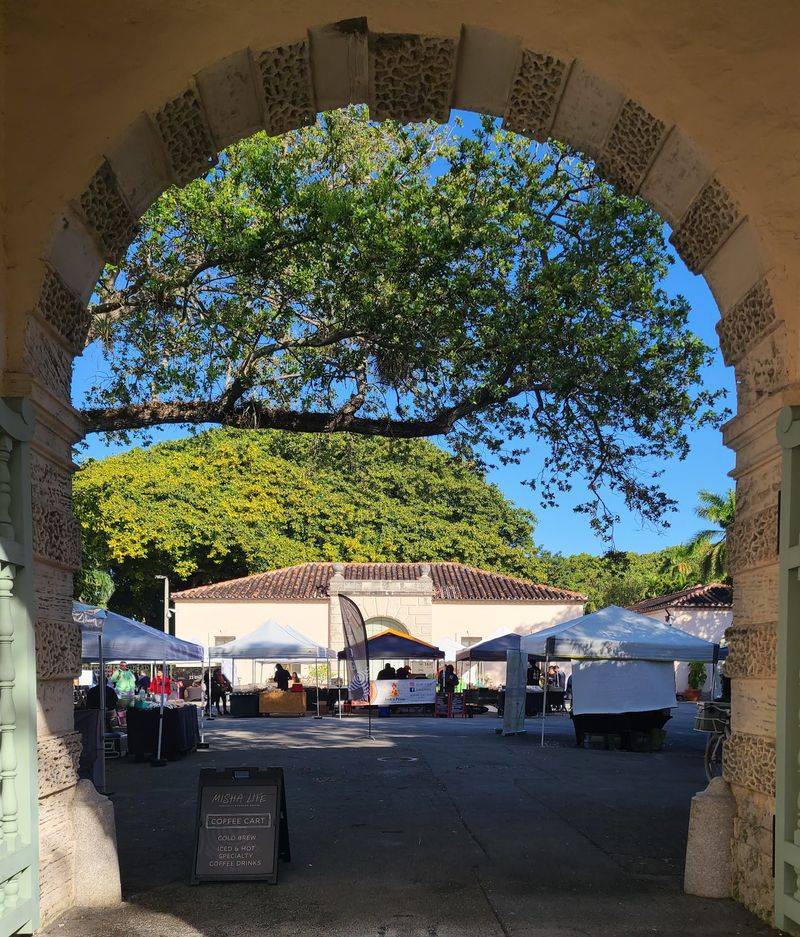
Every grand estate needs a back office. At Vizcaya, that job belonged to the village, the working farm and outbuildings that kept the place running.
Vizcaya Village is being restored right now. It already serves as a lively community space.
On Sundays, a weekly farmers market sets up there. It’s a great excuse to pair local produce with a bit of history.
The village also supports urban agriculture programs. That links back nicely to the land’s original farming purpose.
Community events pop up here too. The estate’s calendar includes educational and contemporary arts programs throughout the year.
Once a month, Vizcaya hosts an evening program called Vizcaya Late. It’s a fun way to see the grounds after normal hours.
I like that the village isn’t frozen in the past. It still feeds and gathers people, just in a modern way.
Check the schedule before you go. Planning around the market or a special event can make a regular visit feel extra special.
Getting There Is Easier Than Building A Palace
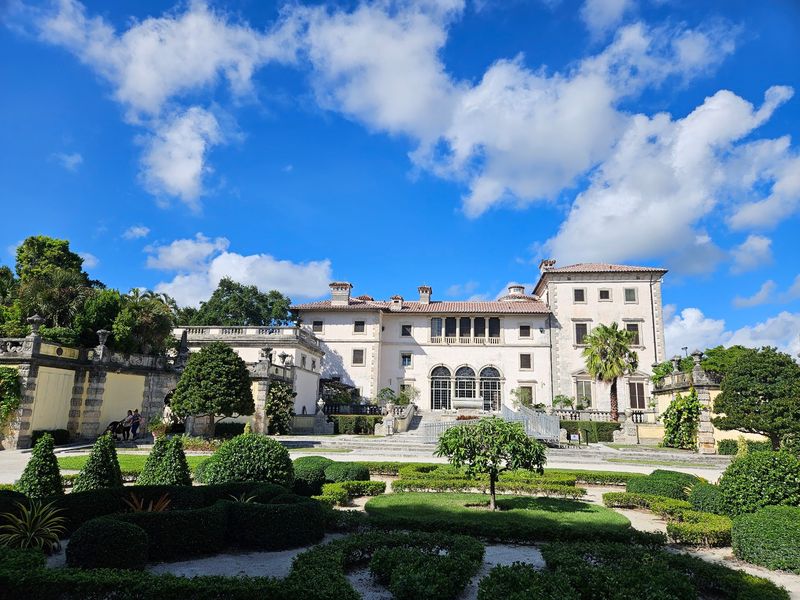
Finding Vizcaya Museum & Gardens is simple. The address is 3251 S Miami Ave, Miami, FL 33129, in the Coconut Grove neighborhood.
It’s open every day except Tuesday, with regular visiting hours from 9:30 a.m. to 4:30 p.m.
Check the official website before visiting, as hours may change for special events or restoration work.
Parking is limited, so public transit is a smart move. The Vizcaya Metrorail Station sits about a ten-minute walk away.
Local buses and trolleys also serve the area. Ride-share and Citi Bike work well if you’d rather skip the parking hunt.
Plan for about two hours to see the house and gardens comfortably. Garden fans may want even more.
A café on site helps when you need a break. There’s also a shop for a souvenir on the way out.
Since restoration is ongoing, some areas may be closed during your visit. The reduced admission helps soften that a bit.
Wear comfy shoes and pack sunscreen. Florida sunshine plus ten acres of gardens is a real workout.