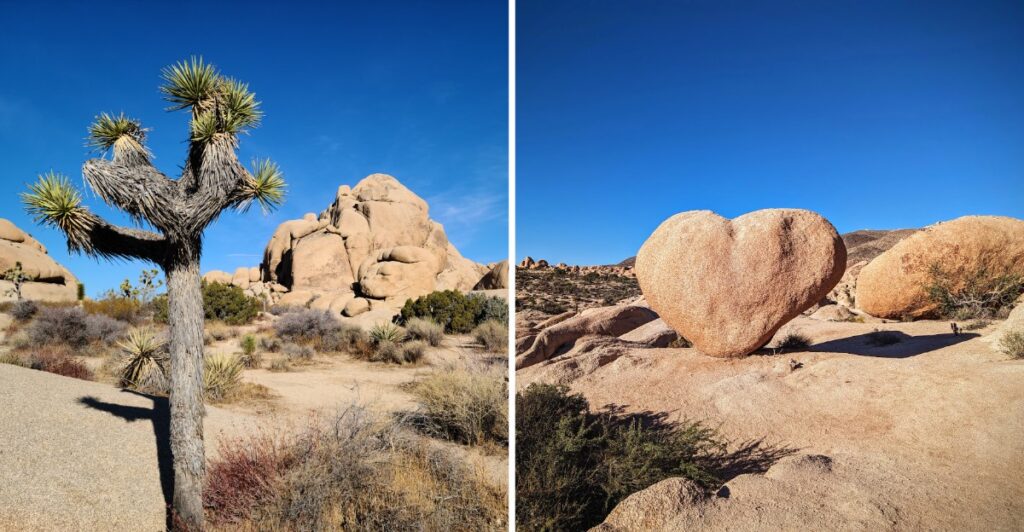
The famous twisted trees in this desert park aren’t actually trees in the usual sense. They’re giant succulents, and 1850s settlers named them after a figure raising his arms toward the sky.
Call me curious, but that detail alone made me want a much closer look at them. Then come the boulder piles, stacked like a toddler giant’s toys, with around 8,000 mapped climbing routes to tackle.
This corner of Southern California also sits right where two completely different deserts meet. Drive a few miles toward the lower side, and the spiky trees swap out for cholla and ocotillo.
My favorite detail is that the park stays open around the clock, even in the middle of the night. Winter nights run long and dark out here, so the stars get plenty of extra time to show off.
Those Wild Branches Belong To A Plant With A Great Backstory
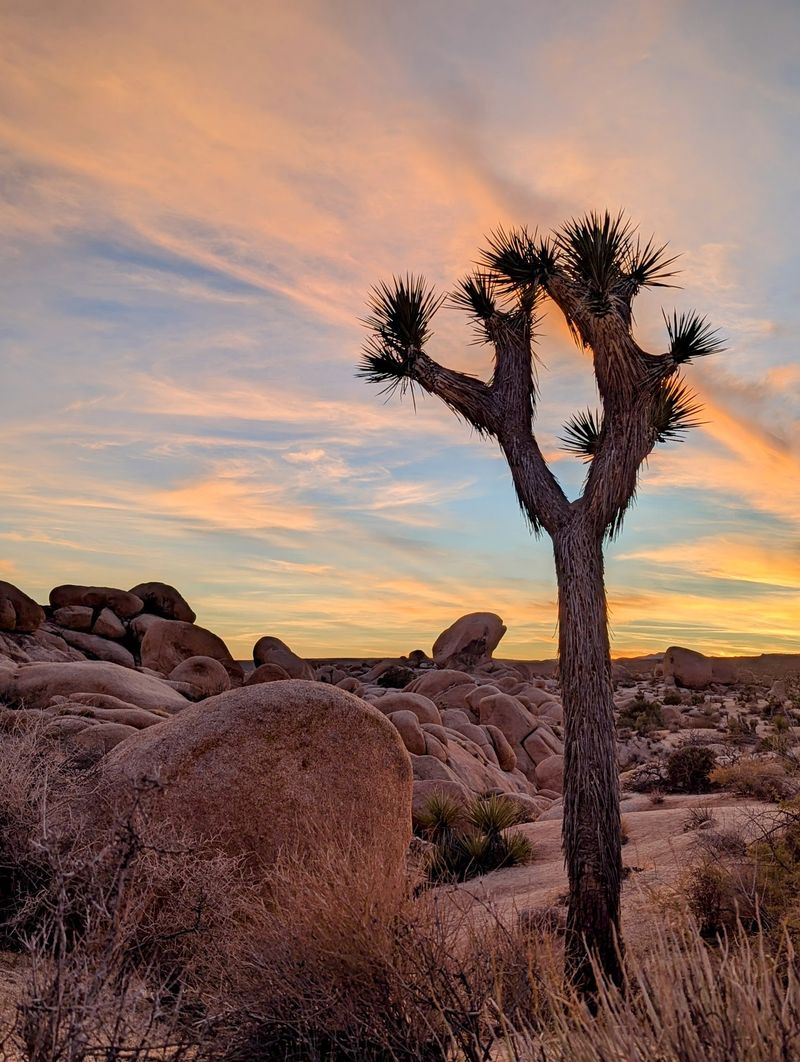
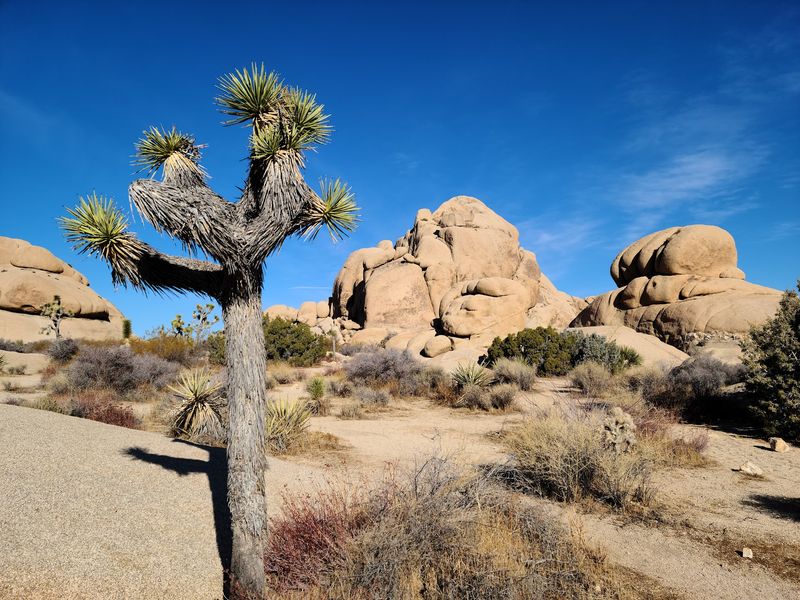
Here’s a fun twist for your next trivia night. The plant that gives Joshua Tree National Park its name, Yucca brevifolia, is a succulent and not a true tree.
According to a popular but unverified legend, Mormon settlers gave the Joshua tree its name in the 1850s.
The legend says the plant’s reaching, twisted branches reminded settlers of the biblical Joshua raising his arms.
Once you hear that, it’s hard to unsee it.
These plants grow in the Mojave Desert part of the park, mostly above 3,000 feet. The higher elevation brings slightly cooler, wetter conditions that they need. Each one grows into its own odd shape, so no two look alike.
That makes them perfect photo subjects, especially at sunrise or sunset. The low light turns their spiky silhouettes into something straight out of a storybook. Bring a wide-angle lens if you have one.
Please admire them from a respectful distance, though. The leaves are sharp, and the plants are part of a fragile desert system. Give them space, and they’ll keep standing for future visitors.
Honestly, you’ll spot so many shapes that you might start naming them. One looks like it’s waving. Another looks like it’s stuck mid-dance.
The Boulder Piles Look Like Someone Forgot To Finish Stacking
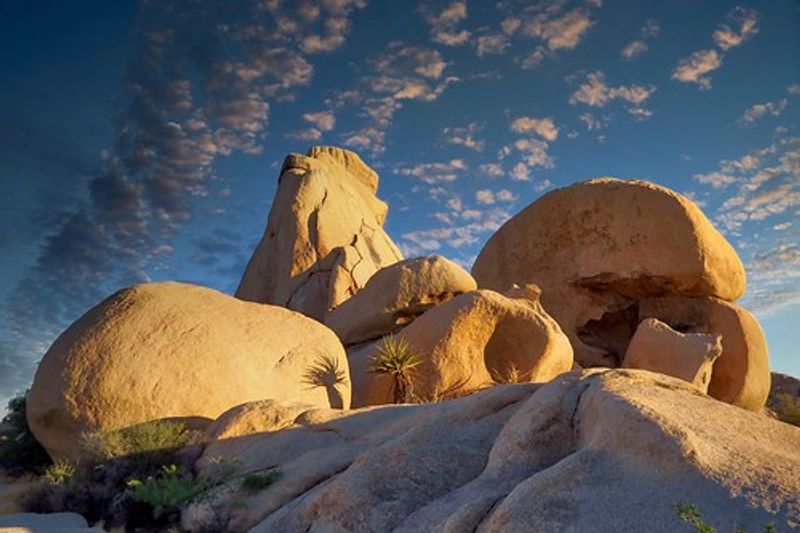
Giant, smooth rocks balance on top of each other everywhere you look. Some piles seem one sneeze away from tumbling, yet they’ve held steady for ages.
The granite formations took shape over millions of years. Underground rock slowly cracked, weathered, and rounded before the surrounding soil wore away. What’s left looks like a playground built by giants.
Skull Rock is the celebrity of the bunch. Its hollow eye sockets make it one of the easiest stops to recognize. It sits near Jumbo Rocks Campground, so it’s simple to add to a driving loop.
Arch Rock is another crowd favorite. A short trail leads to a natural granite arch that frames the sky beautifully. Split Rock Loop gives you more of that same rocky charm with a longer walk.
Kids tend to treat these areas like a natural jungle gym. That’s part of the fun, but sturdy shoes with good grip matter here. Granite can feel rough on your hands, and loose sand makes footing slippery.
Keep an eye out for shapes as you go. Faces, animals, and castles start appearing once your imagination warms up. Good luck stopping at just one rock.
Two Deserts Collide, And You Get To Watch The Scenery Switch
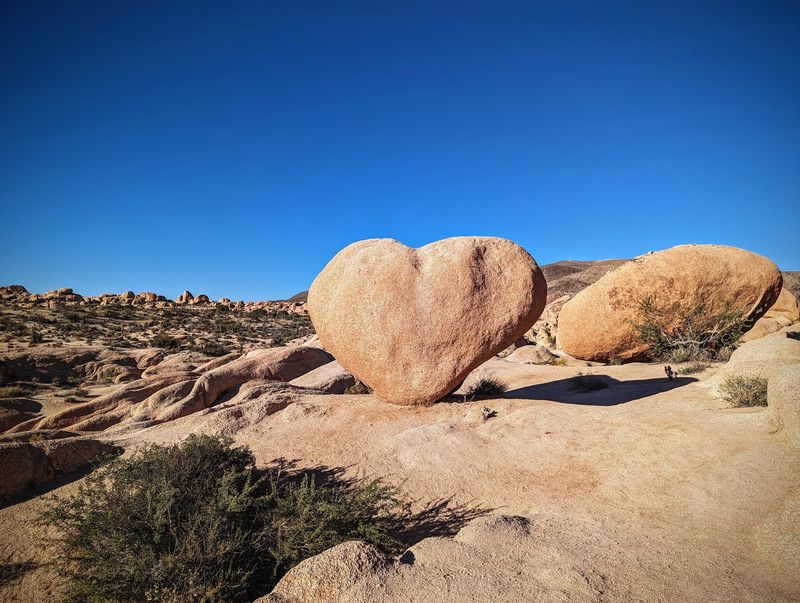
Most parks stick with one look. Joshua Tree National Park splits the difference between two entirely separate deserts.
The higher Mojave Desert covers the western side. That’s where you’ll find Joshua trees and those famous boulder stacks. It sits above 3,000 feet, and the air feels a bit cooler there.
Head toward the lower elevations, and the Colorado Desert takes over. The Joshua trees fade out, and creosote bushes, ocotillo, and cholla cactus move in. It’s like changing channels without touching the remote.
Pinto Basin Road is a great way to see this shift. The drive heads south toward the Cottonwood Visitor Center, about seven miles north of Interstate 10. Watching the plants transform out your window is half the fun.
The Cholla Cactus Garden sits along this route too. Its fuzzy-looking cactus can stick to clothes and skin quickly, so look but never touch. Check its trail status first, since closures sometimes happen.
This mix of habitats supports a wide range of life. You might notice entirely different birds and plants from one zone to the next. It’s a quick lesson in how much elevation really matters.
Short Trails Deliver Big Rewards Without Wrecking Your Legs
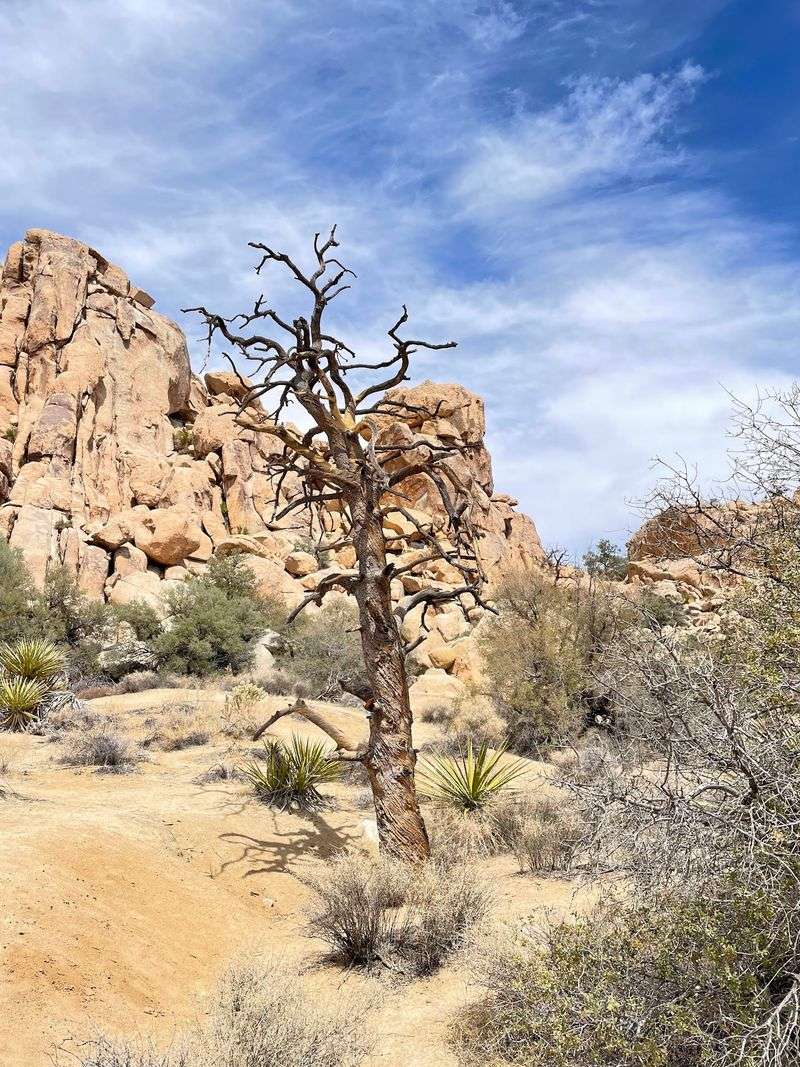
About 300 miles of trails wind through this park. Luckily, you don’t need to be a marathon runner to enjoy them.
Hidden Valley Nature Trail is a classic starter loop. It circles through a rocky area surrounded by tall boulders. Families and first-timers find it easy to manage.
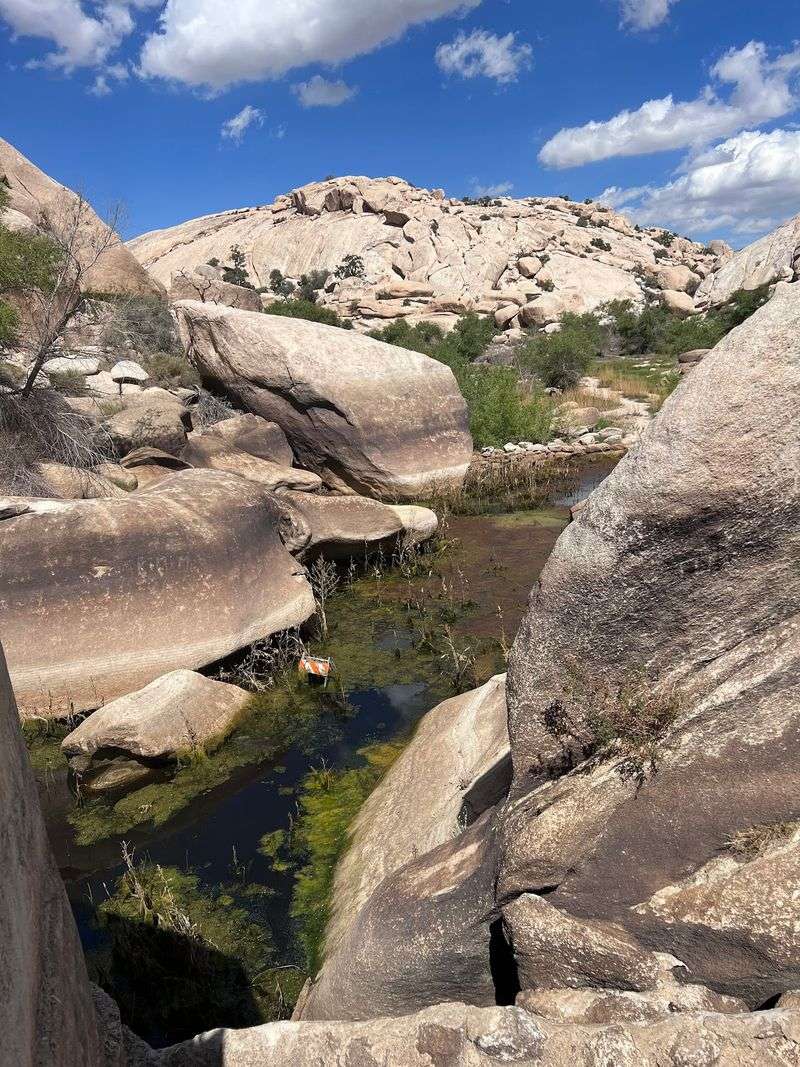
Barker Dam Nature Trail adds a dash of history. Early cattle ranchers built the dam to hold water for their animals. Depending on rainfall, you may spot water reflecting the rocks nearby.
Craving a bigger challenge? Ryan Mountain is a steady climb with sweeping views across the desert from the top. Bring plenty of water, because the shade there is close to nonexistent.
Other favorites include Wall Street Mill, Lost Horse Mine, Mastodon Peak, and the Boy Scout Trail. Each offers its own mix of history, views, and scenery. Some shorter nature walks are even wheelchair accessible.
Cell service is limited in many areas, so download maps before arriving. Carry snacks and more water than you think you’ll need. Food options inside the park are basically nonexistent, so pack like you mean it.
Climbers Treat This Place Like A World-Class Rock Gym
Over 400 climbing formations. Around 8,000 established routes. Those numbers explain why climbers from all over the world talk about this park.
Joshua Tree National Park is famous for its grippy granite. The rough texture gives hands and shoes something to hold. Routes range from beginner-friendly to seriously tough.
Bouldering is especially popular here. You’ll find short, challenging problems on rocks close to the ground, often with no ropes needed. Crash pads and a spotter make the experience much safer.
Cool weather makes a huge difference for climbers. Hot rock can feel slick and painful in summer. Fall and winter offer friendlier temperatures for longer sessions on the wall.
New to climbing? Consider booking a lesson with a qualified guide service that operates in the area. Learning proper technique and safety from experts beats guessing on a cliff.
Not a climber at all? Watching others tackle tall formations is surprisingly entertaining. Bring binoculars and find a comfortable spot with a view.
You might just catch the bug yourself.
Either way, follow park rules and leave no trace. Protecting the rock keeps these routes around for future climbers.
After Dark, The Sky Steals The Whole Show
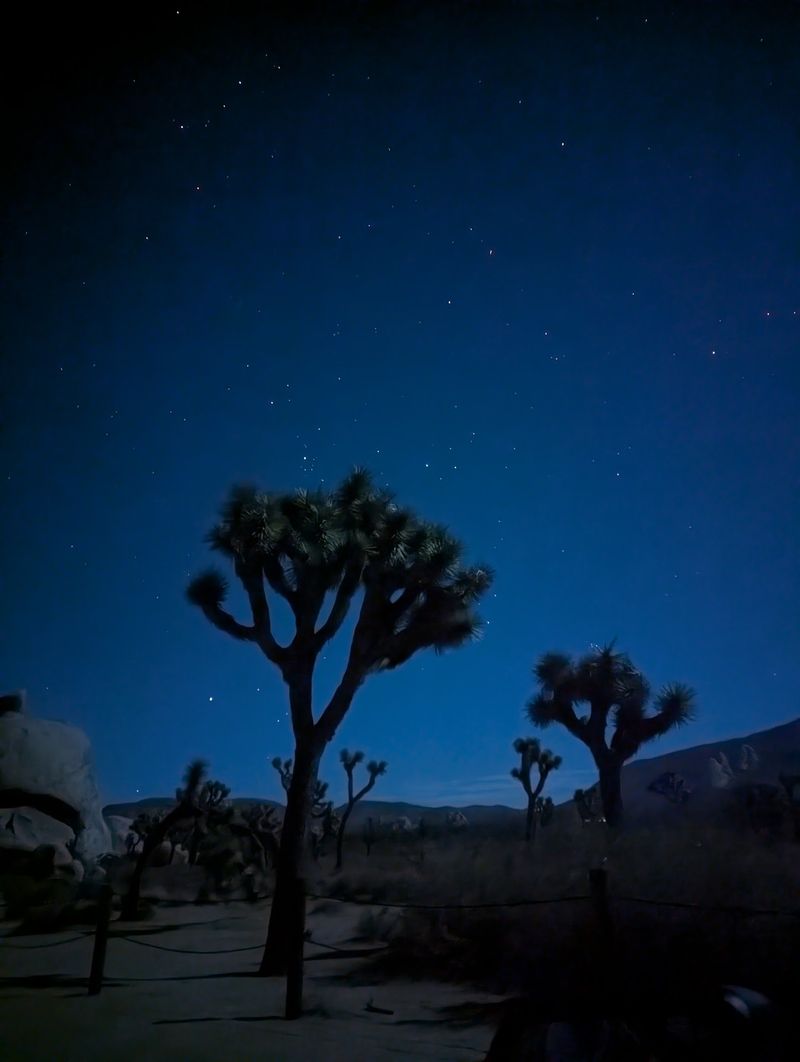
Sunset doesn’t end the day here. It flips the switch to the main event.
Joshua Tree National Park is a designated International Dark Sky Park. That means its night skies are protected and impressively dark. On clear nights, stars seem to pile up overhead like glitter.
Winter is a top season for stargazing. Long nights give you more hours of darkness, and the dry air helps clarity. Summer offers the best views of the Milky Way’s bright center, but the heat is intense.
The annual Night Sky Festival took place October 9–10 in 2026, with future festival dates announced separately.
It features expert guidance and comfortable fall temperatures. It’s a great choice for first-time stargazers who want a little help finding constellations.
Pack a red flashlight to protect your night vision. A blanket or reclining chair makes neck-craning much easier. Layers are a must, since desert nights can turn chilly fast.
Give your eyes some time to adjust once you park. Many stargazers find the sky looks best roughly two hours after sunset. Find a pull-off away from bright lights, settle back, and enjoy a California night that feels endless.
History Hides In Old Mines, Ranches, And Ancient Homelands
People lived in this desert at least 10,000 years ago. The Pinto Culture, Serrano, Cahuilla, Chemehuevi, and Mojave peoples all called this area home.
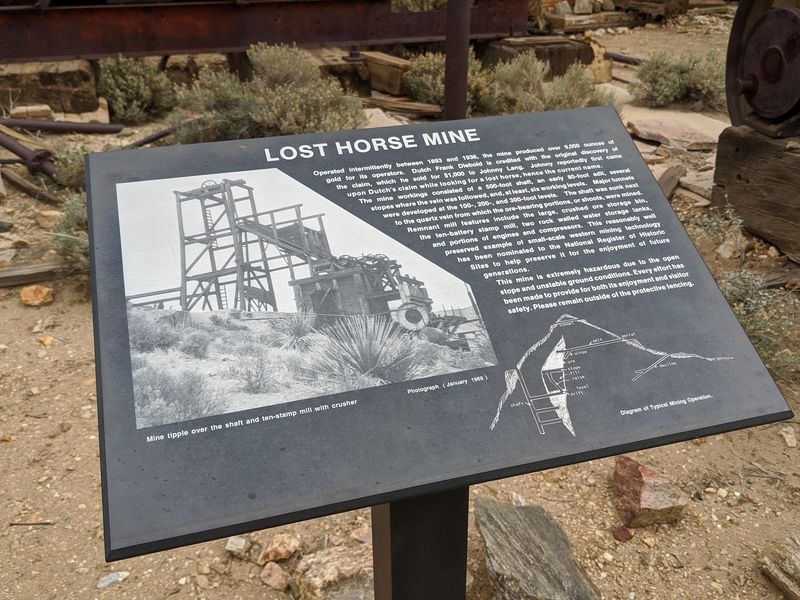
Much later, miners showed up searching for gold. Lost Horse Mine operated intermittently from the 1890s into the 1930s.
A trail leads to the old site, giving you a peek at that rugged era.
Keys Ranch, also known as Desert Queen Ranch, tells a homesteading story. Ranger-led walking tours explore this historic property. It’s a fascinating look at how families made life work in such a dry place.
Then there’s Minerva Hoyt, a Pasadena resident with big plans. In the 1920s and 1930s, she pushed hard to protect these desert plants. Her efforts helped lead to protection for the land.
President Franklin D. Roosevelt named it Joshua Tree National Monument in 1936. The California Desert Protection Act later raised its status to a national park on October 31, 1994.
Yes, it became a park on Halloween, which feels fitting for a place with a Skull Rock.
Today, it covers nearly 800,000 acres. That’s plenty of room for stories.
Smart Planning Makes Your Desert Getaway So Much Smoother
Camping inside the park puts you right next to the boulders and stars. Nine developed campgrounds are available, including Jumbo Rocks, Black Rock, Indian Cove, Ryan, and Cottonwood.
Reservations are required for many of them. Book early, especially for weekends in the cooler months. Backcountry camping is also possible with a permit.
The park’s mailing address is 74485 National Park Drive, Twentynine Palms, CA 92277. Twentynine Palms also hosts a visitor center at 6533 Freedom Way. It offers exhibits, a bookstore, and helpful trip resources.
Another visitor center sits in the town of Joshua Tree at 6554 Park Blvd. It includes a bookstore, gift shop, café, and exhibit gallery. Stopping by is a great way to grab maps and check trail updates.
Fill your gas tank before entering, since services inside are limited. Pack food, water, and offline maps. Some trails, like parts of the Oasis of Mara, may be closed for repairs.
Ready to go before 2026 wraps up? This California desert rewards a little preparation with huge views, weird trees, and starry nights. Not a bad way to close out the year.