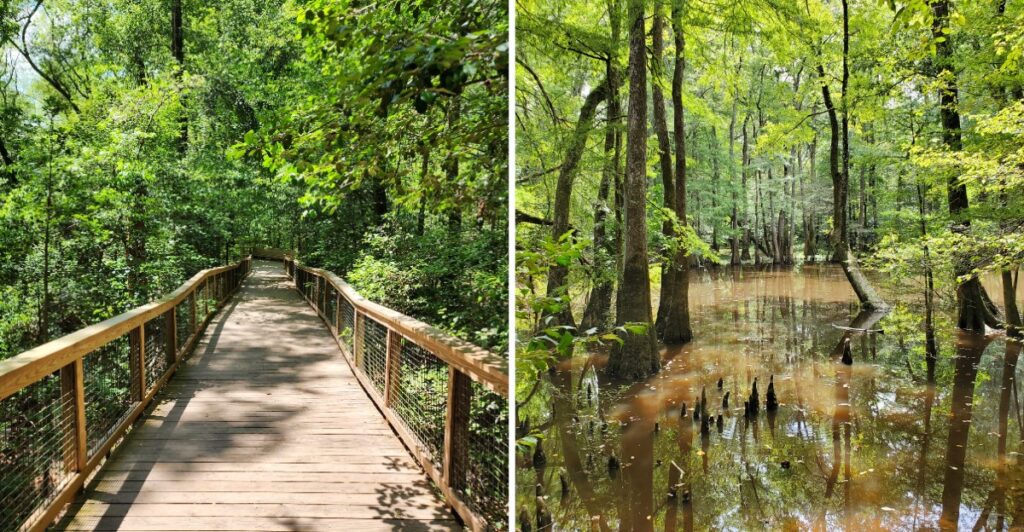
The world’s tallest loblolly pine grows in a swamp forest, and you can walk to its neighborhood without getting your socks wet. A raised wooden path loops through trees so tall they form one of the highest deciduous canopies on Earth.
What wins me over is that the rivers do the gardening here, spilling over their banks to feed the forest floor. Cypress knees poke up from the mud like a crowd of tiny wooden gnomes.
This slice of South Carolina is the largest stretch of old-growth bottomland hardwood forest left in the country. Entry is free, and the path works for wheelchairs and strollers too.
Just off the trail sits a quiet oxbow lake that formed more than 2,000 years ago.
Fair warning: your step count stays low, but your neck gets the workout of its life.
Start Your Trip On A Wooden Path Floating Above The Swamp
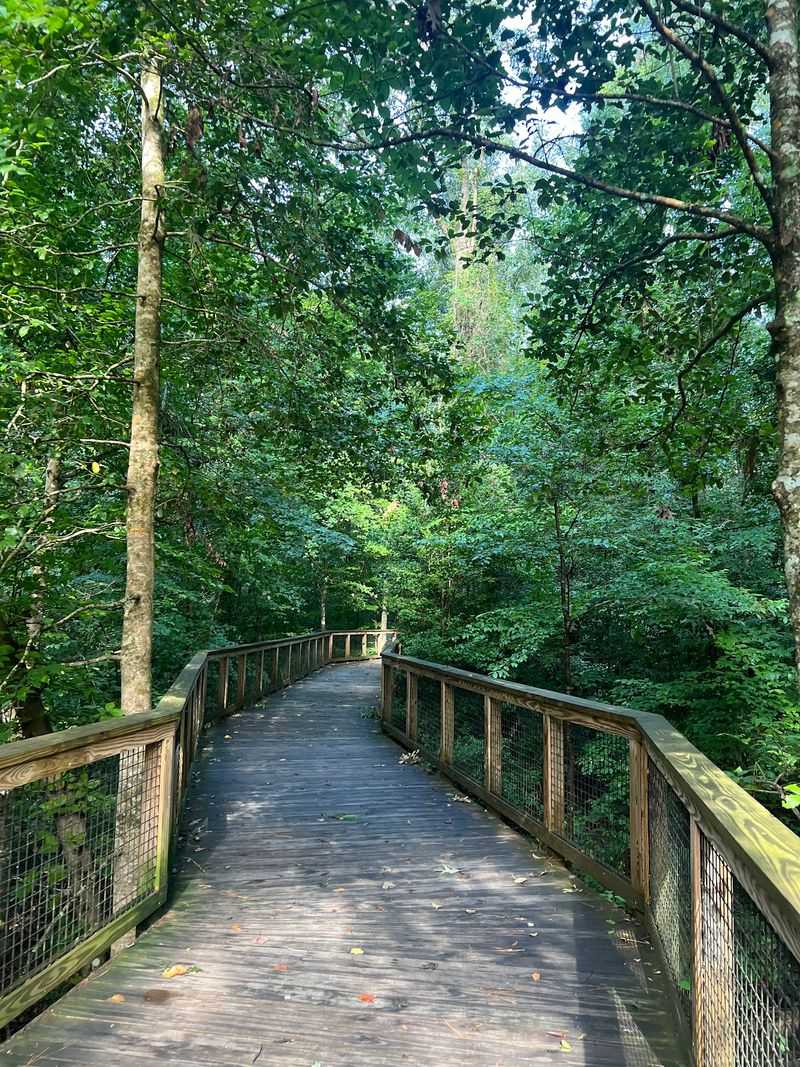
Congaree National Park keeps its best introduction close to the parking lot. The Boardwalk Loop Trail starts right at the Harry Hampton Visitor Center and runs about 2.4 to 2.6 miles.
That’s the whole loop, and it stays flat the entire way. No switchbacks, no huffing, and no surprise hills waiting around the bend.
The boardwalk is elevated, which matters a lot in a floodplain. You get to see a soggy, muddy world without slogging through it yourself.
It’s also the most popular trail in the park, and that makes sense. Few hikes offer this much scenery for so little effort.
Grab a free self-guided brochure at the visitor center before you head out. Numbered stops along the trail match the brochure, so you learn as you stroll.
Think of it as a nature museum with no walls and a very tall ceiling. The trees do the talking, and the brochure translates.
Plan for about an hour or so at a relaxed pace. Faster walkers can finish sooner, but rushing kind of misses the point.
Set your map app to the visitor center, not just the park name. The trailhead sits right beside it, which keeps things simple.
Let The Rivers Explain Why This Forest Looks So Wild
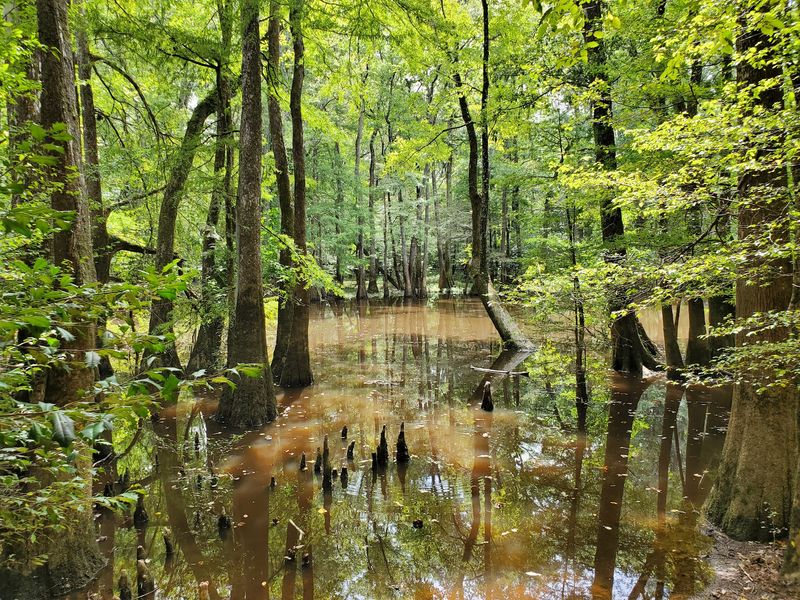
Two rivers handle the landscaping around here. The Congaree and Wateree Rivers overflow their banks from time to time, and those floods feed the forest.
That flooding brings fresh nutrients to the soil. It’s a big reason the trees grow so huge and the plant life stays so thick.
Congaree National Park protects the largest connected stretch of old-growth bottomland hardwood forest left in the United States. Most forests like this were logged long ago.
So walking this boardwalk is a rare chance to see what much of the South once looked like. Not a replanted forest, but the real deal.
The canopy ranks among the tallest of any temperate deciduous forest on the planet. Crane your neck and you’ll feel tiny in the best way.
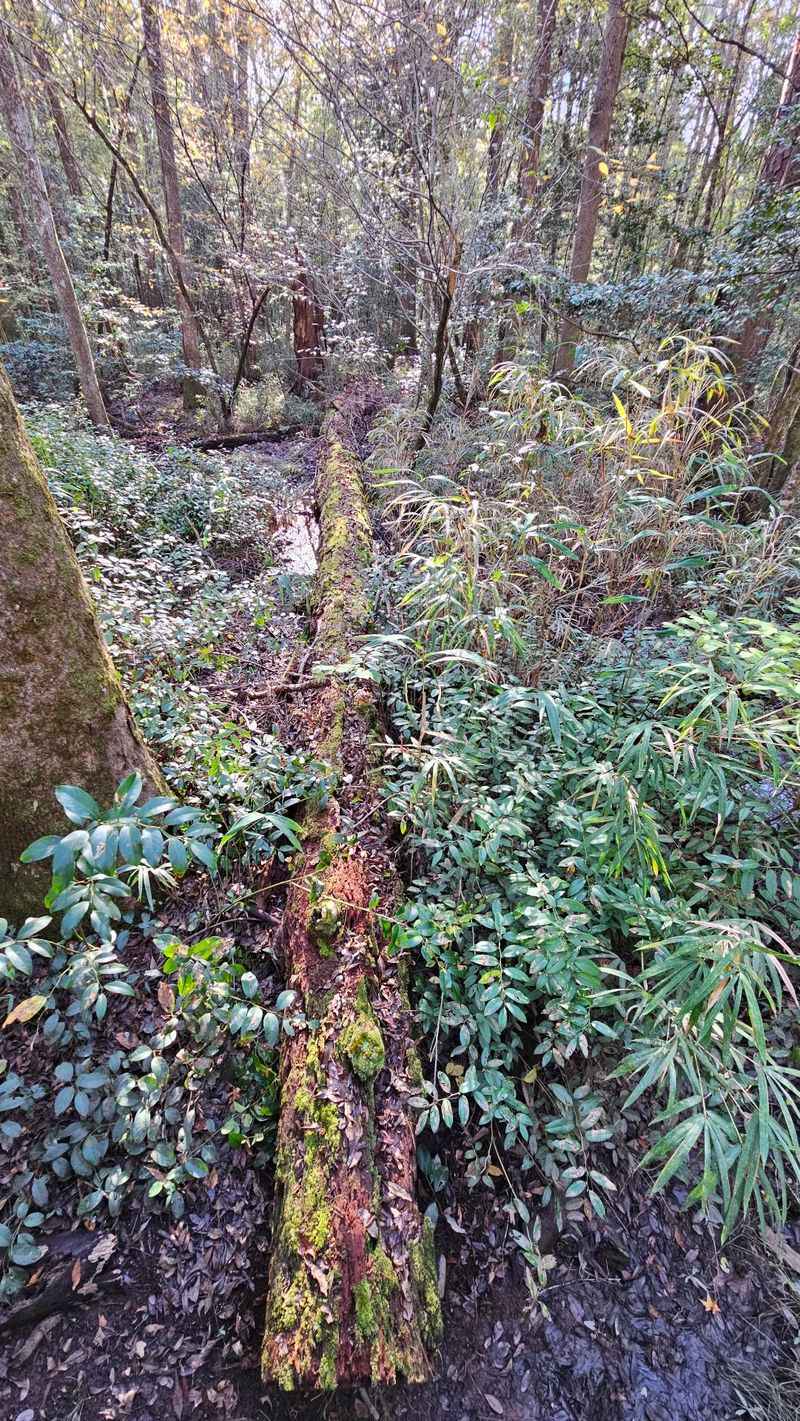
Fallen trunks, standing water, and tangled branches are all part of the plan. Nature here doesn’t tidy up, and nobody asks it to.
Storms play a role too. Hurricane Hugo tore through in 1989 and uprooted many trees, which opened space for new growth to begin.
Look for those gaps as you walk. Young trees reaching for sunlight show the forest renewing itself one season at a time.
Prepare To Get A Stiff Neck From All The Record-Setting Trees
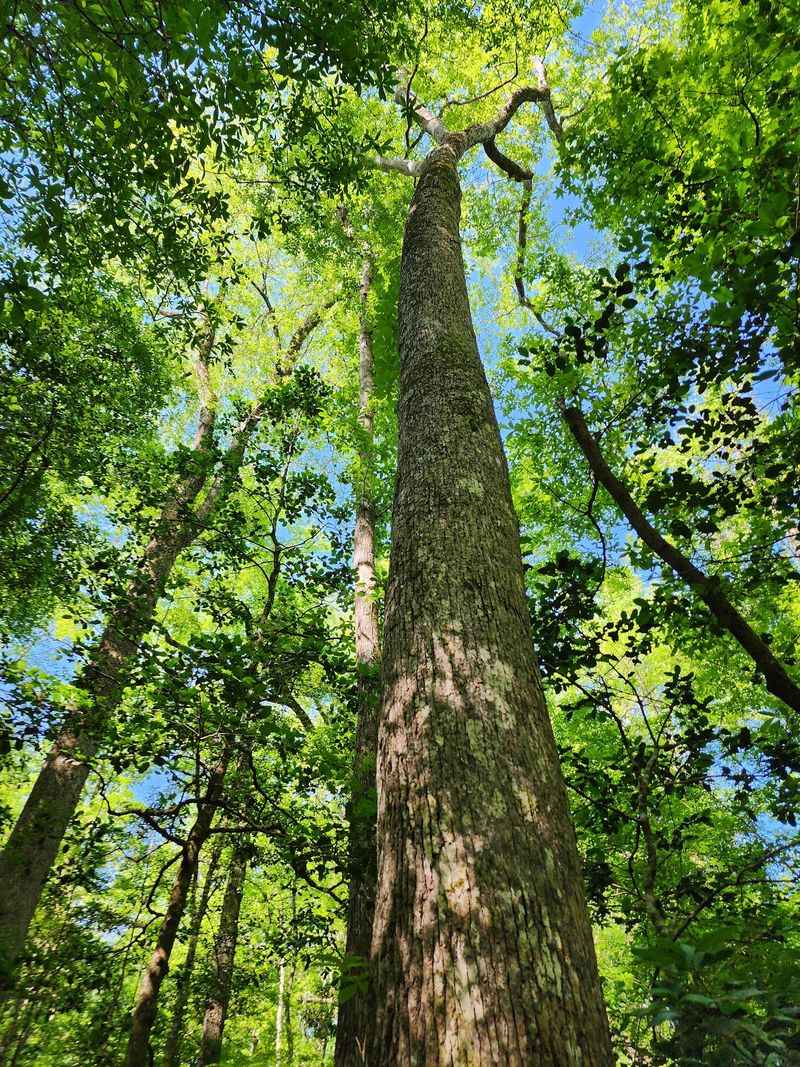
Champion trees are the biggest known members of their species, and this park collects them like trophies.
The headliner is a national champion loblolly pine that stands approximately 170 feet tall.
Yes, one of the country’s champion trees stands right here in South Carolina. That’s a fun fact to drop at your next family dinner.
Bald cypress trees steal plenty of attention too. Their famous knees poke up from the floodplain soil like knobby wooden stalagmites.
They come in all sizes, from small bumps to chunky stumps. Try counting them, and you’ll lose track fast.
Water tupelo, beech, oak, maple, and holly round out the cast. Each one adds a different bark texture and leaf shape to the scene.
The brochure helps you tell them apart at the numbered stops. Suddenly a wall of green turns into a lineup of named characters.
Bring a camera with a wide-angle setting if you have one. Fitting a giant tree into a single photo is harder than it sounds.
Some of these giants have stood through floods, storms, and centuries of change. That kind of staying power deserves a slow walk past.
Save Some Time For The Lake That Started As A Wandering River
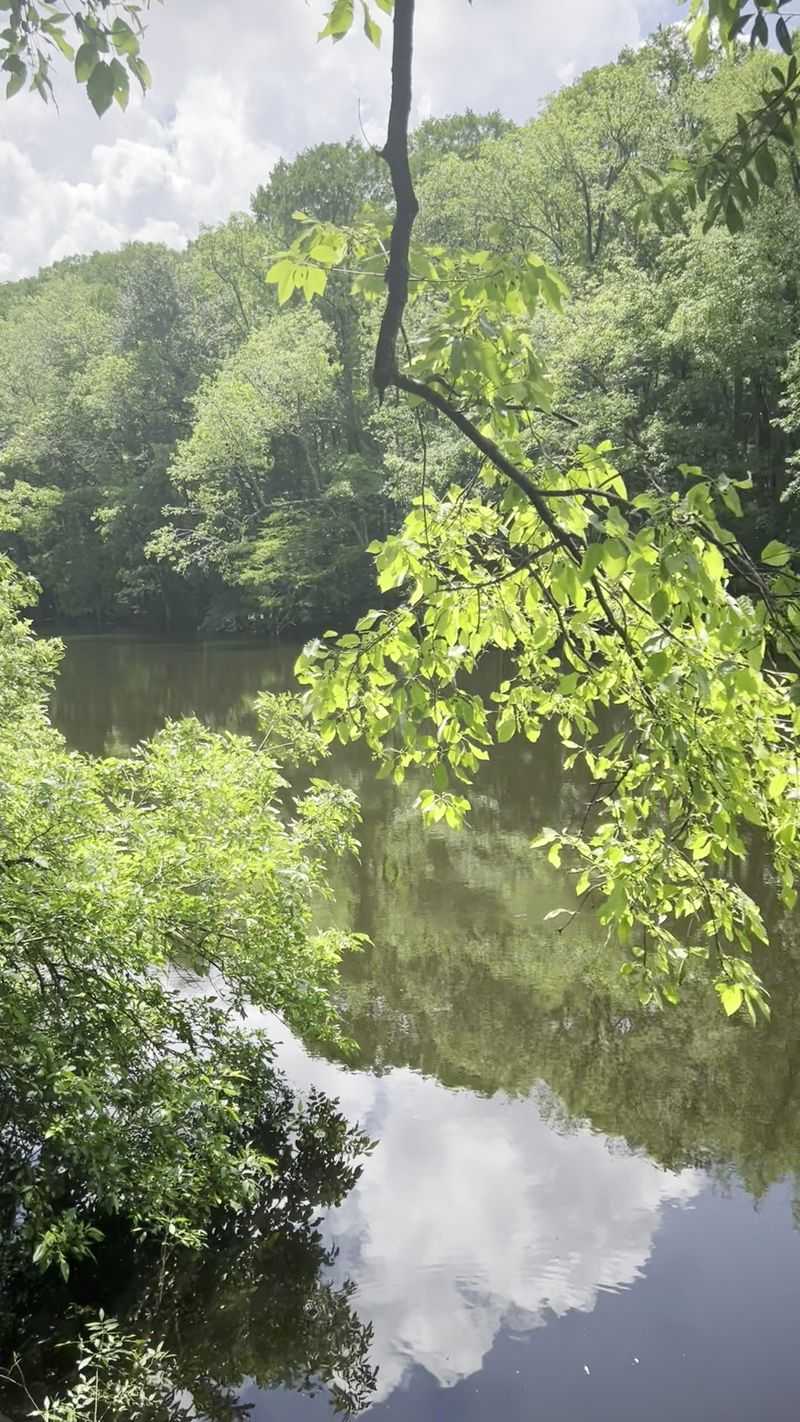
Over 2,000 years ago, a river or creek changed course and left a curve of water behind. That leftover bend became Weston Lake.
Scientists call this an oxbow lake, named for its curved shape. It looks a bit like a horseshoe that wandered off from the main channel.
The Boardwalk Loop Trail offers an elevated overlook right above the water. It’s one of the best spots on the whole route to pause.
Bring binoculars if you own a pair. Ripples on the surface often hint at something moving below.
The lake supports fish, freshwater turtles, and water snakes. Patience pays off here, since turtles love a sunny log.
Water snakes are part of the neighborhood, so admire them from a respectful distance. The overlook keeps you comfortably above the action anyway.
Water levels shift with the seasons and rainfall. A visit in one month might look totally different from a visit a few months later.
That’s a sneaky reason to come back more than once. The lake keeps changing its outfit, and you’ll want to see each look.
Plus, the view is quiet, open, and a nice contrast to the thick forest around it. Consider it the trail’s built-in breather.
Keep Your Eyes Peeled Because Somebody Is Always Watching
Barred owls live in these woods, and they’re famous for a call that sounds like a question. Red-shouldered hawks patrol the area too.
Woodpeckers keep busy here, including pileated and red-headed species. Pileated woodpeckers are big, bold, and hard to miss once you spot one.
Down lower, the reptile crowd takes over. Box turtles, mud turtles, rat snakes, skinks, and anoles all make a home in the park.
Larger mammals roam here as well. Deer, otters, beavers, and wild hogs live in the floodplain, though they don’t follow a schedule.
Alligators sometimes show up in the waterways. Spotting one from the safety of a raised boardwalk feels pretty thrilling.
Chimney swifts zip overhead, adding even more motion to the scene. Birders could spend hours here and still want more time.
Walk slowly and talk softly for your best chances. Animals tend to stay put when the people nearby stay calm.
Never feed or approach wildlife, no matter how friendly it seems. Watching from the boardwalk keeps both you and the critters safe.
Early hours are often good for wildlife watching. You’ll also beat some of the heat, which is a nice bonus.
Bring The Stroller, The Grandparents, And Even The Dog
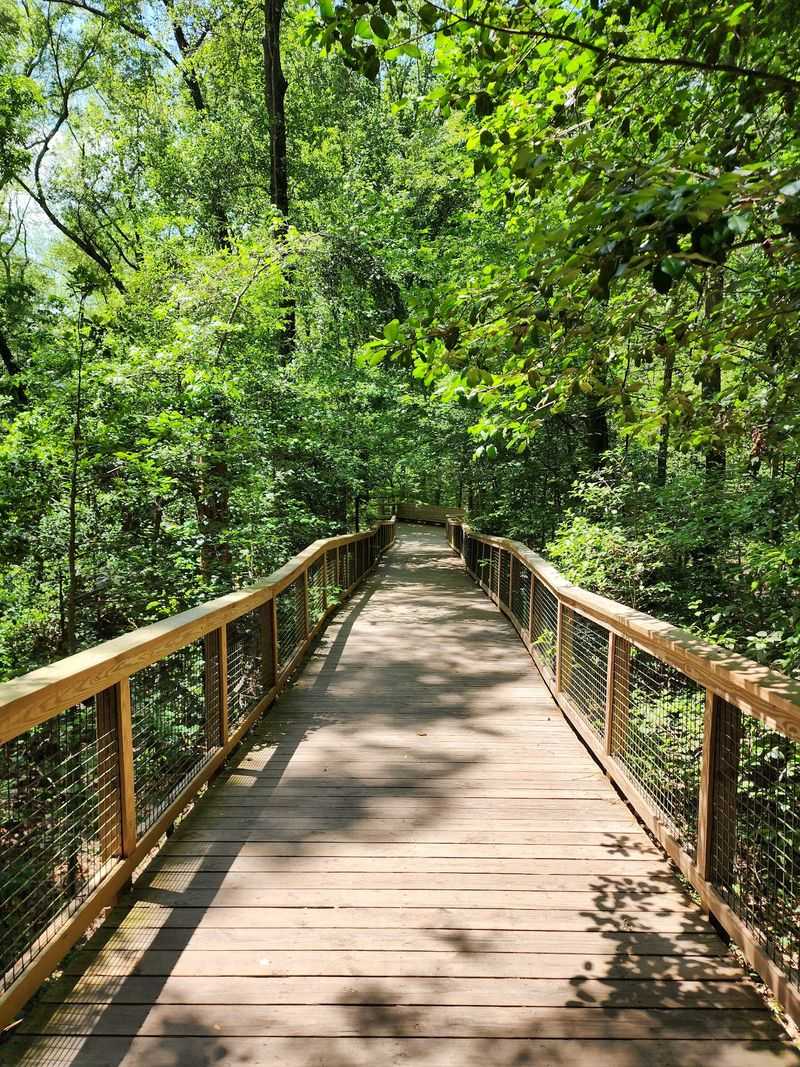
Few national park trails welcome this many types of travelers. The Boardwalk Loop Trail is wheelchair and stroller accessible, so the whole family can tag along.
Leashed pets are allowed on the boardwalk and other designated trails. Your dog gets a national park adventure, and you get a hiking buddy.
Even better, Congaree charges no entrance fee. A day here won’t put much of a dent in your wallet.
Point your GPS to 100 National Park Road, Hopkins, SC 29061. That address takes you to the Harry Hampton Visitor Center and the trailhead.
The visitor center has parking, restrooms, drinking fountains, nature exhibits, and maps. It’s open daily from 9 AM to 5 PM.
It closes on New Year’s Day, Presidents Day, Columbus Day, Thanksgiving, and Christmas. The park grounds themselves stay open 24 hours a day.
Fill your water bottles before starting the loop. South Carolina heat can sneak up on you, even on a short walk.
Ask rangers about current conditions before heading out. They know the trail better than any map ever could.
Check park alerts the morning of your trip too. Weather or maintenance work can sometimes change plans.
Time Your Visit Right And The Mosquitoes Will Have Less To Say
Summer here comes with serious heat, thick humidity, and mosquitoes that take their job very seriously. Plan for all three if you visit in warm months.
Bug spray is your best friend in this forest. Long sleeves and light, breathable clothes help too.
Flooding is another factor worth watching. Portions of the boardwalk, especially the low sections, can flood and may close at times.
That’s not a flaw, though. Floods are the very thing that keeps this forest so healthy and so wildly green.
Cooler months tend to feel more comfortable for walking. Fall, winter, and early spring usually bring fewer bugs and gentler temperatures.
Arriving early in the day is smart in any season. Mornings are cooler, and the forest often feels peaceful before midday.
Check park alerts before you leave home. A quick look can save you a long drive to a closed section.
Bring a hat, sunscreen, and plenty of water no matter when you go. Shade helps, but humidity in South Carolina doesn’t take days off.
A light rain jacket earns its spot in your bag, too. Weather in a floodplain can change its mind quickly.