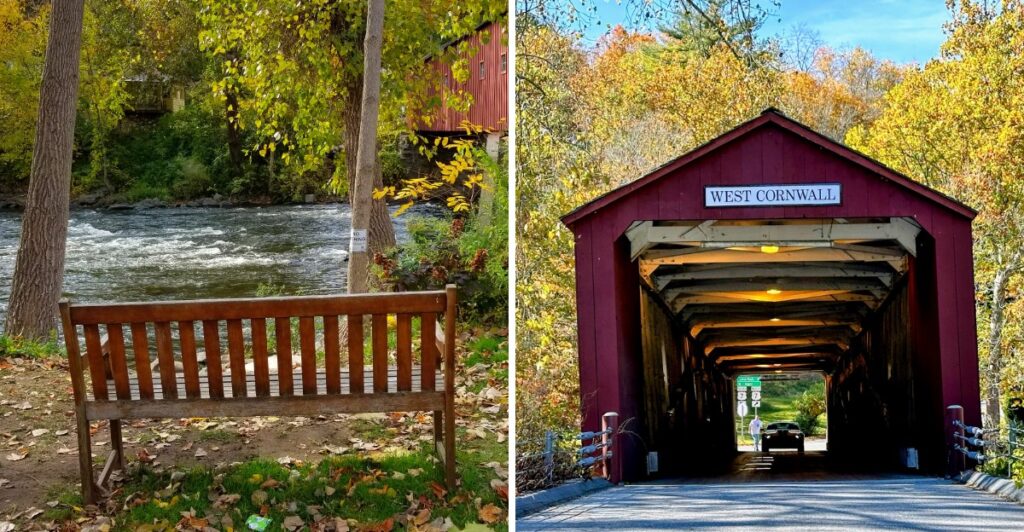
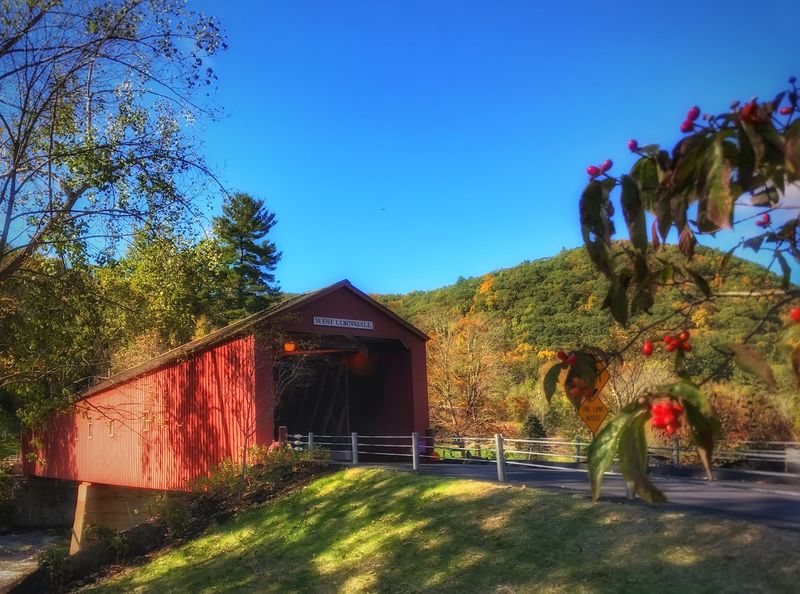
A wooden bridge built around 1864 still carries cars across a rushing river more than 160 years later. It’s bright red, about 172 feet long, and held together with old-fashioned wooden pegs.
Hidden under those weathered planks sits a steel deck that crews quietly added back in 1973. Color me impressed, because that’s one very sneaky upgrade for a bridge with this many birthdays.
This beauty stands in the quiet northwest corner of Connecticut, surrounded by thick, leafy New England woods. In fall, orange and gold leaves frame the red sides, and the river below doubles the color like a mirror.
It’s only a single lane, so drivers take turns crossing the old planks at a gentler pace. I didn’t know I needed a bridge that teaches traffic some manners.
But here we are, gladly hitting the brakes.
A Red Bridge That Has Outlasted Floods, Ice, And Over 150 Years
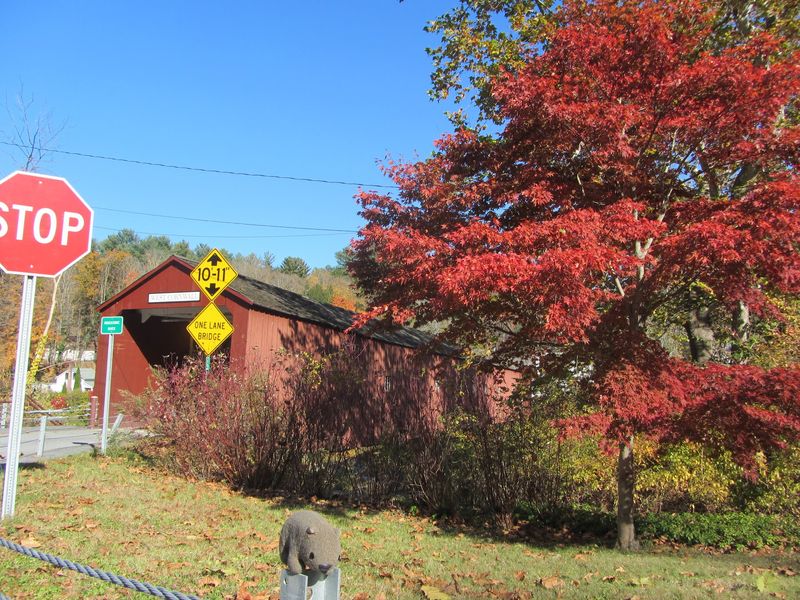
Bridges at this river crossing have had a rough history. Records suggest one stood here as early as 1762, but ice storms and floods kept wrecking the earlier attempts.
A big flood in 1837 was one of the worst troublemakers. Builders clearly learned something, because the current West Cornwall Covered Bridge most likely went up in 1864.
It has served travelers since then, although repairs and occasional closures have interrupted traffic.
Think about that for a second. This bridge was carrying travelers before cars even existed, and it still handles traffic today.
It also earned a spot on the National Register of Historic Places in 1975. That honor recognizes places that tell an important part of American history. This one tells a story of stubborn New England builders who refused to give up on a river crossing.
Today it’s one of only a few covered bridges left in Connecticut. That makes every visit feel a little like stepping into a living history book. You don’t need a museum ticket or a tour guide to enjoy it either.
Just show up, look up at those red boards, and appreciate a structure that simply keeps going. Not many things built in 1864 can say the same.
Peek Inside And You Will Spot Clever Old Engineering
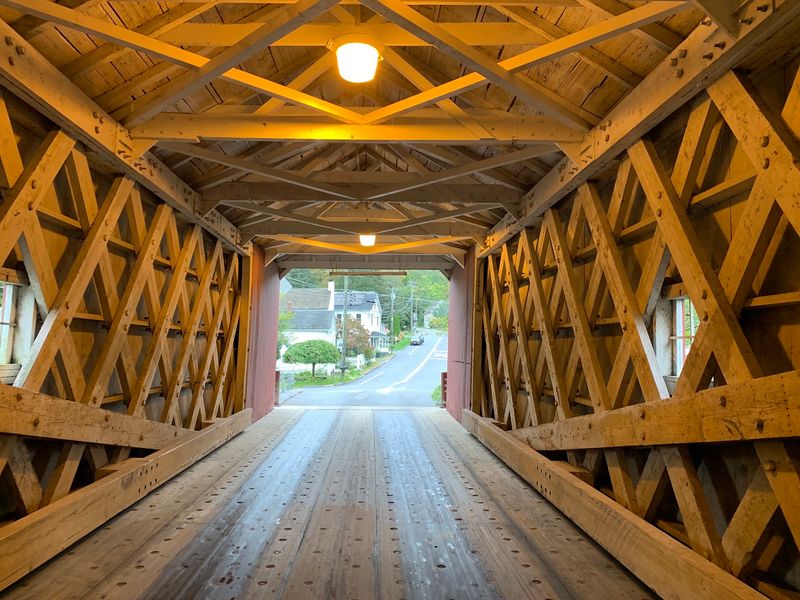
Wooden pegs, known as treenails, secure the bridge’s timber lattice, while a concealed steel deck helps support modern traffic.
Builders call them treenails, and they connect the sturdy red spruce timbers without relying on modern bolts.
The design is a lattice truss, credited to Ithiel Town. He was a well-known architect and engineer, and his crisscross pattern spread strength across the entire frame. Look closely inside and you’ll see the diagonal beams forming a tidy web.
It’s surprisingly pretty for something built to carry heavy loads. Windows along the sides let daylight spill across the planks, which makes the interior feel bright instead of cave-like.
Now here comes the clever part. In 1973, crews slipped a steel support deck underneath the plank floor to carry modern traffic. You can’t really see it from above, so the bridge still looks old-fashioned.
That project even earned an award from the Federal Highway Administration. It’s a great example of saving history while keeping it useful.
So when you stand inside, you’re looking at two eras working together. Nineteenth-century wood handles the looks, and twentieth-century steel quietly does the heavy lifting. Kind of like a classic car with a brand-new engine hiding under the hood.
Fall Turns The Whole Scene Into A Living Postcard
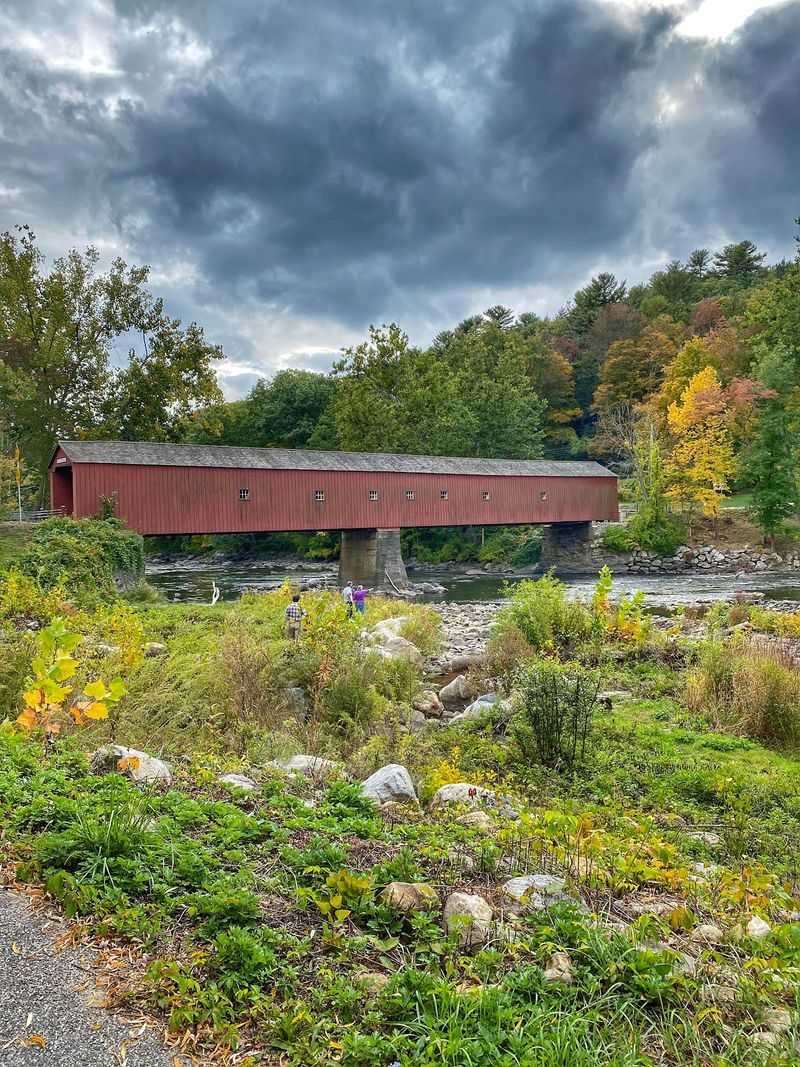
Bright red against blazing orange is a tough combination to beat. During autumn, the trees around the West Cornwall Covered Bridge light up in gold and orange shades.
The red bridge sits right in the middle like it was placed there by a painter.
Speaking of painters, the scenic beauty of covered bridges has long attracted artists, including Eric Sloane. That tells you how picture-worthy it is.
Mid to late October usually brings the best color here. Of course, nature doesn’t follow a strict calendar. Check a Connecticut foliage report before you head out, since peak timing can shift each year.
The Housatonic River adds a bonus layer. On calm stretches, the water can mirror the leaves and the bridge, giving you double the color in one shot.
For the best photos, try different angles. Shoot from the riverbank for a wide view of the bridge and trees together. Then move closer to capture the red boards and window details.
Morning and late afternoon light tend to look softer and warmer. Bring a fully charged phone or camera, because you’ll probably take far more pictures than you planned. Nobody leaves here with just one shot.
Yes, You Can Actually Drive Through It
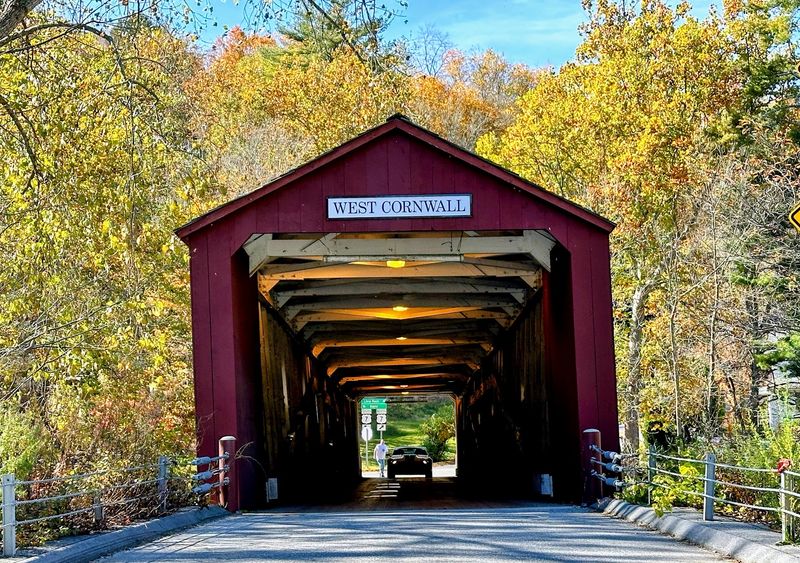
Plenty of historic bridges are look-but-don’t-touch. Not this one.
Cars still travel through it on Connecticut Route 128, and the bridge is generally accessible year-round, except during temporary closures.
The bridge is only one lane wide, at about 15 feet across. That means drivers take turns at stop signs on each end, so patience is part of the deal. Honestly, the short wait gives you a moment to admire the view.
Pay close attention to the height limit, which sits around 10 to 11 feet. Oversized trucks have hit the bridge before, and damage closed it for a stretch in late 2022 and early 2023. It was repaired and reopened, thankfully.
If you drive a tall camper or a vehicle with a roof rack loaded high, double-check your clearance first. Nobody wants to be the reason a landmark needs fixing.
Inside, the rumble of tires on the planks adds a fun soundtrack. Drive slowly and enjoy it. You’re crossing the same spot travelers have used since the 1800s.
Walkers should stay alert too. The bridge is narrow and carries vehicle traffic, so you should exercise caution and avoid stopping inside for photos.
The River Below Steals A Bit Of The Spotlight
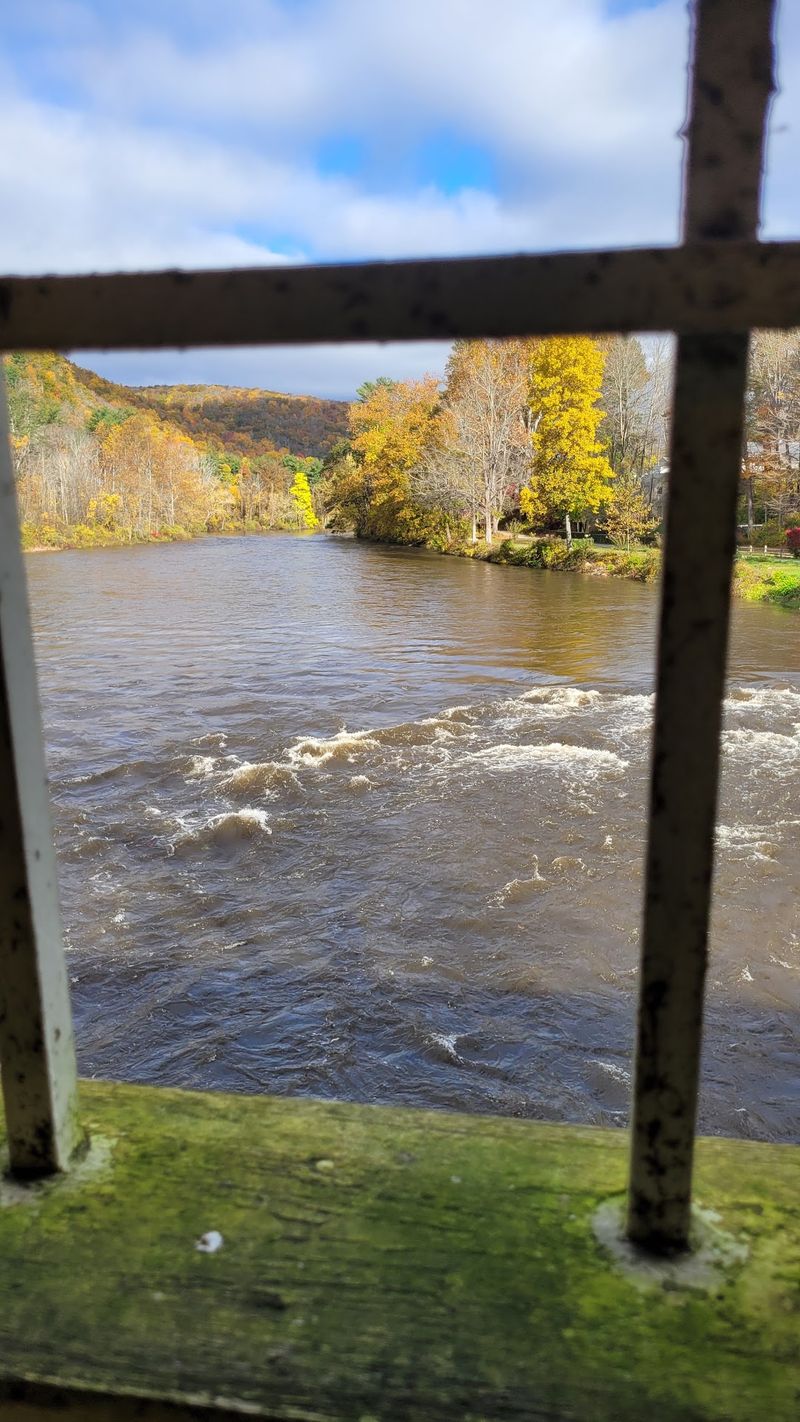
Under all that red paint flows the Housatonic River, and it’s a star on its own. The water moves steadily past rocks and riverbanks, creating a peaceful soundtrack beside the bridge.
This river winds through western Connecticut and offers lots of outdoor fun. Around the bridge area, people go fishing, paddling, and hiking along the water. It’s a nice reminder that this spot is more than just a photo stop.
River access is available nearby, which makes it easy to get closer to the water. Sit on the bank and watch the current slide under the bridge. It’s oddly relaxing.
If you plan to paddle or fish, check local rules and water conditions before you go. Rivers can change quickly after heavy rain, so safety comes first.
Bring a pair of shoes you don’t mind getting a little muddy. Rocky edges and damp grass are common near flowing water.
Even if you never touch the river, it adds so much to the scene. The bridge would still be charming without it. With the river, though, the whole place feels alive and moving.
Park At The Bend And Make Life Easy
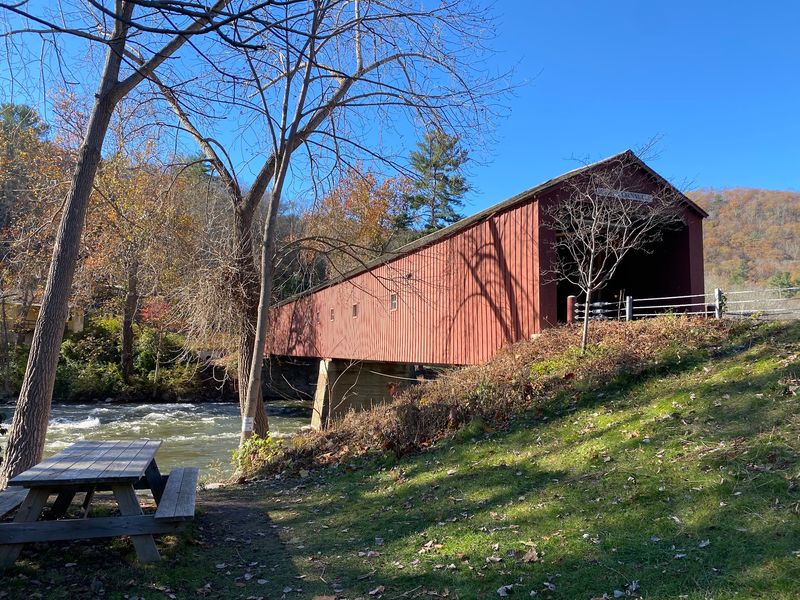
Good news for anyone who dreads hunting for parking. A spot called The Bend sits on Lower River Road, just south of the bridge.
It offers parking, bathrooms, and river access all in one place. That’s a pretty great trio when you’ve been driving for a while.
Officially, the bridge’s location is listed as Connecticut Route 128, West Cornwall, CT 06796, USA. Plug that into your map app, then look for Lower River Road once you’re near the river.
Spaces can be limited, especially on gorgeous fall weekends. Arriving earlier in the day can make things smoother. A weekday trip is another smart move if your schedule allows it.
Once parked, you’re only a short walk from the bridge. That makes it easy to explore on foot, snap photos, and wander down to the riverbank.
Please follow posted signs and park only in marked areas. Blocking roads or private driveways isn’t a good look in a small village.
Having bathrooms nearby is a real win for families with kids. It also means you can linger longer without rushing off to find facilities somewhere else.
Grab A Bench And Let The Afternoon Slow Down
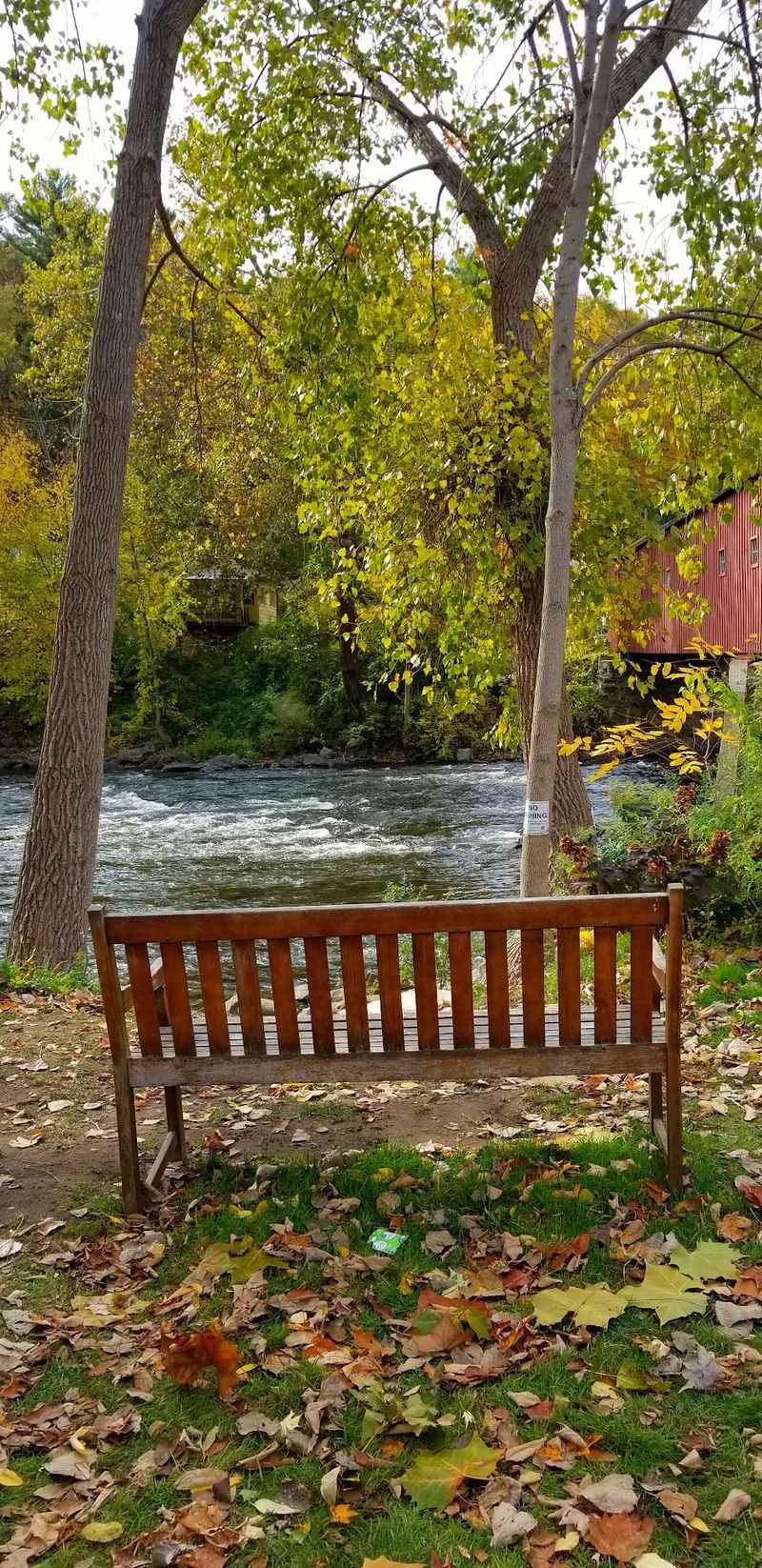
Benches along the riverbank might be the most underrated feature here. They face the water and the bridge, giving you a front-row seat to the whole scene.
A small grassy area near one end of the bridge offers room to stretch out. It works well for a picnic or a quiet break after a scenic drive.
Pack some sandwiches, fruit, and a thermos of hot cocoa on a chilly fall day. Then find a seat and simply watch the river roll by. Few lunch spots come with a view like this.
Bring a blanket if the benches are taken. The grass makes a comfy backup plan.
Please carry out everything you bring in. Keeping this spot clean helps everyone enjoy it, and it protects the river too.
This is also a great place to sketch or journal. Eric Sloane found the bridge worth painting, so maybe it will inspire you as well.
Not every trip needs a packed schedule. Sometimes the best plan is sitting still near a historic bridge and letting time drift for a while. Your phone can wait.
Rent An E-Bike And Cruise The Countryside
Pedaling up Litchfield County hills can be a workout. An electric bike makes those climbs a lot friendlier.
Covered Bridge Electric Bike sits near the bridge and offers e-bike sales and rentals. It’s a fun way to see more of the area without wearing yourself out.
The roads around this part of Connecticut are known for scenic views. Rolling hills, forests, and river glimpses make every curve feel worth exploring. In fall, it gets even better.
Riding gives you a different perspective than driving. You hear the river, feel the cool air, and can stop easily whenever something catches your eye.
Before you head out, ask about routes that match your comfort level. Some roads are narrow, so stay alert and ride with traffic.
Wear a helmet and bring water, even on cool days. Layers help too, since mornings can start chilly and warm up later.
Hours and availability can change by season. Contact the shop ahead of time if you have your heart set on a ride. Then plan a loop that ends right back at the red bridge for one last photo.