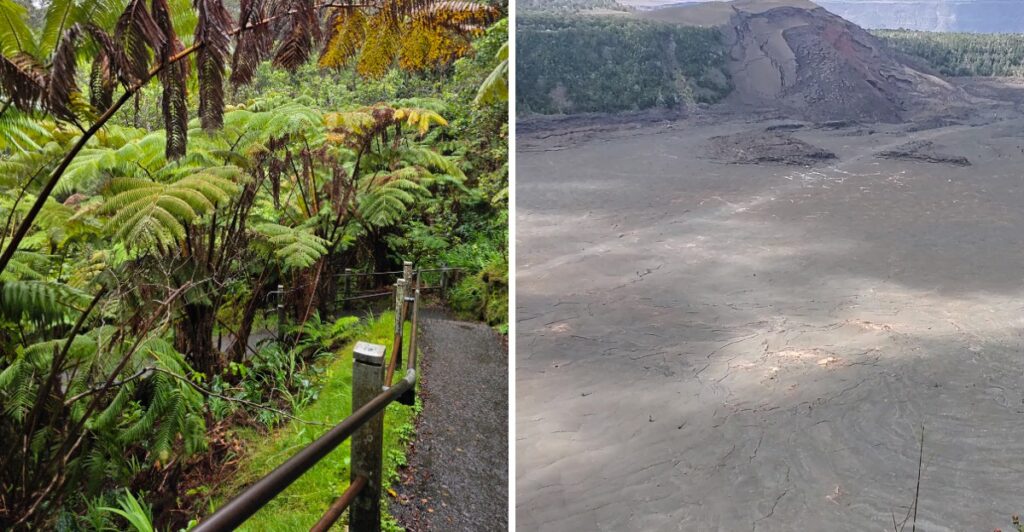
Lava once shot up to 1,900 feet into the air above this volcanic crater on Hawaii’s Big Island.
Today, you can walk right across the wide, hardened lake of rock that the eruption left behind for hikers.
The floor is solid now, but steam still drifts up from its cracks when rain soaks into the ground.
That’s leftover heat from back in 1959, hanging around like a guest who never got the hint to leave.
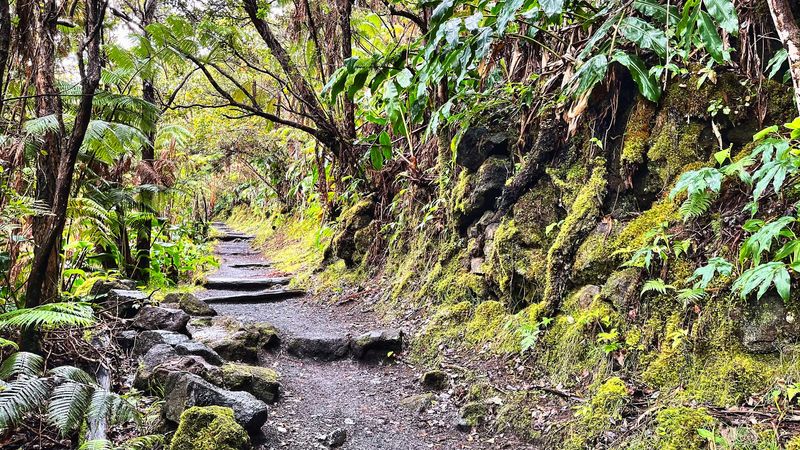
Getting there starts with a winding walk down through a lush green rainforest full of ferns and tall trees. It’s a funny little opening act for a landscape that looks like it belongs somewhere on the moon.
Put me down for the moment the trees fall away, and that rocky crust spreads out right ahead of you.
I’m not saying I’d pitch a tent on a former lava lake, but I’d definitely stay for the steam.
Your Sneakers Are About To Touch The Top Of An Old Lava Lake
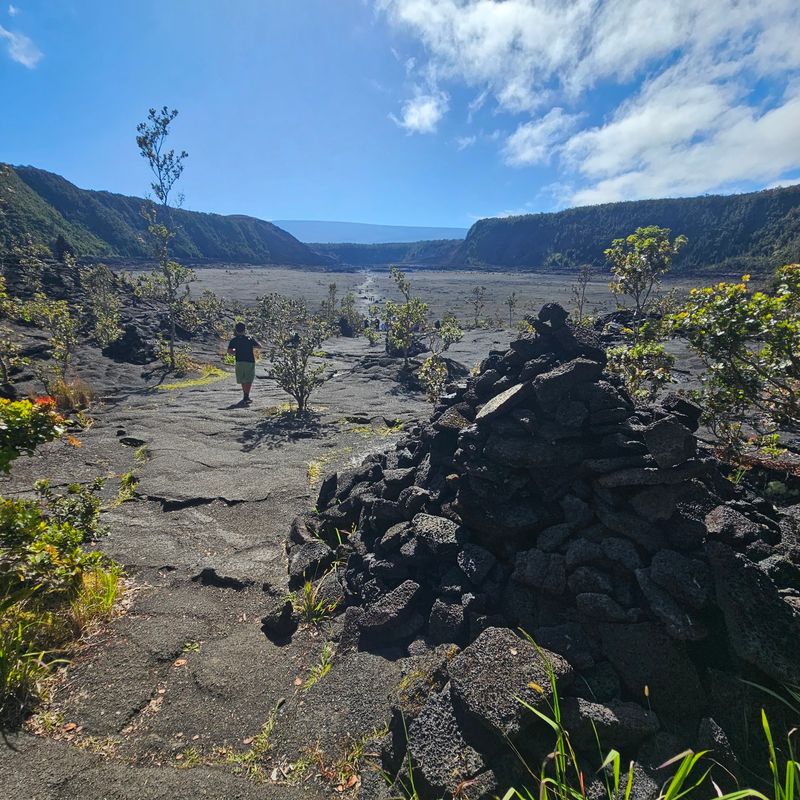
Most trails lead to a view of something amazing. The Kīlauea Iki Trail in Hawaiʻi Volcanoes National Park leads you straight onto it.
The crater floor here is a lava lake that cooled and hardened after a huge eruption. You get to cross it on foot, which still sounds a little unreal when you say it out loud.
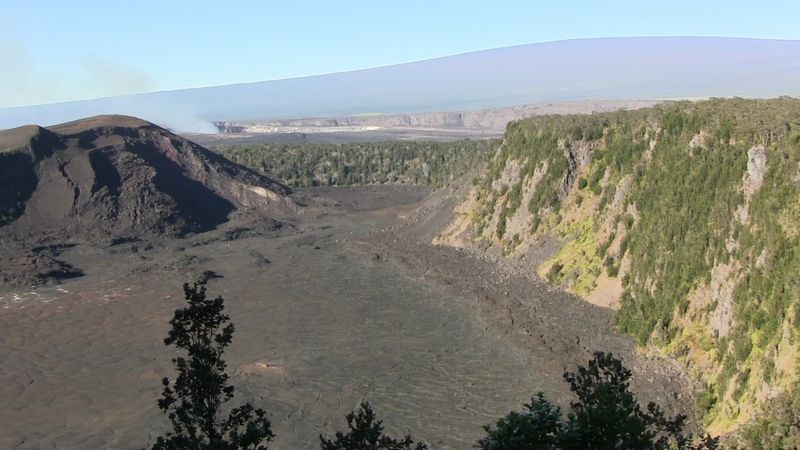
Out on the floor, the ground looks gray, black, and wrinkled in every direction. Cracks split the surface, and tough little plants poke up from the rock like they own the place.
The crater walls rise all around you, wrapped in green forest. That contrast makes the floor feel even bigger and stranger than it looked from the rim.
Hawaii has plenty of famous views, but this one lets you stand inside the story. You’re not peeking over a railing at the action from far away.
Take your time once you reach the bottom. The crossing rewards slow steps, quick glances at the cracks, and plenty of pauses to look back at the cliffs you just came down.
Honestly, it’s the closest most of us will get to hiking on another planet. No spacesuit required.
A 1959 Fireworks Show Built The Ground Under Your Feet
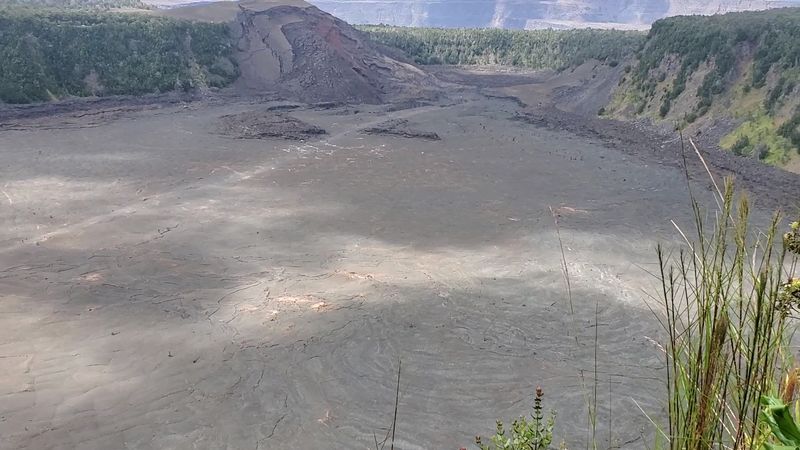
Back in November 1959, this quiet crater woke up in a very loud way.
The eruption ran from November 14 to December 20, 1959, and grabbed attention around the world.
Lava fountains shot as high as 1,900 feet into the sky. That ranks among the tallest lava fountains ever recorded, which is a pretty wild claim for one small crater.
All that molten rock had to land somewhere. It pooled inside the crater and formed a lava lake that reached depths of up to 126 meters.
Over time, the top cooled and hardened into the floor you can cross today. Underneath, the rock held onto its heat for a very long time.
Knowing this history changes how the hike feels. Every flat stretch and every crack is a leftover piece of that six-week eruption.
Kids especially love hearing that the ground was once glowing and liquid. It turns a nice walk into a real geology lesson without anyone noticing they’re learning.
So when you reach the floor, picture those fountains towering above you. Then be glad you showed up a few decades late.
First Comes The Rainforest, Then The Moonscape
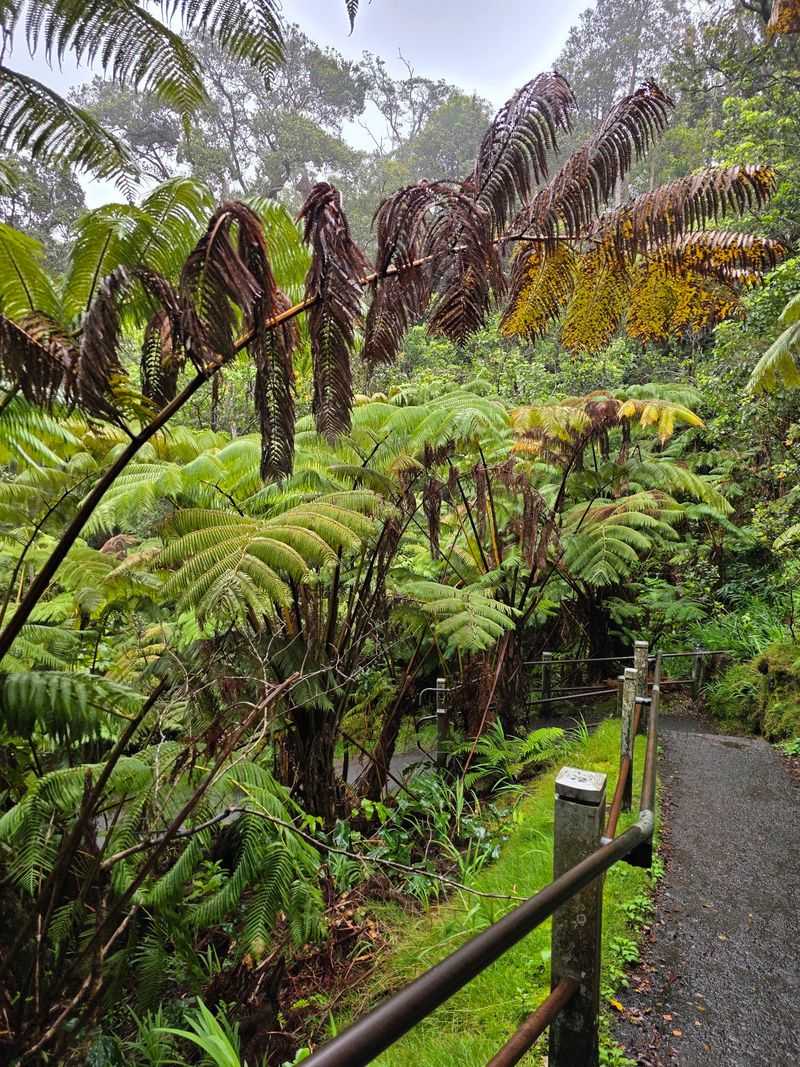
Ferns as tall as people greet you before any lava does. The trail begins in a lush rainforest that wraps around the rim of the crater.
It’s a cool, green start to a hike that ends up somewhere bare and rocky. The switch feels a bit like changing channels mid-show.
The path down is dirt with rocks and tree roots mixed in. Some roots even work like natural steps, so watch your footing and enjoy the help.
Shade covers much of this section, which your shoulders will appreciate later. Once you hit the crater floor, that leafy cover disappears completely.
Along the rim, openings in the trees give you peeks at the floor below. Those first views make the size of the crater sink in fast.
The trail drops about 400 feet from the rim to the bottom. Switchbacks keep things manageable, so you can focus on the scenery instead of your knees.
Slow down here and listen for birds in the trees. This forest is half the fun, not just the hallway to the main event.
Steam Still Rises Here, So Keep Your Eyes Peeled
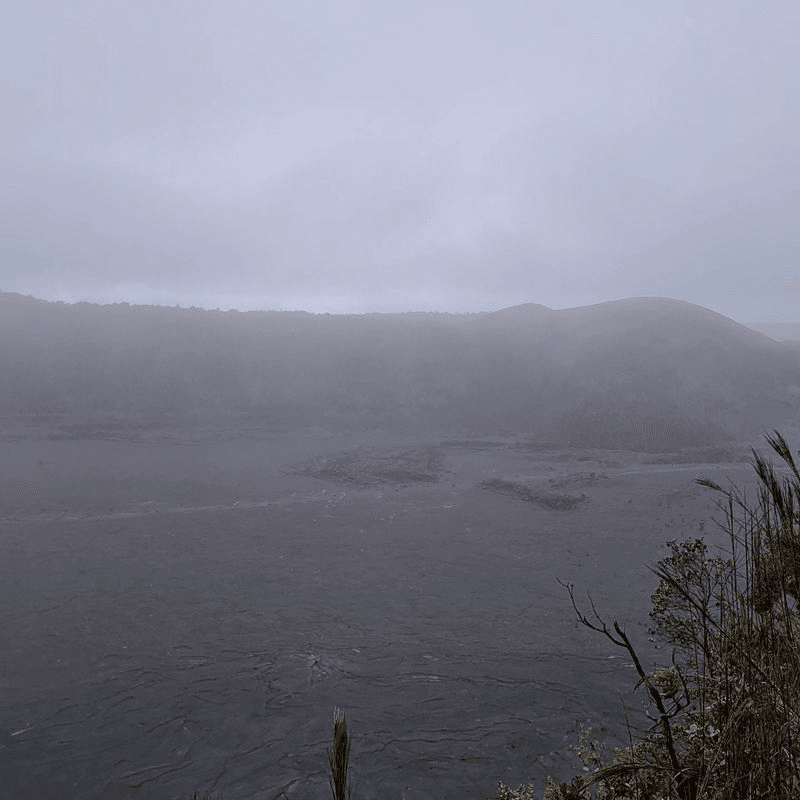
Rain falls, hits warm rock, and turns into steam. That simple recipe explains the wispy clouds you might spot drifting from cracks on the crater floor.
The heat comes from rock below the surface that still hasn’t fully cooled since 1959. It’s a gentle reminder that this ground is younger than a lot of grandparents.
Look toward the reddish hill called Puʻupuaʻi as you cross. The vent that erupted in 1959 sits below that cinder cone, and the trail lets you peer toward it.
Puʻupuaʻi formed from material thrown out during the eruption. Its color stands out sharply against the dark floor, so it’s easy to find.
Steam shows up best after a rainy spell, so cloudy days can actually be a bonus. Gray skies make those little plumes easier to see too.
Stay on the marked route while you snoop around. Cracks can be deep, and the edges aren’t always as solid as they look.
Watching the ground breathe a little is pretty unforgettable. Snap a photo, then just stand still and enjoy it.
Plan For A Few Hours And A Real Leg Workout
Numbers first, because they help you plan. The full loop runs about 3.3 to 4 miles, depending on where you start.
Most people finish in roughly two to three hours. That leaves time for photos, snack breaks, and a few dramatic pauses at the rim.
The hike is rated moderate to challenging. Going down feels easy, but climbing back out of a 400-foot crater gets your heart pumping.
The crater floor itself is fairly flat. Still, the surface is uneven and rocky, so it’s not a stroll in flip-flops.
You can hike the loop in either direction. Each way has its own mix of steep spots and gentler switchbacks, so pick what suits your legs.
Families with older kids often handle it well with breaks. The trail isn’t stroller friendly, though, so leave the wheels in the car.
Start early if you can, before the day heats up. Morning light on the crater walls is a lovely reward for setting that alarm.
Pace yourself on the climb out. The view from the top makes every burning step worth it.
Snagging A Parking Spot Takes A Little Strategy
Parking at the Kīlauea Iki Overlook fills up quickly. It’s small, and peak hours can turn it into a game of musical chairs.
Good news, you have backup options. The Devastation Trailhead and the Puʻupuaʻi Parking Area both offer more room and connect to the trail system.
Starting from one of those spots adds distance to your hike. If you love a longer walk, that’s a bonus instead of a hassle.
The trail sits along Crater Rim Drive, Hawaii National Park, HI 96718, inside Hawaiʻi Volcanoes National Park. Plug that into your map and follow the park roads.
Construction projects in the summit area may cause delays or reduce parking for now. Building in some extra time keeps your mood sunny.
Arriving early is your best friend here. You’ll beat the rush and get cooler air on the trail too.
Restrooms sit near the nearby lava tube area across the road. There are no facilities along the trail or down on the crater floor.
Use the bathroom before you head down. Future you will be grateful halfway across that lava lake.
Pack Like The Weather Can’t Make Up Its Mind
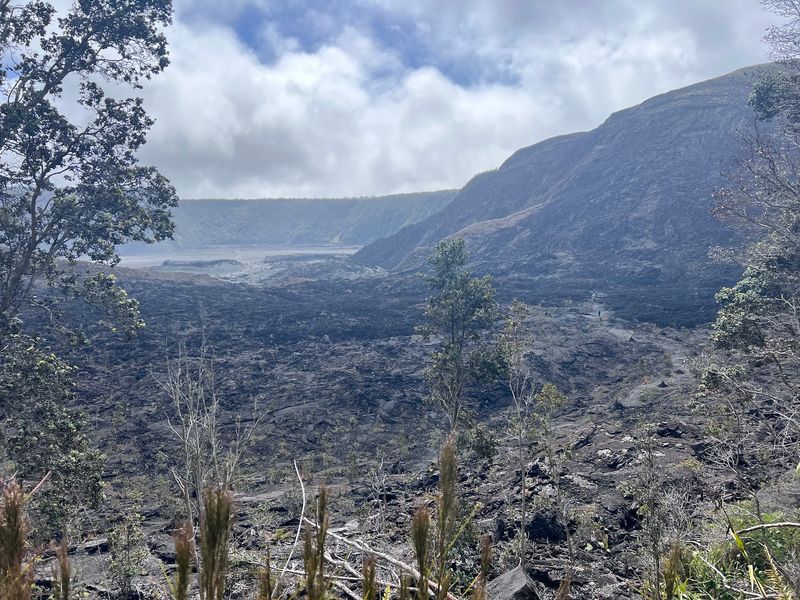
Sun, wind, and rain can all show up on the same hike. The summit of Kīlauea is famous for weather that changes its mind fast.
Start with plenty of water. The crater floor has no shade at all, and the sun bounces right off that dark rock.
A hat and sunscreen come next on the list. Even cloudy days can sneak up on your nose and shoulders.
Toss rain gear in your bag too. A light jacket weighs almost nothing and can rescue a soggy afternoon.
Food matters more than you’d think. The climb back out burns energy, and a snack at the rim tastes like a trophy.
Wear sturdy shoes with good grip. Hiking boots help on sharp lava, though careful hikers manage in solid sneakers.
The terrain is steep and rocky in places, so ankles need support. Skip anything with thin soles or open toes.
Pack light, but pack smart. A well-stocked daypack turns surprise weather into a funny story instead of a bad one.
Add A Lava Tube And Make 2026 Your Year To Go
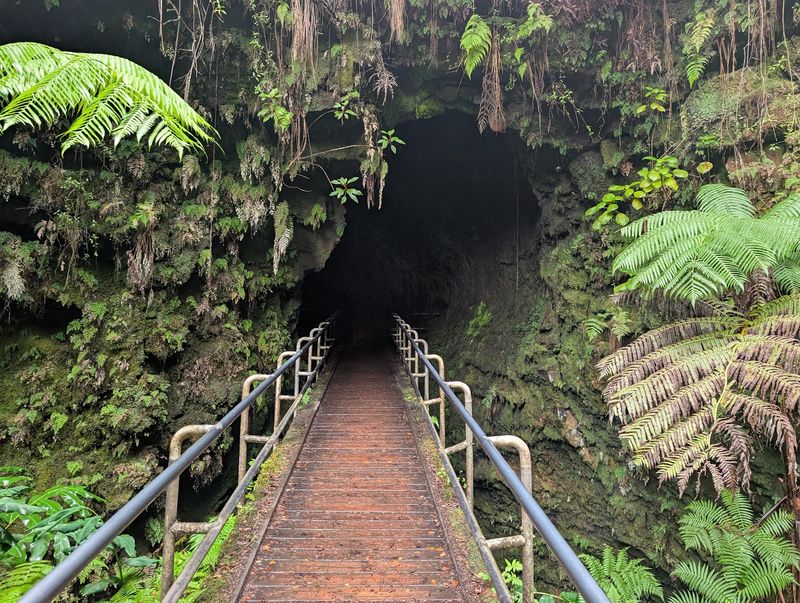
One volcanic wonder is good, but two is better. The Kīlauea Iki Trail connects with Nāhuku, also called Thurston Lava Tube, for a longer adventure.
Nāhuku is a tunnel formed by flowing lava long ago. Pairing it with the crater gives you lava from the inside and the top in one outing.
The entrance bridge at Nāhuku was replaced in August 2026, but visitors should still check current access conditions before exploring.
Even so, the connection makes a fun add-on for curious hikers.
Timing matters this year too. Summit construction projects in the park are expected to wrap up in late 2026.
The Kīlauea Visitor Center is also being renovated until late 2026. For now, a temporary Welcome Center operates at Kilauea Military Camp.
Stop there for maps, trail updates, and helpful tips. It’s an easy way to start your day well informed.
The lava lake isn’t going anywhere, so no need to panic. Still, finishing out 2026 on a crater floor in Hawaii sounds like a pretty great way to close the year.