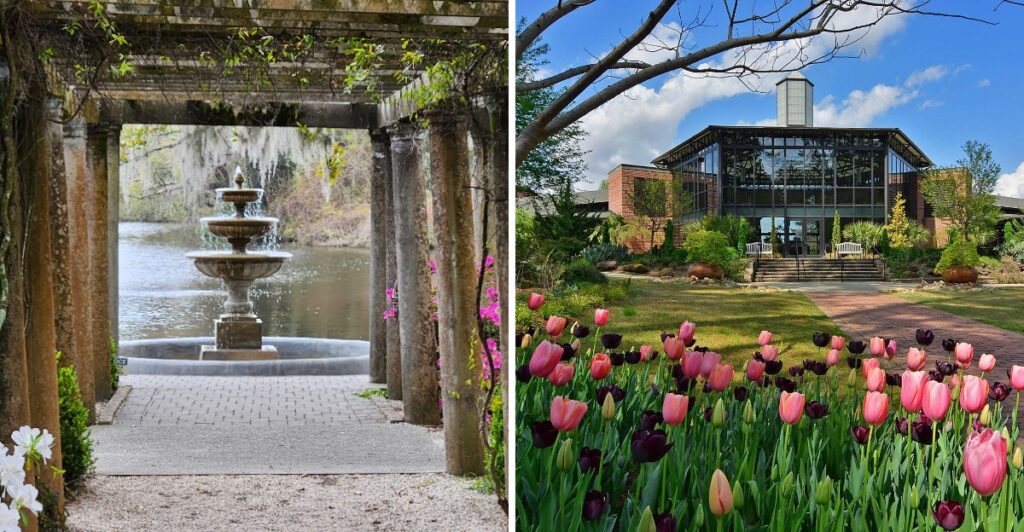
A live oak in one of these North Carolina gardens started growing around 1545, give or take a few years.
That makes it older than the first English attempts to settle this coast, and it still sprouts fresh green leaves.
I’d give a lot to spend one lazy hour under a tree with nearly five full centuries under its belt.
It has outlasted hurricanes and still shows up for spring, which is more than my morning motivation can claim.
The surprises keep stacking up from there, starting with a whole little chapel built from colored glass bottles.
Elsewhere, carnivorous plants sit very still and wait for a passing fly to make a very bad decision.
These gardens move at the gentle pace of shady paths, quiet ponds, and long, slow afternoons spent outside.
That bottle chapel is my new top pick, with the carnivorous plants a close, slightly creepy second.
1. North Carolina Botanical Garden
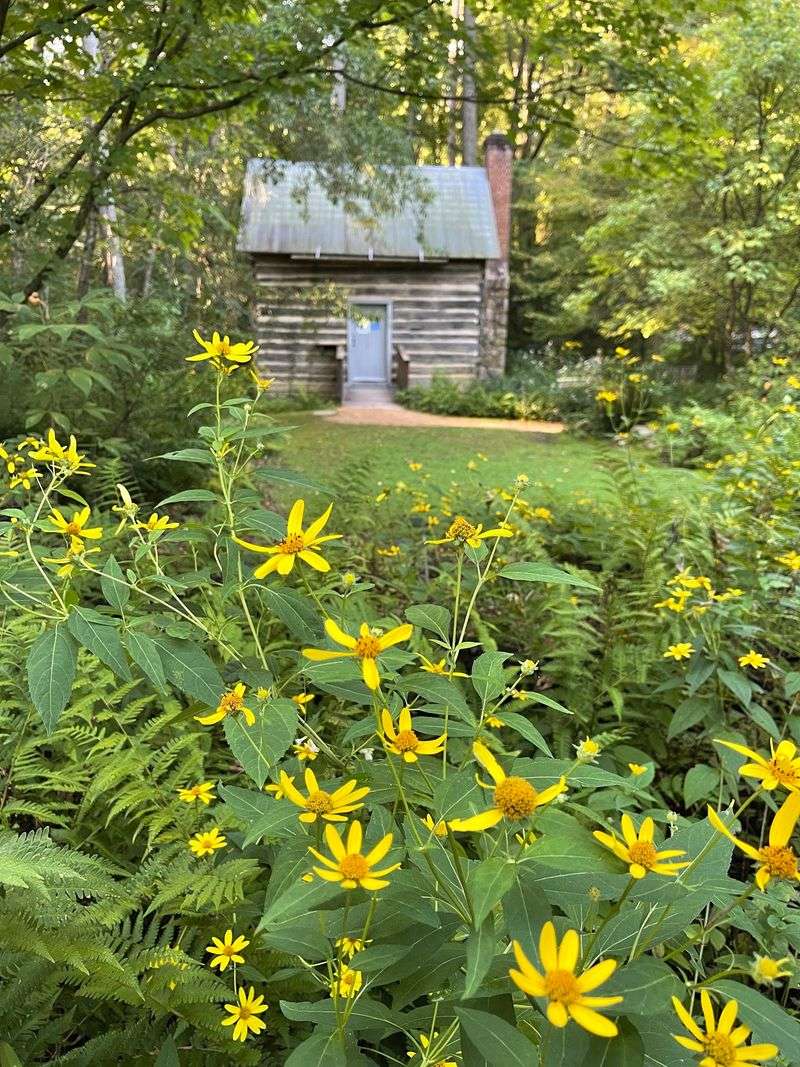
Plants that eat bugs get the celebrity treatment here, and honestly, they earned it. This Chapel Hill garden puts native plants front and center, including an impressive carnivorous plant collection.
The big mission is celebrating plants from North Carolina and its neighbor to the south. You’ll find about 2,500 species native or naturalized in the Carolinas, spread across themed display gardens.
Admission is free, which feels almost suspicious for a place this lovely. Parking is free too, so your wallet can relax right along with you.
Once you’ve had your fill of the display beds, wander toward the nature trails. A creek, a boardwalk, and plenty of birdsong make it easy to lose track of time.
Bird fans should look for the birdwatching station. Kids get their own area too, complete with a play space and a fairy letter writing station.
Labels and educational plaques help you put names to what you’re seeing. You might arrive knowing one wildflower and leave knowing ten.
The story here goes back to 1903, when a UNC professor began planting on campus. In 1952, university trustees set aside 70 acres for a botanical garden.
Save a few minutes for the education center, a LEED Platinum certified building. The shop sells plants, books, and coffee, so your souvenir can actually grow.
Plan around Mondays, since the garden is closed that day. Weekend mornings tend to be the busiest, so a weekday stroll may feel calmer.
Address: 100 Old Mason Farm Rd, Chapel Hill, NC 27517
2. Sarah P. Duke Gardens
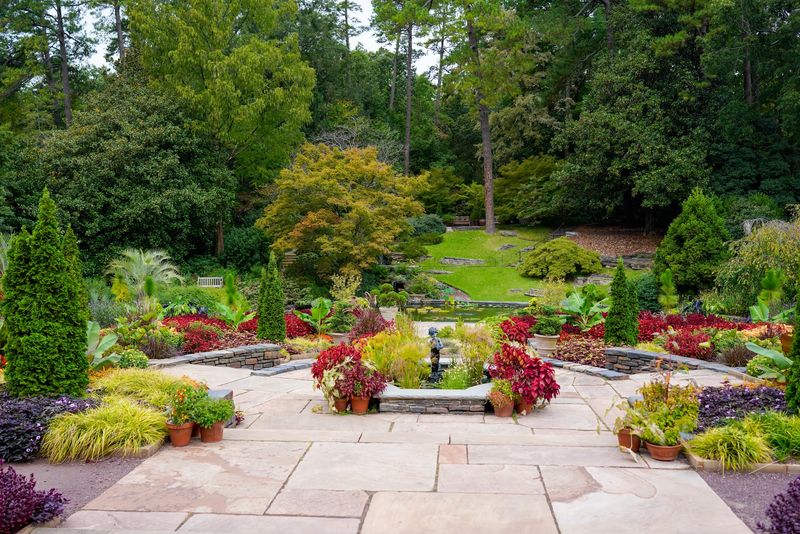
Five miles of paths inside a college campus sounds like a lot of homework. Luckily, the only assignment at these Durham gardens is slowing down.
The grounds cover 55 acres at Duke University. They hold more than 2,500 plant species, so your eyes will stay busy.
Four main areas shape the visit. There are the Historic Gardens with Italianate terraces, the H.L. Blomquist Garden of Native Plants, the W.L.
Culberson Asiatic Arboretum, and the Gateway Gardens.
Spring is the showoff season, thanks to the cherry blossoms. Come at peak bloom and you may forget you meant to look at anything else.
Beyond the blossoms, you’ll find creeks, waterfalls, and a koi pond. An amphitheater adds a nice spot to sit and let the scenery do the talking.
The gardens were dedicated in 1939, and they’ve since been named among the top public gardens in the country. That’s a pretty strong report card for a place you can visit for free.
The outdoor gardens open at 8 a.m. and stay open until sunset. That gives you plenty of room for a late lunch and a long, lazy loop.
Speaking of lunch, seasonal café options are on site. Selected Duke Gardens merchandise is available online through Duke Stores.
Families can check out the free drop-in programs. Classes and tours round things out for anyone who wants to learn as they wander.
Address: 420 Anderson St, Durham, NC 27705
3. Asheville Botanical Garden
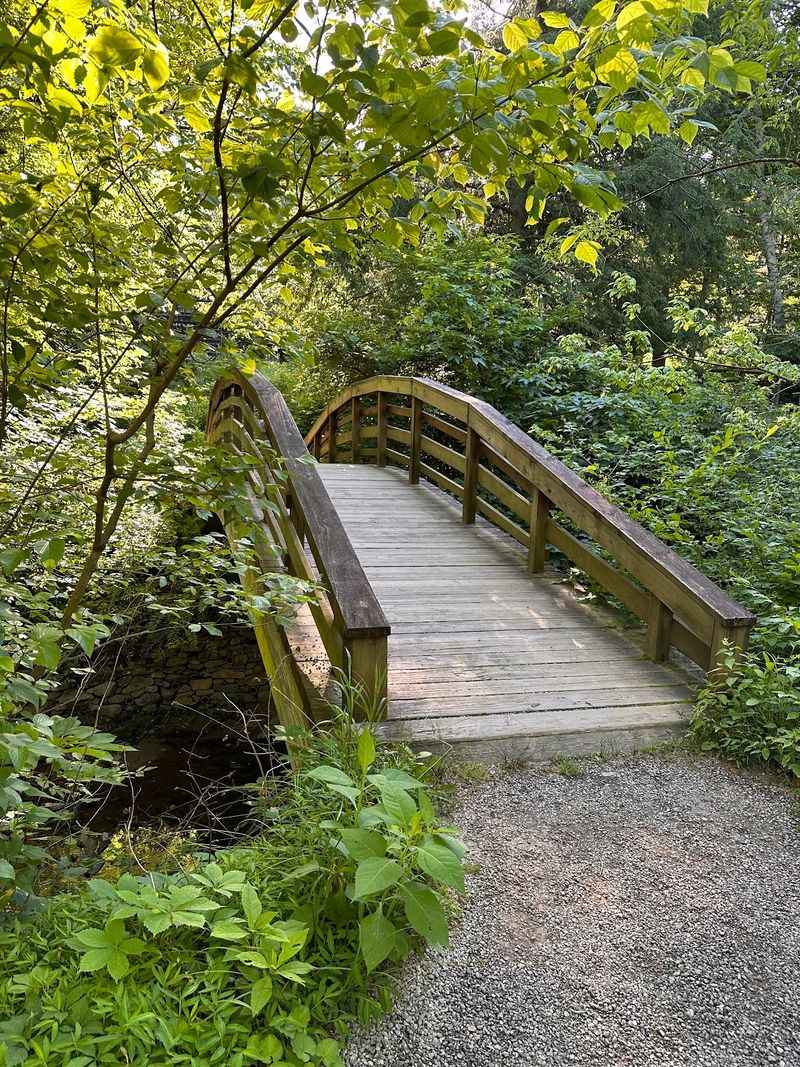
Half a mile doesn’t sound like much until you count the plants. Along one short trail, you’ll pass more than 600 species of Appalachian plants.
Asheville is famous for big mountain views. This garden zooms in instead, showing off the smaller wonders that grow in these hills.
A creek runs through the grounds, and rock walls add an old-world feel. Seating areas let you pause whenever a bloom or a bird grabs your attention.
Rhododendrons are part of the show, which feels right for this region. Many plants and trees carry labels, so you can play botanist without a textbook.
The trail meanders rather than marches. That makes it a fine pick when you want nature without a full-blown hike up a mountain.
Wildlife watching is part of the appeal here. Keep your eyes open and your voice low, and the garden may reward your patience.
The garden grounds are open daily from sunrise to sunset, while the visitor center operates from 10 a.m. to 4 p.m. That’s a generous window for an early stroll or a long evening wander.
Weekends, especially Saturday daytime and Sunday afternoon, draw the biggest crowds. Weekday mornings tend to be quieter if you’d like the creek mostly to yourself.
A gift shop sits on site for browsing after your walk. You might leave with something that reminds you of those Blue Ridge woods.
Pair this stop with a lazy Asheville afternoon and you’ll have a pretty great day. The mountains will still be there when you finish.
Address: 151 WT Weaver Blvd, Asheville, NC 28804
4. Airlie Gardens
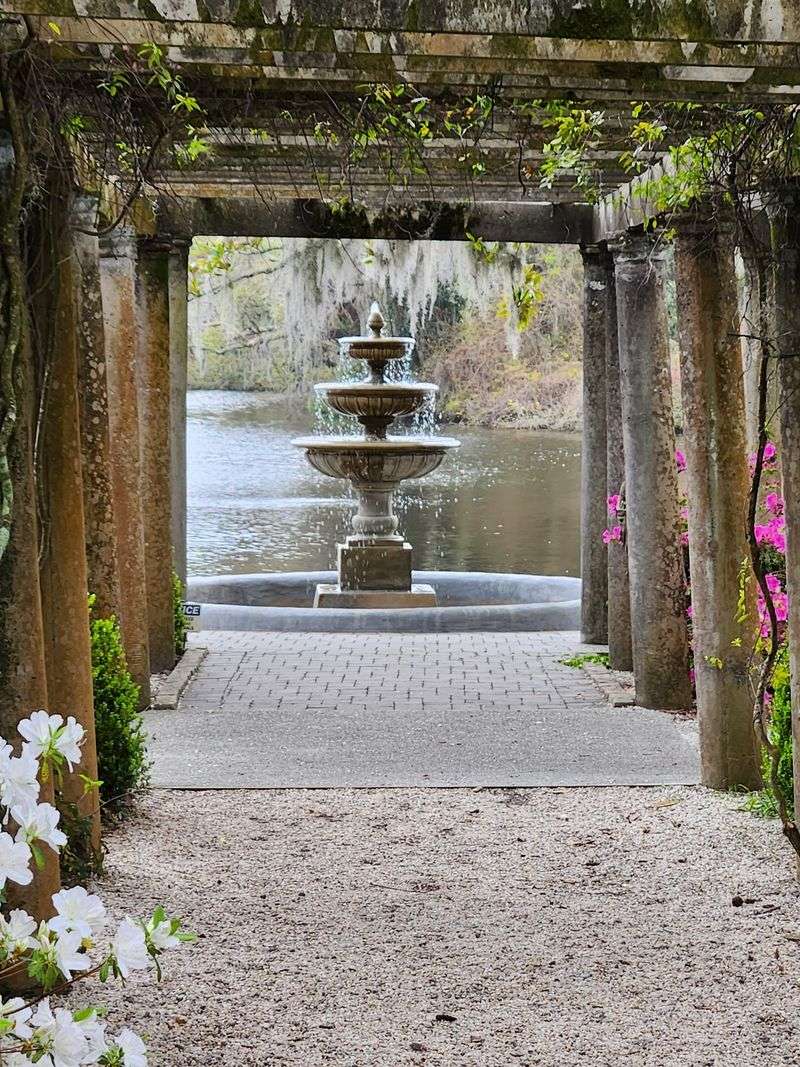
Some trees are old, and then there’s the Airlie Oak. It dates back to 1545, which means it’s had centuries to perfect its shady branches.
Wilmington’s famous garden spreads across 67 acres. It started as a private estate for Sarah and Pembroke Jones around the turn of the 20th century.
Today, New Hanover County runs it as a public garden. You get formal gardens, walking trails, historic structures, and 10 acres of freshwater lakes.
Spring brings the big headline, with more than 100,000 azaleas putting on a show. Even outside bloom season, the water views along Bradley Creek keep things peaceful.
Make time for the Minnie Evans Bottle Chapel. Built with colored glass bottles, it catches the light in ways that feel almost magical.
From June to September, a seasonal Butterfly House opens its doors. There’s also a Bug Zoo for anyone who likes their nature small and wiggly.
Tired legs? A seven-passenger tram runs on a first-come, first-served basis when the weather cooperates.
Most pathways work well for wheelchairs and strollers. That makes this an easy choice for a multigenerational outing.
The garden opens at 9 a.m. and closes at 5 p.m., with last admission at 4:30. Advance tickets are recommended, and it closes on Mondays in January and February.
Address: 300 Airlie Rd, Wilmington, NC 28403
5. Daniel Stowe Conservancy
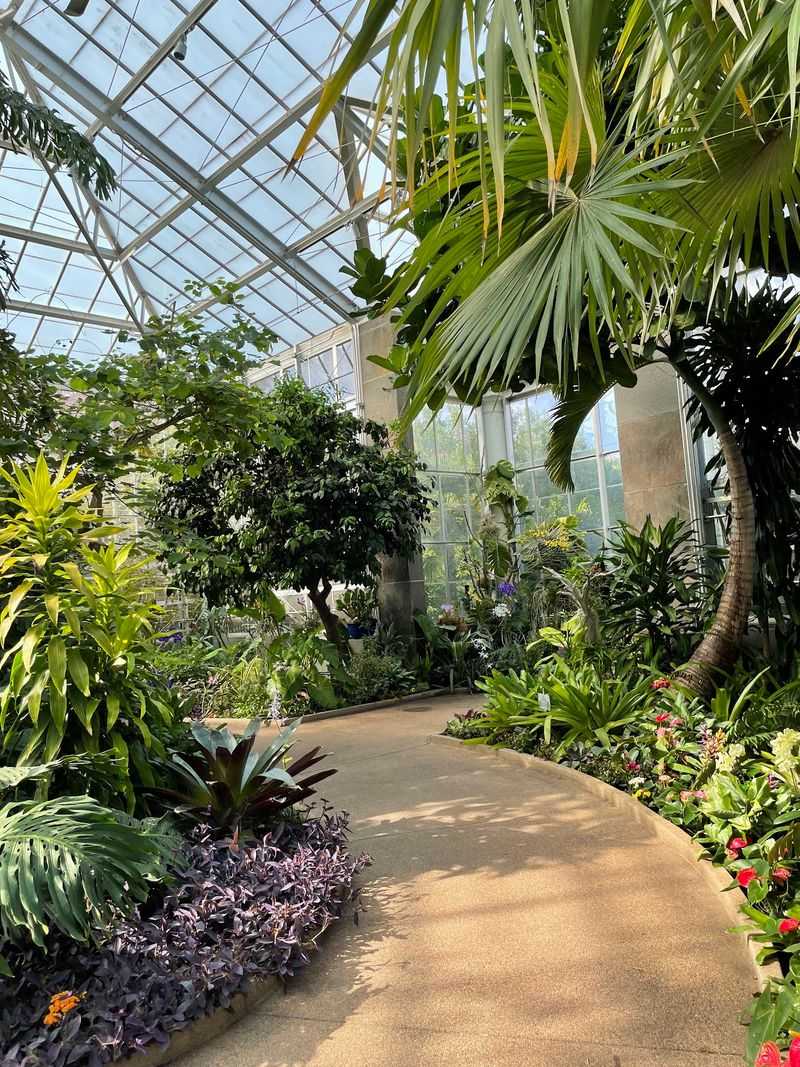
Orchids in the Carolinas usually live on windowsills. In Belmont, they get a whole glass conservatory devoted to tropical plants, and it’s a real treat.
The property stretches across 380 acres along Lake Wylie. The garden first opened in 1999, and it has grown into a big-time day trip.
Fountains are a signature here, and they sparkle across the cultivated gardens. Themed spaces include the Four Seasons Garden, the White Garden, the Cottage Garden, and the Canal Garden.
Got kids with energy to burn? The Lost Hollow Kimbrell Children’s Garden has a Prairie Castle Playground and an Adventure Trail.
Hikers get nearly 6 miles of trails, with about 2 miles bordering the lake. That’s a lot of shoreline for one slow afternoon.
In summer, the Butterfly Bungalow opens between Memorial Day and Labor Day. Winter brings Holidays at the Garden, with its own special hours and tickets.
The cultivated gardens open Wednesday through Sunday from 10 a.m. to 4 p.m. Admission requires a ticket or membership, and final entry is 30 minutes before closing.
Here’s a nice bonus. The trails, dog park, and Trailhead Store are open daily from 7 a.m. to 8 p.m., while the Farmhouse Garden Center opens Wednesday through Sunday from 9 a.m. to 4 p.m.; all offer free access.
Picnic tables are available too. Grab a snack or drink from the on-site café or store, find a spot, and enjoy the surroundings.
Address: 6500 S New Hope Rd, Belmont, NC 28012
6. Cape Fear Botanical Garden
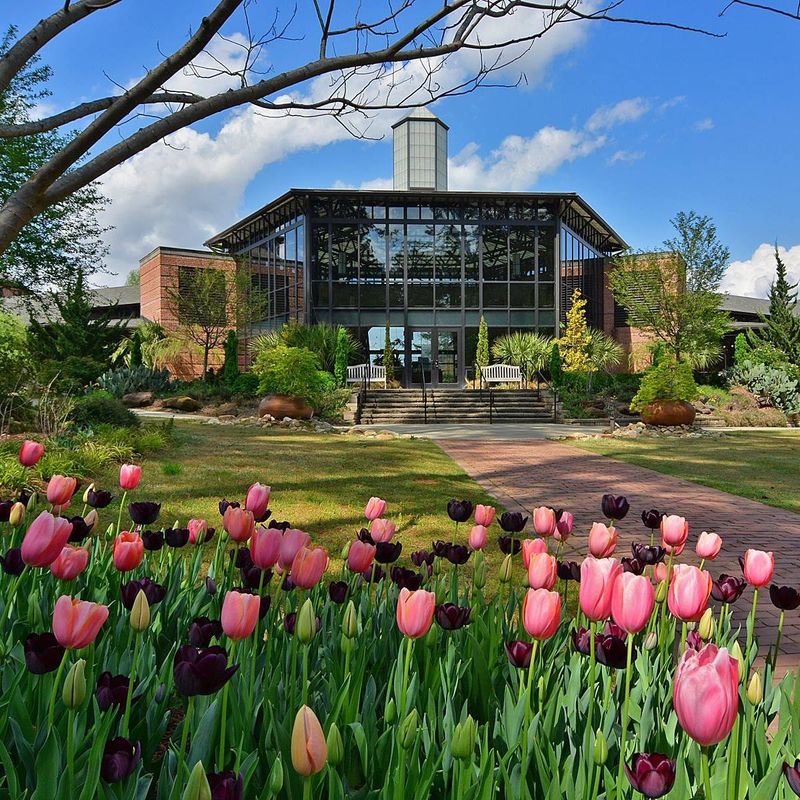
Camellia lovers, this one’s for you. Fayetteville’s garden holds one of the region’s largest collections of camellias, plus a big daylily lineup.
The grounds cover roughly 80 acres in the Sandhills. You’ll find more than 2,000 varieties of plants, along with an arboretum.
For more than 35 years, this garden has celebrated nature and North Carolina heritage. That heritage shows up in the Heritage Garden, which features historic agricultural structures.
Need a quiet moment? Head to the Cypress Pond, where a boardwalk lets you hover over the water like a very calm heron.
Your nose gets a turn in the Fragrance Garden. It’s a sweet stop for anyone who believes flowers should be smelled, not just photographed.
Trail options range from easy walks to rugged hikes. A river loop adds even more scenery for folks who like to stretch their legs.
Little ones can explore the Children’s Garden, with interactive exhibits and playful sculptures. Picnic areas make it simple to turn the visit into a full afternoon.
Only service animals are allowed during general admission. Special events like Dog Day sometimes open the gates to four-legged friends.
The Garden opens from 9 a.m. to 5 p.m. Monday through Saturday and noon to 5 p.m. on Sunday, with extended Thursday hours until 7 p.m. from March through November.
Address: 536 N Eastern Blvd, Fayetteville, NC 28301
7. JC Raulston Arboretum
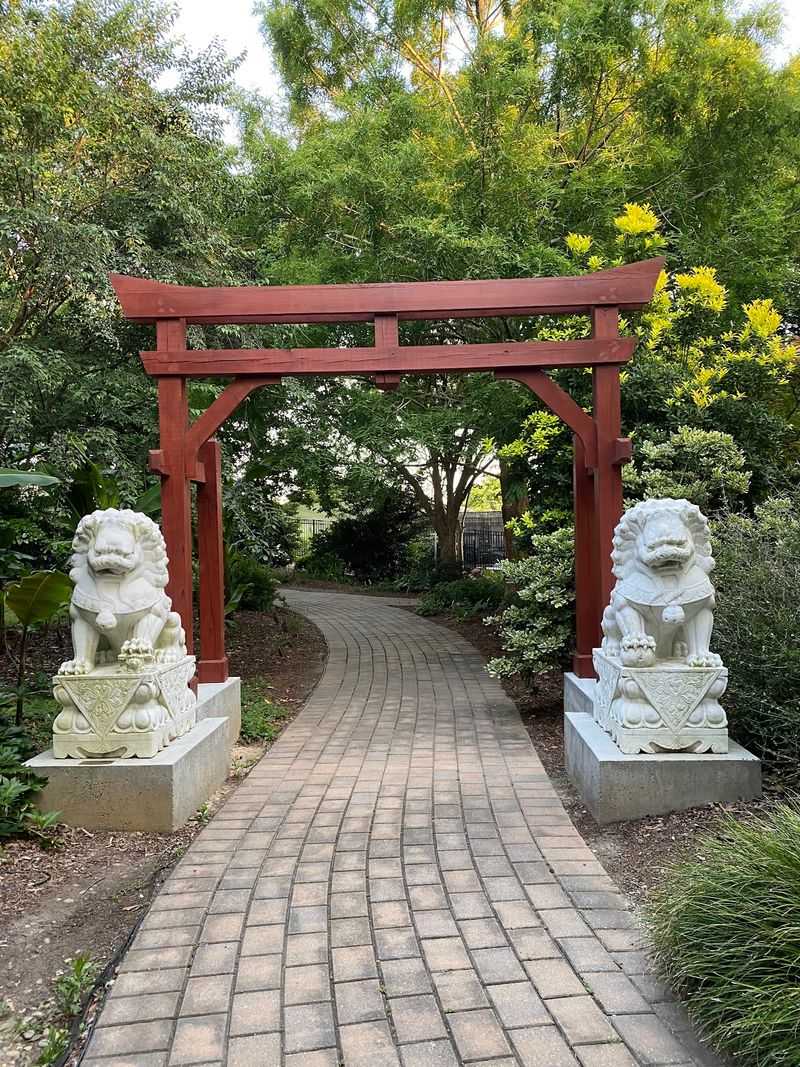
Ten acres might sound small. Then you learn this Raleigh arboretum packs in more than 6,500 plant selections from over 50 countries.
NC State University runs the place as a living laboratory. Plants are chosen for how well they handle Southeastern landscapes, which makes it a goldmine for home gardeners.
Dr. J.C. Raulston founded it in 1976 as the NC State University Arboretum. It was renamed in his honor in 1997.
The Japanese Garden is a favorite stop for a calm moment. You’ll also find a White Garden, a Rose Garden, and a children’s garden.
Plant nerds, get excited about the Annual Color Trials. This is an official All-America Selections testing site, so you might spot future garden center stars early.
The arboretum also keeps nationally accredited collections of redbuds and magnolias. Spring visitors get quite the welcome when those trees start blooming.
Benches, restrooms, and water are available as you explore. Ponds and a mix of sunny and shady areas keep the walk interesting.
Admission is free, and the arboretum is open daily. Hours vary seasonally, with extended Friday and weekend hours from April through September and shorter hours from October through March.
Leave your pup at home, since only service animals are allowed. Keep an eye out for evening garden strolls and other events throughout the year.
Address: Ruby McSwain Education Center, 4415 Beryl Rd, Raleigh, NC 27606
8. Greensboro Arboretum
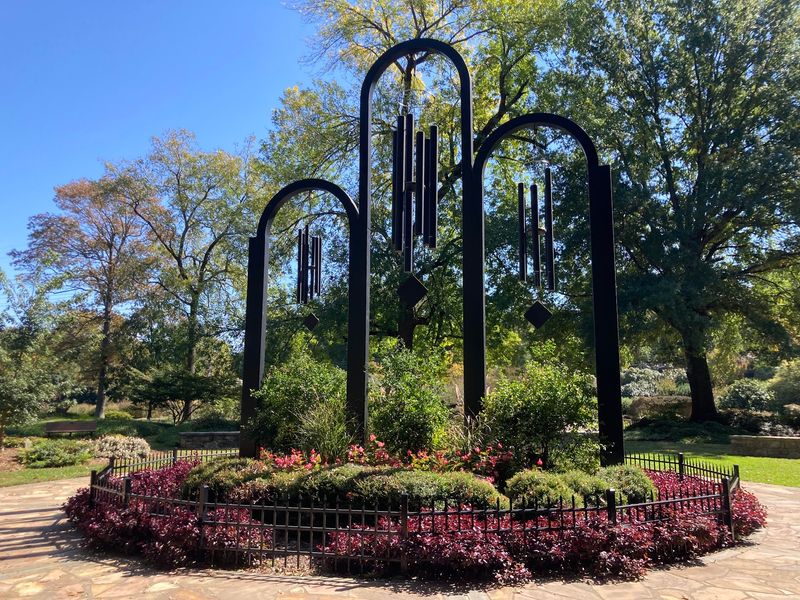
Fourteen plant collections on 17 acres is a lot of variety for a city park. Greensboro’s arboretum makes learning about plants feel like a casual stroll.
The garden leans toward education, and it shows. Plants carry labels, so you can figure out what that gorgeous shrub is before you try finding one for your yard.
Walking trails loop through the collections. They feel carefully designed, yet the grounds still keep a bit of a wild side.
A gazebo gives you a handy spot to rest. It’s also a sweet backdrop for photos, especially when nearby beds are in bloom.
Bring a picnic and make an afternoon of it. You can spread out, snack, and watch the world go by at its own easy speed.
Dog walkers love this place too. Joggers mix in with strollers, so the paths stay lively without feeling rushed.
The arboretum opens at 8 a.m. daily, weather permitting, and closes at 5 p.m. in winter, 7 p.m. in spring and fall, and 8 p.m. in summer.
That leaves room for a morning walk before work or a sunset wander after dinner.
The arboretum works year-round, not just in spring. Each season brings different textures and colors to the collections.
Families will find plenty of space for kids to explore. A basketball court and other sports facilities sit nearby for anyone who needs to burn extra energy.
Address: 3299 Starmount Dr, Greensboro, NC 27403
9. Elizabethan Gardens
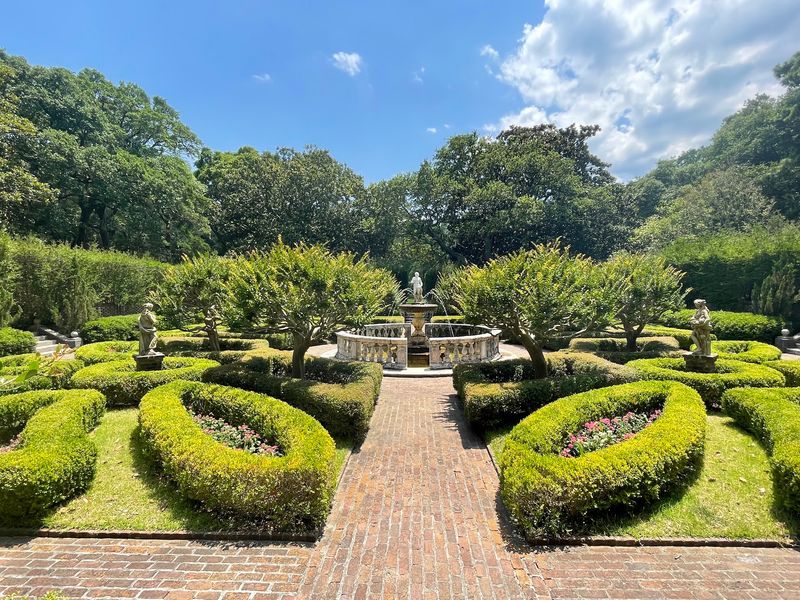
A rose bush with royal ties grows on Roanoke Island. It was donated by Queen Elizabeth, and it lives in a garden built to honor the first English colonists.
The Garden Club of North Carolina proposed the project in 1950. The gardens officially opened on August 18, 1960.
You’ll find them within Fort Raleigh National Historic Site in Manteo. The 10.5 acres feel like a storybook, with Italian Renaissance fountains and antique statuary.
Blooms rotate through the seasons. Camellias, magnolias, hydrangeas, and crepe myrtles take turns stealing the spotlight.
Wander down to the waterfront gazebo for a slow, breezy break. Audio tours are available if you want history with your hydrangeas.
From May through September, the John White Butterfly Center opens as an indoor greenhouse. Kids can also enjoy the Discovery Cottage, with a play ship, swings, slides, and a koi pond.
Dogs can come along for a fee. The Garden Gift Shoppe sells books, gifts, and plants for the trip home.
Timing matters here. The gardens close in January, and the WinterLights season brings special evening hours instead of regular daytime admission.
Regular hours run 9 a.m. to 5 p.m. Monday through Saturday, and 11 a.m. to 5 p.m. on Sunday. Last tickets sell an hour before closing.
Address: 1411 National Park Dr, Manteo, NC 27954
10. Sandhills Horticultural Gardens
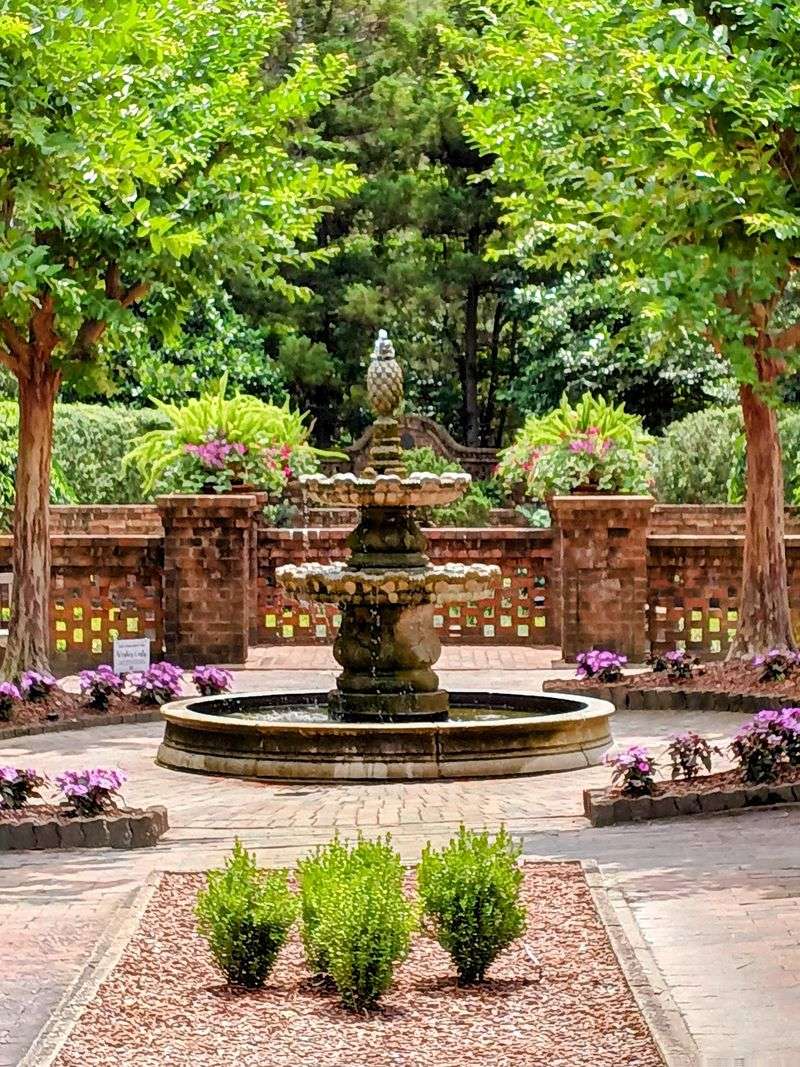
Pinehurst is famous for golf, but plants deserve some attention too. On a community college campus, these gardens pack in an impressive variety of themed spaces.
Formal gardens set a polished tone. Neatly kept beds, statues, and fountains make the place feel like a tiny estate.
Rose lovers will find plenty to sniff. An azalea garden, a conifer garden, and a butterfly garden add even more personality.
A water feature gives you a peaceful place to unwind. The soft sound of water pairs nicely with a slow walk and zero schedule.
Want something wilder? A wetlands trail offers a different kind of scenery from the trimmed beds.
The gardens show off the range of plants that thrive in the Sandhills region. Trees, flowers, and shrubs mix together in some fun and amusing displays.
Hours run from 8 a.m. to 7 p.m. from April through October and from 8 a.m. to 5 p.m. from November through March.
Thursday and Friday afternoons tend to be quiet. Sunday evenings are calm too, if you like a garden that feels like your own backyard.
Pair your visit with a stroll around the historic village of Pinehurst. It’s a lovely way to cap off a day in North Carolina’s Sandhills.
Bring a camera and comfortable shoes. You’ll want both before the afternoon is over.
Address: 3245 Airport Rd, Pinehurst, NC 28374