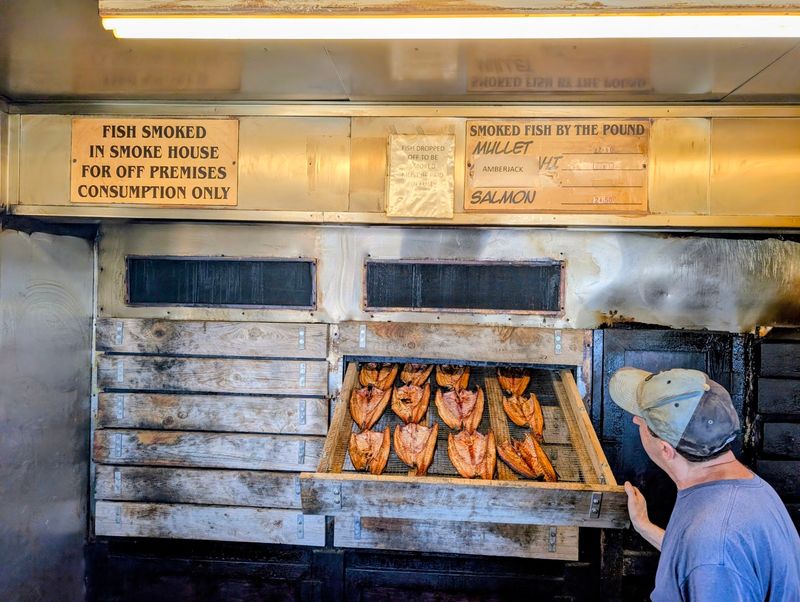
Smoke reached me before any sign did, a sweet, woodsy cloud drifting right across a busy Florida road. I almost drove past the low, plain building, figuring it was just another roadside lunch stop.
Then I spotted whole fish lined up on racks over a slow oak fire, and I pulled into the lot faster than I care to admit. What waited inside was a meal that tastes like Florida history, served by a family that has no plans to change a thing.
A Smokehouse on Pasadena Avenue South
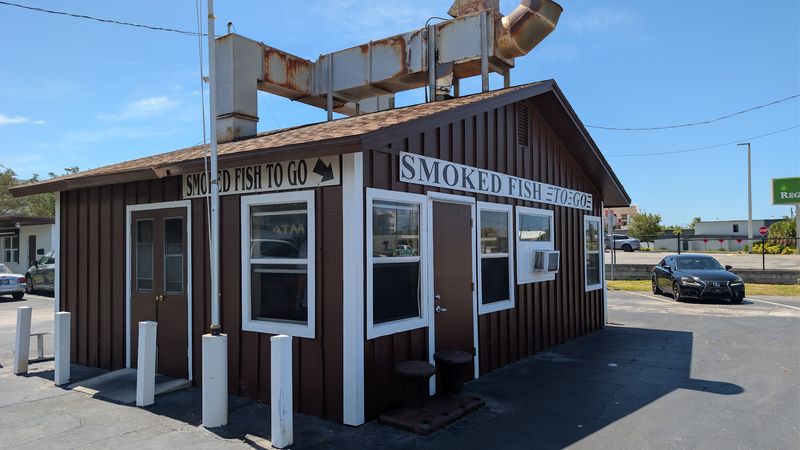
Right where Pasadena Avenue South rolls toward the Gulf beaches, a modest building at number 1350 puts out more smoke than any grill on the block. Ted Peters Famous Smoked Fish sits in South Pasadena, a small community wedged between St. Petersburg and the barrier islands of Pinellas County.
Most people heading to St. Pete Beach zoom right by it, at least until the smell hits their open windows.
At heart, the place is a seafood restaurant with one big specialty. Fish come out of a wood-fired smokehouse and land on your plate with simple sides, no fancy garnish, no fuss.
Folks often describe it as a no-frills spot, and that label is worn with pride here.
Visitors can grab a seat on the outdoor patio, belly up to the bar, or slip into an indoor dining room that many guests never realize exists. Others swing by the smokehouse counter for fish and spread to take home.
Whichever way you go, the main event stays the same: smoked mullet, cooked over red oak, the way it has been done here for generations of hungry Floridians.
Blue Anchor Beginnings and a 1951 Move
Back in 1945, a man named Ted Peters opened a restaurant called the Blue Anchor on Blind Pass Road. World events were still shaking out, Florida was on the edge of a tourism boom, and a fellow with a smoker had a pretty good idea.
People love food they can smell from the street.
Six years later, in 1951, the operation moved to its current home on Pasadena Avenue South. The name changed, the address changed, but the core plan stuck.
Ted placed his smoker right out front where drivers and walkers could see and smell fish slowly cooking over the fire.
Call it marketing before anyone used that word for a lunch counter. The aroma did the selling, pulling curious travelers off the road and into a seat.
Decades later, that same trick still works on first-timers who had no plans to stop.
Here is a fun bit of perspective: the restaurant has outlived drive-in theaters, rotary phones, and countless food trends. The owners like to say they plan on staying open until the sign hits 100 years.
Judging by the steady crowds, that goal seems well within reach.
Five Generations Keeping the Fire Going
Family businesses rarely make it past the second generation. Ted Peters is now run by the fifth, which feels a little like spotting a manatee in your backyard pool.
Rare, surprising, and kind of wonderful.
Every handoff could have brought big changes, like a longer menu, a shiny remodel, or trendy new flavors. Instead, each generation has chosen to protect what already worked.
The smoking method, the simple sides, and the rustic charm have all been treated like family heirlooms.
Guests notice that commitment. One server, asked for an item the kitchen never carries, reportedly explained with a smile that they have been doing things the same way for decades.
The owners openly say they cannot change because sticking to tradition is exactly what makes them special.
Small updates do sneak in from time to time. Card payments were added recently, which the family called the biggest addition they have ever made.
Repairs and fresh paint also happen as time allows. Still, the heart of the place beats the same rhythm it did when Ted first lit the fire, and longtime regulars say walking in feels just like old times.
Why Red Oak Gets the Job
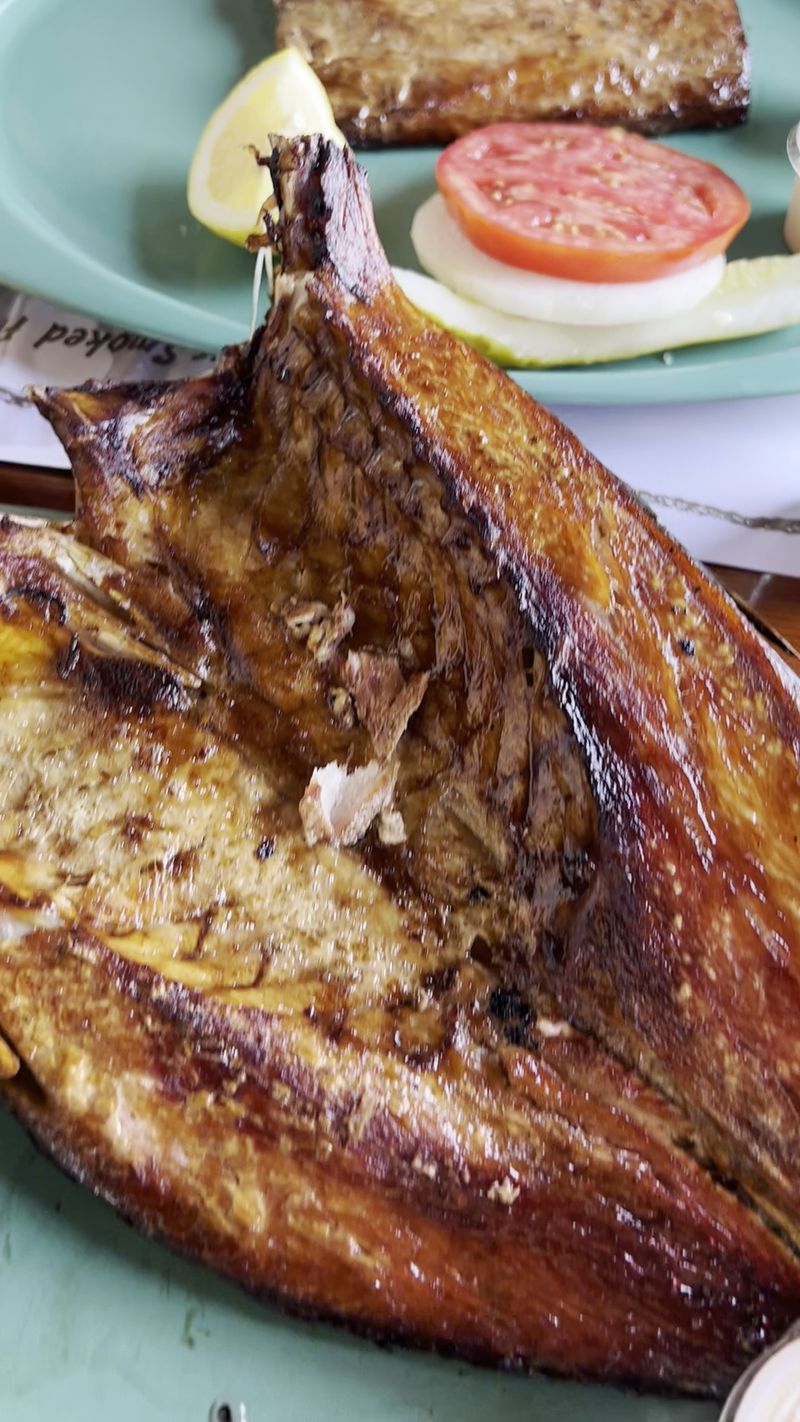
Wood choice can make or break smoked fish. Pick something too harsh, and the flavor turns bitter.
Pick something that burns too fast, and you spend all day feeding the fire while the fish cooks unevenly.
Red oak solves both problems. The wood is native to Florida, and it burns slowly and cleanly, giving off steady heat and a mellow smoke.
That calm, even burn is what lets the fish soak up flavor without picking up any sharp, sooty taste.
Loyal fans often say the result tastes smoky but never overpowering. One longtime barbecue cook visiting for the first time was impressed by the rich smoke flavor without any uncomfortable aftereffects later.
Another guest liked the fish so much that he went searching for Florida red oak to try smoking at home.
Good luck matching it, though. The trick is not just the wood but decades of knowing exactly how hot the fire should smolder and when to add another log.
Stand near the smokehouse for a minute, take a deep breath, and you will understand why this particular oak has earned its permanent spot beside the racks.
Four to Six Hours on the Racks
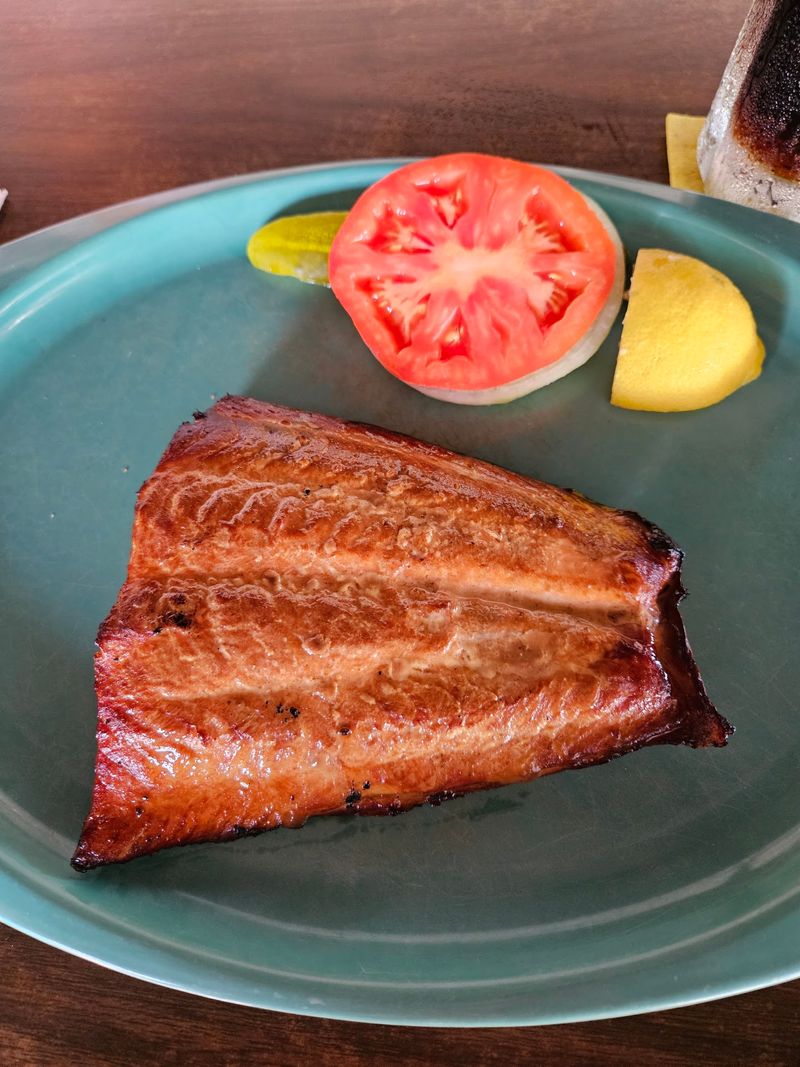
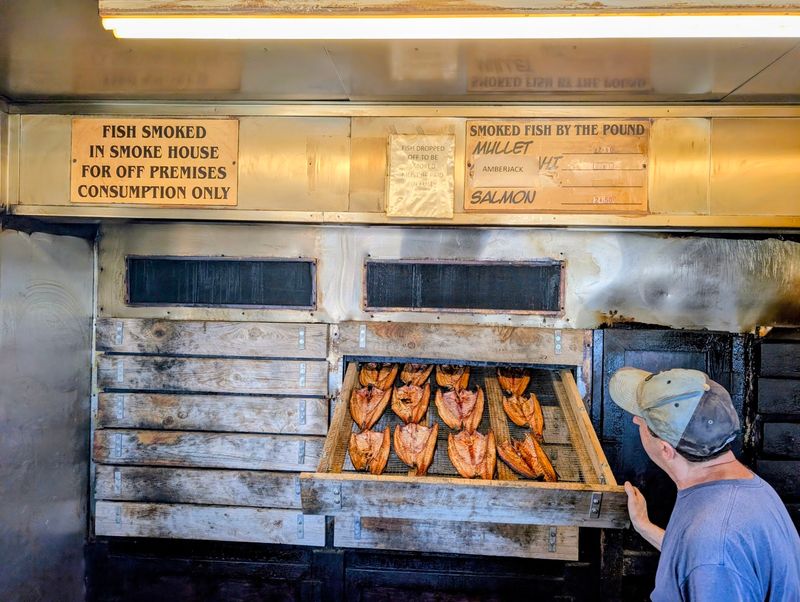
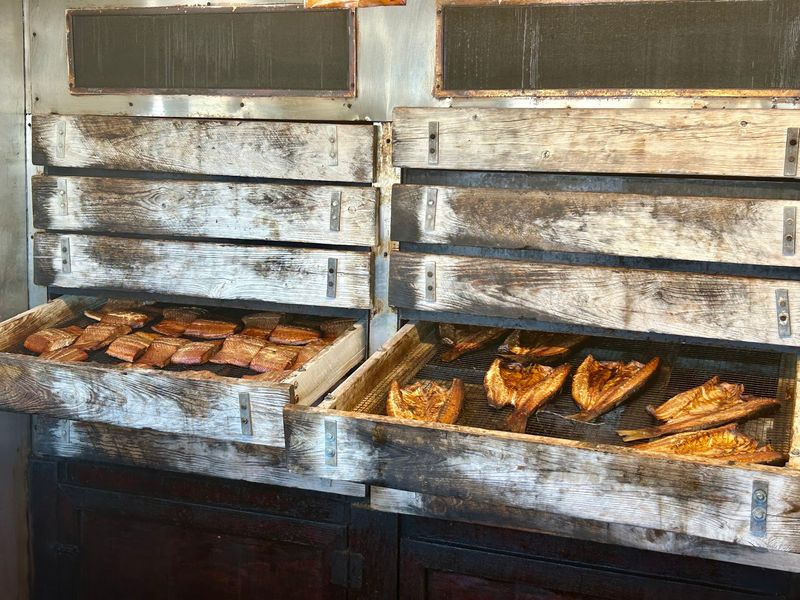
Patience is the secret ingredient nobody puts on the menu. Fresh fish are laid out on racks and hot-smoked for four to six hours, depending on how big and thick each one is.
Thin pieces finish sooner, while hefty mullet stay in the smoke longer.
Hot smoking cooks the fish fully while flavor settles in. Fans say the method seals in moisture and locks in that deep, woodsy taste.
You end up with flesh that pulls away in tender flakes, tinted gold on the outside.
Here is a history bonus worth sharing at the table. Smoking fish in Florida goes back thousands of years before Ted Peters ever lit a fire.
Indigenous communities like the Tocobaga, who lived around Tampa Bay, used smoke as a way to preserve their catch long before refrigerators existed.
So when you watch fish slowly turning golden here, you are seeing a technique with very deep Florida roots. Some visitors even get to point at their salmon straight off the grate, picking the exact piece they want.
Few dining moments feel more connected to the food than that one.
The Famous Mullet Dinner
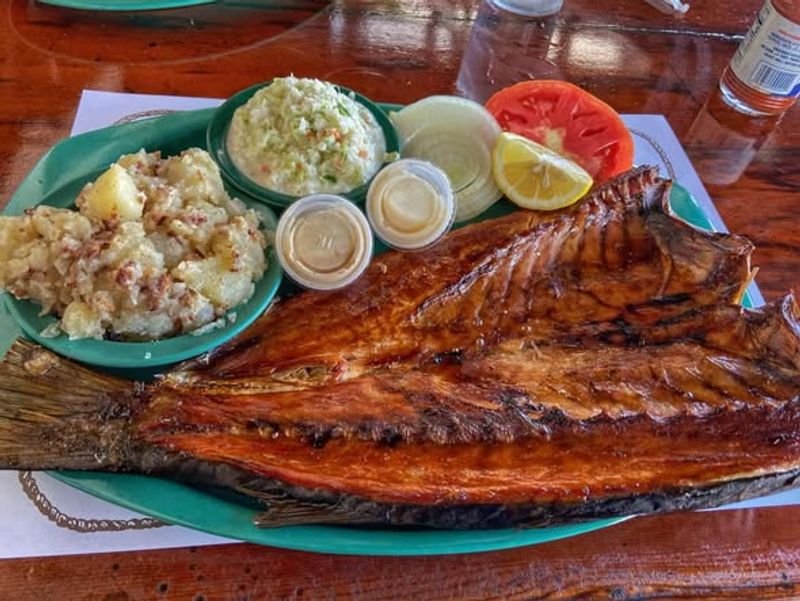
Mullet surprises plenty of newcomers. One traveler admitted she did not even know you could eat mullet until she tried it here, and she left happy to cross it off her bucket list.
For many Floridians, though, smoked mullet is pure comfort food.
The mullet dinner brings roughly a pound of fish plus two sides, and guests often say it easily feeds two people. Expect deep smoky flavor and moist meat that tastes clean, not fishy.
Regulars call it a strong value for the amount of food you get.
A small heads up: mullet has bones, and some diners find them a bit of work. Servers are known to stop by and show first-timers how to eat it, which takes the mystery out fast.
Once you get the hang of it, tugging the flakes free becomes part of the fun.
Lunch portions exist too, but they depend on the size of fish that day. Smaller mullet tend to run out quickly, so the kitchen sometimes only has dinner sizes ready.
Arrive earlier if you want the lighter option.
Salmon, Mahi and Amberjack on the Side Racks
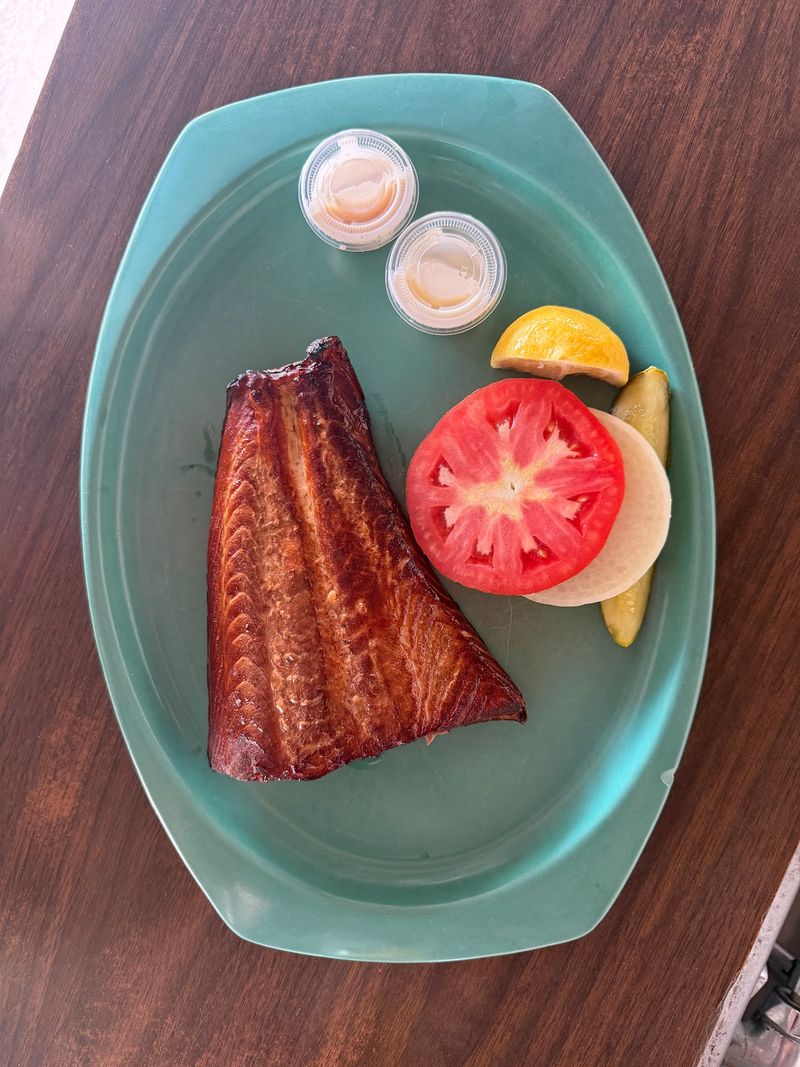
Not ready to wrestle with mullet bones? No problem.
The smokehouse also turns out other fish, and the choices often include salmon, mahi mahi, and amberjack, depending on the day.
Smoked salmon earns a huge share of the praise. Visitors describe it as fresh, tender, and loaded with smoky flavor, and even folks who had never tried smoked salmon walked away impressed.
It also tends to be easier for beginners, since the flakes come away cleanly.
Amberjack has quietly become a new favorite for some guests. One diner went as far as recommending it over the mullet, calling it a pleasant surprise.
Mahi offers another mild, approachable option for anyone who likes a lighter fish.
These alternatives usually cost a little more than the mullet, so keep that in mind when ordering. Specials shift because the kitchen works with whatever sizes and catches arrive.
That means part of the fun is asking what came off the racks today.
Groups often order a mix and pass plates around. It is a smart way to taste how the same red oak smoke plays with different kinds of fish.
Fish Spread, Warm Potato Salad and Friends
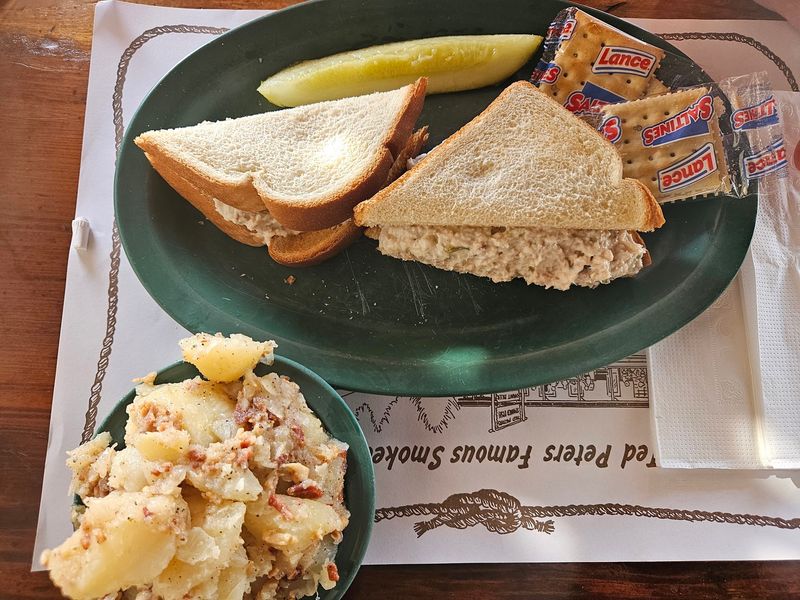
Ask regulars what to order first, and many will skip the fish entirely and point to the spread. The house-made smoked fish spread is one of the most talked-about items on the menu, served with saltine crackers and a bottle of hot sauce on the side.
Plenty of people buy extra tubs to take home or even give as gifts.
Close behind is the German potato salad, served warm. Guests rave about its tangy flavor, and some call it their favorite part of the whole meal.
Coleslaw rounds out the classic side lineup, and even coleslaw skeptics have admitted it won them over.
Craving something besides fish? The hamburger is a popular pick, and guests describe it as huge.
A smoked fish spread sandwich, served on white bread with a large pickle, is another casual choice.
Manhattan clam chowder, with its tomato base, offers a warm starter. For dessert, the key lime pie gets compliments for balancing sour and sweet just right.
Wash it all down with the root beer, which a surprising number of visitors specifically recommend.
Patio Breezes and a Secret Dining Room
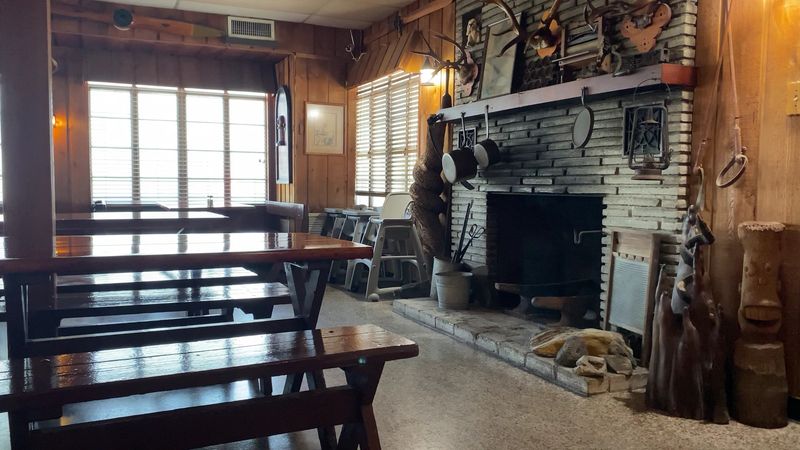
Walking up, your nose takes the lead. The smell of smoldering oak and slowly cooking fish wraps around the entrance, and guests often say it is half the experience.
If you dislike fish aromas, though, consider yourself warned.
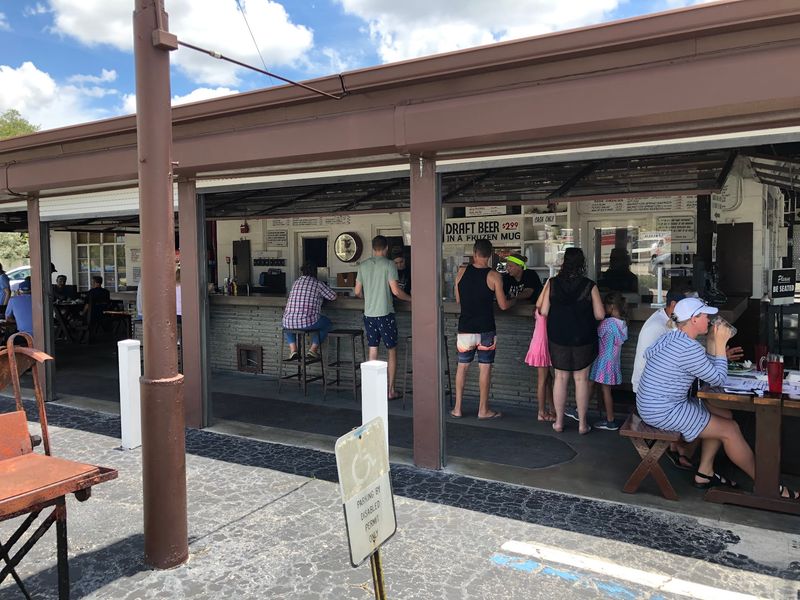
Most people head straight for the outdoor seating. Tables fill quickly on nice days, giving the patio a lively, neighborly buzz.
A bar area offers quick seats for solo diners or anyone who wants to watch the action.
Here is the part that surprises almost everyone. A full indoor dining room sits inside, cooled by strong air conditioning, and even folks who have visited for decades sometimes do not know it is there.
On hot, sticky summer days, that cool room becomes a lifesaver.
The overall feel is relaxed old Florida charm. Nothing is polished or trendy, and some visitors note the building shows its age, with the family making repairs and adding fresh paint as they go.
The restaurant also sits beside a busy road, so expect a bit of traffic noise. Somehow, all of it adds to the feeling of stepping into living history.
Who Leaves Happiest
Food history buffs will feel right at home. Eating here is a bit like opening a scrapbook of Gulf Coast life, with flavors that have stayed steady since the 1950s.
One guest described the meal as more like a snapshot of living history than a regular weekday lunch.
Beach-bound families also do well here. It sits just minutes from St. Pete Beach, making it an easy stop before or after a day on the sand.
Many families have made it an annual tradition, coming back year after year with friends and relatives.
Curious eaters who have never tried smoked mullet will find friendly guidance. Servers are known for being warm and attentive, even when the place is packed.
Who might want to think twice? Diners who want a long menu with many choices may find the selection too simple.
The family keeps things focused on purpose, preferring consistent quality over variety. Folks who are bothered by fish bones can still enjoy themselves by sticking with salmon, amberjack, or the spread.
Anyone who dislikes smoky aromas, however, might simply want to choose a different lunch spot.
Hours, Payment and Getting There
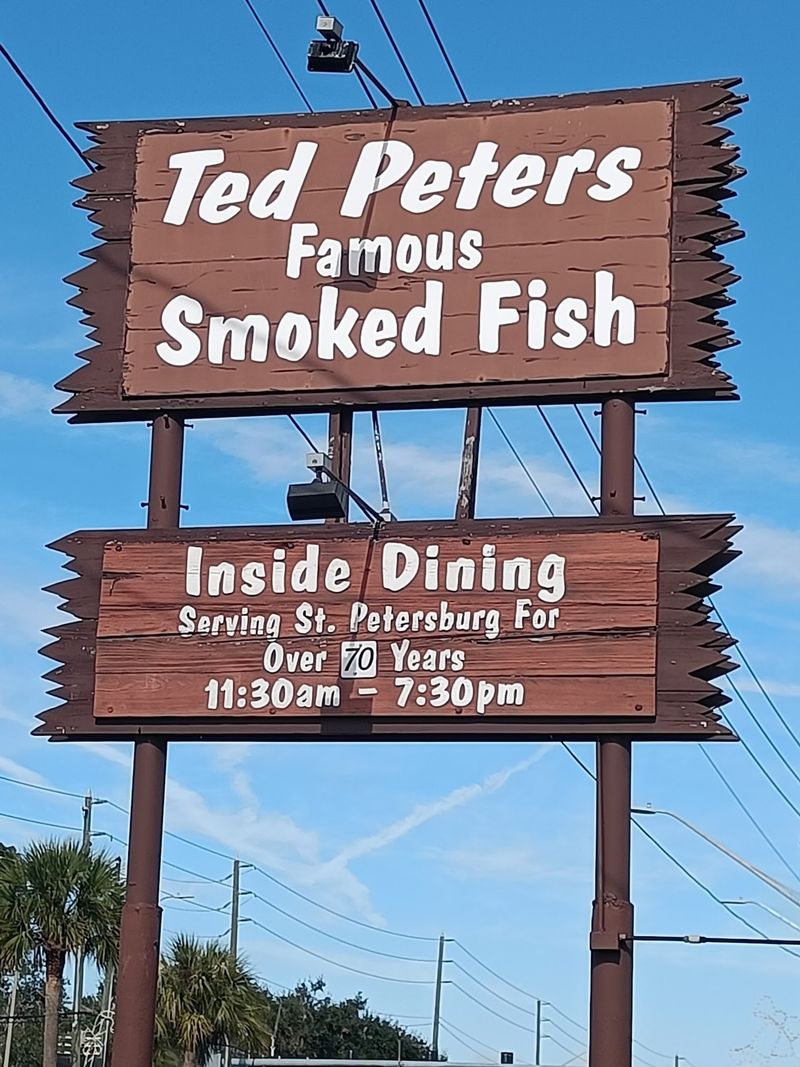
Plan ahead, because the calendar matters. Ted Peters is open Wednesday through Sunday from 11:30 AM to 7:30 PM, and it closes on Mondays and Tuesdays.
One devoted visitor even extended a trip by a day just to get in on a Wednesday.
For decades, this was a cash-only spot, and many guides still describe it that way. Recently, the family started accepting cards, a change they called a necessity.
An ATM is also on site, so bringing some cash remains a handy backup.
Finding it is simple. The restaurant sits at 1350 Pasadena Avenue South in South Pasadena, along the main route connecting St. Petersburg to St. Pete Beach and the Gulf islands.
That makes it an easy add-on to any beach day in Pinellas County.
Crowds build at peak meal times, and waits are common. Regulars say the food is worth it, and seats at the bar sometimes open up quickly.
For the best shot at a smaller lunch-size mullet, arrive near opening, since those fish tend to sell out first. Exact menu prices can change, so check when you arrive.
A Plate Worth the Detour
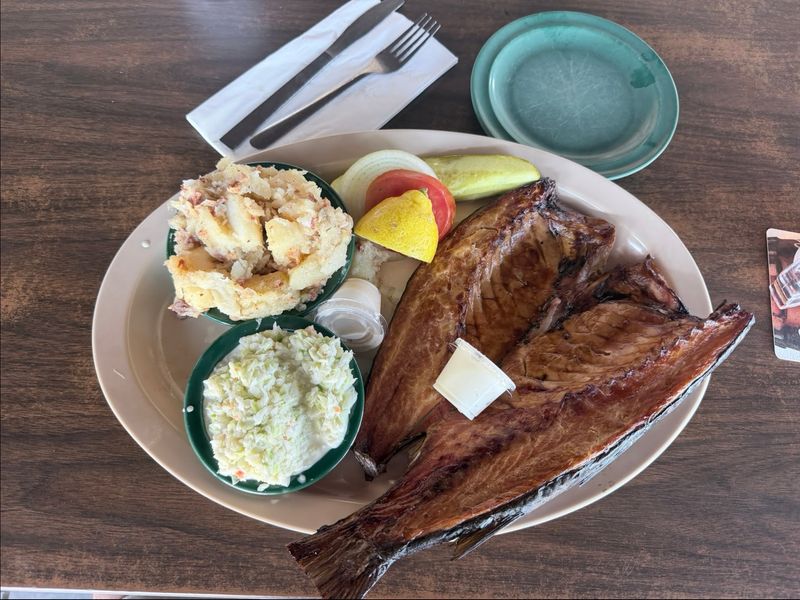
Some meals fill you up, and others stick in your memory for years. A plate of red oak smoked mullet in South Pasadena manages to do both.
It tastes of patience, wood smoke, and a Florida that many people thought had faded away.
Nothing here tries to impress you with flash. You get honest fish, warm potato salad, creamy spread with saltines, and servers who seem genuinely glad you came.
Five generations of one family have kept that formula alive by refusing to chase trends.
Is it perfect? Not exactly.
The building shows some wear, the road can be noisy, and mullet bones demand a little attention. Yet those small quirks feel like part of the story rather than problems to fix.
For day-trippers, the timing could hardly be better. Cooler autumn and mild winter days make the patio especially pleasant, and a beach afternoon is only minutes away.
Point your car toward Pasadena Avenue South this weekend, roll the windows down, and follow your nose. Chances are, you will be planning a return trip before the last cracker is gone.