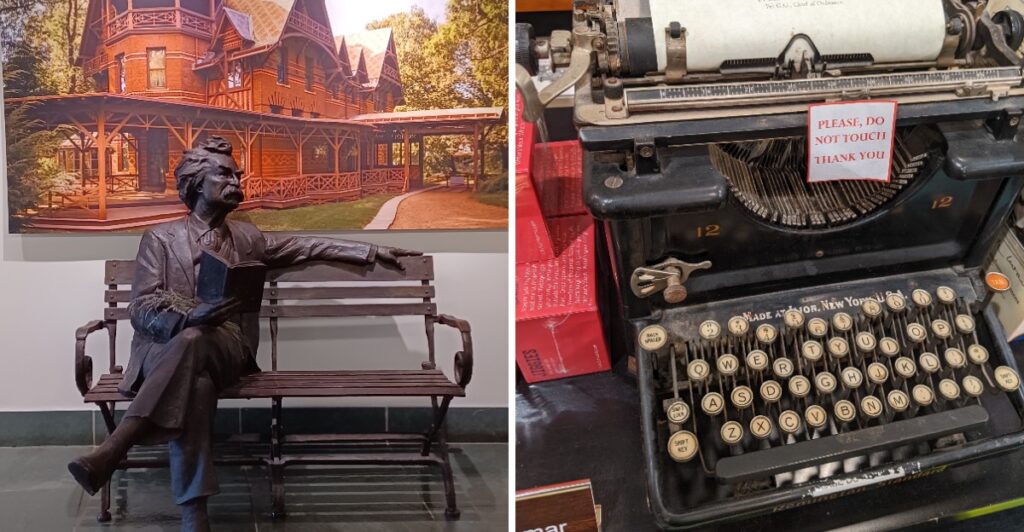
A biographer once described this Connecticut house as part steamboat, part medieval fortress, and part cuckoo clock.
That’s a lot of personalities for one address, and the roof adds patterned slate in three colors.
A celebrated New York design firm handled the interiors with serious Gilded Age flair. The kids even had a glass plant room they nicknamed The Jungle.
Their dad wrote some of America’s best-loved books upstairs, a few steps from a pool table. Writer’s block clearly had some stiff competition in that room.
The 25-room house came with a burglar alarm and speaking tubes back in the 1870s. He wrote adventures for a living, then went home to a house that looked like one.
The Outside Looks Like A Storybook Got Very Ambitious
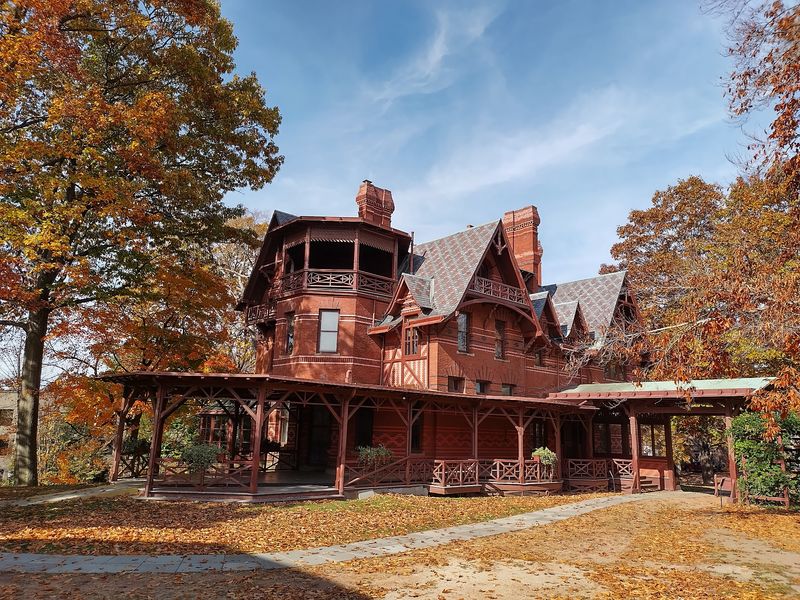
Red brick sounds plain until someone decides to paint with it. At The Mark Twain House & Museum, black and vermilion bricks form bold patterns across the walls.
Then your eyes drift up to the roof. Slate tiles in three colors create designs that look almost stitched on.
New York architect Edward Tuckerman Potter designed the home. Samuel and Olivia Clemens stayed very involved in the planning, and it shows.
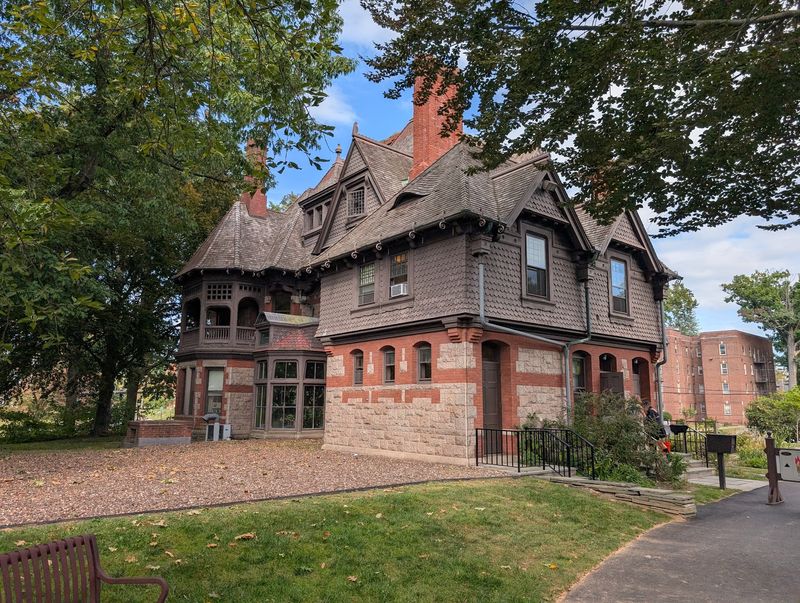
The roofline refuses to sit still. Two massive gables, two smaller gables and an octagonal tower all compete for your attention.
Experts label the style High Gothic, Victorian Gothic Revival or Stick style. Biographer Justin Kaplan put it best as part steamboat, part medieval fortress and part cuckoo clock.
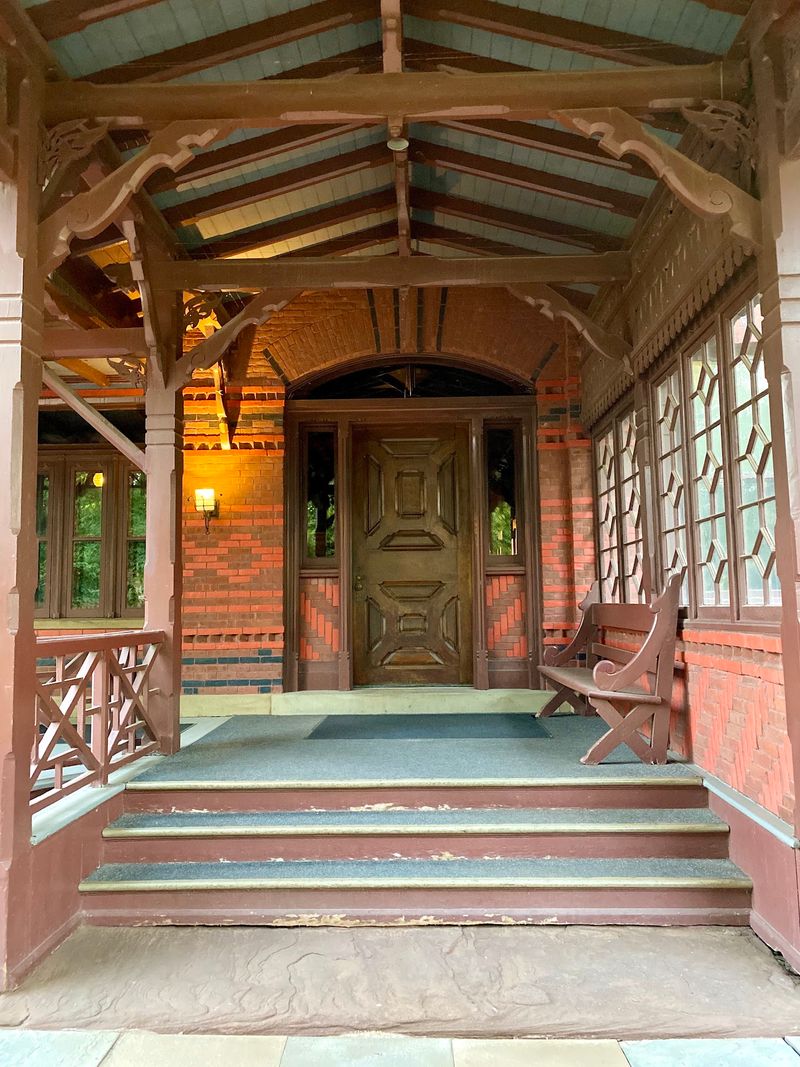
A huge wraparound porch hugs the house like a deck on a riverboat. There’s also a porte-cochere, which is a covered spot where carriages once pulled up.
Construction began in August 1873. The family moved in by September 1874, and they called it home until 1891.
Photos are allowed outside, so bring your camera for the exterior. Snap the brickwork up close, then step back for the whole wild skyline.
Tiffany’s Designers Basically Went Wild With Every Wall
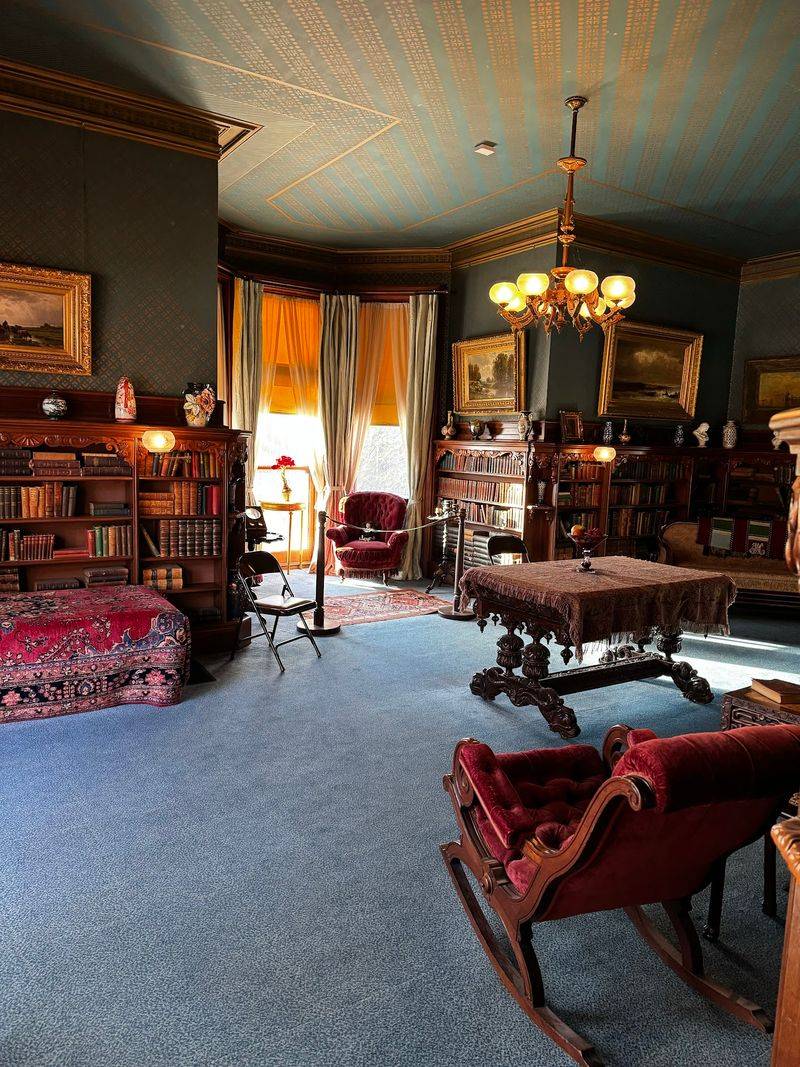
Louis Comfort Tiffany is famous for glowing glass lamps. His firm, Associated Artists, decorated rooms in this house in 1881.
The results feel like a jewelry box you can stand inside. Elaborate stenciling covers walls and ceilings in repeating patterns.
Carved woodwork adds even more detail. Doorways, railings and trim all got the fancy treatment.
The grand hall sets the tone right away. It’s dramatic, dark and rich, like the opening scene of a mystery novel.
Tiffany glass also appears in the museum’s collection. That collection holds roughly 50,000 artifacts, including manuscripts, photos and family furnishings.
Here’s a smart tip for your visit. Look up often, because ceilings here deserve as much attention as walls.
Photos aren’t allowed inside the house. That rule sounds strict, but it frees you to actually notice the patterns instead of your screen.
Your guide will point out details you might miss. Ask questions about the stenciling, since each room has its own design story.
Fans of art, color or old-school craftsmanship will find plenty to admire. Even folks who never read Tom Sawyer usually leave impressed by these walls.
Huck Finn Was Written Next To A Pool Table
Most writers want a quiet desk. Mark Twain wanted a quiet desk and a billiard table.
The Billiard Room on the top floor served as his writing sanctuary. It also hosted his social gatherings, because why pick one when you can have both?
Some of his biggest books came to life in this house. The list includes The Adventures of Tom Sawyer and Adventures of Huckleberry Finn.
He also wrote The Prince and the Pauper and Life on the Mississippi here. A Tramp Abroad and A Connecticut Yankee in King Arthur’s Court joined them.
That last title even has Connecticut right in it. Talking about home-field advantage, this one takes the prize.
Think about that for a second. Characters millions of kids met in English class first showed up in this room.
Reaching it takes some climbing. A full tour includes three flights of stairs, so wear comfy shoes.
Visitors who can’t manage stairs can see the first floor, which is wheelchair accessible. The Webster Bank Museum Center is fully accessible too.
Standing where Huck was born feels a little magical. It’s the closest thing to peeking over a legend’s shoulder.
A Burglar Alarm In The 1870s? Twain Was An Early Adopter
Gadget fans, this section’s for you. The house came loaded with technology that was cutting-edge for its time.
There was a telephone, which was brand-new stuff back then. Speaking tubes let people chat between rooms without yelling up the stairs.
A burglar alarm guarded the home. Gas lighting brightened the rooms after dark.
Central heating kept the family warm through New England winters. Extensive plumbing rounded out the modern comforts.
Mark Twain loved new inventions, even when they drove him a little nuts. His house reflects that curious, try-everything personality.
Try to spot these features as your guide leads you around. They show how a wealthy Victorian family actually lived day to day.
It’s funny to compare them with our phones today. Speaking tubes were basically the group chat of 1880.
Interior lighting on tours stays true to the period. That means some rooms feel dim and cozy, just like they would have long ago.
Sunny days help you see more details. Plan your visit for daylight hours if you can, especially in the darker rooms.
Nobody can say this house was behind the times. It was practically showing off.
Spider Webs And Bees Are Part Of The Decor Here
Most people try to get rid of spider webs. In the Mahogany Suite, they’re printed right on the walls.
This guest suite went through a complete restoration. During restoration, workers recreated the suite’s Victorian decor using historically inspired bee and spiderweb wallpaper designs.
That’s restoration with real detective work. Layers of history were peeled back to bring the original look home.
Bees show up outdoors too. The property has 11 gardens, which reflect Twain’s reported interest in bees.
Upstairs, another star waits. The Clemens family’s ornate Venetian bed is among the original furnishings still in the house.
It’s covered in carvings and looks fit for royalty. Twain apparently liked sleeping with a view of those carvings, which sounds very on brand.
Many original family pieces remain throughout the home. They make the rooms feel lived-in rather than staged.
Small details like wallpaper often tell big stories. Ask your guide how the team figured out what belonged where.
Restoration here began formally in 1963. The house opened as a museum in 1974, right on its 100th birthday.
That’s a lot of careful work, and it really paid off.
Save Time For The Museum Center Before Or After
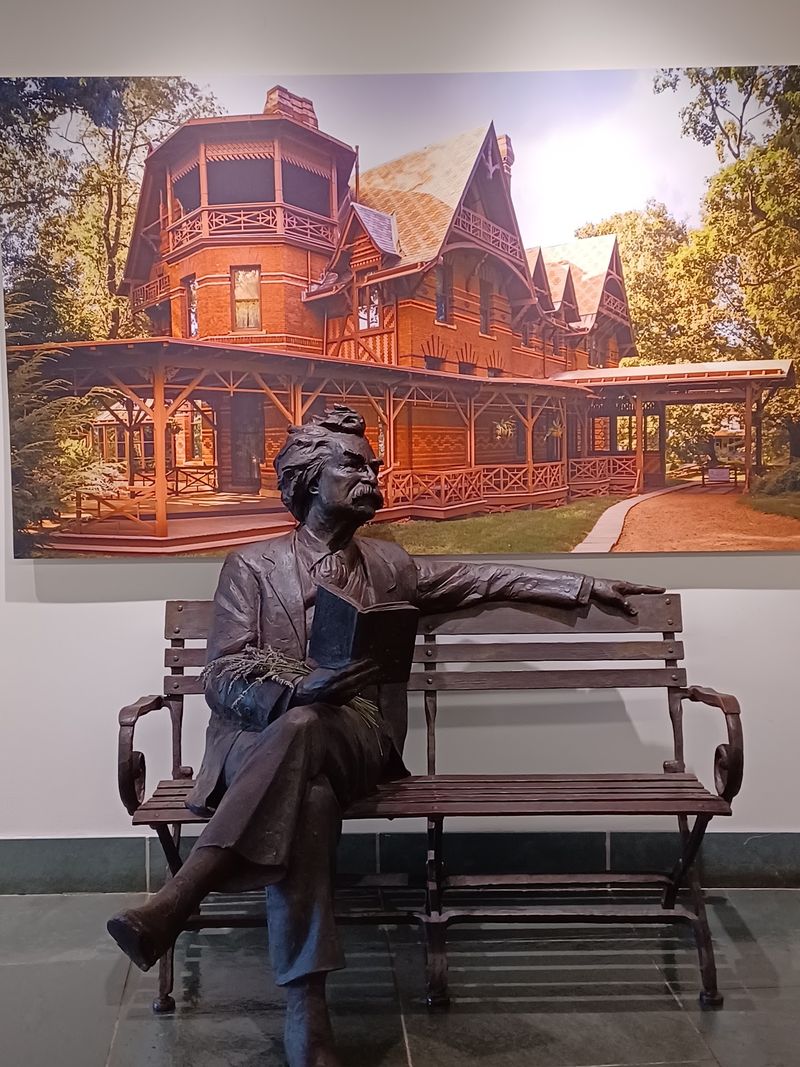
Your visit starts at the Webster Bank Museum Center. This LEED-certified building opened in 2003 next to the historic home.
The ticket counter is here, plus galleries with changing exhibitions. Exhibits cover Twain’s life, family and times.
A 23-minute Ken Burns documentary about Mark Twain plays here too. It’s a smart warm-up before you see the house.
Hungry between tours? The Nook Cafe sits on the second floor and runs seasonally from May to October.
It offers freshly made sandwiches, salads and baked goods from local vendors like Cafe Louise. You’ll also find Deep River chips and chocolates from Fascia’s Chocolates.
Coffee, tea and Avery’s sodas round things out. There’s free Wi-Fi too, handy for planning your next stop.
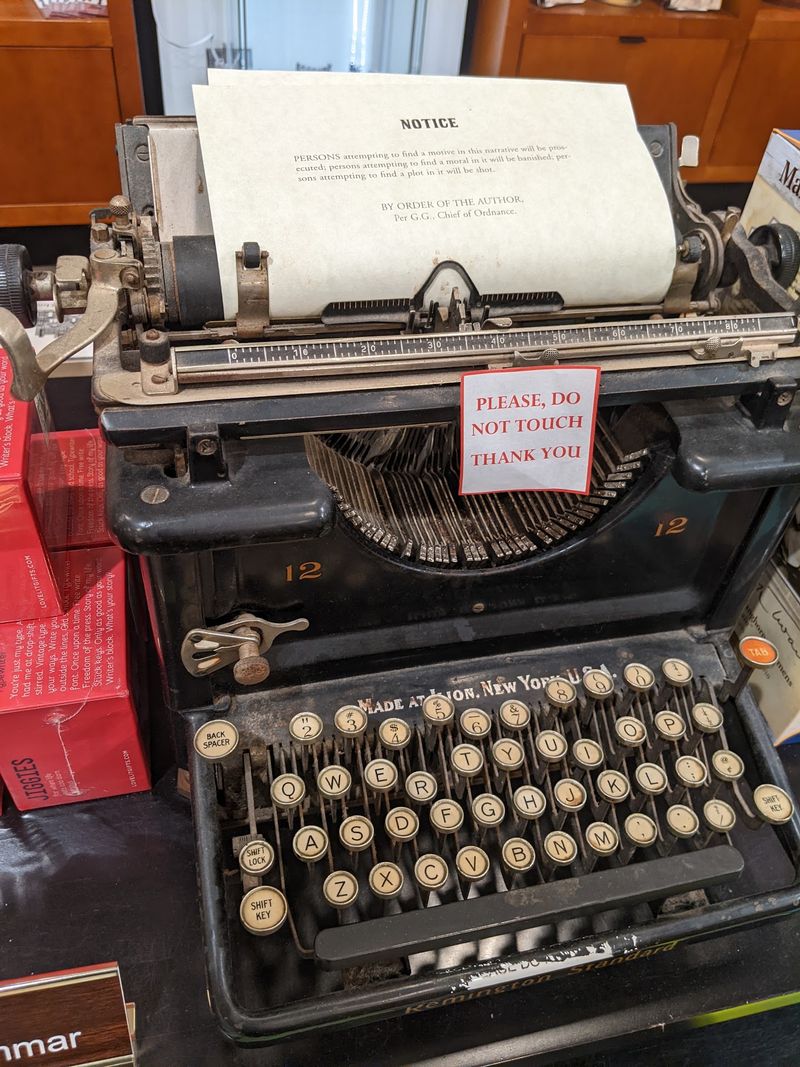
Don’t skip the museum store. It stocks books by and about Twain, Victorian-style gifts, stationery, jewelry and Connecticut-themed items.
Sales help support restoration and education at the house. So that bookmark you buy actually does some good.
Parking enters at 385 Farmington Avenue. The lot sits a short walk from the house, with clear signs to guide you.
Harriet Beecher Stowe Lived Right Next Door
Some neighborhoods have a famous resident. Nook Farm had a whole crowd of them.
This Hartford area attracted progressive thinkers and writers. Harriet Beecher Stowe, author of Uncle Tom’s Cabin, lived just next door.
Today the Harriet Beecher Stowe Center offers its own tours. Pairing both houses makes for a great literary day in Connecticut.
The neighborhood connection runs even deeper. In 1929, Katharine Seymour Day, Stowe’s grand-niece, saved the Twain house from being torn down.
Without her, this whole adventure wouldn’t exist. That’s one excellent neighbor, generations later.
Find The Mark Twain House & Museum at 351 Farmington Ave, Hartford, CT 06105. Give yourself extra time to stroll the grounds and gardens.
Twain once said the house had a heart and a soul. After seeing the patterned bricks, jungle room and pool-table office, that’s easy to believe.
Seasonal events add more reasons to return. Victorian holiday decorations appear from late November into January.
The annual Mark Twain American Voice in Literature Weekend celebrates writing too. Book lovers, mark your calendars.
So, steamboat, fortress or cuckoo clock? Go see it and decide for yourself.