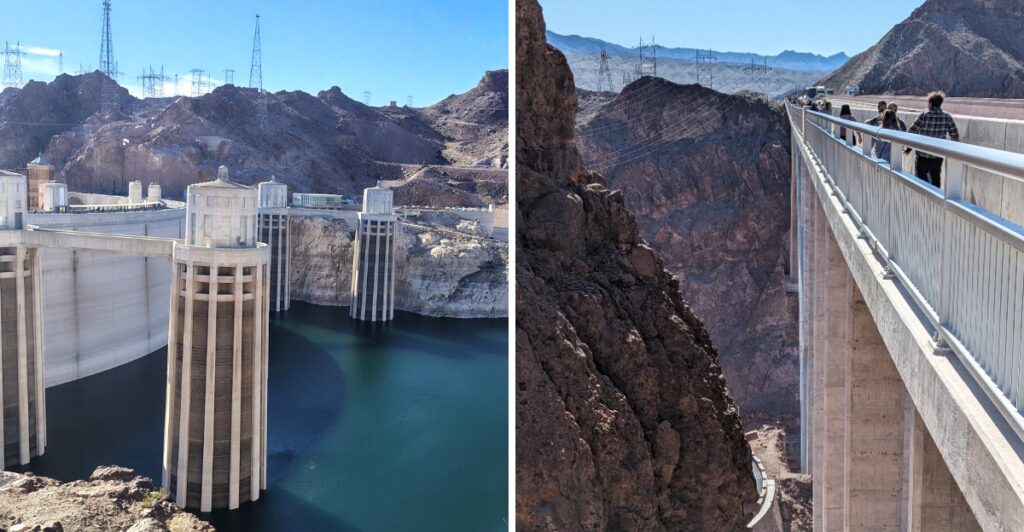
An elevator here drops you about 500 feet into solid rock to meet a room full of giant turbines. That alone earns a spot on my travel list. The concrete wall above it climbs more than 726 feet out of a desert canyon.
The base is 660 feet thick. The top narrows to 45 feet, which is still wider than most streets. Workers finished the job during the Great Depression, and it still does its job today.
It sits right on the line between Nevada and Arizona. You can stand with one foot in each state and pretend you’re a very confused clock.
Art Deco statues and bronze details add style you won’t expect from a water project.
Go on a weekday morning, before the desert sun turns the sidewalk into a griddle. Most walls keep people out, but this one keeps an entire lake in line.
Those 726 Feet Look Even Bigger When You Are Standing On Top
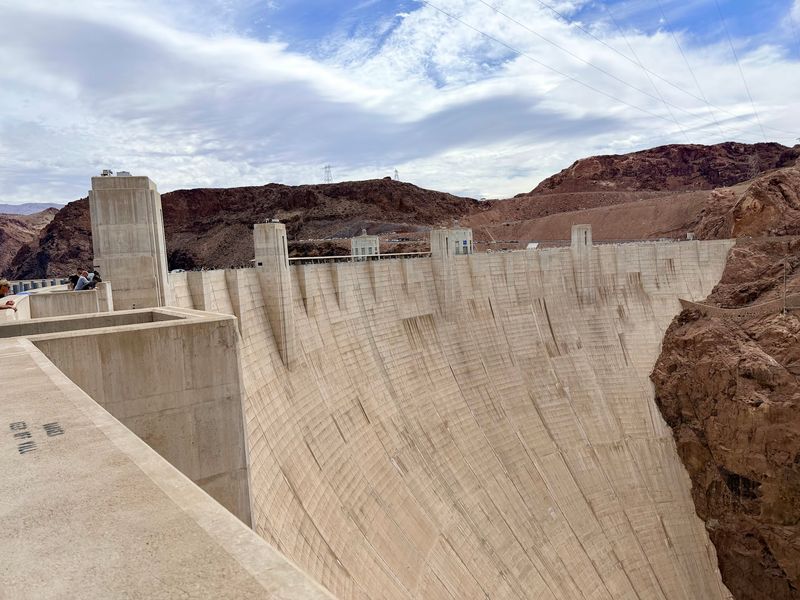
Concrete rarely gets a fan club, but Hoover Dam earns one fast. The arch-gravity dam stands 726.4 feet from base to crest and stretches 1,244 feet across Black Canyon.
That curve isn’t just for looks. Its arch shape pushes the weight of the water into the canyon walls on both sides.
Builders started in April 1931 and wrapped up in March 1936, ahead of schedule. President Franklin D. Roosevelt dedicated the dam on September 30, 1935.
Before any concrete went in, crews had to move a whole river out of the way. They blasted four huge diversion tunnels through the canyon walls, two on each side.
Those tunnels add up to more than 3 miles. That’s a lot of digging before the main project even began.
Today the dam is a National Historic Landmark. It’s also named one of America’s Seven Modern Civil Engineering Wonders.
The dam sits about 35 miles southeast of Las Vegas, Nevada. That makes it an easy half-day trip from the Strip.
Walk the top slowly and peek over the edge. If heights make your knees wobble, stay a step back and enjoy the view anyway.
Grab Your Ticket Early Because The Guided Dam Tour Sells Out
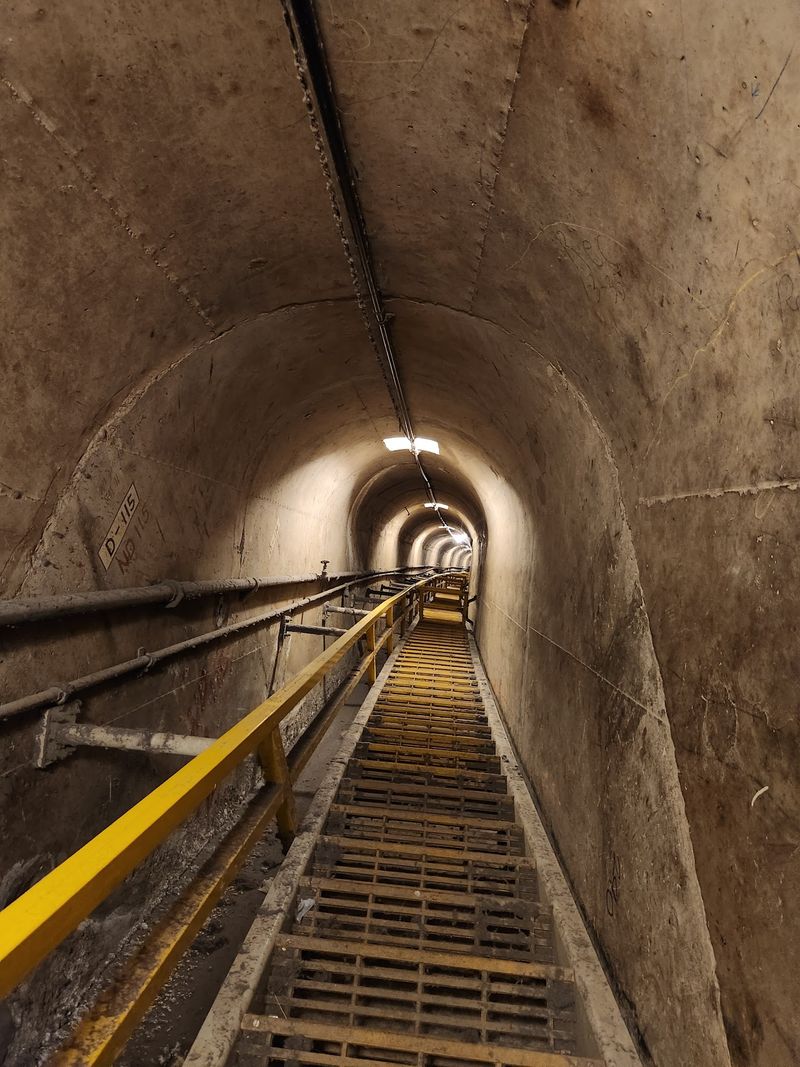
Ready for the deep cut? The Guided Dam Tour is the most complete way to see what’s hiding inside all that concrete.
It includes a trip to the power plant and the visitor center. Guests also explore passageways deep inside the dam itself.
Here’s the catch. Tickets are sold only on-site, in person, on a first-come, first-served basis.
No online booking means early birds win. Plan to arrive soon after the visitor center opens at 9 a.m.
The last tour departs at 4:10 p.m. Waiting until the afternoon is a risky move on busy days.
This tour isn’t recommended for children under ten. Accessibility is also limited for wheelchairs and strollers because of ventilation shafts along the route.
Families with little ones have another good choice, covered in the next section. Nobody has to miss the fun.
One more planning note matters here. Maintenance can sometimes pause certain tours, so stay flexible on the day.
Think of this tour as the director’s cut of Hoover Dam. You get the hidden scenes, the tight hallways, and plenty of history packed into one trip.
Ride 500 Feet Down To Meet The Giant Generators
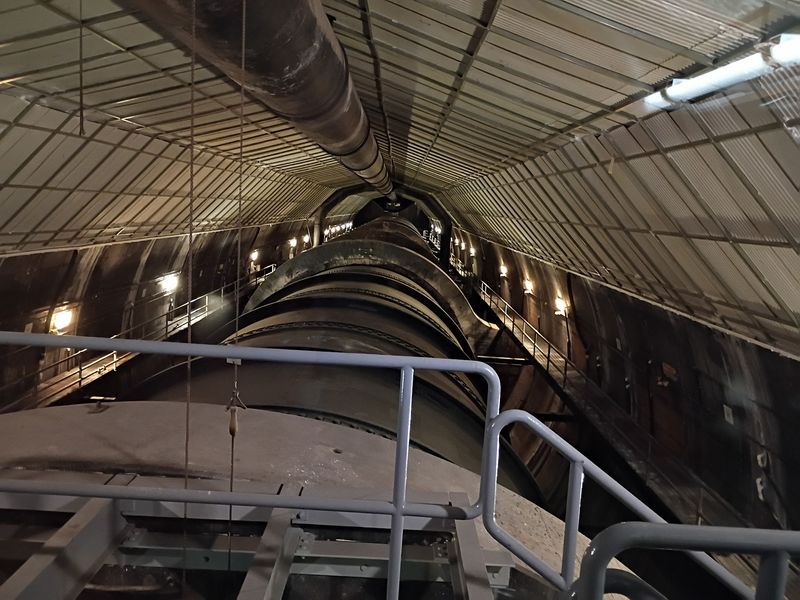
Big machines live at the bottom of this canyon. The Guided Power Plant Tour takes you about 500 feet into the dam to see them up close.
An elevator handles the trip down. Then you’ll reach the generator room in the Nevada Powerhouse.
The row of generators looks like something out of a science fiction movie. Except these machines are real and still working.
Here’s a sobering bit of current news. Lake Mead’s low water level has significantly reduced Hoover Dam’s hydroelectric generating capacity, although the dam continues to produce electricity.
Power output is far below the original design. It’s a real lesson in how much the Colorado River matters to the West.
Good news for families comes next. This tour works for wheelchairs, motorized scooters, and strollers.
It’s a strong pick when you have younger kids along. It’s also great when time is short but curiosity is high.
Tour guides walk you through how the water turns into electricity. Bring your questions, because they’ve heard plenty.
Tip of the day? Look down at the floors too. The design details are part of the show.
Head To The Rooftop For A 360-Degree Payoff
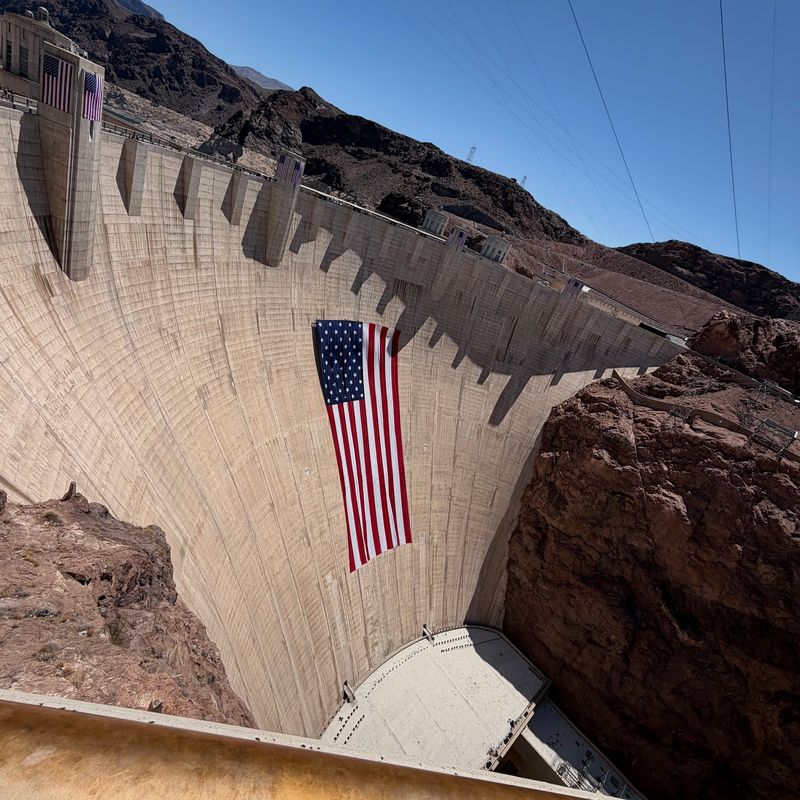
Some views are worth a few stairs. The rooftop observation deck at the Hoover Dam Visitor Center gives you a full 360-degree look around.
From up there, you can spot the dam, the Colorado River, and Lake Mead. The Hoover Dam Bypass Bridge shows up in the frame too.
Inside, the visitor center holds exhibits, a theater, and an exhibit gallery. Self-guided visits are available if you’d rather explore at your own pace.
Don’t skip the topographical-map presentation in the Original Exhibit Building. It shows how the river region fits together in one big picture.
The visitor center sits at 81 Hoover Dam Access Rd, Boulder City, NV 89005. Hours run from 9 a.m. to 4:15 p.m. daily.
It closes on Thanksgiving and Christmas Day. Plan around those dates if you’re traveling during the holidays.
The self-guided route works for wheelchairs, strollers, and motorized scooters. That makes it a friendly stop for almost every group.
Visit the deck after you’ve walked the dam. Seeing it from above helps everything you just learned click into place.
Bronze Wings And Art Deco Style Steal The Show
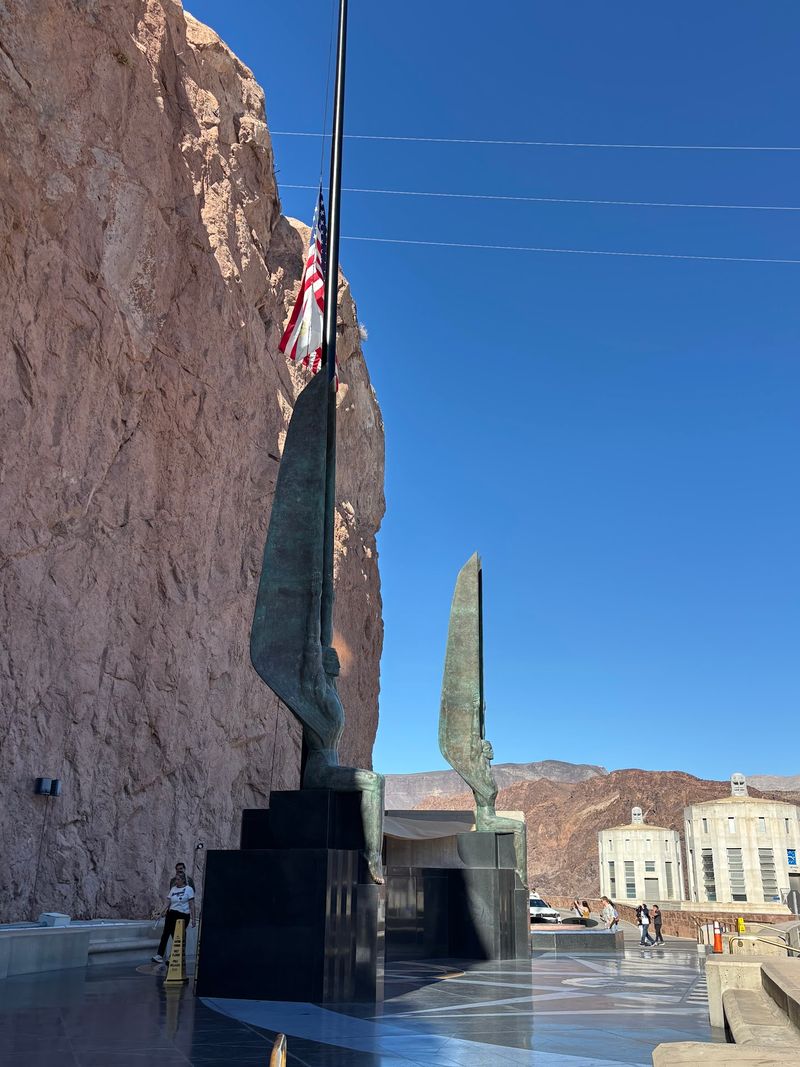
Nobody expects a power plant to be this stylish. Yet Hoover Dam is full of Art Deco touches that feel almost glamorous.
Artist Oskar Hansen created sculptures for the site. His most famous work is the Winged Figures of the Republic.
Each figure rises about 30 feet tall. Their sleek wings point upward like they’re ready for takeoff.
They make one of the most popular photo spots at the dam. Get there early if you want a clean shot without a crowd in the background.
Nearby, you’ll find a monument honoring the High Scalers. These workers dangled on ropes to clear loose rock from the canyon walls.
It was brave, tough, and dangerous work. The monument is a fitting thank-you to the people who made the project possible.
Keep your eyes open for smaller design details too. Bronze elevator doors and patterned floors add to the 1930s flair.
History buffs and design lovers both win here. It’s proof that even a giant slab of concrete can have serious personality.
Catch The Postcard View From A Bridge Almost 900 Feet Up
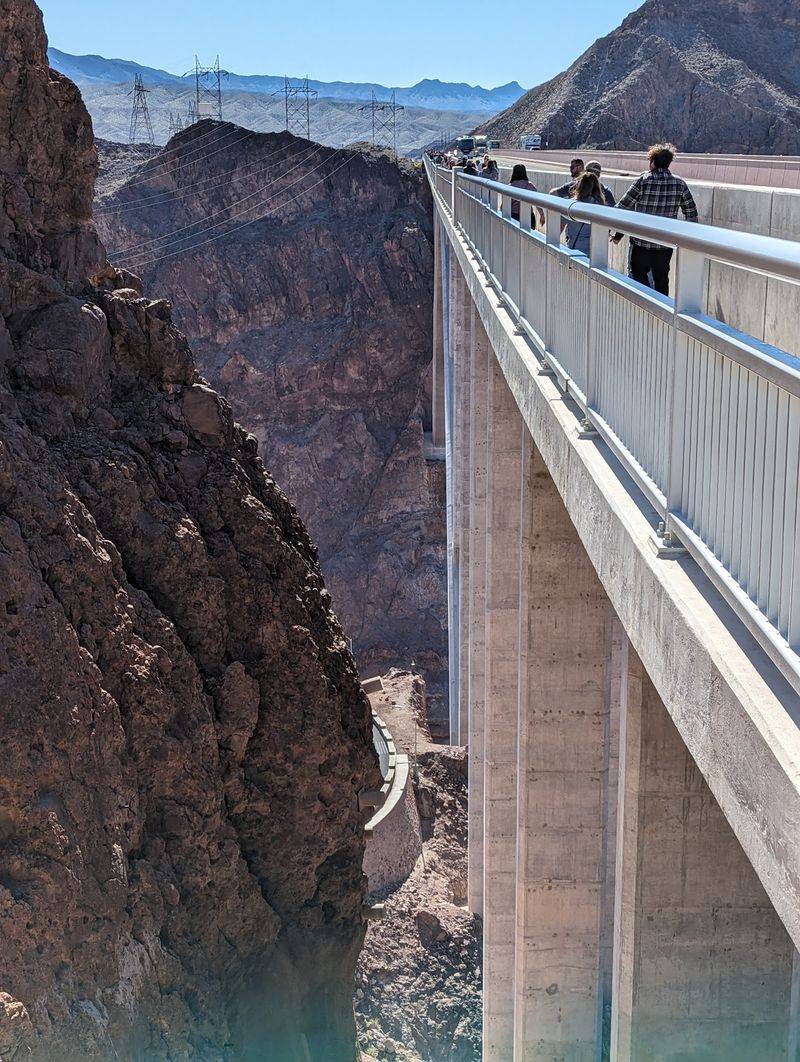
Want the photo everyone ends up framing? Head to the Mike O’Callaghan-Pat Tillman Memorial Bridge just south of the dam.
This concrete arch bridge was completed in 2010. It towers nearly 900 feet above the Colorado River.
The bridge carries U.S. 93 traffic across Black Canyon. It also has a pedestrian walkway with sweeping views.
From the walkway, Hoover Dam looks like a perfect curve tucked between canyon walls. You’ll finally see the whole thing in one shot.
Getting up there takes a series of stairs and ramps. Think of it as a short leg workout with a big reward at the end.
Wear comfortable shoes and carry water. Desert heat doesn’t care about your vacation plans.
The walk feels very different from standing on the dam. Up here, the size and setting of the canyon really sink in.
Save this stop for good light if you can. A clear sky over Nevada and Arizona makes those canyon colors glow.
Lake Mead Tells A Story You Should Hear
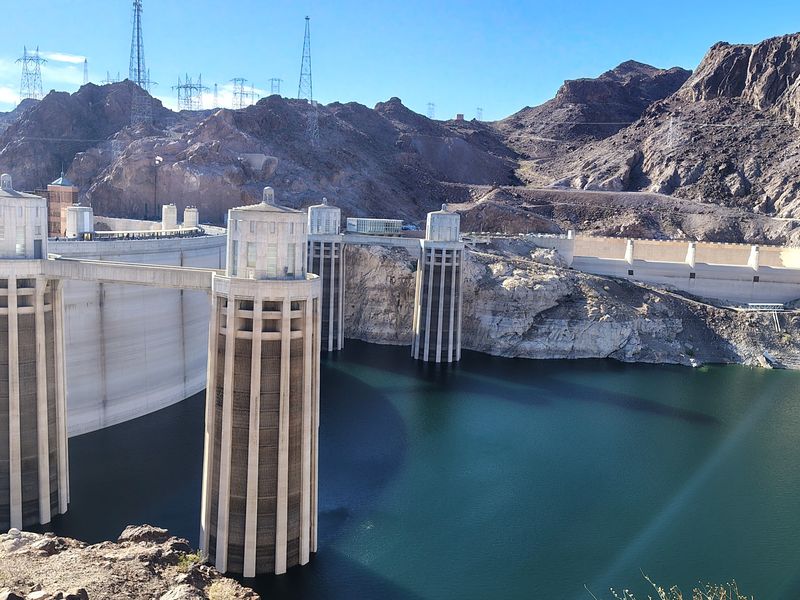
Behind the dam sits Lake Mead, the largest reservoir in the United States by water capacity. Hoover Dam created it by holding back the Colorado River.
The water serves roughly 20 to 25 million people. It reaches homes and farms across Arizona, California, and Nevada.
Lately, the lake has a worrying tale to share. In fall 2026, it sat near 1,037 feet, about a quarter full.
That remains about 87 feet above Hoover Dam’s minimum power pool level of 950 feet. Below an elevation of approximately 950 feet, Hoover Dam can no longer generate hydroelectric power.
Look at the canyon walls, and you’ll notice a pale ring above the water. It shows how much higher the lake once reached.
Seeing it in person makes the numbers feel real. It turns a fun trip into a memorable lesson about water in the West.
The dam was built for flood control, water storage, power, and recreation. All four jobs depend on that lake.
Spend a minute just looking out across it. Few views explain the importance of water quite this clearly.
Smart Planning Makes Your 2027 Visit Way Smoother
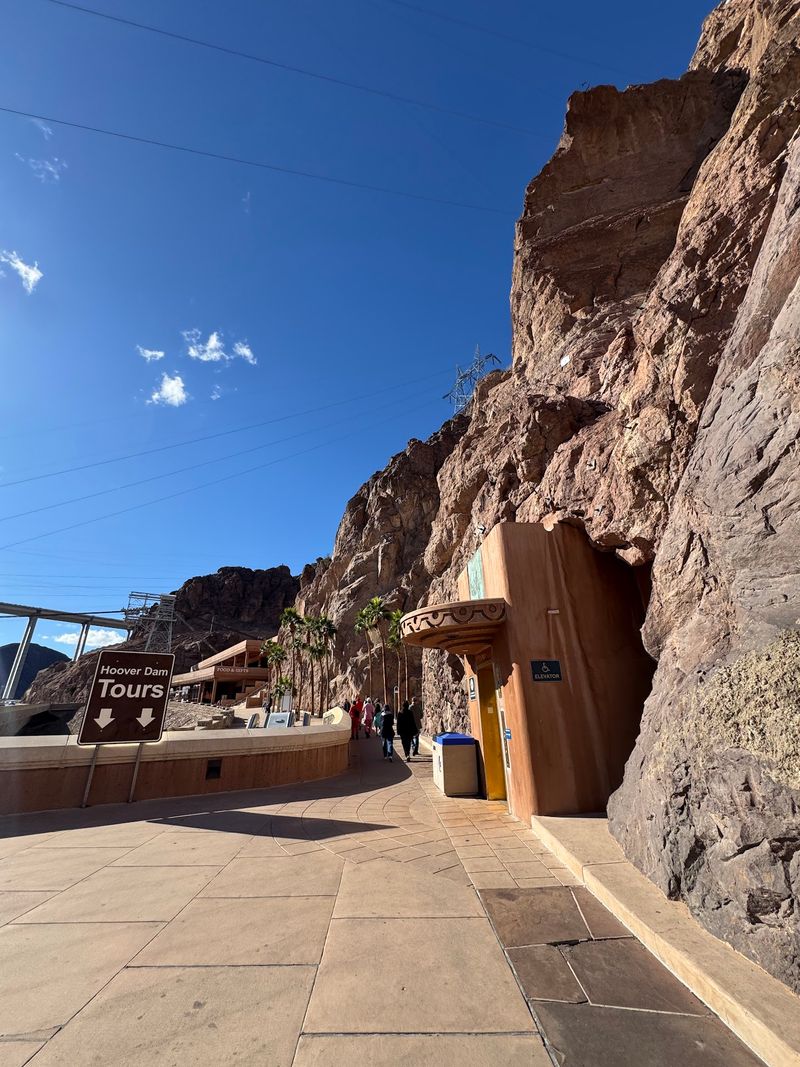
A little planning goes a long way at a national landmark. Hoover Dam is generally open to the public daily from 5 a.m. to 9 p.m.
Expect a security checkpoint before you enter. Vehicles get screened, so build in extra time for that step.
Firearms aren’t allowed on the property. Drones are also prohibited, so leave yours in the car.
A 400-car parking garage sits near the visitor center on the Nevada side. It’s a paid lot, and it can fill up on busy days.
Food and drinks are available at the dam. Sealed snacks and bottled water are generally fine, but don’t eat or drink inside any dam building.
Restrooms and a gift shop are on-site too. Grab a souvenir before heading back toward Boulder City.
Closures can happen without much warning. The site once closed temporarily because of a cableway equipment issue, so check the status before you drive out.
Go on a weekday morning if your schedule allows. You’ll get cooler air, easier parking, and a better shot at tour tickets.