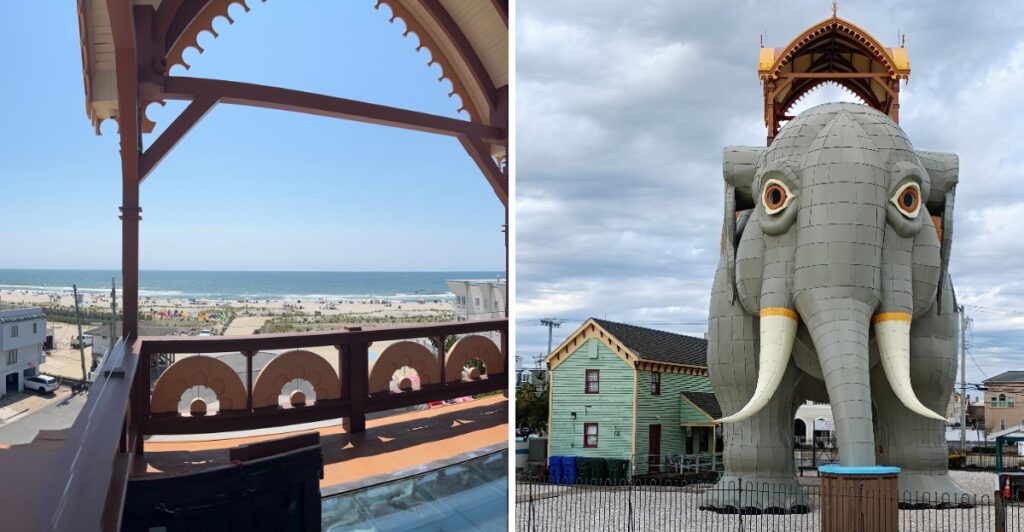
A six-story elephant stands beside the beach in New Jersey. She’s 65 feet tall, and she weighs about 90 tons.
You can climb inside her through a spiral staircase tucked inside one of her legs. That staircase leads all the way up to a lookout on her back, with ocean views in every direction.
Her builder also earned a U.S. patent for animal-shaped buildings. Honestly, I love that someone filed paperwork to protect the idea of a building shaped like a zoo animal.
She has watched the Atlantic roll in since 1881. People once tried to tear her down, and she outlasted that plan too.
She’s been a home, an office, and a vacation rental, so this 90-ton lady has earned her bragging rights.
Meet The Oldest Roadside Attraction Still Standing In America
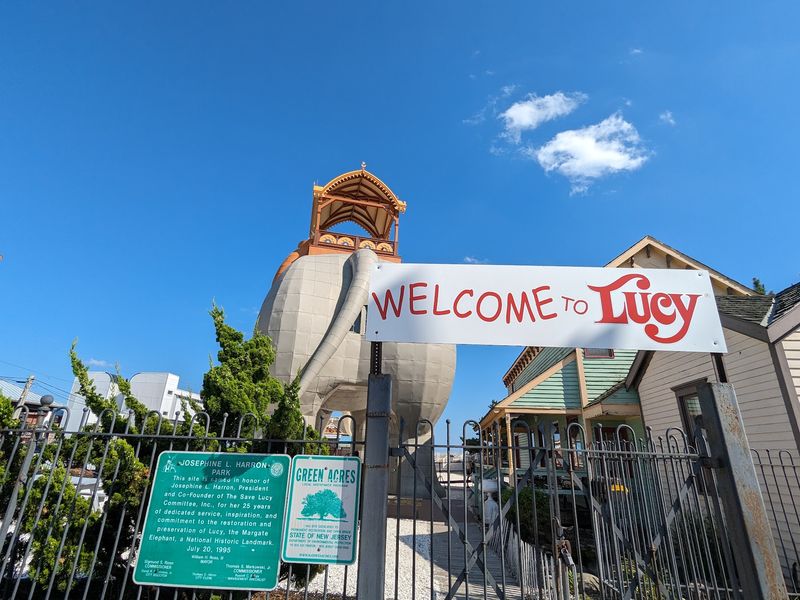
Most roadside attractions are lucky to last a few summers. Lucy the Elephant has been standing on the Jersey Shore since 1881, and she’s still welcoming visitors.
She’s recognized as the oldest surviving roadside tourist attraction in the United States. That title beats every giant donut, oversized boot, and dinosaur statue you’ve ever pulled over to photograph.
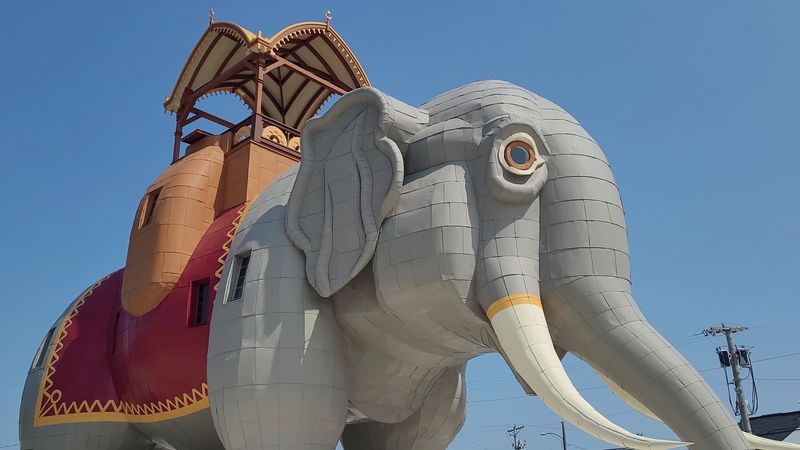
The numbers are just as wild as the idea. Lucy stands 65 feet tall, stretches 60 feet long, and measures 18 feet wide.
She tips the scales at roughly 90 tons. She’s also listed as the 12th tallest statue in the country, which feels like a fun fact to pull out at dinner.
Lucy is modeled after an Asian elephant. Here’s a funny twist, though, because her tusks technically point to a male elephant.
Nobody seems to mind, and the name Lucy has stuck for over a century. She’s a building, a statue, and a local celebrity all at once.
Some landmarks ask you to admire them from behind a rope. Lucy lets you climb right inside, which makes her a lot more fun than most historic buildings.
A Real Estate Pitch That Got Wildly Out Of Hand
James V. Lafferty Jr. had land to sell and a big problem. Nobody was rushing to buy lots in a quiet beach area then called South Atlantic City.
His solution was bold, to put it mildly. In 1881, he built a giant elephant to grab the attention of possible buyers.
Think about how that pitch must have sounded back then. Folks would ride out to see the huge creature and maybe leave with a piece of property.
Lafferty clearly believed in the idea. In 1882, he received a U.S. patent for animal-shaped buildings, which may be one of the most delightful patents ever granted.
He didn’t stop at just one elephant either. He built two more, one in Coney Island and another in Cape May.
Only Lucy remains today, which makes her the last of her herd. That gives her a little extra charm and a lot of extra history.
The area later became known as Margate, and the elephant became its most famous resident. Lafferty’s marketing gimmick turned into a landmark that people still travel to see more than a century later.
She Has Worked More Jobs Than Most People
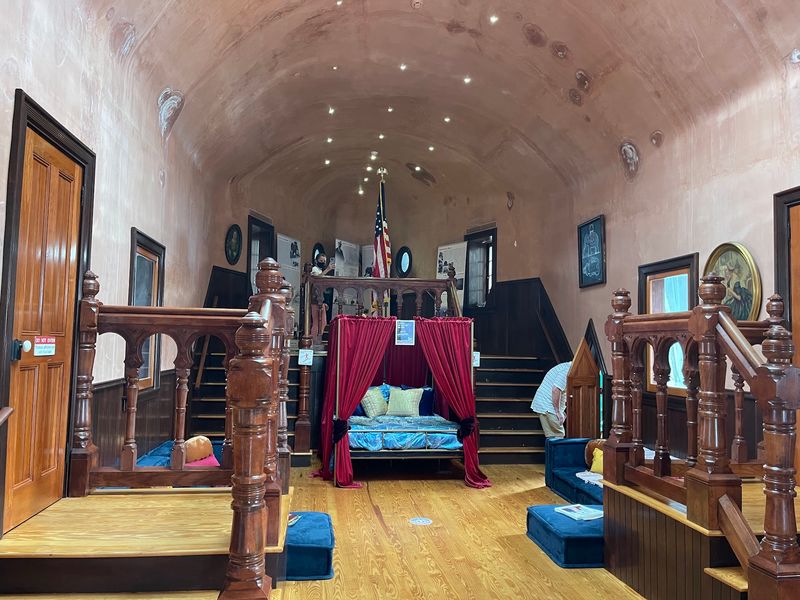
Lucy’s resume is impressively strange. Over the years, she has served as a real estate office, business offices, and even a summer home.
In 1887, the elephant was sold to Anton Gertzen. His family would shape her story for decades to come.
Sophia Gertzen, a later owner, gave her the name Lucy in 1902. Before that, the building was called the Elephant Bazaar.
One year later, things got even more unusual. In 1903, a British doctor and his family spent the summer living inside her.
Picture explaining that on a postcard back home. Your summer address would basically be the inside of a giant elephant by the ocean.
Lucy got one more surprise gig much later. In March 2020, she was briefly available for overnight stays through Airbnb.
The overnight stays eventually took place in September 2020, marking the first time in more than a century that guests had spent the night inside Lucy.
It was a short run, but it proved Lucy still had a few new tricks.
Her many jobs are a big part of why she feels so lovable. She has adapted to every era and kept right on standing tall.
The Neighborhood Saved Her Just In Time
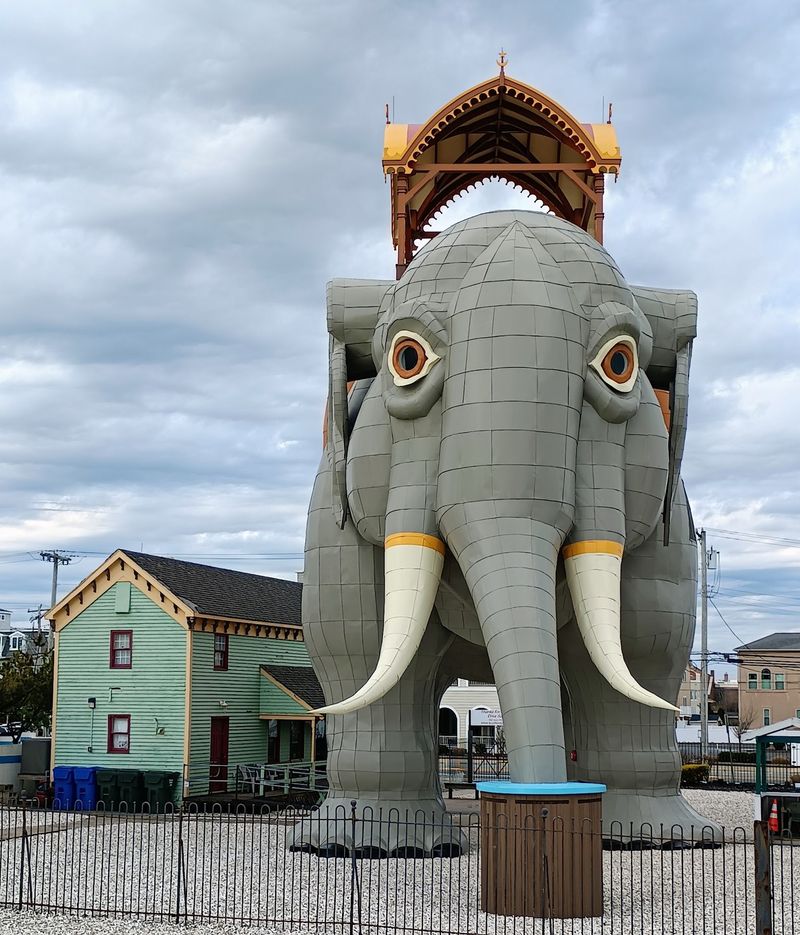
By 1969, Lucy was in rough shape. Years of salty air and neglect had worn her down, and she was slated for demolition.
Then the community stepped up in a big way. A volunteer group called the Save Lucy Committee formed in 1970 and started raising money.
Saving her meant more than patching a few holes. The group had to move the entire 90-ton structure to city-owned land.
On July 20, 1970, Lucy traveled two blocks to her new spot. That might not sound far, but try moving a six-story elephant down the street.
Restoration work followed, and it took time. Lucy finally reopened to the public in 1974.
The recognition came quickly after that. She joined the New Jersey Register of Historic Places and the National Register of Historic Places in 1971.
In 1976, Lucy was named a National Historic Landmark. Not bad for a building that was nearly turned into scrap a few years earlier.
Her rescue is a reminder that regular people can save something special. A group of neighbors decided an elephant was worth fighting for, and they were right.
Nearly A Million Pieces Of Wood Went Into That Trunk
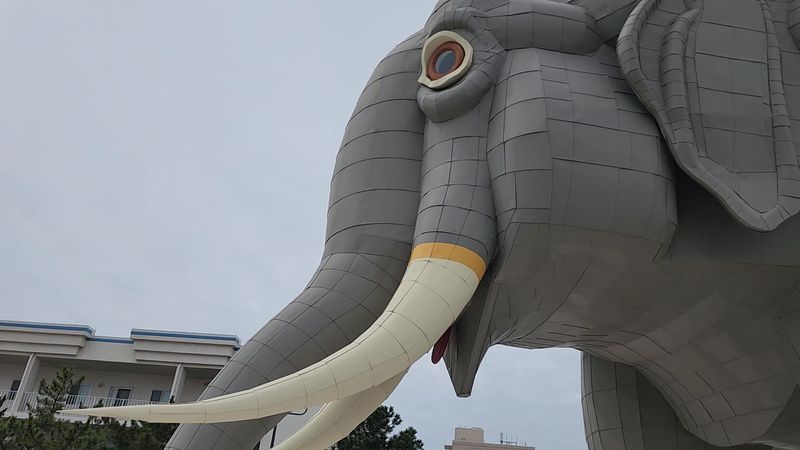
Building an elephant from scratch takes a ridiculous amount of material. Lucy was made with nearly one million pieces of wood.
The nail count is just as staggering. Her builders used 200 kegs of nails and 4 tons of bolts and iron bars.
All that wood needed protection from the ocean air. Her outside was covered with 12,000 square feet of tin sheeting.
That metal skin is what gives Lucy her famous gray look. It also has to stand up to wind, salt, and plenty of Jersey Shore weather.
Keeping her in shape is an ongoing job. Major restoration of her exterior metal skin started in September 2021.
The work took more than a year to finish. Lucy reopened to the public on December 28, 2022, looking refreshed for her next chapter.
A federal grant for interior restoration was announced in 2024, withdrawn in 2025, and replaced with new funding in 2026. Caring for a historic elephant is clearly never a one-and-done project.
Next time you stand under her belly, take a second to look up. Every inch of that giant frame is the result of careful hands, both old and new.
The Best Seat In Margate Sits On An Elephant’s Back
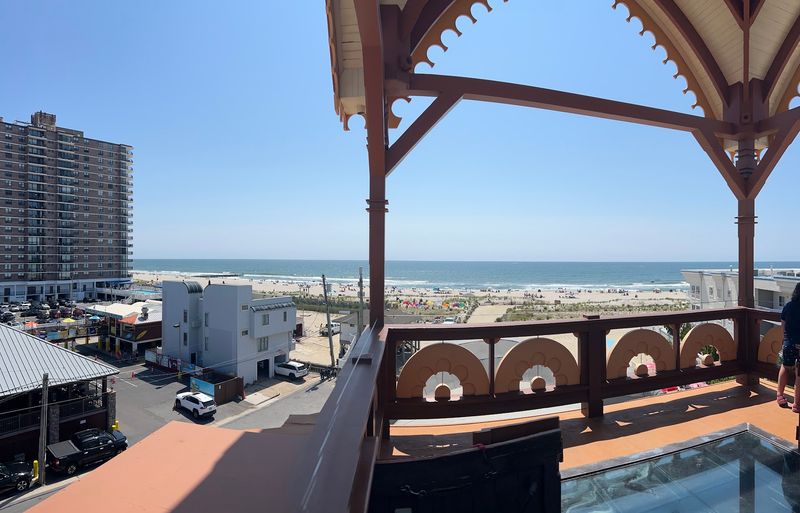
Riding on top of an elephant used to require an actual elephant. At Lucy, you just climb the stairs.
The tour ends at the howdah, which is the fancy carriage on her back. It works as an observation deck with 360-degree views.
The scenery covers a lot of ground. You can look out over Margate City, the beach, and the Atlantic Ocean.
Turn a little and the Atlantic City skyline comes into view. It’s a fun reminder of how close Lucy sits to all that boardwalk action.
Bring your camera or phone with plenty of battery left. Photos from up here look nothing like the usual beach snapshots in your camera roll.
Clear weather makes the view even better. If you can pick your day, go when the sky is bright and the horizon is easy to see.
There’s also something funny about the whole experience. You’re standing on top of a six-story elephant, looking at the ocean, and that’s completely normal here.
Plenty of buildings in New Jersey have nice views. Very few let you enjoy them from a seat on an elephant’s back.
Yes, She Gets Her Toenails Painted Every Year
Lucy has a birthday party, and it’s as charming as it sounds. The celebration happens every July, close to July 20.
That date matters for a reason. July 20 is the anniversary of the day she moved to her current spot in 1970.
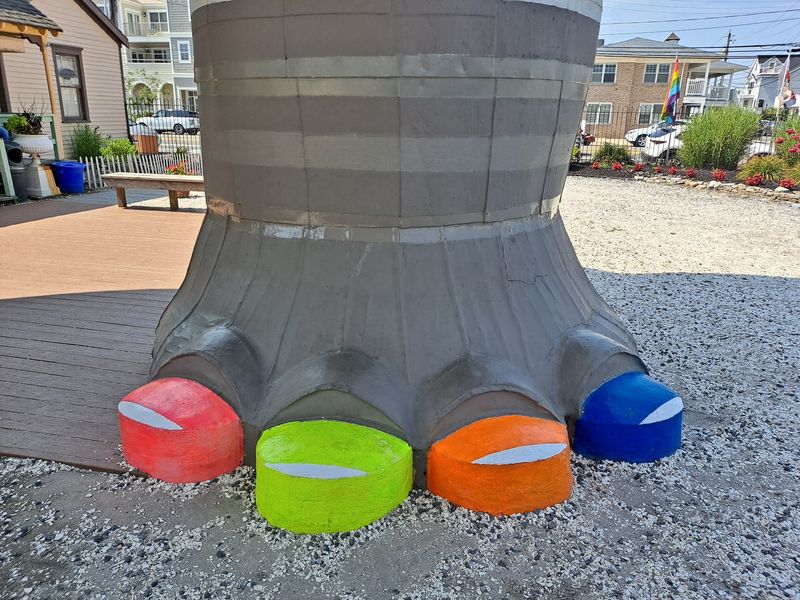
The best part might be her pedicure. Each year, Lucy gets her toenails painted a fresh color.
The color isn’t picked at random either. Visitors and online fans vote to decide which shade she wears.
Think of it as a fashion choice for the biggest client in town. Those toenails aren’t small, so whoever paints them definitely earns the job.
The party gives families a fun reason to plan a summer visit. Kids especially tend to love the idea of a building with a birthday.
Check her official channels ahead of time for party details. Event plans can change from year to year, so it helps to confirm before you go.
Few historic landmarks get this much love. Lucy gets a party, a vote, and a new nail color, which feels exactly right for a 90-ton elephant with this much personality.
Plan Your Stop So The Elephant Fits Your Schedule
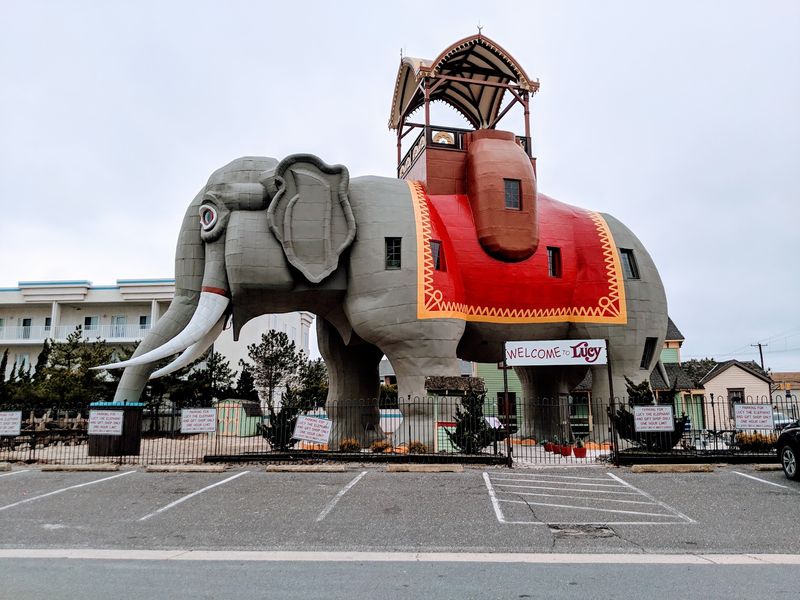
Finding Lucy is the easy part. She’s at 9200 Atlantic Ave, Margate City, NJ 08402, and she’s a little hard to miss.
She stands along the beach in Josephine Harron Park. The address is also listed as 1 Lucy Plaza.
Lucy is usually open Monday through Friday from 11 a.m. to 4 p.m. Weekend hours typically run from 10 a.m. to 5 p.m.
Hours can change, so call ahead before you head out. That tip matters most if you’re driving in from far across New Jersey or beyond.
The park around Lucy is fenced and has picnic tables. It’s a nice place to relax, snack, and snap photos before or after your tour.
Don’t skip the gift shop across Atlantic Avenue at 9219 Atlantic Avenue. It sells official Lucy the Elephant merchandise, and proceeds help support her preservation.
The shop stays open even when tour times shift. That means you can still grab a souvenir if your timing doesn’t line up perfectly.
A plan for a new visitor center on her site was approved in 2023. Lucy keeps growing her story, one trunk-sized step at a time.