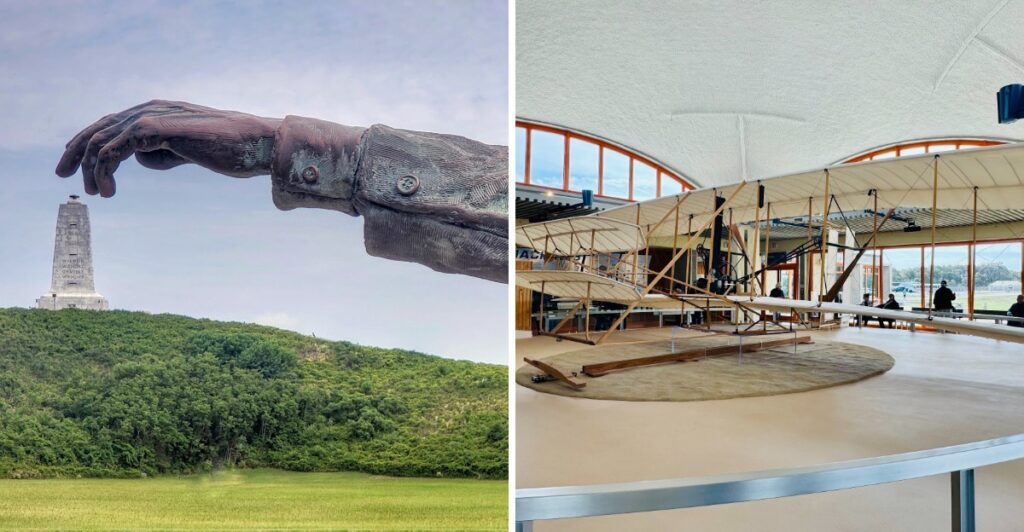
The very first airplane flight lasted 12 seconds. That is shorter than my average attempt to parallel park, and it still changed the entire planet.
Orville Wright covered 120 feet on that first hop. Later the same morning, Wilbur stretched it to 852 feet in 59 seconds. Four flights.
One chilly December day. Zero airline snacks.
Today you can stand on the exact spot in North Carolina where it happened. A granite boulder marks the approximate takeoff point, while smaller stone markers identify where each of the four flights ended.
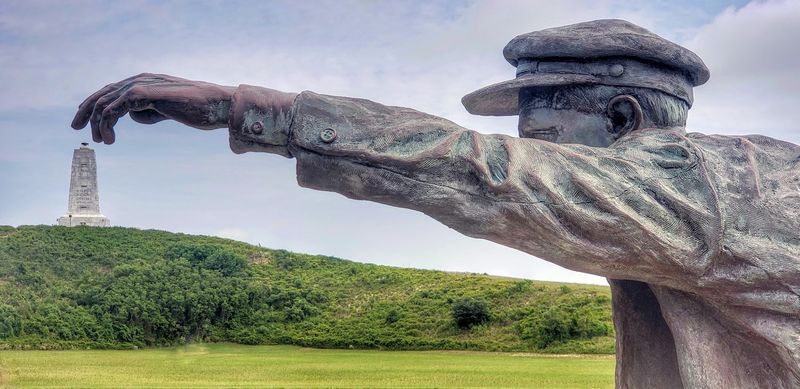
A tall granite monument watches over everything from the top of a sand dune. Honestly, I think that beats any museum that keeps the action behind glass.
The brothers needed years of wobbly gliders to earn 12 seconds of glory. Today, that entire first flight would fit inside one round of “please fasten your seatbelts.”
You Can Literally Stand Where Flying Began
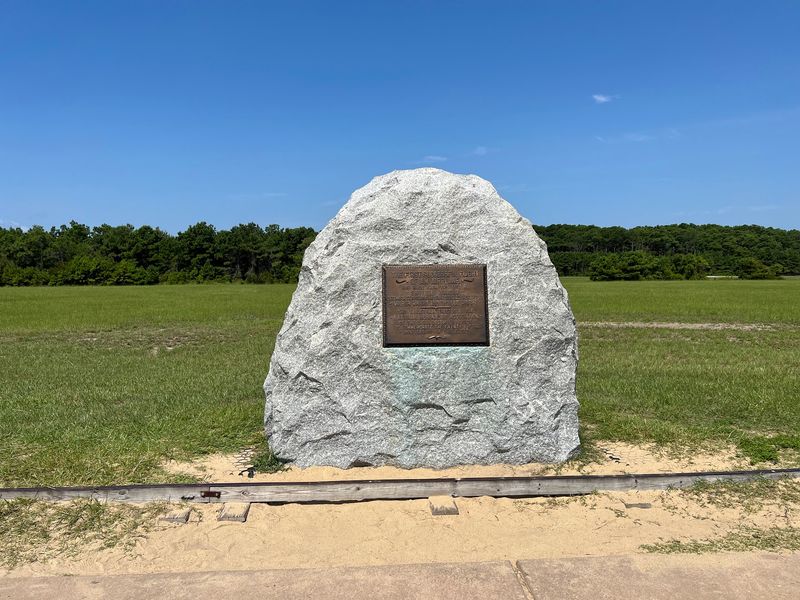
Most history happens somewhere you can’t reach anymore. At the Wright Brothers National Memorial, you can walk right up to the starting line.
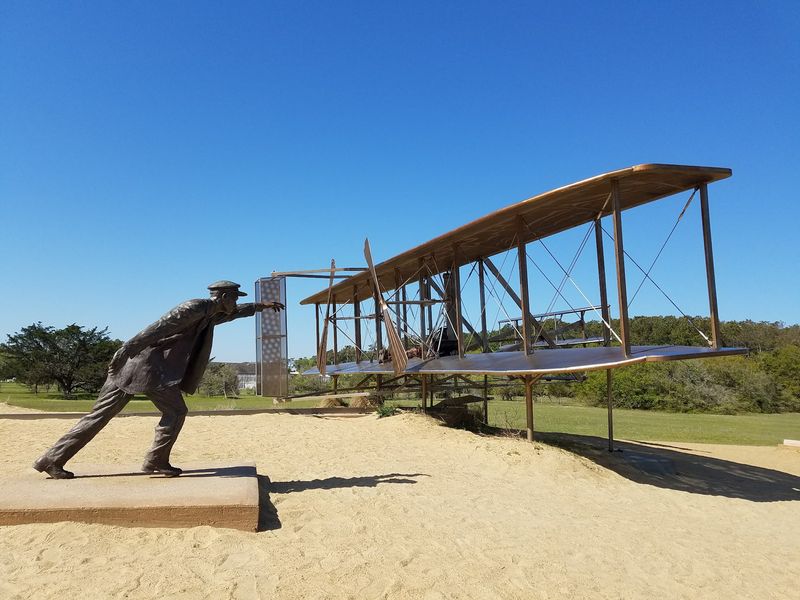
A large granite marker called the First Flight Boulder sits where the 1903 Wright Flyer left the ground. From there, a path called the Flight Line stretches across the open field.
Smaller stone markers show where each of the four flights landed on December 17, 1903. The first one is only 120 feet away, which feels almost funny.
Keep walking and the markers get farther apart. The last one marks Wilbur’s 852-foot flight, which lasted a full 59 seconds.
Pacing it out is the best part. You start to feel how each try pushed a little farther than the last.
Kids usually treat it like a race, and honestly, that’s the right idea. Let them run from marker to marker and count the steps.
Bring a hat, because this stretch is wide open to the sky. The same steady wind that helped the brothers will happily grab your cap too.
Climb The Dune For A Monument That Owns The Skyline
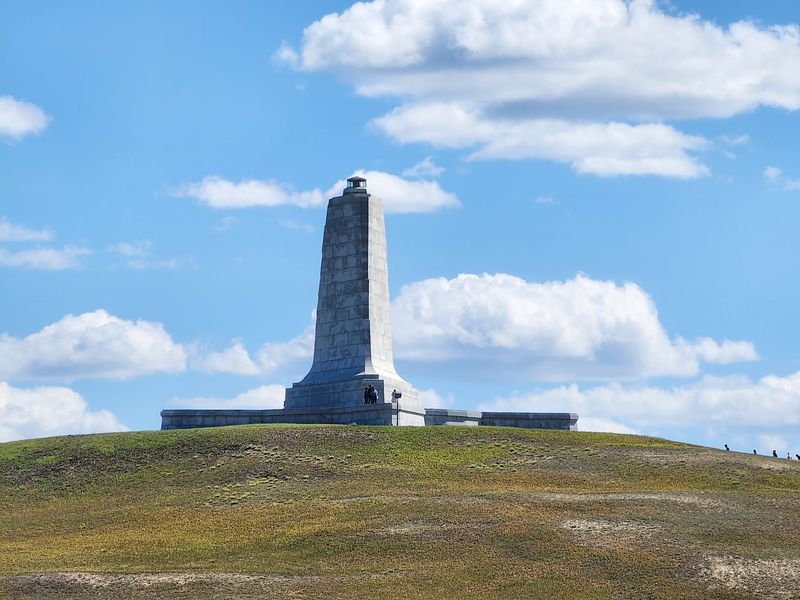
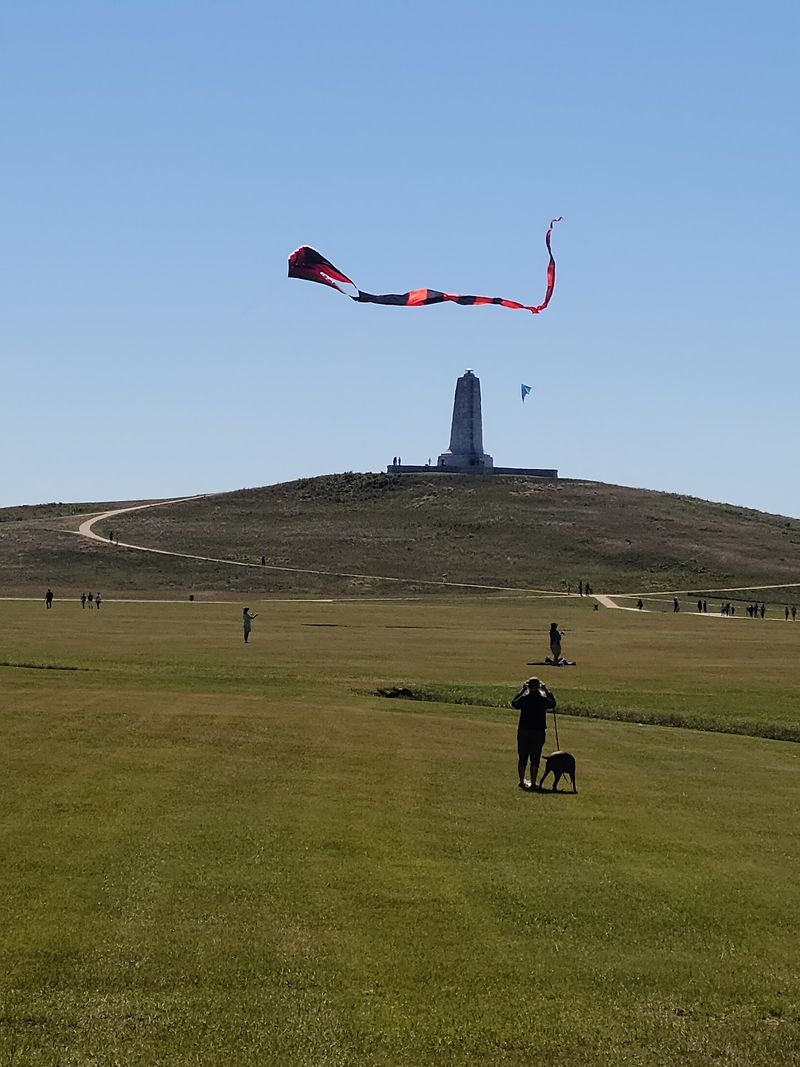
Sixty feet of solid granite crowns the tall sand dune behind the flight field. It’s the Wright Brothers Monument, and it’s hard to miss from anywhere on the grounds.
This dune is where Wilbur and Orville tested their gliders for years before the big day. Grass now holds the sand in place, so the hill no longer drifts around.
The monument was dedicated on November 19, 1932. Orville Wright himself showed up for the ceremony, which is a pretty great flex.
A paved path winds up the slope toward the top. It’s a real climb, so pace yourself and pack some water on warm days.
The payoff is worth every step. From up there, you get wide views across the park and the surrounding Outer Banks landscape.
Look down and you can trace the Flight Line you just walked. Suddenly those markers look like tiny dots on a giant map.
Wind tends to pick up near the summit. Hold onto your sunglasses, because the brothers picked this spot for breezes, not calm afternoons.
A Full-Size Flyer Waits Inside The Refreshed Visitor Center
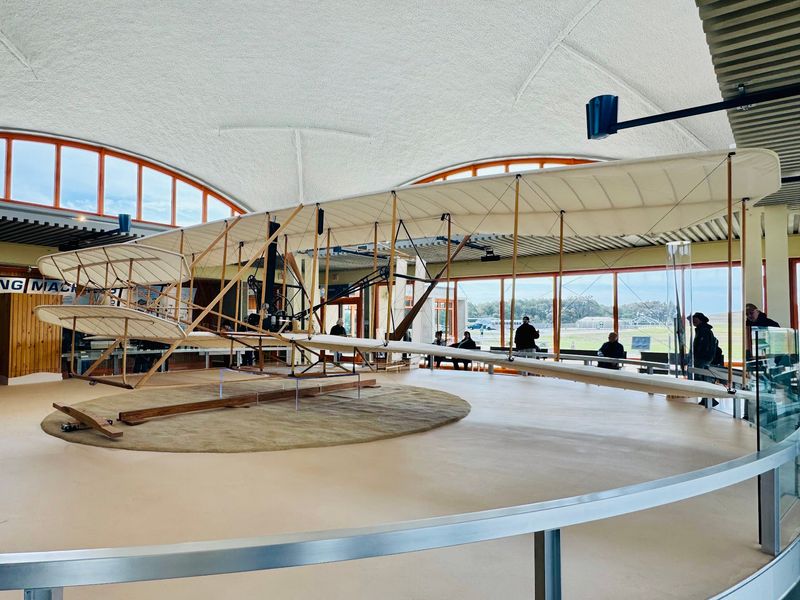
Photos never quite show how fragile the first airplane looked. Inside the visitor center, a full-scale reproduction of the 1903 Wright Flyer fixes that fast.
The wings are wide, the frame is thin, and the whole thing looks surprisingly delicate. I’d want a seatbelt and a lot of courage before trying it.
The visitor center got a fresh remodel with new interactive exhibits. They trace the brothers’ journey from early experiments all the way to that famous morning.
A new 16-screen video wall now fills the Flight Room. It adds big visual punch to a story that started with bicycles and stubborn curiosity.
You’ll also find hands-on STEAM activities sprinkled through the space. These let younger visitors test the same ideas about lift and control the brothers wrestled with.
Start here before heading outside. The exhibits make the boulder, the markers, and the monument mean a lot more once you understand the struggle.
Restrooms sit right by the building, and a gift shop is on site. Grab a park passport stamp while you’re there if you collect them.
Peek At The Tiny Camp Where Big Ideas Lived
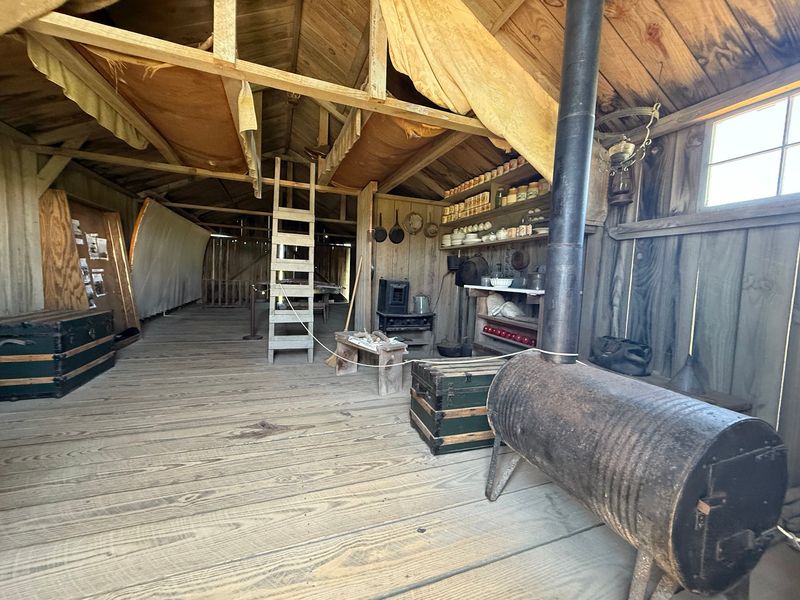
World-changing inventors, it turns out, didn’t need fancy offices. The reconstructed 1903 camp buildings prove the brothers worked with very little.
These are recreations of the simple structures Wilbur and Orville used during their experiments. One sheltered the aircraft, while the other served as their living and work space.
Standing next to them puts the whole story in perspective. Two brothers from Dayton, Ohio, lived out here far from home to chase a wild idea.
The Outer Banks back then were remote and quiet. That privacy was part of the appeal, since nosy crowds weren’t exactly lining up to watch.
Take a slow look around the buildings and imagine the long weeks of tinkering. Every repair, test, and setback happened in this small corner of sand.
The camp sits near the Flight Line, so it fits easily into your walk. It’s a quick stop, but it adds a very human layer to the visit.
Honestly, it’s the most relatable spot in the park. Anyone who has ever built something in a cramped garage will feel right at home.
Rangers Turn The Story Into A Show
Reading a sign is fine. Hearing a ranger explain why the first flight nearly didn’t happen is a whole different level.
The Wright Brothers National Memorial offers a range of ranger programs throughout the year. Summer brings the busiest lineup, with interactive talks that pull visitors right into the story.
These talks often happen near the Flyer reproduction inside. Check the schedule when you arrive so you can plan your outdoor walk around it.
Families should ask about the Junior Ranger program too. Kids work through activities, learn the history, and earn a badge for their effort.
It’s a smart way to keep younger travelers curious instead of restless. Nothing motivates a ten-year-old quite like a shiny reward at the finish.
Rangers also answer questions on the spot. Ask about wing warping, gliders, or why they chose this breezy stretch of North Carolina coastline.
The programs make a big site feel personal. You’ll leave knowing the brothers as real people who failed often and kept going anyway.
December 17 Is The Party You Want On Your 2026 Calendar
Birthdays get cake, but the birth of flight gets airplanes overhead. Every December 17, the park throws a celebration for the anniversary of the first flight.
The day includes a wreath-laying ceremony at the site.
Additional activities vary by year, so check the official schedule for any flyovers, speakers, or appearances by Wright family descendants.
Here’s a bonus that makes it even sweeter. Admission is free on December 17, so the whole family gets in without paying the entrance fee.
That makes it the perfect way to wrap up 2026. You’ll mark the anniversary on the very ground where it all happened.
Dress warmly, since mid-December on the Outer Banks can be chilly and windy. Remember, the brothers flew on a cold morning too.
Can’t make December work? August 19 is National Aviation Day, and the park waives fees then as well.
Standard National Park Service fee-free days also apply here. Planning around one of these dates is an easy way to save while soaking up history.
Pilots Get Bragging Rights At This Little Runway
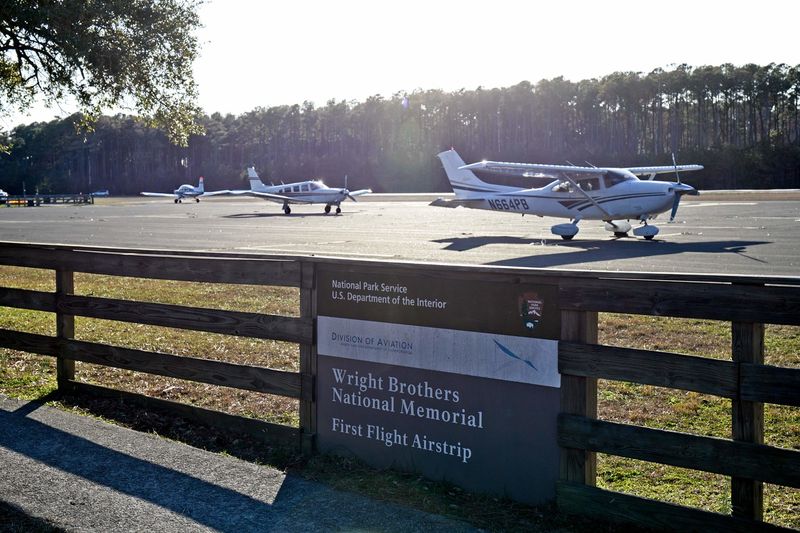
Plenty of airports have history. Only one lets pilots land right where powered flight began, and it’s tucked beside this monument.
The First Flight Airstrip, known by the code KFFA, offers a 3,000-foot runway for private aircraft. It’s the only place pilots can touch down at the site of the first flight.
Think about that for a second. The Flyer needed 120 feet, and modern planes get a runway twenty-five times longer.
Pilots should plan carefully before flying in. No fuel, hangar space, or repair services are available at the strip.
That means arriving with enough gas for your next leg. Treat it like a scenic stop, not a full-service airport.
Non-pilots can still enjoy it. The runway area sits near the monument, and spotting small planes nearby adds a fun modern twist to the visit.
If you know an aviation fan, this is their bucket-list moment. Few logbook entries will ever sound cooler than this one.
Smart Planning Keeps Your Visit Smooth As A Tailwind
Plug the wrong address into your GPS and you’ll end up nowhere near the dune. Use 1000 North Croatan Highway, Kill Devil Hills, NC 27948.
The park’s mailing address is in Manteo, and it sends drivers to a different spot. Stick with the visitor center address and you’ll be fine.
You’ll find the entrance at milepost 7.5 on US-158. It’s an easy turn off the main road through this part of North Carolina.
Gates and the visitor center are open daily from 9 a.m. to 5 p.m. The park closes only on Christmas Day.
Leave the cash at home, because the park doesn’t accept it. Pay with a credit or debit card at the kiosk or automated fee machines.
Children 15 and under get in free, and the pass lasts seven consecutive days. America the Beautiful passes also cover entry.
Public WiFi isn’t offered, but cell service is generally good. That’s plenty for posting your monument photo before you even reach the car.