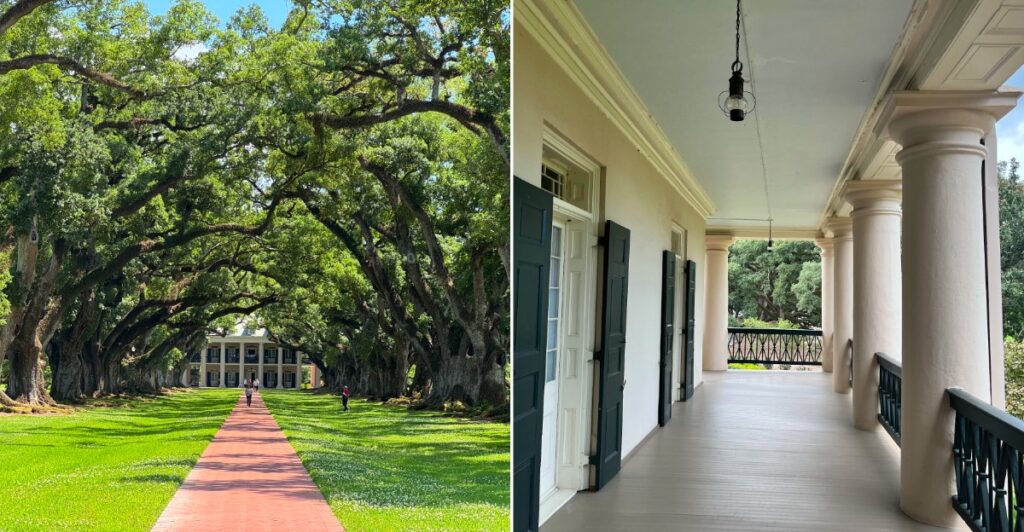
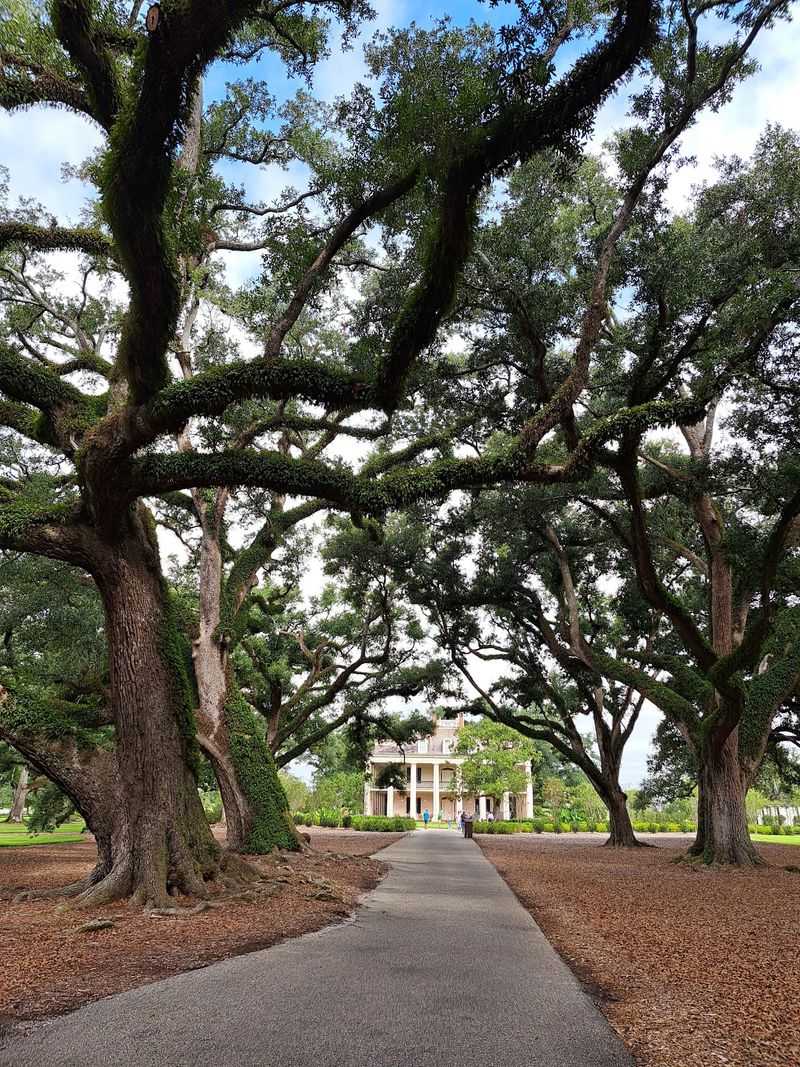
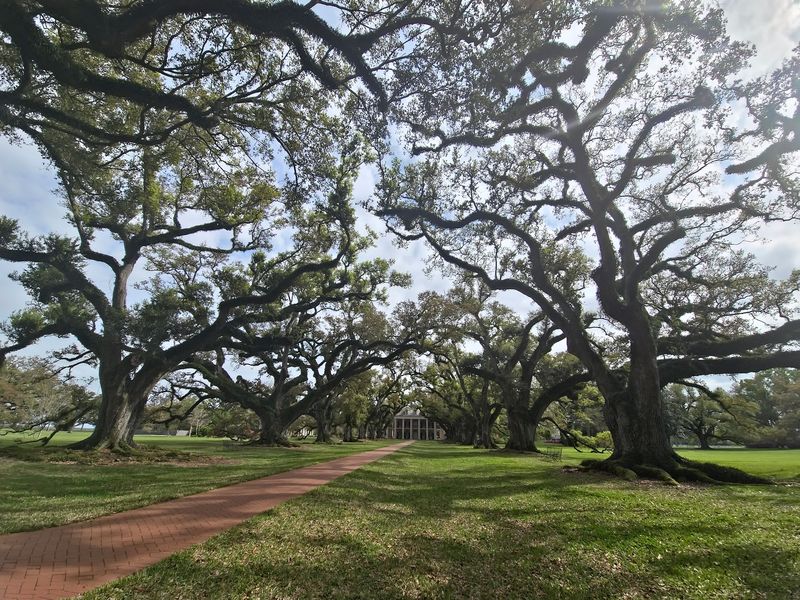
Twenty-eight live oaks, roughly 300 years old, stand in two perfect rows along one stretch of this road. They were planted before the house at the end of them even existed. I can’t imagine a better welcome mat.
A few miles away, a bright Creole house from 1804 tells stories pulled from a woman’s own memoir. Down the same road, two sister estates still grow around 1,000 acres of sugarcane every year. Hollywood has borrowed them more than once.
I like how this drive in Louisiana mixes beauty with honest, hard history. The levee hugs one side, and small river communities slide past on the other. Every stop asks you to slow down and actually listen.
So how does one quiet two-lane road pack in this much story? Let’s take it one bend at a time.
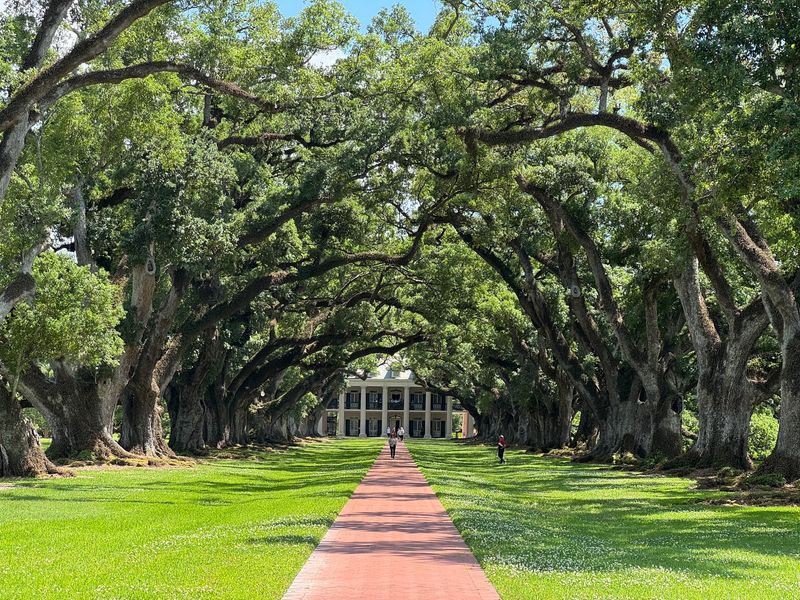
Twenty-Eight Oaks Will Stop You Before The House Does
A scenic stretch of Louisiana’s Great River Road follows Highway 18 through the Vacherie area on the west bank of the Mississippi River. From Interstate 10, use Exit 194 and follow Highway 641 south across the Veterans Memorial Bridge, then turn toward Vacherie and Highway 18.
Oak Alley Plantation’s long canopy of live oaks is a distinctive landmark along the Great River Road at 3645 Highway 18. The highway runs beside the river levee, with historic properties appearing along the route.
Use Oak Alley’s signed visitor arrival area only if you are stopping at that attraction; otherwise continue the public road for the scenic drive. Follow local speed limits and pull off only at lawful, designated stopping areas.
The Big House Tour Saves Its Best View For The Balcony
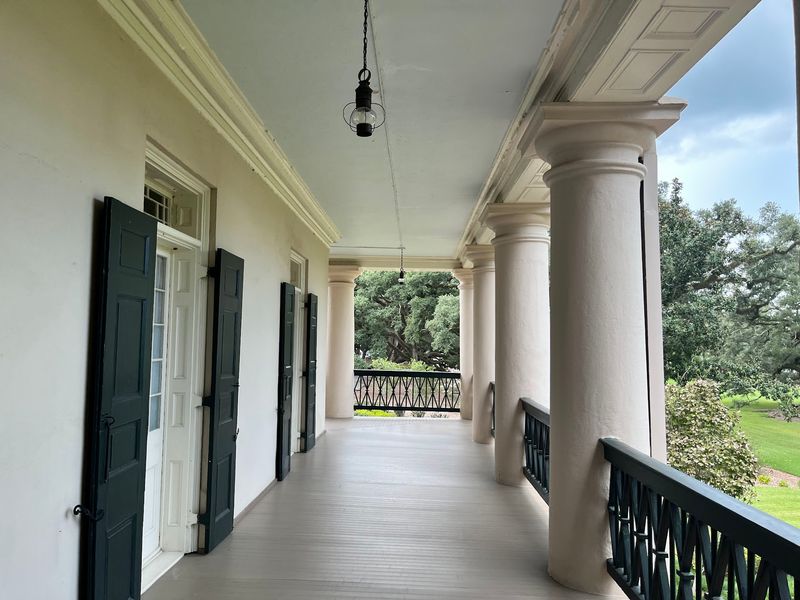
Built in 1839, the main house at Oak Alley is a classic Greek Revival design. Guided tours of the Big House run from 9:00 AM to 4:30 PM.
Inside, the rules are simple. Photography isn’t allowed in the house, so keep your phone in your pocket and your ears open.
The payoff comes upstairs. Guests can photograph the famous oak alley from the upper balcony.
From that height, the double row of trees stretches out like a green tunnel. It’s the shot everyone hopes for. Honestly, it’s worth holding your camera hostage for the whole tour just to earn it.
The house sits at 3645 Highway 18 in Vacherie, Louisiana 70090. That’s right along the Great River Road, with the levee just across the way. The location tells you plenty about how river life once worked.
Tours give context about the families who lived here and the people who were forced to work the land. The setting is gorgeous. The history behind it is serious, and the guides treat it that way.
Ask questions during the tour. It’s a short window, so make the most of it.
Honest History Waits Behind The Mansion
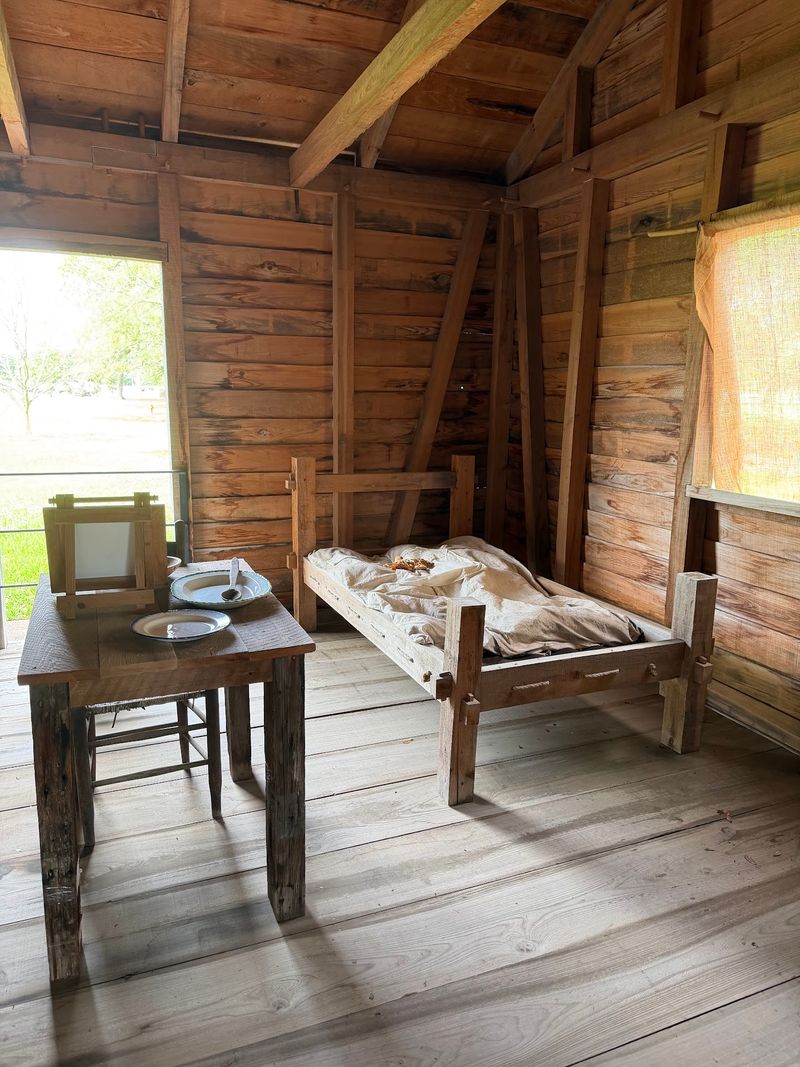
Behind the postcard view sits the most important part of the visit. Oak Alley includes a significant slavery exhibit on its grounds.
The plantation began as a sugar operation. That wealth came from the forced labor of enslaved people, and the exhibits face that truth directly.
One story stands out for its lasting impact. An enslaved gardener developed a method for grafting pecan trees between 1846 and 1847.
That innovation shaped pecan growing far beyond this property. It’s a powerful reminder that skill and brilliance existed among people denied their freedom. Their names and work deserve to be remembered.
Give this area real time on your schedule. Rushing through it would miss the point of coming here at all.
Reading the panels slowly helps the stories land. Families with older kids may find it sparks good conversations on the drive home. Younger children might need some guidance and simple explanations.
The beauty of the oaks and the weight of this history live side by side. Seeing both gives you a fuller picture of the River Parishes. That balance is exactly what makes this stop meaningful.
Lunch, Souvenirs, And Even A Cottage For The Night
Hunger has a habit of showing up mid-tour. Luckily, the Oak Alley Plantation Restaurant and Inn serves meals right on the property.
That means no frantic searching for food along a rural road. You can eat, regroup, and keep exploring without moving your car.
There’s also a gift shop on site. It’s handy for picking up a keepsake or a snack for the next leg of the drive.
Now for the sneaky perk. The inn offers cozy cottages for overnight stays.
Guests who stay over get access to the grounds outside regular hours. Think about that for a second. Those famous oaks, without the daytime traffic, all to yourself early or late.
That’s a pretty strong argument for turning a day trip into a weekend. It also lets you spread the River Road stops across two days. Less rushing means more actual enjoyment.
Oak Alley also works as a wedding venue. Couples clearly know a dramatic backdrop when they see one.
Book a cottage ahead if you want the after-hours experience. Spots on a property like this don’t sit empty for long.
A Colorful Creole House Tells A Very Different Story
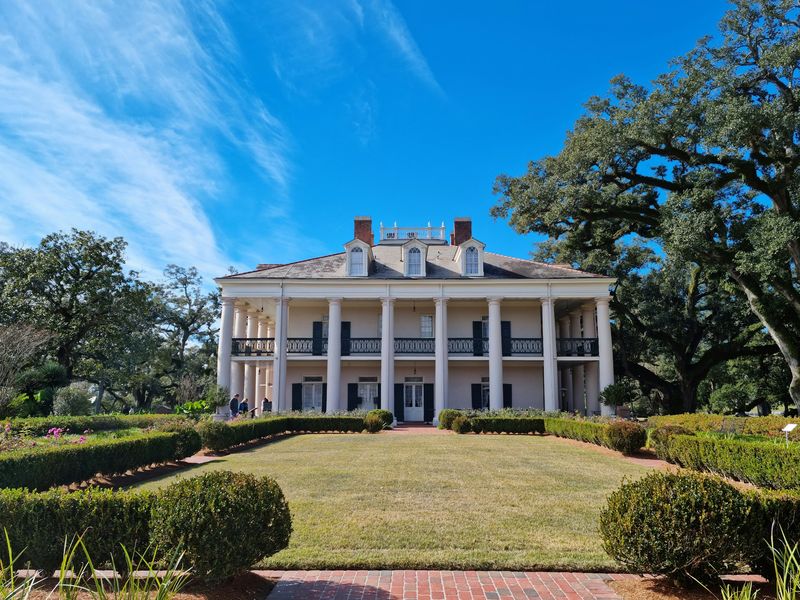
Bold colors replace white columns at Laura Plantation, just down Highway 18. Its Creole-style raised manor house dates to 1804.
That makes it older than Oak Alley’s main house by decades. The feel here is completely different, too.
Laura focuses on Louisiana’s Creole culture. It preserves documented histories of both free and enslaved people who lived on the property.
The place started as l’Habitation Duparc. It was renamed Laura Plantation in 1892. Tours draw from Laura Locoul Gore’s memoir, Memories of the Old Plantation Home, along with deep archival research.
That approach gives the stories real names and details. It’s no surprise Lonely Planet once called it the Best History Tour in the United States. That’s a big title for a house on a two-lane road.
Visits here are fully guided. So plan your timing around a tour rather than casual wandering.
You’ll find it at 2247 Highway 18 in Vacherie. It’s a short hop from Oak Alley, which makes pairing the two easy. Seeing both back to back shows how different plantation stories can be.
Gardens, Barns, And A Banana Grove Fill The Back Acres
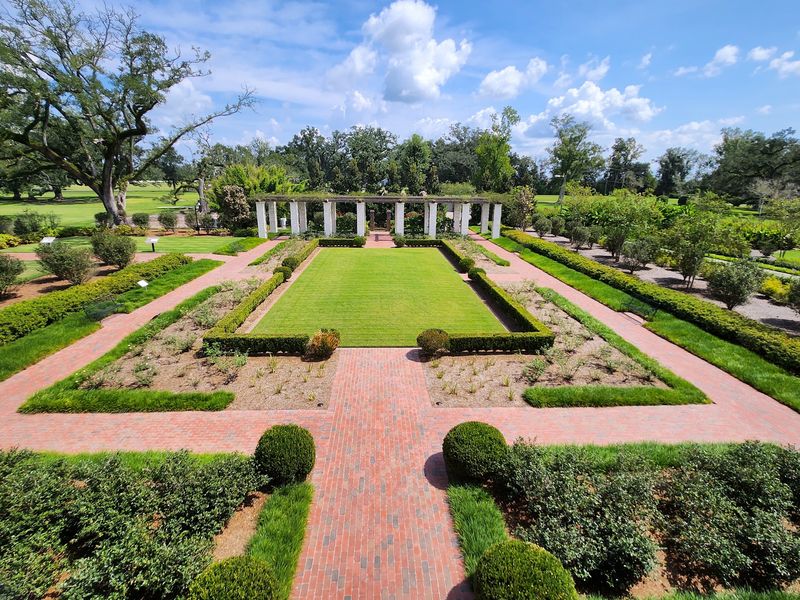
Bananas in Louisiana? At Laura Plantation, yes, and there’s a whole grove nicknamed BananaLand.
It’s one of three distinct gardens on the grounds. The others are the Jardin Français and a kitchen potager.
Each garden shows a different side of daily life. One leans formal and French. Another focuses on growing food for the household.
The property also holds 12 buildings on the National Register of Historic Places. Those include animal barns, overseers’ cottages, and authentic 1840s slave cabins.
That collection matters. Many historic sites lose their outbuildings over time, leaving only the main house standing. Here, you get a much wider view of how the whole place functioned.
A dedicated museum exhibit goes deeper. It’s called From the Big House to the Quarters: Slavery on Laura Plantation.
The exhibit shares personal stories of enslaved individuals who lived here. Those stories turn history into real people with real lives.
Wear comfortable shoes for this stop. Between the gardens, buildings, and exhibit, there’s plenty of ground to cover, and you’ll want to see it all.
Sugarcane Still Grows At These Working Sister Estates
Most historic plantations stopped farming long ago. St. Joseph Plantation and Felicity Plantation never really did.
These sister properties still farm around 1,000 acres of sugarcane every year. History here isn’t frozen behind glass.
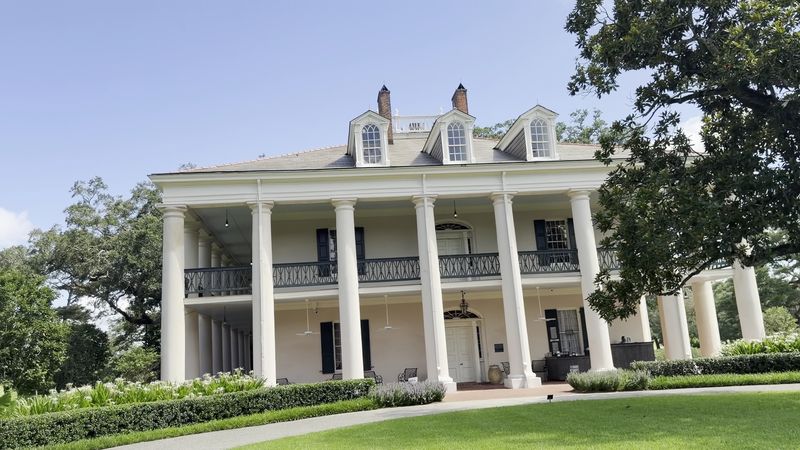
St. Joseph dates to the 1830s. It’s one of the few fully intact sugar plantations in the River Parishes.
Along with its Manor Home, original outbuildings remain. You’ll see slave cabins, a detached kitchen, and a blacksmith’s shop. Together, they show how a sugar operation actually worked day to day.
Felicity was built between 1845 and 1847. Valcour Aime gave it to his daughter as a wedding gift, which is quite the upgrade from a toaster. Its style blends French Colonial and Greek Revival.
The two properties merged in 1901. They formed the St. Joseph Plantation and Manufacturing Company, still owned by the same family corporation today.
St. Joseph sits at 3535 Highway 18 in Vacherie, right near Oak Alley. Both estates are open seven days a week with daily tours. An on-site Louisiana Sugarcane Museum exhibit adds even more context.
Movie Fans Might Recognize A Few Of These Porches
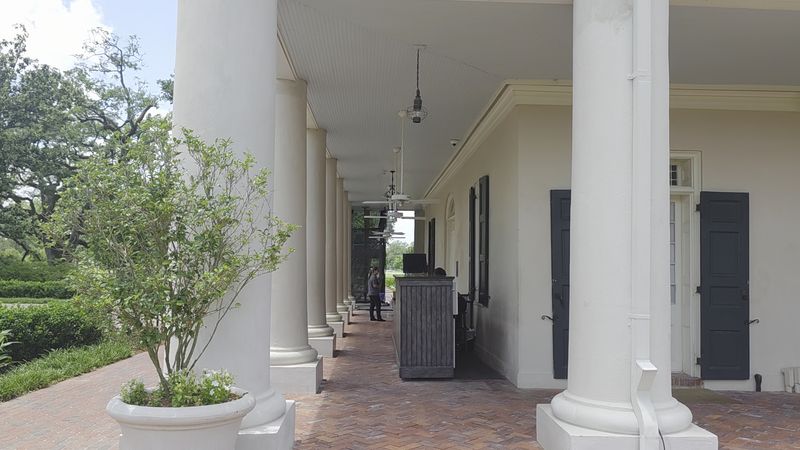
Hollywood loves an authentic setting. St. Joseph and Felicity have shown up in films and TV shows, including 12 Years a Slave and The Skeleton Key.
That’s a lot of screen time for two farms that still grow sugarcane. Their real buildings save filmmakers from building fake ones.
Recognizing a filming spot in person is oddly thrilling. A scene you watched on a couch suddenly becomes a place you can stand.
Still, the tours here focus on real history first. Guides cover what life was like on a working sugarcane plantation. The movie trivia is a bonus, not the main event.
Seasonal events add another reason to visit. The estates have offered Mourning Tours and Cajun Bonfire Celebrations.
The Mourning Tours explore historic customs around loss and remembrance. The bonfire celebrations lean festive and tie into local Cajun tradition. Check dates before you go, since seasonal events don’t run all year.
Pairing these sisters with Oak Alley is easy because they sit so close together. You could visit three historic estates without driving far at all. Louisiana makes efficient sightseeing surprisingly pleasant here.
December Brings Bonfires To The Levee
Winter on the River Road gets a fiery glow. Each December, Oak Alley Plantation hosts a Christmas bonfire evening on the levee.
Bonfires along the Mississippi are a cherished holiday tradition in this part of Louisiana. Seeing one near those famous oaks feels like a fitting finale.
This event needs separate tickets. Regular daytime admission won’t cover it, so plan ahead.
The drive itself deserves credit too. This stretch of Highway 18 follows the west bank of the Mississippi River.
The levee rises on one side. Fields, historic homes, and oak canopies roll by on the other. Vacherie, a small unincorporated community, serves as a handy hub for all of it.
That setup makes the Great River Road easy to enjoy at a slow pace. You’re never far from the next stop. Rushing between estates would waste the scenery.
A smart plan covers Oak Alley, Laura, and the sugarcane sisters over a day or two. Add a meal on site and maybe an overnight cottage. Then let the river guide your route home, mile after easygoing mile.