A cactus flower in southern Arizona blooms for a single summer night, then fades by morning. It’s called the Queen of the Night, and the name fits. Miss it, and you’re waiting another year.
One garden keeps a boojum tree collected in Mexico back in 1925. That tree has nearly a century of desert living under its belt. Then there’s a garden with nearly 14,000 cacti, basically a spiny small town.
The saguaro blossom is Arizona’s official state flower. That fits a state with cacti taller than houses, and some saguaros can live for more than 150 years.
Ticketed gardens and free neighborhood stops both made the cut, in busy cities and quiet desert towns.
Just keep your hands to yourself, because these plants come with built-in security.
1. Desert Botanical Garden
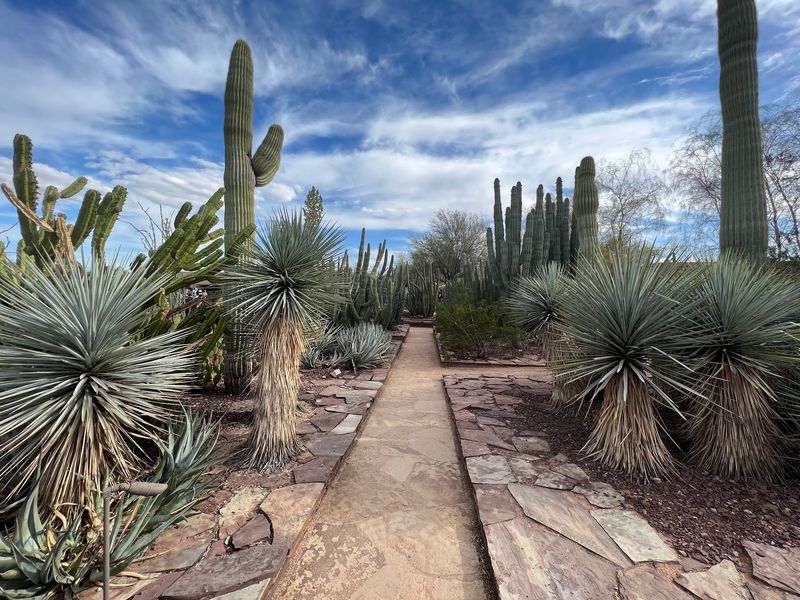
Nearly 14,000 cacti live here, which means you’ll run out of energy long before the garden runs out of spines. The collection covers about 1,320 different cactus varieties, with a special soft spot for the prickly pear family.
The whole place stretches across 140 acres in Phoenix. More than 50,000 plants from deserts around the world fill those grounds, so you’re seeing far more than the local backyard lineup.
Your visit starts in the Ottosen Entry Garden. Hundreds of cacti greet you there, including saguaro and prickly pear, plus rarer faces like red cholla and organ pipe cactus.
From there, the Desert Discovery Loop Trail is a smart first walk. It shows off saguaros, agaves, and yuccas, giving you a quick crash course in desert survival skills.
Need a break from cacti? A butterfly house, colorful sculptures, and a trail with scenic views add some variety to the day.
There’s serious science happening too. The garden’s living collection includes 520 rare and endangered plant species, so your ticket supports more than pretty photos.
Speaking of tickets, buying them ahead of time is a smart move. Saturday evenings tend to be the busiest, so plan around that if you prefer a calmer stroll.
Hungry or curious after your walk? You’ll find dining, a gift shop, and a library on site, which makes it easy to turn a quick visit into a full Arizona afternoon.
Address: 1201 N Galvin Pkwy, Phoenix, AZ 85008
2. Tucson Botanical Gardens
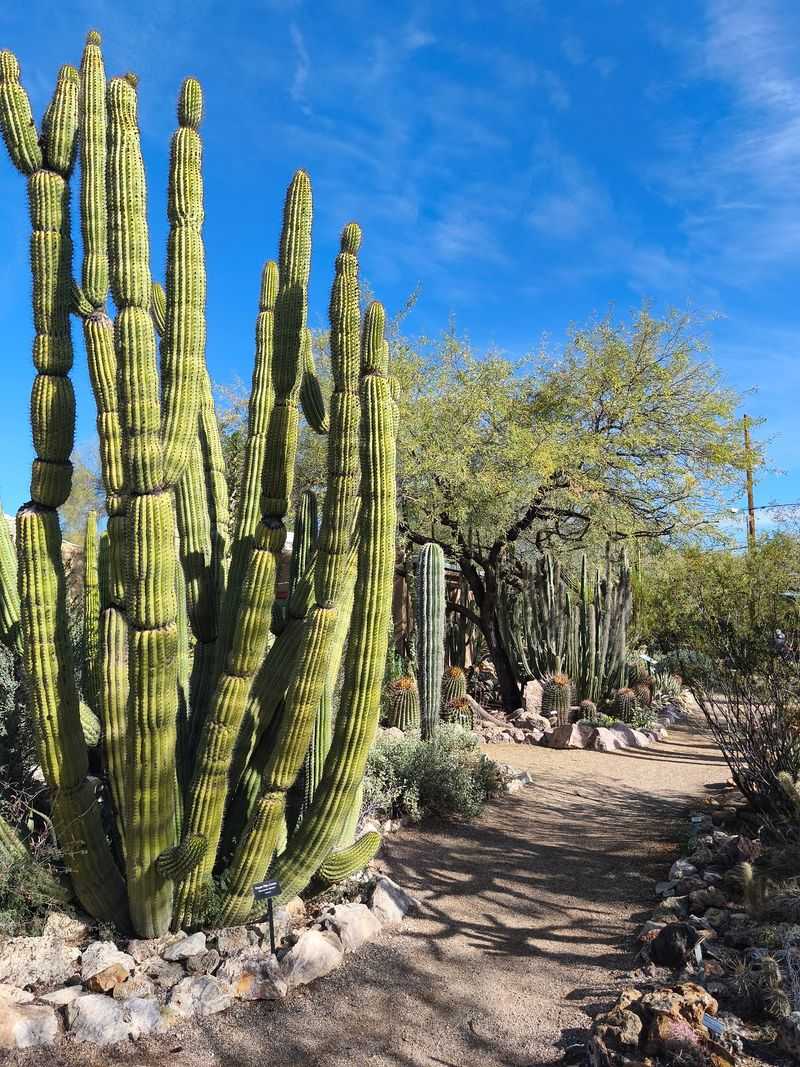
Rocks and cacti make a surprisingly great team in this city garden. The cactus beds feature stones and minerals from the collection of Harrison Yocum, who founded the gardens in 1964.
You’ll find the place in central Tucson on about 5.5 acres. That might sound small, but the grounds pack in more than 20 curated garden spaces.
The star for cactus fans is the Cacti and Succulents from Around the World garden. It holds more than 500 plants from the Southwest, Mexico, Central and South America, and Africa.
So yes, your local saguaro gets to share space with some very well-traveled neighbors. Hedgehog cacti show up in the mix too, so keep an eye out for their chunky little stems.
The plants come clearly labeled, which is a gift if you can never remember which spiky thing is which. You can wander, read, and actually leave knowing a few new names.
Variety goes beyond the desert beds. A butterfly exhibit, orchids, herbs, and a children’s area round out the visit nicely.
Bringing kids? The gardens offer activities for younger visitors, which helps when tiny legs lose interest in reading plant signs.
The gates open at 8:30 in the morning. Getting there early gives you cooler air for strolling, which matters a lot in Arizona.
Address: 2150 N Alvernon Way, Tucson, AZ 85712
3. Tohono Chul Sonoran Botanic Gardens & Arboretum
Talk about a diva. The Night Blooming Cereus here opens its famous Queen of the Night flowers for just one night, usually in June or July.
The garden is known for its large collection of these plants. That makes it a top spot in Tucson for anyone who wants to catch that fleeting show.
Not around during bloom season? No problem, because the rest of the grounds keep you busy year round.
The Succulent and Cactus Garden explains convergent evolution in a simple way. It places plants from different deserts side by side, so you can see how unrelated species found similar ways to survive.
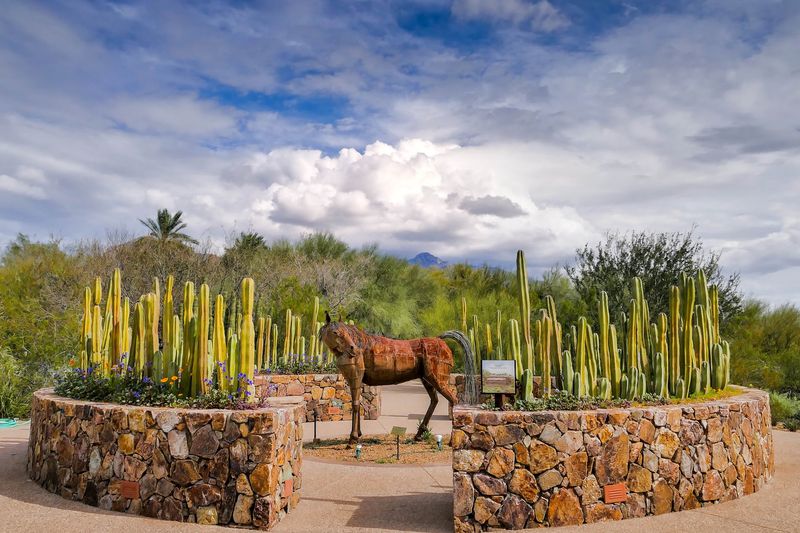
Then there’s the Cactus Circle, planted with Mexican fencepost cacti. Their tall green columns look like a living fence built by a very patient gardener.
Paths also lead into natural desert, where prickly pear and saguaro grow. Themed areas like the Penstemon and Palm gardens add color between the spines.
Rock fans will enjoy the geology wall. It shows the types of stone found in the Santa Catalina Mountains, right in the garden’s backyard.
Want to take a piece home? The greenhouse sells potted cacti and desert-adapted plants, and a bistro with a shady patio waits when you need lunch.
Weekends bring bigger crowds. A weekday morning gives you more room to wander at your own pace.
Address: 7366 N Paseo Del Norte, Tucson, AZ 85704
4. Boyce Thompson Arboretum
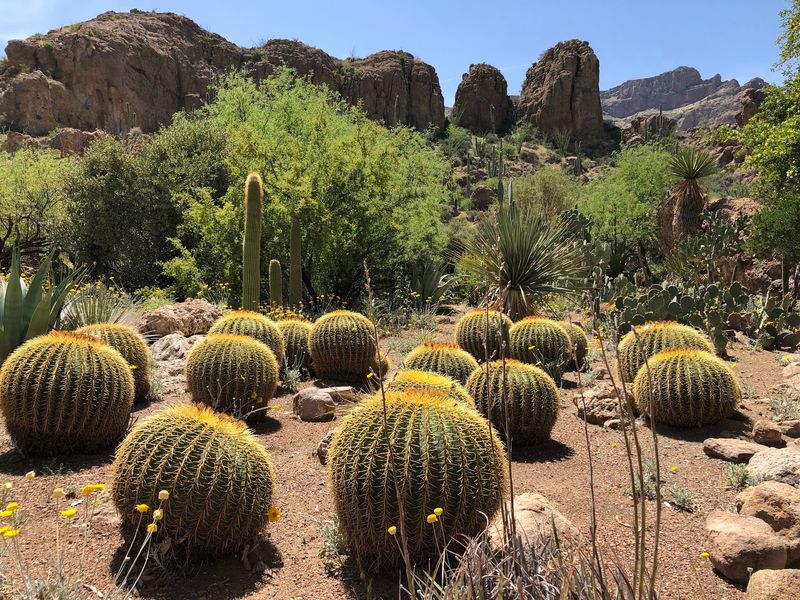
Some of these cacti have been putting down roots since the early 1920s. Founded in 1924, this is the oldest and largest botanical garden in Arizona.
The property covers 323 acres near the small town of Superior. Picket Post Mountain rises nearby, giving your cactus photos a dramatic rocky backdrop.
The six-acre Cactus and Succulent Garden is the main event for spine lovers. It holds around 1,500 plants and more than 200 cactus species from the Southwest, Mexico, and South America.
Here’s a sobering fact. About one-third of those cactus species are threatened in the wild, so this garden doubles as a safe harbor.
Columnar cacti steal the show. Saguaro, Mexican fencepost, organ pipe, and South American cardon grande stand in big groups like a spiky skyline.
Look lower and you’ll spot barrel cacti, chollas, pincushions, hedgehogs, and Easter lily cacti. Several large boojum trees grow here too, including one collected in Mexico in 1925.
Beyond the cactus beds, a main trail of about two miles loops the grounds. Along the way you’ll find a suspension bridge, a creek, a greenhouse, and historic buildings.
Got a pup? The arboretum is dog-friendly, which is rare for a botanical garden.
Weekend mornings get busy. Weekday visits tend to feel much quieter.
Address: 37615 E Arboretum Way, Superior, AZ 85173
5. Carefree Desert Gardens
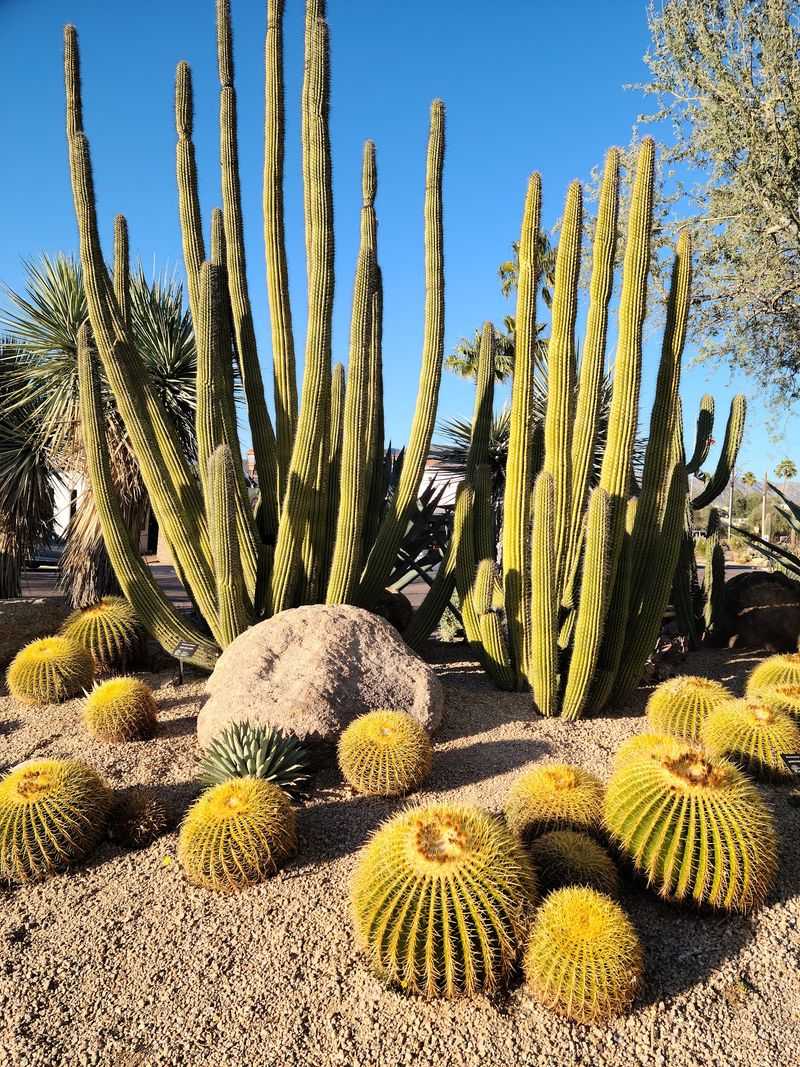
A town named Carefree with a street called Easy Street? The garden’s address already sounds like a vacation.
This four-acre botanical garden sits right in the center of town. It’s free to visit, and the grounds are listed as open around the clock.
Small doesn’t mean skimpy. Lots of cacti fill the space, along with plants from around the world and well-marked desert trees.
Self-guided walking tours help you make sense of what you’re seeing. You can move at your own speed and stop whenever a strange spiny shape catches your eye.
Keep an eye out for the huge sundial. It’s one of the garden’s best-known features and a fun spot for a quick photo.
Water plays a part too. A waterfall and other water features add a cool touch to the desert scene.
Traveling with kids? A playground and a water play area give them a reason to love a garden trip.
Dogs get their own designated area. Shaded seating and fireplaces with couches make it easy for grown-ups to rest.
Once you finish exploring, nearby shops and restaurants surround the garden. That makes it simple to turn a short stroll into a relaxed small-town outing.
Friday mornings tend to be the busiest time. Midweek afternoons usually feel calmer.
Address: 101 Easy St, Carefree, AZ 85377
6. Fountain Hills Desert Botanical Garden
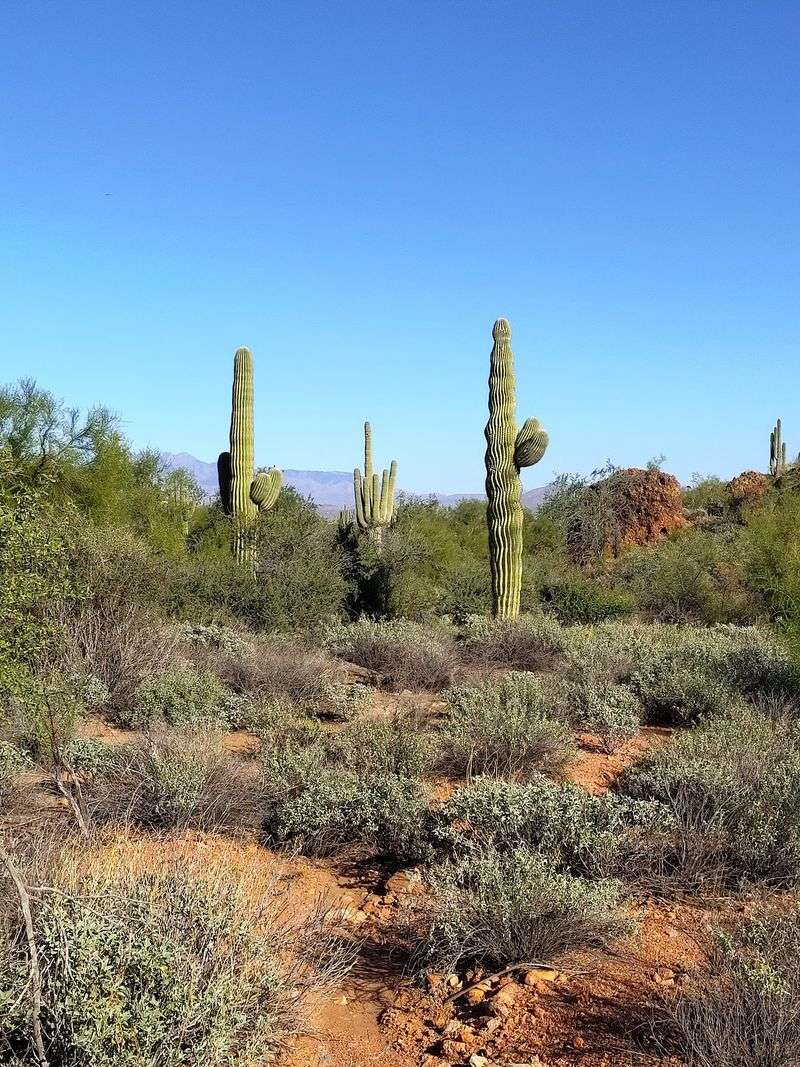
Forget neat flower beds for a moment. This garden lets the Sonoran Desert do the decorating itself.
Instead of planted displays, you get walking trails through native desert. It’s a natural setting where cacti and other plants grow on their own terms.
The trails offer both easy and more challenging routes. That flexibility works well if your group includes casual strollers and eager hikers.
Signs along the way explain the plants and land features. You may come away knowing how desert plants have been used for healing, which is a fun twist on a nature walk.
Don’t expect a giant property. The area is fairly small, but the views across the desert make up for its size.
Finding the entrance can take a moment the first time. Once you’re on the path, it feels like a quiet introduction to desert life.
Early birds will appreciate the schedule. The garden opens at sunrise every day, making an early visit a good way to beat the summer heat.
The garden is open from sunrise to sunset every day of the year. A quick check before you go saves you from arriving at a locked gate.
Mornings tend to draw more walkers. Evenings near the weekend are usually the quietest time to wander.
Bring water and a hat. The desert is lovely, but it doesn’t offer much shade for free.
Address: 11300 N Fountain Hills Blvd, Fountain Hills, AZ 85268
7. Arizona-Sonora Desert Museum
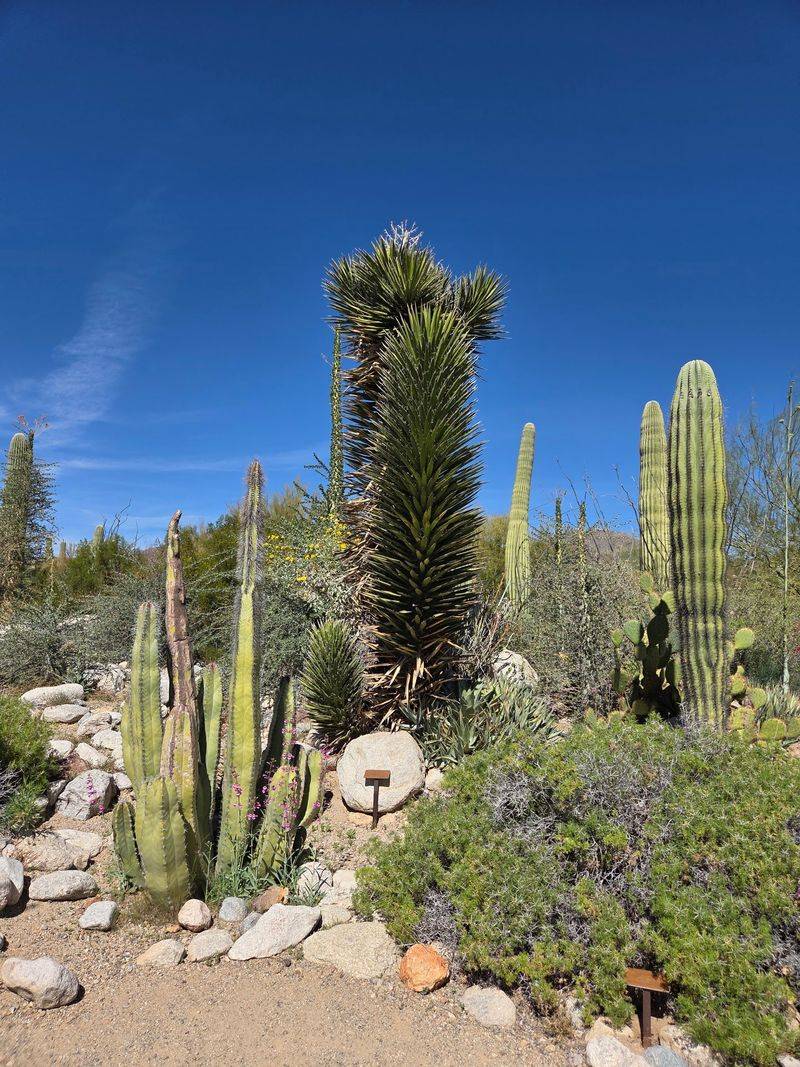
Where else can a cactus garden compete with a raptor show for your attention? This Tucson spot blends a natural history museum, live animals, and botanical gardens into one outing.
The cactus garden often surprises people. Loads of varieties grow along the paths, making it a pleasant place to slow down and look closely.
Saguaros rise across the grounds with mountain views behind them. You might spot tortoises nearby, since animal exhibits share the space with the plants.
That mix is what makes the museum special. You learn how desert plants and animals depend on each other instead of seeing them in separate boxes.
Interactive exhibits keep things lively. Live demonstrations and the raptor show add a little drama between garden walks.
The drive out is part of the fun too. The road to the museum offers big desert scenery before you even park.
Practical needs are covered well. A cafe, restaurant, gift shop, and theater are all on site.
Families will find changing tables and plenty to keep kids curious. Tours are offered if you’d like more guidance than signs can give.
Active military visitors can get discounts. Parking options include a free lot, which is always a nice surprise.
The museum opens at 8:30 in the morning. Arriving early means cooler paths and calmer crowds.
Address: 2021 N Kinney Rd, Tucson, AZ 85743
8. Glendale Xeriscape Garden
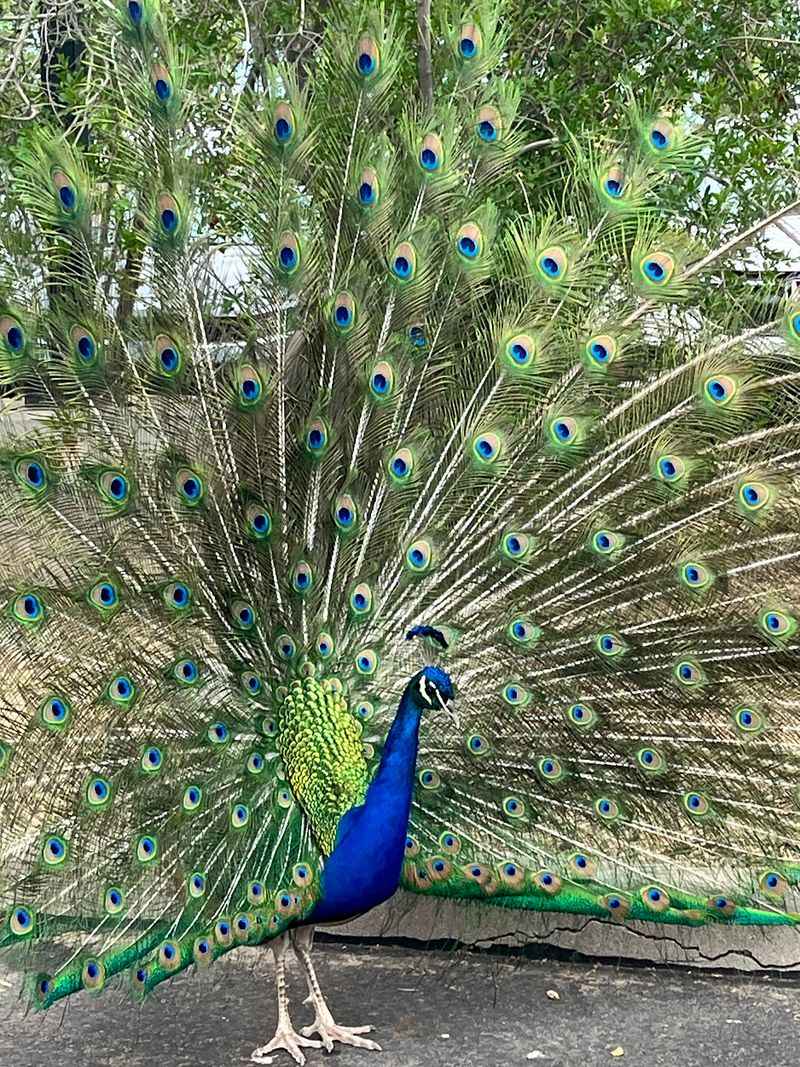
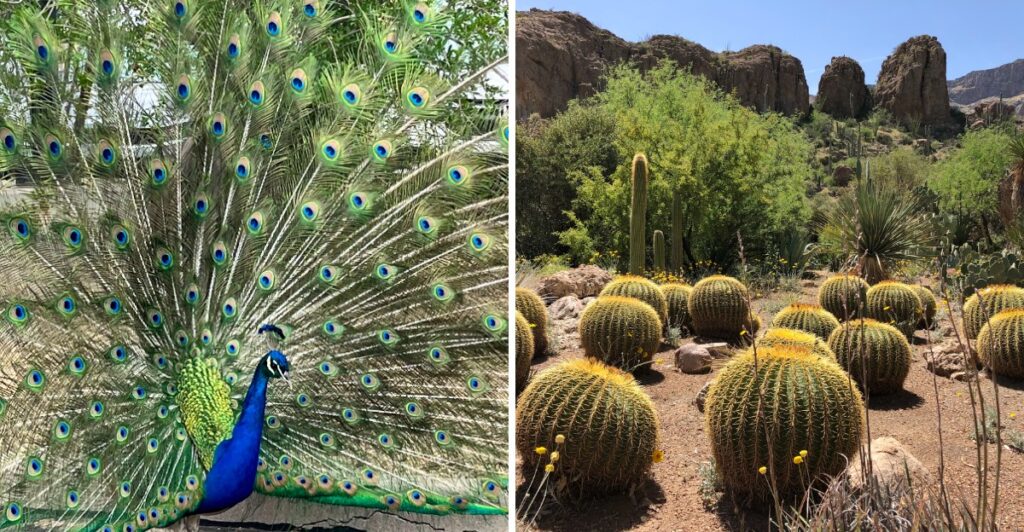
Peacocks strutting past cacti is not a sight you expect at a library. Yet that’s exactly the scene at this Glendale garden.
The garden surrounds the Glendale Public Library. Roughly 400 plants are placed around the grounds, many of them cacti and other water-wise picks.
The whole point is practical inspiration. Informative signs show you how to build a sustainable, low-water garden at home.
That makes it a smart stop if your yard needs help. You can see real examples instead of guessing from a catalog.
Plants come labeled, so jotting down names is easy. Aloe plants are among the highlights you’ll pass on a stroll.
A full loop takes around 20 to 30 minutes. That’s short enough for a lunch break or a pause during errands.
Want to stay longer? A playground and barbecues make it simple to plan a picnic nearby.
The free-roaming peacocks steal plenty of attention. Give them some space, and let them pose on their own schedule.
Check the hours before heading over. The garden is open daily from dawn to dusk, including Sundays.
Restrooms are available on site. Afternoons are often the busier stretch, so a morning visit may feel calmer.
Address: 5959 W Brown St, Glendale, AZ 85302
9. Scottsdale Xeriscape Garden
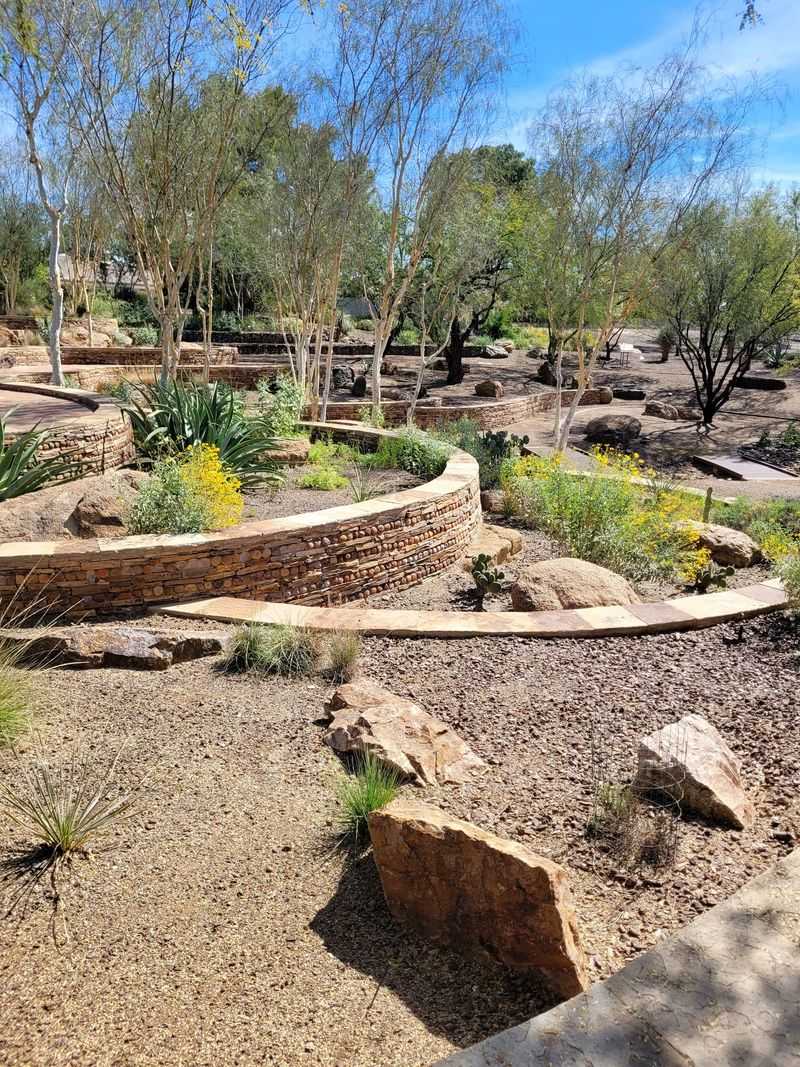
Saving water never looked this sharp. This Scottsdale garden at Chaparral Park shows how desert landscaping can be both thrifty and stylish.
The garden holds more than 7,000 plants across about 200 species.
Its plant collection includes a wide variety of desert-adapted plants, including cacti and succulents.
Familiar faces are easy to find. Saguaro, prickly pear, barrel cactus, cholla, and ocotillo all make appearances.
Signs explain garden design and water systems in plain terms. An interactive plant guide adds even more detail for curious visitors.
Modern architecture and art installations give the space a fresh look. It feels less like a lecture and more like a calm outdoor gallery.
Here’s a bonus fact. The garden is a National Wildlife Federation Certified Wildlife Habitat, so plants here support local creatures too.
Plan on a 20 to 30 minute walk. It’s a quick, easy trip for families or anyone with a busy schedule.
Free parking and public restrooms keep things simple. Hours run from early morning to late evening, which gives you lots of flexibility.
Sunday and Friday evenings tend to be busiest. Midweek afternoons usually stay quieter.
Leave with a few ideas for your own yard. In Arizona, a smarter garden can mean a lighter water bill.
Address: 5401 Hayden Rd, Scottsdale, AZ 85250
10. Brinton Desert Botanical Garden
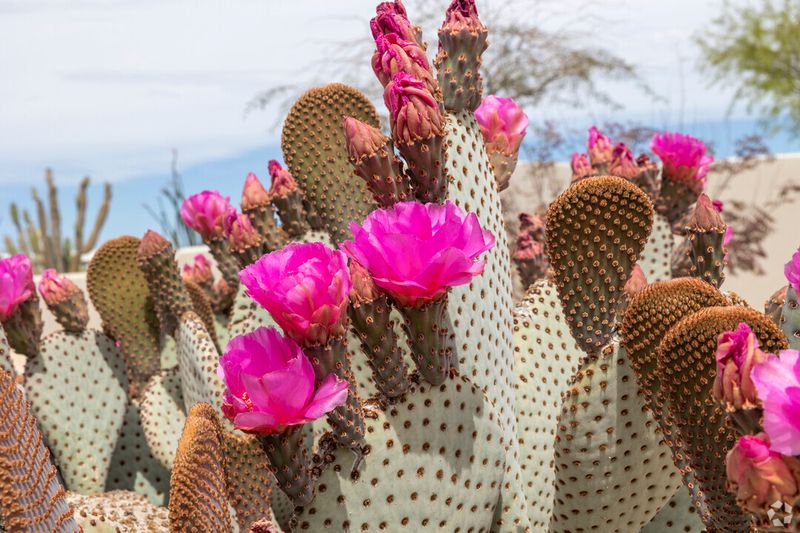
Not every cactus outing needs a ticket and a full day. This Mesa garden proves a short neighborhood stroll can still pack plenty of spines.
Brinton Desert Botanical Garden is small and free. It sits within a park setting, so it feels easygoing from the moment you arrive.
Plenty of cacti and desert plants line the grounds. It’s the kind of place that makes you notice plants you’ve probably passed many times without a second look.
A short trail leads you through the collection. You can finish it quickly, then circle back to study your favorites.
Here’s a fun extra. The garden includes a compass guide course, which adds a little adventure to the walk.
Kids get a playground nearby. That makes it a handy choice when you want plants and they want swings.
Seating along the way lets you rest and take it all in. A relaxed Sunday afternoon visit fits this spot perfectly.
Restrooms are available, and parking is free. Those small comforts help keep the trip stress-free.
Think of this garden as a friendly warm-up for bigger places on the list. It’s also a solid pick for regular walks if you live nearby.
Bring a curious eye and comfy shoes. The best details here are often the smallest ones.
Address: 1710 N Horne, Mesa, AZ 85203