A dropped roll might be the luckiest accident in sandwich history.
According to the restaurant’s origin story, the cook who dropped a roll into hot pan drippings in 1918 didn’t toss it out.
He handed it to a police officer, who loved it.
The officer came back the next day with friends, asking for that dipped sandwich again. More than a century later, the same California counter still dips rolls in roast juices from morning to night. It even outlasted a freeway that forced it to move.
I love the story that the whole thing started with a slip of the hand.
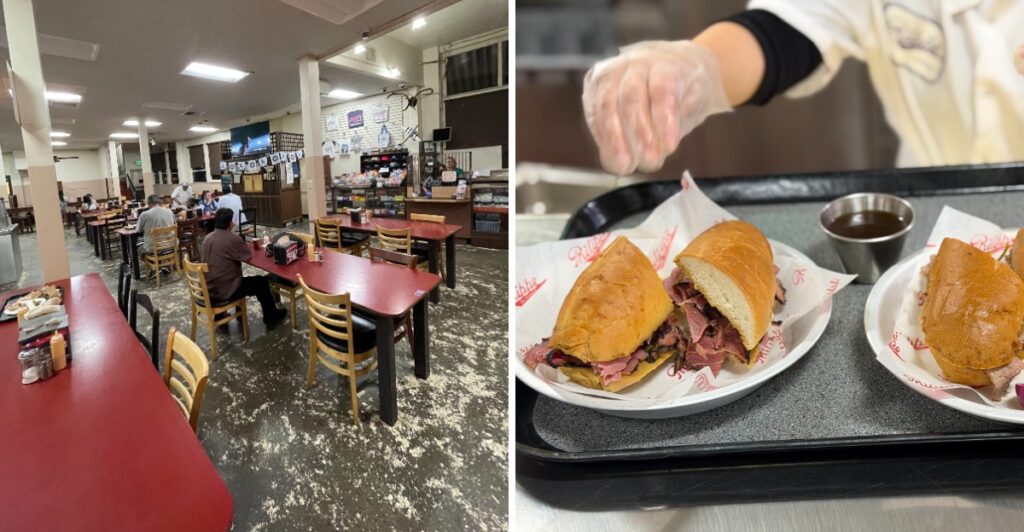
For over a hundred years, sawdust covered the floors there too. The sawdust-covered floors have long been part of the restaurant’s character, just like its famous French dip.
Turns out butterfingers can be a pretty solid business plan.
A Butterfingers Moment Turned Into A Sandwich Legend
Some of the best ideas start as mistakes.
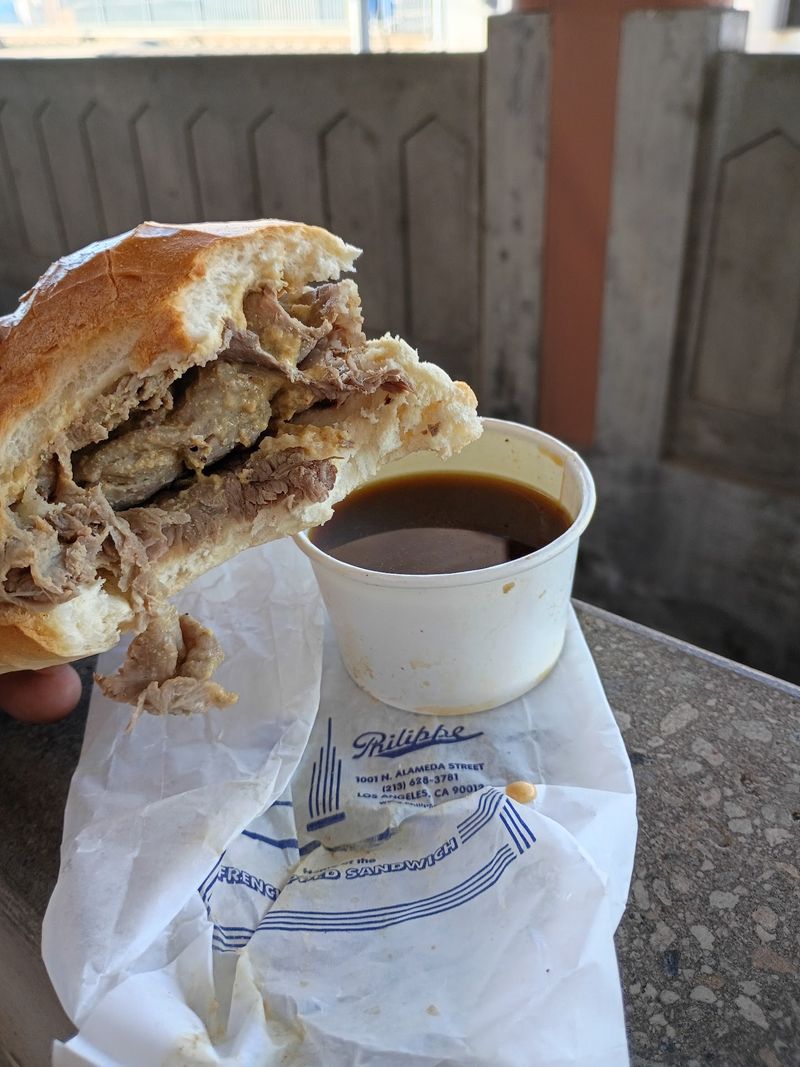
According to Philippe The Original’s traditional origin story, founder Philippe Mathieu accidentally dropped a sliced French roll into a pan of hot drippings in 1918.
He was making a sandwich for a policeman at the time. Instead of starting over, he offered the soggy roll anyway, and the officer gladly took it.
The next day, that officer returned with friends. They all wanted the dipped sandwich, and a California classic was officially on its way.
Mathieu had opened the restaurant back in 1908 as a French immigrant with a deli counter. Ten years later, the French dip became the reason people kept coming back.
Fair warning, though. Cole’s Pacific Electric Buffet, another old downtown spot, also claims it invented the sandwich first.
The two places have kept up a friendly rivalry for years. Nobody has settled it, which honestly makes trying both sound like a fun homework assignment.
Still, Philippe’s tells its story with total confidence. It has kept serving that dipped creation for over a century, and that kind of staying power speaks pretty loudly on its own.
Pick A Line And Meet Your Personal Sandwich Carver
Forget the usual cashier setup. Ten carvers stand behind a long display counter, and each one handles a separate line of hungry customers.
Your carver does pretty much everything. They take your order, build your sandwich, and ring you up right there at the station.
It feels a bit like a relay race where one runner does every lap. The system keeps things personal and surprisingly efficient for such a busy place.
Watching the carving happen right in front of you is half the fun. You see your meat sliced, your roll dipped, and your plate come together in real time.
Got questions about dip levels or meat choices? Your carver is the person to ask, since they’re the one making your meal anyway.
A little planning helps a lot here. Decide on your sandwich, sides, and dessert before you reach the front, so your turn goes smoothly.
This old-school setup is part of what makes Philippe The Original feel so different from modern fast food. It’s hands-on, a little theatrical, and very much its own thing.
Learn The Secret Dipping Language Before You Reach The Counter
Ordering here comes with its own vocabulary. Knowing four little words will make you sound like you’ve been coming for decades.
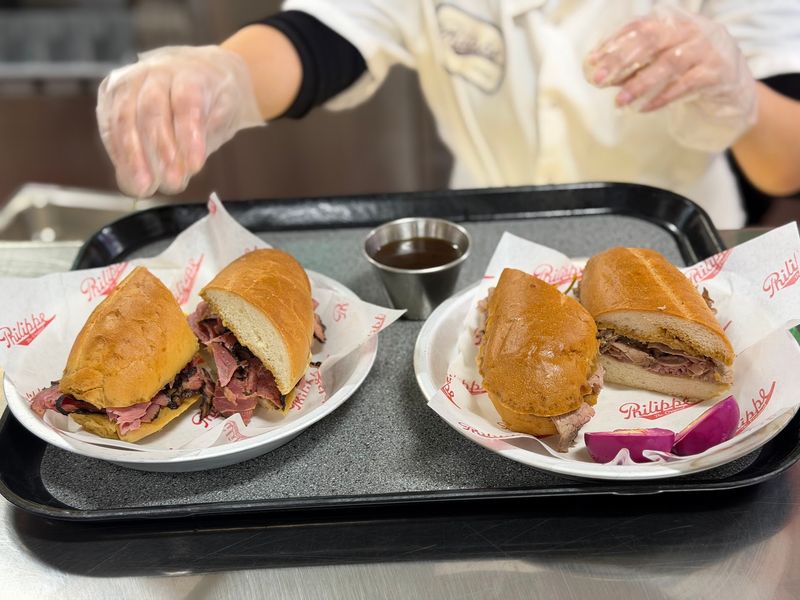
Single-dipped means only the top half of the roll gets dipped in the jus.
Double-dipped means both the top and bottom halves get dunked.
Wet is for people who want the bread truly soaked. You can also request the jus on the side, allowing you to control how much you dip each bite.
Then comes the bigger decision of picking your meat. Roast beef is the classic, but you can also choose pork, lamb, ham, turkey, or hot New York pastrami.
Each one lands on a freshly baked French roll with a lightly textured crust. That roll matters, because it has to hold up after swimming in natural gravy from the roasts.
Lamb is a fun pick if you want something a little different. Pastrami brings extra punch for anyone who likes bold, peppery flavor.
Here’s a smart move for first-timers. Start with double-dipped beef, then come back later and work your way through the rest of the lineup like a sandwich scientist.
Treat That Famous Hot Mustard With Serious Respect
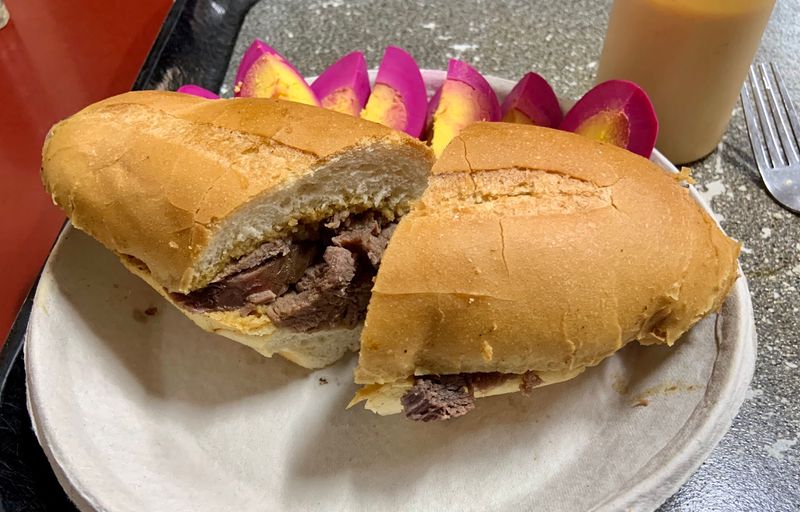
The restaurant prepares about 40 gallons of its famous hot mustard twice a week.
The mustard has become almost as famous as the sandwich itself. It’s spicy, sharp, and known for packing a real kick.
Think of it as a sidekick with a strong personality. A thin layer wakes up the roast beef, while a thick layer might wake up your whole face.
Start small, and taste before adding more. You can always spread on extra, but you can’t take back a giant scoop once it’s on there.
The mustard pairs especially well with beef and pastrami. Its heat cuts through the rich jus and gives each bite a little extra zip.
Brave eaters sometimes go heavy on purpose. That’s a fine plan, as long as you keep a drink nearby and a napkin handy.
Making that much mustard on a weekly schedule shows how central it is here. It’s not a fancy topping, just a bold one that has earned its spot on every table.
Grab A Stool And Share A Table With Strangers
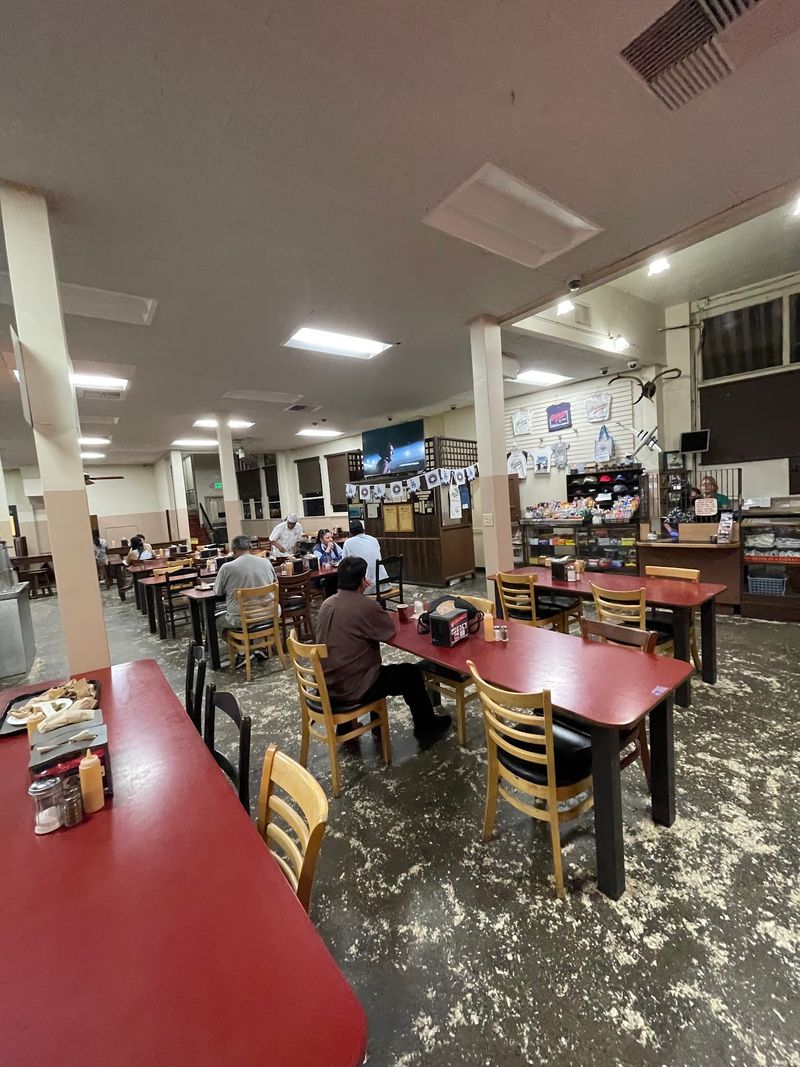
Nobody comes here for fancy decor, and that’s exactly the point. The dining room keeps things simple, sturdy, and full of old-fashioned character.
For more than a century, sawdust-covered floors added to the restaurant’s old-school charm.
That tradition ended in 2026, when safety and insurance requirements forced the restaurant to remove the sawdust.
Long communal tables fill the space. Worn wooden stools line them up, inviting you to sit beside folks you’ve never met.
Sharing a table might feel odd at first. Then again, it’s hard to stay shy when everyone around you is happily dunking sandwiches.
Look up and you’ll spot ceiling fans turning overhead. Dark brown wooden walls wrap the room in a cozy, lived-in look.
The walls also double as a mini museum. You’ll find displays of historic U.S. newspapers, plus exhibits about circuses and Los Angeles railroading history.
Those railroad displays fit nicely with the neighborhood, since a major train station sits close by. They make waiting for a seat a lot more interesting than staring at your phone.
Bring a curious mind along with your appetite. Between bites, you can wander a bit and read headlines from long ago, which makes lunch feel like a field trip.
Show Up At Sunrise For Pancakes And Bargain Coffee
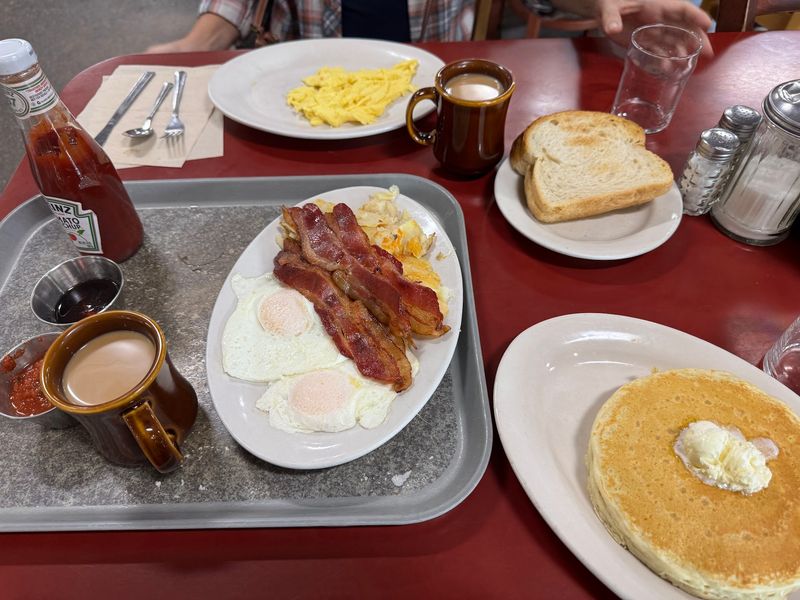
Early birds get a whole different menu here. Breakfast runs daily from 6:00 a.m. to 10:30 a.m.
The lineup leans hearty and classic. You’ll find egg dishes, omelets, bacon, sausage, ham, corned beef hash, and fried potatoes.
Sweeter cravings are covered too. French toast and pancakes share the breakfast menu with a selection of fresh juices.
Coffee usually comes included with most breakfast orders. That’s a nice bonus when you’re still waking up.
The restaurant’s coffee is a legend all by itself. It has kept a long tradition of being remarkably cheap, and it still costs less than a single dollar per cup.
Gaviña Coffee is the brand served here. In a big city where coffee prices can climb fast, that tiny cost feels almost like a magic trick.
Breakfast is also a clever way to enjoy the place on a calmer schedule. You get the history, the wooden tables, and the carvers, all before the lunch rush shows up.
Save Room For Pink Pickled Eggs And Coconut Cream Pie
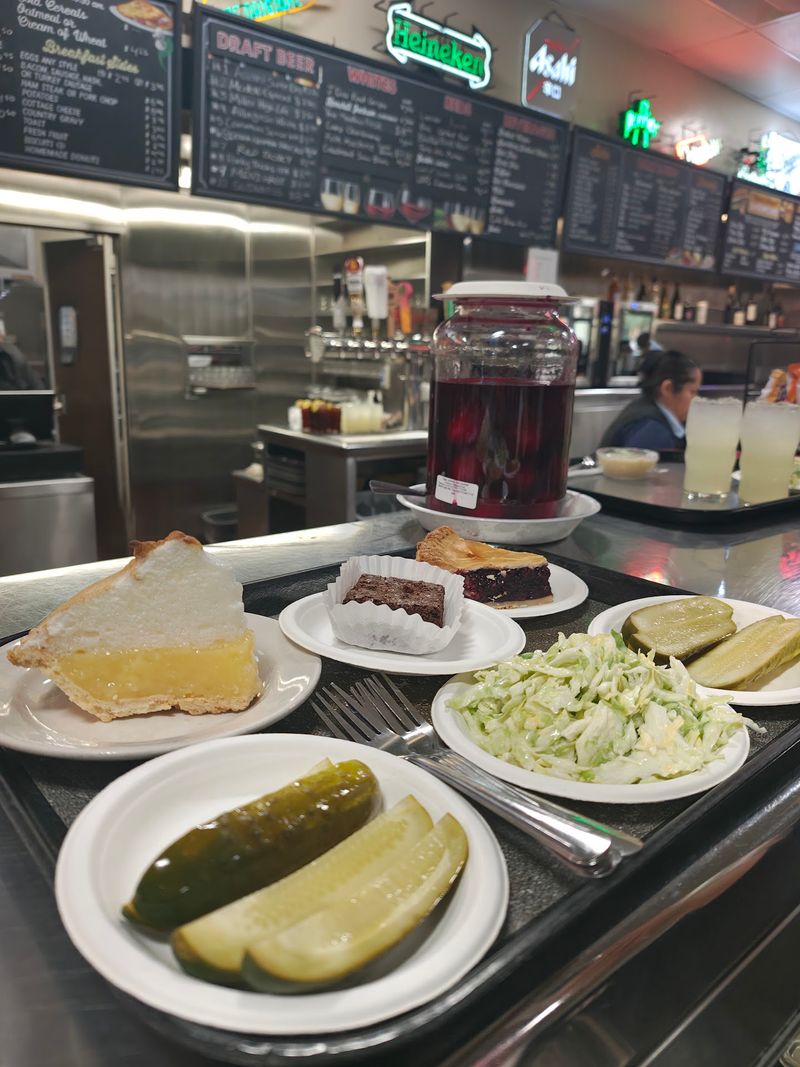
Hard-boiled eggs pickled in beet juice turn a bright, cheerful pink. They’re one of the most eye-catching sides on the whole menu.
Sweet pickled beets sit right beside them. Homemade potato salad, macaroni salad, and coleslaw round out the classic deli lineup.
Soup fans have options too. Daily rotating homemade soups include choices like Chicken Noodle, French Onion, Split Pea, Navy Bean, Manhattan Chowder, and Vegetable Barley.
Not in the mood for meat? Tuna sandwiches and peanut butter and jelly are also on the menu, which makes picky eaters very happy.
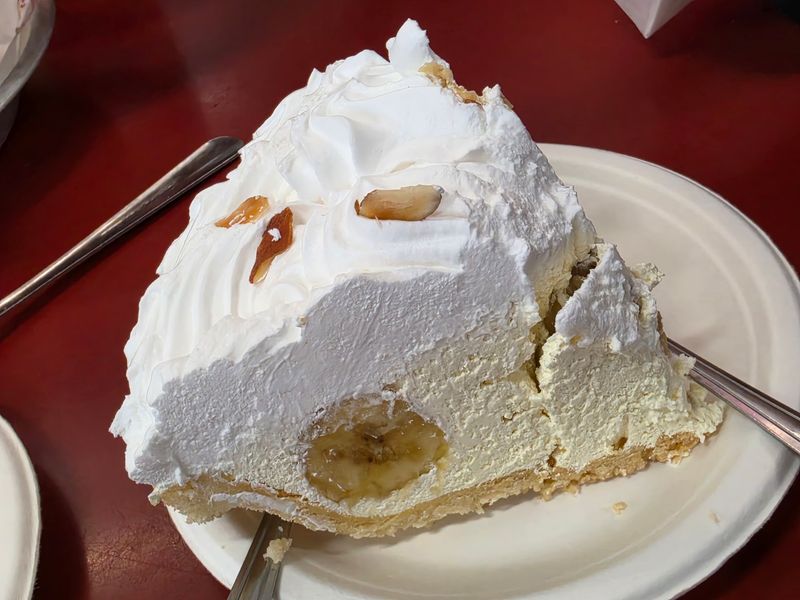
Dessert deserves its own plan. Cream and fruit pies, including coconut cream, share space with New York style cheesecake, brownies, and carrot cake.
There are cozy, old-fashioned picks as well. Baked apples, custard, tapioca, cookies, and ice cream in vanilla, chocolate, strawberry, or chocolate chip all make appearances.
A smart strategy is to split desserts with your group. That way, you can sample a slice of pie and a cup of tapioca without needing a nap afterward.
Union Station Is Basically Next Door, So Make A Day Of It
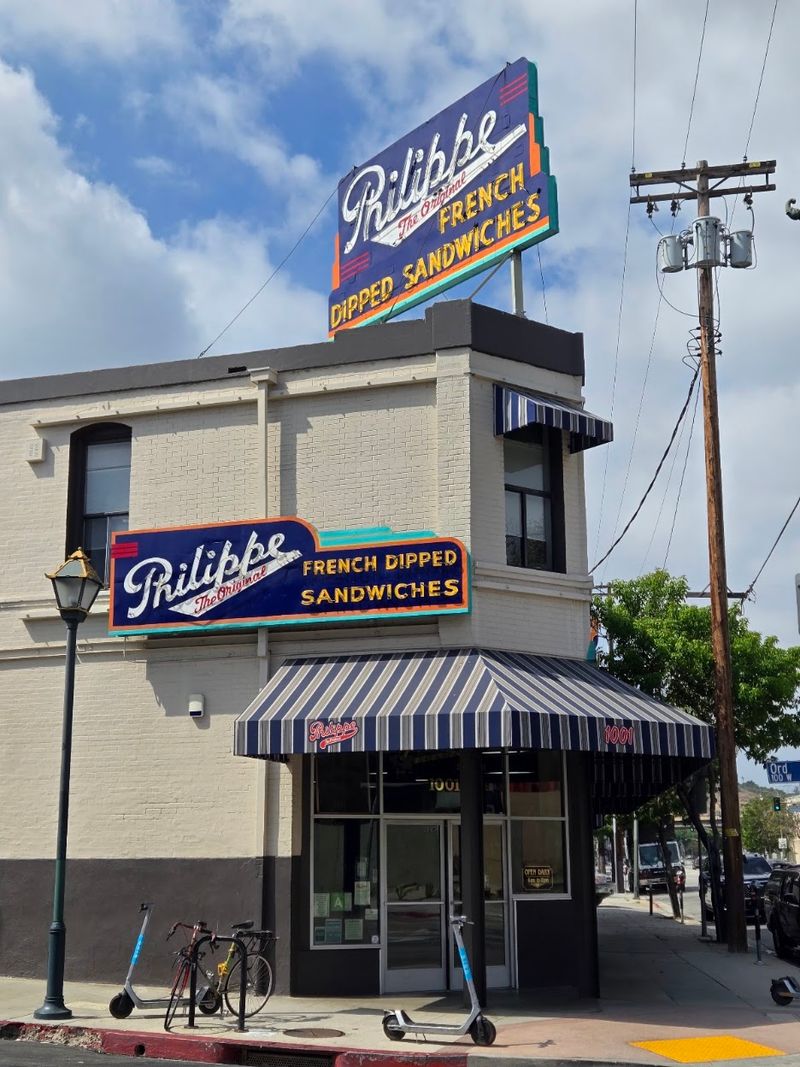
A freeway project once forced this famous counter to pack up and move. In 1951, it left its Aliso Street location to make room for the Hollywood Freeway.
Its new home became 1001 N Alameda St, Los Angeles, CA 90012. It has served sandwiches from that address ever since.
The location is a winner for explorers. Union Station is close by, Chinatown sits right at the edge, and Olvera Street is about two blocks south.
That makes it easy to pair lunch with a stroll through historic downtown Los Angeles. Riding a train in and walking over adds some extra old-school flair.
Ownership has its own long story too. Mathieu sold the business to the Martin family in 1927, and descendants of the Martin and Binder families still run it.
Doors open daily at 6 a.m. and close at 10 p.m., except on Christmas Eve and New Year’s Eve, when they close early. The restaurant is closed on Thanksgiving and Christmas Day.
Few California restaurants can claim continuous service since 1908. Philippe The Original has pulled it off, and that dipped roll is still the best reason to visit.