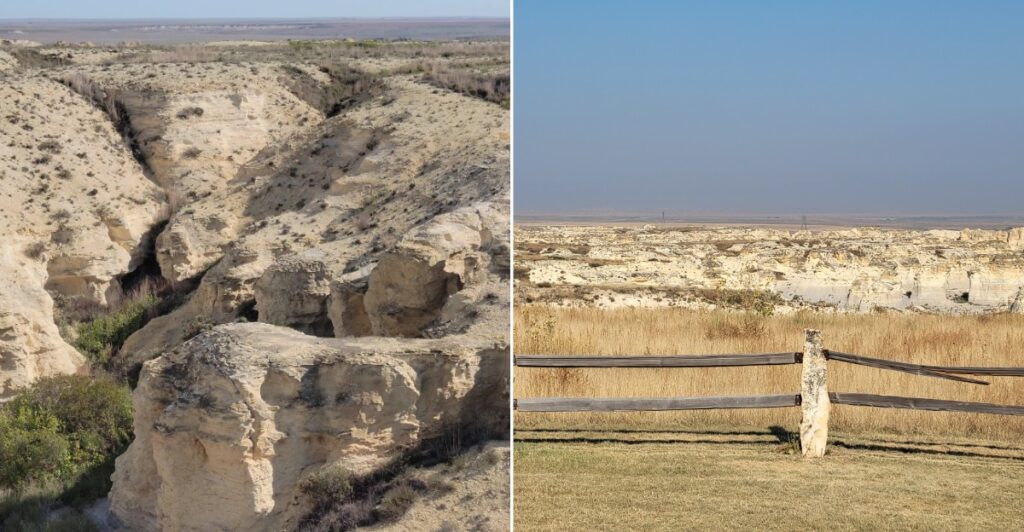
Chalk cliffs up to 100 feet tall rise out of flat prairie, and they started as the floor of an ancient ocean. Yes, an ocean.
In the middle of the country.
The chalk formed about 85 million years ago from tiny sea creatures that piled up over time.
Scientists have pulled mosasaurs, plesiosaurs, and flying pterosaurs out of this same kind of rock. I can’t imagine a cooler backstory for a pile of white stone.
This corner of western Kansas has only been open to the public since 2019.
Pioneers once thought the spires looked like an ancient walled city at sunset. I like how a name that old still fits so well.
So what does it feel like to stand on the rim of a vanished sea? The answer sits at the end of a long gravel road.
An Ocean Floor Is Waiting For You In The Middle Of The Plains
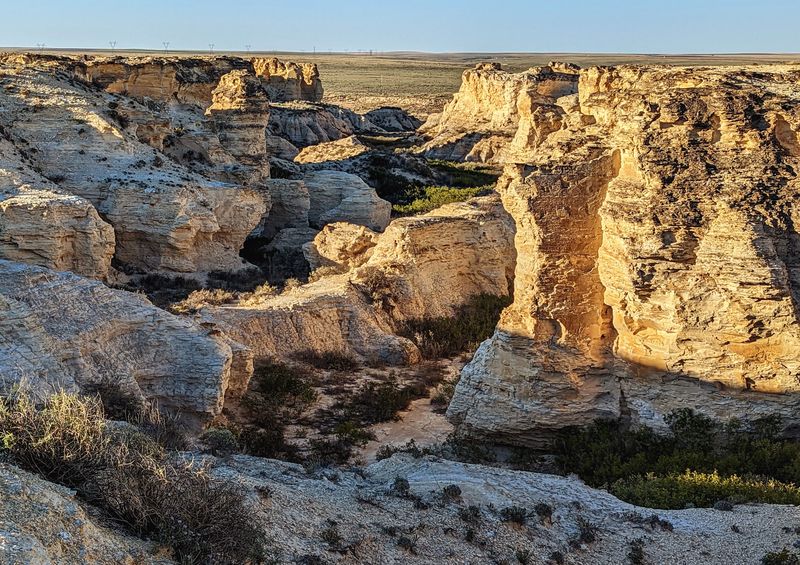
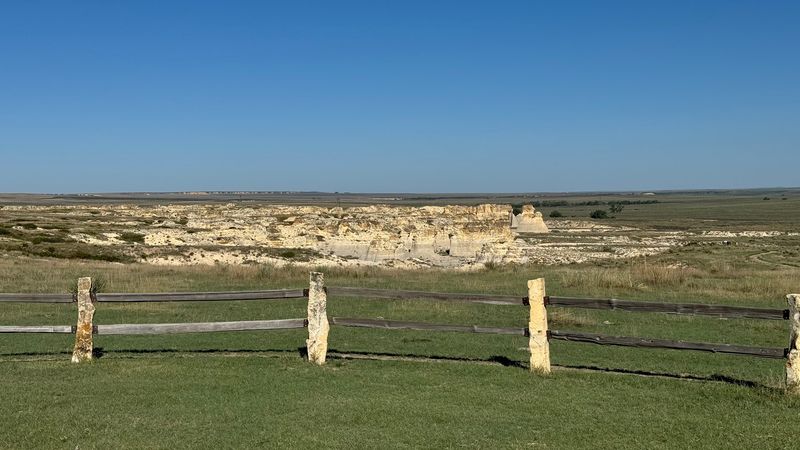
Flat farmland stretches for miles, and then the ground simply drops away.
Little Jerusalem Badlands State Park protects a mile-long band of chalk spires, pinnacles, and cliffs reaching up to 100 feet tall.
It holds the largest expanse of exposed Niobrara Chalk in Kansas. That’s a big claim, and the view backs it up.
The park covers 332 acres in Logan County. About 220 of those acres belong to the fragile badlands themselves.
The rest gives you room to park, walk, and take it all in. The contrast with the surrounding prairie is the whole thrill.
Many people still picture this state as one long wheat field. The chalk canyons here politely disagree.
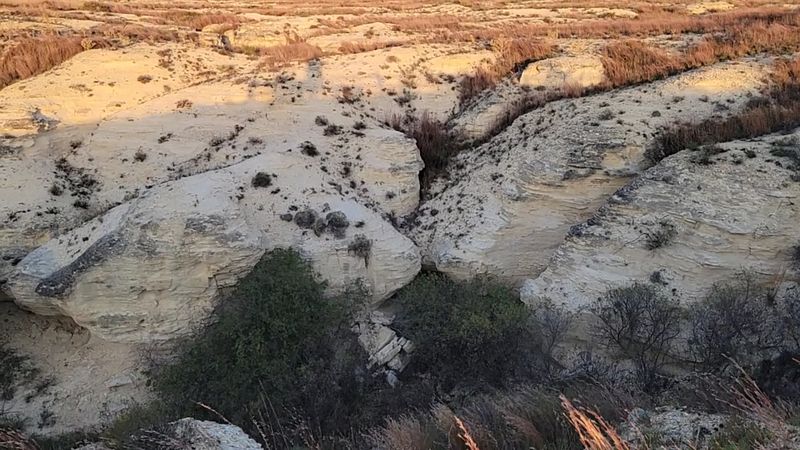
You’ll see hoodoos, rugged canyon walls, and layered rock in soft shades of white and gold.
These ancient formations preserve evidence of sediments deposited roughly 85 million years ago, while erosion over millions of years helped shape the cliffs and spires visible today.
Go in with curious eyes and a little patience. The details get richer the longer you look.
Bring a camera, but don’t stare through it the entire time. Some views deserve your full attention first.
Tiny Sea Creatures Built Every Spire You See
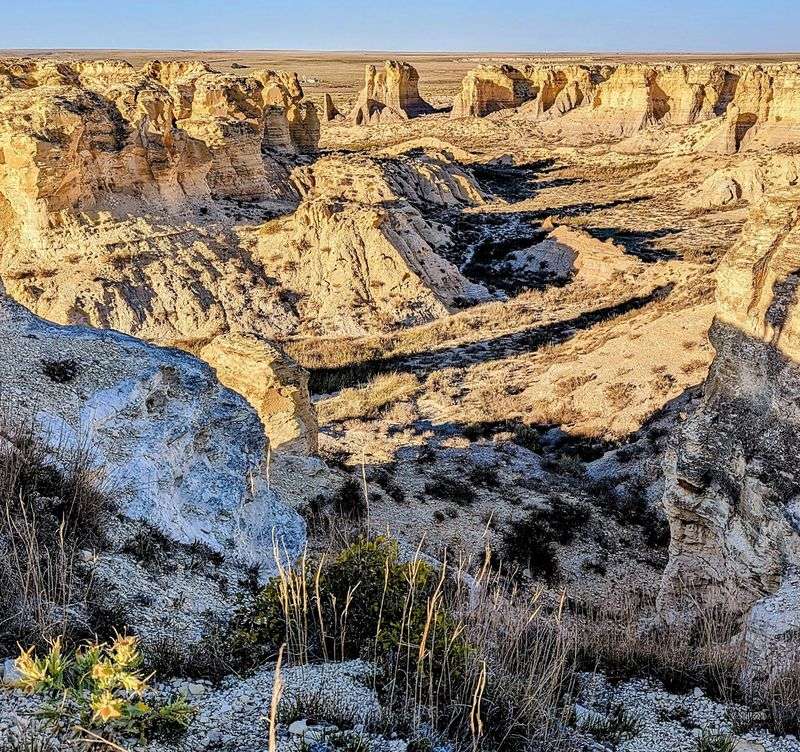
About 85 million years ago, a shallow sea called the Western Interior Seaway split North America in two. Western Kansas sat underwater during this Late Cretaceous period.
Microscopic marine organisms called coccolithophores lived in those ancient waters. These tiny algae produced calcium-carbonate plates called coccoliths.
When the plates and other marine remains sank to the seafloor, they gradually accumulated and became part of the sediment that formed chalk over millions of years.
Later, the same forces that pushed up the Rocky Mountains lifted the old seafloor. Wind and water then went to work like patient sculptors.
That erosion carved the canyons and spires standing here today. It’s still happening, slowly, one rainstorm at a time.
The silty seafloor made a great place for fossils to form. Paleontologists have found mosasaurs, plesiosaurs, pterosaurs, and early aquatic birds in Niobrara Chalk.
More common finds include giant ancient clams and oysters stuck right in the rock. Fossils from this region now sit in museums around the world.
That’s a lot of history for some white cliffs. Each layer is basically a page from a very old ocean diary.
Keep that story in mind as you walk. It turns pretty rocks into something much bigger.
Pioneers Gave These Cliffs A Name Worth Remembering
Some place names leave you guessing. This one comes with a picture built right in.
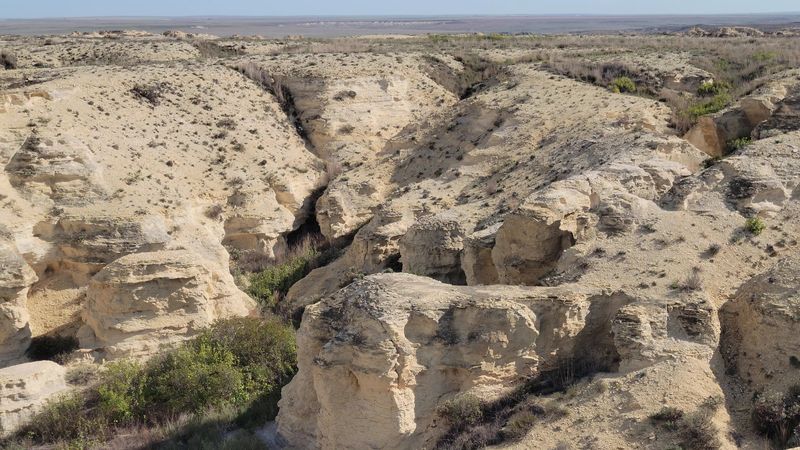
Early pioneers looked at the formations and saw something familiar. To them, the walls and towers resembled the ancient walled city of Jerusalem.
The effect was said to be strongest at sunrise or sunset. Low light paints the chalk and sharpens every shadow.
Try squinting at the skyline during golden hour. You may start spotting your own towers and gates.
The land’s more recent story matters too. The McGuire family owned the ranch for five generations before selling it to The Nature Conservancy in July 2016.
The sale came with a key condition. The land had to be opened to the public so people could help protect it.
The Conservancy reportedly turned down offers for a fossil dig site, an off-road park, and a private hunting preserve. Instead, the Kansas Legislature made it a state park in 2018.
It opened to visitors in 2019. The Nature Conservancy and the Kansas Department of Wildlife and Parks now work together to care for it.
Short On Time? The Overlook Trail Still Delivers
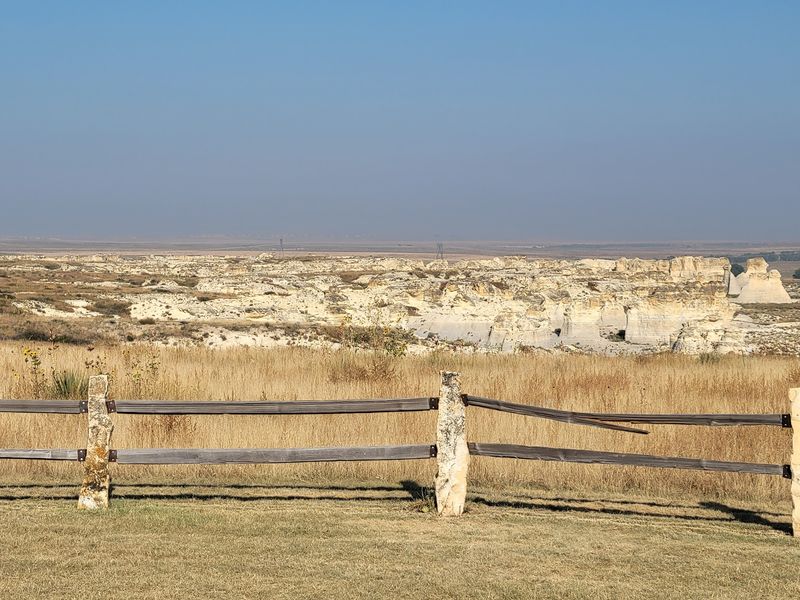
Good news for anyone traveling with little legs or limited time. The Overlook Trail is only about a quarter mile.
The path uses crushed rock with gentle slopes. That makes it friendly for a wide range of walkers.
It ends at a scenic viewpoint above the badlands. You get a big payoff without a big effort.
This trail works well if the day is heating up. You can see the canyon and be back at your car fast.
Interpretive signs along the way explain the geology, plants, and history. Think of them as quiet tour guides that never ask for a tip.
Read a few as you go. They make the view far more meaningful.
One thing to know before you start. Shade is basically missing out here, so a hat and sunscreen are smart.
Carry water even for this short walk. The western Kansas sun doesn’t care how short your trail is.
If the Overlook Trail leaves you wanting more, good. The longer route is right next door.
Life On The Rocks Rewards Hikers Who Keep Going
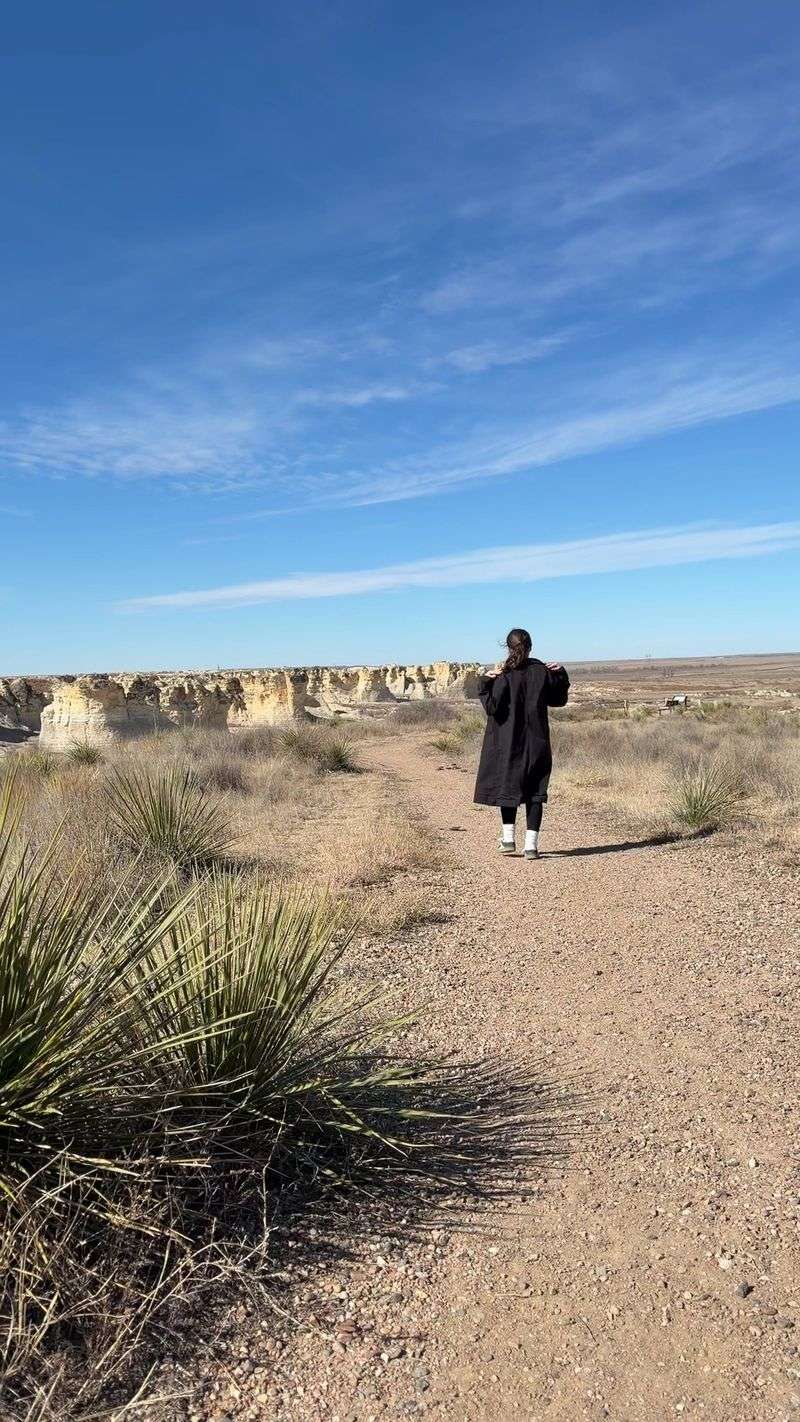
Want the better views? The Life on the Rocks Trail follows the rim of the badlands, covering approximately 2.5 miles round trip according to the Kansas Department of Wildlife and Parks.
It offers several vantage points and two scenic overlooks. Each stop shows the canyon from a fresh angle.
The first half-mile has crushed rock and gentle slopes, making the initial section relatively approachable for many walkers.
After that, the trail switches to a natural surface for about three-quarters of a mile. The slopes get moderate as you head toward the second overlook.
It’s an out-and-back route, so you return the way you came. The complete hike is approximately 2.5 miles, including the return to the trailhead.
The far overlook is where the formations feel closest from the trail. Patience pays off here.
Plan your timing with the sun in mind. Early morning and evening light make the chalk glow and the shadows deepen.
Midday can feel brutally exposed on hot days. Pack plenty of water and wear sturdy shoes.
Stay on the marked path the whole way. The chalk is fragile, and every footprint off-trail adds up.
A Guided Tour Is Your Only Ticket Into The Canyon
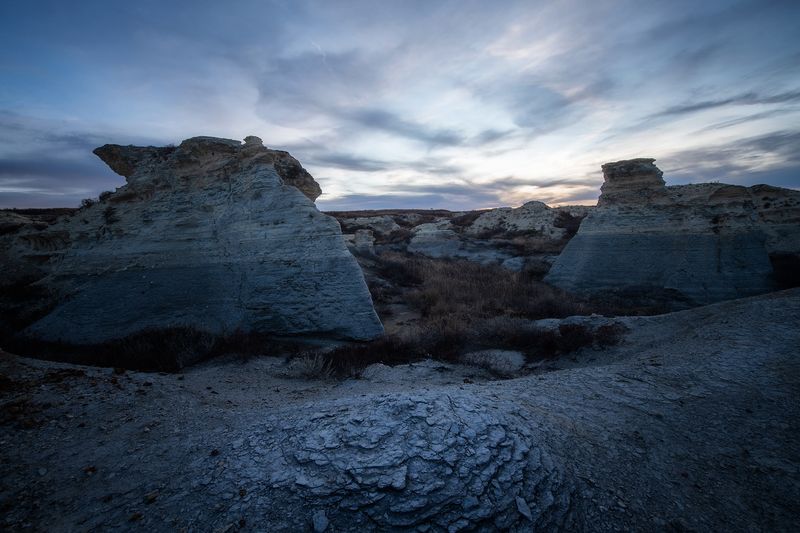
Staring down at those spires makes you want to touch them. Here’s how that can actually happen.
Guided tours are the only way to leave the trails and enter the delicate interior formations. They must be reserved ahead of time through the Kansas Department of Wildlife and Parks.
No booking means no canyon floor. Plan ahead, and you get a totally different view of the park.
Walking among the formations shows their size in a way overlooks can’t. Guides also share stories about the rocks, fossils, and history.
The park sometimes hosts special events too. Guided sunset hikes have been on the calendar, and they sound like a dream.
Watching chalk turn gold with an expert nearby is hard to beat. Keep an eye on event listings before your trip.
Tours exist because the badlands are easy to damage. Limiting access keeps the formations standing for future visitors.
That small trade-off feels worth it. You get a rare peek while helping protect something irreplaceable.
Rare Plants And Sharp-Eyed Hawks Call This Chalk Home
Ferruginous hawks are known to nest in this rugged spot. These big raptors fit the dramatic scenery perfectly.
Other birds more typical of the dry West show up too. Look for rock wrens and Say’s phoebes around the cliffs.
Small mammals, bats, lizards, snakes, and toads live here as well. Insects of all kinds keep the whole system buzzing.
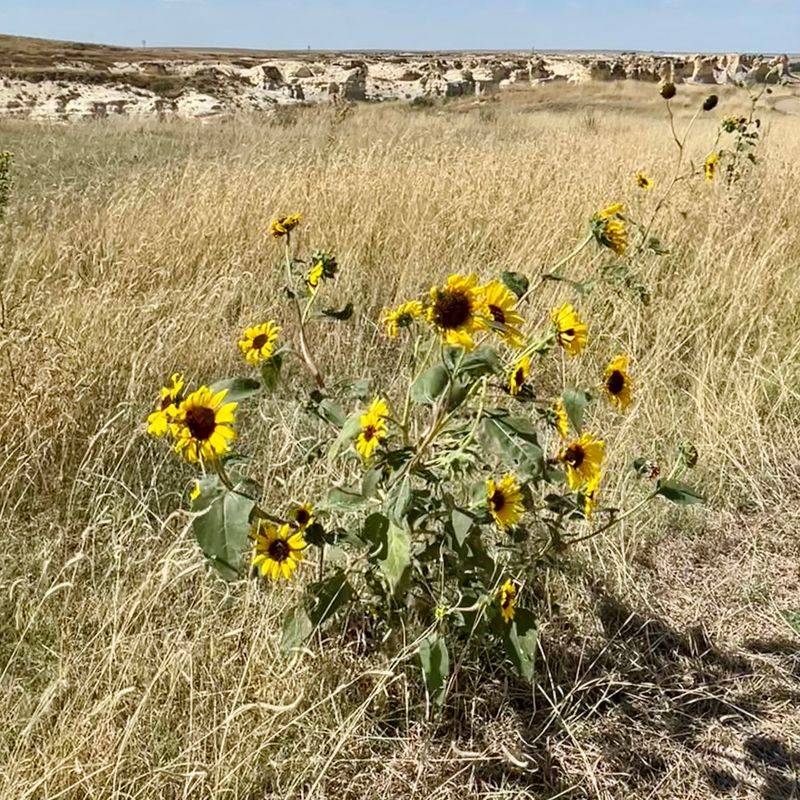
The real botanical superstar is easy to miss. The park holds the single largest population of Great Plains wild buckwheat.
This plant grows only in the chalk prairies of western Kansas. Nowhere else on Earth, just here and nearby.
That makes the park important far beyond pretty views. It’s a safe home for a species with very few addresses.
Collecting anything is not allowed. That includes rocks, flowers, plants, and fossils.
Bring binoculars instead of a bag. Watching wildlife from the trail is half the fun anyway.
Slow down and scan the cliffs. You never know who might be watching you back.
A Few Smart Moves Make The Trip So Much Easier
Getting there is part of the adventure. Little Jerusalem Badlands State Park sits at County Road 400 and Gold Road, Oakley, KS 67748.
The last stretch involves gravel roads. Avoid the drive right after heavy rain if you can.
The park is open daily, year-round, from sunup to sundown. It’s a day-use spot, so there’s no camping on-site.
Every vehicle needs a daily permit or an annual Kansas state parks pass. A self-pay station waits at the parking lot, so having cash on hand is wise.
Leashed dogs are welcome, and owners must clean up after them. Bikes, horses, ATVs, UTVs, and drones are not allowed.
Fires, climbing, and camping are also off the list. These rules protect the fragile chalk.
Big changes are coming soon. A new visitor center is set to start construction in August 2026 and open in early 2027.
The park stays open during the work. Restrooms will remain available too, which is always good news.
Make A Day Of It Along A Wild West Byway
One stop is great, but this region rewards road trippers. The park sits along the Western Vistas Historic Byway.
That route is known for rugged landscapes and traces of Wild West history. It also passes through some notable fossil-hunting country.
Need a place to sleep? Historic Lake Scott State Park lies roughly 7 to 8 miles south.
It offers camping, which Little Jerusalem does not. Pairing the two makes for an easy overnight plan.
Start early at the badlands while the light is soft. Then head south and spend the afternoon at the lake.
That loop gives you chalk canyons and water in one trip. Not bad for a state some folks call flat.
Photographers should plan around morning and evening. Those hours bring out the subtle colors in the chalk.
This park challenges what people expect from Kansas. It feels ancient, surprising, and wonderfully out of place.
Go see that old seafloor for yourself. The prehistoric ocean has been waiting a very long time.