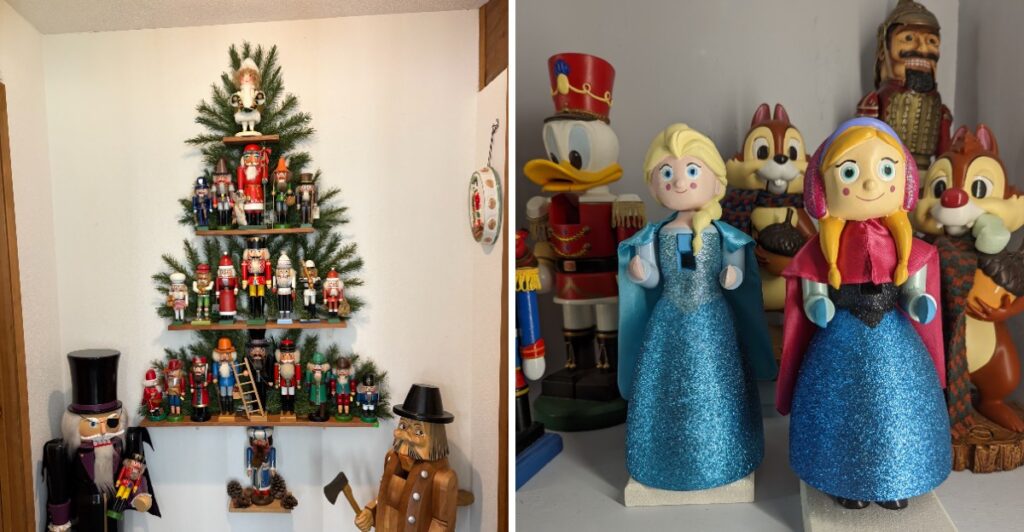
More than 9,000 nutcrackers live inside one Washington museum, and their head of security is a six-foot Bavarian named Karl. Yes, he’s carved from wood. No, he doesn’t do small talk.
This collection goes way back, as in prehistoric nutcracking stones and ancient Roman gadgets. Then the timeline jumps all the way to cartoon characters, and Guinness World Records was impressed enough to step in.
There’s even a cast-iron Jimmy Carter prototype, which feels fitting for a former peanut farmer. A few Italian nutcrackers change their eye color mid-crack, which is wildly extra for a kitchen tool.
Karl handles the welcome. Thousands of others handle the staring.
A Ballet Teacher’s Hobby Grew Into A World-Famous Collection
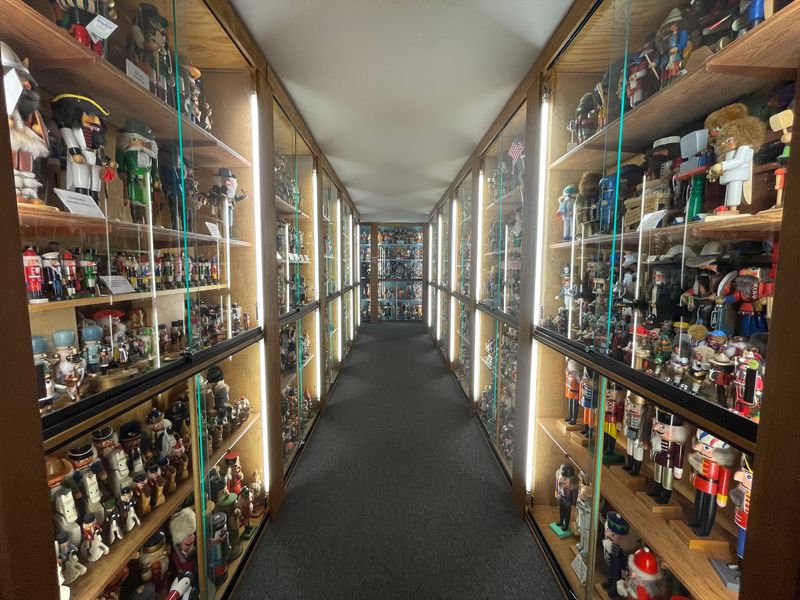
Every great collection starts with one piece, and this one started with a ballet. Arlene Wagner taught dance and supervised productions of The Nutcracker, which sparked a lifelong hunt for the real thing.
She began collecting decades ago and eventually earned the nickname the Nutcracker Lady. Her husband George shared the passion, and their shelves clearly ran out of room.
In 1995, the couple opened the Leavenworth Nutcracker Museum as a private showing of their personal collection. That’s one way to solve a storage problem.
The Wagners later donated both the collection and the building that holds it. In 2006, the museum became a nonprofit, and other collectors began adding their own nutcrackers.
Arlene also wrote books, including The Art and Character of Nutcrackers, which features more than 1,000 pieces from the museum. An addendum followed in 2015 for anyone who needed even more.
Fame came knocking too. She appeared on NBC’s Today, CBS Sunday Morning, and an A&E special, and she was the very first guest on Conan in 2010.
Staff members were trained by Arlene herself, so their knowledge runs deep. Ask a question and you’ll likely get a story with your answer.
The Oldest Pieces Will Make Your Kitchen Gadgets Feel Very Young
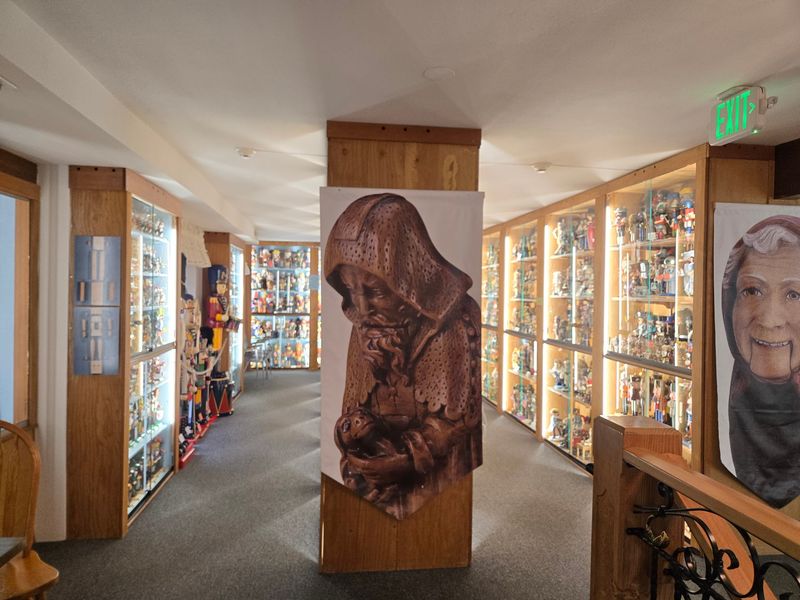
Long before anyone carved a soldier with a lever jaw, people cracked nuts with rocks.
The museum displays prehistoric nutting stones from the Archaic period, estimated at four to eight thousand years old.
Those humble stones are believed to be among the earliest nutcracking tools anywhere. Honestly, they did the job without a single painted mustache.
Fast forward a few thousand years and you reach one of the oldest items in the building. It’s a bronze Roman piece dated somewhere between 200 BC and 200 AD.
The museum acquired that Roman treasure in 2006. Seeing it in person puts your everyday snack routine into perspective.
From there, the timeline keeps marching forward through roughly 800 years of craftsmanship. You’ll spot pieces from the 12th and 13th centuries alongside folk-art carvings.
Materials vary wildly as you move along the cases. Look for nutcrackers made of wood, metal, bone, horn, ivory, and even acrylic.
Pieces arrive from more than 50 countries, so the styles shift constantly. A slow walk through these older displays pays off, especially if history usually makes your eyes glaze over.
Watch For A Napoleon And Some Eyes That Change Color
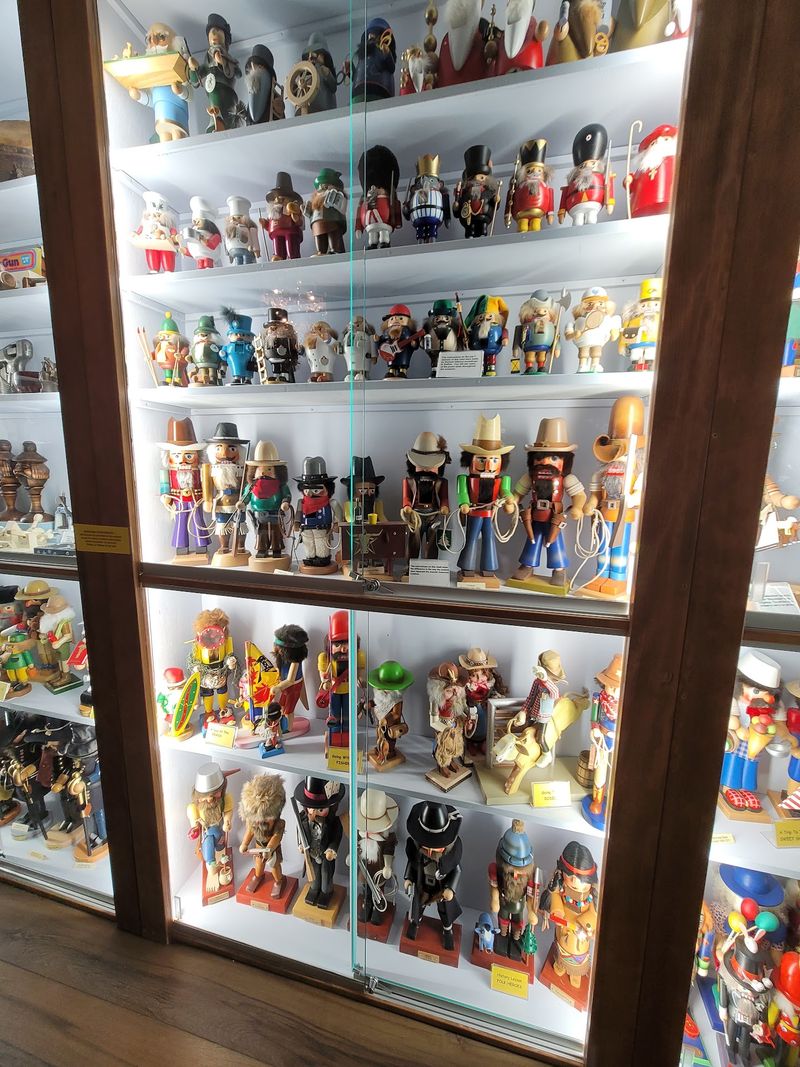
Napoleon is here, and he’s surprisingly small for his reputation. He’s the oldest wooden toy soldier nutcracker in the museum, made in 1820 in Sonneberg, Germany.
His face was sculpted from paper mache, which makes his survival pretty impressive. Two centuries later, he still looks ready to give orders.
Toy soldier nutcrackers are the style most people picture during the holidays. Seeing an early example helps you understand how the classic look developed over time.
Next, hunt down the nutcrackers from Italy’s Groeden Valley. Their blue eyes change to brown as a nut gets cracked.
Yes, really. Someone engineered a nutcracker with a mood ring built into its face.
These clever designs show how carvers loved adding a little magic to everyday tools. Each one rewards a closer look, so don’t rush past the cases.
Many displays sit behind glass, and staff ask guests to avoid touching them. That rule protects fragile pieces like Napoleon for future visitors.
Give yourself time to compare the faces, hats, and expressions. Once you start noticing the details, you’ll realize no two nutcrackers share quite the same personality.
Cartoon Favorites Turn Up In Some Very Unexpected Shapes
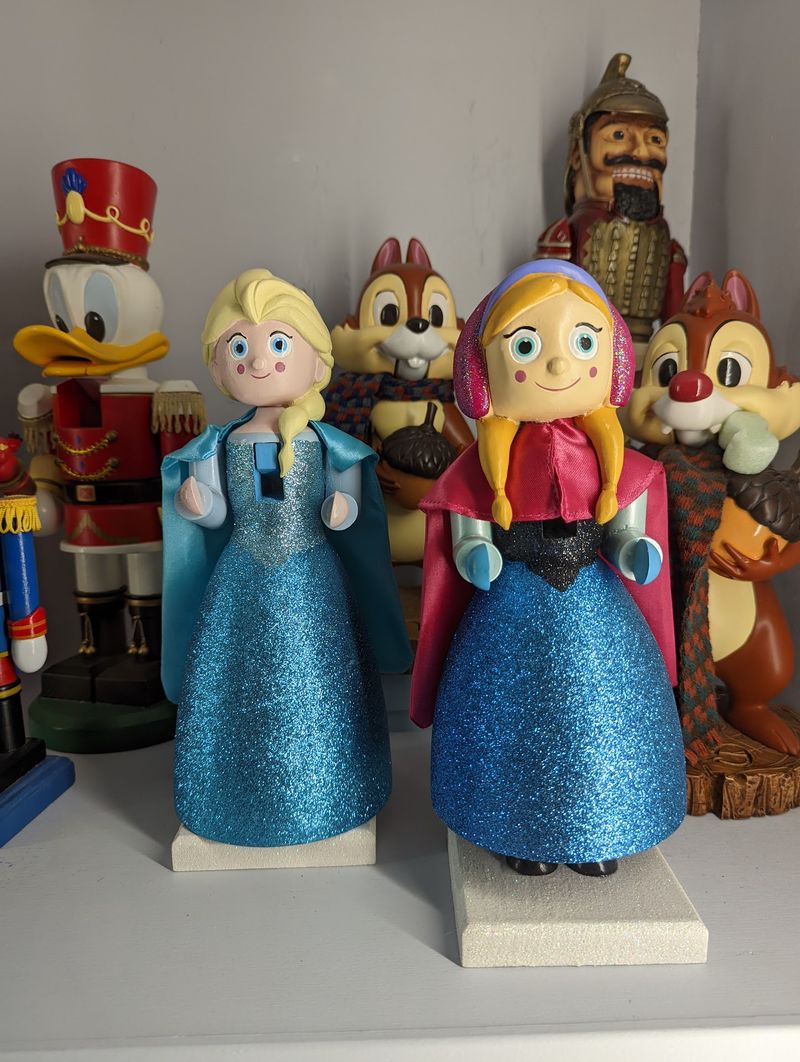
Mickey Mouse has cracked nuts. So have Minnie, Big Bird, Garfield, and Snoopy, at least in nutcracker form.
The pop culture section is where kids tend to point and grownups start grinning. Snow White and all Seven Dwarfs make an appearance too.
Teddy bears and snowmen join the party for an extra dose of holiday cheer. Then things get delightfully odd.
One case features an Egyptian mummy nutcracker. Another holds a cast-iron Jimmy Carter prototype, which might be the most unexpected presidential souvenir in Washington.
These playful pieces prove nutcrackers aren’t just stiff soldiers in tall hats. Artists have turned almost every popular figure into a nut-crunching sidekick.
If you have young travelers, this section is a great place to slow down. Ask them to name every character before reading the labels.
It’s also a smart reminder that collecting can be fun instead of fussy. A museum with medieval carvings and Garfield under one roof clearly doesn’t take itself too seriously.
Keep an eye out for your own childhood favorite. With thousands of pieces on display, the odds are surprisingly good.
Karl And The Mouse King Are Ready For Their Close-Up
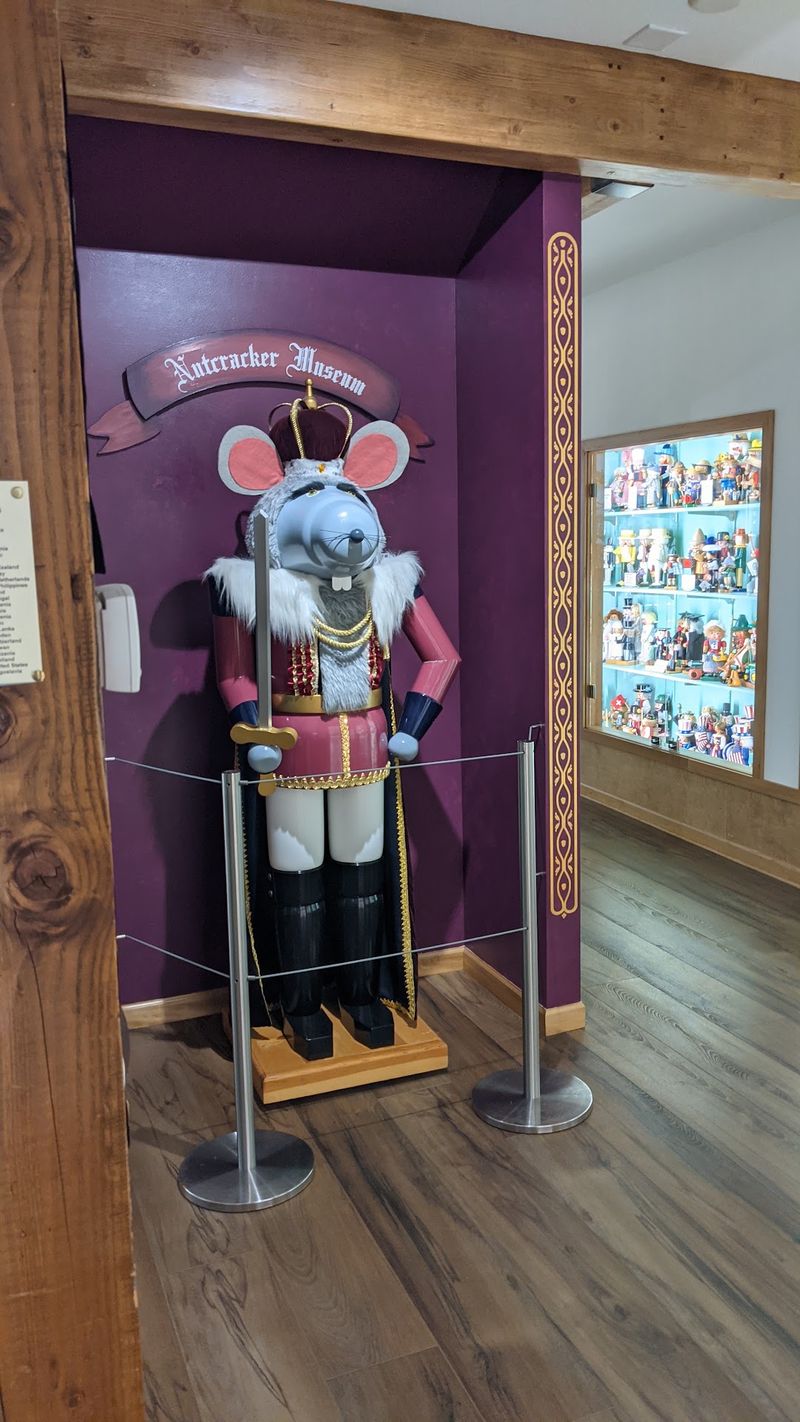
Standing six feet tall, Karl doesn’t exactly blend in. He’s the museum’s oversized ambassador, carved by Karl Rappl of Oberammergau, Germany.
Dressed as a classic Bavarian figure, he makes the perfect photo buddy. Stand next to him and you’ll suddenly feel like a holiday decoration yourself.
The giant Mouse King display is another favorite for pictures. Fans of the ballet will recognize the villain who battles the Nutcracker Prince.
Posing with both of them gives you a full story in two shots. One hero, one rival, and you somewhere in the middle.
Photography is generally welcome throughout the museum, with a few marked exceptions. Watch for signs near certain collections and respect them.
Video recording and livestreaming are not allowed inside. That keeps the space calm and protects the collection.
Here’s a practical tip for your photos. Turn off your flash, since bright bursts aren’t kind to delicate older pieces.
Karl and the Mouse King are sturdy enough to handle your posing, though. Grab your best holiday grin and let them steal the spotlight.
You Actually Get To Crack Some Nuts Here
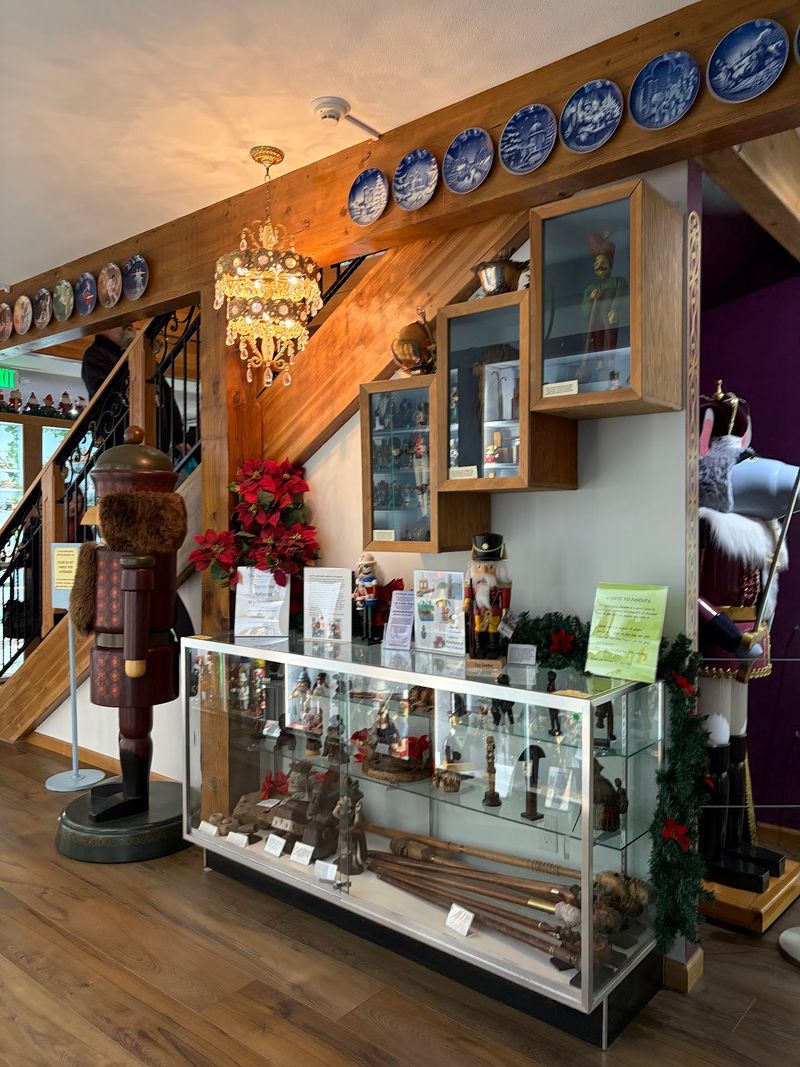
Looking is great, but cracking is better. Visitors can try opening hazelnuts with different types of nutcrackers, including styles similar to ones used by past generations.
It turns a quiet museum stop into something hands-on. You’ll quickly learn which designs work smoothly and which ones demand serious grip strength.
Start your visit with the 17-minute introductory video near the entrance. It explains nutcracker history and sets up everything you’re about to see.
Watching it first makes the cases more meaningful. Otherwise you might miss why certain pieces matter so much.
Families should ask about the nutcracker hunts. The museum offers versions for both children and adults, which keeps everyone searching the shelves with purpose.
Kids especially love tracking down specific characters and animals. It’s a clever way to keep young eyes busy while grownups linger over the antiques.
Adults shouldn’t skip their own hunt either. Spotting a tiny detail among thousands of nutcrackers feels oddly satisfying.
Most guests spend between 30 and 60 minutes exploring. Add the full video and a hunt, and you’ll want to plan for the longer end.
Finding It Is Easy, Just Look For The Maibaum

Leavenworth already looks like a Bavarian village, so a nutcracker museum fits right in. The building sits downtown at 735 Front St, Leavenworth, WA 98826.
You’ll find it on the corner of Front and 8th Street. It’s directly across from the tall blue and white maibaum pole, which makes a handy landmark.
Public parking areas downtown are a short walk away. That makes it easy to pair the museum with a stroll through the shops.
The Leavenworth Nutcracker Museum is open daily, usually from 11 a.m. to 5 p.m. On Sundays, it closes a little earlier at 4:30 p.m., and holiday hours can change.
Plan to arrive at least 30 minutes before closing. Rushing past 9,000 nutcrackers would be a real shame.
The museum spans two floors, and there’s no elevator to the second level. Thankfully, every category of nutcracker appears on both floors, so nobody misses the full range.
Aisles are wide enough for strollers and wheelchairs. Small pets are welcome if carried the whole time, and certified service dogs are always allowed.
Save A Few Minutes For The Tree And The Gift Shop
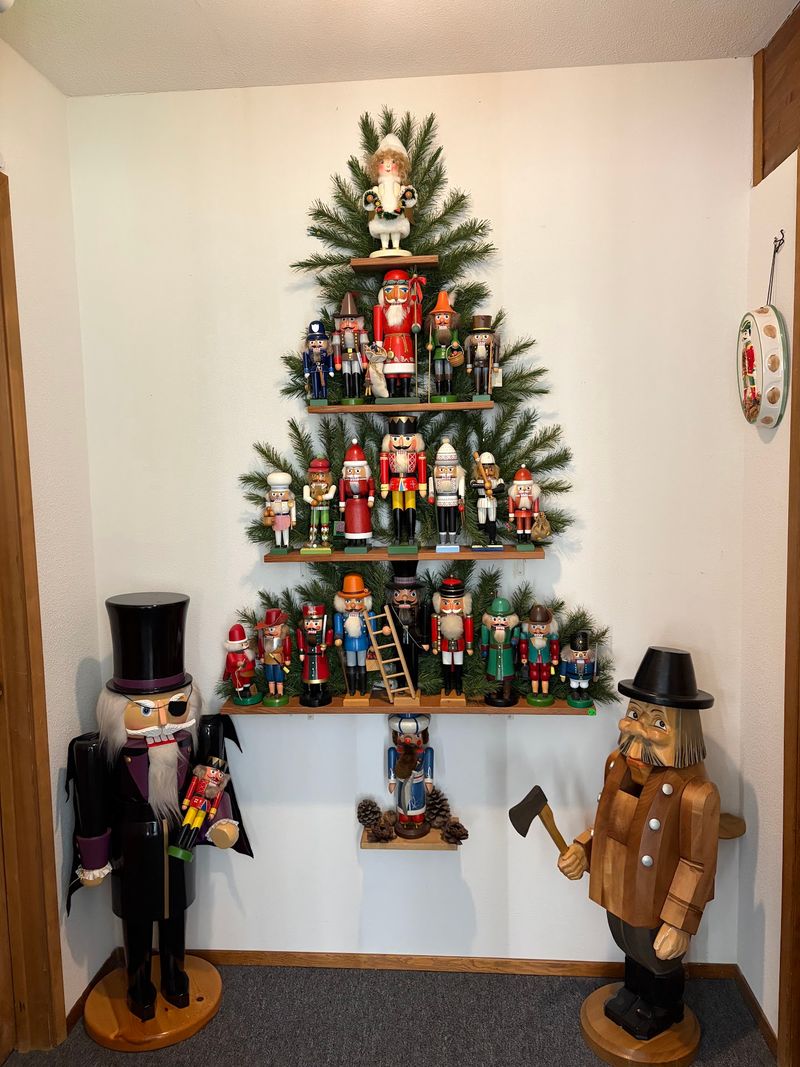
Some Christmas trees have ornaments. This one is made of nutcrackers.
The permanent nutcracker tree was crafted by Christian Ulbricht, a well-known German maker. It was gifted to the museum on its 10th anniversary.
Unlike your tree at home, it stays up all year. No dropped needles, no tangled lights, and no arguments about who takes it down.
Near your exit, the Nutcracker Lady Gift Shop is ready for anyone who caught the collecting bug. It specializes in nutcrackers, smokers, and collectibles, especially from Germany’s Erzgebirge region.
That region is famous for traditional wooden crafts. Bringing one home connects your holiday decor to a long carving tradition.
Here’s the feel-good part. Proceeds from gift shop sales help support the museum and its collection.
Take your time browsing the shelves before choosing. A carefully picked nutcracker can easily become a family heirloom.
If you already collect, this is a great spot to find something special. If you don’t, consider this your warning that it might start today.