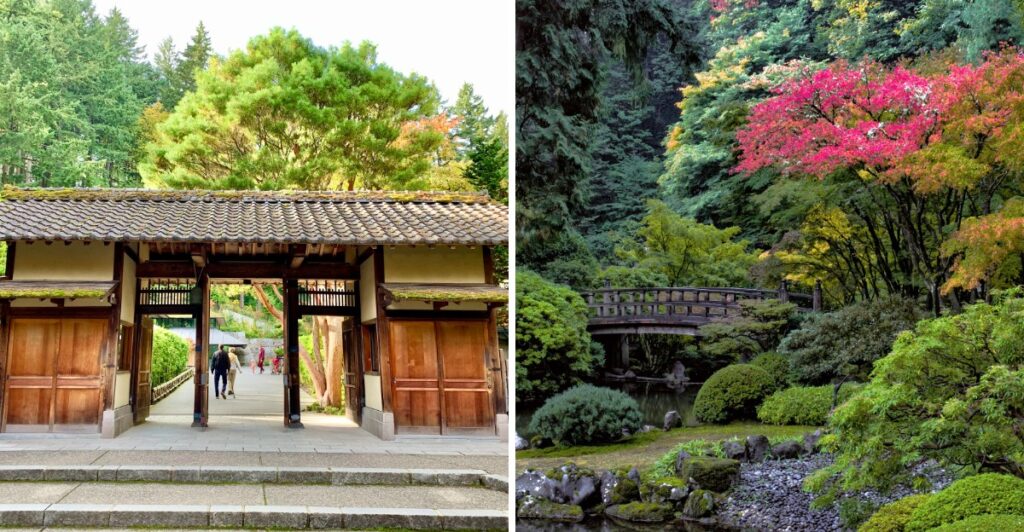
Some trees have names. This Japanese maple has a title: The Tree.
No introduction needed. Every autumn, this Oregon garden’s leafy celebrity earns its reputation all over again.
But it has some competition. More than two dozen stone lanterns dot the grounds, including a century-old gift from Sapporo, Japan. Even the garden decorations come with a passport and a history lesson.
November’s gray skies give the red and gold leaves a spectacular backdrop.
Below the branches, colorful koi drift through the ponds while a 35-foot waterfall provides the background music.
The Tree might get all the attention, but the rest of the garden isn’t exactly camera-shy.
The Ambassador Who Called It The Best Outside Japan Wasn’t Exaggerating
High praise doesn’t get much higher than this.
In 1989, Japan’s ambassador to the United States called the Portland Japanese Garden the most beautiful and authentic Japanese garden in the world outside Japan.
That’s a bold statement from someone who knew the real thing. The garden has spent decades living up to it, especially when autumn rolls in.
The story began in the late 1950s. Portland leaders, including Mayor Terry Schrunk, wanted to build friendship with Sapporo, Japan, and help heal old wounds between the two nations.
The garden was founded in 1963 on the old Washington Park Zoo site. Professor Takuma Tono of Tokyo Agricultural University designed it, and it opened to the public in 1967.
Today the grounds cover 12.5 acres in the hills of Washington Park. That’s a big jump from the original 5.5 acres, so plan on more walking than you expect.
A nonprofit runs the whole place without state or local tax funding. Japanese-born garden experts have guided its care over the years. Every raked line and trimmed branch reflects that long tradition, and fall is when the hard work really shows off.
Go Ahead And Say Hello To The Most Photographed Maple Around
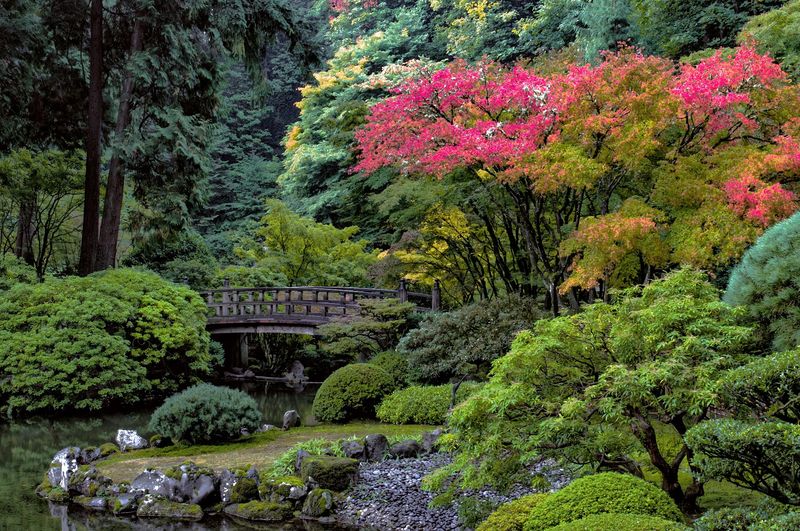
Some trees get a plaque. This one gets a capital T. Over in the Strolling Pond Garden, a celebrated Japanese maple simply goes by The Tree.
Its fall foliage is the main reason so many cameras point in one direction each autumn. Peak color usually arrives between late October and early November, when the maples flash crimson, gold, and orange.
Here’s a helpful tip for photographers. Early morning tends to bring softer light and fewer people, which makes framing that famous shot much easier.
Tripods are allowed, but they require a small fee. Personal photos are welcome, though portrait sessions are not permitted on the grounds.
Want to know if the leaves are ready before you leave home? The garden runs a Fall Color tracker on its website with updates on how the season is progressing.
Japanese maples grow all over these grounds, so The Tree has plenty of colorful company. Still, it holds a special spot near the water. Watching those red leaves reflect in the pond is the kind of scene that makes you forget your phone battery is at four percent.
Koi, Bridges, And A 35-Foot Waterfall Share One Busy Pond Garden
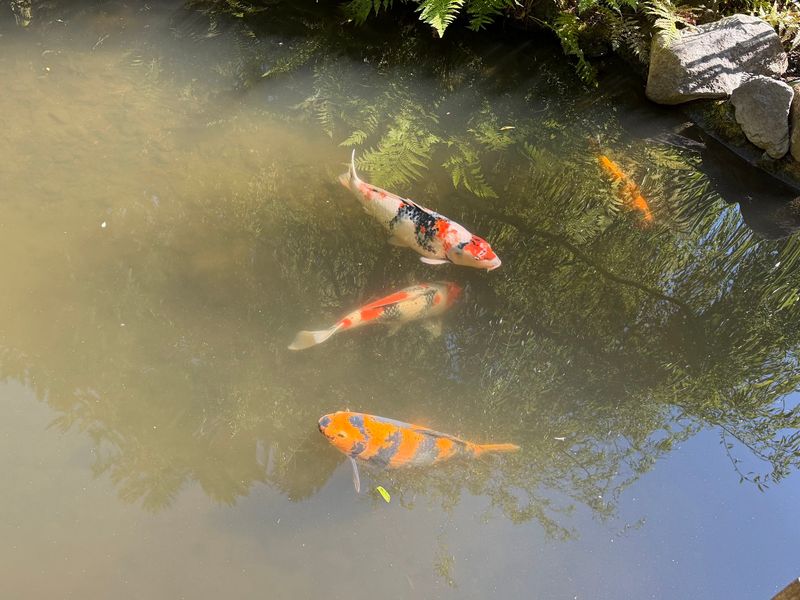
Fish get prime real estate here. The large, colorful koi live in the Strolling Pond Garden, the biggest garden space on the property.
This area holds two ponds, and each corner adds something new. A Moon Bridge curves over the water, while a zig-zag bridge called a yatsuhashi slows your steps on purpose.
Why zig-zag? The shape nudges you to pause, turn, and notice the view from fresh angles. It works pretty well on hurried visitors too.
Then comes Heavenly Falls, a waterfall that stands 35 feet tall. Its steady rush adds sound and movement to an otherwise calm scene.
A hillside of cherry trees rises nearby, and several stone lanterns stand along the water. In November, fallen maple leaves can drift across the pond surface beside the bright fish.
The koi are a favorite with kids and grown-ups alike. They tend to be more active in warmer weather, so autumn moves may look a bit more relaxed. Find a spot on a bridge, look down, and let those orange and white swimmers show you what slowing down really looks like.
Count The Stone Lanterns, Then Lose Count Happily
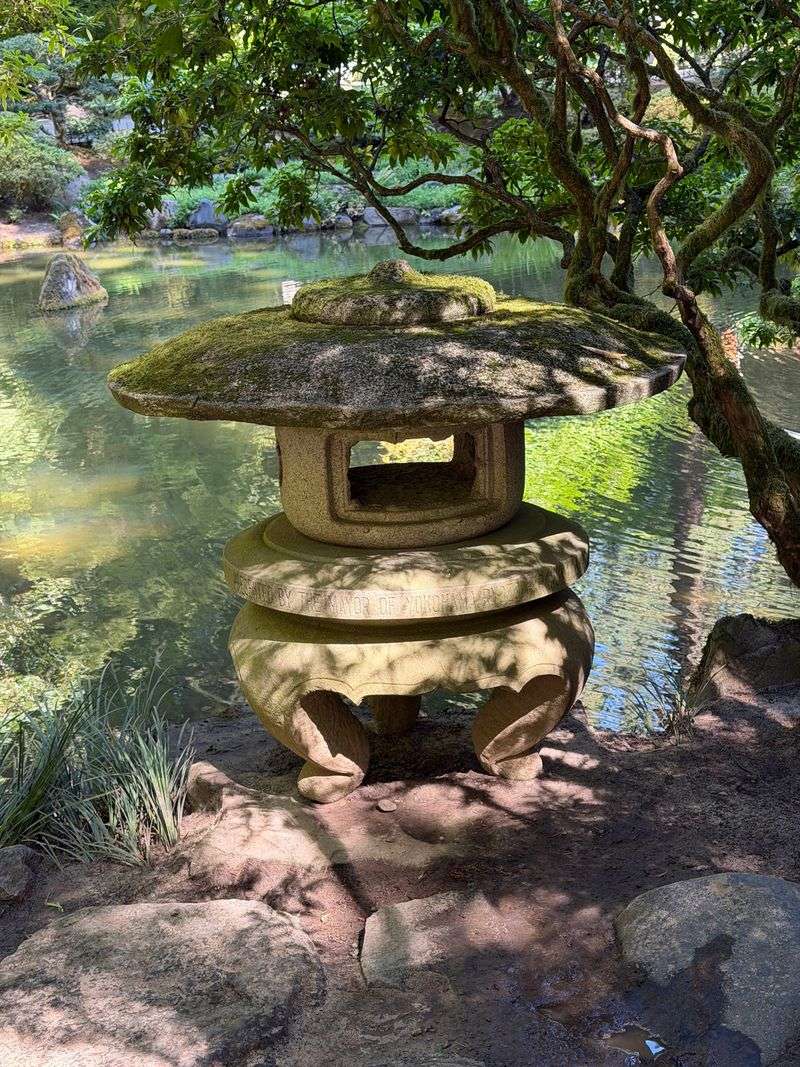
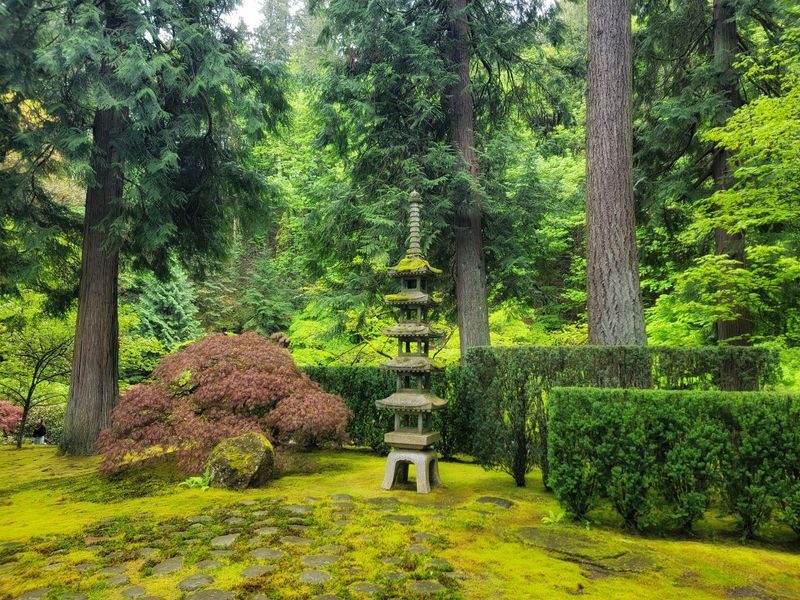
More than two dozen authentic stone lanterns dot these grounds. That’s a lot of quiet stone guardians watching the leaves turn.
The star of the group is a Five-Storied Pagoda Lantern that is about 100 years old. It came as a gift from the City of Sapporo, Portland’s sister city in Japan.
Lanterns show up in several garden spaces. You’ll spot them along the ponds and in the Tea Garden, where they help guide the path toward the tea house.
Each one adds weight and history to the scenery. Gray stone next to scarlet maple leaves is a pairing that never seems to get old in autumn.
Misty November days make these lanterns look even moodier. Soft fog wraps around their shapes, and the bright foliage around them pops against the gray.
Here’s a fun challenge for families. Try spotting as many lanterns as you can during your stroll. Kids can keep score while adults secretly compete too.
Nobody has to know who won, though everyone will claim victory anyway at the café afterward.
Your Visit Starts Under A Century-Old Temple Gate
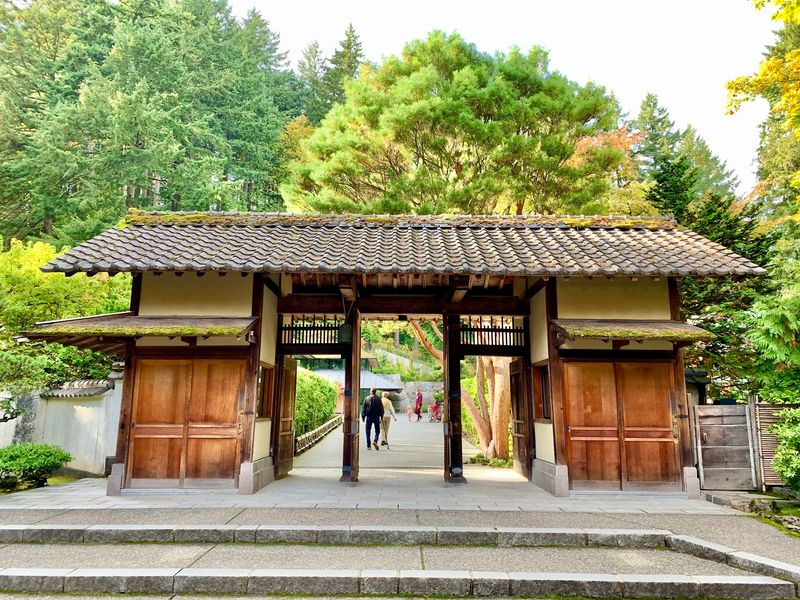
First impressions matter, and this one is about 100 years old. An authentic temple gate stands at the lower entrance of the grounds.
It arrived in 1976 as a gift from the Japanese Ancestral Society of Oregon. Passing beneath it sets the tone before you’ve seen a single koi.
From there, the path climbs. Expect a steady uphill walk through tall trees before you reach the main garden areas.
Need a break from the hill? A free, ADA-accessible garden shuttle runs between the Welcome Center and the Cultural Village approximately every 15 minutes during operating hours.
Near the entrance sits the Shiro-zumi Castle Wall. This rock wall was the first of its kind built outside Japan, which is a pretty impressive claim for a pile of stones.
A little honesty about accessibility helps with planning. The Cultural Village, Upper Flat Garden, and Pavilion are accessible, but not every part of the grounds is. Wheelchairs aren’t available to rent.
Docent tours with American Sign Language interpretation can be arranged with advance registration, which makes the experience welcoming for more visitors.
Warm Up With Tea Inside A Glass-Walled Café
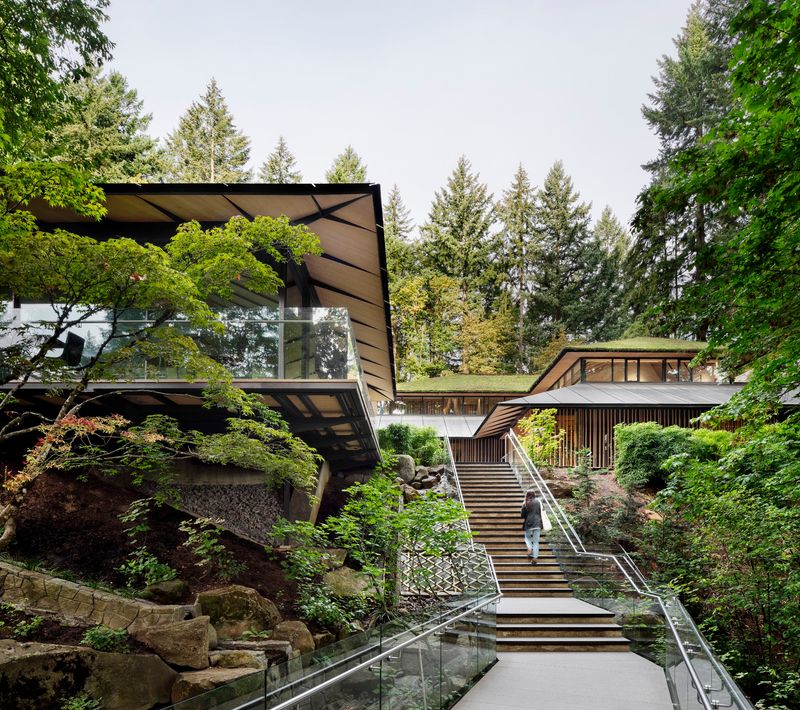
Chilly fingers and green tea make a great team. The Umami Café is a glass-walled tea house with views straight into the garden.
Japanese teas fill the menu, including organic sencha. Light bites include Japanese-style sandwiches, daifuku mochi, cakes, and pastries.
The glass walls are the real treat in November. You stay cozy while the maples outside put on their fiery show.
One rule to know before you go. Garden admission is required to visit the café, and outside food and drinks other than water aren’t allowed on the grounds.
The café has its own operating hours, so check its current schedule when planning your visit. Plan your tea break earlier if you want to finish your walk without rushing.
It’s part of the Cultural Village, which opened in April 2017. The well-known architect Kengo Kuma designed the complex, and the café fits right into the calm feel of the place. Grab a seat, wrap your hands around a warm cup, and enjoy a view that beats any screensaver you’ve ever had.
Bonsai, Art, And Origami Fill The Cultural Village
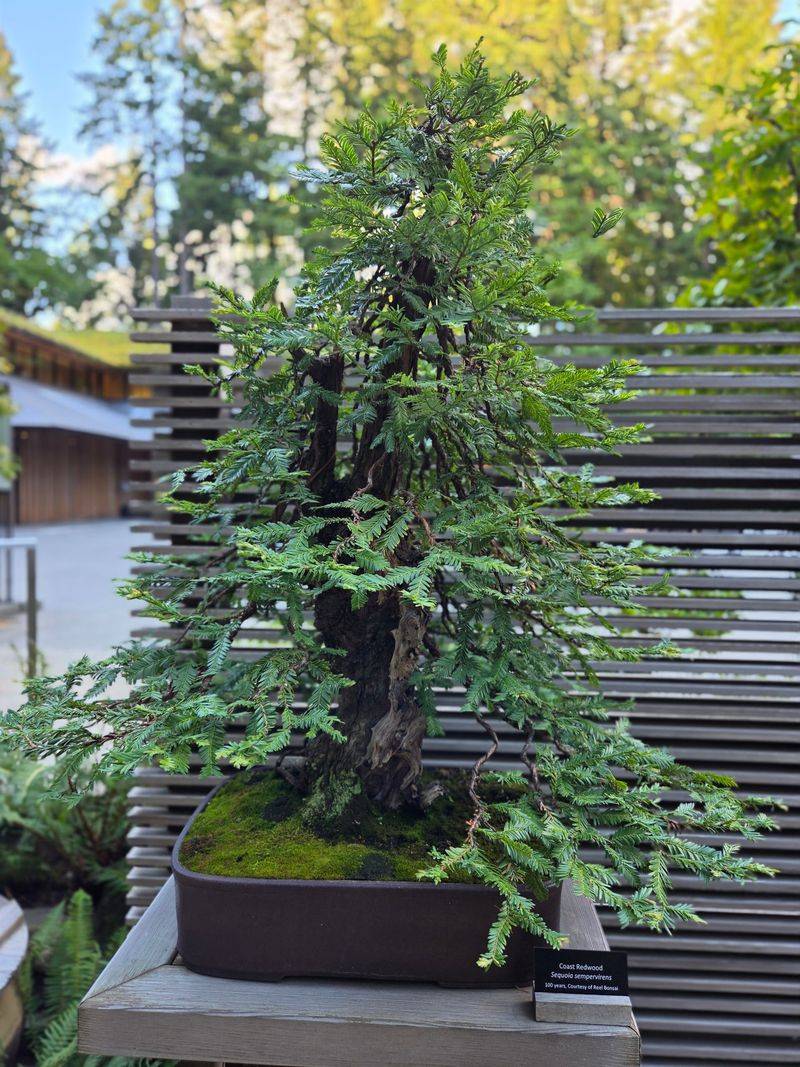
During warmer months, the Ellie M. Hill Bonsai Terrace displays carefully cultivated miniature trees.
Each one is expertly pruned, and the bonsai on display are on loan to the garden.
Nearby, the Jordan Schnitzer Japanese Arts Learning Center hosts art exhibitions, classrooms, and a library. It’s a good stop when you want context behind all that beauty.
Families get their own spot too. The Ron and Jenny Herman Garden House works as a family studio, offering light activities like origami and coloring, typically on weekends.
Kids can also try a scavenger hunt around the grounds. It’s an easy way to keep young explorers focused on more than splashing toward the koi.
The gift shop sells Japanese and Japanese-inspired items, including some imports that are hard to find elsewhere in the United States. Leave room in your bag.
Cultural programs pop up throughout the year. Look for performances on shinobue flute, koto, and Tsugaru shamisen, plus festivals like Kiku Matsuri, the chrysanthemum festival. Many events are included with daily admission, which makes timing your visit around one a pretty smart move.
Plan Smart Because November Color Draws A Crowd
Fall color and limited parking can turn into a tricky combo. The garden sits at 611 SW Kingston Ave, Portland, OR 97205, inside Washington Park.
Parking is public, metered, and limited. TriMet bus #63 and the MAX train to the Washington Park stop are solid alternatives, and the free Explore Washington Park shuttle stops nearby.
The garden is closed on Tuesdays, plus Thanksgiving, Christmas, and New Year’s Day. Hours shift by season, so check the current schedule before heading out.
Members get early access on operating days. Everyone else can aim for opening time to enjoy calmer paths and gentler light.
More than 400,000 people visit each year. That’s a big number, so buying tickets ahead and planning around weekends is a smart idea.
Bonus points for location. The International Rose Test Garden sits right next door, and the grounds offer views over the city. Pair both stops for a full Oregon outdoor day.
Just bring good walking shoes, because whatever hill you climb up in Washington Park, you’ll be walking back down too.